Home » Posts tagged 'Community' (Page 2)
Tag Archives: Community

Divine Harmony
 Why do some songs merely entertain, where others penetrate to the depths of our souls? Why does one song leave us unmoved, where another evokes passion or joy or sorrow?
We might find an answer by framing the question differently:
What is harmony?
Any thoughtful combination of notes can produce a pleasing sound. But not all composition is inspired, not all orchestration sublime. And even then, only once in a long while does the coalescence of notes and instrumental arrangement produce a true symphonic masterpiece, one that carries us to new heights of exultation.
Add to that the poetry of artful lyrics seasoned with shrewd insight into the human condition, and you will experience the fusion of heart and mind in a glorious oneness of divine synchronicity.
There is a single word to describe this.
Read the rest here, from this month’s issue of The Wagon Magazine.

Ten tips for a safer, healthier workplace
 Here we are again, shaking our collective heads the latest harassment headlines. How did this happen? How did we get here? How long are these stories going to continue to surface?
But the question we should be asking is: what can we do about it? Here are a few common sense curatives for the pandemic of predators in the workplace.
Don’t go it alone. Vice President Mike Pence was widely mocked and ridiculed after disclosing that he doesn’t dine alone with other women. But there is safety in numbers, and the mere presence of others reminds us to behave better. Keep private interactions semi-public, and you’re far less likely to end up in compromising positions.
No flirting. Sure, it’s fun. Like a little kid whisking his finger through a flame, we love to skirt the edges of propriety with winks, raised eyebrows and ambiguously provocative remarks. But it’s a short step onto a very slippery slope, and a little sensual sparring can quickly spiral from cute and clever to distasteful and dangerous.
Watch your tongue. HBO and Showtime have made the worst kind of language positively pedestrian. But there used to be seven words you couldn’t hear on television for good reason. Refinement of language reinforces refined behavior, and the more acceptable foul vocabulary becomes, the more likely we are to cross the boundaries of suggestive, harassing and bullying speech as well.
Look professional. The way we dress sends a signal about how we expect to be treated. The more casual the attire, the looser the standards. This applies to both productivity and personal interaction. A professional-looking workplace promotes professional behavior in every area.

Keep your hands to yourself. Aside from a formal handshake, touching has little place in any professional setting. Some people don’t like being touched but are reluctant to say so. And unwanted or inappropriate contact is just another way of violating boundaries. Do you want people to think of you as “creepy”? Did you just find yourself thinking about Joe Biden?
Don’t turn a blind eye. It’s easy to convince ourselves that a remark or action really meant nothing. We don’t want to look petty, and we don’t want to make something big out of something small. But if a colleague acts in a way that offends you, take that person to one side and politely say you didn’t appreciate it and please not to act that way again.
Have each other’s backs. It’s no different when we witness or learn of misbehavior toward others. It’s hard to stand up for ourselves, especially when we aren’t sure if we can count on those around us to come to our defense. Letting others know that you’re there for them when they need you empowers everyone and creates a bulwark against predatory behavior.
Document. You can let a single, minor incident roll off your shoulders. But if it’s egregious, or if a pattern of behavior begins to emerge, make sure to keep a detailed record in real time, in the form of personal emails, a personal diary and, if necessary, complaints to superiors.
 Don’t over-react. As diligent as we have to be, we also have to be careful not to go overboard. In our politically correct society, too many people are eager to find misconduct everywhere, whether it’s racial, sexual, or ideological. Occasionally, we all have poor judgment, and putting an offender on alert quietly and privately is probably enough for most first-offenses. Hitting the nuclear button at the slightest whiff of innuendo may end up being more harmful then helpful to a collaborative culture. If we’re all walking on eggshells, none of us is going to get very far.
Don’t believe it can’t happen to you. The headlines and history are littered with stories of people who never thought they could become victims or never imagined they would become oppressors – not to mention never believing they could be called out or brought down. When we think it can’t happen to us, the chances rocket upward that it will happen to us.
King Solomon teaches that wisdom walks in the ways of integrity and follows the paths of justice. We can save ourselves from much folly by acknowledging the pitfalls that lie before us and disciplining ourselves to avoid them.
The first step is to recognize that all of us are capable of committing acts of gross impropriety, and that any of us can be tripped by the temptations of ego and opportunism if we let down our guard. Only when we hold ourselves to the highest standards of ethical conduct do we have the right to expect as much from others.

My Son, the Lone Soldier
 Parents worry about children. It’s what we do.
When they’re infants, we worry about every sniffle and cough. When they’re in grade school, we worry about bumps and bruises. When they enter adolescence, we worry about their hormones and teenage angst. As they become young adults, we worry about them finding their way in life.
So I understand it when people ask if I’m worried about my son in the Israeli army. But many of them don’t understand my answer.
All in all, I think he’s safer than he’s ever been.
It wasn’t part of the plan. After college, with a good job waiting for him in New York, he went to Israel for a few months of spiritual R & R in the Jewish homeland. But almost from the moment he arrived, he knew that he wanted to stay. And if he was going to live as an Israeli, he wanted to do his part to defend his country and his fellow Jews.
With barely a second thought, he became a Lone Soldier.
He found the unit he wanted – the Gadsar Reconnaissance Division of the Nahal Brigade. He was attracted by the division’s reputation for quiet determination, and he eagerly awaited the challenge of proving himself fit for an elite combat unit.
His first goal was to complete the gibush – a 3 ½ day selection trial of relentless physical rigor. Of the 15 prospective soldiers in his group, four dropped out after three hours. The rest made it all the way to the end. And in the end, he made the cut.
My son was five years older than most of the other guys – a huge difference at that age – and had to obey and respect commanders much younger than himself. But he also found that his age elicited among his peers an expectation of maturity. With that perception came a sense of responsibility to live up to what others expected.
The 14-month training proved always demanding, frequently tedious, sometimes painful and – on occasion – seemingly pointless. But he soon recognized the advantages of discipline and learned to trust the wisdom of his commanders. As his taskmasters drove him to do things he would never have done on his own and develop skills he never imagined he would want or need, he began to discover his own extraordinary potential.
He mastered weaponry, marksmanship, navigation, camouflage, demolition, and hand-to-hand combat. Above all, he acquired the self-confidence that comes from having been trained and tested – and, with it, the mindset for success in every aspect of life.
He came to value the camaraderie that comes from a shared sense of purpose. His world view grew broader and deeper. He learned to sympathize with the plight of the Palestinian people and to simultaneously loathe the corruption of Palestinian leaders who exploit their own people by perpetuating a culture of terror for political advantage.
As a Lone Soldier, having left his own parents and siblings halfway around the world, he found himself in a strange twilight zone of independence without isolation. He enjoyed the warm affection of an Israeli family that adopted him as a son, and the security of knowing that his superiors were always looking out for his welfare. And from the comments of his fellows, he gained new insights about himself:
“You chose to come over and do this – that’s absolutely crazy.”
“What is it with you? You act like you enjoy being here.”
“Dude, you have really good table manners.”
In a world of distracted, spoiled, and self-absorbed adult-children who don’t know who they are and don’t care where they’re going, my son has been trained to look for opportunities, respond to the unexpected, and navigate his way through any challenges and around any obstacles that life may throw at him.
 More important, he has cultivated a sense of personal and national identity, an awareness that he is not just an individual but part of something far greater than himself – which makes him greater than anything he could become on his own. He has learned to take responsibility for himself and has developed a desire to engage the future rather than merely wait for it to arrive. He wants to make the world a better place, and he understands that the best way to do that is by making himself a better person.
In many ways I envy him and his comrades the opportunity they have, and it saddens me that more young people don’t choose to similarly challenge themselves. Most of us don’t begin life well-prepared for life, irrespective of our schooling or our vocational training. We squander so much thought and effort trying to figure things out on the fly, trying to play catch-up as we struggle with our careers and in our relationships.
We are all soldiers in the army of Mankind, all warriors on the battlefield of life. I’m grateful that my son has what so few of us have – the training and experience to meet those battles, to step forward into life with skill and self-assurance. And I’m proud that he has discovered that true joy comes from commitment to a higher purpose and higher values.
So to those who wonder why I’m not more worried about my son, all I can say is this: what on earth do I have to worry about?

Why Ethics Matter, Part 3: How I Survived Paris
You learn a lot when you travel. And the lessons you learn may include valuable tips on self-preservation.
My experience on the famous Champs-Elysee offers an entertaining look at our we can discover life-lessons in the most unlikely places.
Click here to enjoy another 2-minute video. Share your own account of some unexpected lesson learned in the comments section.


Stop Squabbling, Start Succeeding
 In 1932, President Herbert Hoover appointed Benjamin Cardozo to the Supreme Court. The president was a conservative Republican. Justice Cardozo was seen as a liberal Democrat — but he was also recognized as the greatest legal mind in the country.
President Hoover certainly would have preferred a conservative, but he knew the country wouldn’t stand for him to choose a supreme court nominee based on politics. He nominated Benjamin Cardozo, who was approved by the Senate — unanimously .
As recently as 1986, the Senate confirmed Antonin Scalia without a single opposing vote, and in 1993 Ruth Bader Ginsburg sailed through confirmation with only 3 dissensions. It wasn’t so long ago that our politicians’ top priority was to keep the system working.
But times have changed.


The Aftermath of Abuse
 Feeding frenzy might be the best caption for our scandal-ridden headlines. Paradoxically, the designation fasting frenzy would be equally suitable.
Let me explain.
In recent weeks and months, reports of sexual misconduct have propagated faster than entries on a nine-year-old’s birthday wish list. Roger Ailes, Bill O’Reilly, Steven Seagal and, of course, Harvey Weinstein are just a few of the 33 alleged predators listed in a recent L.A. Times article. Since then, accusations have been leveled Roy Moore, Richard Dreyfuss, George Takei, and Louis CK.
Perhaps the brightest silver lining is the extraordinary speed with which Kevin Spacey succeeded in destroying his own career. It’s reassuring to know that there are still forms of behavior sufficiently deviant to evoke universal condemnation.
In most cases, the alleged perpetrators have either fired back with furious rebuttals or dissembled with transparent evasions. Sadly but unsurprisingly, they remain unrepentant despite multitudinous plaintiffs or even their own court settlements.
Given the venal culture of both Washington and Hollywood, many of us are eager to believe every indictment and highly skeptical of the denials. But not all of us.
THE DARKER SIDE OF THE DARK SIDE
What effect do these scandals have on our culture? As with so many things, there’s good and there’s bad. The real question is: which outweighs the other?

On the positive side, when predators see that society will expose them and hold them accountable for their actions, the safer all potential victims become. On the other hand, the more such incidents are reported, the more degenerate behavior appears to become the norm. The result, perversely, could be to destigmatize and even enable similar behavior.
Then there is the sheer number of accusers. With so many plaintiffs, it’s hard not to wonder if some might be opportunists, simply piling on to genuine claims in hope of cashing in on the misfortunes of others. The frequency of such claims also increases the likelihood of defamation becoming a popular form of harassment itself, with baseless accusation converted into a weapon for character assassination.
Moreover, there’s the problem of exaggeration, of innocuous episodes unreasonably magnified. To wit, when former President George H. W. Bush – 93 years old and no longer fully in command of his faculties – pats a woman on her backside, this does not rise to level of abuses currently dominating the news cycles. We do real victims a disservice when lurid headlines paint every indiscretion with the same brush.
LESS THAN CHARMING
Depravity is bad enough. But the preponderance of charges, the kneejerk denials, and the moral equivalence of the petty and the abhorrent – these form a caustic trifecta of venality that sows cynicism all across the social landscape. With tragic irony, we can become so disgusted that we no longer care.
King Solomon says, If the snake bites because it was not charmed, there is no benefit to the charmer’s art.
How easily we convince ourselves that whatever we want is ours for the taking, that with craft and persuasion we can win anything we desire with no concern for risks and consequences. And when we overreach and fall victim to our own devices, the venomous destruction we let loose not only endangers us but all around us as well. In our arrogance we free the viper from its pit, and no one knows where it will strike.
Most of us will never come close to committing acts as horrific as those that fill the headlines. But without positive action, the persistence of such stories can erode our own commitment to ethics and set our own moral compass spinning in all directions.
 So how do we protect ourselves? First, by taking responsibility for even the smallest of our own actions. Second, by refusing to excuse the misdeeds of others – regardless of station or alliance – and, simultaneously, refusing to accept unsubstantiated accusations until all the evidence is in.
To see that all people are treated with the respect they deserve, to always rise to the defense of the defenseless, to hold ourselves and all others to a higher standard of personal conduct – this is the formula for a healthy, respectful, and civil society.
Published in Jewish World Review

Confronting the Credibility Crisis
 Hillary Clinton has been called a lot of things. But branding her the “cancer” of the Democratic Party ratchets the vitriol up to a new level.
More significant is who’s doing the name-calling. When Donna Brazile, Former Democratic National Committee Chair and longtime party stalwart, launches an internecine assault worthy of Donald Trump, it’s hard not to take notice.
Robby Mook certainly noticed. “Her claims are laughable,” the former Clinton campaign manager told Anderson Cooper. But Elizabeth Warren wasn’t laughing. Instead, the Massachusetts Senator invoked Ms. Brazile’s account of Clintonian malfeasance as evidence that the Democratic primary had been “rigged.”
So what are we to believe? Mrs. Clinton has been getting away with moral murder for years. Are the party faithful finally drawing a line? Or is Ms. Brazile merely trying to sell books while Senator Warren postures for the 2020 election?
Time may tell. But in the meantime, the undeniable victim is credibility.
TOO MANY CROOKS
There was a time when hustlers and lawbreakers would abandon their denials once evidence of wrongdoing grew overwhelming and indisputable. But today’s culture of fake news and fake outrage has spawned a limitless capacity for brazenness.
I am not a crook. I did not have sex with that woman. If you like your doctor, you can keep your doctor. I remember landing under sniper fire. The Art of the Deal is the number one selling business book of all time.
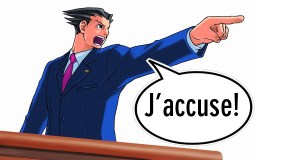 Even the investigators of corruption fall under suspicion. Robert Mueller, the special counsel looking into Russian election tampering, has himself been implicated in the scandal he is charged with investigating. Mr. Mueller arrived on the scene with bipartisan plaudits for his character and integrity. Now we aren’t sure if we can believe that, either.
You would think in an age like ours, when every word and deed appears instantaneously as part of the public record, that public figures would be exercise more caution in what they do and say. Instead, they seem to care less than ever.
It’s not hard to understand why. Mainstream news outlets largely ignore stories inconsistent with their political ideologies. News consumers visit only those outlets that provide stories confirming their political biases. And the epidemic of inaccuracy leaves us so jaded that we feel justified believing whatever we want about anyone we choose.
The crisis of confidence in our political system is reason enough for dismay. But there’s an even more profound cause for alarm – the corrosive effect of cynicism on our collective conscience and moral clarity.
LEMMING MENTALITY SYNDROME
There may be no more malignant phrase in the English language than everyone does it. Our parents didn’t tolerate hearing it from us, and as responsible parents we refuse to tolerate it from our children. But anything that is repeated enough plants itself in our consciousness, where it insidiously takes root and refuses to let go.
 All the more so when the media bombard us with evidence that we can’t trust our leaders, can’t trust our icons, can’t trust the spokesmen for moral values to uphold the values they espouse. And if the people I’m supposed to look up to act without scruples, why should I worry about how I look in the eyes of others?
The solution, therefore, is relatively straightforward: start looking in a different direction.
In the first verse of his first psalm, King David writes: Fortunate is the one who does not walk in the counsel of the wicked, does not stand in the path of misguided people, and does not sit in the company of cynics.
The more we associate with those who reject ethical values, the more automatically we adopt their ways. The more we expose ourselves to the influence of those who embrace moral relativism, the more we disable our own moral compass. The more we keep company with those who view everything and everyone in a negative light, the more we grow convinced that there is no reason to hold ourselves to a higher standard.
But if we remove ourselves from corrupting influences by seeking out company and counsel from people of integrity, and by searching out the good instead of fixating on the bad – then we will find ourselves drawn steadily upward, and we will begin to draw those around us upward as well.
Published by Jewish World Review
If you enjoyed this article, please share with others. Thanks!

Are you telling the truth?
As fake news becomes the new normal, I’m revisiting these thoughts from 2010.
 After circling the globe one and a half times, living for nine years in Israel and one year in Hungary, and teaching adolescents for over two decades, it’s only natural that I have more than a few stories to tell. So it never fails to discomfit me when friends or neighbors respond to my essays by asking:
“Did that really happen?”
Are my anecdotes so truly unbelievable? After all, I never claimed to have flown to the moon on gossamer wings, to have crossed the Alps with Hannibal by elephant, or to have led the attack against Custer’s army at Little Big Horn. No, I’ve merely plucked useful insights from slightly quirky encounters in an attempt to uncover the wisdom that resides within myriad aspects of the human condition.
And so I’ve penned essays about my white fedora, which fellow travelers reported noticing as our paths crisscrossed throughout Europe; about the Israeli gentlemen who rebuked me in an elevator for wearing an earring while sporting tzitzis, the fringed tassels worn over the belt line according to Jewish custom; and about the ragged man who stopped in his tracks on the streets of Budapest, apparently overwhelmed and overjoyed to discover a religious Jew having survived the travails of the Holocaust and assimilation; these, together with assorted episodes from my high school class room.
“I loved your article,” an acquaintance will say. And then, with alarming frequency: “Did that really happen?”
I even get it from my mother.
To be honest, I can’t say that I’m surprised. After all, narrative accuracy has seen its market value tumble over the years. As candidate for president, John Kerry described how Christmas in Cambodia was “seared in his memory.” A stirring narrative, aside from the fact that he wasn’t actually there. In the Democratic primary four years later, Hillary Clinton reported that her parents had named her in honor of Sir Edmund Hillary — an impressive feat of prescience, since Sir Edmund had not conquered Mount Everest until five years after Ms. Clinton was born and named. Even Ronald Reagan, although never caught embellishing his own history, nevertheless brought tears to the eyes of his audiences with poignant war stories that turned out to be scenes from old movies.
Popular motion pictures that are “based on” or “inspired by” true stories often undergo such embellishment that they emerge bearing little resemblance to the events they claim to portray. Tonight Show host Jay Leno, in his autobiography, reportedly included anecdotes that actually happened to other people. Mr. Leno explained that he had permission to use one story, and that he had paid for the right to use the other.
As in so many cases, the biblical injunction against speaking untruths extends far beyond the simple meaning of the words. The verse MiDavar sheker tirchak translates, simultaneously, as “Distance yourself from a false word” and as “Distance yourself from a false thing.” Jewish philosophy teaches that words are not mere symbols or labels; they possess a substance and a reality all their own. Consider how a cruel word can inflict more pain than a sharp blow between the eyes, or how a well-placed compliment can produce more pleasure than the sweetest dessert.
When does a word or a thing become false? In principle, the slightest embellishment or exaggeration constitutes a violation of Jewish values, if not Jewish law. If one is uncertain about the details of a story, it is easy enough to add “I think” or “something like” to the narrative. That small concession to veracity helps us preserve our respect for the lines between truth and falsehood — lines that grow increasingly blurred in a society descending ever deeper into moral confusion.
 The Hebrew word emes, commonly translated as truth, is formed by the three letters that come, in sequence, at the very beginning, the precise middle, and the very end of the Hebrew alphabet. Before we can be certain that anything is true, we must have a sufficiently broad perspective; we must have all the information, accurately and in context; and we must have a clear understanding of the propriety of revealing that information and the consequences of doing so. Only then is it emes.
Consequently, sometimes even absolute truth may be considered false. In the case of malicious gossip, the accuracy of the information may result in harm even worse than slander by damaging relationships that would have been secure against rumor or innuendo. Similarly, details taken out of context, although factual, often imply conclusions that have no bearing on reality. They may be true, but they are not emes.
The distinction between words that are true and words that are emes easily leads us onto thin moral ice. What about “white lies” intended to spare the feelings of others, or “harmless” untruths meant to warm another person’s heart?
At first glance, Jewish tradition seems to endorse such ideas. The sages teach that Aaron, the High Priest, upon discovering that two friends had come to quarrel, ran back and forth reporting to each how sorry the other was and how desperately he longed for reconciliation, until the two parties resolved their dispute and became friends once again. The same sages tell us to always call a bride beautiful, no matter what she actually looks like.
But is it not true that true friends, divided by conflict, miss the relationship they once had and mourn their lost friendship? Is it not similarly true that every bride glows with an inner beauty projected at the moment of her greatest joy, and that she is truly beautiful in the eyes of her bridegroom? If so, is it not also true that the sages were offering us a profound lesson in how to interpret human nature?
Indeed, even if there may be cases that require us to speak some literal untruth to protect another person’s physical, mental, or spiritual welfare, such cases are few and far between. If we are honest with ourselves, we will concede that most of us will have rare occasion to bend or break the truth.
Perhaps, if we all exert more effort to ensure that all our words are words of emes, we will not find ourselves suspicious of those stories of little miracles and inspirational irony that can make our eyes sparkle and our hearts swell. And if a more profound commitment to honesty helps us become less cynical and more easily inspired, then what do we really have to lose?
 Yonason Goldson