Home » Posts tagged 'Conflict' (Page 11)
Tag Archives: Conflict

When Kindness is Cruelty
 With a fury reminiscent of Hurricane Katrina, Typhoon Lionrock savaged northeast Asia two weeks ago, unleashing floods that left 100,000 North Koreans homeless and more than half a million without water. The devastation was so extraordinary that the North Korean government responded in a way equally unprecedented — by turning to the West for help.
I confess that my initial reaction was smug satisfaction. There’s something providential about a rogue nation responsible for instigating so much strife and apprehension around the world coming hat-in-hand to beg for international aid and succor.
However, after a moment’s reflection my feelings of moral superiority evaporated instantaneously. The victims here are not corrupt government nabobs; rather, they are the self-same people already victimized by the congenital corruption of their rulers. Even if the Orwellian tactics of the Kim dynasty have successfully hypnotized and lobotomized the people of North Korea into abject reverence, those hapless people hardly deserve the added suffering and indignation of a world denying them aid because of the sins of their overlords.
Divine justice will have to wait a bit longer.
To complicate matters further, just last week North Korea conducted yet another nuclear test in violation of its already-violated non-proliferation treaty. And so, with the UN blustering about increased sanctions and South Korea preparing for “the worst-case scenario,” humanitarian organizations are grappling with the logical and logistical problems of aiding the unfortunate citizens of a terrorist nation without helping the nation itself.
Of course, this is hardly a new dilemma.

9/11 — Visionaries and Ideology: A study in contrasts
 Originally published in 2015 by Jewish World Review.
Who knew a trip to New York could be so emotional?
I didn’t want to go in the first place. As my 92-year-old student likes to quote: Travelling is for peasants.
But my wife convinced me with simple arithmetic. Four tickets to bring three kids and son-in-law home or two tickets to visit them. No-brainer.
So I went grudgingly, confirming in the end the truism that some of life’s most profound moments come not only unexpected but against our will.
Our first stop was the 9/11 museum. I marveled at the artistic vision that had conceived the memorial pools, the water channeling down in rivulets that mirrored the face of the fallen towers, the continuous downward rush balanced by the redemptive feeling of water — the source of life — returning to the heart of the world. Here there was solace, closure, and consolation.
But a very different feeling accosted me inside. Almost upon entering the doors a single word brandished itself across my mind’s eye: Holocaust.
Let me explain.
To begin… obviously there is no comparison between the monstrosity of wantonly dehumanizing genocide and any single act of terror; obviously there is no equivalence between the systematic psychological, spiritual, and physical destruction of millions and a few thousand relatively instantaneous murders.
But then again, yes there is.
First, there is the shock value. 3000 murders compressed into 102 minutes is mathematically equivalent to six million in 139 days. Add to that the psychological trauma upon a nation that thought itself secure within its borders, the ensuing economic crisis, the emotional aftermath, the agonizing reappraisal, the moral uncertainties, and the recriminations that followed and remain woven into the social fabric of America to this day. Then add in the ideology of death that rejoices in the destruction of perceived enemies even (or all the more so) through self-destruction. Finally, add in the certainty that it could happen again.
These two abominations have much in common.
 The images in the 9/11 museum are haunting from the first. The twisted support beams, the bits of recovered debris, the walls of smiling faces of victims all conspire to pierce our hearts with the helpless torment of senseless violence. And around every turn, or so it seemed to me, the words “Remember” and “Don’t forget.”
Whether the architects of the memorial intended this biblical resonance I cannot say. But those three words are so much a part of Jewish tradition that for me they sealed the connection between the fate of the twin towers and the fate of European Jewry.
Remember what Amalek did to you on the way as you came out from Egypt; how he came upon you and struck down from behind all who were faint and weary; and he feared not G-d. Therefore it shall be… that you shall blot out the remembrance of Amalek from under heaven; do not forget.
Who is Amalek? He is the first terrorist nation in recorded history, the prototype of ideological nihilism and a culture of moral anarchy, the spiritual progenitor of every philosophy of hate and violence and, according to the traditions handed down by the sages across the generations, the ultimate ancestor of the German nation.
Remember what Amolek did to you, and remember why: to erase all awareness that a culture of moral integrity can flourish on this earth. Don’t forget, lest you leave yourself vulnerable to his never-ending mission to destroy you. There is only one way to deal with terrorist: blot them out from under heaven, or else they will do the same to you. It is a simple matter of self-preservation.
In 3,300 years, little has changed.
My handkerchief was damp before I left the museum. The magnitude of the destruction perpetrated by unadulterated hatred and evil was overwhelming. If we don’t fight against it, we become party to it. If we don’t acknowledge it for what it is, we allow it to consume us. And yet every visitor will leave this hallowed place and promptly lose himself in the vanities and trivialities of everyday life… myself included.
But this was only the first part of my New York epiphany. The second would come a few days later, when my wife led me into Federal Hall.
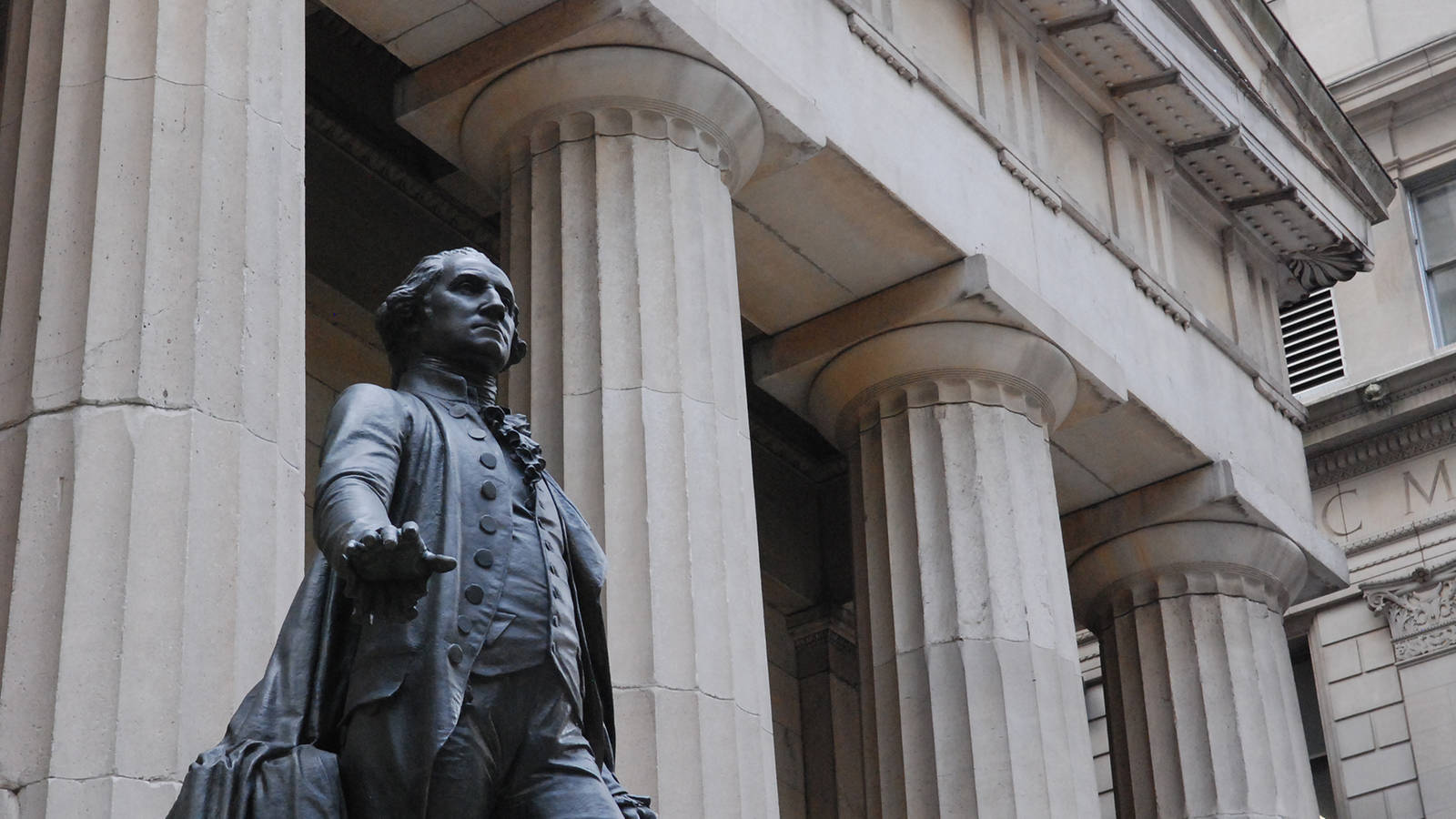 The site of George Washington’s inauguration provided as emotional an experience as the 9/11 museum. Here was a shrine to visionary ideology, not distorted into evil but elevated to the highest imaginable strata of human aspiration. Here, a fledgling nation conceived in the minds of practical dreamers took its incipient steps toward the lofty goals of justice, virtue, and equality before the law in a true meritocracy. Here, the noblest impulses of man forged a society out of shared values that had never been applied, never been attempted, never been imagined beyond the musings of political fantasy.
The obstacles had been myriad and megalithic. The chances of success had been spare. The need for compromise and cooperation had required superhuman resources of selflessness, humility, and a sense of common purpose. The collective will to succeed in their grand vision was the bond that overcame their differences, and the resourcefulness born of desperate times guided them to find solutions to their most intractable problems. And if our democracy today is slipping into a sad shadow of what it was conceived to be… well, it still stands alone in the world as a symbol of the ideals and the responsibilities of freedom.
Vision and ideology — the sources of unimaginable heroism and of monstrous evil. This is what we must remember. This is what we must never forget.
May we find the wisdom to follow the way of heroes.
9/11 — Balancing the Scales of Freedom
 Originally published in the St. Louis Post-Dispatch the week after 9/11/2001, between Rosh HaShonah and Yom Kippur.
It was Judgment Day — exactly one week after the World Trade Center buildings collapsed and so many illusions along with them.
“Judgment Day” is the expression found in the traditional liturgy for Rosh HaShonah, the first day of the Jewish new year. And as I stood in the midst of the congregation intoning the High Holiday prayers, the vision of exploding passenger planes and twin towers crumbling to dust hovered before my eyes.
On Rosh HaShonah we will be inscribed … who will live and who will die … who by water and who by fire … who by storm and who by plague … Who will have peace and who will suffer … who will be cast down and who will be exalted.
The judgment upon Jews became kinder after the United States opened her doors to us a century ago. Where no one else would have us, America took us in, allowing us to live both as Americans and as Jews without persecution.
Yet for all that, American Jews often feel torn by opposing cultural forces, especially approaching our Day of Judgment in a society where there is no greater sin than “judgmentalism.”
Without judgment, however, society cannot endure. As good citizens we must judge others – not based on race or religion but upon actions and behavior. And we must judge ourselves as well, by constantly reexamining our motives and our prejudices and our values and our goals. To condemn even this kind of judgment as a threat to freedom is to retreat from our responsibility to discern right from wrong; it is to embrace the illusion of absolute theoretical freedom – moral anarchy – which is in reality no freedom at all.
September 11 brought us face to face with moral anarchy in the form of incomprehensible evil. Perhaps the first step toward confronting it is to remind ourselves that freedom is not a right – it is a privilege, and privileges carry with them obligations that are often inconvenient and occasionally painful. When Thomas Jefferson wrote that the tree of liberty must sometimes be refreshed with the blood of patriots, he warned that the threat against freedom can only be met by not taking freedom for granted.
 Freedom is not democratic, as less than a score of suicidal zealots understood when they commandeered four transcontinental airliners. The duties of freedom are non-negotiable, as New York firefighters and policemen understood when they rushed into crumbling skyscrapers. And the rules of freedom cannot always be legislated: sometimes we have to choose between necessary evils, as the passengers aboard United Airlines flight 93 understood when they drove their plane into a Pennsylvania field.
These are the kinds of judgments we must make, every day and every year, to preserve our society, all the more so in a nation built out of so many cultures and beliefs as ours. Every freedom of the individual cannot be permitted if it threatens the collective, nor can every interest of the collective be observed if it oppresses the individual. But when we share the collective will to make our society stable and secure, then the individual will set aside his personal freedoms for the national good and the nation will bend over backward to protect individual freedom.
This is the mark of a great civilization, and it rests upon an informed and devoted citizenry prepared to debate, sometimes passionately but always civilly, the moral direction of our collective journey.
This Rosh HaShonah I stood shoulder to shoulder with friends and neighbors singing ancient liturgical poems in praise of our Creator, just as so many Americans stood together the week before singing “G-d Bless America.” There were no agendas, no politics, no grudges, no rivalries. All of a sudden we were one nation, indivisible, a people with one noble history and many noble ideals whose differences vanished in the shadow of our many common values and common goals.
As the Jews have had ample opportunity to learn, now America has learned that nothing brings us together like a common enemy. What we have yet to learn is how to continue to stand together even in times of peace.

Acquire a Friend
 Yehoshua ben Perachya says: Make for yourself a mentor; acquire for yourself a friend; and grant every person the benefit of the doubt.
~Ethics of Fathers 1:6
A successful life is depends upon the guidance of responsible teachers, the company of sound friends, and a willingness to fully understand who people are before judging them.
Submitting to authority keeps us respectful, humble, and confident in the path we follow. The company of worthy companions prevents us from straying after our own egos and illusions. Deliberation in forming our opinions of others saves us from the evils of stereotyping and groupthink.
But not every authority is responsible, not every would-be friend is deserving of friendship, and some people are truly wicked. Wisdom comes with experience, and experience can be painful.
If we are sincere and disciplined in our efforts, then our missteps will always be instructive rather than catastrophic, and we will ultimately find our way.

Karma Always Strikes Twice

Arriving in Hangzhou on Saturday, President Obama received an unexpected welcome. Absent were both rolling staircase and television coverage. Instead, the president was compelled to disembark ignominiously through a high-security door in the belly of the plane.
New York Times reporter Mark Landler mused that in his six years covering the White House he had never witnessed the president shut off from the media.
And that was only the beginning. Both reporters and staffers — including National Security Advisor Susan Rice and her deputy — found their way blocked by bright-blue police tape. When Ms. Rice tried to duck under the tape, Chinese officials swiftly intercepted her. When White House staff members protested the radical departure from protocol, their objections were met by angry shouts from the Chinese.
Some saw in this a reprise of Mr. Obama’s first visit to China in 2009, when the Chinese censored coverage of the president’s town hall meeting and an interview with the non-government press. Maybe the administration’s much-heralded pivot-to-Asia swung too far and came around full-circle.
Or it may be yet another case of karma, which chooses its targets without political bias.

Open Season on Everyone
 Let me be clear. I am no fan of Ann Coulter.
The right-wing firebrand disdains all forms of moderation in both tone and worldview, whether she is tweeting expletives about Jews or hailing Donald Trump’s immigration plan as a new Magna Carta. When it comes to discrediting the intellectual and moral integrity of conservatism, nobody does it better.
Even Ms. Coulter’s political mentor, arch-conservative David Horowitz, disavowed her for attempting to resurrect as a martyred crusader Senator Joseph McCarthy, whose self-serving campaign against communists real and imagined represents one of American history’s ugliest eras.
For my part, I’ve never gotten out of my head Ms. Coulter’s inexcusably cruel and utterly gratuitous swipe at Margot Kidder in a 2004 column about the controversy that eventually ended the career of CBS anchor Dan Rather. With neither context nor pretext, Ms. Coulter’s savaging of an admired actress struggling with bipolar disorder was even more contemptible that Donald Trump’s mocking of disabled reporter Serge Kovaleski.
So it may be simple karma that Ms. Coulter received as good as she dishes out at last weekend’s Comedy Central roast of actor Rob Lowe. Her mere presence on the dais apparently marked her as fair game, making her the target of more vicious barbs than the man-of-honor himself.
But karma does not excuse the cast of notables who turned what should have been good-natured (if adolescent) banter into a lynching party.

Fighting Political Correctness — Civilly
 Conservatives across America are cheering University of Chicago dean John Ellison for his recent letter informing incoming students that they may have to suffer the indignity of confronting people they don’t agree with and ideas that make them uncomfortable.
Needless to say, the position was immediately denounced by zealots who sincerely believe that the only way to preserve intellectual freedom is by muzzling any and every utterance that they find threatening to their own feelings and worldview.
The sad reality is that there are racists and sexists in the world, just as some people are intellectually dishonest and plain rude. (Some of them are running for president of the United States.)
But people such as these will not go away or change their stripes because others attempt to silence them. The only effect of censorship is to drive people into more insulated camps and encourage their withdrawal into more extreme factions where groupthink reigns and all meaningful exchange of ideas is prohibited.
The freedom to disagree and engage in civil discourse is what keeps a society healthy, and a college campus is where intellectual and moral maturity are supposed to take root and blossom. It’s a challenging process; but there’s a reason for the expression growing pains.
When such distinguished figures at Condoleezza Rice and George Will — not to mention Binyamin Netanyahu — are disinvited on account of pressure from students who would rather hide from opposing viewpoints than defend their own positions, it is obvious that American universities are no longer serving their students or society at large.
A free society depends upon the ability to differentiate between legitimate opinions that differ from our own and pathological ideologies corrosive to moral values and human dignity. As such, we have to allow those who embrace the latter free voice so that we can then refute them from a position of reason, not opposing ideology.
In his book Civility, Stephen L. Carter makes the critical point that civil behavior — which is the foundation of civilization — requires a sensitivity to a code of personal conduct that goes beyond the letter of the law. By attempting to legislate free speech and codify free thought, we forfeit the essential value that human culture is built upon a commitment to seek and to do good, not merely to abstain from what is forbidden.
With courage and clarity of thought, we can engage those with whom we disagree in a way that is both civil and respectful. By doing so, we can promote mutual respect and understanding, while effectively marginalizing those who reject civility without needing to stifle all dissenting opinions.
This is not merely a prescription for American college campuses. It would serve to foster a much needed atmosphere of unity and fellowship in all our communities, at home and around the world.

Suffer the Children?
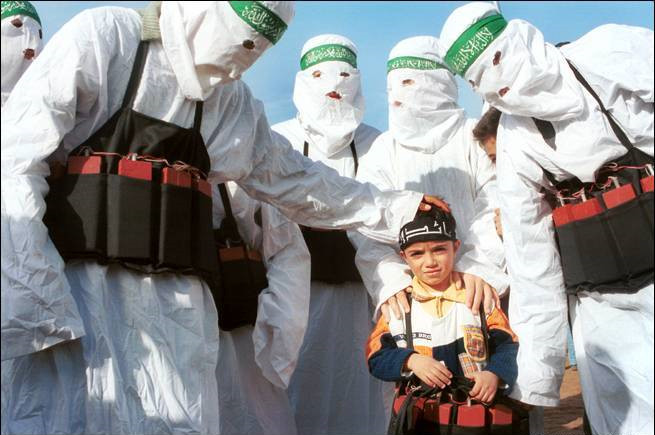 Twelve-year-olds don’t choose to become suicide bombers.
And true believers don’t send children as martyrs in place of themselves. The perpetrators of last week’s vicious attack on a Kurdish wedding in Turkey believe in nothing so much as violence as a means to their own power. It’s a sad sign of the times that we can almost admire the zealots of a few years ago who willingly gave their own lives for their ideals, no matter how convoluted those ideals may have been.
When fanatics eagerly give the last full measure of devotion — for which Abraham Lincoln praised the Union soldiers who sacrificed their lives at Gettysburg — we have to ask ourselves if we are prepared to sacrifice as much for our noble values as our enemies readily sacrifice in the name of terror.

Louisiana and the Waters of Life and Death
As residents across Louisiana struggle against catastrophic flooding, we should all take a few moments to contemplate how quickly nature can become our greatest adversary. Water is both the source of all life and the greatest destructive force on earth. I ponder the paradox in these reflections from after the Pacific Rim tsunami of 2005.
 Volcanoes. Hurricanes. Earthquakes. Fires. Tornadoes. Blizzards. Drought.
In a time when reports of terrorism have become all too common, it is sobering to consider the myriad ways nature possesses to inflict death and violence on a scale surpassing the most destructive instruments devised by man. Of all these, however, destruction by water, whether from the sea or from the sky, holds a unique terror in the scope and measure of its devastation.
Aside from the 150,000 lives already reported lost across nearly a dozen countries along the Indian Ocean, dehydration, disease and hunger threaten as many as 5 million more in the wake of the recent tsunami. And rare though tidal waves may be, the more familiar trial-by-water of floods has, with much greater frequency, left similar numbers homeless and in danger of starvation.
It seems ironic that water, the source and foundation of all life upon our planet, can become nature’s most malevolent instrument against the beings whose lives depend upon it.
Devastation by water occupies a prominent place in human history. Virtually every ancient culture records the tradition of a great flood that inundated the world, lending credence to the biblical account of Noah and the ark. Jewish tradition describes this not as a random event, but as a divine response to the corruption of mankind.
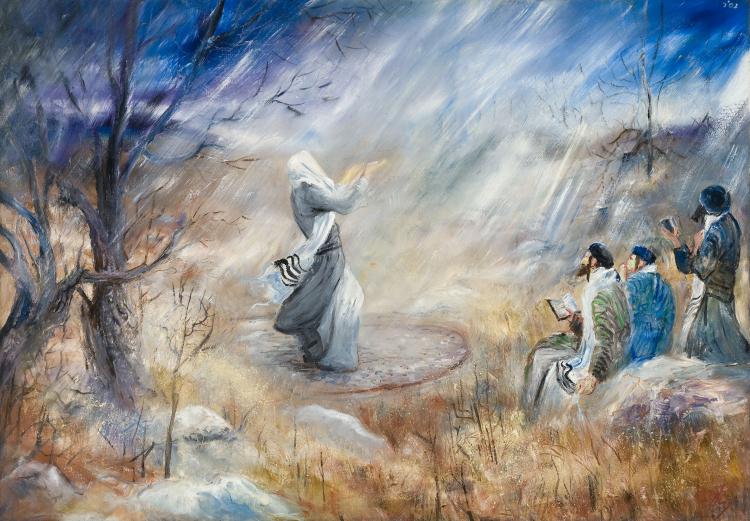
The Talmud, however, reports a much more enigmatic account of divine intervention through water. It was in a time of terrible drought that the Jewish people approached the sage Choni HaMagil and beseeched him to pray for rain on their behalf. When Choni’s supplications to the Almighty went unanswered, he drew a circle in the dust and stepped inside of it, vowing not to leave the circle until G-d bestowed rain upon His people.
Immediately, a fine mist settled upon the earth, too little to alleviate the drought but sufficient to free Choni from his vow.
Choni called out to heaven: “I asked not for this, but for a rain to fill all the wells and cisterns.” Immediately, raindrops larger than melons began to fall, wreaking destruction upon homes and fields.
 Again Choni called out to heaven: “Neither did I ask for this, but for a rain of blessing.” Immediately a normal rain began to fall, filling the wells and cisterns of the people as Choni had requested. But the rain did not stop, and soon the entire population of the land feared that they would drown in the rising waters.
One last time Choni called out heavenward: “Master of the World, Your people, Israel, whom You brought out from Egypt, can tolerate neither too much blessing nor too much misfortune.” Immediately the waters abated, and the people returned to their fields. From this time onward, people referred to Choni by the name HaMagil — the Circle-maker.
What was the point of G-d’s demonstration to the people of Israel? What did Choni mean that the people could not tolerate too much blessing? And why did Choni find it necessary to remind the Almighty, at this particular moment, that He had brought the Jewish people out from Egypt?
The Exodus from Egypt may be described, in commercial terms, as the largest loan ever extended in the history of man. During the generations of slavery in Egypt, the Jewish people had forgotten their Creator and lapsed into the same idolatries as their Egyptian masters. And although, to their credit, the Jews had guarded themselves against assimilation, this alone was insufficient to earn them the privilege of miraculous redemption. Nevertheless, G-d gave them an incalculable line of credit: Freedom from slavery, freedom from oppression, freedom to chart their own course into the future.
Moreover, He promised them immeasurable blessing and unbounded prosperity, on condition that they would repay their loan — repay it by living according to G-d’s law, repay it by rising above material pursuits and petty self-interest, repay it by using all the blessing that G-d would bestow upon them to aspire to moral, ethical, and spiritual perfection.
In this light, blessing may be understood as a double-edged sword. Wielded in one direction, it cuts down all enemies and obstacles that stand before us. Wielded in another, it obligates us to a standard of righteousness and moral behavior that we may find nearly impossible to meet.
This was the meaning behind the Almighty’s response to Choni the Circle-maker’s plea:
Two roads lie before My people, and it is their choice which to follow. One leads back to Egypt, back to the oppression of materialism and the slavery of self-indulgence, back to spiritual emptiness and the absence of all blessing. The other road leads forward, to spiritual fulfillment and spiritual greatness, if My people will only find within themselves the potential to seek greatness and discard all lesser goals. It is for this that I redeemed them, that they might cast off the chains of physicality and reach for the heavens.
 And this too was the meaning behind Choni’s appeal to the Almighty:
Master of the World, You brought your people out from slavery and oppression on condition that they would use their freedom and the blessings to strive for spiritual heights. Your people, however, have demonstrated from their beginnings that, whatever their potential may be, they still suffer from human failings and human shortcomings. They cannot tolerate too little material blessing, lest the struggle to survive overwhelms them and they abandon all higher aspirations. And they cannot tolerate too much blessing, lest they cower before the goal set for them and lose all hope of its attainment.
By all accounts, the world that we live in today enjoys a level of material affluence unattained and unimagined by previous generations. Such basic necessities as rapid transit, instantaneous communication, indoor plumbing, electrical lighting and refrigeration, which we take for granted, provide us with an ease of living simply unavailable to even the wealthiest, most powerful monarchs until the last century. The very existence of an “entertainment industry,” much less the staggering sums of money devoted to it, testifies to our abundance of resources — which is to say, our abundance of material blessing.
Nowhere does Jewish tradition teach the condemnation of wealth or of recreation.
Nowhere does Jewish law mandate the forcible redistribution of wealth from those blessed with good fortune to those less fortunate. But Jewish tradition does warn us of the responsibilities of prosperity. It warns us in the narrative of the flood, in the story of Choni HaMagil, and also in the Hebrew word for charity: tzedakah, derived from the word tzedek, or justice.
It is only just that those who are blessed share a portion of their blessing with their less fortunate neighbors. It is only just that, before overindulging in one’s own good fortune, he ponders why he deserves having received such blessing while his neighbor has not. And it is only just that he ask himself how, even in the absences of tax incentives or legal mandate, he might reach out with his blessing to ease his neighbor’s plight.
If the waters of the earth, the life-giving waters that are the source of our greatest blessing — life itself — have risen up to inflict enormous tragedy, swallowing human life and draining billions of dollars of aid to spare human suffering, we will all be remiss if we do not pause to consider whether we have used our blessings wisely, and what we must do to ensure that we will continue to deserve them.

Going all Waze at once
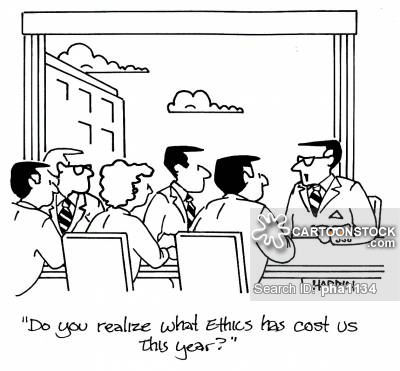
‘Do you realize what ethics has cost us this year.’
Driving in any unfamiliar city can be daunting, disorienting, and disconcerting. Driving in a foreign country can be downright dyspeptic. Driving in Israel can be a flirtation with catastrophe.
In some ways it’s better than it used to be. Traffic has gotten so dense that drivers simply cannot indulge the reckless habits that once prevailed. It’s hard to bob and weave when your car is stuck in gridlock.
But when the traffic starts moving, the experience can be harrowing, made all the more stressful as you try to find your way along unfamiliar boulevards and position yourself to make quick turns with little notice.
Thank goodness for Waze.
Just plug in your destination, follow the directions, and voila! Oh, sure, we made a few wrong turns, but even then Waze got us right back on track.
Most of the time.
Click here to read the whole article.
Hat tip: Rabbi Yehoshua Binyamin Falk
 Yonason Goldson