Home » Posts tagged 'Culture Wars' (Page 22)
Tag Archives: Culture Wars

Why Marriage Matters

From the United States Constitution to the French Revolution, from the Emancipation Proclamation to the 19th Amendment, from the Civil Rights Act to last week’s Supreme Court decision affirming the right to gay marriage, the world has taken (by a vote of 5 to 4) another great step forward on the road to universal equality and justice.
That’s what the pundits would like us to think. Except that it wasn’t a step forward.
And, more important, it was never about the right to marry…
As an institution, marriage created a moral structure upon which all other moral structures found purchase: Partnership, self-sacrifice and, perhaps most critically, respect for the natural boundaries and limits imposed by the design of the universe in which we live. Human beings took for granted the imperative to conform to nature’s laws and nature’s plan. Individual desire and ambition learned to submit to a higher reality and universal truths. Personal gratification was not the ultimate arbiter of right and wrong in a society that required cooperative spirit and collective commitment to ideals that extended beyond oneself.

“No Awareness” Zone?
From Stuff.co.nz:
 “A Belgian city has come up with a solution to the problem of pedestrians bumping into other people while sending text messages from their mobile phones.
“Antwerp has given smartphone users their own designated lanes, where they can walk while texting or looking at their mobiles without irritating or endangering others.
“The narrow corridors are marked “text walking lane” in English on a number of busy pedestrian shopping streets in the city centre.
“Negotiating the corners is likely to remain challenging for people whose eyes are glued to their phone screens.”
Philadelphia did this last April Fool’s Day as a joke. When life imitates art, should we laugh or cry?
The question answers itself: is there really anything funny about people too preoccupied to watch where they’re going who need the government to step in and protect them from themselves?

The Unfairness Doctrine
With the biggest FIFA scandal to date dominating the headlines, I’m revisiting this piece from a couple of years ago about the growing indifference to justice throughout the world community.
 There are certainly more important things than soccer to get worked up over — especially here in the United States, where we already have baseball, basketball, hockey, and (American) football.
Maybe that’s an argument in defense of referee Koman Coulibaly, who infuriated American soccer fans by disallowing a winning goal by team USA with no apparent justification. After all, it’s only a game. Wouldn’t all that passion be better directed against the gulf oil disaster or Iran’s nuclear weapons program?
In this case, at least, the Federation Internationale de Football Association (FIFA) might agree. According to the New York Times, FIFA president Sepp Blatter “does not want video replay or extra referees on the end line at the World Cup. He favors debate over decisiveness and human frailty over intrusive technology, thinking that subjectivity helps soccer more than it hurts.”
Now there’s an interesting philosophy: human error by judges, umpires, and referees enhances competitive sports. But don your body armor before making that suggestion to Detroit Tigers pitcher Armando Galarraga. Only two weeks earlier, you may remember, a blown call by umpire Jim Joyce on the last play of the game denied Mr. Galarraga baseball’s most coveted distinction — a perfect game.
In the aftermath, pundits have suggested that the baseball mishap did more for the sport than a perfect game ever could have. Mr. Galarraga was the model of graciousness, upset at being robbed but apparently harboring no resentment. For his part, Mr. Joyce appeared not only contrite but genuinely heartbroken. A week later, the league itself showed impressive quality of character when a hundred MLB players voted the repentant umpire the best in the game. All around, a sport that has been plagued with steroid and contract scandals produced extraordinary examples of dignity, restraint and — to revive an expression near to extinction — class.
In contrast, Mr. Coulibaly has yet to offer a single word of explanation, much less apology, for his inexplicable whistle-blowing. (However, mounting pressure may convince FIFA to reverse its own policy of refusing to comment on calls by the time this sees publication. Nothing challenges core values like bad press.)
But is it only a game? Every parent knows that the way children play reveals much about who they are deep down. It seems reasonable to assume the same about cultures: the way they play speaks volumes about their moral values.
MORE THAN A GAME
In American sports, everyone from fans to players to officials to high commissioners has weighed in on the use of instant replay to ensure the accuracy of calls at critical moments. Some argue that, in the interest of fairness, every available technology should be employed to ascertain the umpiric accuracy. Others are afraid that instant replay will slow down gamesalready mired in strategic interruptions and commercial breaks. But no one claims that accuracy doesn’t matter. And certainly no one has ever hinted that inaccuracy is good for the game.
What the Armando Galarraga incident so refreshingly demonstrates is that, to a large degree, Americans still care about facts and fairness. Umpire Jim Joyce acknowledged his mistake, expressed sincere remorse, and all was forgiven. What the Koman Coulibaly debacle indicates is that, to a large degree, the international community has lost all interest in truth and justice.
When such indifference to right and wrong confines itself to the playing field, we might pass it off as a sad but inconsequential character defect of sports celebrities. But this kind of skewed perception of reality long ago began seeping inexorably into the world of politics and social justice, most notably the assault by the community of nations against the State of Israel.
By all accounts, Israel should be the darling of the non-Arab world. Largely secular, the only democracy in the Mideast and the only Middle Eastern countryto have made concessions for peace, a socialist nation that has nevertheless become a burgeoning economic powerhouse, and a lone David surrounded by a hoard of Goliaths, Israel meets every criterion of European values. And yet, the European Economic Community and the European-dominated United Nations have, time and time again, cast Israel as aggressor and censured Israel for intransigence while ignoring facts and history that prove precisely the opposite.
Perhaps the United Nations should field its own soccer team. Perhaps Koman Coulibaly should seek nomination for the position of U.N. Secretary-General.
THE LAST EXILE
In his prophetic dream, the patriarch Jacob beheld celestial emissaries ascending and descending a ladder with its feet upon the earth and its top reaching the heavens. The sages of the Talmud teach that Jacob witnessed the guardian angel of Babylon go up seventy rungs and then descend, foreshadowing the Babylonian exile of 70 years. He then saw the guardian angels of Persia and Greece ascend 56 years and 180 years respectively, corresponding to the duration each would rule over the Jews. Finally, Jacob watched the guardian angel of Edom go up and up the ladder until he cried out to the Almighty, “Master of the World! Will this angel never come down?”
“Even if it reaches the gates of heaven,” replied G-d, “I will cast it down Myself,” implying that the nation of Edom would rule Israel until the arrival of the messianic era.
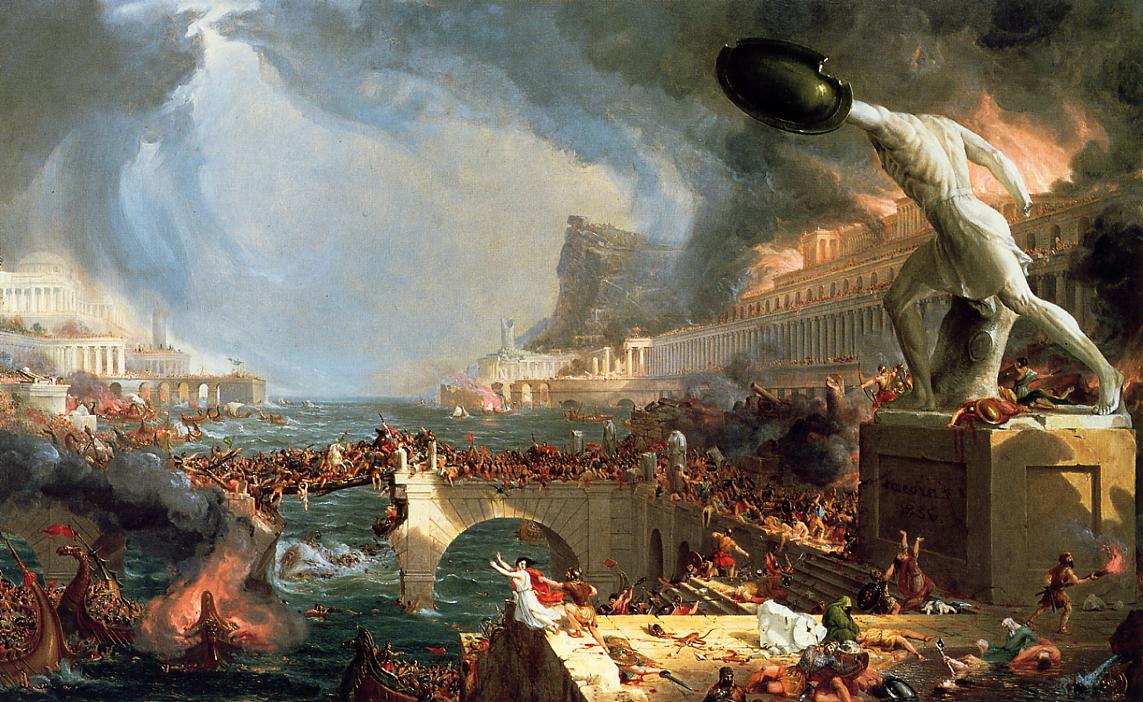 Nearly 2000 years ago, the sages identified the Roman Empire as the spiritual descendant of Edom, which was itself descended from Jacob’s wicked brother, Esau. But if the Roman Empire fell over 1500 years ago, how are we to understand the image of Rome’s guardian angel reaching the gates of heaven and surviving until the coming of the Messiah?
Esau was called Edom — meaning red — not because of his red complexion but because of his peculiar request that Jacob serve him “that red stuff,” by which he meant the bean stew he found his brother preparing when he came in hungry from the field. Color is the least intrinsic quality an object possesses, describing only the most external, cosmetic appearance without acknowledging function or purpose.
In this single moment, Esau revealed his defining quality as superficiality, the total lack of concern with anything other than outward appearances. And although the empires of Edom and Rome have long disappeared from the earth, the culture of superficiality that characterized them has become the salient characteristic of Western Civilization. In today’s culture wars, the final battleground between good and evil has become one in which evil claims to be good, conflating right and wrong with the empty sophistries of moral equivalence and political correctness, advancing arguments so thin and insubstantial that they fool no one who cares to look beneath the surface.
And yet, hardly anyone cares to look.
Soccer may be only a game, but it has become an international obsession. The contempt for truth articulated by its highest officials exposes a dangerous cultural bias and explains why the Europeans community would rather condemn the beleaguered nation of Israel than risk the consequences of antagonizing Israel’s belligerent and oil-rich enemies.
Jews around the world can take some comfort in the ability of America and Americans to still respond with passion in defense of truth. At the same time, the willingness of the current administration and so many in the media to rush to judgment against Israel offers unsettling evidence that we are approaching the fulfillment of the prophecy that, at the End of Days, Israel will stand against the world alone.
Originally published on Jewish World Review.

9 Ways to Keep your Integrity
 Everyone likes a good story.
I have my share to tell, having spent my prodigal youth hitchhiking cross country and circling the globe, living abroad for a decade, and teaching high school for over 20 years.
But it still happens that friends and neighbors occasionally respond to my recollections by asking: “Did that really happen?”
Read the intro to Proverbial Beauty at Amazon.
Are my tales so truly unbelievable? After all, I never claim to have flown to the sun with Icarus, to have crossed the Rubicon with Julius Caesar, or to have followed Teddy Roosevelt’s charge up San Juan Hill.
No, I’ve merely sought to pluck insights from slightly quirky encounters and offer a bit wisdom from my observations on the human condition.
“I loved your article,” someone will say. And then, almost predictably: “Did that really happen?”
I even get it from my mother.
The new normal?
To be honest, it comes as no surprise. After all, honesty has seen its market value tumble over the years with countless reports of plagiarism, factual carelessness, and blatant fabrication.
But as troubling as such prevarication may be from the media, it’s far more disheartening when it becomes the norm among our political leaders.
The sad truth is that we expect our politicians to lie. But the brazenness with which they conjure up easily verifiable falsehoods grows ever more astonishing.
Once integrity disappears, the only motive not to lie is fear of not getting away with it — and get away with politicians have, in a society that has grown indifferent to lying.
But there is something we can do. Here are 9 ways we can prevent the erosion of our own integrity:

Jewish Billionaires put their Mouths where their Money is
Jewish billionaires Sheldon Adelson and Haim Saban have organized the first meeting of its kind, bringing together 50 Israeli and pro-Jewish corporations to push back against anti-Israel boycotts (BDS).
The real tragedy is that their efforts are necessary. The superficiality that typifies the Western World is self-evident with even the most feeble efforts to scratch the patina of political correctness that turns perpetrators into victims and victims into provocateurs.
 Shame on those who perpetuate the myth that Israel is the source of Arab suffering. Shame on those who provide the millions in aide that Gaza Arabs never see because their leaders spend it on high-tech tunnels for attacking Israeli civilians. Shame on those who caused hundreds of West Bank Arabs to lose their jobs by pressuring Soda Stream to move their production plant back across the “green line.” Shame on those who don’t hold the leaders of surrounding Arab nations accountable for ignoring the plight of Arab refugees for 60 years so they can vilify Israel for their own criminal negligence.
And shame on Jimmy Carter and his ilk who perpetuate the demonstrable lie that Israel is an apartheid state.
Would an apartheid state produce an Arab citizenry that has a higher standard of living, literacy, and longer life expectancy than that of the surrounding Arab nations? Would it have permitted a sitting Arab Supreme Court justice, Arab ministers, generals, ambassadors, and consulate-generals, an Arab Israeli national soccer team captain , and an Arab Miss Israel?
But ideologues never let facts get in the way of ideology. The successful western world must be held responsible for every evil in the world, even as radicals sacrifice their own lives to destroy the societies that allow well-meaning fools to enable the agents of their own self-destruction.
Speak Truth to Powers
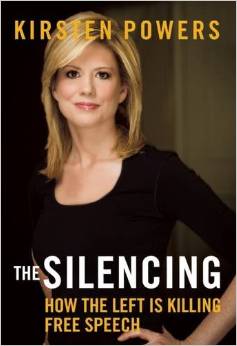 How refreshing that there are people like Kirsten Powers in the world.
In her new book, the outspoken, unapologetic liberal Democrat has taken aim at the militant search-and-destroy tactics employed by many liberals to shut down civil discourse and bully ideological opponents into submission.
Not surprisingly, many on the left have turned their attacks upon Ms. Powers and her book, proving her point by doing exactly what she accuses them of doing.
The intellectual laziness of groupthink lies at the heart of the deep divisions that are tearing this country apart. If more people would listen — listen to each other, and listen to Ms. Powers’s message — America might start turning back toward a culture of problem-solving and away from character assassination and political dogma.

How will we survive the drone culture?
I haven’t read this entire excerpt, but the rise of the drone raises more questions than the obvious ones concerning basic morality and “rules of engagement.”
 At the end of the movie classic “Patton,” the general responds to a reporter’s question about the “wonder weapons” of the coming era:
“Wonder weapons? By G-d, I don’t see the wonder in them. Killing without heroics? Nothing is glorified? Nothing is reaffirmed? No heroes, no cowards, no troops, no… generals. Only those who are left alive, and those who are left… dead. I’m glad I won’t live to see it.”
The message here is not the glorification of warfare. What Patton understood is that conflict brings out the true essence of a person. Cowards are revealed as cowards, providing the opportunity for reappraisal. Heroes are not merely revealed… they are created through their engagement on the field of combat. The heat of battle requires them to tap into unrealized potential.
This doesn’t require a battlefield of armies. It does require that we take up arms against our lesser selves and strive to conquer our baser impulses and inclinations. It demands that we grapple with the complex issues of good and evil and not take refuge in political slogans or groupthink.
In a culture of automation, we have a harder fight not to become automatons ourselves. We can comfortably join the army of drones, or we can meet the challenge, rise to the occasion, and emerge victorious as heroes.

Collateral Damage from the Grievance Industry
In a deeply insightful column, Thomas Sowell offers an observation that should be obvious to everyone:
 “[C]ommunities scattered across the country were disrupted by riots and looting because of the demonstrable lie that Michael Brown was shot in the back by a white policeman in Missouri — but there was not nearly as much turmoil created by the demonstrable fact that a fleeing black man was shot dead by a white policeman in South Carolina.” (Emphasis added.)
Mr. Sowell goes on to make the point that the grievance industry cares about neither truth nor justice. A guilty white cop indicted for killing an innocent black man isn’t newsworthy; an innocent white cop exonerated for killing a black criminal is cause for moral outrage.
And this is what is all comes down to: self-serving leaders and rabblerousers want outrage. They want to rail against the unfairness of it all, against the gap between rich and poor, against the indignity of stop-and-frisk, against the “legacy of slavery.” What they don’t want is to search for solutions, much less find them. That would mean an end to the victim-culture that has allowed them to exploit the disadvantages of their own brethren for their own profit and power.
“In a world where the truth means so little, and headstrong preconceptions seem to be all that matter, what hope is there for rational words or rational behavior, much less mutual understanding across racial lines?”
Let’s hope Mr. Sowell’s lament isn’t the sad epitaph for any hope of achieving, or restoring, a civil society.

Don Draper and the Illusion of Influence
Mad Men is coming to an end, concluding a luminescent seven-season run that began in 2007. But the show was into its third season before I first heard the name Don Draper.
I guess that proves hopelessly I’m out of touch with contemporary culture — a term that has increasingly become an oxymoron.
 Nonetheless, I can’t say that I was embarrassed in 2009 to have never heard of the personality voted Most Influential Man in America. What mortified me far more was to find myself living in a society that could consider a fictional character to be its most significant public figure.
I had to strain my memory to place that year’s first runner-up, track star Usain Bolt. I’m still straining my powers of reason to comprehend why a Jamaican sprinter should have been considered the most influential real person in United States.
Number three on the list was President Barack Obama. I had heard of him, and it’s hard to argue that the president is not supremely influential in his own country, no matter what one may think of his policies.
The rankings lay in the hands of readers polled annually by AskMen.com, a website (of which I had also never heard) devoted to men and their lifestyles. Topping the list as well were, in order: Facebook CEO Mark Zuckerberg, American Idol judge Simon Cowell, late pop star Michael Jackson, Apple CEO Steve Jobs, tennis champion Roger Federer, quarterback Peyton Manning, and Ultimate Fighting Championship president Dana White.
But grabbing the most votes was Don Draper, lead character in the Emmy-winning drama Mad Men. And for the first time in the poll’s history, the most influential man in American does not actually exist.
According to Reuters, AskMen.com editor-in-chief James Bassil explained the vote this way: “One of the big themes this year was that men really want to take on these traditional roles — as fathers, working men, provider at home, leader at the office. I think they are yearning for what is a solid past.”
That would be a comforting thought … if it were actually true. Indeed, one wonders if Mr. Bassil has watched the show or read his own magazine.
The AskMen.com website had this to say: “[Draper is] a postwar archetype, both a brilliant career man and a temptation-swayed philanderer who sincerely wants to be a family man… permanently conflicted over how to reconcile his morals and his desires.” The website for Mad Men describes the show as a “sexy, stylized and provocative drama [that] follows the lives of the ruthlessly competitive men and women of Madison Avenue advertising, an ego-driven world where key players make an art of the sell.”
Were that not enough to debunk Mr. Bassil’s rose-colored analysis, the list of the top ten winners is more than enough. Celebrities, athletes, billionaire businessmen, and an ideologically far-left president hardly reflect a trend back toward traditional values.
 In truth, the evidence suggests just the opposite, that Americans are increasingly obsessed with glitz and glamour, with power and wealth, with conquest and ego-gratification. The sad moral of the story was that the poll-winners are genuinely influential in steering our society toward superficial hopes and unrealistic dreams. How fitting that the most influential man was not only a fictional character, but a profoundly flawed and ambivalent one at that.
The bright side of the story, however, is that the poll revealed the attitudes and aspirations not of Americans as a whole but of AskMen.com readers. If the publication is anything like its forerunners, Playboy and GQ, it is hardly a fair representation of the country. Indeed, it would seem to say more about the inner conflict of testosterone-driven alpha males than those typical family men who may already be living — not merely yearning for — traditional values.
I never have watched the show, so I can’t comment on where the main character’s ambivalence has led him over the years. But it seems a good bet that those acolytes of Don Draper (and his real-world alter-egos) are likely to end up leading similarly conflicted lives, following him into the oblivion of the world of illusion.
Whereas those who live their lives according to traditional values understand that it is those very values that teach us the difference between good and evil, between truth and falsehood, between reality and illusion. Without the fantasy of Hollywood or the glamour of Madison Avenue, theirs are the lives of real substance and enduring reward.

Fighting for whose rights?
Here we go again.
Socrates gave up his life for the ideal of pure wisdom. Galileo was threatened with torture for his commitment to scientific truth. Nelson Mandela spent 27 years in prison for his campaign to end apartheid.
 And now, attorney Steven Wise is seeking to be the next torchbearer for virtue and justice by seeking legal personhood for two chimpanzees currently deprived of their primatial integrity by incarceration in the anatomy department of New York’s Stony Brook University. Mr. Wise has even found a judge willing to hear his case.
This is a natural outgrowth of our collective obsession with rights and entitlement which has, proportionally, shrouded our notion of personal responsibility. A healthy culture recognizes that it has a moral obligation to show compassion to all living creatures. But as the very concept of morality flickers and fades from social consciousness, only the assertion of rights prevents the rapid disintegration of society.
And as we lose our sense of responsibility, the distinction between man and animals grows harder to define until, ultimately, it all but disappears. In California, the “rights” of a little fish trump the welfare of humans: crops wither in arid fields during the worst drought on record as the state dumps trillions of gallons of fresh water into the ocean.
It’s worth noting that in 1933, two years before the Nuremberg Laws stripped German Jews of both civil and human rights, the Nazi government passed some of history’s most progressive laws for the protection of animals, legislation considered emblematic of the highest moral values of a people.
Elevating animals to the level of human beings inevitably results in human beings acting worse than animals.
 Yonason Goldson