Home » Posts tagged 'Culture' (Page 22)
Tag Archives: Culture

Before the Flood
 “Things will last my time,” said the Marquise de Pompadour, “But after me, le deluge.”
More prophetic words were never spoken. The mistress of Louis XV foresaw clearly the collapse of the French monarchy and the flood of violence and chaos that would engulf the next generation. But that was the future’s problem. Why should she care?
In some ways, her brutal disregard for future suffering is more palatable than the utopian fantasies and rhetorical flourishes of modern leaders. At least the Marquise knew what lay ahead, and at least she didn’t pretend that she had an easy fix to prevent the future from arriving on tomorrow’s doorstep.
But today we face an impending crisis no less ominous. Our expectations for national leadership have sunk so low that we are willing to overlook pathological, craven, and unapologetic dishonesty from one presidential candidate and volcanic, adolescent recklessness from the other. One can scour the nation’s capital without turning up even a smidgen of character and statesmanship, evidence of a political culture rife with cronyism, gridlock, and groupthink.

The Zen of Tom Harmon
 Palmer: So what do I do?
Gibbs: Give her what she wants.
Palmer: But I have no idea what that is.
Gibbs: Say hello to the rest of your life, Jimmy.

Tony Soprano Redux
 A good friend of mine, who is usually more clear-headed, sent me a slimy little video asserting that character doesn’t matter, since both FDR and Winston Churchill smoked and drank while Adolf Hitler was a teetotaler and a vegetarian. His point was that Donald Trump’s crude, impulsive, petty, and narcissistic behavior has no bearing on his fitness for office.
While it is true that people are complicated, and that no one is completely virtuous or completely lacking in virtue, the indulgence in moral relativism is particularly galling when it comes from the right, after so many years of denouncing it as the Kool-Aid of choice among the left.
But the blurring of lines has been going on for a long time. It particularly hit its stride about ten years ago with the success of the Sopranos, which prompted an op-ed that I revisit here.
Psychoanalyst Glen Gabbard, author of The Psychology of The Sopranos: Love, Death, Desire and Betrayal in America’s Favorite Gangster Family, has an interesting take on the phenomenon of Tony Soprano.
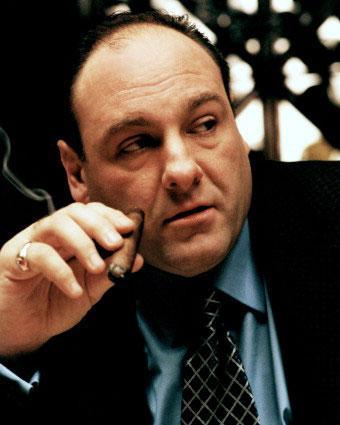 The success of The Sopranos, it seems, depends not on Tony Soprano the mobster, but on Tony Soprano the psychoanalysis patient. Whereas in daily life, Tony is a crook, a thug, and a murderer, on the couch Tony is a regular guy, with the same hopes, dreams, problems, and anxieties as the rest of us.
Dr. Gabbard explains that people love to root for Tony the regular guy to prevail over Tony the violent criminal; they want more than anything to be able to find a noble everyman at the heart of the worst of the worst and the lowest of the low.
Simply stated, viewers don’t want to believe that anyone is really evil.
This is a remarkable turnabout from the early 80s when everyone’s favorite television creep was J.R. Ewing on Dallas. Back when “Who shot J.R.?” was on everybody’s lips, it wasn’t because we wanted to see the would-be assassin brought up on charges — we wanted to see him handed the key to the city. We didn’t want to understand J.R. — we wanted to hate him. We loved to hate him.
 J.R. never killed anybody, never even beat anyone up, yet we cheered from our couches when he got what was coming to him and hoped desperately that his every nasty scheme would fail. If so, why do viewers in record numbers forgive everything for Tony Soprano, the Godfather who terrorizes and murders for fun and profit, just because he worries about his marriage and his children? C’mon, even J.R. loved his daddy.
Perhaps there’s no better barometer for the moral pressure of society than our relationship with television’s most popular characters. When we cheer for the good guys and boo the bad guys, isn’t it because of our desire to see that justice is done?
But when we sympathize with a violent criminal, when we identify with him because he cares about his kids just as we do, isn’t it a sign of abandoning the commitment to differentiate between right and wrong?
The job of making moral decisions, of balancing right and wrong in complex circumstances, is no simple business. But instead of challenging us to recognize that Tony is a villain in spite of his human side, The Sopranos (and, more generally, the entertainment industry) manipulates us into identifying with Tony’s humanity so that we overlook his wickedness.
Based on Dr. Gabbard’s assessment, it seems that we yearn to deny that genuine evil walks this earth. Indeed, it may be admirable to look for the good in all people and give our neighbor the benefit of the doubt, but not to the exclusion of recognizing that sometimes there is no doubt, that what little good remains in some people has been hopelessly buried under a mountain of evil. The Hitlers, Stalins, and Ahmadinejads of the world may love their children and may have had troubled youths, but evil remains evil whether we choose to look it in the face or to bury our heads in the sand.
Too often, it seems, we avoid looking evil in the face at any cost. It should come as no surprise, therefore, that a growing element in our society blames the United States for Pearl Harbor, blames Israel for Palestinian suicide bombers, blames all of Western Civilization for September 11. But making excuses for evil does not make evil go away.
It just keeps coming back, each time bolder and more brazen than before.
The Talmud warns us to distance ourselves from a bad neighbor and not to associate with a wicked friend. Even if he loves his kids. Even if his name is Tony Soprano. Perhaps, especially if his name is Tony Soprano.
Originally published in 2007 by the St. Louis Post-Dispatch, Jewish World Review, and Aish.com.
Look in the Mirror, Mr. President
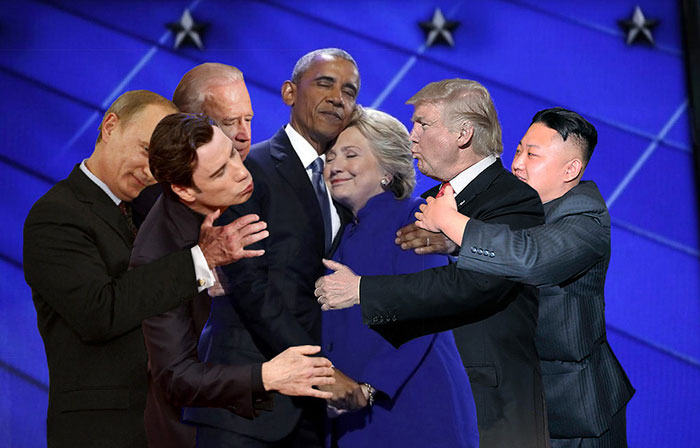 “The Republican nominee is unfit to serve as president.”
Such is the gospel according to Barack Obama, who went on to defend his verdict by citing “the repeated denunciations of his statements by leading Republicans.”
He’s right, of course. But his critique might carry more weight if it were not a classic case of the pot calling the kettle black.
(OMG, did I just write that?)
Before his very public embrace and endorsement of Hillary Clinton at the Democratic convention, Mr. Obama might have taken a look at the recent incendiary assessment of Ms. Clinton by NYT columnist Maureen Dowd, who’s about as far to the left as one can get without falling off the edge of the earth.
Here are a few choice quotes:
[The Clintons’] vast carelessness drags down everyone around them…
In a mere 11 days, arrogant, selfish actions by the Clintons contaminated three of the purest brands in Washington…
Hillary willfully put herself above the rules — again — and a president, campaign and party are all left twisting themselves into pretzels defending her.
The Clintons work hard but don’t play by the rules. Imagine them in the White House with the benefit of low expectations.
If even the most ardent defenders of liberal ideology give Ms. Clinton a failing grade in character, surely that must call into question her credibility as an aspirant for the country’s highest office.
So answer us this, President Obama: how can you, with a straight face and in all earnest, chide Republicans for not rejecting an unfit candidate when you so brazenly refuse to do so yourself?

One Cheer for Tim Kaine
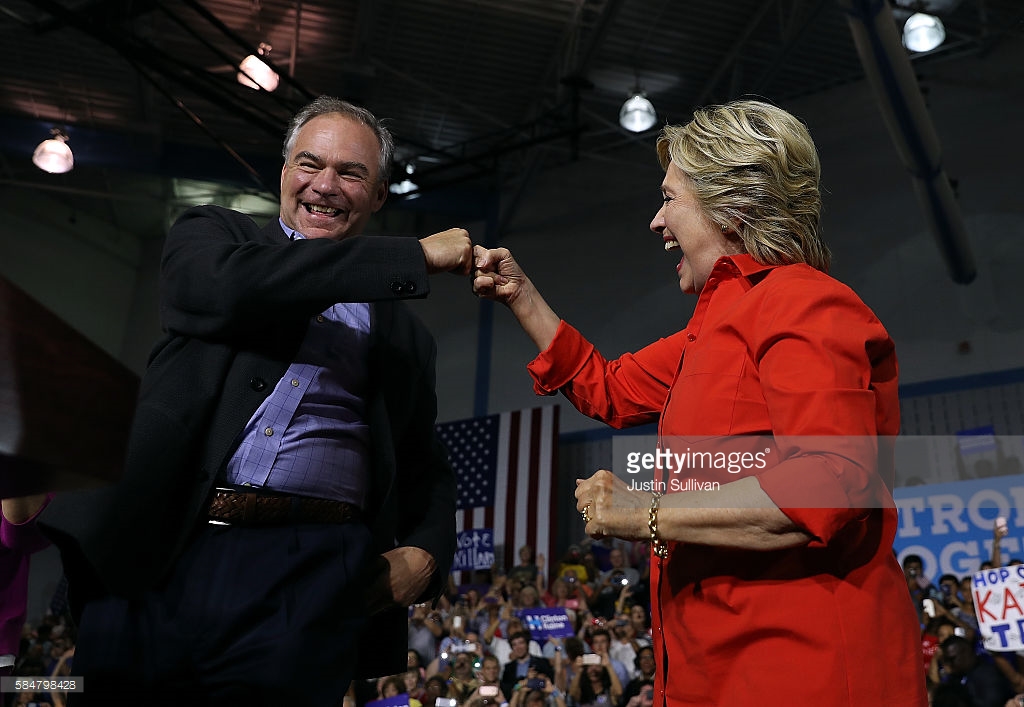
A few election cycles ago, a politician I greatly admired was tapped as running mate for a nominee I did not so greatly admire. What followed was a classic example of what is commonly known as the Waffle.
Prior to accepting the vice-presidential nomination, Mr. Waffle met with the presumptive nominee to discuss their respective positions and differences, of which there were more than a few. The future vice-presidential candidate emerged from the meeting and announced to the press that, after a 45 minute-long meeting, he had been convinced to reverse his position on all points of disagreement and now, wholeheartedly, supported the nominee’s entire platform.
I’ll take my Waffle with syrup, please.
At the time, I wasn’t sure what was more disheartening: that a man I admired could so easily abandon his own convictions, or that he and his team believed it would be politically advantageous to do so. In either case, it was a sad day for integrity.
That’s why I have to tip my hat to Tim Kaine.

Between Heaven and Earth
Everyone I see should be smiling. A few of them are. Most of them aren’t, and I feel sorry for them, caught up in the distractions of earthly existence and overlooking the miracles that surround them.
Such is the human condition: the eyes betray the soul, and the heart grows deaf to its own inner voice, which vanishes into the rumble of routine that drums out the exhilaration of each new moment.
It should be easier here at the eye of the universe, and indeed it is. But easier is a relative term, and a hundred pounds might as well be a hundred tons when our muscles have atrophied from disuse. Just the same, in the absence of spiritual discipline, spirituality itself remains a cliché, a meaningless abstraction or, at best, a mere footnote in the narrative of life, an asterisk relegated to indices of the Sabbath, the Festivals, and the House of Worship.
Such an insidious lie. Such an insipid deception.

The Jewish liturgy begins each day with a series of 15 blessings acknowledging the gifts of fundamental existence and identity. How fortunate we are to have eyes that can behold the beauty of our world, limbs that can carry us to the corners of the earth, minds capable of discerning light from dark and good from evil; how reassured we are to commit ourselves to a higher purpose, to recognize that path we are meant to follow, and to trust the guiding Hand that gently steers us toward the fulfillment of our destiny; how much reason we have to rejoice that we are able to master our own passions, to summon the strength to meet failure with determination, and to discover new inspiration everyday amidst the monotony of life in the material world.
Yet still we forget. Even here in this place where heaven and earth kiss, even here at the focal point of human history, human nobility, and human aspiration. Too much light can blind even more effectively than too much darkness.
In the Old City of Jerusalem, the center of Creation, and in the ancient village of Tzefat, home of the greatest kabbalists of the last 500 years, the tension between the past and the present gives way to a supernal harmony that radiates from every rock and tree, that grows stronger as you turn every corner and pass through every archway. The voices of ages gone by whisper always in your ear, if you remember to listen for them.
Click here to read the whole essay from this month’s The Wagon Magazine.

A Tale of Too Many Egos
 This isn’t about the 2016 presidential campaign. It’s not about the candidates or the conventions; it’s not about about political ideology or the political process.
It’s all about We The People.
But that requires talking about — at least briefly — the candidates I’d rather not talk about.
Some of us had dared to hope that Donald Trump, after securing the Republican nomination, would disclose that it had all indeed been an act and that he was ready to start acting like an adult. After all, he’s a super-successful billionaire real estate mogul. And he has such great kids. Surely, he’s capable of acting presidential.
Ah, hope springs eternal.
Then the ghost of Ted Cruz reappeared. To be fair, Mr. Trump has a legitimate grievance against Mr. Cruz, who should have either endorsed his former rival or declined the invitation to speak from the convention pulpit. As a career politician, Senator Cruz must understand that the purpose of a national convention is to inspire party solidarity, not to posture for the next election cycle. Mustn’t he?
Of course, life isn’t any better in Philadelphia, where DNC head Debbie Wasserman-Schultz finally agreed to disappear into the night in exchange for one last grandstand, after she was caught exploiting her position to skew the supposedly even-handed primary process in favor of Hillary Clinton.
Not than anyone was surprised. Whatever your political bent, principles have largely become a thing of the past.
That may be because too many Americans have no notion of the values on which this country was founded: Equal opportunity, equal rights, and equal protection under the law. These do not ensure equal wealth or power. But they are part of a culture that once recognized a moral, as opposed to a legal, commitment to place the lowest rung of the ladder of fortune within reach of its most downtrodden citizens, to protect the minority from the tyranny of the majority, and to shape a society bound together by commitment to higher values and national destiny.

The Continuing Culture of Violence
 I’ve had too many opportunities to repost this article. Violence begets violence, and as chaos becomes the new normal we have to find a way to restore order and civility to our societies. If we do, we can make Ft. Myers and Munich and Dallas and Boston nothing more than the names of cities once again.
https://yonasongoldson.com/2015/05/18/remembering-the-boston-bombing/
There’s still time for real change

Highly principled, hard as nails, even-keeled, dedicated to higher values, devoted to the welfare of the people he serves, and fiercely loyal to those who serve under his command.
If he’s not available, I’d settle for Tom Selleck. Like Ronald Reagan, at least he would know how to act like a president.
Crossing the great divide
 Listen in on my interview with Clint Bellows last week discussing the challenges facing Israel and America. Interview begins at about 49:00.
 Yonason Goldson