Home » Posts tagged 'Culture' (Page 30)
Tag Archives: Culture

Affluenza: Nothing new but the name
 Some verbal atrocities are either too offensive or too absurd to ever be forgotten. Like Jonathan Gruber’s candid admission that “the stupidity of the American voter … was really, really critical for [Obamacare] to pass.” Or Brian Williams misremembering that he had been shot down in a helicopter. Or Al Gore’s claim that he invented the internet (although, in all fairness, that was not quite what he said).
But few violations of common sense and common decency compare to that of Jean Boyd, the judge who concluded that probation and rehab were sufficient punishment for Ethan Crouch — after he pled guilty to taking the lives of four people while driving drunk — because he was a victim of affluenza.
Now, two years later, after Ethan Crouch has violated his parole, fled to Mexico with his mother, and finally ended up back in custody, the Washington Post would like us to reconsider whether the diagnosis is really so ridiculous after all. Rallying experts to support his case, Post editor Fred Barbash suggests that affluenza may indeed be an authentic malady, citing ASU professor of psychology Suniya S. Luthar and Barry Schwartz of Swarthmore College:
“High-risk behavior, including extreme substance abuse and promiscuous sex, is growing fast among young people from communities dominated by white-collar, well-educated parents. These kids … show serious levels of maladjustment as teens, displaying … marijuana and alcohol abuse, including binge drinking [and] abuse of illegal or prescription drugs.”[What also stands out] is the type of rule-breaking – widespread cheating and random acts of delinquency such as stealing from parents or peers among the affluent, as opposed to behavior related to self-defense, such as carrying a weapon, among the inner-city teens.”
“[What also stands out] is the type of rule-breaking – widespread cheating and random acts of delinquency such as stealing from parents or peers among the affluent, as opposed to behavior related to self-defense, such as carrying a weapon, among the inner-city teens.”
And finally: Serious depression or anxiety among affluent kids is “is two to three times national rates.”
No arguments from this quarter. But what does not appear in Mr. Barbash’s lengthy commentary is even the most meager attempt to identify why affluence produces teenage miscreants. What is it about growing up with every possible advantage that predisposes so many children to criminally irresponsible behavior?
The answer is quite simple.
State of the Union: Four Faces of Leadership
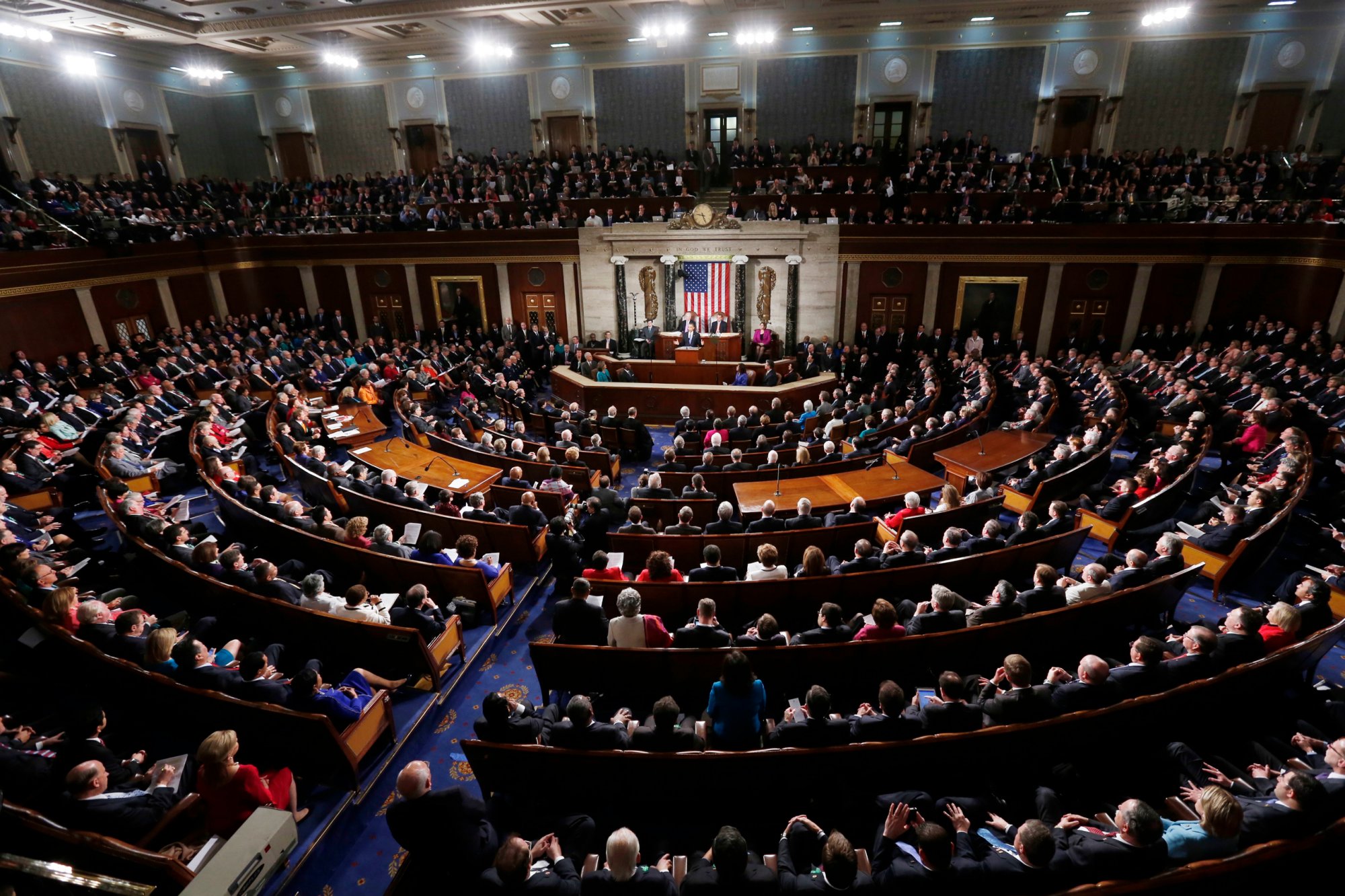 If we need another example of how upside-down our culture has become, we only have to look at the hype leading up to tonight’s State of the Union address by soon-to-be Former President Barack Obama. Even as the pundits all agree that the speech will be largely irrelevant and predictable, they can find little else to talk about.
Mr. Obama is expected to tell us how wonderful things are, how many of his goals he has achieved, and how much the quality of our lives has improved since he took office. The success of such an approach depends upon one of three factors:
- that his claims are actually true;
- that he can convince the people that his claims are actually true;
- that he can pound home the message (with the cooperation of an obsequious media) until people think there must be something wrong with them if they don’t believe it.
Whether the president succeeds or not remains to be seen. But it’s illuminating to compare his style to other presidents and presidential hopefuls, past and present.

Sean Penn — the twelfth monkey?
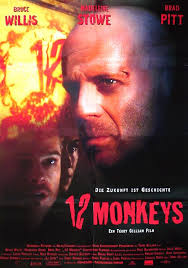 It may be the real-world incarnation of 12 Monkeys, the cult flick in which Bruce Willis goes back in time to save mankind and inadvertently causes the holocaust he is trying to prevent.
Sean Penn has traveled far and wide to uncover the warm, fuzzy side of such political personalities as Hugo Chavez and Raul Castro. We can only speculate on the motives behind his latest adventure, an elaborately staged meeting with El Chapo, the infamous Mexican drug kingpin Joaquin Guzman, who was recently recaptured after escaping from his maximum security prison cell.
Irony of ironies, it was Sean Penn himself who inadvertently led authorities to Guzman’s location. And although Mr. Penn has had little to say about his role in the apprehending of El Chapo, it’s tantalizing to wonder whether he might seek help from Bruce Willis to travel back in time in hope of undoing what he has done.

The Intern
 Trans-Atlantic flying has gotten a little more tolerable with the almost limitless supply of movies on each passenger’s personal screen. All the more so when you come across one of those rare productions that provide everything you could possibly want from a movie.
The Intern, starring Robert DeNiro and Anne Hathaway, showcases Hollywood at its best. It’s clever, it’s clean, it carries you along effortlessly and leaves you happy and hopeful that maybe, just maybe, the world is not tottering on the brink of cultural implosion after all.
Robert DeNiro is eminently believable as a 70-year-old widower who finds himself working for an edgy, high-tech start-up and turns the business on it’s head with his old-fashioned work ethic and traditional, common sense values. Without sermonics or sentimentality, the film endorses the follow-your-dream mentality while simultaneously deflating the myth that you can have it all.
Loyalty, self-discipline, personal responsibility, and the wisdom of experience, all in a major motion picture. Who woulda thought?

Justice in Oregon — Color Blind and 20/20
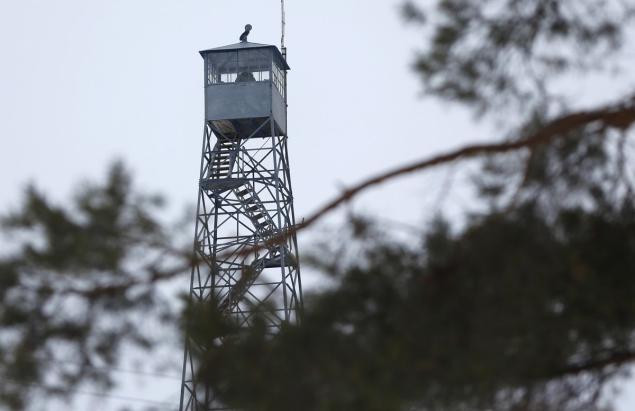 A broken clock is right twice a day and, gratefully, the justice department has found the sweet spot — at least for the moment — in Oregon.
Certainly, the armed occupation of a national wildlife refuge is cause for concern. But it is not cause for panic and, in light of past notorious government interventions, definitely not cause for military confrontation.
In both the 1992 Ruby Ridge, Idaho, incident and the 1993 Branch Davidian raid in Waco, Texas, the level of intervention was clearly disproportionate to the danger posed and the resulting bloodshed largely indefensible. This is not to say that the government did not have just cause; rather, it failed to employ that resource that is more endangered than any other: common sense.
3 people died at Ruby Ridge; 76 died at Waco.
It’s heartening, therefore, that authorities are approaching the current crisis near Burns, Oregon, with circumspection. Of course, they can’t ignore the occupation. But with no one in danger, a wait-and-see strategy is the best of all available options.
The broader relevance of the story arises from the inevitable accusations of racism by leaders in the black and Muslim communities. It’s only because the so-called Citizens for Constitutional Freedom are white, they say, that the government has not charged in with guns blazing.
Which is, of course, pure nonsense. Two dozen right-wing trespassers in the middle of nowhere is hardly comparable to Ferguson, Missouri, or San Bernardino, California.
The response is different because the situations are different. And in this case, stuck between the real fears that inaction will embolden extremists to further acts of defiance while over-reaction will provide the opportunity for martyrdom, wait-and-see offers the best possible compromise between unattractive alternatives.
It’s also arguable that the occupiers have legitimate grievances against government overreach, which has grown into a systemic malady, evidenced by a rash of executive orders and a culture of bureaucratic strong-arming. Compared with the nebulous jeremiads of the Occupy Wall Street crowd and, more recently, students at Yale and the University of Missouri, the very real plaints of the Oregon occupiers appear level-headed and downright mainstream.
Competent leadership is characterized by the ability to gauge every situation according to its unique combination of factors, risks, and potential consequences. One-size-fits-all solutions rarely prove effective, and accusations of inconsistency are childish at best, opportunistic at worst. What we need most in these troubled times is cool-headed calculation that looks to strike the sanest balance between principled action and pragmatic compromise.
When we start demanding that level of aptitude and integrity from our leaders, maybe we will find ourselves with leaders worthy of our confidence and trust.

8 Choices for Making a Happier Life
I’m a big fan of Malcolm Gladwell. His particular genius for collecting data and weaving together fresh insights has produced a wealth of practical wisdom to help us improve the quality of our lives.

But nobody’s perfect.
I recently came across Mr. Gladwell’s 2004 Ted Talk, in which he recounted the career of one Howard Moskowitz, a psychophysicist whose market research for Pepsi Cola, Vlasic Pickles, and Prego Spaghetti Sauce — beginning back in the early 70s — changed the food industry forever. It might seem obvious to us with the wisdom of hindsight but, to make a long story short, Howard Moskowitz discovered that there is no perfect pickle, no ideal type of cola, and no universal favorite recipe for spaghetti sauce.
How big a deal was this? I’ll let Mr. Gladwell explain:
Everyone else in the industry looked at what Howard had done, and they said, “Oh my God! We’ve been thinking all wrong!” And that’s when you started to get seven different kinds of vinegar, and 14 different kinds of mustard, and 71 different kinds of olive oil. And then eventually even Ragù hired Howard, and Howard did the exact same thing for Ragù that he did for Prego. And today, if you go to a really good supermarket, do you know how many Ragùs there are? 36! In six varieties: Cheese, Light, Robusto, Rich & Hearty, Old World Traditional — Extra-Chunky Garden.
All well and good. Now we can all have exactly what we like all the time, without sacrifice, without compromise, without effort.
But then Mr. Gladwell continues, moving on from tomato sauce to mustard. And it is here that Malcolm Gladwell exits the highway of reason and turns onto the backstreets of phantasmagoria.

Donald Trump: Obama 2.0
A magic rests on the lips of the king;
Let his mouth not betray him in judgment.
~Proverbs 16:10
 However improbable it seemed at the start, it’s not hard to understand the initial popularity of Donald Trump. In an age of mealy-mouth, equivocating, do-nothing, business-as-usual, avaricious politicians, many found it refreshing to have a larger-than-life presence who seemed to speak his mind and didn’t pander to popular opinion. But by now the flirtation should have revealed itself for what it is — a cheap one-night stand with no basis for a solid relationship.
Donald Trump represents everything that is wrong with this country: arrogance, self-promotion, pettiness, bellicosity, irresponsibility, bigotry and, despite his hugely successful self-branding, dishonesty and insincerity. In truth, Donald Trump is exactly the opposite of the persona that originally made him so appealing; on closer inspection, he reveals himself to be nothing less than a fun-house reflection of Barack Obama.
Like Mr. Obama, Donald Trump believes in nothing but himself; each man genuinely believes he is the smartest person in the world, and each reacts with seething contempt toward anyone who questions or disagrees with him. Armed with the conviction that comes from infallibility, each will say whatever he has to say, without a flicker of shame, to advance his own personal agenda.
Mr. Trump had only good things to say about Hillary Clinton in his 2012 interview with Greta Van Susteren, but last July he told Meet the Press that Ms. Clinton was “the worst Secretary of State in history.” In 1999 he said, “I love universal health coverage,” but now he chastises the Republican congress for not putting an end to Obamacare. In 1999 he was “very pro-choice,” but now he’s anti-abortion. Apparently, this qualifies him to be president. in 2014, the Washington Post awarded President Obama for having told 3 of the 12 biggest political lies of the year. In 2013, it was 3 out of 10 — an average good enough for an MLB All-Star.
The issues are not the issue; brazen disregard for the truth is. Much more disturbing is the persistent popularity of Mr. Trump based on the illusion that “he tells it like it is.

Heading over the cliff
 Not following the usual conservative line, Bernie Goldberg articulates the train-wreck of Donald Trump, and Glenn Beck explains how we got here.

Free Judea Under Shimon Maccabee
 Virtually everyone has learned about the miracle of Chanukah and the rededication of the Temple in Jerusalem. But the tumultuous 22 years between the Hasmonean victory over the Seleucid Greek army and the establishment of an autonomous Jewish state are not nearly so well known.
In 165 BCE, the same year that the Maccabees recaptured the Temple, Demetrius I succeeded Antiochus IV as ruler of Syria. Immediately, the new monarch sought to consolidate his forces with the soldiers still garrisoned in Jerusalem and with the Hellenist Jews still determined to resist the authority of a Torah government.
The early success of the Maccabees evaporated before the renewed Syrian onslaught. Eleazar, eldest brother of Judah Maccabee, was the first Hasmonean casualty of war, crushed beneath the elephant he believed was carrying the king as he drove his sword upward into its belly during the battle of Beis Zecharyah. Only a year later, after defeating an army ten times greater his own and slaying the Seleucid general Nikanor, Judah Maccabee himself fell in battle as he attempted to defend Jerusalem with only 800 men. Both the capital and the Temple were lost, and Demetrius appointed Bacchides, a particularly cruel Seleucid officer, as governor over Judea.
CRISIS AND RECOVERY
After Judah’s death, his brother Jonathan assumed command of the Jewish resistance. Vastly outnumbered and in retreat, Jonathan prepared his army to flee across the Jordan river, where he hoped to reorganize his forces. Before he had completed the operation, however, enemy soldiers discovered and surrounded his hideout. Jonathan barely escaped with his life, while his brother Yochanon was captured and killed.
With his forces too weak to mount a conventional assault, Jonathan returned to the guerrilla tactics of the early Hasmonean revolt. Gradually, he rebuilt his strength until his own army attained parity with the Seleucid forces. Recognizing that Bacchides had lost the will to fight, Jonathan took advantage of the stalemate and dispatched messengers with offers of peace. Bacchides accepted, and Jonathan established himself north of Jerusalem in the village of Michmash, the early home of Saul, first King of Israel.
 Five years later, an attempted coup against Demetrius back in Syria provided Jonathan with the opportunity for which he had long been hoping. Preoccupied with his own fight for survival, Demetrius posed no threat at all as Jonathan advanced to seize Jerusalem and began refortifying the city’s defenses. Jonathan continued to monopolize on the fractious Seleucid government, playing Demetrius and his rival, Alexander Balas, one against the other. In short order, Jonathan secured his position in Jerusalem and reclaimed his hereditary position as High Priest in the Holy Temple. As the political situation in Syria deteriorated, Jonathan continued to expand his control over Judea.
TREACHERY AND REPRISAL
But Jonathan’s successes in diplomacy ultimately led him too far. When Tryphon, a new king in Syria, marched against Jerusalem, he found Jonathan waiting for him at the head of a much larger army of 40,000 men. Recognizing that he had no hope of victory, Tryphon convinced Jonathan to meet with him in Akko, where he captured Jonathan and subsequently murdered him.
After 17 years of Jonathan’s leadership, his brother Shimon, the last of the five Maccabean brothers, took his place as leader over Judea. In response to Tryphon’s treachery, Shimon threw his support to Tryphon’s rival, Demetrius II. In appreciation, on the 27th day of Iyar, 3619 (142 BCE), Demetrius formally exempted the Jews from their annual tribute and declared Judea fully independent, recognizing Shimon as its sovereign. Twenty-two years after the miracle of Chanukah, the Jews finally gained political autonomy for the first time since the era of the First Temple.
In the course of his rule, Shimon secured the boundaries of his tiny kingdom, repulsed an attack by Antiochus VII of Syria, and led his people into one of the greatest periods of prosperity of the Second Temple era.
Shimon’s own end was less glorious. He was assassinated by his son-in-law, Ptolemy, in the seventh year of his reign. Ptolemy’s ambitions profited him nothing, however, since Shimon’s son Yochanon drove him out of the kingdom. But Ptolemy did succeed in bringing the last of the sons of Mattisyahu to a violent death.
For the family who restored glory to the Jewish people, drove out the Selucid oppressors, resisted the corrosive influence of Hellenism, and returned the divine service to the Temple in Jerusalem, we hardly would expect such an inglorious end. We would also not expect such a mixed legacy: Shimon’s son and grandson both allied themselves with the heretical Sadducees; his great-grandsons began a civil war that resulted in the beginning of Roman rule over Israel and produced the bloody reign of Herod.
Where did the Hasmoneans go wrong?
THE DIVINE RIGHT OF KINGSHIP
Before his death, the Jewish patriarch Jacob prophesied that, “The scepter shall never depart from Judah,” meaning that no tribe other than Judah would ever rule legitimately over the Jewish people (Genesis 49:10). The reputation of Judah Maccabee as a brilliant general and an inspired leader remains unimpeachable. But from the moment he drove the Greeks out of Jerusalem, Jewish law required him to petition the Sanhedrin straight away for the appointment of a permanent leader from the dynasty of David. By retaining national leadership for himself and establishing a precedent followed by his brothers and their descendants, Judah sentenced the Hasmonean line to a destiny of one tragedy after another, until nothing remained but the memory of former greatness.
 There is another, deeper reason for the inevitable downfall of the Hasmonean dynasty. As members of the priestly kohanim,the Hasmonean family had their mission within the Jewish nation defined by the Torah as purely spiritual. Unlike the large majority of Jews who must strive to balance the pursuit of spiritual ideals with involvement in the material world, kohanim have no occupation other than Divine service and no portion in the Land of Israel other than the Temple itself.
Conversely, the kings, whose royal line descends from David himself, live a life of opulence and luxury, through which they endeavor to achieve an absolute synthesis of spirituality and materialism.
By shouldering the mantle of kingship, perhaps not in name but undeniably in practice, the
Hasmoneans encumbered themselves with the burden of kings — to harmonize the physical and the spiritual — obligating themselves in a service diametrically opposed to the austerity demanded by their intrinsic nature as priests.
Unable to succeed simultaneously as kohanim and as kings, the Hasmoneans condemned themselves to failure and, ultimately, self-destruction when they did not return the leadership of the Jewish nation to its rightful heirs, the descendants of the dynasty of David, the true kings of Israel.

That Thou art Mindful of Him
Yes, they’re at it again. According to the New York Law Journal:
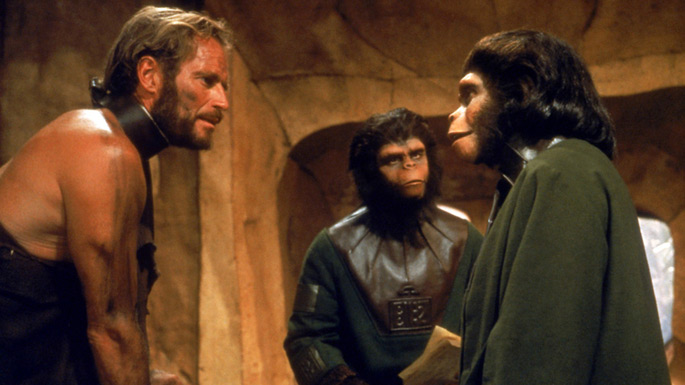 “A group seeking release of chimpanzees in captivity in New York through habeas corpus petitions has renewed its request to free a chimp held at a farm in Fulton County, near Albany.
“This time, the Nonhuman Rights Project said the materials supporting the petition it filed in Manhattan Supreme Court for the release of “Tommy” contain new statements from experts, including an affidavit from anthropologist Jane Goodall, supporting its arguments that chimpanzees possess enough human qualities to make their extended confinement cruel and unusual punishment.
“The group’s previous attempts to have Tommy released failed when an Appellate Division, Third Department, panel ruled that since chimps cannot bear the legal responsibilities and duties of humans, they are not entitled to habeas corpus or other legal protections accorded to people. The state Court of Appeals declined to hear the case [emphasis added].”
Socrates gave up his life for the ideal of pure wisdom. Galileo was threatened with torture for his commitment to scientific truth. Nelson Mandela spent 27 years in prison for his campaign to end apartheid.
And now, attorney Steven Wise is seeking to be the next torchbearer for virtue and justice by seeking legal personhood for two chimpanzees currently deprived of their primatial integrity by incarceration in the anatomy department of New York’s Stony Brook University. Mr. Wise has even found a judge willing to hear his case.
This is a natural outgrowth of our collective obsession with rights and entitlement which has, proportionally, shrouded our notion of personal responsibility. A healthy culture recognizes that it has a moral obligation to show compassion to all living creatures. But as the very concept of morality flickers and fades from social consciousness, only the assertion of rights prevents the rapid disintegration of society.
And as we lose our sense of responsibility, the distinction between man and animals grows harder to define until, ultimately, it all but disappears. In California, the “rights” of a little fish trump the welfare of humans: crops wither in arid fields during the worst drought on record as the state dumps trillions of gallons of fresh water into the ocean.
It’s worth noting that in 1933, two years before the Nuremberg Laws stripped German Jews of both civil and human rights, the Nazi government passed some of history’s most progressive laws for the protection of animals, legislation considered emblematic of the highest moral values of a people.
Elevating animals to the level of human beings inevitably results in human beings acting worse than animals.
Hat tip: Syd Chase
 Yonason Goldson