Home » Posts tagged 'Good and Evil' (Page 12)
Tag Archives: Good and Evil

Rosh Hashanah and the Mysteries of the Universe
 Originally published by Jewish World Review in 2003.
96% of the matter in the universe is invisible. Mysterious “dark energy” is pushing all of space apart. Empty space is not really empty, but filled with subatomic “foam.” At least seven parallel universes exist, each a trillionth the size of a proton.
Science fiction? Fantasy? The product of opium hallucinations?
Guess again. According to an article in U.S. News and World Report, these hypothesized phenomena represent the mainstream of current scientific thought.
In the wake of observations reported last March by NASA’s Wilkinson Microwave Anisotropy Probe, astronomers and physicists are resorting to these and other fantastic models to explain anomalous temperature variations in the background radiation permeating the heavens.
And who knows? They may be right. After all, once upon a time a round earth, a heliocentric solar system, and manned flight were all scorned as flights of the wildest fancy. Perhaps entire universes really do exist, wrapped up in a particle of dust beneath your finger nail.
On the other hand, increasingly complex and convoluted theories begin to look like the frantic flailings of scientists drowning in the mysteries of human existence. Indeed, one noted physicist confessed that, if he’d been presented with these theories not long ago, “I’d either ask what you’ve been smoking or tell you to stop telling fairy tales.”
Of course, one almost has to feel sorry for these scientists. Every discovery, every revelation, every insight, opens up a new Pandora’s Box of inexplicable phenomena. A few short decades ago, we knew of about half a dozen known sub-atomic particles. Today there are hundreds, with the number growing all the time, and often only the haziest guesses as to why they exist. Relativity theory and quantum theory both seem to describe the workings of the universe, but only the most strained and unproven theory suggests how to unite these two approaches.
 It’s almost enough to make one contemplate — dare we say it? — Divine Creation. Indeed, man’s desire to plumb the secrets of the universe is nothing new. Newton, Descartes, Galileo, Aristotle, all of these and many others grappled with physics and metaphysics in their labors to comprehend the vast expanse of time and space that stretches toward the boundaries of existence.
But long before the first scientist or philosopher raised his eyes to gaze into outer space and contemplate the stars, another man searched inner space seeking understanding. His name was Job.
A righteous man who lost his fortune, his family, and his health, Job questioned whether there was any rhyme or reason to explain the suffering of the righteous and the prosperity of the wicked. And as he sank into the mire of self-pity and nihilism, a Voice from above answered him:
“Where were you when I laid the foundations of the earth?” asked the Almighty. “What is the path where light dwells? And darkness, where is its place, that you may take it to its boundary, that you may understand the paths of its home?”
The Creator never explains Job’s suffering, but He does provide Job with the answer that restores his faith: The complexity of creation is not only more that you know, but more than you can begin to imagine. Every star above you in the sky, every drop of water in the sea, and every grain of sand upon the shore resides in its place and follows the course chosen for it; so too is every seeming whim of fate rather an unfathomable pulse from the primordial machine that steers the unfolding of eternity.
And so we say in the Rosh HaShanah liturgy, “This day is the anniversary of the beginning of Your handiwork, a remembrance of the First Day.” As we stand in the murky spiritual twilight between the end of one year and the start of another, we contemplate that amidst the mystery and uncertainty that surrounds us, one constant offers us security and safety if we take hold of it: the indivisible relationship between the Creator of all and His ultimate creation — Mankind, for whom He brought all else into being.
This day. This day of Rosh HaShanah begins a new year, a new season, a new opportunity to draw near to the Master of Creation. This day offers us a poignant reminder of how to cling to the godliness the resides within us, to strive to become more devoted in our relationships and less demanding in our expectations, more focused on others and less fixated on ourselves, less passionate about material gain and more ardent in our pursuit of spiritual fulfillment.
 This day reminds us that we hold in our hands an awesome privilege, as well as an awesome responsibility. How willingly are we seduced into looking for simplistic solutions to the moral and ethical dilemmas that life throws at us day after day? How longingly do we embrace superficial cliches and bromides that urge us to pull the warm covers of apathy over our heads?
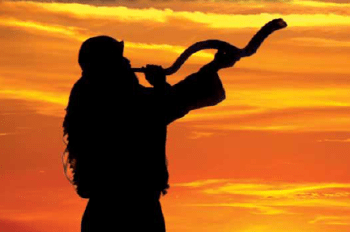
This day. Rosh HaShanah is our wake up call, and the sound of the shofar signals our reveille to open our eyes and behold the breathtaking magnificence that is Creation. And if our minds reel as we try to grasp the limitless expanse of the universe, we can yet grasp onto this certainty: that the One who placed us in its midst has revealed Himself through His Word and has given each of us a priceless gift, no less than the sand and the sea and the stars — an indispensable role to play in the completion of His masterpiece and the means through which we can become one with the infinite and with the divine.

A Zoo with a View
 In the 1920s, comedian Robert Benchley commented that there are two categories of people in the world: people who divide people into categories and people who don’t. He went on to remark that, “Both classes are extremely unpleasant to meet socially, leaving practically no one in the world whom one cares very much to know.”
Groucho Marx may have been thinking the same thing when he famously quipped that he wouldn’t want to belong to any club that would have him as a member.
In all seriousness, it may be high time that we took these humorists and their absurdist observations a bit more seriously.
My first serious exposure to absurdism was back in my sophomore year at the University of California, when my English professor introduced our class to playwright Edward Albee. I was immediately fascinated by The Zoo Story, although I wasn’t quite worldly enough to appreciate the subtext of class warfare and social malaise.
Time would solve that problem. But I was still able to recognize the hidden threads of realism sewn together in a garment of tragicomic incongruity.

When Kindness is Cruelty
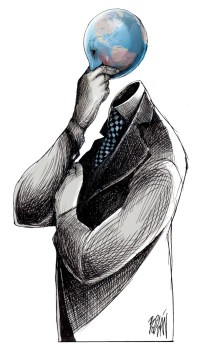 With a fury reminiscent of Hurricane Katrina, Typhoon Lionrock savaged northeast Asia two weeks ago, unleashing floods that left 100,000 North Koreans homeless and more than half a million without water. The devastation was so extraordinary that the North Korean government responded in a way equally unprecedented — by turning to the West for help.
I confess that my initial reaction was smug satisfaction. There’s something providential about a rogue nation responsible for instigating so much strife and apprehension around the world coming hat-in-hand to beg for international aid and succor.
However, after a moment’s reflection my feelings of moral superiority evaporated instantaneously. The victims here are not corrupt government nabobs; rather, they are the self-same people already victimized by the congenital corruption of their rulers. Even if the Orwellian tactics of the Kim dynasty have successfully hypnotized and lobotomized the people of North Korea into abject reverence, those hapless people hardly deserve the added suffering and indignation of a world denying them aid because of the sins of their overlords.
Divine justice will have to wait a bit longer.
To complicate matters further, just last week North Korea conducted yet another nuclear test in violation of its already-violated non-proliferation treaty. And so, with the UN blustering about increased sanctions and South Korea preparing for “the worst-case scenario,” humanitarian organizations are grappling with the logical and logistical problems of aiding the unfortunate citizens of a terrorist nation without helping the nation itself.
Of course, this is hardly a new dilemma.

9/11 — Visionaries and Ideology: A study in contrasts
 Originally published in 2015 by Jewish World Review.
Who knew a trip to New York could be so emotional?
I didn’t want to go in the first place. As my 92-year-old student likes to quote: Travelling is for peasants.
But my wife convinced me with simple arithmetic. Four tickets to bring three kids and son-in-law home or two tickets to visit them. No-brainer.
So I went grudgingly, confirming in the end the truism that some of life’s most profound moments come not only unexpected but against our will.
Our first stop was the 9/11 museum. I marveled at the artistic vision that had conceived the memorial pools, the water channeling down in rivulets that mirrored the face of the fallen towers, the continuous downward rush balanced by the redemptive feeling of water — the source of life — returning to the heart of the world. Here there was solace, closure, and consolation.
But a very different feeling accosted me inside. Almost upon entering the doors a single word brandished itself across my mind’s eye: Holocaust.
Let me explain.
To begin… obviously there is no comparison between the monstrosity of wantonly dehumanizing genocide and any single act of terror; obviously there is no equivalence between the systematic psychological, spiritual, and physical destruction of millions and a few thousand relatively instantaneous murders.
But then again, yes there is.
First, there is the shock value. 3000 murders compressed into 102 minutes is mathematically equivalent to six million in 139 days. Add to that the psychological trauma upon a nation that thought itself secure within its borders, the ensuing economic crisis, the emotional aftermath, the agonizing reappraisal, the moral uncertainties, and the recriminations that followed and remain woven into the social fabric of America to this day. Then add in the ideology of death that rejoices in the destruction of perceived enemies even (or all the more so) through self-destruction. Finally, add in the certainty that it could happen again.
These two abominations have much in common.
 The images in the 9/11 museum are haunting from the first. The twisted support beams, the bits of recovered debris, the walls of smiling faces of victims all conspire to pierce our hearts with the helpless torment of senseless violence. And around every turn, or so it seemed to me, the words “Remember” and “Don’t forget.”
Whether the architects of the memorial intended this biblical resonance I cannot say. But those three words are so much a part of Jewish tradition that for me they sealed the connection between the fate of the twin towers and the fate of European Jewry.
Remember what Amalek did to you on the way as you came out from Egypt; how he came upon you and struck down from behind all who were faint and weary; and he feared not G-d. Therefore it shall be… that you shall blot out the remembrance of Amalek from under heaven; do not forget.
Who is Amalek? He is the first terrorist nation in recorded history, the prototype of ideological nihilism and a culture of moral anarchy, the spiritual progenitor of every philosophy of hate and violence and, according to the traditions handed down by the sages across the generations, the ultimate ancestor of the German nation.
Remember what Amolek did to you, and remember why: to erase all awareness that a culture of moral integrity can flourish on this earth. Don’t forget, lest you leave yourself vulnerable to his never-ending mission to destroy you. There is only one way to deal with terrorist: blot them out from under heaven, or else they will do the same to you. It is a simple matter of self-preservation.
In 3,300 years, little has changed.
My handkerchief was damp before I left the museum. The magnitude of the destruction perpetrated by unadulterated hatred and evil was overwhelming. If we don’t fight against it, we become party to it. If we don’t acknowledge it for what it is, we allow it to consume us. And yet every visitor will leave this hallowed place and promptly lose himself in the vanities and trivialities of everyday life… myself included.
But this was only the first part of my New York epiphany. The second would come a few days later, when my wife led me into Federal Hall.
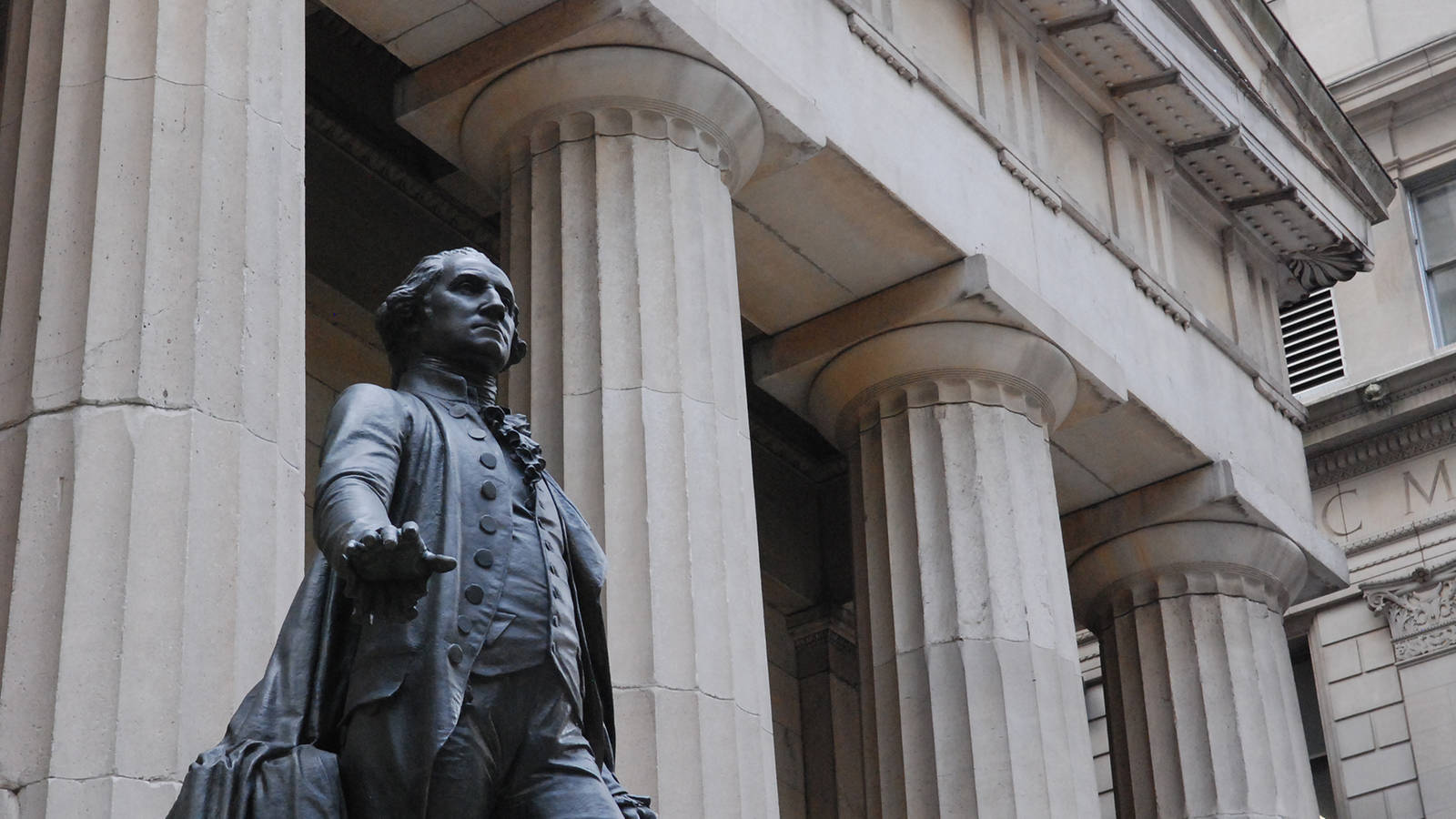 The site of George Washington’s inauguration provided as emotional an experience as the 9/11 museum. Here was a shrine to visionary ideology, not distorted into evil but elevated to the highest imaginable strata of human aspiration. Here, a fledgling nation conceived in the minds of practical dreamers took its incipient steps toward the lofty goals of justice, virtue, and equality before the law in a true meritocracy. Here, the noblest impulses of man forged a society out of shared values that had never been applied, never been attempted, never been imagined beyond the musings of political fantasy.
The obstacles had been myriad and megalithic. The chances of success had been spare. The need for compromise and cooperation had required superhuman resources of selflessness, humility, and a sense of common purpose. The collective will to succeed in their grand vision was the bond that overcame their differences, and the resourcefulness born of desperate times guided them to find solutions to their most intractable problems. And if our democracy today is slipping into a sad shadow of what it was conceived to be… well, it still stands alone in the world as a symbol of the ideals and the responsibilities of freedom.
Vision and ideology — the sources of unimaginable heroism and of monstrous evil. This is what we must remember. This is what we must never forget.
May we find the wisdom to follow the way of heroes.
9/11 — Balancing the Scales of Freedom
 Originally published in the St. Louis Post-Dispatch the week after 9/11/2001, between Rosh HaShonah and Yom Kippur.
It was Judgment Day — exactly one week after the World Trade Center buildings collapsed and so many illusions along with them.
“Judgment Day” is the expression found in the traditional liturgy for Rosh HaShonah, the first day of the Jewish new year. And as I stood in the midst of the congregation intoning the High Holiday prayers, the vision of exploding passenger planes and twin towers crumbling to dust hovered before my eyes.
On Rosh HaShonah we will be inscribed … who will live and who will die … who by water and who by fire … who by storm and who by plague … Who will have peace and who will suffer … who will be cast down and who will be exalted.
The judgment upon Jews became kinder after the United States opened her doors to us a century ago. Where no one else would have us, America took us in, allowing us to live both as Americans and as Jews without persecution.
Yet for all that, American Jews often feel torn by opposing cultural forces, especially approaching our Day of Judgment in a society where there is no greater sin than “judgmentalism.”
Without judgment, however, society cannot endure. As good citizens we must judge others – not based on race or religion but upon actions and behavior. And we must judge ourselves as well, by constantly reexamining our motives and our prejudices and our values and our goals. To condemn even this kind of judgment as a threat to freedom is to retreat from our responsibility to discern right from wrong; it is to embrace the illusion of absolute theoretical freedom – moral anarchy – which is in reality no freedom at all.
September 11 brought us face to face with moral anarchy in the form of incomprehensible evil. Perhaps the first step toward confronting it is to remind ourselves that freedom is not a right – it is a privilege, and privileges carry with them obligations that are often inconvenient and occasionally painful. When Thomas Jefferson wrote that the tree of liberty must sometimes be refreshed with the blood of patriots, he warned that the threat against freedom can only be met by not taking freedom for granted.
 Freedom is not democratic, as less than a score of suicidal zealots understood when they commandeered four transcontinental airliners. The duties of freedom are non-negotiable, as New York firefighters and policemen understood when they rushed into crumbling skyscrapers. And the rules of freedom cannot always be legislated: sometimes we have to choose between necessary evils, as the passengers aboard United Airlines flight 93 understood when they drove their plane into a Pennsylvania field.
These are the kinds of judgments we must make, every day and every year, to preserve our society, all the more so in a nation built out of so many cultures and beliefs as ours. Every freedom of the individual cannot be permitted if it threatens the collective, nor can every interest of the collective be observed if it oppresses the individual. But when we share the collective will to make our society stable and secure, then the individual will set aside his personal freedoms for the national good and the nation will bend over backward to protect individual freedom.
This is the mark of a great civilization, and it rests upon an informed and devoted citizenry prepared to debate, sometimes passionately but always civilly, the moral direction of our collective journey.
This Rosh HaShonah I stood shoulder to shoulder with friends and neighbors singing ancient liturgical poems in praise of our Creator, just as so many Americans stood together the week before singing “G-d Bless America.” There were no agendas, no politics, no grudges, no rivalries. All of a sudden we were one nation, indivisible, a people with one noble history and many noble ideals whose differences vanished in the shadow of our many common values and common goals.
As the Jews have had ample opportunity to learn, now America has learned that nothing brings us together like a common enemy. What we have yet to learn is how to continue to stand together even in times of peace.

Acquire a Friend
 Yehoshua ben Perachya says: Make for yourself a mentor; acquire for yourself a friend; and grant every person the benefit of the doubt.
~Ethics of Fathers 1:6
A successful life is depends upon the guidance of responsible teachers, the company of sound friends, and a willingness to fully understand who people are before judging them.
Submitting to authority keeps us respectful, humble, and confident in the path we follow. The company of worthy companions prevents us from straying after our own egos and illusions. Deliberation in forming our opinions of others saves us from the evils of stereotyping and groupthink.
But not every authority is responsible, not every would-be friend is deserving of friendship, and some people are truly wicked. Wisdom comes with experience, and experience can be painful.
If we are sincere and disciplined in our efforts, then our missteps will always be instructive rather than catastrophic, and we will ultimately find our way.


Suffer the Children?
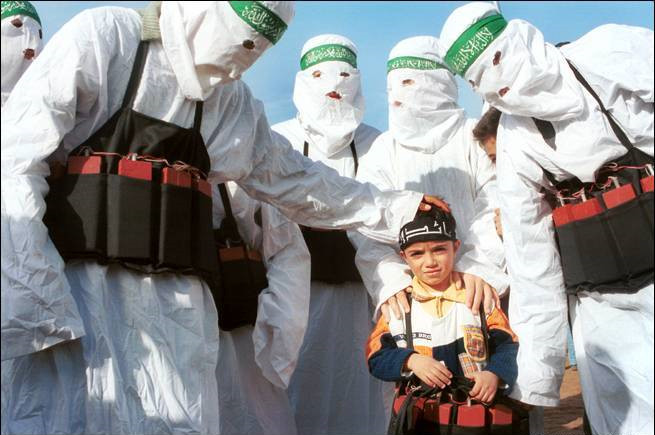 Twelve-year-olds don’t choose to become suicide bombers.
And true believers don’t send children as martyrs in place of themselves. The perpetrators of last week’s vicious attack on a Kurdish wedding in Turkey believe in nothing so much as violence as a means to their own power. It’s a sad sign of the times that we can almost admire the zealots of a few years ago who willingly gave their own lives for their ideals, no matter how convoluted those ideals may have been.
When fanatics eagerly give the last full measure of devotion — for which Abraham Lincoln praised the Union soldiers who sacrificed their lives at Gettysburg — we have to ask ourselves if we are prepared to sacrifice as much for our noble values as our enemies readily sacrifice in the name of terror.

Going all Waze at once
‘Do you realize what ethics has cost us this year.’
Driving in any unfamiliar city can be daunting, disorienting, and disconcerting. Driving in a foreign country can be downright dyspeptic. Driving in Israel can be a flirtation with catastrophe.
In some ways it’s better than it used to be. Traffic has gotten so dense that drivers simply cannot indulge the reckless habits that once prevailed. It’s hard to bob and weave when your car is stuck in gridlock.
But when the traffic starts moving, the experience can be harrowing, made all the more stressful as you try to find your way along unfamiliar boulevards and position yourself to make quick turns with little notice.
Thank goodness for Waze.
Just plug in your destination, follow the directions, and voila! Oh, sure, we made a few wrong turns, but even then Waze got us right back on track.
Most of the time.
Click here to read the whole article.
Hat tip: Rabbi Yehoshua Binyamin Falk

My interview with Bill Martinez
 Listen to my recent interview about faith and politics on Bill Martinez live.
 Yonason Goldson