Home » Posts tagged 'Groupthink' (Page 3)
Tag Archives: Groupthink

3 Tips to Program your Internal GPS
 To drive in Israel can be described as a near-death experience.
In some ways it’s better than it used to be. Traffic has gotten so dense that drivers simply cannot indulge the reckless habits that once prevailed. It’s hard to bob and weave when your car is stuck in gridlock.
But when the traffic starts moving, the experience can be harrowing, made all the more stressful as you try to find your way along unfamiliar boulevards and position yourself to make quick turns with little notice.
Thank heaven for Waze. Just plug in your destination, follow the directions, and voila!
Then something strange happened.

The Fool in the Mirror

The Green Generation has arrived! We recycle; we favor alternative energy; we’re environmentally conscious. Clearly, we are on our way to saving our planet.
Or maybe we’re not.
But at least we feel really good about ourselves.
That’s what Remi Trudel discovered. The Boston University marketing professor ran a study in which subjects were asked to sample four different beverages. With a recycling bin placed nearby, people more often took a new cup for each beverage; when there was no bin, more people reused the same cup.
Paradoxically, the opportunity to recycle increased the production of waste. In other words, environmental consciousness increases environmental carelessness.
It should come as no surprise, therefore, to learn that people who buy hybrid cars typically increase their driving miles. From the perspective of human psychology, it seems that conservation is a zero sum game: if I save here, I’m permitted to indulge there.
Professor Trudel suggests that, for most of us, recycling is more about making ourselves feel good than about being responsible custodians of the environment. If I save a plastic bottle or aluminum can from the county landfill, I can go on consuming with less guilt. The result is that we become like the dieter who justifies an extra helping of dessert because he used Sweet’N Low in his coffee.
HOW GREEN IS YOUR VALLEY?
Mike Adams of Natural News takes it a step further. If you sift through a recycling bin, you’re likely to find all kinds of containers for chemical products that potentially do more harm to the environment than the boxes and bottles in which they are sold. We don’t mind releasing pollutants into the ecosystem in the form of scented laundry detergent, antibacterial soap, and perfume. Why? Because we assuage our collective conscience with the knowledge that those plastic and cardboard containers will be turned into packaging for more toxic products.
For decades we’ve been warned about the evils of polystyrene cups. But many paper cups are not biodegradable; they may cost more to produce, while requiring more raw materials, use more energy, and produce more greenhouse gases. But, hey, paper feels more eco-friendly.
All this is the natural, if maddeningly irrational, consequence of our national obsessions with feelings. Motives are important. Fairness is important. Perception is important. Results are largely irrelevant.
That may explain why Al Gore, at the time he accepted his Nobel Peace Prize for chiding the American people for their environmental irresponsibility, was simultaneously living in a mansion that guzzled 12 times as much energy as an average American home. Presumably, he reasoned that the benefit to the world from his advocacy far outweighed his own environmental rapaciousness.
This kind of inconsistency is not limited to environmentalism. Repeatedly during his campaign and presidency, Barack Obama promoted increasing capital gains taxes in the name of fairness, even though empirical evidence showed that such increases actually decrease tax revenue rather than raise it. For decades, California lawmakers relentlessly raised corporate taxes on the most successful businesses, eventually driving many of them out of the state and plunging the economy into chaos.
But at least they can sleep at night.
IF WISHES WERE FORCES
The worldview that values feelings and good intentions over results inevitably fosters a terrifying ideology of utopianism. On October 11, 2002, former President Jimmy Carter received his own Nobel Peace Prize, in large part for his role negotiating a treaty in which North Korea agreed to suspend its nuclear weapons program. On October 16, just five days later, the United States announced that North Korea admitted to having a clandestine program to enrich uranium for nuclear weapons.
Many observers continue to wonder how anyone could have believed that the North Korean leaders could be trusted to honor their commitments. But the idea of peace was just too good to let go.
Social conscience, environmental awareness, world peace — these are all noble ideals. But the mere desire to make our planet a better place will not make it so. Indeed, lofty dreams untethered from reality typically produce much more harm than good.
And yet the dreamers continue to dream, unperturbed by either logic or history.
King Solomon ponders: What use is wealth in the hands of a fool when his heart has no desire to purchase wisdom?
The real challenge is to get the fool to recognize the self-destructive consequences of his folly. In literature, the Knight of Mirrors forces Don Quixote to see his own madness, but the tragic hero quickly returns to the comfort of his delusions once the looking glass is taken away.
So how do we speak truth to power, when power shows such persistent disdain for truth?



The Curse of Cowardice
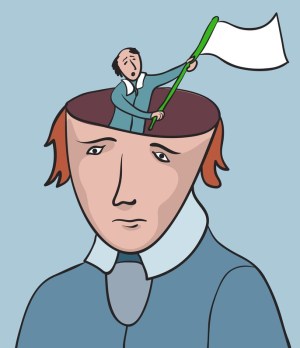 “The implications for our country are so serious that I feel a responsibility to my constituents… as well as to my conscience, to voice my concerns forthrightly and publicly. And I can think of no more appropriate place to do that than on this great Senate floor.”
~Democratic Sen. Joseph Lieberman, September 1998
It takes courage to stand up to our enemies, but even greater courage to stand up to our friends. And that’s precisely what is missing in modern political culture:
Courage.
In today’s world of groupthink, challenging the party line can be socially and professionally self-destructive. Friends and allies turn into assailants at the first whisper of dissent, at even the suggestion that there may be more than one side to any issue.
THE SOUNDS OF SILENCE
In June of last year, Maya Dillard Smith, head of the Georgia ACLU, came under attack for suggesting that the topic of transgender bathrooms warranted deeper discussion. To her credit, Ms. Smith resigned her position rather than remain part of an organization so fervently opposed to the principle of civil discourse.
The previous November, Professor Erika Christakis (together with her husband) lost her job at Yale after sending an email suggesting that students should be treated as adults, then compounding her transgression by attempting to engage demonstrators in reasoned debate.
And for years, moderate Republicans, disparaged as RINOs – Republicans in Name Only – have been hunted and attacked as traitors to their party.
In this age of polarization and partisanship, it’s much safer to attack the other party, whether from the right or the left. Republicans and Democrats alike circle the wagons to defend those among them who hurl even the most outrageous verbal projectiles across the aisle. To stand alone as the voice of reason by suggesting temperance, moderation, or compromise means taking your life in your hands.
After last week’s horrific shooting spree, which targeted Republican lawmakers as they practiced for the annual congressional baseball game, the obligatory expressions of unity and civility poured forth from both Democrats and Republicans. But it didn’t last long. By week’s end the rhetoric was already ratcheting up again, with each side blaming the other for creating a cultural atmosphere of toxic hate and violence.
Both sides are right. Yet neither is willing to offer more than lip service toward solving the problem.
SAY IT AIN’T SO, JOE
So who will be today’s Joe Lieberman? Who will speak out against entrenched power and political pressure to risk the slings and arrows of reprimand and reprisal? Who will show the courage to call out his or her own colleagues for their inflammatory excesses instead of taking the coward’s way out by indicting the other side while claiming the high moral ground from amidst the morass?
 Where are the mavericks, the lone wolves, and the white knights who fear the sting of their own conscience more than lash of their own party, who will bet their own future on the long odds that their example might spur others to join them in building a coalition of responsible statesmen to right the ship of state?
When Senator Lieberman took to the senate floor two decades ago, he directed his censure not only against his president and the leader of his party, but against his personal friend. It wasn’t easy, and it wasn’t safe. But loyalty to truth and responsibility to country outweighed emotional comfort or potential fallout. Abuse of power could not be tolerated. Corruption of office could not be sanctioned. Silence was not an option:
“The president is a role model and, because of his prominence in the moral authority that emanates from his office, sets standards of behavior for the people he serves.
“His duty… is nothing less than the stewardship of our values. So no matter how much the president or others may wish to compartmentalize the different spheres of his life, the inescapable truth is that the president’s private conduct can and often does have profound public consequences.”
If so, how much more so his public demeanor.
King Solomon teaches: When a ruler indulges falsehood, all his ministers disdain the law.
Herein lies the awesome responsibility of all who wield power. Every elected official, every appointed judge, every journalist and news anchor and editorialist has a moral obligation to ensure that his words are accurate, that his positions are based in fact and reason, and that his language is respectful.
And it is the moral obligation of We The People to hold our leaders accountable, and to support those among them who demand accountability.

Reclaiming Civility
 A child’s brain is like a sponge, absorbing everything with which it comes in contact. As the brain gets older it learns to process, to analyze, to interpret. And eventually it begins to slow, begins to forget, begins to lose function.
Few prospects are as forbidding as mental decline, the specter of which haunts us as we advance toward old age. And so the experts tell us to keep our minds active, that using the brain is the surest way to stave off mental deterioration.
- Crossword puzzles
- Sudoku
- Word games
- Logic problems
These are common recipes from the diet books for the mind. But don’t stop there; the more creative and more challenging, the better for your brain.
- Go traveling
- Take up knitting or gardening
- Learn Italian
- Drive a different way to work
- Get an advanced degree
Anything and everything that piques cognitive activity belongs in our catalogue of mental health activities.
“That’s all good,” says Barbara Strauch, author of The Secret Life of the Grown-Up Brain: The Surprising Talents of the Middle-Aged Mind and New York Times health and medical science editor. But the most intriguing advice Ms. Strauch has heard is this:

Right on the Left
 To quote one of history’s most conflicted figures, let me be perfectly clear:
I am no fan of Bill Maher. And that is precisely the point.
No doubt he would deny it to the death, but the toxic talk show host has much in common with his own favorite target of righteous condemnation, Donald Trump.
Mr. Maher is arrogant, opinionated, abrasive, belittling, ill-informed about positions he opposes, and indifferent to nuance. He subscribes to a black-and-white worldview that disdains and denigrates anyone with whom he disagrees. For him, there are only two ways to look at the world: his way and the way of morons.
If the online quotes attributed to him are accurate, Bill Maher defines faith as the purposeful suspension of critical thinking – implying that there is no such thing as reasoned belief and that only the religious suffer from self-delusion.
He:
• Equates the 9/11 terrorists with churchgoers
• Calls religion a neurological disorder
• Fails to recognize that political dogma on both sides of the aisle can be as virulent as the most zealous religious dogma.
So what is my point? Simply this: however much I may despise the man and virtually everything he believes, it’s only fair to acknowledge when he’s right.


Both sides now, and then
In the beginning, the questions came with surprising consistency:
What do you mean, you’re not Australian? I thought you were from England. You sound like a Scot.
 It’s noteworthy that I didn’t fool anyone into thinking I was one of them. The Aussies knew I wasn’t Australian and the Brits knew I wasn’t English. Oddly enough, the Americans believed I wasn’t American. But few were able to successfully place me or my accent.
I hadn’t planned it that way, although my newfound cultural ambiguity did give me a certain amount of pleasure. There was something romantic, adventurous, and egalitarian about being a Citizen of the World. There was also something reassuring about being an anonymous everyman, without the baggage of preconception and the insult of stereotype.
The explanation wasn’t complicated.

Adios, Amigos!
 I’ve never made secret my disaffection for Donald Trump. But within the dark clouds of his campaign and presidency, one bright ray of sunshine may be getting ready to pierce through the gloom:
Even before our new president began settling into the White House, a grassroots movement was already underway, gradually building momentum toward the singular goal of California seceding from the union.
According to the Washington Post, the activist group Yes California has responded to the Trump presidency by mobilizing its minions, which now constitute 53 chapters statewide, determined to gather the half-million votes necessary for getting the measure on the state ballot in 2018. I encourage readers to donate generously.
And here I offer these sage words of advice to the secessionists: look south.
 Yonason Goldson