Home » Posts tagged 'Ideology' (Page 11)
Tag Archives: Ideology

The Unfairness Doctrine
With the biggest FIFA scandal to date dominating the headlines, I’m revisiting this piece from a couple of years ago about the growing indifference to justice throughout the world community.
 There are certainly more important things than soccer to get worked up over — especially here in the United States, where we already have baseball, basketball, hockey, and (American) football.
Maybe that’s an argument in defense of referee Koman Coulibaly, who infuriated American soccer fans by disallowing a winning goal by team USA with no apparent justification. After all, it’s only a game. Wouldn’t all that passion be better directed against the gulf oil disaster or Iran’s nuclear weapons program?
In this case, at least, the Federation Internationale de Football Association (FIFA) might agree. According to the New York Times, FIFA president Sepp Blatter “does not want video replay or extra referees on the end line at the World Cup. He favors debate over decisiveness and human frailty over intrusive technology, thinking that subjectivity helps soccer more than it hurts.”
Now there’s an interesting philosophy: human error by judges, umpires, and referees enhances competitive sports. But don your body armor before making that suggestion to Detroit Tigers pitcher Armando Galarraga. Only two weeks earlier, you may remember, a blown call by umpire Jim Joyce on the last play of the game denied Mr. Galarraga baseball’s most coveted distinction — a perfect game.
In the aftermath, pundits have suggested that the baseball mishap did more for the sport than a perfect game ever could have. Mr. Galarraga was the model of graciousness, upset at being robbed but apparently harboring no resentment. For his part, Mr. Joyce appeared not only contrite but genuinely heartbroken. A week later, the league itself showed impressive quality of character when a hundred MLB players voted the repentant umpire the best in the game. All around, a sport that has been plagued with steroid and contract scandals produced extraordinary examples of dignity, restraint and — to revive an expression near to extinction — class.
In contrast, Mr. Coulibaly has yet to offer a single word of explanation, much less apology, for his inexplicable whistle-blowing. (However, mounting pressure may convince FIFA to reverse its own policy of refusing to comment on calls by the time this sees publication. Nothing challenges core values like bad press.)
But is it only a game? Every parent knows that the way children play reveals much about who they are deep down. It seems reasonable to assume the same about cultures: the way they play speaks volumes about their moral values.
MORE THAN A GAME
In American sports, everyone from fans to players to officials to high commissioners has weighed in on the use of instant replay to ensure the accuracy of calls at critical moments. Some argue that, in the interest of fairness, every available technology should be employed to ascertain the umpiric accuracy. Others are afraid that instant replay will slow down gamesalready mired in strategic interruptions and commercial breaks. But no one claims that accuracy doesn’t matter. And certainly no one has ever hinted that inaccuracy is good for the game.
What the Armando Galarraga incident so refreshingly demonstrates is that, to a large degree, Americans still care about facts and fairness. Umpire Jim Joyce acknowledged his mistake, expressed sincere remorse, and all was forgiven. What the Koman Coulibaly debacle indicates is that, to a large degree, the international community has lost all interest in truth and justice.
When such indifference to right and wrong confines itself to the playing field, we might pass it off as a sad but inconsequential character defect of sports celebrities. But this kind of skewed perception of reality long ago began seeping inexorably into the world of politics and social justice, most notably the assault by the community of nations against the State of Israel.
By all accounts, Israel should be the darling of the non-Arab world. Largely secular, the only democracy in the Mideast and the only Middle Eastern countryto have made concessions for peace, a socialist nation that has nevertheless become a burgeoning economic powerhouse, and a lone David surrounded by a hoard of Goliaths, Israel meets every criterion of European values. And yet, the European Economic Community and the European-dominated United Nations have, time and time again, cast Israel as aggressor and censured Israel for intransigence while ignoring facts and history that prove precisely the opposite.
Perhaps the United Nations should field its own soccer team. Perhaps Koman Coulibaly should seek nomination for the position of U.N. Secretary-General.
THE LAST EXILE
In his prophetic dream, the patriarch Jacob beheld celestial emissaries ascending and descending a ladder with its feet upon the earth and its top reaching the heavens. The sages of the Talmud teach that Jacob witnessed the guardian angel of Babylon go up seventy rungs and then descend, foreshadowing the Babylonian exile of 70 years. He then saw the guardian angels of Persia and Greece ascend 56 years and 180 years respectively, corresponding to the duration each would rule over the Jews. Finally, Jacob watched the guardian angel of Edom go up and up the ladder until he cried out to the Almighty, “Master of the World! Will this angel never come down?”
“Even if it reaches the gates of heaven,” replied G-d, “I will cast it down Myself,” implying that the nation of Edom would rule Israel until the arrival of the messianic era.
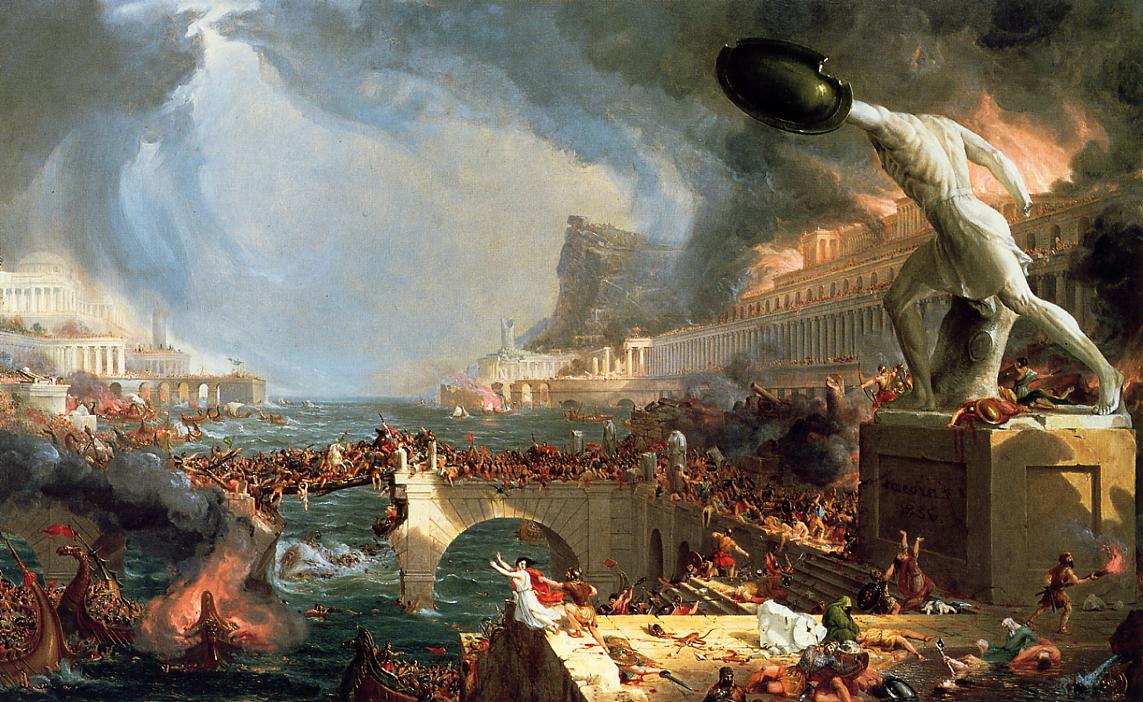 Nearly 2000 years ago, the sages identified the Roman Empire as the spiritual descendant of Edom, which was itself descended from Jacob’s wicked brother, Esau. But if the Roman Empire fell over 1500 years ago, how are we to understand the image of Rome’s guardian angel reaching the gates of heaven and surviving until the coming of the Messiah?
Esau was called Edom — meaning red — not because of his red complexion but because of his peculiar request that Jacob serve him “that red stuff,” by which he meant the bean stew he found his brother preparing when he came in hungry from the field. Color is the least intrinsic quality an object possesses, describing only the most external, cosmetic appearance without acknowledging function or purpose.
In this single moment, Esau revealed his defining quality as superficiality, the total lack of concern with anything other than outward appearances. And although the empires of Edom and Rome have long disappeared from the earth, the culture of superficiality that characterized them has become the salient characteristic of Western Civilization. In today’s culture wars, the final battleground between good and evil has become one in which evil claims to be good, conflating right and wrong with the empty sophistries of moral equivalence and political correctness, advancing arguments so thin and insubstantial that they fool no one who cares to look beneath the surface.
And yet, hardly anyone cares to look.
Soccer may be only a game, but it has become an international obsession. The contempt for truth articulated by its highest officials exposes a dangerous cultural bias and explains why the Europeans community would rather condemn the beleaguered nation of Israel than risk the consequences of antagonizing Israel’s belligerent and oil-rich enemies.
Jews around the world can take some comfort in the ability of America and Americans to still respond with passion in defense of truth. At the same time, the willingness of the current administration and so many in the media to rush to judgment against Israel offers unsettling evidence that we are approaching the fulfillment of the prophecy that, at the End of Days, Israel will stand against the world alone.
Originally published on Jewish World Review.

Jewish Billionaires put their Mouths where their Money is
Jewish billionaires Sheldon Adelson and Haim Saban have organized the first meeting of its kind, bringing together 50 Israeli and pro-Jewish corporations to push back against anti-Israel boycotts (BDS).
The real tragedy is that their efforts are necessary. The superficiality that typifies the Western World is self-evident with even the most feeble efforts to scratch the patina of political correctness that turns perpetrators into victims and victims into provocateurs.
 Shame on those who perpetuate the myth that Israel is the source of Arab suffering. Shame on those who provide the millions in aide that Gaza Arabs never see because their leaders spend it on high-tech tunnels for attacking Israeli civilians. Shame on those who caused hundreds of West Bank Arabs to lose their jobs by pressuring Soda Stream to move their production plant back across the “green line.” Shame on those who don’t hold the leaders of surrounding Arab nations accountable for ignoring the plight of Arab refugees for 60 years so they can vilify Israel for their own criminal negligence.
And shame on Jimmy Carter and his ilk who perpetuate the demonstrable lie that Israel is an apartheid state.
Would an apartheid state produce an Arab citizenry that has a higher standard of living, literacy, and longer life expectancy than that of the surrounding Arab nations? Would it have permitted a sitting Arab Supreme Court justice, Arab ministers, generals, ambassadors, and consulate-generals, an Arab Israeli national soccer team captain , and an Arab Miss Israel?
But ideologues never let facts get in the way of ideology. The successful western world must be held responsible for every evil in the world, even as radicals sacrifice their own lives to destroy the societies that allow well-meaning fools to enable the agents of their own self-destruction.
Speak Truth to Powers
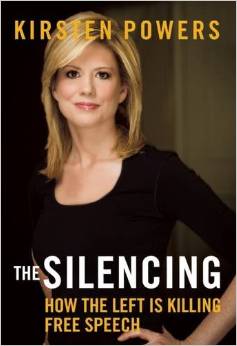 How refreshing that there are people like Kirsten Powers in the world.
In her new book, the outspoken, unapologetic liberal Democrat has taken aim at the militant search-and-destroy tactics employed by many liberals to shut down civil discourse and bully ideological opponents into submission.
Not surprisingly, many on the left have turned their attacks upon Ms. Powers and her book, proving her point by doing exactly what she accuses them of doing.
The intellectual laziness of groupthink lies at the heart of the deep divisions that are tearing this country apart. If more people would listen — listen to each other, and listen to Ms. Powers’s message — America might start turning back toward a culture of problem-solving and away from character assassination and political dogma.

The Answer is in the Stars
 From Symmetry Magazine:
According to theory, the big bang should have created matter and antimatter in equal amounts. When matter and antimatter meet, they annihilate, leaving nothing but energy behind. So in principle, none of us should exist.
But we do. And as far as physicists can tell, it’s only because, in the end, there was one extra matter particle for every billion matter-antimatter pairs. Physicists are hard at work trying to explain this asymmetry.
Here’s a nice follow up to yesterday’s post, Embrace Mystery and Discover Joy. Scientists love to tell us how they’ve decoded the secrets of the universe. Then they tell us that we shouldn’t even exist.
“The universe is not only queerer than we suppose, but queerer than we can suppose.”
~J.B.S. Haldane

How will we survive the drone culture?
I haven’t read this entire excerpt, but the rise of the drone raises more questions than the obvious ones concerning basic morality and “rules of engagement.”
 At the end of the movie classic “Patton,” the general responds to a reporter’s question about the “wonder weapons” of the coming era:
“Wonder weapons? By G-d, I don’t see the wonder in them. Killing without heroics? Nothing is glorified? Nothing is reaffirmed? No heroes, no cowards, no troops, no… generals. Only those who are left alive, and those who are left… dead. I’m glad I won’t live to see it.”
The message here is not the glorification of warfare. What Patton understood is that conflict brings out the true essence of a person. Cowards are revealed as cowards, providing the opportunity for reappraisal. Heroes are not merely revealed… they are created through their engagement on the field of combat. The heat of battle requires them to tap into unrealized potential.
This doesn’t require a battlefield of armies. It does require that we take up arms against our lesser selves and strive to conquer our baser impulses and inclinations. It demands that we grapple with the complex issues of good and evil and not take refuge in political slogans or groupthink.
In a culture of automation, we have a harder fight not to become automatons ourselves. We can comfortably join the army of drones, or we can meet the challenge, rise to the occasion, and emerge victorious as heroes.

When does encouragement turn deadly?
A New York Times article last month highlighted suicide clusters among Palo Alto high school students over the past few years. Many believe the reason lies in mixed messages from parents who tell their children to do their best and be happy, but who clearly won’t be happy themselves if their children’s best doesn’t get them into Ivy League universities.
Dr. Glenn McGee, the district superintendent, thinks that parents don’t get it. “My job is not to get you into Stanford,” he said he tells parents and students. “It’s to teach them to learn how to learn, to think, to work together — learn how to explore, collaborate, learn to be curious and creative.”

But the pressure to compete and perform remains. During this past school year, three boys laid down on local train tracks and took their own lives. Their parents’ words of assurance couldn’t offset the pressure of uncompromising expectations.
Indeed, one wonders whether Dr. McGee gets it himself. “Can we put sensors up there?” he wonders, suggesting some sort of system to alert the train operators. “This is Silicon Valley. There ought to be something we can do.”
But the solution isn’t to monitor the train tracks. As the old cliche goes, you don’t save people from falling of a cliff by putting an ambulance down in the valley.
The only answer is to change the culture so that success is measured not by standardized test scores and status but by cultivating individual talents and the attitudes that contribute to a healthy society. When parents make it their mission to fulfill each child’s unique potential — and not to satisfy their own dreams — then children are likely not only to meet parents’ expectations but to exceed them.

The War on Women Continues
From the Huffington Post:
 British chess grandmaster Nigel Short is responding to criticism after recently arguing that inherent differences in men’s and women’s brains may explain why there are fewer female chess champions than males ones.
“Men and women’s brains are hard-wired very differently, so why should they function in the same way? I don’t have the slightest problem in acknowledging that my wife possesses a much higher degree of emotional intelligence than I do,” he wrote in the February issue of New In Chess magazine. “One is not better than the other, we just have different skills.”
“It would be wonderful to see more girls playing chess, and at a higher level, but rather than fretting about inequality, perhaps we should just gracefully accept it as a fact,” he added.
So why would Huff Post run such a blatantly chauvinistic report? Well, obviously, for the counter-offensive that makes up the last 60% of the article. Then, of course, you have the comments, which fluctuate wildly between the apoplectic, the apologetic, the politically correct, and the well-reasoned.
Anyone who has raised children or taught school knows that males and females are more different than some species. We have different strengths and weaknesses, which is why it makes sense that we form partnerships called “the family.”
It’s both fascinating and disturbing that so many people are offended by those who say so.
Bad Hair Day at CSI
 Since 2012, the FBI has been reviewing some 2600 convictions from the ’80s and ’90s that depended on hair analysis. With 268 cases reviewed so far, more than 95% have been called into question, according to NewScientist.
This doesn’t mean that science is unreliable. Rather, it reinforces the well-known computer adage of GIGO — garbage in, garbage out. In other words, technology is only as good as the people using it.
So when it comes to understanding the origins of the universe, the evolution of man, the nature of human psychology, or the changing climate patterns of our planet, perhaps a bit more humility is in order before we jump to conclusions that new discoveries might force us to reverse tomorrow or the next day.
Our world is a complicated place. Instead of insisting that we have everything figured out, let’s watch the sun rise and listen to the rain fall while we enjoy the mystery of it all.
The New Polarization
 A college student who rarely attended classes and turned in assignments poorly done or not at all, emailed his professor after receiving his final grade to ask if there was any way he could raise his grade — an F earned with a 25% average — to a C. Even grade inflation couldn’t help this hapless soul.
But hope springs eternal, and wishful thinking has become so pervasive that it has a new name: magical thinking, as if wishing just isn’t enough anymore.
It’s everywhere. Government programs with no revenue to pay for them. Students acquiring massive debt from loans to procure degrees in art history, classical philosophy or — no joke — viking studies. State sponsored alternative energy schemes built on nothing but high-minded intentions. School boards hiring puppet administrators and then firing them when student performance crashes.
On the one hand, we indulge in the most irrational flights of fancy with no concern for the consequences. On the other, we resist thinking out of the box by denying ourselves the opportunity to engage people with opposing viewpoints in civil discourse.
Is this the new face of polarization? Not just between groups, but within our own minds?
Instead, let’s turn it around: challenge yourself to seek out new viewpoints and strategies, not to escape from reality but to deal with it and succeed.
Holocaust Day — Visionaries and Ideology
 Who knew a trip to New York could be so emotional?
I didn’t want to go in the first place. As my 92-year-old student likes to quote: Travelling is for peasants.
But my wife convinced me with simple arithmetic. Four tickets to bring three kids and son-in-law home or two tickets to visit them. No-brainer.
So I went grudgingly, confirming in the end the truism that some of life’s most profound moments come not only unexpected but against our will.
Our first stop was the 9/11 museum. I marveled at the artistic vision that had conceived the memorial pools, the water channeling down in rivulets that mirrored the face of the fallen towers, the continuous downward rush balanced by the redemptive feeling of water — the source of life — returning to the heart of the world. Here there was solace, closure, and consolation.
But a very different feeling accosted me inside. Almost upon entering the doors a single word brandished itself across my mind’s eye: Holocaust.
Let me explain.
Read the whole article here.
 Yonason Goldson