Home » Posts tagged 'Integrity' (Page 18)
Tag Archives: Integrity

Panama Papers: the New Ashley-Madison

Photo Credit: Kacper Pempel
So now it all comes down to Costa Rica.
With the American elections devolving into the absurdity of a bad reality-show, it has become simply too embarrassing to continue living in the United States. When Ted Cruz starts to look moderate and even-keeled in comparison to every other viable candidate, you know it’s time to find a new place to live.
Of course, Israel would be my next choice. But I have two children living in Israel now, and the last thing twentysomethings want is for mom and dad to move in down the street while they’re trying to discover who they are and decide what they want to do when they grow up.
(The fact that I’m still trying to figure out what I want to do when I grow up does not make things better.)
I could move to Canada, of course, but fleeing across the northern border is such a cliche I wouldn’t be able to live with myself. And Mexico is too risky; after all, what happens if I decide I want to come back and Donald Trump won’t let me in?
Europe is in chaos, Asia is too crowded, Africa is too hot, and Australia is too close to the South Pole. Brazil and Venezuela teeter on the brink of catastrophe, threatening to pull the entire South American continent down with them.
So I found myself left with only two possibilities: Panama and Costa Rica. But after last week’s headlines, Panama is off the table as well.
The revelations in the Panama Papers have exposed a dark side of human nature almost beyond human imagination.

Political Correctness: the root of all evil
 Dear Future President:
If you want to fix the country, you can start with the root cause of all that ails our country:
Political Correctness.
The truth is that political correctness is not a new idea at all; it is simply the new label for an old, established moral postulate once accepted by all.
The word civility shares its linguistic root with the word civilization. It means taking into consideration the comfort of others before expressing what I think or doing what I want. It means remembering that other people have rights before I assert my own. It means reflecting upon how my actions are going to affect my community and recognizing that I have a responsibility to a society that is more than the sum of autonomous individuals.
So what was wrong with the term civility that the concept needed rebranding as political correctness? Most likely, it was the connotation of political ideology that spawned this illegitimate offspring of cultural nobility.
In this series, professionals provide advice for the next U.S. president.
#nextpresident

Are Facebook friends causing depression?
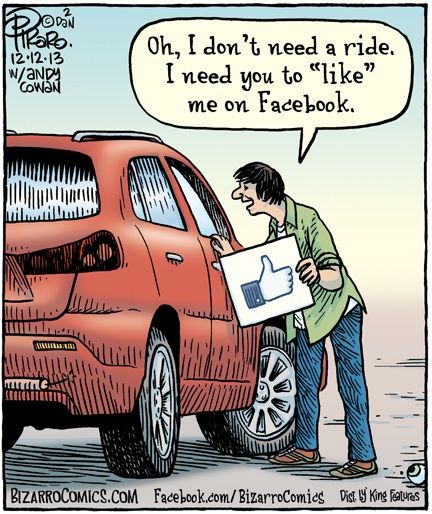 The connection between social media use and depression is old news. But a new study offers a new insight into the why.
The obvious reason has always been that substituting online “relationships” for genuine human interaction leaves a person feeling empty because of the shallowness of the exchanges. Now, Ariel Shensa of the University of Pittsburgh School of Medicine offers an additional insight.
Interviewing 1,763 randomly selected participants, ages 19-32, Dr. Shensa and her team discovered that aside from the amount of time spent on social media, the motivation behind that involvement proved a more significant predictor of depression.
According to Lindsay Howard of the Virginia Consortium Program in Clinical Psychology, those who seek recognition and approval through the use of social media are the ones most likely to suffer from a negative self-image and accompanying disorders. Even less frequent use of social media — when it is used to seek self-validation — becomes a kind of addiction, which is at the root of its link to depression.
So here’s an opportunity to revisit these thoughts from 2010 on the relentless pursuit of fame and the futility of seeking validation from others.
No Tears for Big Brother
Refinement. Poise. Modesty. Graciousness. Integrity. Once upon a time, these were the attributes with which parents hoped to imbue their children, that they might lead rewarding lives and develop healthy emotional relationships.
But consider the cultural icons we hold up before our children to emulate today: they have Michael Vick as their model of refinement; Lindsay Lohan as their model of poise; Lady Gaga as their model of modesty; Donald Trump as their model of graciousness; and a myriad of chief executive officers around the globe as their models of integrity. Our children learn from these instructors every day, unsupervised, through television and the internet. Could anyone in any previous generation have seen all this coming?
As a matter of fact, someone did.
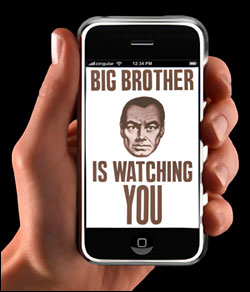 Superficially, the excesses of modern society may bear little resemblance to the colorless culture of oppression visualized by George Orwell in his dystopian classic1984. But Orwell’s masterpiece was itself a warning against the insidious threat of superficiality, whether political, social, or economic. Today, Orwell might be dismayed, but not surprised, at how eagerly we have divorced ourselves from reality in every aspect of our lives.
Unsustainable spiraling profits, unsupported by genuine production or service, sounded not a single warning bell until the inevitable bursting bubble caused billions of dollars to vanish in a heartbeat and left millions saddled with crushing debt. The nomination of a photogenic candidate with no experience and no credentials sounded no warning bells to the majority of the electorate who swept him into high office, precipitating the greatest ideological rift in the United States since the Civil War. Most significant of all, the cognitive and social disintegration spurred on by the ubiquitous virtual ports of the computer and television screens suggests a cultural crisis that is already upon us. Time and time again, we choose dreams over substance and learn nothing from our mistakes.
WE HAVE SEEN THE ENEMY…
I still remember vividly how I reacted twelve years ago when I first learned about the new phenomenon called “reality television.” I had just taken my seat on a plane home from New York City, delighted that a departing passenger had left behind a copy of the New York Times Magazine. The cover caption caught my interest, and I turned to the lead story about a new British television show called “Big Brother.” Before I was half-way finished my hands were trembling, and I could hardly stop myself from looking over my shoulder to see if George Orwell was reading the story from the row behind me.
Even for those of us who remember 1984, our overfamiliarity with instant visual communication has diluted the once-nightmarish connotations of the iconic Orwellian telescreen. We don’t value privacy, we can’t cope with isolation, and we dissolve into near-hysteria whenever we find ourselves cut off from our social networks even for a moment. Access means more than substance. Bandwidth means more than content. And Big Brother, the erstwhile symbol of Stalinist totalitarianism, now finds himself transformed into a pop-icon enjoying a successful dozen-year run in Britain, the backdrop for Orwell’s prophetic novel.
Last month, however, the kulturkamph deepened as the producers of the American version of the show announced two new wrinkles for the new season. First was the introduction of “The Mole,” a saboteur placed among the Houseguests to wreak havoc upon every social dynamic. Not only will the sole contestant to survive the season win half a million dollars; now, one of them gets a payoff for stirring up dissension.
…AND IT IS US
Second, and even more disturbing, was the announcement that one of the guests was to be an Orthodox Jew who, by his own account, “will practice all aspects of his religion while living in the Big Brother house.”
No he didn’t. (He was quickly booted). And here is why:
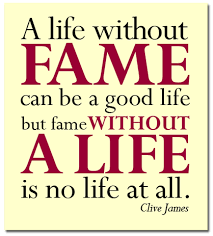 Rabbi Israel Ba’al Shem Tov, the illustrious founder of the 18th century Chassidic movement, once remarked that a pious companion of his youth had been blessed with a life of anonymity, while he, Rabbi Israel, had been condemned to fame. If the rabbi’s disdain for notoriety leave us bewildered, that itself is a symptom of how the superficial values of Western culture have rendered us incapable of understanding that personal privacy is both a virtue to be admired and a treasure to be jealously guarded. Conversely, fame is both a vice and a curse, although one wouldn’t know it from the electronic media’s most successful innovations — the seductive screen of television, the virtual gateway of the internet, and the reinvention of Big Brother.
The way private lives have gone out of fashion today is a blight upon the human condition and a corruption of all that is noble within human potential. To invite anyone who will listen into the deepest corners of our lives constitutes no less a violation than inviting a stranger into one’s bed. And the sale of our souls for 15 minutes of fame leaves us every bit as poor as the sale of one’s body for a few moments of carnal pleasure.
Of course, it’s not hard to understand how we arrived at this point. Our regard for privacy is continually eroded by the inescapable message that renown is the ultimate measure of success. But consider: if private lives were not so dear, why is everyone else trying so hard to steal ours away from us?
So can one uphold the precepts of Jewish Law while pandering for public adulation on international TV? For anyone who one remains sensitive to the Torah’s prescription with regard to fame, most certainly not. Any contestant that sells his personal privacy may be superficially in compliance with the letter of the law and the technical restrictions of the Sabbath and a kosher diet. But he has lost touch with the spirit of the law and has compromised the underpinnings of his faith. Even were he to have won that half a million, he will have paid out far more than he gained, in the cost of his personal dignity and in the sacrifice of his most precious commodity — the priceless gift of intimacy with the Divine.

Marriage of Convenience
 We are what we pretend to be, so we must be careful about what we pretend to be.
― Kurt Vonnegut
The orderly rolled my gurney to a stop before an imposing double doorway. “Okay,” he said, “This is where you get your kiss.” I couldn’t tell if he was speaking to me or to my wife. In any case, my wife kissed me and laughed and cried all at once. Then I was rolling again.
I arrived in surgery and scooted over onto the operating table. I joked with the anesthesiologist. He found my vein on the first try. I recited Psalms to myself and wondered distantly why I wasn’t scared out of my wits.
They sliced me open, broke my sternum, compressed my lungs like empty sugar bags, and stopped my heart to patch the hole between its upper chambers with a piece of my pericardium while redirecting the blood that flowed through an anomalous vein.
I don’t remember that part.
I also don’t remember my hands clawing the air, straining against nylon straps, struggling to tear the ventilator mask from my face and the dressing from my chest. My wife stifled a cry when she saw me in recovery. Apart from the convolutions of my fingers, the pallor of my face starkly mirrored the countenance of death.
“He looks so good,” the nurse told her.
When I did regain consciousness the next day, numbed by morphine and dazed by the residue of anesthesia, I asked my cardiologist if he could release me that afternoon. “I have to catch a flight to Jacksonville this evening,” I said.
I was trying to be funny. He thought I was delirious.
EXPECT THE UNEXPECTED
![[ File # csp3608269, License # 1131644 ] Licensed through http://www.canstockphoto.com in accordance with the End User License Agreement (http://www.canstockphoto.com/legal.php) (c) Can Stock Photo Inc. / Eraxion](https://proverbsandprovidence.com/wp-content/uploads/2016/04/anatomy-lungs.jpg)
Lacking prescience, however, I had no excuse for the cavalier attitude with which I approached this whole business. No matter how distinguished my surgeon’s credentials, and no matter how casually he explained away the operation as routine (with the probability of success better than 99%), cardiac surgery remains as heart-stopping as it sounds: they carve open your chest and, during an extended period of clinical death, cut and paste around your most vital organ before sewing you back together.
Call it what you like; it hardly ranks among the more attractive forms of elective surgery.
Yet “elective surgery” was how the doctor had described it. After all, I had virtually no symptoms, and my condition might not advance for twenty years. Then again, deterioration could begin within months, or even weeks. And so, at my cardiologist’s insistence, I opted to exchange the distant prospect of lingering death for the immediate promise of physical pain followed by months-long recovery.
That was what I expected. Instead, from beginning to end, while my wife and children and parents were dealing with their respective emotional traumas, the greatest discomfort I suffered throughout the entire episode came not from the incision, not from anesthesia withdrawal, not even from the mild pneumonia I contracted during recovery, but from a persistent hangnail that nagged me from the day after surgery until I returned home and exorcised it with my cuticle clippers.
THERE IS A LESSON
The great tennis player Arthur Ashe, after contracting AIDS via blood transfusion, was reported to have said, “If I ask why this has happened to me, then I must also ask concerning all the good that I have had in my life.”
Indeed, Mister Ashe, may you rest in peace — you should have asked both questions, as should we all.
If life is all One Great Accident, then there is no why. But the exquisitely textured fabric of our universe, the elegant design of our world, and the transcendent nobility of Man when he listens to the calling of his soul — all these testify to the genius of an invisible Conductor who guides the symphony of Creation.
And if there is a plan behind the apparent chaos, then whatever happens for good or for bad should prompt us to ask, “Why?”
Click here to read the whole essay, from my column in the inaugural issue of The Wagon Magazine

Who we are not
 So here we are again, contemplating a general election that will give us a choice between the lesser of two evils. And the likely options look to be more noxious than any we’ve ever had to face.
Everyone is asking the same question: how did we get here? And the bad news — which is old news — is that negative advertising works.
But why does it work? Everyone hates it, everyone complains about it, everyone laments the decline of civility, the widening of the political divide, and the incurable blight of ideological gridlock. So why do we continue to respond to the very thing we can’t stand in a way that makes it keep getting worse?
A new study may offer a glimmer of explanation.

Nothing left to say, nothing right to say
 I’m going to make a greater effort to stay away from politics in general and Donald Trump in particular (although I’ve made that resolution before without much success). I’ve been baffled by the responses I’ve gotten from Trump supporters accusing me of dishonesty and spreading a message of hate.
It’s hard to imagine how individuals who claim sensitivity to lying and hate-mongering are able to overlook such an abundance of both in their own candidate’s rhetoric. But I’ve already addressed the proliferation of such double-standards and willful ignorance elsewhere.
So here is my parting shot (for now), excerpted from an article by the always-insightful Jonathan Rosenblum:
IF DONALD TRUMP SPEAKS to voters tired of being ignored and condescended to, he is nevertheless a disastrous representative of them. Nothing in his life until now has shown an iota of concern with those who now salute him, and he has not offered one serious policy prescription that would address their economic insecurities. All he offers is his boastful self-promotion and a call for the power to make America great again. However different in style he is to the polished and fluent Barack Obama, he offers the same promise of being some sort of miracle worker. (Remember when Obama pronounced his nomination as the day the oceans cease to rise.)
Trump is not the antidote to thought-stifling political correctness, as his supporters seem to think. Vulgarity and the lack of basic human decency are not the opposite of political correctness.
[Trump] has betrayed no understanding of the American system of checks and balances or three co-equal branches of government. Recently, he boasted that he would gut First Amendment protections of the press to make it easier for him to sue, in the manner of Turkey’s Erdogan, reporters and papers that get under his tissue-thin skin.
ONE OF THE WISEST OF THE FOUNDERS, Benjamin Franklin predicted, “Only a virtuous people are capable of freedom. As nations become corrupt and vicious, they have more need of masters.” And, as David French argues, “Trump is running not for president of a constitutional republic but to be the strongman of a failing state.”
One by one, many at first inclined to hold their noses and vote for Trump (and there is an argument for doing so) have determined that they cannot, for he will further lower the standards of an already debased culture. For some it was his casual dismissal of the courage of John McCain during six years of torture in North Vietnamese captivity, which left McCain permanently disabled.
For Andrew McCarthy, the lead government prosecutor in the first World Trade Center bombing, it is Trump’s boast that he will order American troops to become war criminals and target the wives and children of ISIS fighters. For Stephen Hayes of the Weekly Standard, it is the impossibility of explaining to his young children why someone would mock the physical disability of a crippled reporter. For the religious conservative David French, it is his pledge to keep funding Planned Parenthood to the tune of millions of dollars, so that it can continue killing hundreds of thousands of babies a year.
These thoughtful conservatives are shocked that Trump’s supporters rather than being appalled by his cruelty and malice are attracted by it. They see him as the artifact of a society from which the civic vitality catalogued by de Tocqueville has been lost and replaced by vitriol and demagoguery.
“Our Constitution was made for a moral and religious people,” wrote John Adams. “It is wholly inadequate for the governance of any other.” (Hat tip again to David French.) If so, America is grave danger on the evidence of this election season.
Hat tip: Sylvia Poe

2016: The Last Year of the Weimar Republic
 In this new era of surrealism, it’s ironic that we can find prophetic wisdom in as unlikely a source as Hollywood scriptwriter Aaron Sorkin. In his 1995 masterpiece The American President, we find this exchange between President Andrew Shepherd and his domestic policy advisor, Lewis Rothschild:
Lewis Rothschild: People want leadership, Mr. President. And in the absence of genuine leadership they’ll listen to anyone who steps up to the microphone. They want leadership; they’re so thirsty for it they’ll crawl through the desert toward a mirage, and when they discover there’s no water they’ll drink the sand.
President Shepherd: Lewis, people don’t drink the sand because they’re thirsty; they drink the sand because they don’t know the difference.
The truth is that both are right. Deprive people of authentic leadership for long enough and they will certainly lose the ability to tell the difference between reality and illusion.
When we reflect upon the contrast between the elegant ideals set forth by revolutionary leaders two and a half centuries ago and the cartoonish ranting of the avenger seeking coronation today, there is ample reason for anxiety that has nothing to do with Nazi genocide.

What would your grandmother say, Mr. Cheeseburger?
 Does the benefit of pointing out outrageous behavior outweigh the cost of rewarding outrageous behavior by pointing it out? It’s hard to know anymore.
Nevertheless, the recent report of a man in Britain who changed his name to Bacon Double Cheeseburger demands brief mention — not only for its idiocy but for its insidious banality.
Oh, I know what you’re thinking: that this kind of no-news-news isn’t worth the time it takes to read about it. But trivial symptoms can offer an early warning to life-threatening conditions; and, with our culture already in dire need of life-support, the passive acceptance of every “new normal” may soon lead us into the category of DNR — Do Not Resuscitate.
So, yes, the obvious question is, “who cares”? People do all kinds of dopey things and, if they aren’t violating any laws or committing immoral acts, we might as well just shrug our collective shoulders and get on with our collective lives — especially when we can’t stop them in any case. Compared with multiple body piercings and blanket-tattoos, adopting a silly name seems downright pedestrian.
But it’s worth asking ourselves this: why did it never occur to our grandparents to alter their appearances or their appellations?

Spitting Image 2:2 — When sacrifice is for the birds
 Would you sacrifice one of your children to save the other?
That was the unthinkable dilemma revealed at the climax of the Meryl Streep classic Sophie’s Choice, which left the heroine emotionally scarred for the rest of her life.
The poignancy of that final scene tears at the insides of anyone who’s ever seen it. Some things are too hideous even to contemplate, and we simultaneously rage against the evil of the Nazi tormentor and ache for the mother who had to choose and could never forgive herself for choosing.
But reality can be just as disturbing as fiction. A recent study by University of Florida scientists describes how herons, egrets, and storks living in the Everglades willingly sacrifice some of their young to alligators living below their nests so that the alligators will protect the remaining chicks from raccoon and possums.
The deal makes perfect sense for the alligators: they get a steady diet of baby birds falling from the sky almost straight into their mouths. And it makes perfect sense for the mothers as well: since birds typically have more young than they can care for, so giving up a few who wouldn’t survive anyway to protect the rest is practical, logical and, arguably, moral.
Except that it isn’t. What separates human beings from animals is conscience. When our moral compass is functioning as it should, simple pragmatism isn’t enough to govern our decision-making. And if the cost of cold, hard logic, no matter how sound, requires us to sacrifice our humanity, then it is our willingness to embrace the full measure of devotion to a higher moral standard that serves the greater good, even when no one else is watching and no one else will ever know.
Sacrifice of oneself for the benefit of others is the most noble quality of humankind. Sacrificing others for our own benefit shows us to be lower than the lowest animal. Because, unlike animals, we know better.
Or, at least, we should.
 Yonason Goldson