Home » Posts tagged 'Integrity' (Page 20)
Tag Archives: Integrity

Who is Wise? Who is Righteous? One who reads Harry Potter

Do you want to put an end to bigotry, ultra-nationalism, and racism? It might be easier than you think. Try reading Harry Potter.
No, it’s not magic. According to the Journal of Applied Social Psychology, there’s more to the wildly successful series than just a good story. The tale of a mistreated orphan boy who discovers extraordinary magical abilities is essentially an epic metaphor for the battle between merit and privilege, between status and stature, as pure-blooded wizards contend with half-bloods and “mudbloods” for supremacy over the magical world.
By identifying with the heroes of the story who grapple with the conflict between ancestral identity and the content of character, readers will likely emerge a little more heroic themselves.
That’s what Professor Loris Vezzali and his team of researchers from Italy’s University of Modena and Reggio Emilia concluded after a series of studies which demonstrated how children exposed to the passages dealing with prejudice displayed improved attitudes toward minorities and other social classes. According to Scientific American, this research supports an earlier study in Science, which “found that reading literary fiction, as opposed to popular fiction or nonfiction, results in keener social perception and increased empathy.”
This really should come as no surprise. Literary fiction seeks to educate as well as entertain. The combination of relaxing the mind, the willing suspension of disbelief, and the integration of moral themes, allows for the better internalization of values. Of course, the benefits are dependent upon the soundness of those values.
But Harry Potter hits the mark with almost unwavering accuracy.
Read the whole article at: http://www.learning-mind.com/reading-harry-potter/

Legal Larceny
 Earlier this month, voters in a CBS news poll ranked presidential candidates on, among other qualities, honesty. Joe Biden, who was then still in the race, claimed the top spot with an 85% favorable rating. Hillary Clinton scored 68% among Democrat primary voters but only 35% among voters in general.
This is nothing less than staggering. Whatever one may think about Mrs. Clinton’s qualifications to occupy the White House, her record on truthfulness screams for itself: She’s lied about Benghazi, lied about her emails, lied about ducking under sniper fire in Bosnia, lied about being broke when her husband left office, lied about her immigrant grandparents, lied about being named for Sir Edmund Hillary.
The real tragedy is that so much of the voting public is uninformed about or, even worse, indifferent to Mrs. Clinton’s utter disregard for the truth. It’s not just that she tells lies; it’s that she tells lies about things that don’t even matter, tells lies that can be easily verified, tells lies about having told lies without even a trace of embarrassment or remorse.
For whatever reasons, a huge portion of the country has made up its mind to adore Mrs. Clinton. In their eyes, she can do no wrong. Either her lies don’t matter, or else they aren’t lies, since if they were she would never have spoken them.
Whatever the explanation or excuse, the effect upon our society is chilling. For when we lose our respect for the truth, there is no way our culture can survive.
It’s worth reflecting on Harry Truman’s observation that there is nothing more dangerous than a liar in public office. Mr. Truman feared what would happen if the people believed him. But what’s even more frightening is what happens when we follow our leaders’ examples and accept dishonesty as a way of life ourselves.
As I discuss in this article from 2011, originally published in Jewish World Review.
Legal Larceny
70 million Britons can’t be wrong. Can they?
Well, since our cousins across the pond boil their meat and drink warm lager, maybe the British love affair with one-pound coins was not the best indicator that Americans would willingly part with their one-dollar bills. Given the spectacular failures of the Susan B. Anthony dollar and the Sacagawea gold coin, hindsight seems better than 20/20.
If experience were not enough, a 2008 Harris poll found that three-fourths of people questioned prefer their dollars in bill, leaving little room for doubt. According to NPR, however, dollar-coin proponents remain undeterred. When asked about the poll, Leslie Paige, who represents watchdog group Citizens Against Government Waste, replied, “I suspect that they just don’t understand what the up sides are.” Ms. Paige believes the government should the dollar bill from circulation, thereby forcing Americans to use the coins.
In the meantime, over a billion newly minted coins line the shelves of government reserve vaults sealed in plastic bags. At a production cost of 30 cents per coin, that’s $300 million dollars of tax money spent on very pretty gold-colored trinkets that no one may ever use, with more being added to the pile every day.
Some, however, have found a way of turning fool’s gold into the genuine article.
 In an effort to popularize the coins, the United States Mint has offered to mail coin orders to buyers free of shipping charges. Enterprising “travel hackers” quickly figured out that they could buy the coins, rack up frequent-flier points on their credit cards, then deposit the coins to their bank accounts to pay off their credit card> bills. Officials began catching on when they noticed repeat orders adding up to as much as $600,000 worth of coins; they got another clue when banks reported receiving deposits of coins still in their Mint wrappers.
“We’ve used them to go on trips around the world,” Jane Liaw told NPR, saying that she and her husband are planning trips to Greece and Turkey, “all on miles and points.”
“It’s not illegal,” says Mint spokesman Tom Jurkowsky, “But it’s an abuse of the system… The system was set up to promote the use of dollar coins and we are simply trying to do the right thing here.”
NOLO CONTENDRE
Sadly, this seems to be the mantra of modern morality. If the government hasn’t legislated against it, there’s no reason not to do it. Everything that is not forbidden is permitted.
How recently have we witnessed the fallout from this mentality: the false promises of 125% home mortgages to insolvent borrowers, the loan-bundling that turned a fraction of a percent advantage into multimillion dollar profits, the obscene bonuses paid to executives with government bail-out money. None of these practices was illegal, even though they caused and perpetuated an economic tailspin from which the middle and lower classes have yet to recover.
 The attraction of easy money is irresistible, it seems, no matter what the risk.
Ironically, the decline of the America work ethic coincides with many Americans working harder than ever. But appearances can be deceiving. While people do indeed put in longer hours, increasingly those hours are frittered away texting, tweeting, checking email, and playing solitaire. Indeed, even when working hard, many of us seem motivated less by a desire to do our jobs well than by the passionate longing to escape work altogether, either through exotic forms of recreation or early retirement.
I can’t help but remember the way my English professor described Shakespeare’s Prince Hal, who fearlessly charged into battle and “fought like hell for the privilege of not having to work for a living.”
I also can’t help but apply the teaching of the sages in the Talmud when they remarked, “Love work, despise lordliness, and do not become overly familiar with the government.”
The Hebrew word for “work” employed here is malachah, derived from the root meaning “walking” or “traveling forward.” To involve oneself in any pursuit that is productive, creative, or designed to benefit those with whom we share our world – this is highest calling of civilized society. This kind of work is truly the labor of love. Moreover, by dropping the feminine ending, the word malachah becomes malach, commonly translated as “angel;” when we strive to create a better world we simultaneously transform ourselves into divine emissaries of the Almighty.
ILL-GOTTEN GAINS
In contrast, the sages warn us to despise “lordliness,” the lust for power that seeks to control others and harness their efforts for personal advantage. More and more, we witness the investment of time and energy in profit without production, in clever tricks to generate income effortlessly without contributing anything to society in return, in seeking the spoils of lordliness at the expense of those who perform real work.
Finally, the sages warn us against over-familiarity with the government, since it is the nature of rulers to care for little except their own continued hold on power. Even in our democratic government, too many of our elected officials are motivated either by their own lusts and avarice or by the conviction that they know what is best for the people no matter how much evidence testifies to the contrary.
In truth, there is no greater satisfaction than that derived from an honest day’s work; neither is there any shortage of individuals desperate to avoid labor at all costs, or to exploit the labors of others to feather their own nests. And no matter how hard it tries, government will never succeed in legislating noble values or a human conscience.
Just ask Ben Schlappig, who writes a travel hacker blog. According to NPR, Schlappig brags that he has “a few million miles” and top-tier status with several airlines.
“Just last week I came back from a trip from Australia and Singapore and Malaysia all in first class, just on miles,” he says, “partly thanks to the dollar coin program.”
The Price of Principle
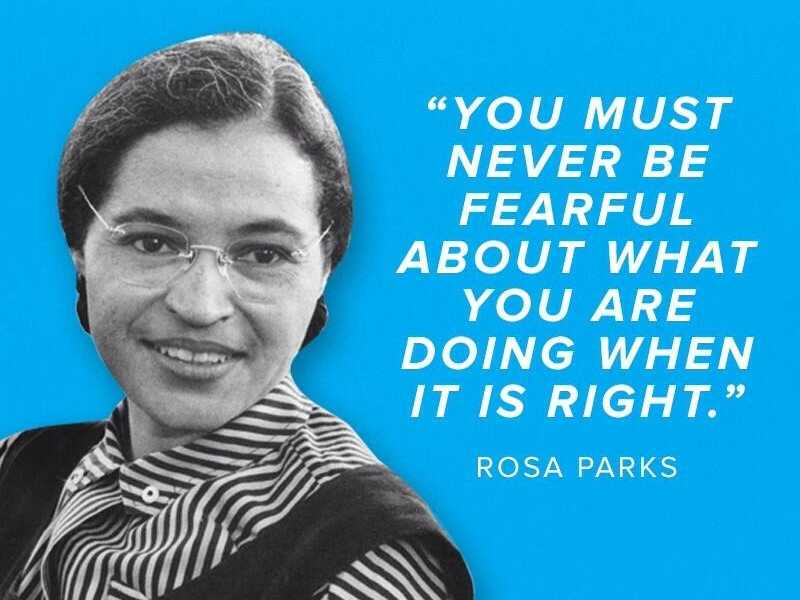 Early last month, Kentucky clerk Kim Davis became the latest standard-bearer of civil disobedience in the face of governmental overreach. Her refusal to sign marriage certificates for gay couples made her first a hero among traditionalists in an age of moral anarchy, and then a martyr for conservatism when she chose jail time rather than compromise her beliefs. In the eyes of many, she has become a latter-day Rosa Parks.
Except that she wasn’t.
Let me be clear. I agree with Ms. Davis in every way: the Supreme Court decision conjuring up gay marriage as a constitutional right is an offense against moral and legal tradition, a blow against the crumbling integrity of the family structure upon which civilized society depends, and a travesty of jurisprudence. In his embarrassing decision, Justice Anthony Kennedy didn’t even pretend that his ruling was based in law, but rather on feelings. In many ways, he himself set the stage for Ms. Davis’s act of rebellion.
But all of that is really beside the point.
The point is this: Ms. Davis took an oath of office. If her conscience does not allow her to fulfill her duty, then the principled course of action is to resign. There are consequences that go with conviction, and in this case the path of conscience requires her to remove herself from her position, not to assert that her personal values prevent her from discharging her duty while insisting that she can keep her job. That rationale is akin to Lois Lerner claiming innocence and then taking the fifth. You can’t have it both ways.
In an interview with Fox News anchor Megyn Kelly, Senator Ted Cruz responded to those calling for Ms. Davis to resign by asking, “where have those voices been calling for the Mayor of San Francisco to resign for having made San Francisco a sanctuary city and defied the immigration laws [and] for President Obama to resign — for six in a half year he has defied immigration law, he has defied welfare reform law, he has even defied his own Obamacare…?”
With all due respect, the Senator had it exactly backwards. By supporting Kim Davis, Senator Cruz undercuts his own objection to President Obama flouting national immigration laws. If Kim Davis is permitted to pick and choose which laws she follows as a matter of conscience, how is that different from Barack Obama’s failure to enforce legislation his conscience tells him is unjust?
This is what happens when respect for the law gives way before personal ideology, regardless of whether that ideology is right or wrong. The result is a societal free-for-all, in which individual feelings and sensitivities trump civic order. My conscience is my own, but it does not permit me to deprive others of their civil rights, no matter how flawed the legal underpinnings of those rights may be.
 Not surprising, there is a talmudic precedent. On one occasion, the sages of the Sanhedrin, the highest body of Torah legislation, were engaged in an unusually heated debate. Rabbi Eliezer, the most revered scholar of his time, was unable to convince any of his colleagues to see a particular point of view. Eventually, he became so frustrated with his fellow scholars that he invoked the name of G-d to support his opinion.
According to tradition, a heavenly voice rang out in the chamber declaring that Rabbi Eliezer was correct in his ruling.
Astonishingly, another sage, Rabbi Yehoshua, stood up and replied, “The Law is not in Heaven.” Not only were the sages not swayed by Rabbi Eliezer’s demonstration, but the actually expelled him from the High Court.
The talmudic narrative goes on to record that the Almighty, upon hearing that the sages had disregarded the divine endorsement of Rabbi Eliezer, responded that, “My children have defeated Me.”
In other words, once G-d put the system in law in force for His people to follow, even He may not abrogate the dictates of that law. For once the system of law becomes subject to exceptions, the system will no longer serve its function.
 Nevertheless, it must also be said that Senator Cruz was not completely off the mark. If the President of the United States will not uphold the law of the land, if Supreme court justices usurp power over the constitution without the slightest legal pretense to justify their decision, if the Attorney General of the United States will not prosecute local officials or former cabinet officers who show contempt for the law they are sworn to uphold, then why should there be any objection to a county clerk standing up for the tenets of her own religion?
The answer is that wrong behavior does not excuse other wrong behavior. When mutineers are doing their level best to scuttle the ship of state, when even the captain of the ship cannot be trusted to steer a clear and steady course, the solution is not for the crew to take up their hatchets and begin hacking away at the gunwales.
Ultimately, Kim Davis is just the latest symbol of the spreading disgust with politics as usual. The real offenders are the highest officials in the land whose conduct promotes personal feelings over responsibility and accountability. The effects of their civic negligence can be seen in the senseless violence on the streets of Ferguson and Baltimore, and in the surreal ascendancy of Donald Trump.
Personally, I applaud Kim Davis for her conviction and her principles. But only when all of us — from the chief executive to the most humble civil servant — put respect for the law before our individual predilections, only then will we be able to restore a climate of common purpose to our fragmented society.

Remembering 9/11: Visionaries and Ideology
 Who knew a trip to New York could be so emotional?
Our first stop was the 9/11 museum. I marveled at the artistic vision that had conceived the memorial pools, the water channeling down in rivulets that mirrored the face of the fallen towers, the continuous downward rush balanced by the redemptive feeling of water — the source of life — returning to the heart of the world. Here there was solace, closure, and consolation.
But a very different feeling accosted me inside. Almost upon entering the doors a single word brandished itself across my mind’s eye: Holocaust.
Obviously there is no comparison between the monstrosity of wantonly dehumanizing genocide and any single act of terror; obviously there is no equivalence between the systematic psychological, spiritual, and physical destruction of millions and a few thousand relatively instantaneous murders.
But then again, yes there is.
Read the whole article here:

The Virginia Shooting: Nihilism and the Culture of Anarchy
 “What has happened to us as a society that we now devalue life to such a level? What has happened in our society that people have become so violent? That’s the fundamental question we need to confront… We have a societal problem in our country. It reminds us of the most important job any of us will ever have … the job of a mother, a father or a parent.”
Senator Marco Rubio summed it up nicely… or tragically. But the deeper question is this: How do we stop the cultural inertia that is driving our society ever further into nihilism and moral anarchy?
Senator Rubio gets the answer perfect: If it doesn’t start in the home, then there really is no hope for the future. Without respect for traditional values, without recovering the lost ideals of civility, selflessness, modesty, and integrity, then the tide of history will sweep us away as it did the Roman Empire and leave behind a new Age of Darkness.
Bill O’Reilly makes the same point with his usual brass-knuckled pithiness here.

Someone is Always Watching
 “Someone is always watching.” Movie fans will recognize this as the punchline from “Ocean’s Eleven,” a glib repartee that ultimately recoiled on Andy Garcia and drove Julia Roberts back into the arms of George Clooney. Political observers might remember it, now that former Illinois Governor Rod Blagojevich is back (briefly) in the news, as a line the convicted politico should have uttered when he found himself the subject of state and federal investigators.
But just the opposite was true. The AP reported:
“You would think he would see his life collapsing around him,” said Chicago defense lawyer John Beal, who was in the courtroom with Blagojevich this week and noted how carefree he seemed. “But he was the center of attention and seemed to love it.”
One almost envies Mr. Blagojevich the comfort of his delusions.
At the beginning of the last century, the invention of electric lighting,telecommunication, and cinematography began to change the complexion of modern society. At the time, the leader of European Jewry, the venerable Chofetz Chaim, observed that the introduction of technologies scarcely imagined a generation before provided a lesson for any spiritually sensitive person to recognize that the Universe is not indifferent to our moral conduct.
Previously, the natural cycle of night and day imposed strict order upon human activity. Because most people in those times could not afford the limitless supplies of candles necessary to transform night into day, all activity was cut short early by the long nights of winter, and only in summer could the workday stretch late into the evening. Now, inexpensively and with the flick of a switch, the night could be expelled and the secrets of the darkness instantly revealed.
Can you say AshleyMadison?

What is happiness, and how do we get it?

Order on Amazon today.
Proverbial Beauty, a new book on how to achieve happiness and success, offers a practical guide to changing our outlooks and our fortunes. Here’s an excerpt:
In a single, ringing phrase, Thomas Jefferson captured the essence of the American dream when he declared that all men have the right to “life, liberty, and the pursuit of happiness.” And yet, despite Mr. Jefferson’s noble sentiments and laudable achievements, the enduring lyricism of his words spawned an epidemic of confusion and despondency that continues to spread like pestilence through western society.
How precisely does one pursue happiness? We may pursue wealth, pursue fame, pursue gratification of one form or another. But the fiction of pursuing happiness has become a collective obsession that consumes our lives, either by goading us into chasing impossible dreams or by tarnishing the quality of our existence with unwarranted regrets.
Before we set off in pursuit of anything, we ought to know what it is and how to get it. Like many other words and expressions, we toss about the word “happiness” without really knowing what we mean. The definition seems obvious, but the inconvenient truth is that we really have no idea what we’re talking about.
So what is happiness, and how does one get it?
Read the whole excerpt here:
http://www.jewishworldreview.com/0815/Goldson_pursuit_of_happiness.php3

Email of the Week — The Haircut
Blessed are those that can give without remembering, and take without forgetting.
One day a florist went to the barber for a haircut. When the barber finished he said to the florist, “I can’t take your money: I’m doing community service this week.” The florist was pleased and left the shop.
When the barber went to open his shop the next morning, there was a Thank You card and a dozen roses waiting for him at his door.
Later, a policeman came in for a haircut. When he tried to pay his bill, the barber again explained, “I can’t take your money: I’m doing community service this week.” The officer was happy and left the shop.
The next morning when the barber went to open up, there was a Thank You card and a dozen donuts waiting for him at his door.
Then a Congressman came in for a haircut. “I can’t take your money,” said the barber once again. “I’m doing community service this week.” The Congressman was very happy and left the shop.
The next morning, when the barber went to open up, there were a dozen Congressmen lined up waiting for a free haircut.
And that, my friends, illustrates the fundamental difference between the citizens of our country and the politicians who run it.
As Mark Twain said:
Both politicians and diapers need to be changed often, and for the same reason.
Hat tip: Mom and Ginny Harrigan

When Prejudices Become Principles
 Two cheers for Freedom to Marry, the gay-rights advocacy group that is taking the unorthodox step of closing its doors for no other reason than because it got what it wants — namely, the redefinition of marriage (according to Anthony Kennedy’s unilateral revision of the constitution). So I’m adding my small voice to that of the New York Post to praise the group’s president, Evan Wolfson — irrespective of how much I disagree with his position — for having the integrity to take his victory and go home rather than persisting in advocacy for the sake of advocacy.
Which doesn’t mean, of course, that all his allies will do the same. It took almost no time at all before ABC’s Nightline ran a segment on polyamory, clearly the next step in the dismantling of the nuclear family. “We’re just trying to be the pioneers like in the civil rights movement,” gushed one member of the “trailblazing triad” trumpeted by network.
Finally, in an inevitable but long-delayed surrender to the tide of history, the Boy Scouts of America have released their hold on traditional values by ending their ban on openly gay troop leaders. One feeble cheer to the organization for holding out as long as it did.
With the abyss of moral anarchy looming before us, I’m revisiting my thoughts on the subject from six years ago. At the very least, when archaeologists dig up the remains of Western Civilization some time in the distant future, let them see that Civilization didn’t go down without a fight.
“We must be ever on our guard, lest we erect our prejudices into legal principles.”
This concise jewel of wisdom, from former Supreme Court Justice Louis Brandeis, may eventually take its place as either the standard or the epitaph of Western Civilization. While the evolution of social sensitivity can claim an impressive record of civil rights legislation, we have now to question whether our collective obsession with personal privilege threatens the very foundations of the legal system that protects us.
For his inauguration this Tuesday, soon-to-be President Barak Obama has chosen evangelical pastor Rick Warren to deliver the invocation. Instantaneously, the politically correct Left launched its blitzkrieg, excoriating Reverend Warren for the unpardonable sin of supporting Proposition 8, California’s recent gay-marriage ban. Because he used his First Amendment rights to speak his conscience, and because he recognizes his obligation as a representative of religious conviction to defend religious doctrine, Reverend Warren finds himself where almost all defenders of moral integrity now find themselves: under attack by the zealots of moral anarchy.
The offensive against Reverend Warren may not rank among the most disturbing examples in the aftermath of California’s Proposition 8 referendum. In Riverside, California, 40 to 50 signs supporting Proposition 8 were found arranged in the form of a swastika on the front lawn of a Roman Catholic church. Mormon temples in Salt Lake City and Los Angeles, along with a Catholic Knights of Columbus printing press in Connecticut, received packages containing white powder presumably intended to imitate the 2001 anthrax scare. Reports from around the country include harassment, vandalism, and disruption of church services.
 What would Justice Brandeis say?
He probably would not agree with Justice John Paul Stevens, who quoted him in his dissent against the June 28th, 2000, Supreme Court decision allowing the Boy Scouts of America to dismiss an open homosexual from his position as scoutmaster. Invoking Justice Brandeis as a beacon of light to dispel the darkness of prejudice, Justice Stevens (together with the three justices who voted with him) cast his dissenting vote in an effort to canonize his own prejudices within the body of constitutional law.
But if Justice Stevens argued with the reasoning of colleagues in the majority, presumably he accepted the authority of their decision. Not so the moral and legal vigilantes who have deputized themselves as protectors of the American People against both due process of law and the erroneous decisions of the United States Supreme Court.
Back then, government officials and corporate officers across the country began cutting off financial support to the Boy Scouts and restricting their access to public and private resources. Sounding the charge, predictably, was the New York Times, which asserted that “by allowing a group that bans gays to use public facilities and supporting it, they violate their anti-discrimination statutes.” This, of course, was patently false for two reasons. First, BSA never issued any ban against gays, but only refused to allow leaders in its organization who openly advocated behaviors antithetical to BSA’s core values. Second, and most important, is that BSA was not violating any anti-discrimination statues, since that was precisely the point on which the highest court in the land has just ruled.
“Lest we erect our prejudices into legal principles.” Wasn’t this kind of self-righteous legalistic coercion precisely what Justice Brandeis warned against? Nothing about the policies of the Boy Scouts, who then faced accusations of prejudice, could be reasonably considered prejudicial. Quite the contrary: through their choice of leaders they have always endeavored to inculcate traditional morals and values among a generation of young people bombarded by the relentless media messages of self-indulgence and self-absorption. That they were vilified for adhering to a moral code should have raised a cry of outrage from every parent, every teacher, every community leader, and every responsible citizen in the nation. But all we heard instead, from the highest elected offices on down, was mealy-mouthed equivocation about diversity and open-mindedness.
Sometimes, however, we can be so open minded that our brains fall out. Indeed, the larger issue now, as then, is whether our personal-rights mentality has given birth to an amoral culture that is systematically becoming mandated by law. Even now, those activists who have announced their intention to turn their backs on Reverend Warren when he delivers his invocation are within their rights to do so and should not be legislated against. But what they consistently fail to realize is that respect for differing opinions that are reached through reason and integrity is essential to the survival of a free and democratic society.
Do we really want to live in the kind of lobotomized society where there is no greater sin than judgmentalism? By definition, where there is no judgment there is no justice. By intuition, where there is no civil discourse there is no civilization. To bash each other over the head with legalistic bludgeons is to act like cavemen, and it leads down the road to social chaos far more directly than it does toward social utopia. It doesn’t allow much room for personal freedom, either.
If there is any change that we should truly hope for, it is that this new administration will lead us into a new era in which we stop demanding that the law protects our every right and start acknowledging our responsibility to uphold the system that makes it possible for us to have any rights at all.

Woman in Gold — Intolerance for Injustice
 “Woman in Gold” is one of those stories, and one of those movies, that we need to hear and see to remind us that we’re in this world for something more than the comforts and pleasures of the here and now.
Maria Altmann was a woman in her eighties living in Southern California who decided that it was time to try to recover the portrait of her aunt that had been stolen by the Nazis and had hung in Vienna’s Belvedere Gallery for half a century.
Randal Schoenberg, grandson of Austrian composer Arnold Schoenberg, was a corporate lawyer with a wife and baby who quit his job to take the case against the Austrian government that no one thought he could win.
Hubertus Czernin was an Austrian investigative journalist, the son of a Nazi driven to atone for the sins of his father by allying himself in the fight for truth.
Because ultimately, the story is not one about a painting, about Nazism, or even about the victory of three little people in their David-and-Goliath battle against governments and the corruption of power.
Ultimately, it is a story about intolerance for injustice, about the heeding the inner voice that calls us to take a stand against evil no matter what the cost, no matter how long the odds.
Because when we fight for justice, we always win — even if we lose.
 Yonason Goldson