Home » Posts tagged 'Moral Compass' (Page 22)
Tag Archives: Moral Compass

Louisiana and the Waters of Life and Death
As residents across Louisiana struggle against catastrophic flooding, we should all take a few moments to contemplate how quickly nature can become our greatest adversary. Water is both the source of all life and the greatest destructive force on earth. I ponder the paradox in these reflections from after the Pacific Rim tsunami of 2005.
 Volcanoes. Hurricanes. Earthquakes. Fires. Tornadoes. Blizzards. Drought.
In a time when reports of terrorism have become all too common, it is sobering to consider the myriad ways nature possesses to inflict death and violence on a scale surpassing the most destructive instruments devised by man. Of all these, however, destruction by water, whether from the sea or from the sky, holds a unique terror in the scope and measure of its devastation.
Aside from the 150,000 lives already reported lost across nearly a dozen countries along the Indian Ocean, dehydration, disease and hunger threaten as many as 5 million more in the wake of the recent tsunami. And rare though tidal waves may be, the more familiar trial-by-water of floods has, with much greater frequency, left similar numbers homeless and in danger of starvation.
It seems ironic that water, the source and foundation of all life upon our planet, can become nature’s most malevolent instrument against the beings whose lives depend upon it.
Devastation by water occupies a prominent place in human history. Virtually every ancient culture records the tradition of a great flood that inundated the world, lending credence to the biblical account of Noah and the ark. Jewish tradition describes this not as a random event, but as a divine response to the corruption of mankind.
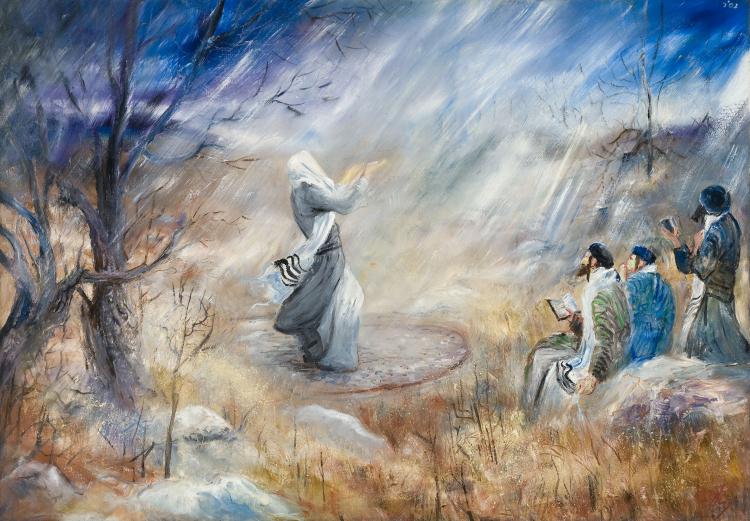
The Talmud, however, reports a much more enigmatic account of divine intervention through water. It was in a time of terrible drought that the Jewish people approached the sage Choni HaMagil and beseeched him to pray for rain on their behalf. When Choni’s supplications to the Almighty went unanswered, he drew a circle in the dust and stepped inside of it, vowing not to leave the circle until G-d bestowed rain upon His people.
Immediately, a fine mist settled upon the earth, too little to alleviate the drought but sufficient to free Choni from his vow.
Choni called out to heaven: “I asked not for this, but for a rain to fill all the wells and cisterns.” Immediately, raindrops larger than melons began to fall, wreaking destruction upon homes and fields.
 Again Choni called out to heaven: “Neither did I ask for this, but for a rain of blessing.” Immediately a normal rain began to fall, filling the wells and cisterns of the people as Choni had requested. But the rain did not stop, and soon the entire population of the land feared that they would drown in the rising waters.
One last time Choni called out heavenward: “Master of the World, Your people, Israel, whom You brought out from Egypt, can tolerate neither too much blessing nor too much misfortune.” Immediately the waters abated, and the people returned to their fields. From this time onward, people referred to Choni by the name HaMagil — the Circle-maker.
What was the point of G-d’s demonstration to the people of Israel? What did Choni mean that the people could not tolerate too much blessing? And why did Choni find it necessary to remind the Almighty, at this particular moment, that He had brought the Jewish people out from Egypt?
The Exodus from Egypt may be described, in commercial terms, as the largest loan ever extended in the history of man. During the generations of slavery in Egypt, the Jewish people had forgotten their Creator and lapsed into the same idolatries as their Egyptian masters. And although, to their credit, the Jews had guarded themselves against assimilation, this alone was insufficient to earn them the privilege of miraculous redemption. Nevertheless, G-d gave them an incalculable line of credit: Freedom from slavery, freedom from oppression, freedom to chart their own course into the future.
Moreover, He promised them immeasurable blessing and unbounded prosperity, on condition that they would repay their loan — repay it by living according to G-d’s law, repay it by rising above material pursuits and petty self-interest, repay it by using all the blessing that G-d would bestow upon them to aspire to moral, ethical, and spiritual perfection.
In this light, blessing may be understood as a double-edged sword. Wielded in one direction, it cuts down all enemies and obstacles that stand before us. Wielded in another, it obligates us to a standard of righteousness and moral behavior that we may find nearly impossible to meet.
This was the meaning behind the Almighty’s response to Choni the Circle-maker’s plea:
Two roads lie before My people, and it is their choice which to follow. One leads back to Egypt, back to the oppression of materialism and the slavery of self-indulgence, back to spiritual emptiness and the absence of all blessing. The other road leads forward, to spiritual fulfillment and spiritual greatness, if My people will only find within themselves the potential to seek greatness and discard all lesser goals. It is for this that I redeemed them, that they might cast off the chains of physicality and reach for the heavens.
 And this too was the meaning behind Choni’s appeal to the Almighty:
Master of the World, You brought your people out from slavery and oppression on condition that they would use their freedom and the blessings to strive for spiritual heights. Your people, however, have demonstrated from their beginnings that, whatever their potential may be, they still suffer from human failings and human shortcomings. They cannot tolerate too little material blessing, lest the struggle to survive overwhelms them and they abandon all higher aspirations. And they cannot tolerate too much blessing, lest they cower before the goal set for them and lose all hope of its attainment.
By all accounts, the world that we live in today enjoys a level of material affluence unattained and unimagined by previous generations. Such basic necessities as rapid transit, instantaneous communication, indoor plumbing, electrical lighting and refrigeration, which we take for granted, provide us with an ease of living simply unavailable to even the wealthiest, most powerful monarchs until the last century. The very existence of an “entertainment industry,” much less the staggering sums of money devoted to it, testifies to our abundance of resources — which is to say, our abundance of material blessing.
Nowhere does Jewish tradition teach the condemnation of wealth or of recreation.
Nowhere does Jewish law mandate the forcible redistribution of wealth from those blessed with good fortune to those less fortunate. But Jewish tradition does warn us of the responsibilities of prosperity. It warns us in the narrative of the flood, in the story of Choni HaMagil, and also in the Hebrew word for charity: tzedakah, derived from the word tzedek, or justice.
It is only just that those who are blessed share a portion of their blessing with their less fortunate neighbors. It is only just that, before overindulging in one’s own good fortune, he ponders why he deserves having received such blessing while his neighbor has not. And it is only just that he ask himself how, even in the absences of tax incentives or legal mandate, he might reach out with his blessing to ease his neighbor’s plight.
If the waters of the earth, the life-giving waters that are the source of our greatest blessing — life itself — have risen up to inflict enormous tragedy, swallowing human life and draining billions of dollars of aid to spare human suffering, we will all be remiss if we do not pause to consider whether we have used our blessings wisely, and what we must do to ensure that we will continue to deserve them.

Going all Waze at once
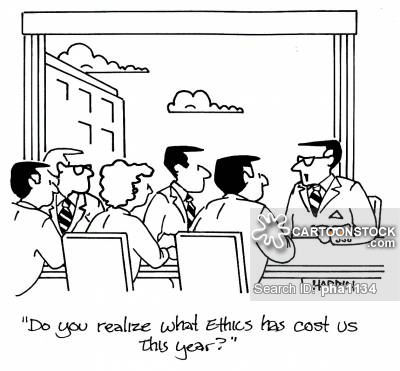
‘Do you realize what ethics has cost us this year.’
Driving in any unfamiliar city can be daunting, disorienting, and disconcerting. Driving in a foreign country can be downright dyspeptic. Driving in Israel can be a flirtation with catastrophe.
In some ways it’s better than it used to be. Traffic has gotten so dense that drivers simply cannot indulge the reckless habits that once prevailed. It’s hard to bob and weave when your car is stuck in gridlock.
But when the traffic starts moving, the experience can be harrowing, made all the more stressful as you try to find your way along unfamiliar boulevards and position yourself to make quick turns with little notice.
Thank goodness for Waze.
Just plug in your destination, follow the directions, and voila! Oh, sure, we made a few wrong turns, but even then Waze got us right back on track.
Most of the time.
Click here to read the whole article.
Hat tip: Rabbi Yehoshua Binyamin Falk

My interview with Bill Martinez
 Listen to my recent interview about faith and politics on Bill Martinez live.

The Seasons of our Discontent
 I received the following email in response to my article last week about Donald Trump and Tony Soprano. I think it’s well worth posting here:
Dear Rabbi,
His point was that Donald Trump’s crude, impulsive, petty, and narcissistic behavior has no bearing on his fitness for office.
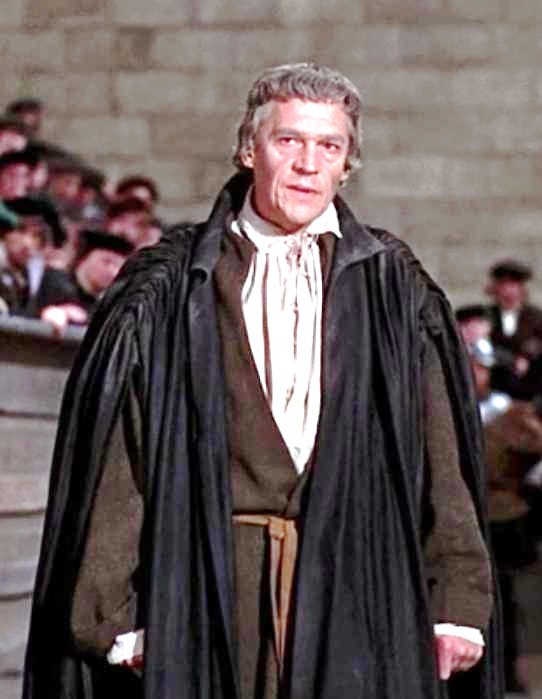
As I read these words in your email, a scene from the 1966 movie A Man for All Seasons came to my mind. The scene occurs at the beginning of the film between Cardinal Wolsey (Orson Welles) and Sir Thomas More (Paul Scofield). This whole scene, all of it worth quoting and so marvelously acted, is one of my favorite “duets” in all movies but I’ll limit myself to the quote below. .
WOLSEY:
Let the dynasty die with Henry Vlll
and we’ll have dynastic wars again.
Blood-witted barons ramping the country
from end to end.
Is that what you want? Very well.
England needs an heir.
Certain measures, perhaps regrettable…
…perhaps not, there’s much in the Church
which needs reformation, Thomas.
All right, regrettable.
But necessary to get us an heir.
Now, explain how you, as a councillor
of England, can obstruct these measures
for the sake of your own private conscience.
SIR THOMAS MORE:
I think that when statesmen forsake
their own private conscience
for the sake of their public duties
they lead their country
by a short route to chaos.
Your usually clear headed good friend is willing to jettison his own private conscience for the sake of political expediency. Millions of other Americans who are also willing to do so are leading our country by a short route to chaos.
 Your statement
The Hitlers, Stalins, and Ahmadinejads of the world may love their children and may have had troubled youths, but evil remains evil whether we choose to look it in the face or to bury our heads in the sand
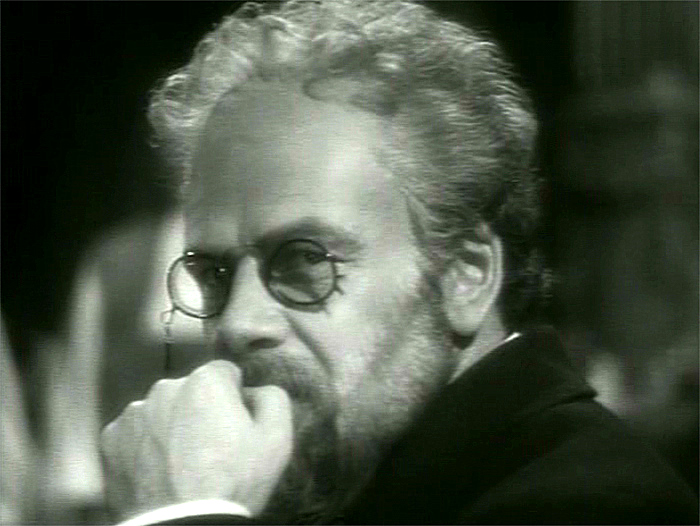
likewise brought to my mind an excerpt from the 1936 movie The Life of Emil Zola, delivered by Zola (played by the incomparable Paul Muni) during Zola’s trial which came about because of Zola’s accusations against the army with regard to the injustice of the Dreyfus affair:
The minister of war,
the chief of the general staff…
…and the assistant chief never doubted
that the famous bordereau…
…was written by Esterhazy…
…but the condemnation of Esterhazy
involved revision of the Dreyfus verdict…
…and that the general staff
wished to avoid at all cost.
For over a year, the minister of war
and the general staff have known…
…that Dreyfus is innocent…
…but they have kept this knowledge
to themselves.
And those men sleep…
…and they have wives
and children they love.
Evil, depravity and mediocrity come in all shapes and sizes. When we are willing to dispense with our own moral consciences and standards in support of that evil for whatever reason we have permitted ourselves to become one with that evil and become just as guilty.
Regards,
Bill Meisler

Before the Flood
 “Things will last my time,” said the Marquise de Pompadour, “But after me, le deluge.”
More prophetic words were never spoken. The mistress of Louis XV foresaw clearly the collapse of the French monarchy and the flood of violence and chaos that would engulf the next generation. But that was the future’s problem. Why should she care?
In some ways, her brutal disregard for future suffering is more palatable than the utopian fantasies and rhetorical flourishes of modern leaders. At least the Marquise knew what lay ahead, and at least she didn’t pretend that she had an easy fix to prevent the future from arriving on tomorrow’s doorstep.
But today we face an impending crisis no less ominous. Our expectations for national leadership have sunk so low that we are willing to overlook pathological, craven, and unapologetic dishonesty from one presidential candidate and volcanic, adolescent recklessness from the other. One can scour the nation’s capital without turning up even a smidgen of character and statesmanship, evidence of a political culture rife with cronyism, gridlock, and groupthink.

Tony Soprano Redux
 A good friend of mine, who is usually more clear-headed, sent me a slimy little video asserting that character doesn’t matter, since both FDR and Winston Churchill smoked and drank while Adolf Hitler was a teetotaler and a vegetarian. His point was that Donald Trump’s crude, impulsive, petty, and narcissistic behavior has no bearing on his fitness for office.
While it is true that people are complicated, and that no one is completely virtuous or completely lacking in virtue, the indulgence in moral relativism is particularly galling when it comes from the right, after so many years of denouncing it as the Kool-Aid of choice among the left.
But the blurring of lines has been going on for a long time. It particularly hit its stride about ten years ago with the success of the Sopranos, which prompted an op-ed that I revisit here.
Psychoanalyst Glen Gabbard, author of The Psychology of The Sopranos: Love, Death, Desire and Betrayal in America’s Favorite Gangster Family, has an interesting take on the phenomenon of Tony Soprano.
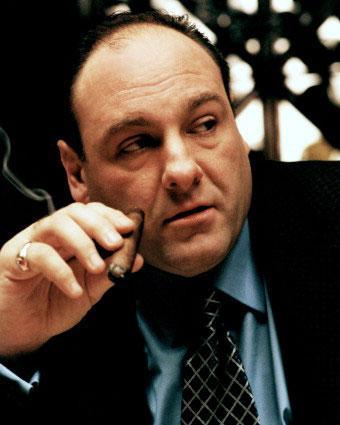 The success of The Sopranos, it seems, depends not on Tony Soprano the mobster, but on Tony Soprano the psychoanalysis patient. Whereas in daily life, Tony is a crook, a thug, and a murderer, on the couch Tony is a regular guy, with the same hopes, dreams, problems, and anxieties as the rest of us.
Dr. Gabbard explains that people love to root for Tony the regular guy to prevail over Tony the violent criminal; they want more than anything to be able to find a noble everyman at the heart of the worst of the worst and the lowest of the low.
Simply stated, viewers don’t want to believe that anyone is really evil.
This is a remarkable turnabout from the early 80s when everyone’s favorite television creep was J.R. Ewing on Dallas. Back when “Who shot J.R.?” was on everybody’s lips, it wasn’t because we wanted to see the would-be assassin brought up on charges — we wanted to see him handed the key to the city. We didn’t want to understand J.R. — we wanted to hate him. We loved to hate him.
 J.R. never killed anybody, never even beat anyone up, yet we cheered from our couches when he got what was coming to him and hoped desperately that his every nasty scheme would fail. If so, why do viewers in record numbers forgive everything for Tony Soprano, the Godfather who terrorizes and murders for fun and profit, just because he worries about his marriage and his children? C’mon, even J.R. loved his daddy.
Perhaps there’s no better barometer for the moral pressure of society than our relationship with television’s most popular characters. When we cheer for the good guys and boo the bad guys, isn’t it because of our desire to see that justice is done?
But when we sympathize with a violent criminal, when we identify with him because he cares about his kids just as we do, isn’t it a sign of abandoning the commitment to differentiate between right and wrong?
The job of making moral decisions, of balancing right and wrong in complex circumstances, is no simple business. But instead of challenging us to recognize that Tony is a villain in spite of his human side, The Sopranos (and, more generally, the entertainment industry) manipulates us into identifying with Tony’s humanity so that we overlook his wickedness.
Based on Dr. Gabbard’s assessment, it seems that we yearn to deny that genuine evil walks this earth. Indeed, it may be admirable to look for the good in all people and give our neighbor the benefit of the doubt, but not to the exclusion of recognizing that sometimes there is no doubt, that what little good remains in some people has been hopelessly buried under a mountain of evil. The Hitlers, Stalins, and Ahmadinejads of the world may love their children and may have had troubled youths, but evil remains evil whether we choose to look it in the face or to bury our heads in the sand.
Too often, it seems, we avoid looking evil in the face at any cost. It should come as no surprise, therefore, that a growing element in our society blames the United States for Pearl Harbor, blames Israel for Palestinian suicide bombers, blames all of Western Civilization for September 11. But making excuses for evil does not make evil go away.
It just keeps coming back, each time bolder and more brazen than before.
The Talmud warns us to distance ourselves from a bad neighbor and not to associate with a wicked friend. Even if he loves his kids. Even if his name is Tony Soprano. Perhaps, especially if his name is Tony Soprano.
Originally published in 2007 by the St. Louis Post-Dispatch, Jewish World Review, and Aish.com.

Take action against terror
Rabbi Mici Mark, the beloved Executive Director of the Torat Shraga talmudic academy in Israel, was murdered by terrorists last month while driving his car on his way to Jerusalem to celebrate his mother’s 80th birthday. He was 46 years old. His wife, Chavi and 2 of his 10 children were in the car with him and, with G-d’s help, are recovering from their injuries.
The community of Otniel has suffered greatly from terror attacks. Mici, was the 11th victim.
Please participate in the Go Fund Me campaign to sponsor a bullet proof van to prevent the Otniel community from further tragedy and trauma.
Details can be found by clicking here.

Look in the Mirror, Mr. President
 “The Republican nominee is unfit to serve as president.”
Such is the gospel according to Barack Obama, who went on to defend his verdict by citing “the repeated denunciations of his statements by leading Republicans.”
He’s right, of course. But his critique might carry more weight if it were not a classic case of the pot calling the kettle black.
(OMG, did I just write that?)
Before his very public embrace and endorsement of Hillary Clinton at the Democratic convention, Mr. Obama might have taken a look at the recent incendiary assessment of Ms. Clinton by NYT columnist Maureen Dowd, who’s about as far to the left as one can get without falling off the edge of the earth.
Here are a few choice quotes:
[The Clintons’] vast carelessness drags down everyone around them…
In a mere 11 days, arrogant, selfish actions by the Clintons contaminated three of the purest brands in Washington…
Hillary willfully put herself above the rules — again — and a president, campaign and party are all left twisting themselves into pretzels defending her.
The Clintons work hard but don’t play by the rules. Imagine them in the White House with the benefit of low expectations.
If even the most ardent defenders of liberal ideology give Ms. Clinton a failing grade in character, surely that must call into question her credibility as an aspirant for the country’s highest office.
So answer us this, President Obama: how can you, with a straight face and in all earnest, chide Republicans for not rejecting an unfit candidate when you so brazenly refuse to do so yourself?

One Cheer for Tim Kaine

A few election cycles ago, a politician I greatly admired was tapped as running mate for a nominee I did not so greatly admire. What followed was a classic example of what is commonly known as the Waffle.
Prior to accepting the vice-presidential nomination, Mr. Waffle met with the presumptive nominee to discuss their respective positions and differences, of which there were more than a few. The future vice-presidential candidate emerged from the meeting and announced to the press that, after a 45 minute-long meeting, he had been convinced to reverse his position on all points of disagreement and now, wholeheartedly, supported the nominee’s entire platform.
I’ll take my Waffle with syrup, please.
At the time, I wasn’t sure what was more disheartening: that a man I admired could so easily abandon his own convictions, or that he and his team believed it would be politically advantageous to do so. In either case, it was a sad day for integrity.
That’s why I have to tip my hat to Tim Kaine.

Between Heaven and Earth
Everyone I see should be smiling. A few of them are. Most of them aren’t, and I feel sorry for them, caught up in the distractions of earthly existence and overlooking the miracles that surround them.
Such is the human condition: the eyes betray the soul, and the heart grows deaf to its own inner voice, which vanishes into the rumble of routine that drums out the exhilaration of each new moment.
It should be easier here at the eye of the universe, and indeed it is. But easier is a relative term, and a hundred pounds might as well be a hundred tons when our muscles have atrophied from disuse. Just the same, in the absence of spiritual discipline, spirituality itself remains a cliché, a meaningless abstraction or, at best, a mere footnote in the narrative of life, an asterisk relegated to indices of the Sabbath, the Festivals, and the House of Worship.
Such an insidious lie. Such an insipid deception.

The Jewish liturgy begins each day with a series of 15 blessings acknowledging the gifts of fundamental existence and identity. How fortunate we are to have eyes that can behold the beauty of our world, limbs that can carry us to the corners of the earth, minds capable of discerning light from dark and good from evil; how reassured we are to commit ourselves to a higher purpose, to recognize that path we are meant to follow, and to trust the guiding Hand that gently steers us toward the fulfillment of our destiny; how much reason we have to rejoice that we are able to master our own passions, to summon the strength to meet failure with determination, and to discover new inspiration everyday amidst the monotony of life in the material world.
Yet still we forget. Even here in this place where heaven and earth kiss, even here at the focal point of human history, human nobility, and human aspiration. Too much light can blind even more effectively than too much darkness.
In the Old City of Jerusalem, the center of Creation, and in the ancient village of Tzefat, home of the greatest kabbalists of the last 500 years, the tension between the past and the present gives way to a supernal harmony that radiates from every rock and tree, that grows stronger as you turn every corner and pass through every archway. The voices of ages gone by whisper always in your ear, if you remember to listen for them.
Click here to read the whole essay from this month’s The Wagon Magazine.
 Yonason Goldson