Home » Posts tagged 'Moral Compass' (Page 29)
Tag Archives: Moral Compass

Affluenza: Nothing new but the name
 Some verbal atrocities are either too offensive or too absurd to ever be forgotten. Like Jonathan Gruber’s candid admission that “the stupidity of the American voter … was really, really critical for [Obamacare] to pass.” Or Brian Williams misremembering that he had been shot down in a helicopter. Or Al Gore’s claim that he invented the internet (although, in all fairness, that was not quite what he said).
But few violations of common sense and common decency compare to that of Jean Boyd, the judge who concluded that probation and rehab were sufficient punishment for Ethan Crouch — after he pled guilty to taking the lives of four people while driving drunk — because he was a victim of affluenza.
Now, two years later, after Ethan Crouch has violated his parole, fled to Mexico with his mother, and finally ended up back in custody, the Washington Post would like us to reconsider whether the diagnosis is really so ridiculous after all. Rallying experts to support his case, Post editor Fred Barbash suggests that affluenza may indeed be an authentic malady, citing ASU professor of psychology Suniya S. Luthar and Barry Schwartz of Swarthmore College:
“High-risk behavior, including extreme substance abuse and promiscuous sex, is growing fast among young people from communities dominated by white-collar, well-educated parents. These kids … show serious levels of maladjustment as teens, displaying … marijuana and alcohol abuse, including binge drinking [and] abuse of illegal or prescription drugs.”[What also stands out] is the type of rule-breaking – widespread cheating and random acts of delinquency such as stealing from parents or peers among the affluent, as opposed to behavior related to self-defense, such as carrying a weapon, among the inner-city teens.”
“[What also stands out] is the type of rule-breaking – widespread cheating and random acts of delinquency such as stealing from parents or peers among the affluent, as opposed to behavior related to self-defense, such as carrying a weapon, among the inner-city teens.”
And finally: Serious depression or anxiety among affluent kids is “is two to three times national rates.”
No arguments from this quarter. But what does not appear in Mr. Barbash’s lengthy commentary is even the most meager attempt to identify why affluence produces teenage miscreants. What is it about growing up with every possible advantage that predisposes so many children to criminally irresponsible behavior?
The answer is quite simple.

Sean Penn — the twelfth monkey?
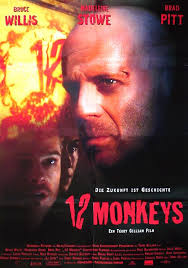 It may be the real-world incarnation of 12 Monkeys, the cult flick in which Bruce Willis goes back in time to save mankind and inadvertently causes the holocaust he is trying to prevent.
Sean Penn has traveled far and wide to uncover the warm, fuzzy side of such political personalities as Hugo Chavez and Raul Castro. We can only speculate on the motives behind his latest adventure, an elaborately staged meeting with El Chapo, the infamous Mexican drug kingpin Joaquin Guzman, who was recently recaptured after escaping from his maximum security prison cell.
Irony of ironies, it was Sean Penn himself who inadvertently led authorities to Guzman’s location. And although Mr. Penn has had little to say about his role in the apprehending of El Chapo, it’s tantalizing to wonder whether he might seek help from Bruce Willis to travel back in time in hope of undoing what he has done.
Always Faithful
 My son at his induction ceremony into the IDF.
May the Almighty watch over all those who put the lives of others before their own.
May we all find within ourselves the clarity and courage to stay true to the values that lie at the core of our humanity.

The Second Amendment and the Oral Law
 As president Obama embarks upon his latest unilateral campaign to repair the world, this time by expanding restrictions on gun ownership, it’s worth revisiting my article on the Second Amendment from 2010.
Perhaps the greatest danger to the Constitution is manipulating its words to validate predetermined conclusions. By doing so, we violate the talmudic admonition against making the law “a spade for digging,” i.e., a tool to advance our own ends.
To preserve constitutional integrity, we have to familiarize ourselves with the context of its times, then apply those observations to the times in which we live. That only works when we are committed to honoring the system, rather than exploiting the system to fit our own agenda.
Last month’s Supreme Court ruling affirming Second Amendment states’ rights (and coinciding with the predictable Republican grilling of Supreme Court nominee Elana Kagan over the same issue) has brought back into the spotlight the constitutional ambiguity regarding gun ownership in the U.S. of A.
A well regulated Militia, being necessary to the security of a free State, the right of the people to keep and bear Arms, shall not be infringed. So states the Second Amendment to the United States Constitution. At first glance, the stipulation seems clear enough. American citizens may own guns, plain and simple.
 Or maybe not. The qualifying phrase that introduces the amendment appears to restrict constitutional protection to dependence upon a militia, or citizen army, to defend the nation. Accordingly, in times such as ours, when a standing army has assumed responsibility for the common defense, there may be no constitutional guarantee at all. And so, on second thought, the amendment seems to clearly limit the extent of private gun ownership.
Or, again, maybe not.
Perhaps the Founding Fathers meant that, since every citizen ultimately owns an equal share of the responsibility to defend his country, the right to bear arms is part and parcel of each person’s national duty to fight for the public welfare should the need ever arise. This would explain why the authors of the amendment might have mentioned a militia even if they never meant to restrict said right.
So what was the original intent of the Framers? If they were here, we could ask them. Since they are not, each side seems to have a fair and reasoned claim to support its respective position.
Is there any way to resolve the question of what was intended by men who passed away long before our grandfathers were born?
In fact, there may be.
THE REST OF THE STORY
Imagine that, as you pass by a window, you see a man wearing a mask raise a knife and plunge it into the chest of another man lying prone beneath him. You scream for the police, certain that you have just witnessed a murder.
Or, yet again, maybe not.
Now imagine that you were unfamiliar with the concept of open-heart surgery. Only after the police arrive and explain that the man in the mask is a surgeon working to repair the heart of the man on the table beside him will you understand that he is in fact saving a life and not taking one.
Context is everything. It orients us in time, space, and circumstance, transforms isolated acts into links in a chain of connected events, none of which can be understood in isolation. And so, if the words of our forebears sometimes appear to us muddled or imprecise, the surest way to achieve clarity is to examine comments and opinions from the same thinkers and the same era.
 Here are a few examples to provide historical context:
James Madison, on the principle of individual rights: [A bill of rights] should more especially comprise a doctrine in favour of the equality of human rights; of the liberty of conscience in matters of religious faith, of speech and of the press; of the trial by jury… of the writ of habeas corpus; of the right to keep and bear arms.
Massachusetts Representative Fisher Ames: The rights of conscience, of bearing arms, of changing the government, are declared to be inherent in the people.
Supreme Court Justice James Wilson, contributor to the drafting of the Constitution:The defense of one’s self, justly called the primary law of nature, is not, nor can it be abrogated by any regulation of municipal law.
Vice President Elbridge Gerry, signatory to the Declaration of Independence, on national defense: What, sir, is the use of militia? It is to prevent the establishment of a standing army, the bane of liberty.
In the context of the times, the intention of the Framers becomes difficult to debate. Only in relatively recent times, when the concept of a militia has become an anachronism, has it become possible to question the true meaning of the Second Amendment.
PRESERVING THE INTEGRITY OF THE LAW
Is there any way for words to retain their clarity despite the persistent evolution of cultural references and values? Is there any method for protecting ideas from the ravages of changing times and sensitivities?
Indeed there is. It predates the United States Constitution by 31 centuries, and it is called the Oral Law of the Torah.
Consider these biblical commandments:
Remember the Sabbath Day and keep it holy… And this will be a sign upon your arm and a remembrance between your eyes … Slaughter your [livestock] in the manner that I have prescribed… Do not seethe a kid in its mother’s milk.
 These precepts, as they are written in the Torah, are impossible to observe. What does it mean to keep the Sabbath “holy,” and what actions — if any — are required to “remember” it? What kind of sign are we to place upon our arms, if elsewhere the Torah prohibits the application of any tattoo, and how do we place a “remembrance” between our eyes? Nowhere does the Torah outline any prescription for ritual slaughter, nor does it imply what is commonly understood, that that the prohibition against cooking a baby goat in its mother’s milk extends to every mixture of meat and dairy products.
In spite of these and many other ambiguities, the basic practices of the Torah observant community have remained essentially unchanged for over 3300 years. The explanation is simple. Unlike the family encyclopedia which once gathered dust on the shelf and now gathers dust on the CD rack, the Oral Torah forces every committed Jew to see himself as custodian of a living tradition that connects him with the origins of his identity and enables him to live in the modern world without compromising the values of his ancestors.
No longer purely oral, the discussions and debates of past authorities have been recorded for their children in the writings of the Talmud and the commentaries that elucidate them. Unlike the records left behind by the Framers of the Constitution, however, these records have become canonized as part of the structure and process through which Jewish law is determined in each and every generation. Even when questions and disagreements arise, there is no debate within the Torah community over the methods through which answers and solutions are to be found.
Society changes, technology changes, and the values of human beings twist in the winds of time like a weather vane spinning before a storm. Electricity, automobiles, computers, cloning, and in vitro fertilization may have once been unimagined, but we have inherited a legacy that teaches us how those earlier generations would have resolved the problems of our changing world if they were here themselves today. And so the Torah Jew never loses his bearings, for he is guided by the words of his forefathers and finds comfort in the knowledge that the ancient wisdom of the Torah will never become stagnant, corrupted, or out of date.
As my teacher Rabbi Nota Schiller often says, the Oral Torah allows the Jews to change enough to stay the same.
Originally published by Jewish World Review

Guest Post: No Good Deed…
 A poor Jew finds a wallet with $700 in it. At his synagogue, he reads a notice saying that a wealthy congregant lost his wallet and is offering a $100 reward for it. He spots the owner and gives him the wallet.
The rich man counts the money and says, “I see you already took your reward.”
The poor man answers, “What?”
“This wallet had $800 in it when I lost it.”
They begin arguing, and eventually come before the rabbi.
Both state their case. The rich man concludes by saying, “Rabbi, I trust you believe ME.”
The rabbi says, “Of course,” and the rich man smiles. The poor man is crushed.
Then the rabbi hands the wallet to the poor man.
“What are you doing?!” yells the rich man.
The rabbi answers, “You are, of course, an honest man, and you say the wallet you lost had $800 in it. Therefore I’m sure it did. But if the man who found this wallet is a liar and a thief, he wouldn’t have returned it at all. Which means that this wallet must belong to somebody else. If that man steps forward, he’ll get the money. Until then, it belongs to the man who found it.”
“What about my money?” the rich man asks.
“Well, we’ll just have to wait until somebody finds a wallet with $800 in it…”

8 Choices for Making a Happier Life
I’m a big fan of Malcolm Gladwell. His particular genius for collecting data and weaving together fresh insights has produced a wealth of practical wisdom to help us improve the quality of our lives.

But nobody’s perfect.
I recently came across Mr. Gladwell’s 2004 Ted Talk, in which he recounted the career of one Howard Moskowitz, a psychophysicist whose market research for Pepsi Cola, Vlasic Pickles, and Prego Spaghetti Sauce — beginning back in the early 70s — changed the food industry forever. It might seem obvious to us with the wisdom of hindsight but, to make a long story short, Howard Moskowitz discovered that there is no perfect pickle, no ideal type of cola, and no universal favorite recipe for spaghetti sauce.
How big a deal was this? I’ll let Mr. Gladwell explain:
Everyone else in the industry looked at what Howard had done, and they said, “Oh my God! We’ve been thinking all wrong!” And that’s when you started to get seven different kinds of vinegar, and 14 different kinds of mustard, and 71 different kinds of olive oil. And then eventually even Ragù hired Howard, and Howard did the exact same thing for Ragù that he did for Prego. And today, if you go to a really good supermarket, do you know how many Ragùs there are? 36! In six varieties: Cheese, Light, Robusto, Rich & Hearty, Old World Traditional — Extra-Chunky Garden.
All well and good. Now we can all have exactly what we like all the time, without sacrifice, without compromise, without effort.
But then Mr. Gladwell continues, moving on from tomato sauce to mustard. And it is here that Malcolm Gladwell exits the highway of reason and turns onto the backstreets of phantasmagoria.

Too Tragic for Words
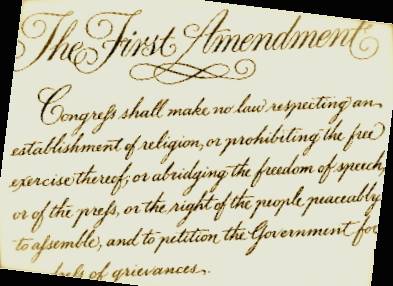 Would you sign a petition to repeal your right to petition? If not, you probably don’t attend Yale University.
Then mourn for our country.

A Short History of Mideast Violence
 Seemingly without end, political groups, government officials, and media outlets continue to blame Israel for unrest in the Mideast. At best, they lament the “cycle of violence,” suggesting that both sides are equally to blame.
With so many outlets providing platforms for misinformation, it’s no surprise how many people believe that Israel is at fault for denying the rights of the Palestinian people to live peacefully in the land that has been theirs since time immemorial.
However, as New York Senator Daniel Patrick Moynihan used to say: “You’re entitled to your own opinions, but you’re not entitled to your own facts.”
So here are the facts.
Before 1920, even the concept of a Palestinian people did not exist. Arabs living in the region considered themselves part of greater Syria, until the French and British divided the region and ended hope of a single commonwealth. Only then, in a desperate attempt to create a national identity out of whole cloth, local Arabs proclaimed themselves Palestinians and begin lobbying for a country of their own.
And they got what they wanted. The next year, Colonial Secretary Winston Churchill divided the region into what are now Jordan and Israel. The Arabs received 76% of the land. The rest was reserved as a Jewish homeland.
But even that was not enough. In 1947, the United Nations divided the remaining territory roughly in half, leaving Israel with 13% of the original Mandate. The Jews accepted the compromise. The Arabs launched a war against the Jews.
Between 540,000 and 720,000 Arabs fled Israel, encouraged by leaders who promised that they would return to their homes after the Jews had been pushed into the sea. Over 70 years later, about 5 million Arab refugees remain, many in squalid camps, unsettled by their own people because of their value as a bargaining chip to demand repatriation or restitution that Israel cannot afford to give.
All the way back in October, 1949, Egyptian Foreign Minister Muhammad Salah A-Din told the Cairo journal Al-Masri that, “In demanding the return of the Palestinian refugees, the Arabs mean their return as masters, not slaves; or, to put it quite clearly — the intention is the termination of Israel.”
You can’t make peace with people who don’t want peace. On, 11 Dec 1948, the UN passed Resolution 194, frequently invoked by Arab leaders b/c it calls for repatriation of (or compensation for) all refugees (Article 11). Every Arab country voted against the resolution, which also guarantees access to holy sites (Article 7) and calls for commitment to peace.
Of course, no one ever mentions the 860,000 Jews who fled for safety from Arab lands at the same time, resettled by Israel without ever receiving restitution from the Arab countries that expropriated their homes and property.
 We also don’t hear how, in 1949, Israel agreed to repatriate 100,000 Arabs as part of a peace negotiation; 35,000 were allowed to return, until repatriation was halted b/c of Arab refusal to make any compromises toward peace. In early 1950, the UN General Assembly established the United Nations Relief and Works Agency, with an annual budget of $54 million. Arab governments refused to cooperate. In 1959, only $7 million had been used while another $28 million lay available in a fund that was never used.
In fact, as early as 1960 King Hussein of Jordan admitted that “Arab leaders have approached the Palestine problem in an irresponsible manner… they have used the Palestine people for selfish political purposes. This is ridiculous and, I could say, even criminal.”
Khaled al-’Azm (Prime Minister of Syria 1948-49) wrote in his memoirs in 1973: “We have brought destruction upon a million Arab refugees, by calling upon them and pleading with them to leave their lands, their homes, their work and their business, and we have caused them to be barren and unemployed though each one of them had been working and qualified in a trade from which he could make a living.”
But the strategy of Arab leaders has always been to use the refugees as a pretext to reject peace in pursuit of their ultimate objective: genocide. Even after getting 87% of the mandatory territory in 1920 and 1947, they still rejected the UN partition, then tried to exterminate Israeli Jews in 1947, 1967, 1973, and have continued terror attacks until today.
By rejecting peace and inciting bloody uprisings, Arab leaders have condemned their own people to lives of poverty and violence. For years, families of suicide murderers were paid tens of thousands of dollars to encourage their “martyrdom.” Murders of Jews are celebrated and their perpetrators turned into heroes by naming streets and schools after them. Yasir Arafat, founder of the Palestinian Liberation Organization (which was established in 1964, three years before Israel had control of the West Bank region, Gaza, or the Golan Heights), embezzled billions of dollars that could have helped his own people.
There are many Palestinians who truly want peace, but any suspected of disloyalty to the power structure and the status quo are executed as sympathizers or collaborators, or else have their families threatened if they don’t “prove” themselves. And Palestinian children grow up in schools that teach hatred of and victimization by Israel, attend paramilitary camps that train them to kill Jews, and learn that the Holocaust is a myth fabricated by Jewish sympathizers in the Western World.
But facts don’t matter. Instead, again and again, Israel is smeared with the same slanderous refrain: occupation, oppression, expansion, apartheid. It doesn’t matter that Israeli Arabs enjoy greater prosperity, literacy, and life expectancy than the Arabs in the surrounding countries. Not to mention freedom. Just as it doesn’t matter that Israeli Arabs have been represented in every walk of life, including an Arab captain of the Tel Aviv football team, an Arab deputy speaker of Knesset, an Arab Supreme court justice, and an Arab Miss Israel.
 It also doesn’t matter that all the way back in 2000, Yasir Arafat refused to accept Israeli Prime Minister Ehud Barak’s offer to return 94% of the West Bank to the PLO.
It doesn’t matter that Israel withdrew from Gaza in 2005, after which Gazans destroyed the infrastructure of greenhouses left behind by the Israelis that could have fed them.
It doesn’t matter that Hamas leaders used their new autonomy to launch missiles against Israeli civilians, while using their own people as human shields in order to win over public opinion. It doesn’t matter that Hamas embezzled millions in humanitarian aid to build sophisticated terror tunnels under the border to attack Israelis.
It also doesn’t matter that the IDF goes to lengths no other country in the world would ever consider to minimize the collateral damage to Arab civilians, dropping leaflets warning of impending attacks and placing its own soldiers in far greater danger than the rules of warfare require or that make sense from a military point of view.
Instead, the propaganda campaign against Israel goes on, even when the casualties are Palestinians themselves. Like when a Palestinian girl stabs a Palestinian man whom she mistakenly believed to be Israeli, the headlines scream Palestinian teenager killed by Israeli forces. And like the 900 workers losing their jobs because the BDS zealots managed to coerce Sodastream to relocate over the green line; it doesn’t matter if a few hundred more martyrs are reduced to poverty if the ideologues can score a PR victory against Israel.
The European community and the Obama administration have ignored these facts and evidence to embrace political correctness and moral equivalence, thereby enabling Palestinian violence against Israeli Jews and prolonging the suffering of Jews and Arabs alike.
No one could say it more clearly or simply than Israeli Prime Minister Binyamin Netanyahu: “If the Arabs put down their weapons today, there would be no more violence. If the Jews put down their weapons today, there would be no more Israel.”
Expanded from an article originally published by Jewish World Review

Donald Trump: Obama 2.0
A magic rests on the lips of the king;
Let his mouth not betray him in judgment.
~Proverbs 16:10
 However improbable it seemed at the start, it’s not hard to understand the initial popularity of Donald Trump. In an age of mealy-mouth, equivocating, do-nothing, business-as-usual, avaricious politicians, many found it refreshing to have a larger-than-life presence who seemed to speak his mind and didn’t pander to popular opinion. But by now the flirtation should have revealed itself for what it is — a cheap one-night stand with no basis for a solid relationship.
Donald Trump represents everything that is wrong with this country: arrogance, self-promotion, pettiness, bellicosity, irresponsibility, bigotry and, despite his hugely successful self-branding, dishonesty and insincerity. In truth, Donald Trump is exactly the opposite of the persona that originally made him so appealing; on closer inspection, he reveals himself to be nothing less than a fun-house reflection of Barack Obama.
Like Mr. Obama, Donald Trump believes in nothing but himself; each man genuinely believes he is the smartest person in the world, and each reacts with seething contempt toward anyone who questions or disagrees with him. Armed with the conviction that comes from infallibility, each will say whatever he has to say, without a flicker of shame, to advance his own personal agenda.
Mr. Trump had only good things to say about Hillary Clinton in his 2012 interview with Greta Van Susteren, but last July he told Meet the Press that Ms. Clinton was “the worst Secretary of State in history.” In 1999 he said, “I love universal health coverage,” but now he chastises the Republican congress for not putting an end to Obamacare. In 1999 he was “very pro-choice,” but now he’s anti-abortion. Apparently, this qualifies him to be president. in 2014, the Washington Post awarded President Obama for having told 3 of the 12 biggest political lies of the year. In 2013, it was 3 out of 10 — an average good enough for an MLB All-Star.
The issues are not the issue; brazen disregard for the truth is. Much more disturbing is the persistent popularity of Mr. Trump based on the illusion that “he tells it like it is.

Mistaking Identity
 Dennis Prager is at it again, this time with the simultaneously radical and reactionary, bigoted, sociopathic, and really-not-very-nice assertion that transgender people should take names and employ pronouns appropriate to their chosen identity.
Quick! Inside the nearest shelter… the sky is falling. Civil society may never recover.
Okay, yes, I am being sarcastic. Guilty as charged. But sometimes the logical and moral convolutions the politically-correct allow for no outlet other than simple mockery.
But I apologize if I hurt anyone’s feelings. I know it’s terribly bad form these days to speak the truth.
However, it should come as no surprise that the moral boundaries of civil society grow ever blurrier, in this case by design. These winds were already blowing with gale force when I published the following essay back in 2011:
When their third child, Storm, was born, Kathy Witterick and David Stocker announced the birth of their new baby with the following email:
“We’ve decided not to share Storm’s sex for now — a tribute to freedom and choice in place of limitation, a stand up to what the world could become in Storm’s lifetime (a more progressive place? …).”
Needless to say, friends and family alike have trouble understanding Witterick and Stocker’s unconventional approach to child-raising. With stereotyping, bullying, and social stigma inevitable parts of growing up, it’s easy to argue that manufacturing an additional obstacle to healthy social development is hardly in the child’s own best interest.
“Everyone keeps asking us, ‘When will this end?'” says Witterick. “And we always turn the question back. Yeah, when will this end? When will we live in a world where people can make choices to be whoever they are?”
FREEDOM WITHOUT LIMITS
A single family hardly constitutes a trend. But consider the Egalia preschool in Stockholm, Sweden, where staff avoid such culturally loaded words as “him” and “her,” addressing the children as “friends” rather than “boys and girls.” According to the AP, “breaking down gender roles is a core mission in [Sweden’s] national curriculum,” and many preschools have hired “gender pedagogues” to devisestrategies for eliminating “stereotypes.”
 Could they be right? Is sexual identity nothing more than arbitrary social programming? By eliminating every vestige of guidance from a child’s environment might parents actually help him learn to make better choices? Will indoctrinating a child with the conviction that every imaginable alternative is equally viable produce a canny, confident, and even-keeled adult?
Well, would it make travel easier if we uprooted every street sign and tore down every traffic signal? Would it make navigation easier if we burned every map and disabled every GPS?
The hazards of unrestricted freedom often go overlooked in a society that values personal autonomy above all else. But the formula for resolving the tension between individual expression and social boundaries was articulated by King Solomon, the wisest of all men, nearly three thousand years ago.
Hear, my son, the moral guidance of your father,
and do not forsake the teaching of your mother (Proverbs 1:8).
Giving voice to the self-evident truth that men are men and women are women, Solomon alludes to the distinct manner in which a father and a mother each makes a unique contribution to the psychological and ethical development of their child. From the father comes instruction— formal guidance in the ways of moral values and discipline. How to know right from wrong, and how to choose good over evil — this is the kind of wisdom most effectively communicated through fatherly counsel and direction.
Complementing the father’s instruction are the lessons absorbed from the mother, who plays the primary role in creating the atmosphere of personal responsibility and spiritual commitment that should permeate a home. It is mainly through the intangible, unquantifiable influence of the mother that a child develops moral sensitivity. Neither father nor mother can successfully assume the role of the other, for our distinct psycho-spiritual complexions are part of the design according to which the universe was formed.
Parents who refuse to assert moral principles, albeit in the name of tolerance and progressivism, succeed only in making their home an environment of intellectual anarchy that will inevitably lead to confusion and dysfunction later in life.
CHILD-RAISING, TAILOR-MADE
Train a youth according to his way;
even when he grows old he will not depart from it (Ibid. 22:6).
Often cited, correctly, as the source for individualizing education based upon the singular needs of every child, this proverb contains another element often overlooked: the word “youth” — na’ar, in Hebrew — implies immaturity. Truth be told, the majority of us suffer from a sophomoric certitude in the infallibility of our own wisdom. And children are the most susceptible of all to such delusions.
Wanting desperately to believe in their own independence, children seize hold of any excuse, no matter how irrational, to invalidate the wisdom of their parents. Left to his own devices, a youth will steer confidently into the heart of the nearest storm, delighted to be free from the steady guidance of the parent who could have saved him from catastrophe.
Like old wine and fine cuisine, genuine wisdom is an acquired taste, and the immature mind will reject its lessons as surely as the untrained palate will disdain the delicacies of a Cordon Bleu in favor of peasant’s fare smothered in salt and ketchup. But we do our children no favor by making it easier for them to marching confidently over the edge of the nearest precipice. Gentle instruction administered with care and consistency will lay the foundations of moral discernment as a child grows into adulthood.
A WORLD WITHOUT BORDERS
In his famous legal discourse regarding character development, Maimonides writes that “people are influenced by the society in which they live” (Hilchos Dayos 6:1). Among the many dangers of the modern world, none may be as insidious as the attack upon all natural and moral boundaries. Electric lighting pushes away the darkness of night, central air conditioning and heating insulate us from the changing of the seasons, cars and planes shrink the distance between faraway places, and electronic communication eliminates all delay in correspondence and information.
No one is suggesting that we live like the Amish and eschew modern technology. But these inventions are not as innocuous as we wish to believe: in the same way that physical boundaries have been breached, so too have moral boundaries become increasingly blurred and the path of moral conduct ever more difficult to find.
 Respect for traditional family structure continues to erode. The personal conduct of political leaders raises less concern than the carelessness that leads to getting caught. Violent criminals are cast as victims while defenders of life and limb are vilified as exploiters and oppressors. And the role of human sexuality in mental health and social stability is ever more profoundly misunderstood. Political correctness and moral equivalence have so muddied conventional wisdom that young and old alike often fear censure from their peers for daring to judge even the most abhorrent behaviors.
Yes, children need to learn to make their own choices, and today’s helicopter parents who micromanage every aspect of their children’s lives are more likely to produce crippled than capable adults. Nevertheless, we dare not overcompensate by throwing our children into the stormy waters of amorality and expecting them to swim. As Solomon has said, it is only through the guidance and teaching of moral values that we will keep our children afloat, as well as enabling them to navigate their way to safe harbor.
Originally published by Jewish World Review
 Yonason Goldson