Home » Posts tagged 'Moral Compass' (Page 32)
Tag Archives: Moral Compass

Yom Kippur: Playoff Season for the Soul
Guest post by Mendel Horowitz

Like a field of dreams Yom Kippur counts on ghosts to inspire. In Kevin Costner’s sentimental role, his character Ray Kinsella carves a baseball diamond from a cornfield after hearing a mysterious whisper “if you build it he will come.” Encouraged by the prophecy and by the spirits of departed ballplayers, Ray in the end discovers his estranged father behind the plate and engages him in a seraphic game of catch. The High Holidays too can be stirred by fantastic voices – inexplicable motivators of contrition, correction, change. On Yom Kippur, standing solemn before my Maker with ghosts of past defeats and not-yet triumphs at hand, I too will aspire to engage Him. I too will hew a future from the past.
This year, the portentous Day of Atonement falls on the eve of September 23, while Sir David Wright hosts the Braves and the Mets delight in their amazing dream. For believers in Flushing, on that weekend baseball might seem delightfully temporal, repentance as distant a notion as spring. For me, our pastime is irresistibly spiritual, her diamond silhouette an invocation, her metaphors as vibrant as her checkered outfield grass. In my synagogue, that holy day will be celebrated as an occasion of longing, an extra-inning playoff of abstinence and prayer. I may not be rooting for the home team that afternoon but I will be encouraged by baseball’s oddities.
Our national pastime is peculiar indeed. When Yogi Berra quipped “it ain’t over till it’s over” during the summer of 1973, the Mets were in last place, finishing July a dismal 44-57. By August 30 the team was 61-71, 6.5 games back with 29 to play. Before the season closed the Mets would claim the NL East, victorious in 21 of their last 29 contests. The Mets infiltrated the postseason with a record of 82-79, to date the worst percentage by a division champion. After raising the NL pennant and battling to a World Series Game Seven, it was finally over when the Mets fell to the Mustache Gang and their swaggering MVP.
Yogi was only half right. In all professional team sports – baseball included – a playoff berth is routinely clinched before the season officially ends. It can be over before it’s over. Baseball is, however, unique in disallowing any single game to be over before its final out. Only on a diamond can a team come back from any deficit with no buzzer, whistle, or horn interrupting its rally. No game is over till it’s over. Just ask Mookie Wilson, who in 1986 delegitimized Billy Buckner on the tenth pitch of his heroic at-bat after the Red Sox were at three times one strike from deliverance. Baseball is a game of second chances.
For diehards, Yom Kippur is a final opportunity in a season of do-overs. When the Israelites forged a golden calf at Sinai Moses was compelled to smash the original tablets, tossing the first pitch in an epic struggle for God’s favor. Throughout a heated summer Moses labored valiantly atop the hill, earning the right to carve new tablets by offering himself for his team. On Yom Kippur, his efforts rewarded, the prophet descended triumphant, with God’s unassuming pardon and trophy slabs in hand. From the assurance of spring through the worry of summer, Moses carried his team to a fall salvation. Not bad for a rookie.
Relived annually, the Jewish season of second chances gets underway with the advent of Elul, the final month before the New Year. From then, each morning after services a shofar sounds and a special psalm is recited, calling to mind the far-reaching potential of the ensuing homestand. For a meritorious few and their less fortunate opposites, Rosh Hashanah, thirty days later, is the conclusive day of judgement, when the righteous and the wicked are inscribed in their respective tomes. Yom Kippur occurs ten days after that, allowing unremarkable journeymen extra innings to settle their score. Before the season’s final strike everyone will have their say at the plate.
A forty day homestand of penitence offers adequate occasions for transcendance. The process of repentance can invigorate, awakening dormant courage from slumber. But introspection is notoriously difficult to maintain, the stretch from Elul to Yom Kippur wearisome, draining. Like an ordinary baseball season (which spans three of four climatic seasons) the Days of Awe rely more on storylines than thrills, more on drama than excitement. Baseball is neither raucous nor bold. When “90% of the game is half mental” its energy is bound to be subtle.
 By some estimates 90% of the game is also spent standing around. According to the WSJ baseball’s fleeting moments of action account for but 17 minutes and 58 seconds of a typical three hour game. From on-deck circle to bullpen, from pathological glove adjustments to obsessive shaking off signs, baseball is an exhibition of exaggerated preparedness. Everything important in baseball happens in the heartbeats between anticipation. Apprehension is baseball’s charm; waiting, her mystique.
What made the pennant race endearing in ‘73 and the rally against Boston amazing in ‘86, were the unhurried ways they unfolded. Few things happen suddenly in baseball, it’s magic evolves leisurely in plain sight. No need for rapid eye movement or instant replay; baseball’s feats are taken in with a pencil and a stomach for suspense. In baseball, time is not something to play against but to toy with, the moments between activity more moving than the action itself.
The Day of Atonement is itself drawn out, prone to rushes of emotion and spans of boredom too. Between its haunting first inning and expectant last are 25 self-denying hours, an ascetic journey of supplication, ceremony, and song. Like baseball, Yom Kippur is a slow game, one that rewards patience with equal measures of elation. The enchantment of the day lingers in its tensions, its allure apparent in its yearning. A classic Yom Kippur unfolds without hurry, its promise swelling cautiously, its hesitancy bursting my heart.
As a religious orientation, baseball imbues the virtue of readiness, the modesty of reacting to something thrown at you really fast. At the plate and on Yom Kippur I can never be sure what may be tossed my way. All I can do is to prepare. Before the ghosts arrived, Ray Kinsella sculpted sacred space from profane, building it so “he will come.” Before knowing who he was, Ray was prepared for his arrival.
Absolution is never assured. To encounter Him on September 23 I will rely on ritual and superstition to get myself ready. My personal playoff will be lengthy, and if all goes well, improbable. I envision a nail-biter until late innings when, like Kirk Gibson, I will limp to the plate and achieve the impossible. Preferably with a longball. Preferably on a full count.

Rethink Everything
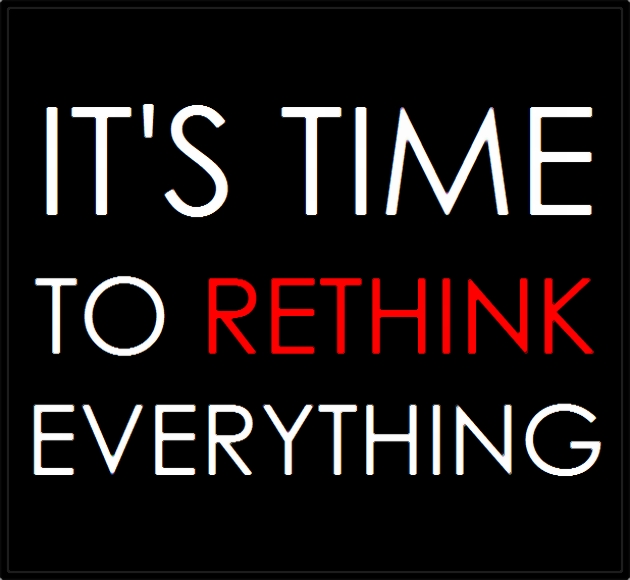 The ten days from Rosh Hashanah to Yom Kippur commemorate the Creation of the universe and the creation of mankind. Rosh Hashanah is called the Day of Judgment, reminding us that all our actions matter, whether great or small, whether public or private.
By contemplating that we will have to make an accounting before the One Judge, we become more aware of our own choices, more cautious in how we judge others, and more willing to rethink the many ideas and attitudes we take for granted.
Ultimately, we want to be the best people we can be, which means looking back on the past year to evaluate how we’ve succeeded and how we have fallen short. It also means looking forward to envision where we would like to see ourselves this time next year, and then setting the bar a little higher, knowing that we will always fall short of our goals.
Change isn’t easy. But it is inevitable, for better or for worse.
And it’s in our hands to see that we change for the better.

Remembering 9/11: Visionaries and Ideology
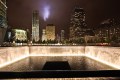
 Who knew a trip to New York could be so emotional?
Our first stop was the 9/11 museum. I marveled at the artistic vision that had conceived the memorial pools, the water channeling down in rivulets that mirrored the face of the fallen towers, the continuous downward rush balanced by the redemptive feeling of water — the source of life — returning to the heart of the world. Here there was solace, closure, and consolation.
But a very different feeling accosted me inside. Almost upon entering the doors a single word brandished itself across my mind’s eye: Holocaust.
Obviously there is no comparison between the monstrosity of wantonly dehumanizing genocide and any single act of terror; obviously there is no equivalence between the systematic psychological, spiritual, and physical destruction of millions and a few thousand relatively instantaneous murders.
But then again, yes there is.
Read the whole article here:
Balancing the Scales of Freedom
Originally published in the St. Louis Post-Dispatch the week after 9/11, between Rosh HaShonah and Yom Kippur.
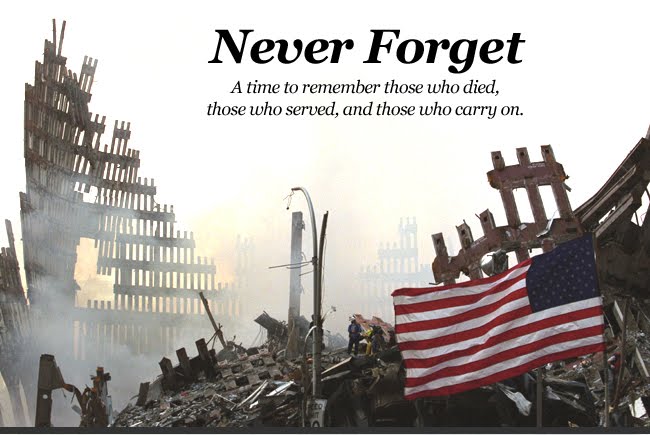
 It was Judgment Day — exactly one week after the World Trade Center buildings collapsed and so many illusions along with them.
“Judgment Day” is the expression found in the traditional liturgy for Rosh HaShonah, the first day of the Jewish new year. And as I stood in the midst of the congregation intoning the High Holiday prayers, the vision of exploding passenger planes and twin towers crumbling to dust hovered before my eyes.
On Rosh HaShonah we will be inscribed … who will live and who will die … who by water and who by fire … who by storm and who by plague … Who will have peace and who will suffer … who will be cast down and who will be exalted.
The judgment upon Jews became kinder after the United States opened her doors to us a century ago. Where no one else would have us, America took us in, allowing us to live both as Americans and as Jews without persecution.
Yet for all that, American Jews often feel torn by opposing cultural forces, especially approaching our Day of Judgment in a society where there is no greater sin than “judgmentalism.”
Without judgment, however, society cannot endure. As good citizens we must judge others – not based on race or religion but upon actions and behavior. And we must judge ourselves as well, by constantly reexamining our motives and our prejudices and our values and our goals. To condemn even this kind of judgment as a threat to freedom is to retreat from our responsibility to discern right from wrong; it is to embrace the illusion of absolute theoretical freedom – moral anarchy – which is in reality no freedom at all.
September 11 brought us face to face with moral anarchy in the form of incomprehensible evil. Perhaps the first step toward confronting it is to remind ourselves that freedom is not a right – it is a privilege, and privileges carry with them obligations that are often inconvenient and occasionally painful. When Thomas Jefferson wrote that the tree of liberty must sometimes be refreshed with the blood of patriots, he warned that the threat against freedom can only be met by not taking freedom for granted.
Freedom is not democratic, as less than a score of suicidal zealots understood when they commandeered four transcontinental airliners. The duties of freedom are non-negotiable, as New York firefighters and policemen understood when they rushed into crumbling skyscrapers. And the rules of freedom cannot always be legislated: sometimes we have to choose between necessary evils, as the passengers aboard United Airlines flight 93 understood when they drove their plane into a Pennsylvania field.
These are the kinds of judgments we must make, every day and every year, to preserve our society, all the more so in a nation built out of so many cultures and beliefs as ours. Every freedom of the individual cannot be permitted if it threatens the collective, nor can every interest of the collective be observed if it oppresses the individual. But when we share the collective will to make our society stable and secure, then the individual will set aside his personal freedoms for the national good and the nation will bend over backward to protect individual freedom.
This is the mark of a great civilization, and it rests upon an informed and devoted citizenry prepared to debate, sometimes passionately but always civilly, the moral direction of our collective journey.
This Rosh HaShonah I stood shoulder to shoulder with friends and neighbors singing ancient liturgical poems in praise of our Creator, just as so many Americans stood together the week before singing “G-d Bless America.” There were no agendas, no politics, no grudges, no rivalries. All of a sudden we were one nation, indivisible, a people with one noble history and many noble ideals whose differences vanished in the shadow of our many common values and common goals.
As the Jews have had ample opportunity to learn, now America has learned that nothing brings us together like a common enemy. What we have yet to learn is how to continue to stand together even in times of peace.
The End of Man
Rabbi Levitas of Yavneh said: Be extremely lowly of spirit, for the end of man is worms.
Pirkei Avos (Ethics of Father) 4:4

Hat tip: @DreamingJannah

The Virginia Shooting: Nihilism and the Culture of Anarchy
 “What has happened to us as a society that we now devalue life to such a level? What has happened in our society that people have become so violent? That’s the fundamental question we need to confront… We have a societal problem in our country. It reminds us of the most important job any of us will ever have … the job of a mother, a father or a parent.”
Senator Marco Rubio summed it up nicely… or tragically. But the deeper question is this: How do we stop the cultural inertia that is driving our society ever further into nihilism and moral anarchy?
Senator Rubio gets the answer perfect: If it doesn’t start in the home, then there really is no hope for the future. Without respect for traditional values, without recovering the lost ideals of civility, selflessness, modesty, and integrity, then the tide of history will sweep us away as it did the Roman Empire and leave behind a new Age of Darkness.
Bill O’Reilly makes the same point with his usual brass-knuckled pithiness here.

Someone is Always Watching
 “Someone is always watching.” Movie fans will recognize this as the punchline from “Ocean’s Eleven,” a glib repartee that ultimately recoiled on Andy Garcia and drove Julia Roberts back into the arms of George Clooney. Political observers might remember it, now that former Illinois Governor Rod Blagojevich is back (briefly) in the news, as a line the convicted politico should have uttered when he found himself the subject of state and federal investigators.
But just the opposite was true. The AP reported:
“You would think he would see his life collapsing around him,” said Chicago defense lawyer John Beal, who was in the courtroom with Blagojevich this week and noted how carefree he seemed. “But he was the center of attention and seemed to love it.”
One almost envies Mr. Blagojevich the comfort of his delusions.
At the beginning of the last century, the invention of electric lighting,telecommunication, and cinematography began to change the complexion of modern society. At the time, the leader of European Jewry, the venerable Chofetz Chaim, observed that the introduction of technologies scarcely imagined a generation before provided a lesson for any spiritually sensitive person to recognize that the Universe is not indifferent to our moral conduct.
Previously, the natural cycle of night and day imposed strict order upon human activity. Because most people in those times could not afford the limitless supplies of candles necessary to transform night into day, all activity was cut short early by the long nights of winter, and only in summer could the workday stretch late into the evening. Now, inexpensively and with the flick of a switch, the night could be expelled and the secrets of the darkness instantly revealed.
Can you say AshleyMadison?

AshleyMadison — Why we’re too lazy to cheat right
 Everything’s easy. Everything’s instant. Is it any wonder that we want everything to be effortless and risk-free — even our acts of disloyalty.
Ironically, patrons of AshleyMadison made their infidelity all the more vulnerable to discovery, believing they could benefit from technology without exposing themselves to the inevitability that anything online eventually finds its way into the public arena.
Technology should free us to enjoy our lives more richly. Instead, it teaches us to be increasingly undisciplined, leeches meaning and purpose from our existence, and deadens us to the simple pleasures that make us truly happy.
Hear my guest interview on the Christal Frost Show discussing why we look for happiness in all the wrong places:
http://wtcmradio.com/the-christal-frost-show-podcasts/yonasongoldson82115/


The Greatest Moment in the History of the Universe
 Well, no. It wasn’t.
But to hear Ann Coulter tell it, it was awfully close.
Just to be clear, this has nothing to do with politics. Hardly anyone thinks that Donald Trump’s immigration plan is viable, no matter how much it may appeal to hardliners. It probably would require a constitutional amendment, it would certainly take half a century and over 100 billion dollars to implement, and it would effectively make Mr. Trump unelectable — if he isn’t already.
But none of that is the point.
What is absolutely clear, beyond any doubt or debate is this: Donald Trump’s plan is not the greatest political document since the Magna Carta.
No matter what Ms. Coulter says.
This is the same kind of irresponsible hyperbole that turns every ideological opponent into a Nazi, a terrorist, a rapist, or a child molester. It shows the same kind of disregard for history that led Ms. Coulter to attempt to resurrect Joseph McCarthy as a fallen hero in place of the paranoid pit-viper that he was. And it’s the same kind of disregard for language and reality that allowed Al Sharpton to laud Bill Clinton as “the first black president,” that enabled Bill Clinton to redefine the word “is,” and that lies at the heart of the political correctness that Ms. Coulter herself (correctly) abhors.
To brand every antagonist a Nazi is to devalue the horror of the Holocaust and to insult its millions of victims. To call newspaper columnists and television hosts terrorists shows a vile lack of empathy for the victims of 9/11 and Oklahoma City. And to suggest any comparison between the Magna Carta and a political platform that is 90% grandstanding and 10% policy is to muddy the waters of logic and reason whey both are clouded enough already.
What an insult to the Summa Theologica, the Declaration of Independence, the Articles of Confederation, the Constitution, the Federalist Papers, Thomas Paine’s Rights of Man, and the Emancipation Proclamation. What a mockery of political history.
“Words, words, words,” wrote William Shakespeare. When we don’t respect them, when we twist them to gain cheap rhetoric advantage without regard for accuracy or authenticity, we become complicit in accelerating the Orwellian doublethink that is already eating away at the civil discourse that is the foundation of a functioning democracy.
 Yonason Goldson