Home » Posts tagged 'Personal Development' (Page 11)
Tag Archives: Personal Development

Rethink Everything
 The ten days from Rosh Hashanah to Yom Kippur commemorate the Creation of the universe and the creation of mankind. Rosh Hashanah is called the Day of Judgment, reminding us that all our actions matter, whether great or small, whether public or private.
By contemplating that we will have to make an accounting before the One Judge, we become more aware of our own choices, more cautious in how we judge others, and more willing to rethink the many ideas and attitudes we take for granted.
Ultimately, we want to be the best people we can be, which means looking back on the past year to evaluate how we’ve succeeded and how we have fallen short. It also means looking forward to envision where we would like to see ourselves this time next year, and then setting the bar a little higher, knowing that we will always fall short of our goals.
Change isn’t easy. But it is inevitable, for better or for worse.
And it’s in our hands to see that we change for the better.

When we aren’t who we think we are
 After several months, two babies switched in an El Slavador hospital were both reunited yesterday with their biological parents, respectively, in Dallas, Texas, and the United Kingdom.
But it didn’t have to turn out that way. Like this story from the news in 2009.
It sounds like a movie. Nurses bring a newborn daughter back to her mother after bathing. The mother insists that she’s been given the wrong baby. The nurses, who clearly know better, dismiss her concerns.
But 56 years later, DNA testing proves that Marjorie Angell, the real mother in this real story, was right.
Kay Rene Reed and DeeAnn Angell were both born on the third of May, 1953 in eastern Oregon’s Pioneer Memorial Hospital. As babies they were switched, presumably while being given baths, and grew up to become wives, mothers, and grandmothers. Less than a year ago Kay Rene’s brother discovered an old photograph of Kay Rene in middle school. Except that it wasn’t a picture of Kay Rene; rather, the schoolgirl who could have been her twin was in fact the sister of DeeAnn.
Subsequent DNA testing proved what had already become obvious. Kay Rene wasn’t a Reed, and DeeAnn wasn’t an Angell.
“I cried,” said Kay Rene. “My life wasn’t my life.”
MISTAKEN IDENTITY
Imagine waking up one morning and discovering that you were someone else. Nothing has changed, yet everything has changed. You have the same friends, the same family, the same job. But you also have another family and another past — a whole different identity about which you know nothing. A careless moment over which you had no control and an innocent mistake outside your knowledge conspired to leave you wondering how your whole life might have unfolded if not for that momentary twist of fate.
What would you do? What would you think? How would you feel?
If you have lived a happy and well-adjusted life, you’d probably wrestle with some inner confusion and then return to your friends and family. But if your life had been difficult, if you had endured an existence of hardships and traumas that had left you broken and bitter, how might you cry out against the cruelty of chance that had snatched away the happy life you might have had.
And what if, somehow, it had actually been your own fault?
THE ULTIMATE ANGUISH
The Sages teach that when a soul departs from this world, it lets out a scream that can be heard from one end of the universe to the other. Contemporary scholars have explained their meaning as follows:
Once freed from the bonds of physical existence, every soul ascends to the next world and comes before the Heavenly tribunal for judgment. Upon our arrival, each of us will witness a reenactment of his entire life on earth, as if projected upon a giant screen, with all of our good deeds and accomplishments, but also with all our carelessness and self-absorption. Recognizing the futility of excuses or apologies, we will feel the shame and remorse of a life poorly lived, with no further chance of redemption.
Simultaneously, as if on a split-screen, a different story plays out. Here we will behold the life of a tzaddik, a truly righteous and pious individual whose every thought and deed is for others and whose efforts are directed entirely toward moral and spiritual self-perfection. The contrast between the two images will be astonishing.
As the painful exercise concludes, each of us will pose a question to the court: “I recognize my own life, but who is this tzaddik that lived so perfect a life, and why was his story projected next to mine?”
“That tzaddik,” the court replies, “is the person you could have been.”
With sudden clarity, the ascendant soul will understand the consequences of a life lived in pursuit of physical pleasure and material goals. Perceiving that there had resided within him the potential to become someone else altogether and, realizing that it is too late to go back and relive his life, the unfortunate soul will emit a scream that can be heard from one end of the universe to the other.
BEFORE IT’S TOO LATE
As long as we remain alive in this world, however, there is time to go back. What’s past is not necessarily past, for the Creator has programmed into his universe the extraordinary capability to go back in time and reshape what has already been done. This is teshuva — repentance or, literally, return.
The Jewish concept of repentance is not mere chest-clopping and confession.Teshuva is a process of self-transformation, of changing ourselves into the kinds of individuals incapable of ever again committing our earlier transgressions and indiscretions. Through sincere self-reflection, our genuine remorse will catapult us to new levels of spiritual and moral sensitivity. By returning to the straight path the Creator laid out before us from the moment we were born, we literally re-create ourselves and severe all connection to the errors of the past.
What’s done is now undone, and we have nothing to fear from the ultimate Day of Judgment. It is no longer our past that defines us. It is what we have made of ourselves, and what we do from this point forward, that will define our future.
 The two women switched at birth have gotten on with their lives, and they have even become friends. Kay Rene introduces DeeAnn as her “swister.”
“I’m trying to move forward and look at the positive,” DeeAnn said. “You can’t look back. It just drives you crazy.”
As we approach Rosh Hashanah, the day on which all the world is judged for the coming year, it would serve us well to contemplate both who we are and who we ought to be.

Rosh Hashanah: Letting our spirits soar
 When my youngest daughter was three years old, she discovered the helium balloons in the flower section of our local supermarket, handed out free to every child who asks. I tied the string around her wrist so the precious balloon wouldn’t escape up to the rafters. She bounced it on its string as I pulled it this way and that to avoid bumping other shoppers. She hugged it as we climbed into the car for the ride home.
As I pulled into the driveway, my daughter flew out of the car, her balloon bobbing along behind her, raced in through the front door and out again to our back yard, slipped the string off her wrist and gazed upward as the balloon rose into the sky and slowly drifted away.
“Why did you let go of your balloon?” I asked, slightly miffed that she had so casually cast away the new toy she had been fussing over for the last half hour.
My daughter just shrugged, giggled, and watched the balloon disappear from sight.
After our next trip to the market she did it again. Then again, over and over for months. Every time I asked the same question. “Why did you let go of your balloon?”
Finally I got an answer. My daughter looked me in the eye and replied, “It’s a present for God.”
* * *
She doesn’t do it anymore. And part of me mourns for the pure, innocent faith that prompted a little girl to give up her toy as an offering to the Almighty.
For all our experience and the sophistication, for all our indulgent smiles at the simplicity of our children’s beliefs, is it not likely that our children know something we don’t, something they themselves soon won’t know or even remember they once knew? And perhaps it is precisely their power of belief that sets them apart from the adults they will become.
Children believe in God, believe in their parents, believe in their country and their school and their friends and that good will always win out over evil. Their trust and faith haven’t yet been sullied by the lies of politicians, the corruption of law and justice, the avarice of sports heroes, the superficiality of Hollywood or, most importantly, the cynicism of their parents, who may try for a time to put on an act to spare their children from their own disillusionment.
But what if it worked the other way, that we could learn an old lesson from our children instead of imposing yet another new lesson upon them? What if we could turn the clock back and recapture even a whiff of the innocence of youth? Would we reach out to grasp it, or have we grown too jaded even to try?
 This Rosh Hashana, Jews around the world will fill synagogues to inaugurate the first day of the Jewish new year. But Rosh Hashana celebrates much more than the beginning of another calendrical cycle. It celebrates birth and rebirth; it celebrates beginning and renewal, for it commemorates nothing less than the Creation of the world and Mankind.
As we approach the New Year, let us ask ourselves how we can turn back the clock, exchanging bad habits for new challenges, routine for renewal, and cynicism for enthusiasm. Instead of smiling with adult condescension at the innocence of children, let us consider instead that the difference between childhood and maturity is not whether we give presents to our Creator, but what kind of presents we choose to give. A child serves God by sending a balloon up into the sky. An adult serves God by releasing his spirit to soar to the heights of Godliness.
Have we given charity in proportion with our means? Have we visited the sick and comforted the distressed? Have we consistently spoken with kindness to our neighbors, with respect to our superiors, and with patience to our children? Have we honored the Sabbath and studied the ancient wisdom of our people?
It’s not enough to make resolutions; we need to inspire ourselves to see them through. We need to awaken in ourselves an awe of the Almighty by reflecting upon the vastness of creation, the unfathomability of the stars in their courses, the mysteries of life, and the limitless potential of the soul — to behold for a lingering moment the immeasurable beauty and majesty of our universe.
And if we can follow through, if we can make the moment last without slipping back into our well-traveled rut of discounting every noble and beautiful thought and deed, then perhaps we can retain our faith in those things truly worthy of faith throughout the coming year.
Originally published by the St. Louis Post-Dispatch and Aish.com

Choose Long-term Gain over Short-term Pain-Avoidance
 There are two things that parents of small children can’t stand. One is a child making noise when we’re trying to get work done. The other is a child making no noise at all.
Because if they’re not making noise, they’re usually getting into trouble.
So consider this scenario: you run to see what your too-quiet two year old has gotten into and find him playing with the snow-globe your sister brought back from her trip to Switzerland last year. Since this is not the best toy for a toddler, you smile at your child and gently take the snow-globe out of his hands.
That’s when the screaming begins.
What do you do? Do you endure the shrieking child or give back the snow-globe?
If you’re normal, your thinking probably works its way through the following steps: 1) He can’t really hurt himself with the snow-globe. 2) He probably won’t break the snow-globe. 3) I never really liked the snow-globe anyway. 4) If he does break it, it’s no big deal to clean it up. 5) So is it really worth making him miserable by taking it away?
But we’re not really worried about the child’s misery, are we? We’re more concerned about ourselves.
In the end, the odds are pretty good you’re going to let the toddler keep the snow-globe.
But the real issue isn’t the snow-globe; it’s the lesson you’ve just taught your child.

Days of Fear, Days of Love
 You must know that there is fear, and there is fear: there is warranted fear and senseless fear. Then there is trust and there is naiveté.
Rabbi Moshe Chaim Luzzato, 18th Century kabbalist
We have nothing to fear but fear itself.
Franklin Delano Roosevelt
As we approach Rosh Hashanah and Yom Kippur, the days of fear and the days of love, we should remind ourselves that the real dangers we face are not from the Ayatollah, not from Vladimir Putin, not from Donald Trump, and not from Hillary Clinton.
The greatest dangers that we face are from our own bitterness, our own complacency, our own pettiness, and our own resistance to challenging ourselves to learn, to grow, and to bring the spirit of God into our world.
In Praise of Superficiality
As we get deeper into campaign season and the Trump phenomenon gains traction, here’s a look back on my retrospective of 2008, a year of political circus and economic implosion.
 Beauty is only skin deep. Don’t judge a book by its cover. All that glitters is not gold.
These well-heeled sound-bytes of conventional wisdom warn us against granting value to appearance, form, and externality. They assert that depth and substance are the determinants of genuine value and true worth. They teach us to look behind every facade and eschew form over content.
Obviously, the people who composed these popular aphorisms were themselves unattractive, moodily self-conscious, or terminally unpopular — quite possibly all three. Yet somehow they succeeded in foisting upon Western Civilization one of the great propaganda victories of the ages, convincing the masses that physical form is quantitatively less important than such insubstantial qualities as character, aptitude, and integrity.
Astonishingly, this shameless hoax continues to shape our outlooks and attitudes even though we all know better. After all, no one would dream of visiting Washington D.C, without seeing the National Gallery, Paris without taking in the Jeu de Paume, or Croatia without experiencing the Muzej Turopolja. And what are these meccas of cultural sophistication? Art galleries — collections of paintings, sculptures, and countless testimonials to aesthetic form and external beauty. When was the last time you visited a metropolitan museum of internal organs or auto parts?
True, beauty may be only skin deep, but that’s precisely the point. Where would Julia Roberts’s career be without her skin? She may be a fine actress, and I’m sure she’s a very nice person, but her movies wouldn’t draw much of an audience if she had her skin surgically peeled away before production.
WHAT’S IN A NAME? EVERYTHING!
Modern psychology has begun to recognize the fallacy of substance over form. In his bestselling book Blink: the Power of Thinking Without Thinking, Malcolm Gladwell marshals compelling evidence in support of superficiality. In one study, college students concluding their semester courses were asked to evaluate the quality of their teachers. Other students, who had not attended these classes, were shown three ten-second videos of the same teachers in action. Their evaluations matched closely those of the students who had actually attended.
The experimenter then shortened the video samples to five seconds, and then to two seconds, each time with comparable results. And this was with the sound turned off! Unfortunately, Mr. Gladwell does not pursue his train of thought to its logical conclusion. If two seconds is just as good as five seconds, ten seconds, or half a year, why do we need any seconds at all? A picture of the teacher should be enough to determine his competency or, even better, merely his name. It should be obvious that Mr. Sunshine, Professor Smiles, or Ms. Summer will create a more positive classroom experience than Mrs. Stern, Dr. Gaunt, or Miss Winter.
A rose by any other name would smell as sweet, observed William Shakespeare, but let’s remember that most historians now believe that those revered plays and sonnets were not actually written by William Shakespeare, the merchant who lived in Stratford-on-Avon. For all his great literary work, Shakespeare wasn’t really Shakespeare, and no one knows who he was. Imagine if the real author stepped forward today and claimed credit for his writings. Nobody would believe him. Of course, hardly anybody would care. We’ve all moved on to reading more relevant novels about teenage vampires.
Consider the last presidential election. Almost the entire Republican Party establishment agreed that Arkansas governor Mike Huckabee was the best candidate to lead the country. But he never had a chance. Can you imagine the elites of vote-laden New York, New England, and California ever voting for someone named Huckabee? If he’d been clever, the governor would have changed his name to Mike Skywalker-Sanchez, thereby establishing himself as an epic hero while attracting the critical Hispanic vote at the same time.
MIND OVER MATTERS
Consider also the recent economic collapse. Everyone was perfectly happy until someone found that all those companies enjoying soaring stock prices weren’t really making any money. As soon as the media started uttering words like downturn, recession, and pyramid scheme the entire market dove into a tailspin. Wouldn’t we all be better off if those misguided people obsessed with digging beneath the surface had simply satisfied themselves with the illusion of prosperity?
Of greater consequence is the effect of our misguided quest to bring depth, complexity, and meaning into our personal lives. Human nature as it is, how much anxiety do we cause ourselves through self-help books that teach us to look for inner peace, and through therapy that prods us to resolve neuroses of which we weren’t even conscious? How many relationships would flourish if we accepted physical attraction and physical gratification as the ideal rather than pursuing fantasies like “self-actualization” and the search for “soul-mates”?
Further evidence can be found in America’s obesity epidemic. Our subconscious minds, confused by the contradictions implicit in the rejection of two-dimensionalism, leave us with no alternative than to impose our misguided objective of becoming three-dimensional upon our physical bodies. The more we seek depth, the more three-dimensional we become — which may be good for the diet-book industry but not for our wardrobes.
So why don’t we all stop pretending? If superficiality is bliss, and if depth and meaning cause only confusion and discontent, it should be a no-brainer.
Here’s the problem. Superficially, depth is “in.” We don’t want to appear shallow because shallowness appears superficially inferior. Of course, on deeper reflection, we understand that superficial appearance is infinitely preferable to the complexity of depth, but our superficiality doesn’t allow us to admit this fact because it seems too obvious to be significant. Get it?
But today we find ourselves poised on the brink of a new era. Ours is the generation of change! Let us seize the moment and rise up as one people with one objective. Let us cast off our superficial adoration for depth and substance. Let us not be afraid to declare our commitment to all that is two-dimensional and raise up the banner of simplicity and externality. Let us purge our worldview of the pernicious urge to discover meaning in our existence, and let us join hands in our conviction that everything worth having should be available to everyone without any effort, thought, or accountability.
Well, aren’t you feeling better already?

How to Take Charge of your Moods and your Choices
 Why does Alaska have the highest rate of organ donation in the country? It might have something to do with Sarah Palin.
Most of us confront the question of whether or not we want our organs harvested every time we apply for a new driver’s license. Typically, we have to choose between checking a box if we want to be donors or leaving the box empty if we don’t.
This is how most donor forms were designed. Then researchers wondered what they could do to increase the number of participants. They came up with the bright idea of giving people a choice between two boxes: mark the yes box to donate, mark the no box to decline. The reasoning went this way: if people can opt out passively, then they’re not necessarily thinking about the choice in front of them, whereas having to choose one way or the other will force them to consider their options more carefully, resulting in more affirmatives.
The reasoning makes perfect sense. However, people are not always reasonable.
Inside Out
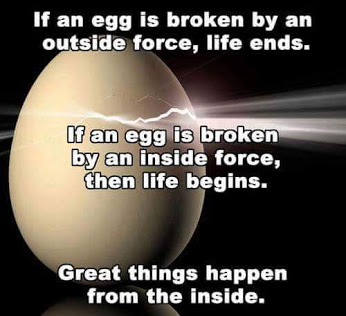
Who is mighty? asks the Talmud. The one who conquers his inclinations.

AshleyMadison — Why we’re too lazy to cheat right
 Everything’s easy. Everything’s instant. Is it any wonder that we want everything to be effortless and risk-free — even our acts of disloyalty.
Ironically, patrons of AshleyMadison made their infidelity all the more vulnerable to discovery, believing they could benefit from technology without exposing themselves to the inevitability that anything online eventually finds its way into the public arena.
Technology should free us to enjoy our lives more richly. Instead, it teaches us to be increasingly undisciplined, leeches meaning and purpose from our existence, and deadens us to the simple pleasures that make us truly happy.
Hear my guest interview on the Christal Frost Show discussing why we look for happiness in all the wrong places:
http://wtcmradio.com/the-christal-frost-show-podcasts/yonasongoldson82115/


 Yonason Goldson