Home » Posts tagged 'Philosophy' (Page 7)

Tag Archives: Philosophy

My interview on Solomon Success

Great minds think alike, and Jason Hartman has a website and podcast exclusively devoted to the practical lessons of King Solomon’s wisdom.

Listen to my interview with him here.

The Monty Hall Problem: Unlocking the Doors of Destiny

2000px-Monty_open_door.svgI can sleep at night again, now that I have resolved one of life’s most perplexing mysteries. All is well with the universe once more.

What is the persistent question that for so long stole my peace of mind? It is the riddle of Monty Hall and the goat behind Door Number Three.

The so-called Monty Hall problem is a counter-intuitive statistics puzzle that goes as follows: You have to choose one of three doors.  Behind one you will find a car; behind each of the others, you will find a goat. You pick Door #1, hoping for the car, of course. Monty Hall, the game show host, narrows your choices by opening Door #3 to reveal a goat. Then Monty offers you a choice:  you can stick with your original door or switch to Door #2.

What should you do? Simple logic suggests that there is no advantage to switching doors. With the elimination of Door #3, your odds improve from one-in-three to even-money.  It shouldn’t matter whether or not you switch: either way, you will still have a 50-50 chance.

But here human logic fails. By switching doors, you increase your odds from even money to two-thirds.

HERE’S WHY IT WORKS, AND WHAT IT MEANS TO US:
http://www.learning-mind.com/the-monty-hall-problem/

Too Tragic for Words

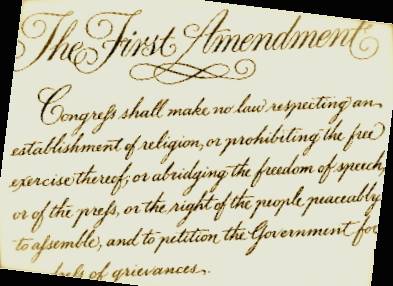
firstamendmentWould you sign a petition to repeal your right to petition?  If not, you probably don’t attend Yale University.

Watch the video here.

Then mourn for our country.

Why do we Cry? The Psychology of Tears

0610-why-we-cry-1154My dog died.  I just got engaged. An earthquake leaves thousands homeless. “Time in a Bottle” comes on the radio. I passed my college physics exam. My best friend has leukemia. My daughter just gave birth to twins. Another senseless terror attack takes innocent lives. Jimmy Stewart’s friends and neighbors all rally to his defense at the end of “It’s a Wonderful Life.”

It would be hard to compose a more random grouping, would it not? Taken individually, the items on this list seem so far removed from one another that anyone having the same emotional response to every one of them might reasonably be diagnosed as schizophrenic.

Well, maybe schizophrenic is what we are, since any of them could send any of us into a spell of sniffles, if not outright sobbing.

Which has to make us wonder:  why do we cry? We all know when we cry.

We cry when we’re sad, and we cry when we’re happy. We cry when we’re lonely, when we’re in pain, when we hear bad news, and when we hear good news. We cry when we’re so overwhelmed with work or debt or family or life in general that we can no longer cope, and we cry when we’re so filled with joy that we want hug the world.

But what do all these highs and lows have in common? And why is crying our natural, involuntary reaction to emotional intensity?

Read more at: http://www.learning-mind.com/why-do-we-cry/

Worst Day Ever?

RottenEcardsWorst Day Ever?
by Chanie Gorkin

Today was the absolute worst day ever
And don’t try to convince me that
There’s something good in every day
Because, when you take a closer look,
The world is a pretty evil place.
Even if
Some goodness does shine through once in a while
Satisfaction and happiness don’t last.
And it’s not true that
It’s all in the mind and heart
Because
True happiness can be attained
Only if one’s surroundings are good
It’s not true that good exists
I’m sure that you can agree that
The reality
Creates
My attitude
It’s all beyond my control
And you’ll never in a million years hear me say
Today was a very good day

Now read it from bottom to top, the other way,
And see what I really feel about my day.

From Aish.com.


Compartmentalize Your Free Will

do-not-cross-the-line-crossing-a-shopping-cart-prohibition-of-shopping-cart-1201651Throw out the diet books and stop starving yourself.  Here’s the next big thing in healthy living:

Duct tape.  Yellow duct tape.

That’s what researchers found when they partitioned grocery store shopping carts into sections, one side for fruits and vegetables, one side for other items.  Just a little nudge to make shoppers more conscious of their purchases led them to buy more healthy food and less junk.

The researchers, Brian Wansink, Dilip Soman, Kenneth Herbst, and Collin Payne, didn’t stop there.  By varying the size of the compartments, they discovered that shoppers bought even more fruits and vegetables in proportion to the size of the designated compartment.  With a little manipulation, customers could be prodded into choosing a healthier diet.

Ah, but there’s the rub.  How dare they manipulate us!  Who are they to play with our minds, to force us to conform to their values, and to interfere with our free will?

To which there is only one obvious response:  nonsense!

Read the whole article at http://www.pickthebrain.com/blog/compartmentalizing-free-will/#kyxx1wXQ1Ae41ZFJ.99

Living Beneath Falling Skies

ap_malaysia_plane_10_kb_140717_4x3_992Two stories from this morning’s headlines:

Man Suing Over Injury From Giant Pine Cone in San Francisco

Missile Brought Down Malaysia Airlines Plane in Ukraine, Investigators Conclude

Our hearts should truly go out to the U.S. Navy veteran who had the misfortune of relaxing in a national park when a 16-pound pine cone fell on his head.  The story would be comical were it not so tragic.  After serving their country, our servicemen deserve respect and appreciation, not traumatic brain injury from freak accidents.

But that’s just the point.  This was an accident, and accidents happen.

I suppose lawyers will wrangle over whether the Park Service was negligent for not posting warning signs and fencing off the area, or for planting a non-native species that might threaten unsuspecting visitors.  I suppose one could also make the case that the Park Service should assume a measure of responsibility by covering the victim’s medical expenses.

But what does it say about us when our natural impulse is to litigate every mishap, to turn to the courts, assign blame, and make others pay?  Life is full of scrapes and bruises, and sometimes more painful twists of fate.  How we deal with the apparent randomness of our world comes down to personal philosophy and theology, but it isn’t always someone else’s fault.

In truth, it reflects a kind of collective arrogance, resulting from the delusion that we are in total control of our lives and our world, and that anything bad that happens to us must have been inflicted in some kind of criminal act.  Why fate smiles on some and torments others is a question we can’t expect to answer in this world.  But there isn’t always a man behind the curtain whom we can haul into court to demand restitution.

Even worse, when we attribute wicked intent to every whim of fortune, we lose some of our contempt for true acts of evil.  The recent finding that it was a Russian-built Buk missile that killed 298 people aboard Malaysia Airlines Flight 17 last year confirms what everyone expected.  There is true evil in the world, and we dare not conflate incidental suffering with that perpetrated by authentic villains.

We live in a world full of contradictions.  When bad things happen to good people, we owe them our comfort and sympathy.  When bad people spread suffering among the innocent, we are duty bound to hunt them down and exact justice.

But we should never confuse the two.

South Carolina and the Great Flood

151007074358-south-carolina-flooding-drone-sanchez-newday-00001420-large-169As residents of South Carolina begin to emerge from the floodwaters that inundated their state, Jews around the world are reading the story of Noah and the ark this week in their synagogues.  Water is both the source of all life and the greatest destructive force on earth.  I ponder the paradox in these reflections from after the Pacific Rim tsunami of 2005.

Volcanoes. Hurricanes. Earthquakes. Fires. Tornadoes. Blizzards. Drought.

In a time when reports of terrorism have become all too common, it is sobering to consider the myriad ways nature possesses to inflict death and violence on a scale surpassing the most destructive instruments devised by man. Of all these, however, destruction by water, whether from the sea or from the sky, holds a unique terror in the scope and measure of its devastation.
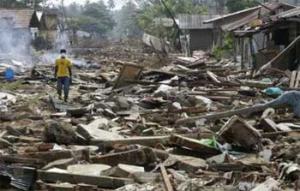
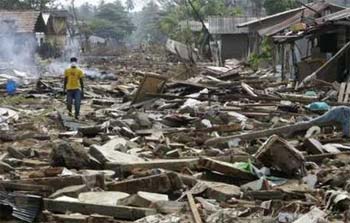
tsunami_housesAside from the 150,000 lives already reported lost across nearly a dozen countries along the Indian Ocean, dehydration, disease and hunger threaten as many as 5 million more in the wake of the recent tsunami. And rare though tidal waves may be, the more familiar trial-by-water of floods has, with much greater frequency, left similar numbers homeless and in danger of starvation.

It seems ironic that water, the source and foundation of all life upon our planet, can become nature’s most malevolent instrument against the beings whose lives depend upon it.

Devastation by water occupies a prominent place in human history. Virtually every ancient culture records the tradition of a great flood that inundated the world, lending credence to the biblical account of Noah and the ark. Jewish tradition describes this not as a random event, but as a divine response to the corruption of mankind.

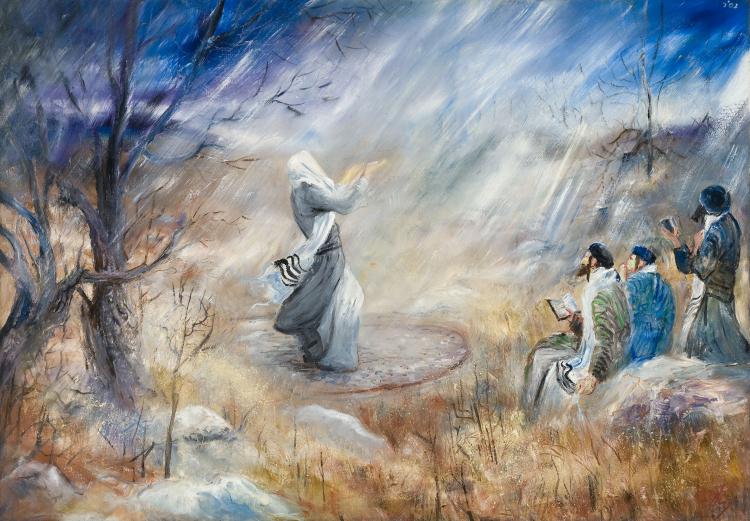
The Talmud, however, reports a much more enigmatic account of divine intervention through water. It was in a time of terrible drought that the Jewish people approached the sage Choni HaMagil and beseeched him to pray for rain on their behalf. When Choni’s supplications to the Almighty went unanswered, he drew a circle in the dust and stepped inside of it, vowing not to leave the circle until G-d bestowed rain upon His people.

Immediately, a fine mist settled upon the earth, too little to alleviate the drought but sufficient to free Choni from his vow.

Choni called out to heaven: “I asked not for this, but for a rain to fill all the wells and cisterns.” Immediately, raindrops larger than melons began to fall, wreaking destruction upon homes and fields.

519133312_2_570_411Again Choni called out to heaven: “Neither did I ask for this, but for a rain of blessing.” Immediately a normal rain began to fall, filling the wells and cisterns of the people as Choni had requested. But the rain did not stop, and soon the entire population of the land feared that they would drown in the rising waters.

One last time Choni called out heavenward: “Master of the World, Your people, Israel, whom You brought out from Egypt, can tolerate neither too much blessing nor too much misfortune.” Immediately the waters abated, and the people returned to their fields. From this time onward, people referred to Choni by the name HaMagil   —   the Circle-maker.

What was the point of G-d’s demonstration to the people of Israel? What did Choni mean that the people could not tolerate too much blessing? And why did Choni find it necessary to remind the Almighty, at this particular moment, that He had brought the Jewish people out from Egypt?

The Exodus from Egypt may be described, in commercial terms, as the largest loan ever extended in the history of man. During the generations of slavery in Egypt, the Jewish people had forgotten their Creator and lapsed into the same idolatries as their Egyptian masters. And although, to their credit, the Jews had guarded themselves against assimilation, this alone was insufficient to earn them the privilege of miraculous redemption. Nevertheless, G-d gave them an incalculable line of credit: Freedom from slavery, freedom from oppression, freedom to chart their own course into the future.

Moreover, He promised them immeasurable blessing and unbounded prosperity, on condition that they would repay their loan   —   repay it by living according to G-d’s law, repay it by rising above material pursuits and petty self-interest, repay it by using all the blessing that G-d would bestow upon them to aspire to moral, ethical, and spiritual perfection.

In this light, blessing may be understood as a double-edged sword. Wielded in one direction, it cuts down all enemies and obstacles that stand before us. Wielded in another, it obligates us to a standard of righteousness and moral behavior that we may find nearly impossible to meet.

This was the meaning behind the Almighty’s response to Choni the Circle-maker’s plea:

Two roads lie before My people, and it is their choice which to follow. One leads back to Egypt, back to the oppression of materialism and the slavery of self-indulgence, back to spiritual emptiness and the absence of all blessing. The other road leads forward, to spiritual fulfillment and spiritual greatness, if My people will only find within themselves the potential to seek greatness and discard all lesser goals. It is for this that I redeemed them, that they might cast off the chains of physicality and reach for the heavens.

H19060-L75167491And this too was the meaning behind Choni’s appeal to the Almighty:

Master of the World, You brought your people out from slavery and oppression on condition that they would use their freedom and the blessings to strive for spiritual heights. Your people, however, have demonstrated from their beginnings that, whatever their potential may be, they still suffer from human failings and human shortcomings. They cannot tolerate too little material blessing, lest the struggle to survive overwhelms them and they abandon all higher aspirations. And they cannot tolerate too much blessing, lest they cower before the goal set for them and lose all hope of its attainment.

By all accounts, the world that we live in today enjoys a level of material affluence unattained and unimagined by previous generations. Such basic necessities as rapid transit, instantaneous communication, indoor plumbing, electrical lighting and refrigeration, which we take for granted, provide us with an ease of living simply unavailable to even the wealthiest, most powerful monarchs until the last century. The very existence of an “entertainment industry,” much less the staggering sums of money devoted to it, testifies to our abundance of resources   —   which is to say, our abundance of material blessing.

Nowhere does Jewish tradition teach the condemnation of wealth or of recreation.

Nowhere does Jewish law mandate the forcible redistribution of wealth from those blessed with good fortune to those less fortunate. But Jewish tradition does warn us of the responsibilities of prosperity. It warns us in the narrative of the flood, in the story of Choni HaMagil, and also in the Hebrew word for charity: tzedakah, derived from the word tzedek, or justice.

It is only just that those who are blessed share a portion of their blessing with their less fortunate neighbors. It is only just that, before overindulging in one’s own good fortune, he ponders why he deserves having received such blessing while his neighbor has not. And it is only just that he ask himself how, even in the absences of tax incentives or legal mandate, he might reach out with his blessing to ease his neighbor’s plight.

If the waters of the earth, the life-giving waters that are the source of our greatest blessing   —   life itself   —   have risen up to inflict enormous tragedy, swallowing human life and draining billions of dollars of aid to spare human suffering, we will all be remiss if we do not pause to consider whether we have used our blessings wisely, and what we must do to ensure that we will continue to deserve them.

Gaining Entry to the Glorious Kingdom

Aaron [the High Priest] shall place lots upon the two goats: one lot “for God” and one lot “for Azazel.”  Aaron shall bring close the goat designated by lot for God and make it a sin-offering. And the goat designated by lot for Azazel shall be stood alive before God, to provide atonement though it, to send it to Azazel into the wilderness.

Leviticus 16:8-10

goat_dies-1One of the most puzzling and disturbing rituals in Jewish practice is the goat “for Azazel.” During the afternoon of Yom Kippur, two goats are brought before the Kohein Gadol, the High Priest.  By lot, one is chosen to be placed upon the altar as a sin-offering, while the other is taken out into the desert and thrown alive over the edge of a sheer cliff.

What purpose could such a practice possibly serve?

In truth, the symbolism of this ritual is astonishingly simple and frighteningly relevant.  The two goats, identical in every way, symbolize the two possible futures that stretch out before every single human being.  Like these goats – which appear indistinguishable from one another – many of the paths open to us in our youth seem equally attractive and filled with opportunity.  Every child demonstrates both qualities of virtue and qualities of selfishness.  Whether our higher or lower nature will win out in the end can never be reliably predicted.

Only over the course of a lifetime will it become evident whether the individual has chosen the path of righteousness, dedicating his life “to God,” like the goat offered up on the altar, or abandoned virtue for the path of wickedness, wandering through life into the wasteland of moral confusion and making himself into an offering “to Azazel,” a name commonly associated with the Satan but often left undefined.

Rabbi Samson Rafael Hirsch explains that the name Azazel can be understood as a composite of two Hebrew words:  az azal – “wasted strength.”[1]  Rather than devoting his life to the ways of virtue defined by God’s law, a person may use his human potential for pleasure seeking, for ego-gratification, for ultimately self-serving ends.  By doing so, he squanders the resources of physical health, intelligence, and imagination in pursuit of temporal rewards that leave him, for all his efforts, with nothing of real value.  He will have wasted his life, as surely as the life of the goat flung over the precipice in the wilderness comes to a wasted end.  Like that goat, his life will have served no purpose except as a warning to others.

On this Day of Atonement, we remind ourselves of the urgency of daily reflection upon our past and our future, of the need to contemplate the awesome indictments of the Day of Judgment that we have only just survived, and of the priceless opportunity we have to influence the verdict of the Celestial Court as it determines our fate for the coming year.

Will we choose to offer ourselves on the altar of divine service by committing ourselves to take greater care in our speech, in our actions, and in our thoughts?  Will we show more consideration for our fellow men and conduct ourselves with modesty and humility?  Or will we continue on as we have, like the goat wandering blindly into the wilderness of oblivion, persisting in the habits of spiritual and moral insensitivity that may have already led us to the brink of eternal desolation?

It should be an easy choice.  But the most important choices that confront us are rarely easy; instead, we grope through the darkness of confusion, blundering through the days and years of our lives.

Except for one day a year, when our eyes are opened wide.

templeThe sages tell us that one who answers amen has greater merit than one who recites the blessing itself: no praise of the Almighty is complete until it is reaffirmed by another.[2]  However, we learn elsewhere that in the Holy Temple in Jerusalem, the congregation did not answer with the tradition amen but with the phrase “baruch sheim kovod malchuso l’olam vo’ed– Blessed is the name of His glorious kingdom forever and ever.”[3]

Rabbi Samuel Eliezer Edels (Maharsha) explains that amen is an expression of emunah, the faithfulness that compels us to remain true to God’s Law and to our spiritual mission even when the darkness of exile envelops us, even when human logic would abandon all hope that there is any rhyme or reason, that there is either Judge or justice.[4]  Amen is the affirmation of our faithful belief in the existence and the divine plan of our Creator even when our senses can make little sense of our existence.  When we declare amen – it is so! – not as an obligatory act but as a willing response, we testify to others and to ourselves that the hidden face of God hides from us only so that we can raise ourselves to new spiritual heights by seeking out the divine presence.

In the courtyard of the Temple, however, the radiance of the Shechina (the Divine presence) illuminated the eyes of all who stood in the holy courtyard facing the inner sanctum.  Those who made the pilgrimage and passed through those gates were rewarded with a vision of such profound spiritual clarity that every shred of doubt evaporated and absolute certainty overtook them.  There was no room left for emunah, and no need to cry out amen.

Instead, the ministrants would proclaim blessed is the name of His glorious kingdom forever and ever, a formula reserved for the malachim — the celestial emissaries that reside in the heavenly spheres — but which we are allowed to intone only in a whisper.

And why are we not permitted to say these words out loud?  Since we do not know and cannot know the name – the essence – of God’s glorious kingdom, at least not until we have lived out our lives in this world and made our transition into the next.  We have no right to praise that of which we have no knowledge, and so we dare only speak of it softly in anticipation of the day when it becomes our inheritance.

But in the Temple, in the presence of the Shechina enwrapped in the light of holiness, one gained sufficient clarity so that he could cry out with the malachim, not as an expression of faith but as declaration of absolute knowledge.

And there is one other occasion when we are permitted to proclaim this formula aloud: on Yom Kippur.

On Yom Kippur, we shed the trappings of our material existence and enter the realm of the malachim.  Indeed, if we have prepared ourselves properly over the Ten Days of Repentance, then we do not merely give up eating and drinking; rather, we lose all interest in physical indulgences, attaining a vision of such spiritual clarity that we might as well be in the Temple itself, or in the celestial spheres alongside God’s divine emissaries.

And when the day is over and we return to the mundane existence of the physical world, we should find ourselves transformed, no longer malachim but much more than flesh and blood.  With renewed spiritual energy and awareness, we are equipped to resolve the contradictions of the higher and lower worlds, and the paradox of the Almighty’s hidden and revealed self.

And this we can accomplish a hundred times a day, with every blessing we pronounce and every amen we answer.

Maharsha goes on to explain that the Tetragrammaton — the four letter name of God as it is spelled out in Hebrew – yud-kay-vav-kay – represents the Almighty in His ultimate form, all powerful and eternal, Master of the glorious kingdom whose name is known only to the malachim.  On the other hand, the spoken name of God, the name in our prayers and our blessings – Ado-noy – represents the Creator as He reveals Himself to us as Master of our world.

With every blessing that we recite, we have an opportunity to act upon the revelation we experienced on Yom Kippur, uniting the revealed and the concealed names of God, proclaiming the unity of the Master of the Universe.  And even more so when we respond amen.

According to Jewish numerology, or gematria, every letter in the Hebrew alphabet has a numerical equivalent.  The numerical values of God’s written name – yud-kay-vav-kay – is 26.  The gematria of God’s name as we pronounce it – Ado-noy – is 65.  And when we respond to another’s blessing, affirming our faithful conviction that the same God we perceive imperfectly through our limited human eyes is one with the ineffable God who created the heavens and the earth, we ourselves transcend both the simple obligations of Torah observance and the finite nature of our earthly existence with one simple word:  amen – with the gematria of 91, the sum of 26 and 65, representing the absolute unity of the Almighty.

And if we can achieve this awareness, despite all the darkness and confusion of our world, the malachim can do nothing but look on and covet the opportunity all of us have to serve our Creator in the way that is uniquely our own.


[1] Commentary on Chumash, loc. cit.
[2] Berachos 53b; Rashba, Sha’alos and Teshuvos 5:53
[3] Sotah 40b
[4] Ibid.

Do we really want a leader?

AAEAAQAAAAAAAAKgAAAAJGE4ZTY0YzkzLWMyOTctNGNmYi1hMDA4LTdkYjg1YmJlYTYzYgThe second Republican debate provided three indisputable facts:

  1.  The mainstream press can barely disguise its bias in favor of the democrat party.  Virtually every question was designed to promote inter-party bickering rather than elicit either policy positions or evidence of executive experience and aptitude.  Whether in the debate itself or beyond, the press devotes disproportional attention to Donald Trump, not because he is the front-runner, nor even because he’s good for ratings, but because he discredit the Republican party in the eyes of most Americans with his ill-mannered and self-serving bluster.
  2. Far too high a percentage of the electorate lacks any real understanding of the responsibility implicit in the right to vote.  Donald Trump has insulted a war hero, insulted women, insulted his fellow candidates, and has skirted giving meaningful responses to specific questions while telling us all to trust how great a job he will do.  That he maintains such a commanding lead over so many truly qualified candidates is perhaps the most depressing aspect of the primary race so far.  True, represents a reaction against political corruption and political correctness.  But incivility is not the opposite of either.
  3. Carly Fiorina stands head and shoulders above every other candidate.  She is well-informed, specific and to the point, poised and articulate, strong yet civil.  She’s exactly what the country needs, and she should be leading by a mile.

When the Children of Israel approached Samuel the Prophet to ask for a king, Samuel responded with anger and rebuke.  It was not the people’s request that was wrong; it was their reason.

“Give us a king,” the people said, “like all the other nations.”

The surrounding nations submitted to the rule of kings to absolve themselves of the responsibility of making choices and of the consequences of their actions.  A Jewish king was supposed to inspire the people to live up to their mission as children of the Almighty.  But the people wanted to take the easy way rather than challenge themselves to strive for greatness.

Ultimately, this country will only find its way back to greatness when we, the people, stop looking at the window dressing, stop looking for an entertainer-in-chief, stop looking for who will promise us the most goodies or tell us what we want to hear.  We can only restore our country to greatness when we rally behind a true leader who is qualified to understand complex issues, who is willing to make difficult choices that are best for the nation, and who has the character to earn trust and respect from friends and enemies alike, at home and across the world.