



Home » Posts tagged 'Philosophy' (Page 8)

Tag Archives: Philosophy

Rosh Hashanah Tailor-Made

-GIF-When-Im-at-a-family-dinner-party-with-all-boring-adults-GIFSNOBODY LIKES fundraising dinners. The speeches are dry, the menu is dull, and the seating arrangements seem to have been drawn up by the Marquis de Sade. No one looks forward to these affairs, and we attend them only out of a sense of obligation.

Since one dinner I attended many years ago, however, I have become more wary than ever of this kind of event.

The evening began unremarkably and proceeded unremarkably — up to a point. The food was better than usual, the speeches ran longer than usual, the company was as good as could be hoped for, and I never saw the dinner plate that slipped from the tray of the passing waiter and struck me squarely on the forehead.

“I didn’t hit you, did I?” asked the waiter in response to the alarmed gasps and cries from the people who shared my table, several of whom assured him that he had, indeed, scored a direct hit.

“Are you all right?” he asked, inevitably. A silly question, really. A pound-and-a-half of glazed ceramic packs quite a wallop after accelerating at thirty-two feet-per-second-squared from a height of six feet in the air.

At least I was still conscious, still sitting upright, and I didn’t think I was bleeding.

“Get a doctor,” someone said.

“He doesn’t need a doctor,” said someone else. “Get him a lawyer.”

The manager arrived with an ice pack. “Here, take this.”

“I was hoping for scotch with my ice,” I said.

He laughed, but didn’t bring me any scotch. “I’ll need your name and address, sir,” he said, handing me a pen and paper.

“Don’t sign anything,” yelled someone from the next table.

I scribbled my vital statistics. “I’m really very sorry, sir,” he said.

“Is there anything else I can do for you?”

“Just the scotch.” He laughed again and went away. I had figured the manager would offer me vouchers for a complimentary night’s stay. He hadn’t. (I never even got a letter of apology.) I hadn’t gotten my whisky, either.

I began regaining my bearings to a medley of more lawsuit jokes. From across the table, however, my next door neighbor offered the only profound comment of the evening: “What were you thinking about before you got hit?”

I knew exactly what he meant. According to Talmudic philosophy, there are no accidents, no coincidences, no random events. Everything comes about through the guiding hand of Divine Providence, what we call hashgochoh pratis: the spiritual imperative that governs how the external world acts upon each and every one of us. In other words, if I got smacked on the head, I must have had it coming to me.

This is a far cry from the popular notion that whatever I want, I have coming to me. As much as contemporary culture may insist that privileges and entitlements are birthrights, the Talmud recognizes only our responsibilities, both to other individuals and to society. When we live up to our obligations, we may expect certain rewards to come our way. But if we do receive an apparently undeserved blow, great or small, we should assume that the equilibrium of the cosmic scales of justice somehow needed to be set back in balance, and we should reflect upon the message that has just been sent us from on high.

Sometimes we can easily identify a concrete lesson to glean from such mishaps. Other times not. But the principle holds, even when we can’t perceive any clear cause and effect: this was necessary; now we need to brush ourselves off and get on with life.

The traditional Yom Kippur liturgy provides a poignant example in its narrative concerning Rabbi Yishmoel, the High Priest, who died as the skin of his face was peeled away to suit the whim of the Roman governor’s daughter.

The malachim, the divine beings who inhabit the heavenly spheres, protested in outrage: “Is this the reward for living a life committed to holiness?” they demanded.

“Be silent!” commanded the Almighty, “or I will return the world to void and nothingness.”

The incomparable 18th century genius, Rabbi Elyahu of Vilna, explains G-d’s reply with an allegory: a king once received a gift of fine Turkish wool, the most luxurious fabric in the world. It was so beautiful, in fact, that the king could not bear to think that even a tiny piece of it should end up as scrap on the cutting floor. He went to every tailor in his kingdom and asked each to make him a suit without letting even one thread of the wool go to waste. But every tailor claimed that such a feat was beyond his ability.

30_236_354_tailoring000012126397Finally, the king found a tailor who agreed to do the job. When the king returned to the tailor’s shop on the appointed date, he discovered that the tailor had indeed produced an exceptional suit of clothes. The king was elated.

“But have you fulfilled your promise?” asked the king. “Did you use every thread?”

“You really don’t know,” answered the tailor. “And the only way you will ever will find out is if you tear your beautiful suit apart and lay out all the pieces in the original shape of the fabric.”

Similarly, we often think that life is full of unfair knocks or is missing essential pieces. But to know for sure, we would have to see all of human history undone before our eyes. Only then would we have the right to assert that there were flaws in the slow sculpture of creation.

The days from Rosh HaShonnah to Yom Kippur — the traditional season of judgment — afford us the opportunity to strengthen our trust that the Master Tailor has done His job well, that He has stitched together the fabric of eternity according to a plan He understands far better than we do — even when bricks, or china plates, fall out of the sky upon our heads.

Should I have sued the hotel? the waiter? the school holding the event? the principal, who was speaking when I got hit? No doubt, I could have found any number of lawyers eager to take the case. If a woman could receive 4 million dollars for spilling a cup of coffee in her own lap, this should be worth at least as much.

But life is full of honest accidents resulting in superficial scrapes and bruises. It’s better for us (and better instruction for our children) to look for what we can learn from life’s bumps and knocks, not to look for whom we can blame and how much we can squeeze out of them.

The waiter returned, contrite and apologetic, perhaps more shaken than I was. “In twelve years this has never happened to me,” he said. Evidently, he also had a date with Providence. “Is there anything else I can do for you, sir?”

“I wouldn’t mind a scotch on the rocks.”

“I’ll see what I can do.”

He did. It wasn’t four million dollars, but it was better than a knock on the head.

Originally published by Jewish World Review

When we aren’t who we think we are

1After several months, two babies switched in an El Slavador hospital were both reunited yesterday with their biological parents, respectively, in Dallas, Texas, and the United Kingdom.  

But it didn’t have to turn out that way.  Like this story from the news in 2009.

It sounds like a movie. Nurses bring a newborn daughter back to her mother after bathing. The mother insists that she’s been given the wrong baby. The nurses, who clearly know better, dismiss her concerns.

But 56 years later, DNA testing proves that Marjorie Angell, the real mother in this real story, was right.

Kay Rene Reed and DeeAnn Angell were both born on the third of May, 1953 in eastern Oregon’s Pioneer Memorial Hospital. As babies they were switched, presumably while being given baths, and grew up to become wives, mothers, and grandmothers. Less than a year ago Kay Rene’s brother discovered an old photograph of Kay Rene in middle school. Except that it wasn’t a picture of Kay Rene; rather, the schoolgirl who could have been her twin was in fact the sister of DeeAnn.

Subsequent DNA testing proved what had already become obvious. Kay Rene wasn’t a Reed, and DeeAnn wasn’t an Angell.

“I cried,” said Kay Rene. “My life wasn’t my life.”

MISTAKEN IDENTITY

Imagine waking up one morning and discovering that you were someone else. Nothing has changed, yet everything has changed. You have the same friends, the same family, the same job. But you also have another family and another past — a whole different identity about which you know nothing. A careless moment over which you had no control and an innocent mistake outside your knowledge conspired to leave you wondering how your whole life might have unfolded if not for that momentary twist of fate.

What would you do? What would you think? How would you feel?

If you have lived a happy and well-adjusted life, you’d probably wrestle with some inner confusion and then return to your friends and family. But if your life had been difficult, if you had endured an existence of hardships and traumas that had left you broken and bitter, how might you cry out against the cruelty of chance that had snatched away the happy life you might have had.

And what if, somehow, it had actually been your own fault?

THE ULTIMATE ANGUISH

The Sages teach that when a soul departs from this world, it lets out a scream that can be heard from one end of the universe to the other. Contemporary scholars have explained their meaning as follows:

Once freed from the bonds of physical existence, every soul ascends to the next world and comes before the Heavenly tribunal for judgment. Upon our arrival, each of us will witness a reenactment of his entire life on earth, as if projected upon a giant screen, with all of our good deeds and accomplishments, but also with all our carelessness and self-absorption. Recognizing the futility of excuses or apologies, we will feel the shame and remorse of a life poorly lived, with no further chance of redemption.

Simultaneously, as if on a split-screen, a different story plays out. Here we will behold the life of a tzaddik, a truly righteous and pious individual whose every thought and deed is for others and whose efforts are directed entirely toward moral and spiritual self-perfection. The contrast between the two images will be astonishing.

As the painful exercise concludes, each of us will pose a question to the court: “I recognize my own life, but who is this tzaddik that lived so perfect a life, and why was his story projected next to mine?”

“That tzaddik,” the court replies, “is the person you could have been.”

With sudden clarity, the ascendant soul will understand the consequences of a life lived in pursuit of physical pleasure and material goals. Perceiving that there had resided within him the potential to become someone else altogether and, realizing that it is too late to go back and relive his life, the unfortunate soul will emit a scream that can be heard from one end of the universe to the other.

BEFORE IT’S TOO LATE

As long as we remain alive in this world, however, there is time to go back. What’s past is not necessarily past, for the Creator has programmed into his universe the extraordinary capability to go back in time and reshape what has already been done. This is teshuva — repentance or, literally, return.

The Jewish concept of repentance is not mere chest-clopping and confession.Teshuva is a process of self-transformation, of changing ourselves into the kinds of individuals incapable of ever again committing our earlier transgressions and indiscretions. Through sincere self-reflection, our genuine remorse will catapult us to new levels of spiritual and moral sensitivity. By returning to the straight path the Creator laid out before us from the moment we were born, we literally re-create ourselves and severe all connection to the errors of the past.

What’s done is now undone, and we have nothing to fear from the ultimate Day of Judgment. It is no longer our past that defines us. It is what we have made of ourselves, and what we do from this point forward, that will define our future.

100778_1The two women switched at birth have gotten on with their lives, and they have even become friends. Kay Rene introduces DeeAnn as her “swister.”

“I’m trying to move forward and look at the positive,” DeeAnn said. “You can’t look back. It just drives you crazy.”

As we approach Rosh Hashanah, the day on which all the world is judged for the coming year, it would serve us well to contemplate both who we are and who we ought to be.

Originally published by Jewish World Review

Rosh Hashanah: Letting our spirits soar

shutterstock_145625101When my youngest daughter was three years old, she discovered the helium balloons in the flower section of our local supermarket, handed out free to every child who asks. I tied the string around her wrist so the precious balloon wouldn’t escape up to the rafters. She bounced it on its string as I pulled it this way and that to avoid bumping other shoppers. She hugged it as we climbed into the car for the ride home.

As I pulled into the driveway, my daughter flew out of the car, her balloon bobbing along behind her, raced in through the front door and out again to our back yard, slipped the string off her wrist and gazed upward as the balloon rose into the sky and slowly drifted away.

“Why did you let go of your balloon?” I asked, slightly miffed that she had so casually cast away the new toy she had been fussing over for the last half hour.

My daughter just shrugged, giggled, and watched the balloon disappear from sight.

After our next trip to the market she did it again. Then again, over and over for months. Every time I asked the same question. “Why did you let go of your balloon?”

Finally I got an answer. My daughter looked me in the eye and replied, “It’s a present for God.”

* * *

She doesn’t do it anymore. And part of me mourns for the pure, innocent faith that prompted a little girl to give up her toy as an offering to the Almighty.

For all our experience and the sophistication, for all our indulgent smiles at the simplicity of our children’s beliefs, is it not likely that our children know something we don’t, something they themselves soon won’t know or even remember they once knew? And perhaps it is precisely their power of belief that sets them apart from the adults they will become.

Children believe in God, believe in their parents, believe in their country and their school and their friends and that good will always win out over evil. Their trust and faith haven’t yet been sullied by the lies of politicians, the corruption of law and justice, the avarice of sports heroes, the superficiality of Hollywood or, most importantly, the cynicism of their parents, who may try for a time to put on an act to spare their children from their own disillusionment.

But what if it worked the other way, that we could learn an old lesson from our children instead of imposing yet another new lesson upon them? What if we could turn the clock back and recapture even a whiff of the innocence of youth? Would we reach out to grasp it, or have we grown too jaded even to try?

erin-lange-renewal-iThis Rosh Hashana, Jews around the world will fill synagogues to inaugurate the first day of the Jewish new year. But Rosh Hashana celebrates much more than the beginning of another calendrical cycle. It celebrates birth and rebirth; it celebrates beginning and renewal, for it commemorates nothing less than the Creation of the world and Mankind.

As we approach the New Year, let us ask ourselves how we can turn back the clock, exchanging bad habits for new challenges, routine for renewal, and cynicism for enthusiasm. Instead of smiling with adult condescension at the innocence of children, let us consider instead that the difference between childhood and maturity is not whether we give presents to our Creator, but what kind of presents we choose to give. A child serves God by sending a balloon up into the sky. An adult serves God by releasing his spirit to soar to the heights of Godliness.

Have we given charity in proportion with our means? Have we visited the sick and comforted the distressed? Have we consistently spoken with kindness to our neighbors, with respect to our superiors, and with patience to our children? Have we honored the Sabbath and studied the ancient wisdom of our people?

It’s not enough to make resolutions; we need to inspire ourselves to see them through. We need to awaken in ourselves an awe of the Almighty by reflecting upon the vastness of creation, the unfathomability of the stars in their courses, the mysteries of life, and the limitless potential of the soul — to behold for a lingering moment the immeasurable beauty and majesty of our universe.

And if we can follow through, if we can make the moment last without slipping back into our well-traveled rut of discounting every noble and beautiful thought and deed, then perhaps we can retain our faith in those things truly worthy of faith throughout the coming year.

Originally published by the St. Louis Post-Dispatch and Aish.com

The End of Man

Rabbi Levitas of Yavneh said: Be extremely lowly of spirit, for the end of man is worms.

Pirkei Avos (Ethics of Father) 4:4

15 - 1

Hat tip: @DreamingJannah

Unforgivable

Should Dylann Roof be Forgiven for the South Carolina Massacre?

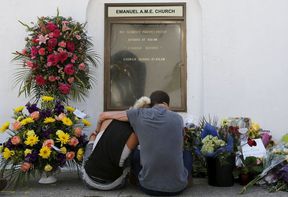
1276260-thumb-288xauto-1105590In an extraordinary example of human nobility, relatives of those killed in the Charleston, South Carolina, massacre expressed their forgiveness for Dylann Roof, the domestic terrorist who opened fire and took nine lives from the historic Emanuel A.M.E. church community. The mourners’ refusal to indulge their natural human impulse for revenge and to return love for hatred shows us all how it is possible to heal our fractured society.

Proverbial Beauty: Read now at Amazon.com

On a deeper level, however, the question of forgiveness is vastly more complicated.

One of the most compelling works of Holocaust literature is The Sunflower, an anthology built around the experience of survivor Simon Wiesenthal in the Lemberg Concentration Camp. In 1943, Mr. Wiesenthal was summoned to the deathbed of Karl Seidl, a Nazi soldier haunted by the atrocities he had committed, who wanted desperately to receive forgiveness from a Jew before he died.

Mr. Wiesenthal describes how he could find nothing to say and left the soldier without uttering a word. He then grapples with the question of whether he should have offered forgiveness, ultimately offering his answer by reframing the question:

ONE FOR ALL?

The crimes committed by the Nazis were not directed against individual Jews but against the Jewish people as a whole. Consequently, the torture and torment inflicted upon any Jew was in fact a crime against every Jew. Each individual victim was not a person but one of a people — the perpetrators didn’t care who he was but what he was — and therefore no individual had the power to grant forgiveness since an entire nation was targeted through each act of individual violence.

In other words, it wasn’t a matter of whether Mr. Wiesenthal should forgive, but whether forgiveness was his to give at all.

The same reasoning applies to all hate crimes. Whether the victim is black or white, Hispanic or Asian, Jew or Gentile, citizen or immigrant, rich or poor, any act of violence motivated by identity is not merely a crime against one person but a crime against mankind. As such, it transcends mere brutality or wickedness and rises to the level of gross inhumanity. By doing so, it becomes unforgivable.

So how can an act of forgiveness be both noble and impossible? Part of the confusion stems from a lack of clear definition. What is forgiveness? And why should forgiving evil ever be considered noble?

In the best-case scenario, forgiveness is a response to contrition. When a perpetrator recognizes the evil of his own actions, sincerely regrets them, and seeks to repair or atone for the harm he caused, then to withhold forgiveness becomes an act of evil itself. In such a case, to grant forgiveness becomes not merely noble but a moral obligation.

Proverbial Beauty: Read now at Amazon.com

But what if the perpetrator feels no remorse? Or what if he has no intention of righting the wrongs he has caused?

Even in that case, if one can understand, or even imagine, what motivated an act of evil, then it might be possible to forgive the offender for his own human weakness, whether it was a momentary lapse in temper or judgment, an innate lack of moral clarity or, as may or may not be the case with Dylann Roof, demonstrable psychological instability. To be able to see past one’s own pain and find a mitigating factor to excuse violence is truly noble… even saintly.

WITHOUT REMORSE

However, in the case of conscious, calculated evil, forgiveness may actually be a perversion of morality. Moral values should be so deeply rooted within that we can’t help responding to any violation of them with indignation and outrage. If we are truly committed to the values of good, how can we possibly tolerate evil, or those who do evil, especially when they do it in the name of good?

This is what the sages of the Talmud meant when they said, Be discerning in judgment. Look for every possible means of explaining away bad behavior. But after all is said and done, evil remains evil. Nonjudgmentalism is an empty slogan that allows evil to proliferate unchecked.

What often gets lost in the discussion of forgiveness is the matter of accountability. If I break your window, my apology means nothing unless I’m willing to pay for the window. And if I’ve caused damage that can’t be repaired, punitive restitution may be the only means through which society as a whole can preserve respect for the rule of law and confidence in the institutions of justice.

The particulars are open to debate. There are legitimate grounds to oppose the death penalty, mostly based in the real concern that an imperfect legal system cannot guarantee the guilt of those sentenced to death.

But to oppose capital punishment on the grounds that the state has no right to take a life misses a larger point. One who takes the life of another member of society forfeits his own place in that society; moreover, a society will retain its respect for the sanctity of life only with the recognition that by taking a life one forfeits his own right to life as well.

To take the life of any one person is, on some level, to take the life of every person. Justice must be served. Only then may it be possible to forgive.

Proverbial Beauty: Read now at Amazon.com

Click here to read this article and more from Yonason Goldson at Jewish World Review

The Scent of Spirit

images“A rose by any other name would smell as sweet,” wrote William Shakespeare, arrange ten simple words into possibly the most famous aphorism in the English language.

[Proverbial Beauty – preview at Amazon.com]

And yet, for all the mystique and romance associated with the beauty of the rose, the greatest of all poets recognized fragrance, not visage, as the defining quality of the most admired flower.

Bonnie Blodgett would almost certainly agree. In Remembering Smell: A Memoir of Losing and Discovering the Primal Sense, Ms. Blodgett describes the emptiness and depression that took over her life when a zinc-based nasal spray disrupted the operation of her olfactory nerve and disfigured her sense of smell.

Gone were the familiar, reassuring fragrances of her garden, replaced by ceaseless aromas of rotting flesh and excrement, which Ms. Blodgett describes as nothing less than torture. But even when these “phantom smells” abated, the odorless existence that replaced them was only a marginal improvement.

“I had no way of knowing before what it would be like to not smell anything,” she told NPR. “When I woke up and sniffed and there was nothing there — I don’t know how to explain it — I felt completely disconnected. I truly felt as if colors were more flat. The voices in conversation felt like a TV soundtrack to me.”

Adding insult to injury was the lack of sympathy received from friends. Unlike blindness, deafness, illness, or injury, most of us cannot relate to an impaired sense of smell as especially debilitating. Of all our senses, it is the one we are most likely to take for granted.

Of course, not everyone fails to recognize the power of fragrance. From Cleopatra to Oprah Winfrey, the rich and powerful have scented themselves to augment their personas and project an image of potency, charisma, or sensuality. Today, the research, development, and production of perfume and cologne have created a $25 billion industry that markets, in the words of star perfumer Sophia Grojsman, “a promise in a bottle.”

imagesNational Geographic explains it this way:  “Memory and fragrance are intertwined, some biologists insist, because the sense of smell plugs smack into the limbic system, the seat of emotion in the brain. No other sense has such immediate access.”

The unique power of fragrance takes little time to assert itself in the chronicles of mankind. Immediately upon exiting the ark, Noah gave thanks for his salvation by building an altar and bringing offerings of thanksgiving. “And the Almighty smelled the pleasing fragrance, and said to Himself, Never again will I curse the earth on account of man” (Genesis 8:21).  Obviously, G-d does not “smell” the way human beings do.  But according to the linguistic nuances of biblical Hebrew, “aroma” implies direct contact over a great distance in the finest detail and in the most subtle ways.*

The Hebrew words rayach (scent) and ruach (spirituality) derive from a common grammatical root, and the implied connection between them appears as early as the narrative of man’s formation, when the Almighty “breathed a living soul into his nostrils” (Ibid. 2:7).  The common derivation of the Hebrew words neshimah –“breath” – and neshomah – “soul” – suggests that our spiritual life force comes, literally and metaphorically, by way of air and respiration.

Just as smell is the most difficult sense to measure, quantify, and define, so too is our spiritual essence the least palpable and discernible facet of our existence.  Similarly, the interplay between one soul and another is the most elusive of human pleasures, but it is also the most rewarding.  As King Solomon says, “Scented oil and incense gladden the heart, sweet as the sincere counsel of a kindred soul” (Proverbs 27:9).  Indeed, the smoky fragrance of incense wafting into the corners of our minds and rippling across the strings of our hearts is anything but smoke and mirrors; it stirs our memories and hopes and dreams the same way that true friendship and camaraderie arouse our spirit.  Truly, the faculty of smell provides the spice of life by adding texture and dimension to all our other senses.

[Proverbial Beauty – preview at Amazon.com]

Ask Bonnie Blodgett.  As suddenly as her sense of smell disappeared, just as suddenly it returned, and she will never take it for granted again. “I was going around smelling everything,” she says. “Being able to smell lilacs again was just — I don’t think I’ll ever get over it.”

imagesBut it goes beyond mere olfactory pleasure. There is truth to common expressions like he has a good nose for business and something doesn’t smell right. Like our sense of smell, human intuition is our intangible moral compass, guiding us when we encounter something for the first time to quickly assess its value and authenticity.  In the biblical narrative, Jacob disguises himself as his brother, Esau, then enters the tent of his father, Isaac, who exclaims, “The fragrance of my son is like the fragrance of a field blessed by G-d” (Genesis 27:27).  The sages elaborate, explaining that the fragrance of the Garden of Eden entered with Jacob, convincing Isaac to bestow his blessing.**

What was this “fragrance of Eden”?  It was nothing less than the soul’s eternal connection to the ultimate Plan of Creation, which began with the placement of Man into a perfect world and will culminate in the restoration of that perfect world at the End of Days.***  And throughout the long generations of chaos in between, the spiritual nature of our world can be scarcely perceived through sight, sound, touch, or taste.  But it can be smelled, if we pay attention to the subtle pleasures of life that are expressions of the human soul and contemplate the mysterious allegory of fragrance.

And so the ancient sources describe the advent of the messianic era as a time when the divinely appointed redeemer will “smell and judge,” – determining complex truths through spiritual discernment (Babylonian Talmud, Sanhedrin 93b).  Thus we find, according to Chassidic tradition, the story of Rabbi Menachem Mendel of Vitebsk, the 18th Century leader of European Jewry whose wife ran through the door one afternoon shouting, “Mendel, Mendel, there’s a man outside shouting that the Messiah has arrived!”

Immediately, Rabbi Menachem Mendel jumped up and ran to the window, took a long sniff of air, then shook his head and muttered, “Nonsense!” before returning to his studies.  Like Isaac, the rabbi knew that a world with the Messiah smells different from a world without Messiah, and that if he could not detect the fragrance of Eden then certainly the messianic era had not yet arrived.

Two generations later, Rabbi Israel of Rizhin asked why the illustrious rabbi had to run to the window – why could he not simply sniff the air in his own home?

Rabbi Israel answered his own question.  So involved was Rabbi Menachem Mendel with his own personal service of the Almighty, so intent was he upon hastening the arrival of messianic era, so profoundly had he had already connected with the spiritual source of the universe that his own house had already acquired the fragrance of Eden.  Consequently, he had to run to the window to discover what the rest of the world smelt like.

The more we focus on what we should be doing to create a perfect world through the perfection of our own character and conduct, the more our lives will acquire the fragrance of spiritual purpose.  And the more eagerly we anticipate the glorious fulfillment of the Almighty’s Master Plan, the sooner we will enjoy a world in which we draw in the aroma of the Divine with every breath.

[Proverbial Beauty – preview at Amazon.com]

*Rabbi Samson Rafael Hirsch

**Rabbi Shlomo Yitzchaki, ad. loc

***Based on the Malbim, loc. cit.

Adapted from an essay originally published in Inyan Magazine, 2 July 2014.  With thanks to Rabbi Shraga Simmons and Aish.com.
Have you changed the world?

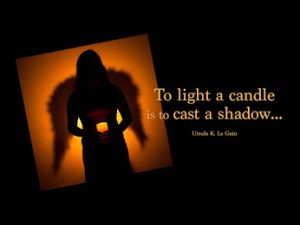
Candle proverbial beauty wisdom proverbsIf you’re walking into the sun, you can’t see the shadow you cast, no matter how long it might be.

If you’re looking for your shadow, you’re looking away from the light.

When the sun is at it’s highest and brightest, the shadow you cast is hiding under your feet.

Only when the source of light is about to disappear does your shadow stretch out toward infinity.

We don’t always get to see how we change the world.

Read the intro to Proverbial Beauty on Amazon.

Who’s Number One?

“The  fragile beauty of narcissism.”

That’s the title of a blog post I came across.  The author tries to make the case — in engagingly poetic prose — that arrogance is a virtue.  Having just published a book illustrating how to turn negatives into positives, I was intrigued by his efforts, but fear the gentleman doth protest too much.  We have enough blights upon society without turning more vices into virtues.

The author posits that,

Arrogance is “claiming ownership without justification”, in other words, more commonly, an inflated sense of self-worth. Why is it inflated? Because it assumes that that which is the source of pride endures, when the truth is it does not.

David-OrtizWell, he’s half-right.  “Inflated sense of self-worth” is definitely accurate.  But the real root of arrogance is the assumption the one is the source of one’s own power.

Why is the arrogance of starlets, sports “heroes,” and members of Mensa so irksome?  Because to be born with brains or beauty has more to do with genetics and fate than with innate worth.  And although most successful athletes work and train hard to succeed, a certain amount of inborn talent is requisite to anything they may achieve through practice.

The laudable custom among many (mostly Hispanic) baseballers to point toward Heaven after getting a hit shows the humble acknowledgement that athletic prowess is not one’s own.  With a single, small gesture they remind themselves — and countless spectators — Who is really Number One.

When our innate abilities lead us to believe in our own superiority, we think we have the right to devalue  not only the contributions but the very existence of others.  The Torah describes Moses as both “the most humble man who ever lived” and “the greatest prophet who ever would live.”  Moses’ knowledge of his own greatness did not impair his humility.  Just the opposite — he recognized that whatever ability he possessed came from outside himself, and also how much more he was obligated because of his natural abilities.

To paraphrase a certain president (who meant something else entirely), “You didn’t create that!”

“My point is that arrogance, narcissism, pride, all forms of hubris, are not without aesthetic value. The arrogant man believes, or at least attempts to believe, that he is or has something of unique and special value.”

The author errs by conflating arrogance with self-confidence.  To believe in my own value, to seek to fulfill my potential, and to strive to push myself beyond my comfort zone toward new horizons — all that has nothing to do with arrogance.  Just the opposite:  an arrogant person believes he is already great and therefore has nothing to prove.  In fact, studies have shown that people who overvalue their own worth are less likely to take up challenges lest they expose themselves as frauds.

Humility and modesty have largely gone out of style in our society, which is a loss for us all.  Let’s try to hang on a bit longer to our contempt for arrogance.

The Answer is in the Stars

roll-over-and-look-at-the-starsFrom Symmetry Magazine:

According to theory, the big bang should have created matter and antimatter in equal amounts. When matter and antimatter meet, they annihilate, leaving nothing but energy behind. So in principle, none of us should exist.

But we do. And as far as physicists can tell, it’s only because, in the end, there was one extra matter particle for every billion matter-antimatter pairs. Physicists are hard at work trying to explain this asymmetry.

Here’s a nice follow up to yesterday’s post, Embrace Mystery and Discover Joy.  Scientists love to tell us how they’ve decoded the secrets of the universe.  Then they tell us that we shouldn’t even exist.

“The universe is not only queerer than we suppose, but queerer than we can suppose.”

~J.B.S. Haldane


Higher Education?

3c9a0505eb29d30b700f6a7067009e3d_c0-0-3000-1748_s561x327On March 9, the Supreme Court refused to hear an appeal by the University of Iowa College of Law challenging Teresa Wagner’s successful lawsuit claiming political discrimination for her conservative views.

The decision comes a year after a more dramatic victory by Mike Adams, a conservative sociology professor who won a similar suit.  Professor Adams was awarded a promotion, a raise, $50,000 in back pay and $710,000 in legal fees from the University of North Carolina-Wilmington.

Underlying both stories is the more serious concern that the culture of ideological narrow-mindedness and bullying has transformed college campuses around the nation from centers of higher thinking into indoctrination centers for political and philosophical uniformity.

caernarfon_castle_three_turretsAnd it’s not just universities.  My Google search for this story turned up only two headlines, one from the conservative Washington Times and the other from the local Iowa Press Citizen.  The print media, it seems, has no more interest in open discussion and debate over opposing viewpoints than does academia.  Better to man the battlements and defend the ivory towers from that most dangerous of all enemy attackers — rational thinking and reasoned argument.

The same principle holds true in business, in education, in religion, and in every arena of social discourse.  If we can’t articulate the position of our ideological opponents, we can’t refute their arguments and, more important, we can’t fully understand our own.

For a more thorough discussion regarding the evils of groupthink, please see my article here.