Home » Posts tagged 'Politics' (Page 12)
Tag Archives: Politics

Profile of Terror
 Whether or not the cause of the EgyptAir disaster turns out to be terrorism — and regardless of whether Donald Trump was right or wrong to call it terrorism before any information was in — that was and is everyone’s first thought in these dangerous times. We don’t believe in accidents anymore; experience has been too stern a teacher and the lessons of fanaticism have been too painful.
Presumably, such incidents will only make TSA lines move slower and slower. Which wouldn’t matter if that actually made us safer and safer.
My neighbor told me recently that his son flew to Australia by way of Istanbul and Qatar. Changing planes in Qatar’s Hamad International Airport, he was ushered through customs without even breaking stride — along with every other Caucasian on his flight — while every single Middle-Easterner was detained, searched, and questioned at length.
Interesting that the Qataris have no qualms about profiling their own people, while here in the open-minded West cling desperately to the illusion that every passenger poses an equal threat to our security.
Is it possible that the Qataris know something we haven’t figured out yet?
If terrorists were dressing up as Orthodox rabbis, I would want TSA to profile me and those who look like me. Instead of taking it personally, I would be grateful for their common sense and conscientiousness.
But I guess that’s just me.

The Danger of Democracy
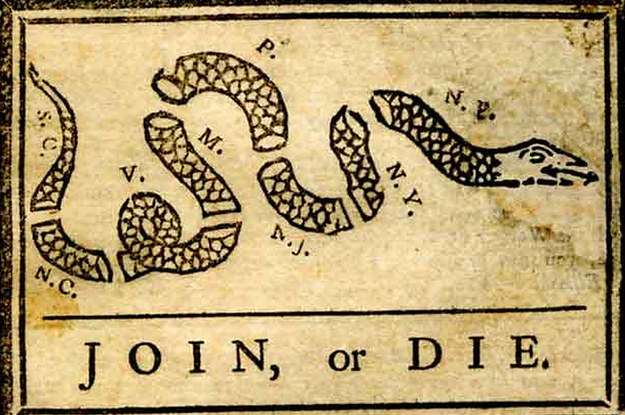 The prospect of a presidential race between the two most unpopular candidates in American electoral history should give us serious pause to reflect upon the inherent precariousness of any democratic system.
On the one hand, democracy protects a people from the whims and excesses of despotism by creating a system of accountability and popular will. On the other, it places power in the hands of the masses, who may be uninformed and easily manipulated; as Robert A. Heinlein once wrote, does history record any case in which the majority was right?
A lot of people seem to agree. Even now that the outcome appears inevitable in both primary races , opposition to the status quo has grown so intense that, in both parties, the voices of pragmatism are being drowned out by the battle cry of revolution.
Each rebel camp is a bizarre mirror-image of the other. On the Republican side, the party orthodoxy is rejecting the presumptive nominee for being indifferent to its values and unfit to lead. On the Democratic side, a surging upstart movement rallies around an untethered independent while decrying the corruption of the party orthodoxy itself.
Both insurgent groups are threatening to turn to third-party candidates. Leaders on both sides are warning that such a move would be political suicide, and history supports their fears. Third-party campaigns backfired for Teddy Roosevelt in 1912, Strom Thurmond (nearly) in 1948, Ross Perot in 1992, and Ralph Nader in 2000. So isn’t it better to vote for the lesser of two evils than to give away the election by grasping at straws?
That’s a good question.

A Day of Remembrance Soon Forgotten
 So what was the point of last week’s Holocaust Memorial Day?
Once upon a time, the commemoration served as a warning against the consequences of unbridled nationalism. But in this generation, the memory of Nazi atrocities has mutated into a political football tossed about to score points for one ideological cause or against another.
IDF Major General Yair Golan made the most egregious fumble when he suggested last Wednesday that events in pre-war Germany are repeating themselves in modern-day Israel. Like all public figures who talk first and think later, the deputy chief of staff was soon scurrying to revise his comments, pleading that he hadn’t meant what he said and hadn’t said what he meant.
More likely, General Golan meant exactly what he said. And it’s likely that his heart was in the right place, even if his brain was out to lunch.

Giving offense vs. taking offense
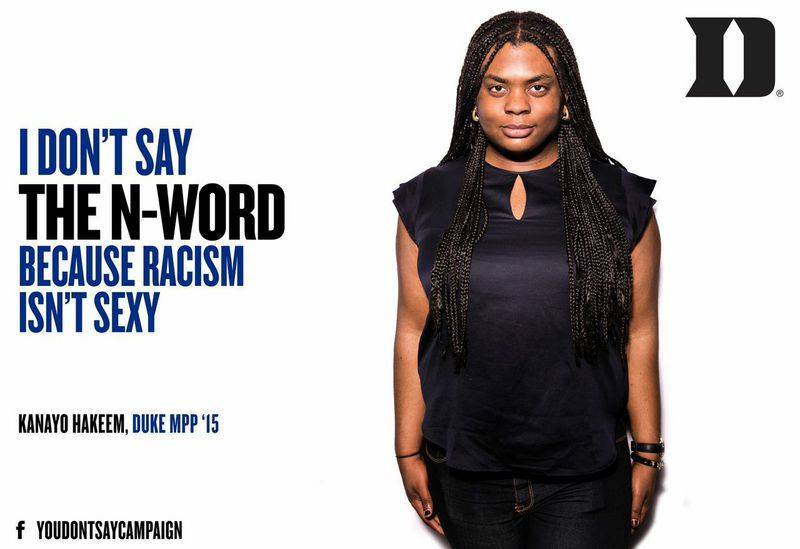 The political correctness police were out in force recently, correctly censuring Larry Wilmore for his use of the N-word and insanely condemning Hillary Clinton for uttering the words “off the reservation,” perceived as demeaning to Native Americans.
Starting with Mrs. Clinton’s turn of phrase, we might as well excise from the the lexicon of acceptability words such as “nosy” because it might offend people with large noses, “insightful” as insulting to myopics, “high-minded” as defamatory of marijuana users, and “thin skinned” for denigrating hemophiliacs. If we want to find reason for taking offense, we can find it everywhere.
The more noteworthy incident was Larry Wilmore’s use of the N-word at the White House Correspondents’ Association dinner, and his directing it toward the President of the United States, no less. Clearly the remark was intended to be affectionate and laudatory, which is how it was taken — without offense.
But that’s not really the point. In a society that is growing simultaneously disrespectful and intolerant of disrespectful speech, we need to elevate public discourse, not sink deeper into the gutter. If the N-word is too offensive to be broadcast — even news anchors reporting the story weren’t permitted to repeat it in quotation marks — then it is certainly unacceptable to be used in the presence of our president or, even worse, said to him.
Frankly, I’m more concerned by the use of President Obama’s first name, and his nickname at that. Maybe Mr. Obama and Mr. Wilmore are on a first-name basis. But in a formal context, such familiarity is utterly disrespectful from anyone other than a spouse, parent, or sibling.
This is the real threat of political correctness. It’s not just that we take offense in all the wrong places. It’s that we lose all sensitivity for the difference between what is respectful and what is disrespectful, we lose all sense of priorities, and we forget that refinement is a value. Nothing matters except the applause, the laugh, the ratings, and the votes.
This is why the same people who took offense at Mrs. Clinton’s use of “off the reservation” have no reservations about her pathological pattern of telling lies and misrepresenting political adversaries.
This is why our political and social institutions are in chaos.
And this is what we are teaching our children.

Passover, Freedom, and the War on Culture
 The responsibilities of freedom, the history of freedom, and the culture wars that threaten the values and the foundations of civilization.
Listen to my interview on the Bill Martinez show (interview begins at 33:00).

Taking Pride in Prejudice
 Prejudice [prej–uh-dis]. Noun. 1. an unfavorable opinion or feeling formed beforehand or without knowledge, thought, or reason. 2. any preconceived opinion or feeling, either favorable or unfavorable. 3. unreasonable feelings, opinions, or attitudes, especially of a hostile nature, regarding an ethnic, racial, social, or religious group.
According to these definitions from Dictionary.com, it’s clear that there are two essential components to prejudice: first, it is a form of opinion, not fact; second, it must be unreasonable or preconceived.
Please follow closely here: this implies that, for any opinion to avoid being prejudicial, the one holding that opinion must be able to articulate three things: 1) why he believes his opinion is correct; 2) why those who believe otherwise think they are correct; and 3) why those with whom he argues are wrong.
This is a matter of simple logic. First, if I can’t explain what I believe, then my beliefs are — by definition — prejudicial. Second, if I can’t explain someone else’s opinion, then rejecting that opinion is — also by definition — prejudicial. And third, if I can’t explain why I disagree with someone else’s opinion, that is — again, by definition — prejudicial.
But who am I kidding? We live in a world of sound bites and slogans, a world in which image trumps substance, in which feelings trump logic, in which the loudest voice drowns out all opponents and the most inflammatory rhetoric attracts the largest audiences. The new morality that rages against prejudice is mostly smoke-and-mirrors; indeed, the people who cry out against prejudice the loudest are the most prejudicial people of all.

Panama Papers: the New Ashley-Madison

Photo Credit: Kacper Pempel
So now it all comes down to Costa Rica.
With the American elections devolving into the absurdity of a bad reality-show, it has become simply too embarrassing to continue living in the United States. When Ted Cruz starts to look moderate and even-keeled in comparison to every other viable candidate, you know it’s time to find a new place to live.
Of course, Israel would be my next choice. But I have two children living in Israel now, and the last thing twentysomethings want is for mom and dad to move in down the street while they’re trying to discover who they are and decide what they want to do when they grow up.
(The fact that I’m still trying to figure out what I want to do when I grow up does not make things better.)
I could move to Canada, of course, but fleeing across the northern border is such a cliche I wouldn’t be able to live with myself. And Mexico is too risky; after all, what happens if I decide I want to come back and Donald Trump won’t let me in?
Europe is in chaos, Asia is too crowded, Africa is too hot, and Australia is too close to the South Pole. Brazil and Venezuela teeter on the brink of catastrophe, threatening to pull the entire South American continent down with them.
So I found myself left with only two possibilities: Panama and Costa Rica. But after last week’s headlines, Panama is off the table as well.
The revelations in the Panama Papers have exposed a dark side of human nature almost beyond human imagination.

Political Correctness: the root of all evil
 Dear Future President:
If you want to fix the country, you can start with the root cause of all that ails our country:
Political Correctness.
The truth is that political correctness is not a new idea at all; it is simply the new label for an old, established moral postulate once accepted by all.
The word civility shares its linguistic root with the word civilization. It means taking into consideration the comfort of others before expressing what I think or doing what I want. It means remembering that other people have rights before I assert my own. It means reflecting upon how my actions are going to affect my community and recognizing that I have a responsibility to a society that is more than the sum of autonomous individuals.
So what was wrong with the term civility that the concept needed rebranding as political correctness? Most likely, it was the connotation of political ideology that spawned this illegitimate offspring of cultural nobility.
In this series, professionals provide advice for the next U.S. president.
#nextpresident

Who we are not
 So here we are again, contemplating a general election that will give us a choice between the lesser of two evils. And the likely options look to be more noxious than any we’ve ever had to face.
Everyone is asking the same question: how did we get here? And the bad news — which is old news — is that negative advertising works.
But why does it work? Everyone hates it, everyone complains about it, everyone laments the decline of civility, the widening of the political divide, and the incurable blight of ideological gridlock. So why do we continue to respond to the very thing we can’t stand in a way that makes it keep getting worse?
A new study may offer a glimmer of explanation.

Purim and the Jewish response to terror
After the horrific attacks in Brussels, especially coming as they did so close to the Festival of Purim, I’m revisiting these thoughts from 2005. Lest we forget.

Pogroms. Genocide. Jihad.
These are the devices our enemies have directed against us throughout the ages, for no other reason than because we are Jews. Yet for all that, the commitment to mercy and justice that defines us as a people and sets us apart from the other nations of the earth ensures that we would never seek the destruction of another people simply because of who they are.
Or wouldn’t we?
You shall erase the memory of Amolek from beneath the heavens. So the book of Deuteronomy commands us — a command renewed from generation to generation across the span of Jewish history — to strike down the nation of Amolek and obliterate its memory from the consciousness of mankind.
How is such a precept defensible? How can we claim the moral high ground over our enemies if we resort to the same tactics that they employ against us?
The decree against Amolek, however, is based upon neither racial hatred, ethnic struggle, religious ideology, nor even historical justification. Many nations have differed from the Jews in belief, practice, and culture, and many of these have waged war against us and sought our destruction. But only the nation of Amolek warrants such condemnation, not only that we seek out and destroy it, but that we never forget the reason why.
Remember what Amolek did to you on the way, as you departed from Egypt: How they fell upon you in the desert, when you were tired and weary, and cut down the weak who trailed behind you.
Why did Amolek attack us? Why did they descend upon us in the desert, unprovoked, and attempt to annihilate us?
At the time of the Jewish exodus from Egypt, 3328 years ago, the entire world witnessed an event both unprecedented and never to be repeated: The miraculous destruction of the most powerful nation on earth and the even more miraculous supremacy of a small and oppressed people. No one in the world doubted the involvement of the Divine Hand behind the upheaval, nor could anyone fail to recognize the significance of this fledgling nation: the rise of the Jewish nation introduced human civilization to such ideals as peace, collective conscience, social responsibility and, above all, a standard of moral values that would become the foundation of all ethics and human virtue.
Such ideals, previously unknown to human society, did not find immediate universal acceptance. Indeed, the values of Judaism have been rejected and discarded time after time throughout human history. But in the wake of the miraculous destruction of Egypt, every nation and every people recognized what the Jewish nation represented. And every nation stood in awe of them. Every nation except one.
The nation of Amolek despised the very concept of moral standards. They would accept no moral authority, would make every sacrifice to protect their moral autonomy, and would employ any tactic to strike out against the nation who, by teaching morality to the world, threatened to render them a pariah.
Why is it important that they cut down the weak who trailed behind you? What does it reveal that they chose the moment when an unsuspecting people were tired and weary to attack? What perverse strategy drove them to embark upon a hopeless campaign of violence that had no hope of success?
In short, Amolek introduced the world to the tactics of terrorism, launching a suicide campaign against the defenseless, against the tired and the weary, just as their ideological descendants would later blow themselves up to murder women and children, waging brutal physical and psychological war upon a civilian population — not for clearly defined political gain, but to spread chaos and the moral confusion of disorder.
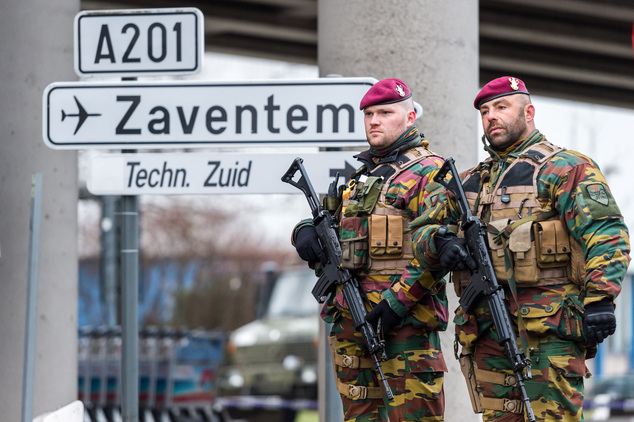
In response, the Torah teaches us the only possible answer to terror: Not negotiation, not compromise, not appeasement, not even military conquest and domination — none of these will ever succeed against the terrorist who seeks nothing less than the obliteration of his enemies, the terrorist driven by such singular purpose that he will sacrifice everything to achieve it and will stop at nothing until he has attained it. He will use others’ desire for peace, their respect for human life, and their confidence in the ultimate goodness of mankind as weapons to destroy them; he will make any promise and offer any gesture of goodwill to gain the opportunity to take another life, to cripple another limb, to break the spirit of all who stand between him and moral anarchy.
In confronting terror, little has changed over the course of 33 centuries. Four centuries after Amolek’s attack upon the Jews in the desert, King Saul showed a moment’s mercy to the king of Amolek, thereby allowing both that nation and its ideology of terror to survive. Five centuries after that, when the Jews of Persia thought to appease Haman, a descendant of Amolek, they very nearly brought about their own destruction, saved only by the miracle of Purim. Similarly did the governments of Europe seek to appease the greatest criminal in modern times, empowering him to send millions to meaningless death in pointless battle and incinerate millions more in an incomprehensible Holocaust.
And today, Western governments and ideologues continue to promote negotiation with and concession to terror, even as more and more innocents are murdered and maimed. Like King Saul, they prove the talmudic dictum that one who shows mercy at a time for cruelty will show cruelty at a time of mercy. For all its insistence upon compassion, upon virtue, upon love for our fellow man, Judaism teaches the cold practicality of confrontation with terror, that there can be no peace with those committed to violence, that there can be no offer of good faith to those who renounce faithfulness, that there can be no respect for the lives of those who devote their lives to dealing out death.
For those who live and die for the sake of terror, only one course of action exists to preserve the society that makes peace and justice possible: to erase their memory from beneath the heavens.
 Yonason Goldson