Home » Posts tagged 'Politics' (Page 15)
Tag Archives: Politics

A Week of Ironies — Iranian Hostages, Nikki Haley, and $1.5 Billion
 In his State of the Union speech, President Obama patted himself on the back for making peace with Iran while, at that very moment, Iran held 10 American sailors in violation of international law and the Geneva Convention. The next day, Secretary John Kerry thanked the Iranians for not keeping the servicemen as hostages.
In the same speech, the president also lamented his failure to create an atmosphere of bipartisanship and cooperation, while passing up no opportunity to snipe at everyone who disagrees with him.
After South Carolina Governor Nikki Haley responded to the president’s address, the angriest voices loudly condemned her for condemning the angriest voices.
Hillary Clinton, who can boast the lowest national rating on trustworthiness since Richard Nixon, dismissed a new FBI investigation into her mishandling of classified information by declaring “that’s just not the way I treated classified information.” Transparency, at last.
 However, none of this made much of an impression on an American public entranced by the dream of winning a 1.5 billion dollar lottery, even though about half of multimillion-dollar lottery winners eventually admit that sudden wealth proved more of a curse than a blessing.
Now that three winners are going to share the unprecedented payoff, they might want to take a page from the book of a middle-aged man in Atlanta who, back in the 1990s, won a $4 million dollar lottery – what was an exceptional amount for the time.
The winner had been working a double shift as a garbage collector. When asked what he intended to do after winning so much money, the man replied, “I’m going to quit one of my shifts.”
“Only one?” asked the incredulous reporter.
“A man has to have work,” replied the new millionaire.
State of the Union: Four Faces of Leadership
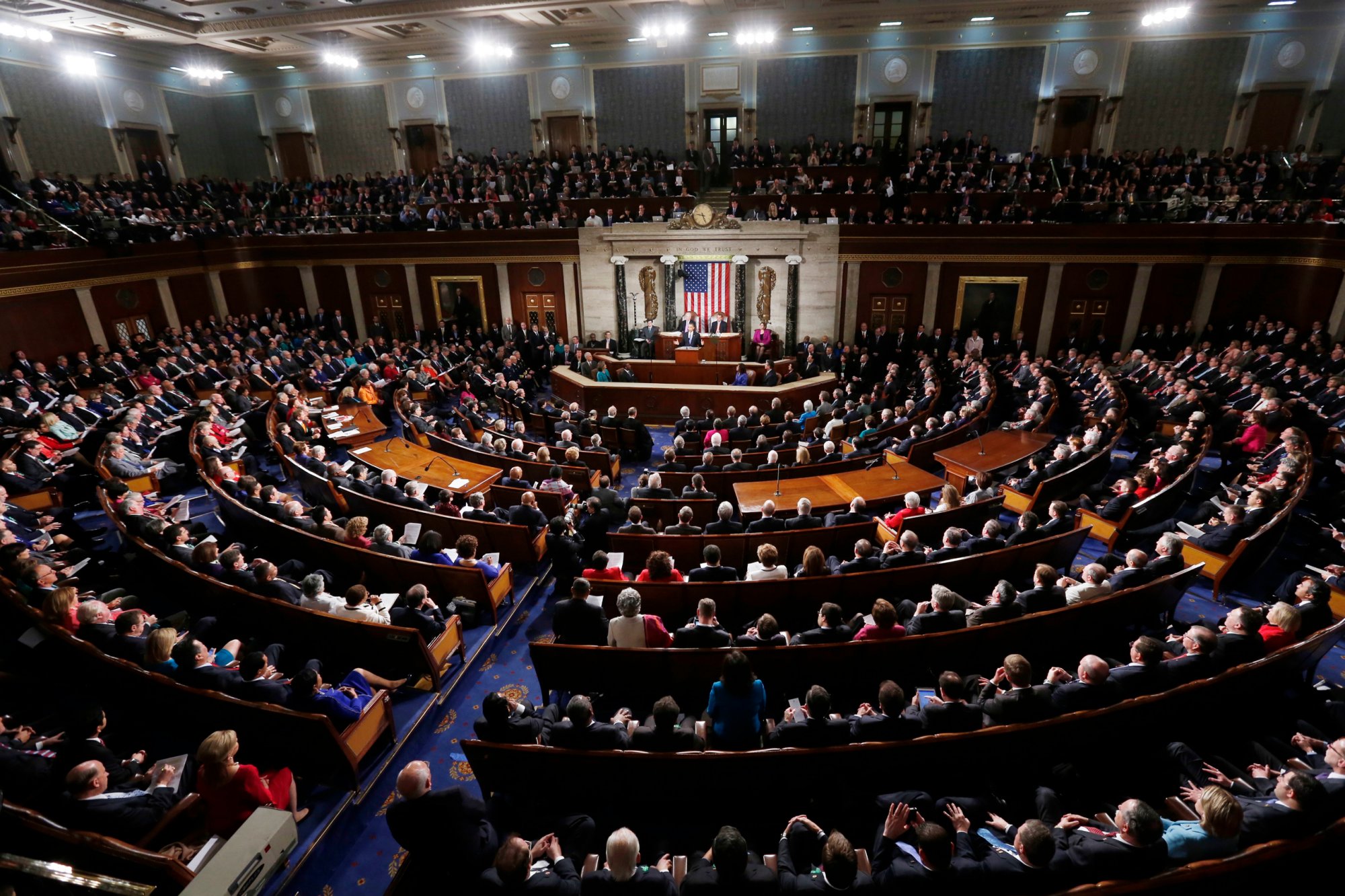 If we need another example of how upside-down our culture has become, we only have to look at the hype leading up to tonight’s State of the Union address by soon-to-be Former President Barack Obama. Even as the pundits all agree that the speech will be largely irrelevant and predictable, they can find little else to talk about.
Mr. Obama is expected to tell us how wonderful things are, how many of his goals he has achieved, and how much the quality of our lives has improved since he took office. The success of such an approach depends upon one of three factors:
- that his claims are actually true;
- that he can convince the people that his claims are actually true;
- that he can pound home the message (with the cooperation of an obsequious media) until people think there must be something wrong with them if they don’t believe it.
Whether the president succeeds or not remains to be seen. But it’s illuminating to compare his style to other presidents and presidential hopefuls, past and present.

Sean Penn — the twelfth monkey?
 It may be the real-world incarnation of 12 Monkeys, the cult flick in which Bruce Willis goes back in time to save mankind and inadvertently causes the holocaust he is trying to prevent.
Sean Penn has traveled far and wide to uncover the warm, fuzzy side of such political personalities as Hugo Chavez and Raul Castro. We can only speculate on the motives behind his latest adventure, an elaborately staged meeting with El Chapo, the infamous Mexican drug kingpin Joaquin Guzman, who was recently recaptured after escaping from his maximum security prison cell.
Irony of ironies, it was Sean Penn himself who inadvertently led authorities to Guzman’s location. And although Mr. Penn has had little to say about his role in the apprehending of El Chapo, it’s tantalizing to wonder whether he might seek help from Bruce Willis to travel back in time in hope of undoing what he has done.

The Second Amendment and the Oral Law
 As president Obama embarks upon his latest unilateral campaign to repair the world, this time by expanding restrictions on gun ownership, it’s worth revisiting my article on the Second Amendment from 2010.
Perhaps the greatest danger to the Constitution is manipulating its words to validate predetermined conclusions. By doing so, we violate the talmudic admonition against making the law “a spade for digging,” i.e., a tool to advance our own ends.
To preserve constitutional integrity, we have to familiarize ourselves with the context of its times, then apply those observations to the times in which we live. That only works when we are committed to honoring the system, rather than exploiting the system to fit our own agenda.
Last month’s Supreme Court ruling affirming Second Amendment states’ rights (and coinciding with the predictable Republican grilling of Supreme Court nominee Elana Kagan over the same issue) has brought back into the spotlight the constitutional ambiguity regarding gun ownership in the U.S. of A.
A well regulated Militia, being necessary to the security of a free State, the right of the people to keep and bear Arms, shall not be infringed. So states the Second Amendment to the United States Constitution. At first glance, the stipulation seems clear enough. American citizens may own guns, plain and simple.
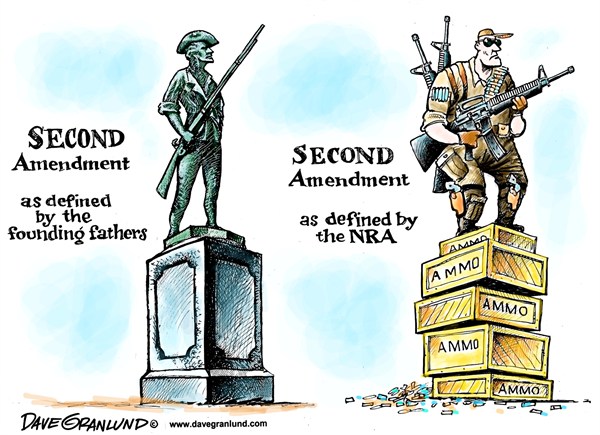 Or maybe not. The qualifying phrase that introduces the amendment appears to restrict constitutional protection to dependence upon a militia, or citizen army, to defend the nation. Accordingly, in times such as ours, when a standing army has assumed responsibility for the common defense, there may be no constitutional guarantee at all. And so, on second thought, the amendment seems to clearly limit the extent of private gun ownership.
Or, again, maybe not.
Perhaps the Founding Fathers meant that, since every citizen ultimately owns an equal share of the responsibility to defend his country, the right to bear arms is part and parcel of each person’s national duty to fight for the public welfare should the need ever arise. This would explain why the authors of the amendment might have mentioned a militia even if they never meant to restrict said right.
So what was the original intent of the Framers? If they were here, we could ask them. Since they are not, each side seems to have a fair and reasoned claim to support its respective position.
Is there any way to resolve the question of what was intended by men who passed away long before our grandfathers were born?
In fact, there may be.
THE REST OF THE STORY
Imagine that, as you pass by a window, you see a man wearing a mask raise a knife and plunge it into the chest of another man lying prone beneath him. You scream for the police, certain that you have just witnessed a murder.
Or, yet again, maybe not.
Now imagine that you were unfamiliar with the concept of open-heart surgery. Only after the police arrive and explain that the man in the mask is a surgeon working to repair the heart of the man on the table beside him will you understand that he is in fact saving a life and not taking one.
Context is everything. It orients us in time, space, and circumstance, transforms isolated acts into links in a chain of connected events, none of which can be understood in isolation. And so, if the words of our forebears sometimes appear to us muddled or imprecise, the surest way to achieve clarity is to examine comments and opinions from the same thinkers and the same era.
 Here are a few examples to provide historical context:
James Madison, on the principle of individual rights: [A bill of rights] should more especially comprise a doctrine in favour of the equality of human rights; of the liberty of conscience in matters of religious faith, of speech and of the press; of the trial by jury… of the writ of habeas corpus; of the right to keep and bear arms.
Massachusetts Representative Fisher Ames: The rights of conscience, of bearing arms, of changing the government, are declared to be inherent in the people.
Supreme Court Justice James Wilson, contributor to the drafting of the Constitution:The defense of one’s self, justly called the primary law of nature, is not, nor can it be abrogated by any regulation of municipal law.
Vice President Elbridge Gerry, signatory to the Declaration of Independence, on national defense: What, sir, is the use of militia? It is to prevent the establishment of a standing army, the bane of liberty.
In the context of the times, the intention of the Framers becomes difficult to debate. Only in relatively recent times, when the concept of a militia has become an anachronism, has it become possible to question the true meaning of the Second Amendment.
PRESERVING THE INTEGRITY OF THE LAW
Is there any way for words to retain their clarity despite the persistent evolution of cultural references and values? Is there any method for protecting ideas from the ravages of changing times and sensitivities?
Indeed there is. It predates the United States Constitution by 31 centuries, and it is called the Oral Law of the Torah.
Consider these biblical commandments:
Remember the Sabbath Day and keep it holy… And this will be a sign upon your arm and a remembrance between your eyes … Slaughter your [livestock] in the manner that I have prescribed… Do not seethe a kid in its mother’s milk.
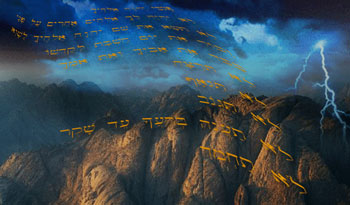 These precepts, as they are written in the Torah, are impossible to observe. What does it mean to keep the Sabbath “holy,” and what actions — if any — are required to “remember” it? What kind of sign are we to place upon our arms, if elsewhere the Torah prohibits the application of any tattoo, and how do we place a “remembrance” between our eyes? Nowhere does the Torah outline any prescription for ritual slaughter, nor does it imply what is commonly understood, that that the prohibition against cooking a baby goat in its mother’s milk extends to every mixture of meat and dairy products.
In spite of these and many other ambiguities, the basic practices of the Torah observant community have remained essentially unchanged for over 3300 years. The explanation is simple. Unlike the family encyclopedia which once gathered dust on the shelf and now gathers dust on the CD rack, the Oral Torah forces every committed Jew to see himself as custodian of a living tradition that connects him with the origins of his identity and enables him to live in the modern world without compromising the values of his ancestors.
No longer purely oral, the discussions and debates of past authorities have been recorded for their children in the writings of the Talmud and the commentaries that elucidate them. Unlike the records left behind by the Framers of the Constitution, however, these records have become canonized as part of the structure and process through which Jewish law is determined in each and every generation. Even when questions and disagreements arise, there is no debate within the Torah community over the methods through which answers and solutions are to be found.
Society changes, technology changes, and the values of human beings twist in the winds of time like a weather vane spinning before a storm. Electricity, automobiles, computers, cloning, and in vitro fertilization may have once been unimagined, but we have inherited a legacy that teaches us how those earlier generations would have resolved the problems of our changing world if they were here themselves today. And so the Torah Jew never loses his bearings, for he is guided by the words of his forefathers and finds comfort in the knowledge that the ancient wisdom of the Torah will never become stagnant, corrupted, or out of date.
As my teacher Rabbi Nota Schiller often says, the Oral Torah allows the Jews to change enough to stay the same.
Originally published by Jewish World Review

Justice in Oregon — Color Blind and 20/20
 A broken clock is right twice a day and, gratefully, the justice department has found the sweet spot — at least for the moment — in Oregon.
Certainly, the armed occupation of a national wildlife refuge is cause for concern. But it is not cause for panic and, in light of past notorious government interventions, definitely not cause for military confrontation.
In both the 1992 Ruby Ridge, Idaho, incident and the 1993 Branch Davidian raid in Waco, Texas, the level of intervention was clearly disproportionate to the danger posed and the resulting bloodshed largely indefensible. This is not to say that the government did not have just cause; rather, it failed to employ that resource that is more endangered than any other: common sense.
3 people died at Ruby Ridge; 76 died at Waco.
It’s heartening, therefore, that authorities are approaching the current crisis near Burns, Oregon, with circumspection. Of course, they can’t ignore the occupation. But with no one in danger, a wait-and-see strategy is the best of all available options.
The broader relevance of the story arises from the inevitable accusations of racism by leaders in the black and Muslim communities. It’s only because the so-called Citizens for Constitutional Freedom are white, they say, that the government has not charged in with guns blazing.
Which is, of course, pure nonsense. Two dozen right-wing trespassers in the middle of nowhere is hardly comparable to Ferguson, Missouri, or San Bernardino, California.
The response is different because the situations are different. And in this case, stuck between the real fears that inaction will embolden extremists to further acts of defiance while over-reaction will provide the opportunity for martyrdom, wait-and-see offers the best possible compromise between unattractive alternatives.
It’s also arguable that the occupiers have legitimate grievances against government overreach, which has grown into a systemic malady, evidenced by a rash of executive orders and a culture of bureaucratic strong-arming. Compared with the nebulous jeremiads of the Occupy Wall Street crowd and, more recently, students at Yale and the University of Missouri, the very real plaints of the Oregon occupiers appear level-headed and downright mainstream.
Competent leadership is characterized by the ability to gauge every situation according to its unique combination of factors, risks, and potential consequences. One-size-fits-all solutions rarely prove effective, and accusations of inconsistency are childish at best, opportunistic at worst. What we need most in these troubled times is cool-headed calculation that looks to strike the sanest balance between principled action and pragmatic compromise.
When we start demanding that level of aptitude and integrity from our leaders, maybe we will find ourselves with leaders worthy of our confidence and trust.
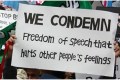
Too Tragic for Words
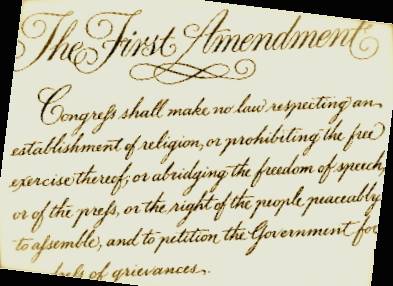 Would you sign a petition to repeal your right to petition? If not, you probably don’t attend Yale University.
Then mourn for our country.

A Short History of Mideast Violence
 Seemingly without end, political groups, government officials, and media outlets continue to blame Israel for unrest in the Mideast. At best, they lament the “cycle of violence,” suggesting that both sides are equally to blame.
With so many outlets providing platforms for misinformation, it’s no surprise how many people believe that Israel is at fault for denying the rights of the Palestinian people to live peacefully in the land that has been theirs since time immemorial.
However, as New York Senator Daniel Patrick Moynihan used to say: “You’re entitled to your own opinions, but you’re not entitled to your own facts.”
So here are the facts.
Before 1920, even the concept of a Palestinian people did not exist. Arabs living in the region considered themselves part of greater Syria, until the French and British divided the region and ended hope of a single commonwealth. Only then, in a desperate attempt to create a national identity out of whole cloth, local Arabs proclaimed themselves Palestinians and begin lobbying for a country of their own.
And they got what they wanted. The next year, Colonial Secretary Winston Churchill divided the region into what are now Jordan and Israel. The Arabs received 76% of the land. The rest was reserved as a Jewish homeland.
But even that was not enough. In 1947, the United Nations divided the remaining territory roughly in half, leaving Israel with 13% of the original Mandate. The Jews accepted the compromise. The Arabs launched a war against the Jews.
Between 540,000 and 720,000 Arabs fled Israel, encouraged by leaders who promised that they would return to their homes after the Jews had been pushed into the sea. Over 70 years later, about 5 million Arab refugees remain, many in squalid camps, unsettled by their own people because of their value as a bargaining chip to demand repatriation or restitution that Israel cannot afford to give.
All the way back in October, 1949, Egyptian Foreign Minister Muhammad Salah A-Din told the Cairo journal Al-Masri that, “In demanding the return of the Palestinian refugees, the Arabs mean their return as masters, not slaves; or, to put it quite clearly — the intention is the termination of Israel.”
You can’t make peace with people who don’t want peace. On, 11 Dec 1948, the UN passed Resolution 194, frequently invoked by Arab leaders b/c it calls for repatriation of (or compensation for) all refugees (Article 11). Every Arab country voted against the resolution, which also guarantees access to holy sites (Article 7) and calls for commitment to peace.
Of course, no one ever mentions the 860,000 Jews who fled for safety from Arab lands at the same time, resettled by Israel without ever receiving restitution from the Arab countries that expropriated their homes and property.
 We also don’t hear how, in 1949, Israel agreed to repatriate 100,000 Arabs as part of a peace negotiation; 35,000 were allowed to return, until repatriation was halted b/c of Arab refusal to make any compromises toward peace. In early 1950, the UN General Assembly established the United Nations Relief and Works Agency, with an annual budget of $54 million. Arab governments refused to cooperate. In 1959, only $7 million had been used while another $28 million lay available in a fund that was never used.
In fact, as early as 1960 King Hussein of Jordan admitted that “Arab leaders have approached the Palestine problem in an irresponsible manner… they have used the Palestine people for selfish political purposes. This is ridiculous and, I could say, even criminal.”
Khaled al-’Azm (Prime Minister of Syria 1948-49) wrote in his memoirs in 1973: “We have brought destruction upon a million Arab refugees, by calling upon them and pleading with them to leave their lands, their homes, their work and their business, and we have caused them to be barren and unemployed though each one of them had been working and qualified in a trade from which he could make a living.”
But the strategy of Arab leaders has always been to use the refugees as a pretext to reject peace in pursuit of their ultimate objective: genocide. Even after getting 87% of the mandatory territory in 1920 and 1947, they still rejected the UN partition, then tried to exterminate Israeli Jews in 1947, 1967, 1973, and have continued terror attacks until today.
By rejecting peace and inciting bloody uprisings, Arab leaders have condemned their own people to lives of poverty and violence. For years, families of suicide murderers were paid tens of thousands of dollars to encourage their “martyrdom.” Murders of Jews are celebrated and their perpetrators turned into heroes by naming streets and schools after them. Yasir Arafat, founder of the Palestinian Liberation Organization (which was established in 1964, three years before Israel had control of the West Bank region, Gaza, or the Golan Heights), embezzled billions of dollars that could have helped his own people.
There are many Palestinians who truly want peace, but any suspected of disloyalty to the power structure and the status quo are executed as sympathizers or collaborators, or else have their families threatened if they don’t “prove” themselves. And Palestinian children grow up in schools that teach hatred of and victimization by Israel, attend paramilitary camps that train them to kill Jews, and learn that the Holocaust is a myth fabricated by Jewish sympathizers in the Western World.
But facts don’t matter. Instead, again and again, Israel is smeared with the same slanderous refrain: occupation, oppression, expansion, apartheid. It doesn’t matter that Israeli Arabs enjoy greater prosperity, literacy, and life expectancy than the Arabs in the surrounding countries. Not to mention freedom. Just as it doesn’t matter that Israeli Arabs have been represented in every walk of life, including an Arab captain of the Tel Aviv football team, an Arab deputy speaker of Knesset, an Arab Supreme court justice, and an Arab Miss Israel.
 It also doesn’t matter that all the way back in 2000, Yasir Arafat refused to accept Israeli Prime Minister Ehud Barak’s offer to return 94% of the West Bank to the PLO.
It doesn’t matter that Israel withdrew from Gaza in 2005, after which Gazans destroyed the infrastructure of greenhouses left behind by the Israelis that could have fed them.
It doesn’t matter that Hamas leaders used their new autonomy to launch missiles against Israeli civilians, while using their own people as human shields in order to win over public opinion. It doesn’t matter that Hamas embezzled millions in humanitarian aid to build sophisticated terror tunnels under the border to attack Israelis.
It also doesn’t matter that the IDF goes to lengths no other country in the world would ever consider to minimize the collateral damage to Arab civilians, dropping leaflets warning of impending attacks and placing its own soldiers in far greater danger than the rules of warfare require or that make sense from a military point of view.
Instead, the propaganda campaign against Israel goes on, even when the casualties are Palestinians themselves. Like when a Palestinian girl stabs a Palestinian man whom she mistakenly believed to be Israeli, the headlines scream Palestinian teenager killed by Israeli forces. And like the 900 workers losing their jobs because the BDS zealots managed to coerce Sodastream to relocate over the green line; it doesn’t matter if a few hundred more martyrs are reduced to poverty if the ideologues can score a PR victory against Israel.
The European community and the Obama administration have ignored these facts and evidence to embrace political correctness and moral equivalence, thereby enabling Palestinian violence against Israeli Jews and prolonging the suffering of Jews and Arabs alike.
No one could say it more clearly or simply than Israeli Prime Minister Binyamin Netanyahu: “If the Arabs put down their weapons today, there would be no more violence. If the Jews put down their weapons today, there would be no more Israel.”
Expanded from an article originally published by Jewish World Review

Donald Trump: Obama 2.0
A magic rests on the lips of the king;
Let his mouth not betray him in judgment.
~Proverbs 16:10
 However improbable it seemed at the start, it’s not hard to understand the initial popularity of Donald Trump. In an age of mealy-mouth, equivocating, do-nothing, business-as-usual, avaricious politicians, many found it refreshing to have a larger-than-life presence who seemed to speak his mind and didn’t pander to popular opinion. But by now the flirtation should have revealed itself for what it is — a cheap one-night stand with no basis for a solid relationship.
Donald Trump represents everything that is wrong with this country: arrogance, self-promotion, pettiness, bellicosity, irresponsibility, bigotry and, despite his hugely successful self-branding, dishonesty and insincerity. In truth, Donald Trump is exactly the opposite of the persona that originally made him so appealing; on closer inspection, he reveals himself to be nothing less than a fun-house reflection of Barack Obama.
Like Mr. Obama, Donald Trump believes in nothing but himself; each man genuinely believes he is the smartest person in the world, and each reacts with seething contempt toward anyone who questions or disagrees with him. Armed with the conviction that comes from infallibility, each will say whatever he has to say, without a flicker of shame, to advance his own personal agenda.
Mr. Trump had only good things to say about Hillary Clinton in his 2012 interview with Greta Van Susteren, but last July he told Meet the Press that Ms. Clinton was “the worst Secretary of State in history.” In 1999 he said, “I love universal health coverage,” but now he chastises the Republican congress for not putting an end to Obamacare. In 1999 he was “very pro-choice,” but now he’s anti-abortion. Apparently, this qualifies him to be president. in 2014, the Washington Post awarded President Obama for having told 3 of the 12 biggest political lies of the year. In 2013, it was 3 out of 10 — an average good enough for an MLB All-Star.
The issues are not the issue; brazen disregard for the truth is. Much more disturbing is the persistent popularity of Mr. Trump based on the illusion that “he tells it like it is.

Heading over the cliff
 Not following the usual conservative line, Bernie Goldberg articulates the train-wreck of Donald Trump, and Glenn Beck explains how we got here.

Free Judea Under Shimon Maccabee
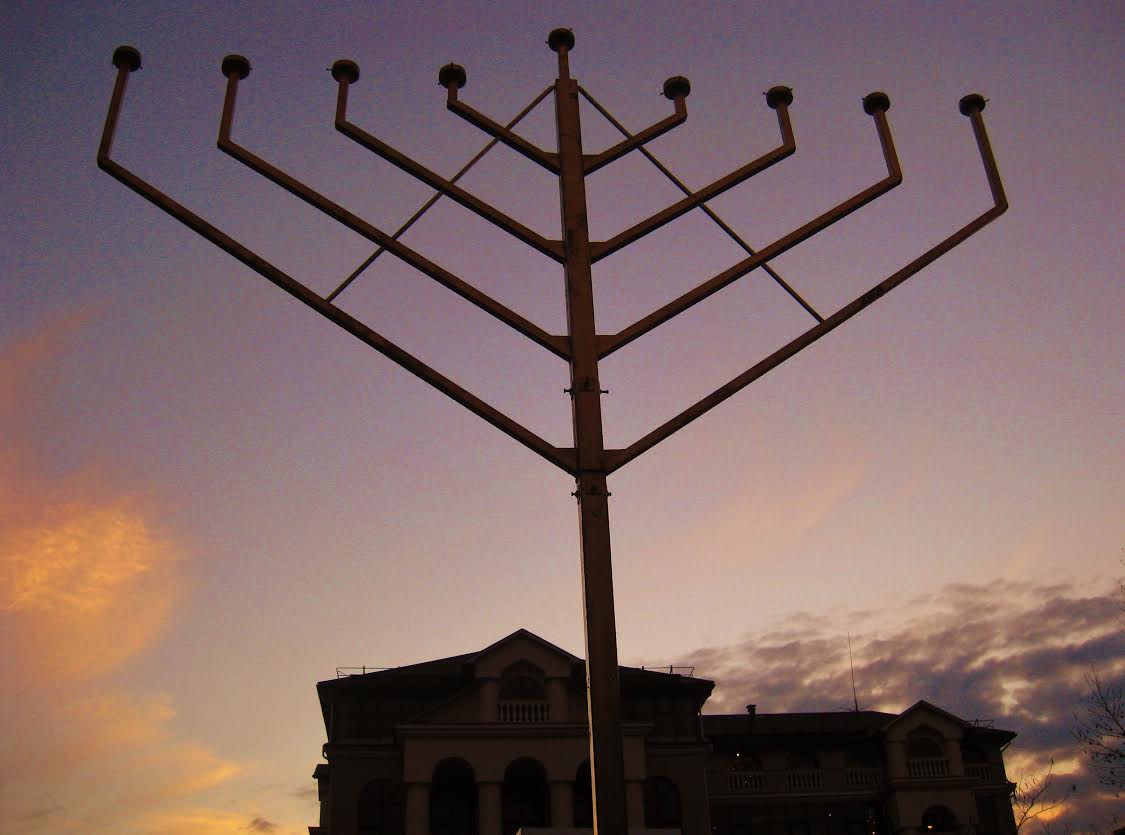 Virtually everyone has learned about the miracle of Chanukah and the rededication of the Temple in Jerusalem. But the tumultuous 22 years between the Hasmonean victory over the Seleucid Greek army and the establishment of an autonomous Jewish state are not nearly so well known.
In 165 BCE, the same year that the Maccabees recaptured the Temple, Demetrius I succeeded Antiochus IV as ruler of Syria. Immediately, the new monarch sought to consolidate his forces with the soldiers still garrisoned in Jerusalem and with the Hellenist Jews still determined to resist the authority of a Torah government.
The early success of the Maccabees evaporated before the renewed Syrian onslaught. Eleazar, eldest brother of Judah Maccabee, was the first Hasmonean casualty of war, crushed beneath the elephant he believed was carrying the king as he drove his sword upward into its belly during the battle of Beis Zecharyah. Only a year later, after defeating an army ten times greater his own and slaying the Seleucid general Nikanor, Judah Maccabee himself fell in battle as he attempted to defend Jerusalem with only 800 men. Both the capital and the Temple were lost, and Demetrius appointed Bacchides, a particularly cruel Seleucid officer, as governor over Judea.
CRISIS AND RECOVERY
After Judah’s death, his brother Jonathan assumed command of the Jewish resistance. Vastly outnumbered and in retreat, Jonathan prepared his army to flee across the Jordan river, where he hoped to reorganize his forces. Before he had completed the operation, however, enemy soldiers discovered and surrounded his hideout. Jonathan barely escaped with his life, while his brother Yochanon was captured and killed.
With his forces too weak to mount a conventional assault, Jonathan returned to the guerrilla tactics of the early Hasmonean revolt. Gradually, he rebuilt his strength until his own army attained parity with the Seleucid forces. Recognizing that Bacchides had lost the will to fight, Jonathan took advantage of the stalemate and dispatched messengers with offers of peace. Bacchides accepted, and Jonathan established himself north of Jerusalem in the village of Michmash, the early home of Saul, first King of Israel.
 Five years later, an attempted coup against Demetrius back in Syria provided Jonathan with the opportunity for which he had long been hoping. Preoccupied with his own fight for survival, Demetrius posed no threat at all as Jonathan advanced to seize Jerusalem and began refortifying the city’s defenses. Jonathan continued to monopolize on the fractious Seleucid government, playing Demetrius and his rival, Alexander Balas, one against the other. In short order, Jonathan secured his position in Jerusalem and reclaimed his hereditary position as High Priest in the Holy Temple. As the political situation in Syria deteriorated, Jonathan continued to expand his control over Judea.
TREACHERY AND REPRISAL
But Jonathan’s successes in diplomacy ultimately led him too far. When Tryphon, a new king in Syria, marched against Jerusalem, he found Jonathan waiting for him at the head of a much larger army of 40,000 men. Recognizing that he had no hope of victory, Tryphon convinced Jonathan to meet with him in Akko, where he captured Jonathan and subsequently murdered him.
After 17 years of Jonathan’s leadership, his brother Shimon, the last of the five Maccabean brothers, took his place as leader over Judea. In response to Tryphon’s treachery, Shimon threw his support to Tryphon’s rival, Demetrius II. In appreciation, on the 27th day of Iyar, 3619 (142 BCE), Demetrius formally exempted the Jews from their annual tribute and declared Judea fully independent, recognizing Shimon as its sovereign. Twenty-two years after the miracle of Chanukah, the Jews finally gained political autonomy for the first time since the era of the First Temple.
In the course of his rule, Shimon secured the boundaries of his tiny kingdom, repulsed an attack by Antiochus VII of Syria, and led his people into one of the greatest periods of prosperity of the Second Temple era.
Shimon’s own end was less glorious. He was assassinated by his son-in-law, Ptolemy, in the seventh year of his reign. Ptolemy’s ambitions profited him nothing, however, since Shimon’s son Yochanon drove him out of the kingdom. But Ptolemy did succeed in bringing the last of the sons of Mattisyahu to a violent death.
For the family who restored glory to the Jewish people, drove out the Selucid oppressors, resisted the corrosive influence of Hellenism, and returned the divine service to the Temple in Jerusalem, we hardly would expect such an inglorious end. We would also not expect such a mixed legacy: Shimon’s son and grandson both allied themselves with the heretical Sadducees; his great-grandsons began a civil war that resulted in the beginning of Roman rule over Israel and produced the bloody reign of Herod.
Where did the Hasmoneans go wrong?
THE DIVINE RIGHT OF KINGSHIP
Before his death, the Jewish patriarch Jacob prophesied that, “The scepter shall never depart from Judah,” meaning that no tribe other than Judah would ever rule legitimately over the Jewish people (Genesis 49:10). The reputation of Judah Maccabee as a brilliant general and an inspired leader remains unimpeachable. But from the moment he drove the Greeks out of Jerusalem, Jewish law required him to petition the Sanhedrin straight away for the appointment of a permanent leader from the dynasty of David. By retaining national leadership for himself and establishing a precedent followed by his brothers and their descendants, Judah sentenced the Hasmonean line to a destiny of one tragedy after another, until nothing remained but the memory of former greatness.
 There is another, deeper reason for the inevitable downfall of the Hasmonean dynasty. As members of the priestly kohanim,the Hasmonean family had their mission within the Jewish nation defined by the Torah as purely spiritual. Unlike the large majority of Jews who must strive to balance the pursuit of spiritual ideals with involvement in the material world, kohanim have no occupation other than Divine service and no portion in the Land of Israel other than the Temple itself.
Conversely, the kings, whose royal line descends from David himself, live a life of opulence and luxury, through which they endeavor to achieve an absolute synthesis of spirituality and materialism.
By shouldering the mantle of kingship, perhaps not in name but undeniably in practice, the
Hasmoneans encumbered themselves with the burden of kings — to harmonize the physical and the spiritual — obligating themselves in a service diametrically opposed to the austerity demanded by their intrinsic nature as priests.
Unable to succeed simultaneously as kohanim and as kings, the Hasmoneans condemned themselves to failure and, ultimately, self-destruction when they did not return the leadership of the Jewish nation to its rightful heirs, the descendants of the dynasty of David, the true kings of Israel.
 Yonason Goldson