Home » Posts tagged 'Psychology' (Page 20)
Tag Archives: Psychology

Spitting Image 2:3 — Unrandom Acts of Kindness
 My neighbor was standing at the front desk of a high-end fitness center one morning when a man came through the door and approached the counter.
“I’ve been jogging,” he said, panting, “and I forgot to bring my water bottle with me. Could I please have a glass of water?”
“I’m sorry,” said the young woman behind the desk, “but this is a private club. There’s a gas station down the street that might be able to help you.”
The jogger looked at the receptionist, shrugged his shoulders, and left.
My neighbor watched in disbelief. “Excuse me,” she said. “You have a coffee machine with paper cups right next to you. You have a sink with a faucet. You could have poured the man a cup of water.”
The young woman looked back at her and replied, with evident remorse. “You’re right. I wish I had thought of that.”
The response is staggering. Not “I was just following the rules” or “I’m not allowed to leave my desk.” Those would have be the predictable, if disappointing answers.
But how is it possible that the thought of offering a cup of water to an overheated stranger could have been so far off the receptionist’s radar that it would not even enter her mind?
Never mind that the woman behind the counter was white and the jogger was black. That only makes it worse, since the jogger might reasonably have suspected racism and the motive behind the refusal.
But this was not about race. It was about how we have retreated so far into our worlds of isolation that offering a cup of water — the easiest, simplest, cheapest, most fundamental act of kindness possible for one human being to perform for another — has become something “we wish we had thought of.”
Those stories of disconnectedness — of two friends in school passing each other without noticing while they talk to each other on the phone, of a child calling her parents in the living room from her bedroom, of a husband and wife texting one another from opposite sides of the couch — have gone from being amusing anecdotes to being darkly disturbing. We’re well on our way to forgetting that other people are real. Which means we’re forgetting what it is to be human.
Like anything else, kindness takes practice. It has become popular to talk about doing random acts of kindness, and that’s wonderful. But it might benefit us more if we did disciplined acts of kindness, to develop the habit of kindness so that we don’t have to think about it.
It really isn’t so hard to drop a coin in a jar for charity every morning, to give a smile and a greeting to the strangers we pass on the sidewalk or to our co-workers in the office, to hold the door open for another as we go through the door ourselves, to offer help to someone whose hands are full, to call a colleague who doesn’t show up at work to ask if everything is okay.
With a little practice, we won’t have to remember to act kind because we will have become kind.
The Three Laws of Hitchhiking
Lessons learned on the road for off the road.
Spitting Image 2:2 — When sacrifice is for the birds
 Would you sacrifice one of your children to save the other?
That was the unthinkable dilemma revealed at the climax of the Meryl Streep classic Sophie’s Choice, which left the heroine emotionally scarred for the rest of her life.
The poignancy of that final scene tears at the insides of anyone who’s ever seen it. Some things are too hideous even to contemplate, and we simultaneously rage against the evil of the Nazi tormentor and ache for the mother who had to choose and could never forgive herself for choosing.
But reality can be just as disturbing as fiction. A recent study by University of Florida scientists describes how herons, egrets, and storks living in the Everglades willingly sacrifice some of their young to alligators living below their nests so that the alligators will protect the remaining chicks from raccoon and possums.
The deal makes perfect sense for the alligators: they get a steady diet of baby birds falling from the sky almost straight into their mouths. And it makes perfect sense for the mothers as well: since birds typically have more young than they can care for, so giving up a few who wouldn’t survive anyway to protect the rest is practical, logical and, arguably, moral.
Except that it isn’t. What separates human beings from animals is conscience. When our moral compass is functioning as it should, simple pragmatism isn’t enough to govern our decision-making. And if the cost of cold, hard logic, no matter how sound, requires us to sacrifice our humanity, then it is our willingness to embrace the full measure of devotion to a higher moral standard that serves the greater good, even when no one else is watching and no one else will ever know.
Sacrifice of oneself for the benefit of others is the most noble quality of humankind. Sacrificing others for our own benefit shows us to be lower than the lowest animal. Because, unlike animals, we know better.
Or, at least, we should.

Willful Ignorance: the new normal

Maybe we really are living in the Matrix.
Day by day, even hour hour by, the headlines become more surreal and the actions of our leaders become more incomprehensible. Who could have imagined that all the conspiracy theories of extraterrestrial mind-control and computer-generated mass-delusion would start to seem like the most reasonable explanations for where we are and how we got here.
The most recent administration scandal over the United States Central Command (CentCom) deleting military intelligence brings to a crescendo the chorus of claims of the White House stifling inconvenient truths about the Islamic State to avoid dealing with the real threat of terrorism. Last year, the Pentagon’s inspector general began investigating after CentCom analysts protested that their findings had been manipulated to whitewash their conclusions. Now it appears that files and emails were not only misrepresented but actually erased.
As we pass the 30th anniversary of the Challenger Space Shuttle disaster, it’s beyond mind-boggling that the culture of denial has grown worse than ever. Back then, NASA administrators ignored warnings that O rings lose resilience at low temperatures and might fail on takeoff — which is exactly what happened.
But as irresponsible as it seems to disregard objections as insubstantial or unfounded, by what conceivable logic does one erase information because it supports an undesirable conclusion? Can we make pneumonia vanish from a patient’s lungs by shredding x-ray images? Can we make a brain tumor disappear by dragging the MRI results across the desktop and into the trash file?
Come to think of it, maybe this was the original strategy intended to make Obamacare viable: destroying evidence of disease would certainly keep medical costs to a minimum.
WE HAVE SEEN THE ENEMY…
It’s not just the government. As a society, we have become increasingly disinterested in a pesky little problem once known as reality. Perhaps this is the inevitable result of fantasy movies and fantasy football, of virtual images and virtual messaging, of games that have become more compelling than reality, and of reality that has become more mind-bending than science fiction. All this aided and abetted by the undo and reset buttons that instantaneously restore our make-believe worlds to perfection when things go wrong.
The rejection of reality cuts across every major issue of our times and infects every corner of political and social ideology. Climate change advocates and skeptics alike exaggerate their claims and malign objectors. Pro-choice zealots dismiss the horrors of late-term abortions, while pro-life zealots often refuse to even consider the complex issues of rape and incest, and sometimes even the life of the mother. Supply-side Republicans continue to trumpet the effectiveness of a trickle-down tax structure despite the widening gap between rich and poor, while tax-and-spend Democrats cry out for fairness despite empirical and historical evidence that everyone loses.
In our information age, we are less concerned with facts than ever. With a single click of the mouse, anyone can find legions of pundits asserting preconceived half-truths and countless articles defending outright falsehoods. We are all adrift on a sea of misinformation, carried along by the winds of self-validation. Had Samuel Coleridge imagined this, he might have written, experts, experts, everywhere, nor anyone to think.
Unsurprisingly, in the field of politics it’s even worse. The most brazenly untruthful political figure in the history of the country calls for her opponents to take a lie-detector test, and a master of reality-television who has reversed himself on almost every substantive issue is winning hearts (if not minds) by branding himself as the candidate who “tells it like it is.”
If Laurence Fishburne appeared to offer us a choice between the red pill and the blue pill, which would we choose? Have we so lost our interest in reality that we would happily opt for a world of illusion, or are we still capable of recognizing that a life of illusion is no life at all?
And again, it’s even worse in the world of politics, where neither red nor blue is likely to offer us any escape from our waking nightmare.
THE CHOICE
But we really don’t need a pill at all.
King Solomon said, “The wise man’s eyes are in his head.” Closer to the brain than to the heart. Looking outward, seeing inward.
What we really need to do is ask ourselves a few hard questions, then follow them up with a few honest answers.
We need to ask ourselves why we no longer value our word the way our parents and our grandparents did. We need to ask why they felt more connected to one another corresponding through written letters than we do through face time. We need to ask why they were willing to sacrifice for higher values when we have forgotten what higher values are.
First we have to be willing to ask ourselves these questions. Then we might be ready to face the universal truths that are self-evident from the answers: that trusting others and being trustworthy go hand in hand; that relationships are only worth as much as the effort that we put into maintaining them; that commitment to something greater than ourselves is the only thing that makes life worth living.
True, the world seems to be spinning toward its own destruction. But even if we can’t save the world, we can stand strong and not allow the world to pull us down with it. Keeping our word, showing respect to those we disagree with, offering a kind word to a stranger or a smile to a passerby — these few faint beatings of a butterfly’s wings might be enough to stir the winds of change, blowing away the clouds of chaos to let the light of reason shine once again.

Behind the Hero on the Screen
 In the aftermath of this weekend’s Academy Awards Ceremony, I’m revisiting these thoughts from 2009. If you didn’t follow the link when I posted it a few weeks ago, now you have another chance.
Which of the following quotes does not belong with the others:
It is not what I am underneath, but what I do that defines me.
With great power comes great responsibility.
It is a far, far better thing that I do than I have ever done before.
Literary mavens will quickly identify the third quote as different from the first two for several reasons. First, it was written in the 19th century, where the others were written in the 21st. Second, it is a line from novel, where the others are lines from motion pictures. And third, it is the only one of the three not spoken by a Marvel Comic superhero.
On a more substantive level, however, all three have very much in common.
The first of the three is spoken by Bruce Wayne in his guise as Batman, explaining away his public playboy persona as a device to conceal his secret identity. The second is spoken by Peter Parker, aka Spiderman, explaining why he is walking away from the woman he loves in order to protect her from the enemies that would try to strike at him through the people closest to him.
The third quote is the closing line of Charles Dickens’s classic A Tale of Two Cities, in which the heretofore-undistinguished Sydney Carton expresses his love for Lucie Darnay by taking the place of her husband, Charles, and suffering death by guillotine so that Charles might live.
All three quotes issue from heroes who not only do great things at personal risk, but who sacrifice life, love, and reputation for a higher ideal. From a brooding moralizer like Dickens, we expect nothing less. From Hollywood scriptwriters and producers, however, we expect anything else.
FOLLOW THE MONEY
As the Oscar season descends upon us, its worth reflecting that Hollywood is known as Tinsel Town for good reason. Glitz, superficiality, and immediate gratification have become synonymous with the land responsible for most of today’s entertainment industry. Revolving door marriages and divorces, infidelity, and recreational drugs are only the most obvious symptoms of a culture that glorifies the pursuit of pleasure and the deification of personal autonomy.
Predictably, the film industry can be counted on to turn out major motion pictures that are thinly veiled propaganda pieces. Such unmemorable productions as Brokeback Mountain, Lions for Lambs, and The Good Shepherd may have curried favor with Hollywood politicos eager to promote alternative lifestyles or government conspiracy theories, but the movie-going public has shown considerably more enthusiasm for traditional good versus-evil-stories in which good triumphs in the end. (For the record, haven’t seen either Brokeback Mountain or Lions for Lambs.)
 If box office receipts are any indication, there can be no doubt that audiences will choose classic heroism every time. The musings of a couple of culturally conflicted cowboys on the open plain can hardly compete with such memorable moments as the President of the United States (played by Harrison Ford) throwing an international terrorist out the cargo hold of his plane in Air Force One or Kevin Kline’s presidential impersonator cutting government pork at a cabinet meeting to save funding for an orphanage in Dave.
That Hollywood did in fact release such movies as Batman Begins, Spiderman, and Air Force One, however, reveals an insight into Left Coast Culture that is at once obvious and surprising.
What is obvious is that money trumps ideology. When all is said and done, filmmakers would rather see increased revenues than the spread of counter-culture ideology. Fair enough. But what is truly remarkable is how well they understand the nobility, the selflessness, and the heroism of personal sacrifice that are so often at the heart of successful moviemaking.
MANKIND’S INNER HERO
Once upon a time, heroism in Hollywood was the norm. But we don’t have to go all the way back to Humphrey Bogart’s “the problems of three little people don’t add up to hill of beans” speech in Casablanca when he gives up Ingrid Bergman. When Helen Hunt refused to abandon her family for Tom Hanks in Cast Away, when Kelly McGillis refused to abandon her Amish community for Harrison Ford in Witness, when Robert Redford emptied out of his life’s savings to rescue Brad Pitt in Spy Games, the positive resolution of their inner conflicts provided some of the most powerful emotional climaxes in modern cinema. And let’s not forget this year’s biggest hit, The Dark Knight, in which Batman takes the blame for murder to allow Gotham City to keep its illusion of hope.
Perhaps the culture of make-believe that turns out movies of heroism is incapable of believing in either real heroism or the values that turn ordinary people into heroes. Why else would they persist in churning out so many ideological flops in between traditionalist blockbusters? One almost feels sorry for the creative geniuses that can portray such compelling drama on the screen but seem incapable of applying it to the reality of their lives.
The classical philosopher Rabbi Moshe Chaim Luzzato describes the human condition thus:
And so [man] finds himself truly in the midst of a raging battle, in which all the matters of the material world, whether good or evil, serve as trials for man. Poverty confronts him on the one side and wealth on the other… comfort on the one side, and suffering on the other, until he faces a battlefront before him and behind. But if he will be valiant and prevail against his adversaries on every side, then he will become a Complete Man.
Movies can remind us of the moral battles we face constantly in our own lives between what we know and what we feel, between what is right and what is pleasing, between rising to each new challenge or abdicating struggle for the line of least resistance. We rejoice when silver screen heroes emerge triumphant from their inner struggles, for they remind us that we too can emerge triumphant. But we despair when they fail, for they remind us how easily we too can fall prey to our inner demons.
It’s ironic that Hollywood filmmakers can describe the human condition so vividly with so little understanding of it. Perhaps they should watch their own movies – the ones that audiences go to see.
Sage Advice from Eeyore
I came across this on Candid Market Networking. Definitely worth the time.
 “Eeyore is a very misunderstood character. Everyone thinks he is just the sad, depressed character. We can learn a lot from him though. He goes out of his way to help his friends. When Owl loses his house, he searches high and low for a new house. He really thinks about all living things around him, and treats them how he would want to be treated. He loves unconditionally, and finds beauty in everything, including weeds.
“The reason he appears so depressed to all of us, is that he expects the same attitude from everyone around him, and is consistently let down. He would do anything for his friends, yet they can’t even seem to remember when his birthday is. Owl didn’t even recognize his tail when he found it. It became an accessory for his new door bell. Eeyore, like all of us, wants to be noticed. He wants to be loved. When Pooh and Christopher Robin think of him, and then help him, he is so happy, he frolics around the forest, waving his tail as he goes.”
In other words, we should moderate our expectations of others while expecting everything from ourselves, focus on our responsibilities to those around us instead of fixating on what we think others should do for us, and try persistently to bring joy to others, which will make us far happier than indulging in the pursuit of our own happiness.

The Devil can’t make you do it
 Hey, mom. Post-partum depression got you down? Thinking of leaving your husband? Don’t fight it; just let him go. After all, it’s not your fault.
It’s your hormones. That’s the latest from the world of science. According to psychologist Jennifer Bartz of McGill University, researchers have identified a link between new parents divorcing and low levels of oxytocin.
Whatever the explanation, there seems to be a familiar eagerness by researchers to impose a chemical, as opposed to a psychological, explanation upon human behavior. Scientists often appear to prefer a model that links our choices to biological and evolutionary causes, further disassociating human decision-making from that most obvious explanation — free will.

Double Standards and the Death of Civilization
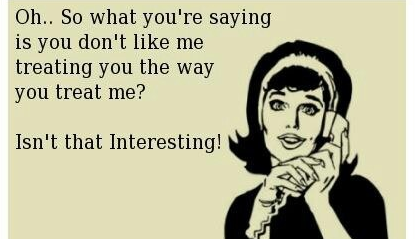 “Don’t say what you’re thinking.”
“It doesn’t matter how you feel.”
“Honesty is not always the best policy.”
It sounds terrible, doesn’t it? And yet modern society has created an entire value system based on these axioms. It’s called political correctness.
At the same time, however, there seems to be a freakish disconnect between the cultural extremes of political correctness and libertinism. On the one hand, the list of socially unacceptable words, phrases, and ideas keeps growing longer; on the other hand, regard for verbal filtering plummets in virtual free-fall.
At first blush, we might explain this away as an obvious consequence of competing ideologies and worldviews. Certainly, the popularity of Donald Trump and Ted Cruz can be understood as a natural reaction to the vacuous rhetoric of our elected officials, and to the farcical condemnation of benign comments and legitimate opinions as “hate speech” by the chattering classes. When a prominent university attempts to censor of words like mothering, fathering, and American as “microaggressions,” the inevitable consequence will be an equal and opposite reaction from the other side of the ideological divide.
But what is truly baffling are the offenses committed by proponents of political correctness themselves.

Christopher Hitchens: Almost a Hero
 It’s remarkable how we can develop a deep fascination, sometimes to the point of fixation, toward people we despise.
This is not particularly healthy: we gain much more by studying those who are worthy of our admiration and reverence, both as models for the refinement of our own behavior and as sources of inspiration that demonstrate the heights to which human nobility can soar.
But human nature produces an incessant magnetism toward the negative, no matter how much we may know better. So I couldn’t resist clicking on Daniel Oppenheimer’s recent retrospective* on Christopher Hitchens, one of my least favorite intellectuals.
I’m glad I did.

The Monty Hall Problem: Unlocking the Doors of Destiny
 I can sleep at night again, now that I have resolved one of life’s most perplexing mysteries. All is well with the universe once more.
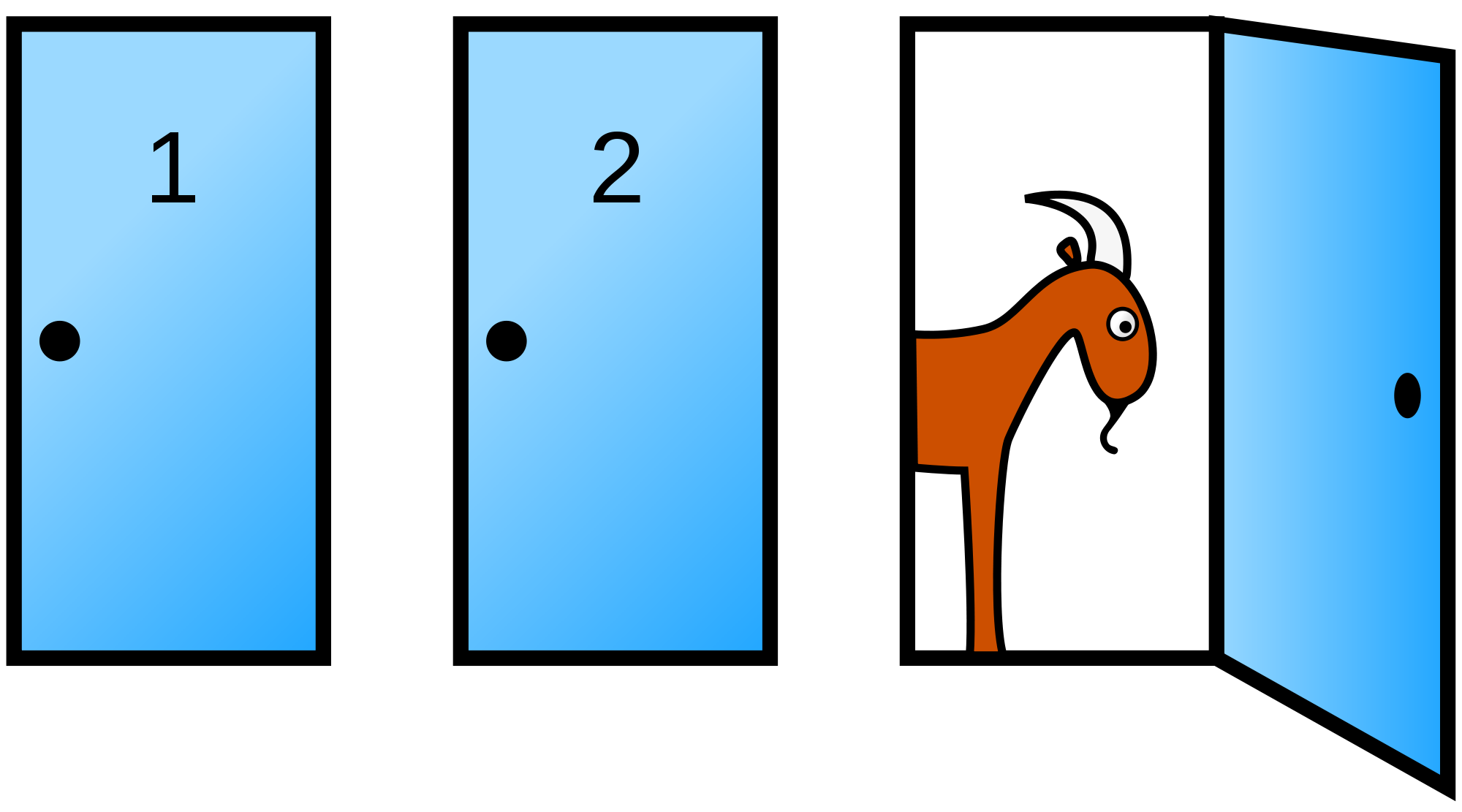
What is the persistent question that for so long stole my peace of mind? It is the riddle of Monty Hall and the goat behind Door Number Three.
The so-called Monty Hall problem is a counter-intuitive statistics puzzle that goes as follows: You have to choose one of three doors. Behind one you will find a car; behind each of the others, you will find a goat. You pick Door #1, hoping for the car, of course. Monty Hall, the game show host, narrows your choices by opening Door #3 to reveal a goat. Then Monty offers you a choice: you can stick with your original door or switch to Door #2.
What should you do? Simple logic suggests that there is no advantage to switching doors. With the elimination of Door #3, your odds improve from one-in-three to even-money. It shouldn’t matter whether or not you switch: either way, you will still have a 50-50 chance.
But here human logic fails. By switching doors, you increase your odds from even money to two-thirds.
HERE’S WHY IT WORKS, AND WHAT IT MEANS TO US:
http://www.learning-mind.com/the-monty-hall-problem/
 Yonason Goldson