Home » Posts tagged 'Psychology' (Page 22)
Tag Archives: Psychology

Living Beneath Falling Skies
 Two stories from this morning’s headlines:
Man Suing Over Injury From Giant Pine Cone in San Francisco
Missile Brought Down Malaysia Airlines Plane in Ukraine, Investigators Conclude
Our hearts should truly go out to the U.S. Navy veteran who had the misfortune of relaxing in a national park when a 16-pound pine cone fell on his head. The story would be comical were it not so tragic. After serving their country, our servicemen deserve respect and appreciation, not traumatic brain injury from freak accidents.
But that’s just the point. This was an accident, and accidents happen.
I suppose lawyers will wrangle over whether the Park Service was negligent for not posting warning signs and fencing off the area, or for planting a non-native species that might threaten unsuspecting visitors. I suppose one could also make the case that the Park Service should assume a measure of responsibility by covering the victim’s medical expenses.
But what does it say about us when our natural impulse is to litigate every mishap, to turn to the courts, assign blame, and make others pay? Life is full of scrapes and bruises, and sometimes more painful twists of fate. How we deal with the apparent randomness of our world comes down to personal philosophy and theology, but it isn’t always someone else’s fault.
In truth, it reflects a kind of collective arrogance, resulting from the delusion that we are in total control of our lives and our world, and that anything bad that happens to us must have been inflicted in some kind of criminal act. Why fate smiles on some and torments others is a question we can’t expect to answer in this world. But there isn’t always a man behind the curtain whom we can haul into court to demand restitution.
Even worse, when we attribute wicked intent to every whim of fortune, we lose some of our contempt for true acts of evil. The recent finding that it was a Russian-built Buk missile that killed 298 people aboard Malaysia Airlines Flight 17 last year confirms what everyone expected. There is true evil in the world, and we dare not conflate incidental suffering with that perpetrated by authentic villains.
We live in a world full of contradictions. When bad things happen to good people, we owe them our comfort and sympathy. When bad people spread suffering among the innocent, we are duty bound to hunt them down and exact justice.
But we should never confuse the two.

When we aren’t who we think we are
 After several months, two babies switched in an El Slavador hospital were both reunited yesterday with their biological parents, respectively, in Dallas, Texas, and the United Kingdom.
But it didn’t have to turn out that way. Like this story from the news in 2009.
It sounds like a movie. Nurses bring a newborn daughter back to her mother after bathing. The mother insists that she’s been given the wrong baby. The nurses, who clearly know better, dismiss her concerns.
But 56 years later, DNA testing proves that Marjorie Angell, the real mother in this real story, was right.
Kay Rene Reed and DeeAnn Angell were both born on the third of May, 1953 in eastern Oregon’s Pioneer Memorial Hospital. As babies they were switched, presumably while being given baths, and grew up to become wives, mothers, and grandmothers. Less than a year ago Kay Rene’s brother discovered an old photograph of Kay Rene in middle school. Except that it wasn’t a picture of Kay Rene; rather, the schoolgirl who could have been her twin was in fact the sister of DeeAnn.
Subsequent DNA testing proved what had already become obvious. Kay Rene wasn’t a Reed, and DeeAnn wasn’t an Angell.
“I cried,” said Kay Rene. “My life wasn’t my life.”
MISTAKEN IDENTITY
Imagine waking up one morning and discovering that you were someone else. Nothing has changed, yet everything has changed. You have the same friends, the same family, the same job. But you also have another family and another past — a whole different identity about which you know nothing. A careless moment over which you had no control and an innocent mistake outside your knowledge conspired to leave you wondering how your whole life might have unfolded if not for that momentary twist of fate.
What would you do? What would you think? How would you feel?
If you have lived a happy and well-adjusted life, you’d probably wrestle with some inner confusion and then return to your friends and family. But if your life had been difficult, if you had endured an existence of hardships and traumas that had left you broken and bitter, how might you cry out against the cruelty of chance that had snatched away the happy life you might have had.
And what if, somehow, it had actually been your own fault?
THE ULTIMATE ANGUISH
The Sages teach that when a soul departs from this world, it lets out a scream that can be heard from one end of the universe to the other. Contemporary scholars have explained their meaning as follows:
Once freed from the bonds of physical existence, every soul ascends to the next world and comes before the Heavenly tribunal for judgment. Upon our arrival, each of us will witness a reenactment of his entire life on earth, as if projected upon a giant screen, with all of our good deeds and accomplishments, but also with all our carelessness and self-absorption. Recognizing the futility of excuses or apologies, we will feel the shame and remorse of a life poorly lived, with no further chance of redemption.
Simultaneously, as if on a split-screen, a different story plays out. Here we will behold the life of a tzaddik, a truly righteous and pious individual whose every thought and deed is for others and whose efforts are directed entirely toward moral and spiritual self-perfection. The contrast between the two images will be astonishing.
As the painful exercise concludes, each of us will pose a question to the court: “I recognize my own life, but who is this tzaddik that lived so perfect a life, and why was his story projected next to mine?”
“That tzaddik,” the court replies, “is the person you could have been.”
With sudden clarity, the ascendant soul will understand the consequences of a life lived in pursuit of physical pleasure and material goals. Perceiving that there had resided within him the potential to become someone else altogether and, realizing that it is too late to go back and relive his life, the unfortunate soul will emit a scream that can be heard from one end of the universe to the other.
BEFORE IT’S TOO LATE
As long as we remain alive in this world, however, there is time to go back. What’s past is not necessarily past, for the Creator has programmed into his universe the extraordinary capability to go back in time and reshape what has already been done. This is teshuva — repentance or, literally, return.
The Jewish concept of repentance is not mere chest-clopping and confession.Teshuva is a process of self-transformation, of changing ourselves into the kinds of individuals incapable of ever again committing our earlier transgressions and indiscretions. Through sincere self-reflection, our genuine remorse will catapult us to new levels of spiritual and moral sensitivity. By returning to the straight path the Creator laid out before us from the moment we were born, we literally re-create ourselves and severe all connection to the errors of the past.
What’s done is now undone, and we have nothing to fear from the ultimate Day of Judgment. It is no longer our past that defines us. It is what we have made of ourselves, and what we do from this point forward, that will define our future.
 The two women switched at birth have gotten on with their lives, and they have even become friends. Kay Rene introduces DeeAnn as her “swister.”
“I’m trying to move forward and look at the positive,” DeeAnn said. “You can’t look back. It just drives you crazy.”
As we approach Rosh Hashanah, the day on which all the world is judged for the coming year, it would serve us well to contemplate both who we are and who we ought to be.

Choose Long-term Gain over Short-term Pain-Avoidance
 There are two things that parents of small children can’t stand. One is a child making noise when we’re trying to get work done. The other is a child making no noise at all.
Because if they’re not making noise, they’re usually getting into trouble.
So consider this scenario: you run to see what your too-quiet two year old has gotten into and find him playing with the snow-globe your sister brought back from her trip to Switzerland last year. Since this is not the best toy for a toddler, you smile at your child and gently take the snow-globe out of his hands.
That’s when the screaming begins.
What do you do? Do you endure the shrieking child or give back the snow-globe?
If you’re normal, your thinking probably works its way through the following steps: 1) He can’t really hurt himself with the snow-globe. 2) He probably won’t break the snow-globe. 3) I never really liked the snow-globe anyway. 4) If he does break it, it’s no big deal to clean it up. 5) So is it really worth making him miserable by taking it away?
But we’re not really worried about the child’s misery, are we? We’re more concerned about ourselves.
In the end, the odds are pretty good you’re going to let the toddler keep the snow-globe.
But the real issue isn’t the snow-globe; it’s the lesson you’ve just taught your child.

Someone is Always Watching
 “Someone is always watching.” Movie fans will recognize this as the punchline from “Ocean’s Eleven,” a glib repartee that ultimately recoiled on Andy Garcia and drove Julia Roberts back into the arms of George Clooney. Political observers might remember it, now that former Illinois Governor Rod Blagojevich is back (briefly) in the news, as a line the convicted politico should have uttered when he found himself the subject of state and federal investigators.
But just the opposite was true. The AP reported:
“You would think he would see his life collapsing around him,” said Chicago defense lawyer John Beal, who was in the courtroom with Blagojevich this week and noted how carefree he seemed. “But he was the center of attention and seemed to love it.”
One almost envies Mr. Blagojevich the comfort of his delusions.
At the beginning of the last century, the invention of electric lighting,telecommunication, and cinematography began to change the complexion of modern society. At the time, the leader of European Jewry, the venerable Chofetz Chaim, observed that the introduction of technologies scarcely imagined a generation before provided a lesson for any spiritually sensitive person to recognize that the Universe is not indifferent to our moral conduct.
Previously, the natural cycle of night and day imposed strict order upon human activity. Because most people in those times could not afford the limitless supplies of candles necessary to transform night into day, all activity was cut short early by the long nights of winter, and only in summer could the workday stretch late into the evening. Now, inexpensively and with the flick of a switch, the night could be expelled and the secrets of the darkness instantly revealed.
Can you say AshleyMadison?

How to Take Charge of your Moods and your Choices
 Why does Alaska have the highest rate of organ donation in the country? It might have something to do with Sarah Palin.
Most of us confront the question of whether or not we want our organs harvested every time we apply for a new driver’s license. Typically, we have to choose between checking a box if we want to be donors or leaving the box empty if we don’t.
This is how most donor forms were designed. Then researchers wondered what they could do to increase the number of participants. They came up with the bright idea of giving people a choice between two boxes: mark the yes box to donate, mark the no box to decline. The reasoning went this way: if people can opt out passively, then they’re not necessarily thinking about the choice in front of them, whereas having to choose one way or the other will force them to consider their options more carefully, resulting in more affirmatives.
The reasoning makes perfect sense. However, people are not always reasonable.

AshleyMadison — Why we’re too lazy to cheat right
 Everything’s easy. Everything’s instant. Is it any wonder that we want everything to be effortless and risk-free — even our acts of disloyalty.
Ironically, patrons of AshleyMadison made their infidelity all the more vulnerable to discovery, believing they could benefit from technology without exposing themselves to the inevitability that anything online eventually finds its way into the public arena.
Technology should free us to enjoy our lives more richly. Instead, it teaches us to be increasingly undisciplined, leeches meaning and purpose from our existence, and deadens us to the simple pleasures that make us truly happy.
Hear my guest interview on the Christal Frost Show discussing why we look for happiness in all the wrong places:
http://wtcmradio.com/the-christal-frost-show-podcasts/yonasongoldson82115/

Email of the Week — Making “Friends”
 Presently, I am trying to make friends outside of Facebook while applying the principles of Facebook.
So every day I walk down on the street and tell the passers-by what I have eaten, how I feel, what I did yesterday and what I will do tomorrow.
Then I give them pictures of my family, of my dog, and of me gardening and spending time in my pool. I also listen to their conversations and I tell them I love them.
And it works. I already have 3 persons following me:
2 police officers and a psychiatrist.

The Miracle of Music
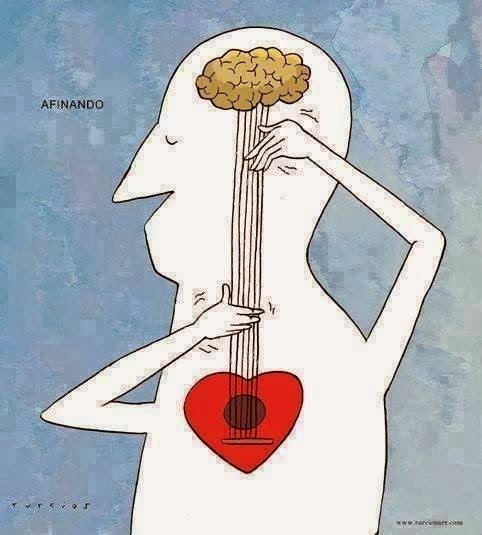 Why do the human mind and heart respond so passionately to an arrangement of sounds and words that provide absolutely no tangible or evolutionary benefit? The answer reveals much about ourselves and the world we live in.
We spend much of our lives looking and hoping for miracles. But the greatest miracle of all is right before our eyes: nature itself, the seamless fusion of all the forces of the world into a unified, unvarying system.
Science itself testifies to this: the principle of entropy, intrinsic to Newton’s second law of thermodynamics, describes the natural state of the universe as tending always toward disorder. In other words, nature’s law cannot account for the laws of nature, cannot explain the original ordering of the natural world that produced the immutable regularity of nature itself. What greater testimony to intelligent design can one find than the unnatural, persistent order evident in every aspect of the workings of Creation?
But what does this have to do with music?
Read the whole article here: http://www.learning-mind.com/the-miracle-of-music-how-sounds-affect-the-human-mind-and-heart/


Acquire the Gift of Giving
When she was 8 years old, Lara Aknin convinced her little brother to trade his dimes for her nickels. It was an easy sell… after all, nickels are bigger and must therefore be worth more.
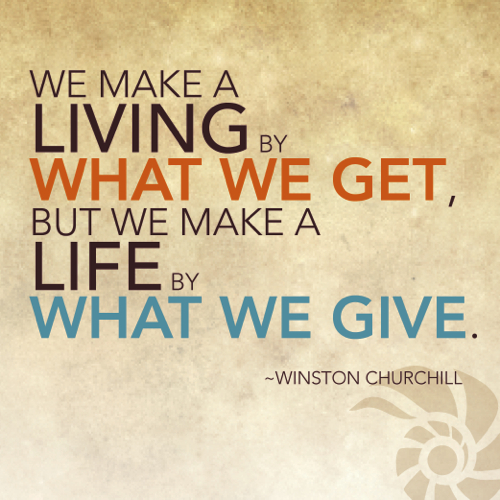 Now a psychologist at Canada’s Simon Fraser University, Dr. Aknin has discovered a mistake more profound than youthful embezzlement: in truth, her motivation itself was built on a misunderstanding of human nature.
In an interview with NPR’s Shankar Vendatam, Dr. Aknin describes the experiment in which her team asked toddlers to feed candies to hand-puppets which, they were told, would really enjoy the treats. Considering that these children were still too young to have absorbed any cultural awareness of giving as a value, the results produced two surprises. Explains Dr. Aknin:
“Children smiled significantly more when they were giving treats away than when they received the treats themselves. But what we thought was particularly exciting was that children actually smiled significantly more when they gave away one of their own treats than an identical treat provided by the experimenter.”
In other words, the greatest feelings of joy may come from giving up that which we treasure the most.
But does the impulse remain as we grow into adulthood?
Where did I leave my keys?
 Have you noticed how the more we try to push God out of our lives, the more insurmountable our problems seem to become?
Remember Einstein’s definition of insanity?
How many times have we spent the morning looking for our keys, cursing the fool who moved them, until we discover that we carelessly dropped them someplace where we were certain not to find them?
How often do we blame other people for the problems we caused ourselves, and look to others for the solutions that we hold in our own hands?
Isn’t it time we learned better?
 Yonason Goldson