Home » Posts tagged 'Psychology' (Page 23)
Tag Archives: Psychology

The Language of Confusion
 Political Correctness has reached a new high — or low — at the University of New Hampshire, where administrators have issued a Bias-Free Language Guide. Forbidden words include the following: “mothering, fathering, healthy, homosexual, rich, poor, senior citizen, and American.”
Perhaps we should find it comforting that a taxpayer-funded school is prepared to go so far to protect its students from hurt feelings. Presumably, educators believe that this measure will improve student’s self-esteem and thereby lead to greater success in the workplace.
Once again, life imitates art, as I discussed in this essay from 2009, written to honor the 60th anniversary of George Orwell’s 1984.
If only they would teach it in New Hampshire.
It never takes more than a day or two into the new school year before I hear the chant of my students’ favorite refrain: That makes no sense!
“What you mean,” I answer the first student who utters that unutterable phrase, “is that you don’t understand.”
“That’s what I said,” the student responds, predictably. “It makes no sense.”
“It makes perfect sense,” I insist, “as you will see once you understand it.”
The student doesn’t give up without a fight. “You know what I mean,” he says. “What difference does it make how I say it?”
“It makes no sense implies that, if the material we are learning does not conform to your way of thinking, then it must be wrong. I don’t understand acknowledges the possibility that the flaw in reasoning may reside in you, rather than in the material.”
He stares back at me, trying to digest this new idea. Over the course of the year, through constant repetition, most of my students will learn never to saythat makes no sense. At least not in my class.
I’ve been challenged on this many times. Is it really my job to belabor this point, to demand that my students express ideas concisely, even when the intent is clear? After all, I’m not a speech or language instructor. Why not just teach the material I’m being paid to teach?
WE THINK WHAT WE SPEAK
In his essay “The Principles of Newspeak,” the appendix to his classic novel, 1984 (published 60 years ago this month), George Orwell describes how the leaders of his totalitarian future have contrived to assure their hold on power by replacing English with Newspeak, a language containing no vocabulary for concepts contrary to the platform of the state-run Party. By controlling language, the Party controls its people’s very thoughts.
 Intuition suggests that language is a product of thought: if we think clearly, automatically we will speak clearly. Orwell demonstrates the opposite, that thought is a product of language. Because we formulate our thoughts in words and sentences, incompetent use of language guarantees muddled thinking. If there are no words for rebellion, uprising, or discontent people will find it difficult to formulate and articulate the concept of overthrowing even the most corrupt and oppressive government.
Students of Orwell will shudder when applying this simple axiom to the corruption of modern language. Advertisers and politicians have known for years that the best way to manipulate public perception is by arranging words in unconventional combinations. Car dealers know that potential customers will feel better buying cars that are “pre-owned” rather than “used.” A certain former president knew that the American people would not respond to the gravity of his presidential peccadilloes if distracted by pondering what the meaning of “is” is.
But linguistic confusion became institutionalized with the rise of political correctness. By dodging frantically out of the rain of potentially offensive terms, we soak ourselves in a torrent of euphemisms for simple words the thought-police deem pejorative. When illegal aliens become “undocumented workers,” we lose all sense of the danger posed by the porous condition of our borders. When terrorists become “insurgents,” we more readily accommodate the moral equivalence that blurs the line between aggressors and defenders. When abortion becomes “reproductive freedom,” the horror over the indiscriminate murder of innocents vanishes altogether.
Similarly, when marriage is bereft by judicial fiat of the definition that has served for thousands of years, the foundations of the family structure erode like sand castles before the approaching tide. And as it becomes taboo to make any direct reference to race, class, ability or performance without fear of hurting one group’s collective feelings or another group’s collective self-esteem, the words that form our thoughts and understanding end up so fully shorn of their dictionary definitions that they cease to mean much of anything at all. In short, nothing makes sense.
CONFUSION BY DESIGN
In truth, for advertisers, politicians, special interest groups, and the politically correct, the real purpose of language is no longer to convey meaning – it is to obscure meaning, to appeal to emotions while bypassing the intellect. Their motive is obvious: it is far easier to evoke a strong emotional response than it is to present a logically developed argument. But by allowing meaning to be drained from our language and our words, we have not only denuded them of their clarity, but also of their depth.
Even worse, we are no longer allowing confusion to reign free but legislating it into the public square. Earlier this year, London decided to remove apostrophes from its street signs. King’s Heath will now become Kings Heath. What’s the reason? Apostrophes are too confusing.
According to Councilor Martin Mullaney, who heads the city’s transport scrutiny committee, “Apostrophes denote possessions that are no longer accurate, and are not needed,” he said. “More importantly, they confuse people. If I want to go to a restaurant, I don’t want to have an A-level (high school diploma) in English to find it.”
Linguistic laziness in both syntax and vocabulary has worn smooth the sharpness of our minds. When I say that I love my wife, and I love my car, and I love ice cream, am I not indulging a subtle self-hypnosis that affirms an equation between all three, that suggests that my feelings for my wife is no more profound than my taste for Baskin Robbins and BMW? By impoverishing our words, we impoverish our thoughts as well.
 What is love? And what is honor? and loyalty? and commitment? As we strip our language of both its clarity and its nobility, these concepts become caricatures of what they once were, defined by the mass media who, like the Orwellian Party, have as their only concern the selling of their own values and their own agenda. And as much as we the people are willing to buy, they will continue to sell.
“Teachers, be careful with your words,” warns the Talmud, “lest the disciples who follow you will drink of evil waters and die.” When the waters of wisdom become polluted with confusion and contradiction, it is society’s youth who will pay the price through the erosion of moral clarity and moral principles.
Back in the classroom, my student continues to stare at me, contemplating my rebuke for a few more seconds before he responds. “What I meant to say,” he finally answers, “is that it makes no sense to me.”
I shake my head. “Don’t make it sound like what you want it to mean,” I tell him. “Just say it the way it is.”

Clean up your act and become a better person
 Counting your change as you exit the local supermarket, you discover that the cashier accidentally handed you back a ten dollar bill instead of a five. You pause, debating whether to go back and correct the error or pocket your modest windfall.
What you do next may depend on how fresh the fruit smelled in the produce section. If the tomatoes were over-ripe enough to emit an unpleasant odor, that might be all it takes to set your moral compass spinning.
In a series of social science experiments, researchers observed how exposure to disgusting smells or images can influence our attitudes and behavior: the same self-protective reflex that makes us back away from an assault upon our senses can also make us recoil from offensive behavior. Needless to say, rotten tomatoes have nothing to do with personal character; but once our feelings of disgust have been activated toward repugnant pictures or noxious odors we are more likely to feel aversion toward objectionable conduct and become increasingly repelled by unethical behavior.
That’s the good news. What’s really ironic, however, is that the same stimuli that make us less tolerant of improper actions by others make us more likely to engage in those same kinds of actions ourselves.

No one is so strong…
 Back in college, when everyone’s goal was “self-actualization,” we used to joke that the curse of actually becoming self-actualized would be having to live in a world where no one else was.
Strength doesn’t mean not needing anyone else. It means not being a slave to internal or external forces.
“Who is mighty?” asks the Talmud. “The one who masters his impulses and inclinations.”
But we still need other people, and the downside of being strong is the presumption by others that everything is always okay.
So don’t forget to ask the people close to you how they’re doing, even when they seem to be on top of the world. Sometimes strength is a burden that we can’t carry alone.

How to Survive the Age of Advertising
 After the Stone Age came the Iron Age, then the Industrial Age, and now the Age of Advertising. Regardless of what the experts say, we are not living in the age of a consumer economy, but of an advertising economy.
With companies trading for billions without producing proportional revenue — or any at all — we can only imagine how far things can go and how far the markets will climb before this latest bubble bursts, exposed for the pyramid scheme that it is. Indeed, the inability to distinguish between reality and illusion is precisely the goal of modern advertising.
Nevertheless, there is some small hope that escape from its influence might still be possible, no matter how far its tendrils have reached. That evidence comes in the person of Julian Keonig, perhaps the greatest legend in advertising history, who passed away last year at age 93.
Readers of a certain age will remember the classic Timex slogan, “It takes a licking and keeps on ticking,” and the self-validating tagline for the Volkswagen Beetle — think small — voted the most successful ad of the last century. Both were the creations of Julian Keonig; but neither was what he considered his most inspired brainstorm.
And neither provides us with an insight into his most important legacy.

Why Marriage Matters

From the United States Constitution to the French Revolution, from the Emancipation Proclamation to the 19th Amendment, from the Civil Rights Act to last week’s Supreme Court decision affirming the right to gay marriage, the world has taken (by a vote of 5 to 4) another great step forward on the road to universal equality and justice.
That’s what the pundits would like us to think. Except that it wasn’t a step forward.
And, more important, it was never about the right to marry…
As an institution, marriage created a moral structure upon which all other moral structures found purchase: Partnership, self-sacrifice and, perhaps most critically, respect for the natural boundaries and limits imposed by the design of the universe in which we live. Human beings took for granted the imperative to conform to nature’s laws and nature’s plan. Individual desire and ambition learned to submit to a higher reality and universal truths. Personal gratification was not the ultimate arbiter of right and wrong in a society that required cooperative spirit and collective commitment to ideals that extended beyond oneself.

The Key to Personal Success… Just Ask!
 Does this sound familiar?
You’re running out the door to take your wife to the airport, only to discover you have a flat tire. You don’t have time to wait for a taxi or the auto club. You want to ask your neighbor for a ride, but you’re afraid it’s too much of an imposition.
Or… you see someone on the subway reading a book by your favorite author or about a topic you find fascinating. You want to strike up a conversation, but you’re afraid of intruding on the other person’s privacy.
Or… you have a lead on a promising job opportunity, and an acquaintance has dealings with your prospective employer. You want to ask her to make an introduction, but you don’t want to put her in an uncomfortable position.
Maybe you’re afraid of rejection; maybe you’re afraid of overstepping the bounds of the relationship; maybe you’re afraid of being a pest.
Sure, there are boundaries, and sometimes we do cross them. So if these scenarios arise often, you might need to examine whether you’re overly needy.
But most of us aren’t looking for such situations; they just happen. And when they do, here’s the key: just ask!

Who’s Number One?
“The fragile beauty of narcissism.”
That’s the title of a blog post I came across. The author tries to make the case — in engagingly poetic prose — that arrogance is a virtue. Having just published a book illustrating how to turn negatives into positives, I was intrigued by his efforts, but fear the gentleman doth protest too much. We have enough blights upon society without turning more vices into virtues.
The author posits that,
Arrogance is “claiming ownership without justification”, in other words, more commonly, an inflated sense of self-worth. Why is it inflated? Because it assumes that that which is the source of pride endures, when the truth is it does not.
 Well, he’s half-right. “Inflated sense of self-worth” is definitely accurate. But the real root of arrogance is the assumption the one is the source of one’s own power.
Why is the arrogance of starlets, sports “heroes,” and members of Mensa so irksome? Because to be born with brains or beauty has more to do with genetics and fate than with innate worth. And although most successful athletes work and train hard to succeed, a certain amount of inborn talent is requisite to anything they may achieve through practice.
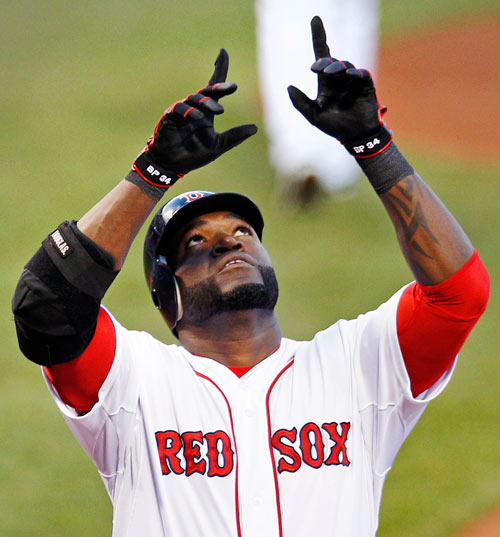
The laudable custom among many (mostly Hispanic) baseballers to point toward Heaven after getting a hit shows the humble acknowledgement that athletic prowess is not one’s own. With a single, small gesture they remind themselves — and countless spectators — Who is really Number One.
When our innate abilities lead us to believe in our own superiority, we think we have the right to devalue not only the contributions but the very existence of others. The Torah describes Moses as both “the most humble man who ever lived” and “the greatest prophet who ever would live.” Moses’ knowledge of his own greatness did not impair his humility. Just the opposite — he recognized that whatever ability he possessed came from outside himself, and also how much more he was obligated because of his natural abilities.
To paraphrase a certain president (who meant something else entirely), “You didn’t create that!”
“My point is that arrogance, narcissism, pride, all forms of hubris, are not without aesthetic value. The arrogant man believes, or at least attempts to believe, that he is or has something of unique and special value.”
The author errs by conflating arrogance with self-confidence. To believe in my own value, to seek to fulfill my potential, and to strive to push myself beyond my comfort zone toward new horizons — all that has nothing to do with arrogance. Just the opposite: an arrogant person believes he is already great and therefore has nothing to prove. In fact, studies have shown that people who overvalue their own worth are less likely to take up challenges lest they expose themselves as frauds.
Humility and modesty have largely gone out of style in our society, which is a loss for us all. Let’s try to hang on a bit longer to our contempt for arrogance.

Are you too sure for your own good?
“Understanding the distinctions between probability and certainty is one of the keys to developing a sociological imagination (and becoming an educated citizen, for that matter). One of the fascinating aspects of social science is using research tools to test assumptions through collected data—typically through multiple studies in a variety of settings.”
 This insightful post by Karen Sternheimer raises two critical points.
First, aside from death and taxes, there’s no such thing as a sure thing. Everything we do is based in probable outcomes. In the game of life, we are all gamblers.
But that’s as it should be. The difference between a gambler and an investor is largely semantic. We take a chance every time we cross the street, and success in any enterprise depends on weighing risk against reward, assessing the odds of winning against the odds of losing, calculating how much might be won and how much might be lost.
“Thinking about probabilities, rather than certainties, leads us to ask questions that help us understand sociological phenomena in much more depth than assumptions do.”
The problem is that most of us don’t want to do the hard work of making sure our facts are in order and our reasoning is sound. We’d rather listen to our gut, which is notoriously unreliable; after all, it’s a lot easier to take confidence in feelings and assumptions, than to deal with uncertainty.
The second point is the likelihood of children learning from their parents’ examples. If we gamble, chances are our children will, too. If we gamble recklessly, we are setting them up for disaster. But if we never take risks, our children may grow up timid and unaccomplished.
However, if we play the odds wisely, not waiting for the sure thing that will never come but neither betting the farm on long-shots… if we do our due diligence to make cautious bets when the probabilities are in our favor and the potential losses are manageable, then odds are our children will learn to be responsible gamblers themselves and will have the best chance for success in life that we can pass on to them.

Remembering Forgetfulness
 “Too many people become members of the ‘Bad Memory Club’ and focus on the 5% of the time that their memory fails them. If you think you have a bad memory, it means you have a good one because you can remember where your memory has gone wrong. Think about how much data you already have stored in your memory… Your memory does a lot right, so ask yourself, “How does my memory serve me – how did it serve me today?”
We all have the power to radically improve the quality of our lives by turning negatives into positives. With modest but consistent effort, we can train ourselves to focus on the good, initiating a virtuous circle of positive thinking that leads to increasingly positive actions and results.
Sometimes all it takes is remembering to try.
Speak Truth to Powers
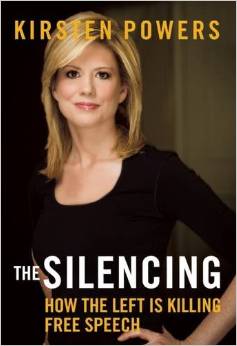 How refreshing that there are people like Kirsten Powers in the world.
In her new book, the outspoken, unapologetic liberal Democrat has taken aim at the militant search-and-destroy tactics employed by many liberals to shut down civil discourse and bully ideological opponents into submission.
Not surprisingly, many on the left have turned their attacks upon Ms. Powers and her book, proving her point by doing exactly what she accuses them of doing.
The intellectual laziness of groupthink lies at the heart of the deep divisions that are tearing this country apart. If more people would listen — listen to each other, and listen to Ms. Powers’s message — America might start turning back toward a culture of problem-solving and away from character assassination and political dogma.
 Yonason Goldson