Home » Posts tagged 'Science and Nature' (Page 3)

Tag Archives: Science and Nature

Anywhere is my Destination

It was a spectacular November morning, the high desert air clear and sharp, the sun ablaze in a cobalt sky. The future was mine for a song.

It was my first day on the road, the beginning of my grand adventure. It was my ultimate break with the past, my rejection of the familiar, and my repudiation of the predictable. There I was, on the cusp of metamorphosis, about to tear through the walls of my cocoon and take flight into a brave new world.

I was terrified.

It had seemed like a good idea, leaving everything and everyone behind to hitchhike across America. But that first morning out, standing on barren stretch of New Mexico highway 650 miles from where I’d started, all I could think of was getting back on the train to Southern California and slinking home to confess my reckless folly.

Click here to read the whole essay.

California and the Waters of Life and Death

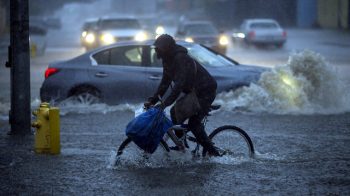
Whenever headlines carry the painful images of human being caught in the path of catastrophic flooding, we should all take a few moments to contemplate how quickly nature can become our greatest adversary.  Water is both the source of all life and the greatest destructive force on earth.  I ponder the paradox in these reflections from after the Pacific Rim tsunami of 2005.


The Tsunami and the Circle-Maker

california-flood-bicyclist-jpg_5902745_ver1-0_640_360Volcanoes. Hurricanes. Earthquakes. Fires. Tornadoes. Blizzards. Drought.

In a time when reports of terrorism have become all too common, it is sobering to consider the myriad ways nature possesses to inflict death and violence on a scale surpassing the most destructive instruments devised by man. Of all these, however, destruction by water, whether from the sea or from the sky, holds a unique terror in the scope and measure of its devastation.

Aside from the 150,000 lives already reported lost across nearly a dozen countries along the Indian Ocean, dehydration, disease and hunger threaten as many as 5 million more in the wake of the recent tsunami. And rare though tidal waves may be, the more familiar trial-by-water of floods has, with much greater frequency, left similar numbers homeless and in danger of starvation.

It seems ironic that water, the source and foundation of all life upon our planet, can become nature’s most malevolent instrument against the beings whose lives depend upon it.

Devastation by water occupies a prominent place in human history. Virtually every ancient culture records the tradition of a great flood that inundated the world, lending credence to the biblical account of Noah and the ark. Jewish tradition describes this not as a random event, but as a divine response to the corruption of mankind.

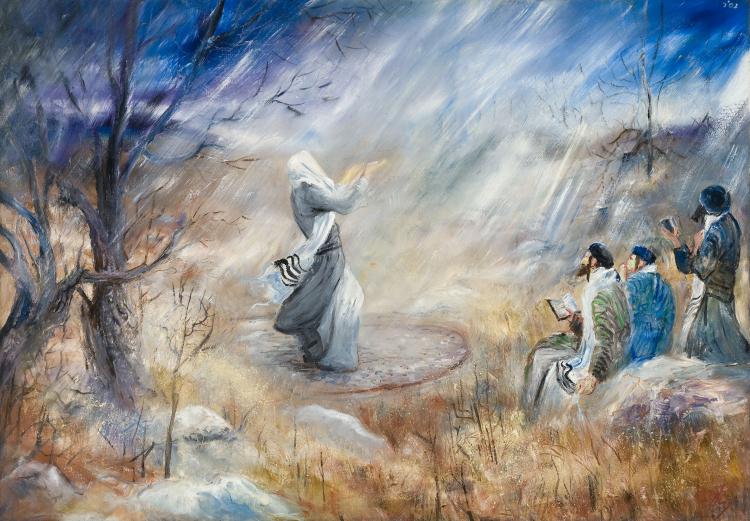
The Talmud, however, reports a much more enigmatic account of divine intervention through water. It was in a time of terrible drought that the Jewish people approached the sage Choni HaMagil and beseeched him to pray for rain on their behalf. When Choni’s supplications to the Almighty went unanswered, he drew a circle in the dust and stepped inside of it, vowing not to leave the circle until G-d bestowed rain upon His people.

Immediately, a fine mist settled upon the earth, too little to alleviate the drought but sufficient to free Choni from his vow.

Choni called out to heaven: “I asked not for this, but for a rain to fill all the wells and cisterns.” Immediately, raindrops larger than melons began to fall, wreaking destruction upon homes and fields.

Again Choni called out to heaven: “Neither did I ask for this, but for a rain of blessing.” Immediately a normal rain began to fall, filling the wells and cisterns of the people as Choni had requested. But the rain did not stop, and soon the entire population of the land feared that they would drown in the rising waters.

One last time Choni called out heavenward: “Master of the World, Your people, Israel, whom You brought out from Egypt, can tolerate neither too much blessing nor too much misfortune.” Immediately the waters abated, and the people returned to their fields. From this time onward, people referred to Choni by the name HaMagil   —   the Circle-maker.

What was the point of G-d’s demonstration to the people of Israel? What did Choni mean that the people could not tolerate too much blessing? And why did Choni find it necessary to remind the Almighty, at this particular moment, that He had brought the Jewish people out from Egypt?

The Exodus from Egypt may be described, in commercial terms, as the largest loan ever extended in the history of man. During the generations of slavery in Egypt, the Jewish people had forgotten their Creator and lapsed into the same idolatries as their Egyptian masters. And although, to their credit, the Jews had guarded themselves against assimilation, this alone was insufficient to earn them the privilege of miraculous redemption. Nevertheless, G-d gave them an incalculable line of credit: Freedom from slavery, freedom from oppression, freedom to chart their own course into the future.

Moreover, He promised them immeasurable blessing and unbounded prosperity, on condition that they would repay their loan   —   repay it by living according to G-d’s law, repay it by rising above material pursuits and petty self-interest, repay it by using all the blessing that G-d would bestow upon them to aspire to moral, ethical, and spiritual perfection.

In this light, blessing may be understood as a double-edged sword. Wielded in one direction, it cuts down all enemies and obstacles that stand before us. Wielded in another, it obligates us to a standard of righteousness and moral behavior that we may find nearly impossible to meet.

This was the meaning behind the Almighty’s response to Choni the Circle-maker’s plea:

Two roads lie before My people, and it is their choice which to follow. One leads back to Egypt, back to the oppression of materialism and the slavery of self-indulgence, back to spiritual emptiness and the absence of all blessing. The other road leads forward, to spiritual fulfillment and spiritual greatness, if My people will only find within themselves the potential to seek greatness and discard all lesser goals. It is for this that I redeemed them, that they might cast off the chains of physicality and reach for the heavens.
H19060-L75167491And this too was the meaning behind Choni’s appeal to the Almighty:

Master of the World, You brought your people out from slavery and oppression on condition that they would use their freedom and the blessings to strive for spiritual heights. Your people, however, have demonstrated from their beginnings that, whatever their potential may be, they still suffer from human failings and human shortcomings. They cannot tolerate too little material blessing, lest the struggle to survive overwhelms them and they abandon all higher aspirations. And they cannot tolerate too much blessing, lest they cower before the goal set for them and lose all hope of its attainment.

By all accounts, the world that we live in today enjoys a level of material affluence unattained and unimagined by previous generations. Such basic necessities as rapid transit, instantaneous communication, indoor plumbing, electrical lighting and refrigeration, which we take for granted, provide us with an ease of living simply unavailable to even the wealthiest, most powerful monarchs until the last century. The very existence of an “entertainment industry,” much less the staggering sums of money devoted to it, testifies to our abundance of resources   —   which is to say, our abundance of material blessing.

Nowhere does Jewish tradition teach the condemnation of wealth or of recreation.

Nowhere does Jewish law mandate the forcible redistribution of wealth from those blessed with good fortune to those less fortunate. But Jewish tradition does warn us of the responsibilities of prosperity. It warns us in the narrative of the flood, in the story of Choni HaMagil, and also in the Hebrew word for charity: tzedakah, derived from the word tzedek, or justice.

It is only just that those who are blessed share a portion of their blessing with their less fortunate neighbors. It is only just that, before overindulging in one’s own good fortune, he ponders why he deserves having received such blessing while his neighbor has not. And it is only just that he ask himself how, even in the absences of tax incentives or legal mandate, he might reach out with his blessing to ease his neighbor’s plight.

If the waters of the earth, the life-giving waters that are the source of our greatest blessing   —   life itself   —   have risen up to inflict enormous tragedy, swallowing human life and draining billions of dollars of aid to spare human suffering, we will all be remiss if we do not pause to consider whether we have used our blessings wisely, and what we must do to ensure that we will continue to deserve them.


Originally published by Jewish World Review.

Profit is not enough

“Cybercrime is out of control.”

So says Caleb Barlow, Vice President at IBM Security.  And if you’re already worried about credit card fraud and Russian hacking, you may not want to read any further.

On the other hand, there’s a lesson for all of us from the world of virtual villainy.

Most of us have come to accept internet espionage, phishing emails, and scam artists as part of life, the virtual equivalent of political kickbacks, muggings, and drive-by shootings.  We don’t like them; but the real world is not a perfect world, so we learn to take the bad with the good.

In a recent Ted Talk, Caleb Barlow offered a terrifying and surreal account of criminal organizations operating like professional, legitimate businesses, with English-speaking help desks and fake banking websites.  They operate anonymously on the Dark Web, which most of us relate to as something from a Kiefer Sutherland thriller.

But it’s real.  So real, in fact, that if you stumbled across a dark website you’d think you were shopping on Amazon or checking reviews on Angie’s List.

Read the whole article here.

It’s about time

hqdefaultAre you feeling more rested this week?  Do you notice your watch running a smidgen fast?  Maybe it’s because of the leap-second added by the National Institute of Standards and Technology on New Year’s Eve.
A few of us may take comfort knowing that our clocks are back in sync with the earth’s relative positive to the sun, and find it reassuring that all the cosmic gears and cogs are once again in perfect alignment.  The rest of us couldn’t care less.

Does it really matter?

Well, yes; it just might.

There are two ways to look at time.  First, as a convenient touchstone for organizing our lives.  Without some universal standard for tracking our days and our hours, imagine the trouble we would have arranging our affairs and interactions.

But you can also make the case that time really does mean something.

Click here to read the whole article.

It’s right before your eyes

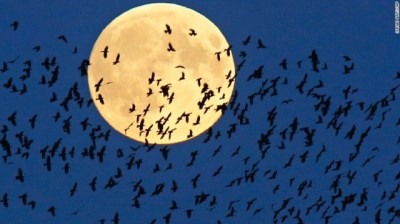
image-supermoon-dan-hujan-meteor-akan-hiasi-langit-malam-iniYesterday’s supermoon, the closest and brightest in seven decades, is dramatic precisely because it fails to push back the darkness of night.  King Solomon warns us of the pitfalls of living “under the sun,” reminding us that too much light can blind us to the dangers posed by our own misperception — a theme that figures prominently in my book Proverbial Beauty.  I’m taking the opportunity to revisit this article from 2009.

Imagine if, in the late 1990s, a freshman congressman in the House of Representatives had submitted, as his first piece of legislation, a bill requiring airlines to install high-security doors on all passenger planes between the cockpit and the cabin. Imagine that the bill narrowly passed, was signed into law, and resulted — at great inconvenience and expense — with enhanced security for every commercial flight crew by the summer of 2001.

What would such an initiative have produced? Most notably (or really, just the opposite), September 11 would be a date of no greater significance than August 3. No terrorists would have seized those airliners and flown them into the Twin Towers that day. Perhaps American troops would never have gone into Afghanistan or Iraq. Perhaps the economy would not (yet) have collapsed. Quite possibly, Barack Obama would never have been elected president in an anti-George W. Bush backlash.

In his book The Black Swan: The Impact of the Highly Improbable , economist Nassim Nicholas Taleb proposes just such a scenario. But Mr. Taleb focuses less on the global consequences than on the fate of our fictional congressman — let’s call him Joe Smith. Congressman Smith will not be remembered as the hero who prevented the worst terrorist attack in history, precisely because he successfully prevented it. In all likelihood, he will be loudly denounced as the architect of an expensive and irrelevant measure and hounded out of office. He may live out his life regret his own lack of political saavy, which ended his career before it had even begun.

A complicated and often elusive treatise, The Black Swan proposes a correlation between history’s most significant events and the degree to which they were unanticipated. The stock crashes of 1929 and 1987; the outbreak of both world wars; the collapse of the Soviet bloc and the rise of Islamic fundamentalism. Each of these came as a profound shock to the world; only with the benefit of hindsight have historians explained all of them as political and economical inevitabilities.

Moreover, the lessons learned from history’s most earth-shattering events tend consistently to be exercises in locking the barn door after the horse has run away. Both individually and collectively, we implement strategies that would have changed the course of history had we applied them earlier, failing to realize that our measures to correct address the specific circumstances that shaped the past rather than the broader principles that will determine the future. The more closely we focus on what we expect to happen, the more we increase the probability that the future will arrive from an entirely unimagined direction.

DON’T LOOK NOW

The human eye is a truly remarkable organ. It is self-focusing, adjusts instantly from close-range to distance, discerns color and texture, judges distance, and adapts to bright sunlight, inky darkness, and everything in between. It allows us to focus on a single point of interest while, through our faculty of peripheral vision, we continue to process information coming in from all sides to provide context and enable us to respond to changing conditions.

someone_watching_you_by_svitakovaeva-d4hu3fzInstinctively and intuitively, we place the object of immediate interest at the center of our optic and cognitive attention. But this is not always the most effective means of perception. We have all experienced instances of looking directly at an object and failing to see it, either because it is so familiar or unremarkable that our minds filter it out as irrelevant, or because it is so incongruous that our subconscious refuses to accept its presence. In such cases, we may notice an object only when we are looking elsewhere and our peripheral vision, unencumbered by the censorship of our expectations, draws our attention back to that which had previously hidden in plain sight.


This phenomenon — called averted vision — was first alluded to by Aristotle and has become particularly important among astronomers, who have found that observing an object peripherally may increase its resolution by up to three or four magnitudes. Because the center of the eye contains only cones, which perceive brightness and color, fainter objects are more easily detected by the rods, which perceive dim, monochromatic light and occupy the outer regions of the eye.

LOOK AWAY AND ALL WILL BE REVEALED

We live in a world that, on its surface, seems well-ordered and readily understood. The cycle of seasons follows its natural course with relative predictability. The habits of animals remain virtually unchanged. The waters of the earth flow downward from the mountains to the seas, evaporate and rise up to the firmament, then return to the earth as rain.

On closer inspection, however, the world is a place of profound mystery. Solid objects are composed of increasingly tiny particles, many of which are spinning wildly in microscopic orbits at nearly the speed of light. Hundreds of other sub-atomic particles waft about our universe, many without any clear direction or purpose. The beginnings of physical existence and life itself cannot be substantiated through any empirical evidence or rational theory. The force of gravity, which is so fundamental that we scarcely give it any thought, has no satisfactory explanation.

Atoms, the building blocks of our universe, had never been directly observed until last year, when an electronic microscope powerful enough to view them was finally engineered. The protons, neutrons, and electrons, as well as those myriad other sub-atomic particles, are still yet to be seen. So how do we know they exist? Indirect evidence — the averted vision of science. By analyzing observable evidence, scientists have determined that these particles must exist to explain otherwise unexplainable phenomena.

But why should our universe be so impenetrably shrouded in mystery? The sages of the Talmud explain that ours is a world of hester ponim — a world in which the Almighty “hides His face.” The familiarity of the material world draws all our attention, distracts us from the true spiritual nature that reveals itself only at the periphery of our vision. The unanswered questions of science, the anomalies of nature, the enigmas of philosophy, the improbability of the cosmic and individual “coincidences” that surround us daily — all these testify to the order and the One who imposed order upon the universe. They whisper to us from the corners of our consciousness and beckon us from the edges of our awareness, vanishing to insignificance amidst the cacophony of physical existence the moment we try to focus on them, then reappearing as soon as we turn our attention elsewhere.

Search for G-d and all His might, says King David, seek His presence always.The harder we try to find order in our lives, the more chaotic our world seems to become. By allowing the subtle evidence that flutters at the fringes of Creation to hold out attention, however indirectly, the more we make our hearts and minds sensitive to the spiritual reality that is the foundation of the physical universe and the human condition.

Originally published in Jewish World Review

Why Feeling Good about Yourself Is Not Always Good for You

11960191_f520Take a ride in a glass elevator, from ground level to rooftop in a single ride. How do you feel?

If you’re like most people, you feel – no surprise here – like you’re on top of the world. You feel good about yourself and believe in your ability to overcome any obstacle and conquer every challenge. The only downside is – well, going down. By the time you get to the bottom, not only have your feelings of grandeur evaporated, but now you feel a bit puny, somewhat insignificant, and less than capable.

But wait! You can save yourself the effort. Researchers have discovered that you can awaken the same responses by merely imagining yourself soaring skyward or plummeting earthward. With a little visualization, you can create your own mood.

But what happens next?

That’s what Max Ostinelli, David Luna, and Torsten Ringbergat wanted to find out. The three University of Wisconsin, Milwaukee, psychologists had people imagine themselves rising up into the sky, then asked them to solve a series of SAT-style math problems. With all that positive and high self-esteem pumping up their neural pathways, certainly, their performance should have increased significantly. Right?

Wrong. They did worse. A lot worse. In fact, the performance gap between those who had their self-esteem artificially inflated and those who had theirs artificially diminished was between 20 and 30 percent.

As Max Ostinelli explains to NPR,

“When we boost self-esteem in this way, people are motivated to maintain their high self-esteem. So they say, well, I’ll withdraw from the task.”

In other words, when we know that our feelings of accomplishment are unearned or undeserved, our defense mechanism kicks in to protect our fragile bubble of fantasy from the nasty pinprick of reality. Conversely, when we feel we have to prove ourselves, an inner voice prompts us to engage and persevere rather than sit around wallowing in our feelings of inadequacy.

Click here to read the whole article.

Rosh Hashanah and the Mysteries of the Universe

cropped-man-and-mysterious-universeOriginally published by Jewish World Review in 2003.

96% of the matter in the universe is invisible. Mysterious “dark energy” is pushing all of space apart. Empty space is not really empty, but filled with subatomic “foam.” At least seven parallel universes exist, each a trillionth the size of a proton.

Science fiction? Fantasy? The product of opium hallucinations?

Guess again. According to an article in U.S. News and World Report, these hypothesized phenomena represent the mainstream of current scientific thought.

In the wake of observations reported last March by NASA’s Wilkinson Microwave Anisotropy Probe, astronomers and physicists are resorting to these and other fantastic models to explain anomalous temperature variations in the background radiation permeating the heavens.

And who knows? They may be right. After all, once upon a time a round earth, a heliocentric solar system, and manned flight were all scorned as flights of the wildest fancy. Perhaps entire universes really do exist, wrapped up in a particle of dust beneath your finger nail.

On the other hand, increasingly complex and convoluted theories begin to look like the frantic flailings of scientists drowning in the mysteries of human existence. Indeed, one noted physicist confessed that, if he’d been presented with these theories not long ago, “I’d either ask what you’ve been smoking or tell you to stop telling fairy tales.”

Of course, one almost has to feel sorry for these scientists. Every discovery, every revelation, every insight, opens up a new Pandora’s Box of inexplicable phenomena. A few short decades ago, we knew of about half a dozen known sub-atomic particles. Today there are hundreds, with the number growing all the time, and often only the haziest guesses as to why they exist. Relativity theory and quantum theory both seem to describe the workings of the universe, but only the most strained and unproven theory suggests how to unite these two approaches.

1280It’s almost enough to make one contemplate — dare we say it? — Divine Creation. Indeed, man’s desire to plumb the secrets of the universe is nothing new. Newton, Descartes, Galileo, Aristotle, all of these and many others grappled with physics and metaphysics in their labors to comprehend the vast expanse of time and space that stretches toward the boundaries of existence.
But long before the first scientist or philosopher raised his eyes to gaze into outer space and contemplate the stars, another man searched inner space seeking understanding. His name was Job.

A righteous man who lost his fortune, his family, and his health, Job questioned whether there was any rhyme or reason to explain the suffering of the righteous and the prosperity of the wicked. And as he sank into the mire of self-pity and nihilism, a Voice from above answered him:

“Where were you when I laid the foundations of the earth?” asked the Almighty. “What is the path where light dwells? And darkness, where is its place, that you may take it to its boundary, that you may understand the paths of its home?”

The Creator never explains Job’s suffering, but He does provide Job with the answer that restores his faith: The complexity of creation is not only more that you know, but more than you can begin to imagine. Every star above you in the sky, every drop of water in the sea, and every grain of sand upon the shore resides in its place and follows the course chosen for it; so too is every seeming whim of fate rather an unfathomable pulse from the primordial machine that steers the unfolding of eternity.

And so we say in the Rosh HaShanah liturgy, “This day is the anniversary of the beginning of Your handiwork, a remembrance of the First Day.” As we stand in the murky spiritual twilight between the end of one year and the start of another, we contemplate that amidst the mystery and uncertainty that surrounds us, one constant offers us security and safety if we take hold of it: the indivisible relationship between the Creator of all and His ultimate creation — Mankind, for whom He brought all else into being.

This day. This day of Rosh HaShanah begins a new year, a new season, a new opportunity to draw near to the Master of Creation. This day offers us a poignant reminder of how to cling to the godliness the resides within us, to strive to become more devoted in our relationships and less demanding in our expectations, more focused on others and less fixated on ourselves, less passionate about material gain and more ardent in our pursuit of spiritual fulfillment.

blowing-of-shofarThis day reminds us that we hold in our hands an awesome privilege, as well as an awesome responsibility. How willingly are we seduced into looking for simplistic solutions to the moral and ethical dilemmas that life throws at us day after day? How longingly do we embrace superficial cliches and bromides that urge us to pull the warm covers of apathy over our heads?
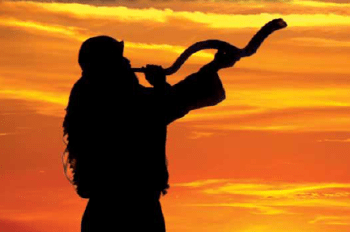
This day. Rosh HaShanah is our wake up call, and the sound of the shofar signals our reveille to open our eyes and behold the breathtaking magnificence that is Creation. And if our minds reel as we try to grasp the limitless expanse of the universe, we can yet grasp onto this certainty: that the One who placed us in its midst has revealed Himself through His Word and has given each of us a priceless gift, no less than the sand and the sea and the stars — an indispensable role to play in the completion of His masterpiece and the means through which we can become one with the infinite and with the divine.

Louisiana and the Waters of Life and Death

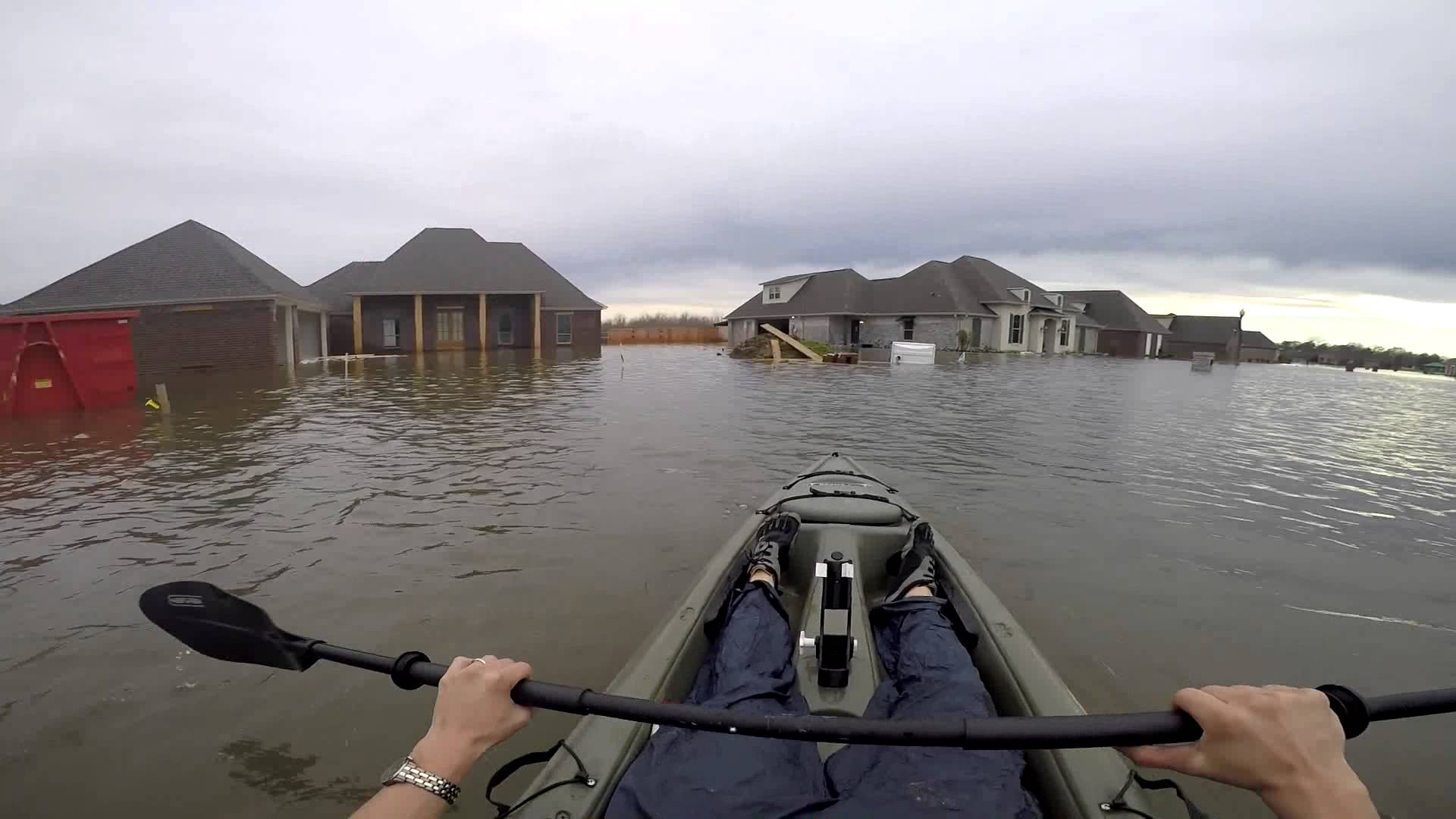
As residents across Louisiana struggle against catastrophic flooding, we should all take a few moments to contemplate how quickly nature can become our greatest adversary.  Water is both the source of all life and the greatest destructive force on earth.  I ponder the paradox in these reflections from after the Pacific Rim tsunami of 2005.

maxresdefaultVolcanoes. Hurricanes. Earthquakes. Fires. Tornadoes. Blizzards. Drought.

In a time when reports of terrorism have become all too common, it is sobering to consider the myriad ways nature possesses to inflict death and violence on a scale surpassing the most destructive instruments devised by man. Of all these, however, destruction by water, whether from the sea or from the sky, holds a unique terror in the scope and measure of its devastation.

Aside from the 150,000 lives already reported lost across nearly a dozen countries along the Indian Ocean, dehydration, disease and hunger threaten as many as 5 million more in the wake of the recent tsunami. And rare though tidal waves may be, the more familiar trial-by-water of floods has, with much greater frequency, left similar numbers homeless and in danger of starvation.

It seems ironic that water, the source and foundation of all life upon our planet, can become nature’s most malevolent instrument against the beings whose lives depend upon it.

Devastation by water occupies a prominent place in human history. Virtually every ancient culture records the tradition of a great flood that inundated the world, lending credence to the biblical account of Noah and the ark. Jewish tradition describes this not as a random event, but as a divine response to the corruption of mankind.

The Talmud, however, reports a much more enigmatic account of divine intervention through water. It was in a time of terrible drought that the Jewish people approached the sage Choni HaMagil and beseeched him to pray for rain on their behalf. When Choni’s supplications to the Almighty went unanswered, he drew a circle in the dust and stepped inside of it, vowing not to leave the circle until G-d bestowed rain upon His people.

Immediately, a fine mist settled upon the earth, too little to alleviate the drought but sufficient to free Choni from his vow.

Choni called out to heaven: “I asked not for this, but for a rain to fill all the wells and cisterns.” Immediately, raindrops larger than melons began to fall, wreaking destruction upon homes and fields.

120831085605-01-isaac-landov-fri-horizontal-galleryAgain Choni called out to heaven: “Neither did I ask for this, but for a rain of blessing.” Immediately a normal rain began to fall, filling the wells and cisterns of the people as Choni had requested. But the rain did not stop, and soon the entire population of the land feared that they would drown in the rising waters.

One last time Choni called out heavenward: “Master of the World, Your people, Israel, whom You brought out from Egypt, can tolerate neither too much blessing nor too much misfortune.” Immediately the waters abated, and the people returned to their fields. From this time onward, people referred to Choni by the name HaMagil   —   the Circle-maker.

What was the point of G-d’s demonstration to the people of Israel? What did Choni mean that the people could not tolerate too much blessing? And why did Choni find it necessary to remind the Almighty, at this particular moment, that He had brought the Jewish people out from Egypt?

The Exodus from Egypt may be described, in commercial terms, as the largest loan ever extended in the history of man. During the generations of slavery in Egypt, the Jewish people had forgotten their Creator and lapsed into the same idolatries as their Egyptian masters. And although, to their credit, the Jews had guarded themselves against assimilation, this alone was insufficient to earn them the privilege of miraculous redemption. Nevertheless, G-d gave them an incalculable line of credit: Freedom from slavery, freedom from oppression, freedom to chart their own course into the future.

Moreover, He promised them immeasurable blessing and unbounded prosperity, on condition that they would repay their loan   —   repay it by living according to G-d’s law, repay it by rising above material pursuits and petty self-interest, repay it by using all the blessing that G-d would bestow upon them to aspire to moral, ethical, and spiritual perfection.

In this light, blessing may be understood as a double-edged sword. Wielded in one direction, it cuts down all enemies and obstacles that stand before us. Wielded in another, it obligates us to a standard of righteousness and moral behavior that we may find nearly impossible to meet.

This was the meaning behind the Almighty’s response to Choni the Circle-maker’s plea:

Two roads lie before My people, and it is their choice which to follow. One leads back to Egypt, back to the oppression of materialism and the slavery of self-indulgence, back to spiritual emptiness and the absence of all blessing. The other road leads forward, to spiritual fulfillment and spiritual greatness, if My people will only find within themselves the potential to seek greatness and discard all lesser goals. It is for this that I redeemed them, that they might cast off the chains of physicality and reach for the heavens.

H19060-L75167491And this too was the meaning behind Choni’s appeal to the Almighty:

Master of the World, You brought your people out from slavery and oppression on condition that they would use their freedom and the blessings to strive for spiritual heights. Your people, however, have demonstrated from their beginnings that, whatever their potential may be, they still suffer from human failings and human shortcomings. They cannot tolerate too little material blessing, lest the struggle to survive overwhelms them and they abandon all higher aspirations. And they cannot tolerate too much blessing, lest they cower before the goal set for them and lose all hope of its attainment.

By all accounts, the world that we live in today enjoys a level of material affluence unattained and unimagined by previous generations. Such basic necessities as rapid transit, instantaneous communication, indoor plumbing, electrical lighting and refrigeration, which we take for granted, provide us with an ease of living simply unavailable to even the wealthiest, most powerful monarchs until the last century. The very existence of an “entertainment industry,” much less the staggering sums of money devoted to it, testifies to our abundance of resources   —   which is to say, our abundance of material blessing.

Nowhere does Jewish tradition teach the condemnation of wealth or of recreation.

Nowhere does Jewish law mandate the forcible redistribution of wealth from those blessed with good fortune to those less fortunate. But Jewish tradition does warn us of the responsibilities of prosperity. It warns us in the narrative of the flood, in the story of Choni HaMagil, and also in the Hebrew word for charity: tzedakah, derived from the word tzedek, or justice.

It is only just that those who are blessed share a portion of their blessing with their less fortunate neighbors. It is only just that, before overindulging in one’s own good fortune, he ponders why he deserves having received such blessing while his neighbor has not. And it is only just that he ask himself how, even in the absences of tax incentives or legal mandate, he might reach out with his blessing to ease his neighbor’s plight.

If the waters of the earth, the life-giving waters that are the source of our greatest blessing   —   life itself   —   have risen up to inflict enormous tragedy, swallowing human life and draining billions of dollars of aid to spare human suffering, we will all be remiss if we do not pause to consider whether we have used our blessings wisely, and what we must do to ensure that we will continue to deserve them.

Originally published by Jewish World Review.

One step closer to Eden

Awake from the north and come from the south!  Blow upon My garden and let its spices flow.  Let My beloved come to his garden and partake of its precious fruit.
— Song of Songs 4:16

Would the world be better off without mankind?

Many environmentalists think so.  It’s hard to deny that, from a purely ecological point of view, life on earth would do much better without human beings around to interfere with the natural order.

But without mankind, there would be no point and, ultimately, no reason for the world to exist at all.  Only Man seeks to create; only Man strives to become more than he is; and only Man directs his efforts toward ideals that transcend mere survival and procreation.

If we are to act as responsible custodians of the world, however, we have to stop from time to time and let the world remind us what those ideals are.

In the late 1800s, the great Rabbi Samson Raphael Hirsch announced his plan to travel from Germany to see the storied mountain ranges of Switzerland.  This was entirely in keeping with Rabbi Hirsch’s philosophy of integrating worldly knowledge and experience into his religious outlook.  That being said, the incomparable leader of Orthodox Jewry was well into his seventies, seemingly much too old to undertake such an adventure.

Some of the rabbi’s closets acolytes questioned the wisdom of embarking on such a strenuous journey at his advanced age.  The rabbi replied that it was precisely because of his age that he felt it necessary to go.

“I may not have much longer to live,” explained Rabbi Hirsch.  “And when I stand in judgment upon my arrival in the World to Come, what will I say when the Almighty asks me, “Samson, why did you not see My Alps?”

Rabbi Hirsch understood what we too easily forget:  That the wonder and beauty of the world are here for us to experience, for us to enjoy, and for us to find inspiration in the masterful Hand that fashioned all of Creation.

But North Americans need not travel to Switzerland to find their inspiration.  Within our own borders we have the “American Alps.”  That’s what Louis Hill, president of the Great Northern Railway, called the mountains of Glacier National Park.  It was Hill who found the region so extraordinary that he lobbied congress to designate Glacier as a national park in 1910.  And it was Hill who influenced the Alpine design of the park’s hotels and facilities to echo the mountains’ namesake across the sea.

Even from the same continent, getting to the park in northern Montana is no simple matter.  My wife and I flew into Spokane, Washington, then rented a car and began to drive, first across the Washington border, then through Idaho, and ultimately into Montana.  The roads were mostly straight and flat as the miles sped by; it took us six hours just to reach the outskirts of 1,583 square-mile wilderness.  But as my own rabbi likes to say, the best things in life are rarely found on the beaten path.

Click here to read the whole article from this month’s Wagon Magazine.

Spitting Image 2:2 — When sacrifice is for the birds

evergladesWould you sacrifice one of your children to save the other?

That was the unthinkable dilemma revealed at the climax of the Meryl Streep classic Sophie’s Choice, which left the heroine emotionally scarred for the rest of her life.  

The poignancy of that final scene tears at the insides of anyone who’s ever seen it.  Some things are too hideous even to contemplate, and we simultaneously rage against the evil of the Nazi tormentor and ache for the mother who had to choose and could never forgive herself for choosing.

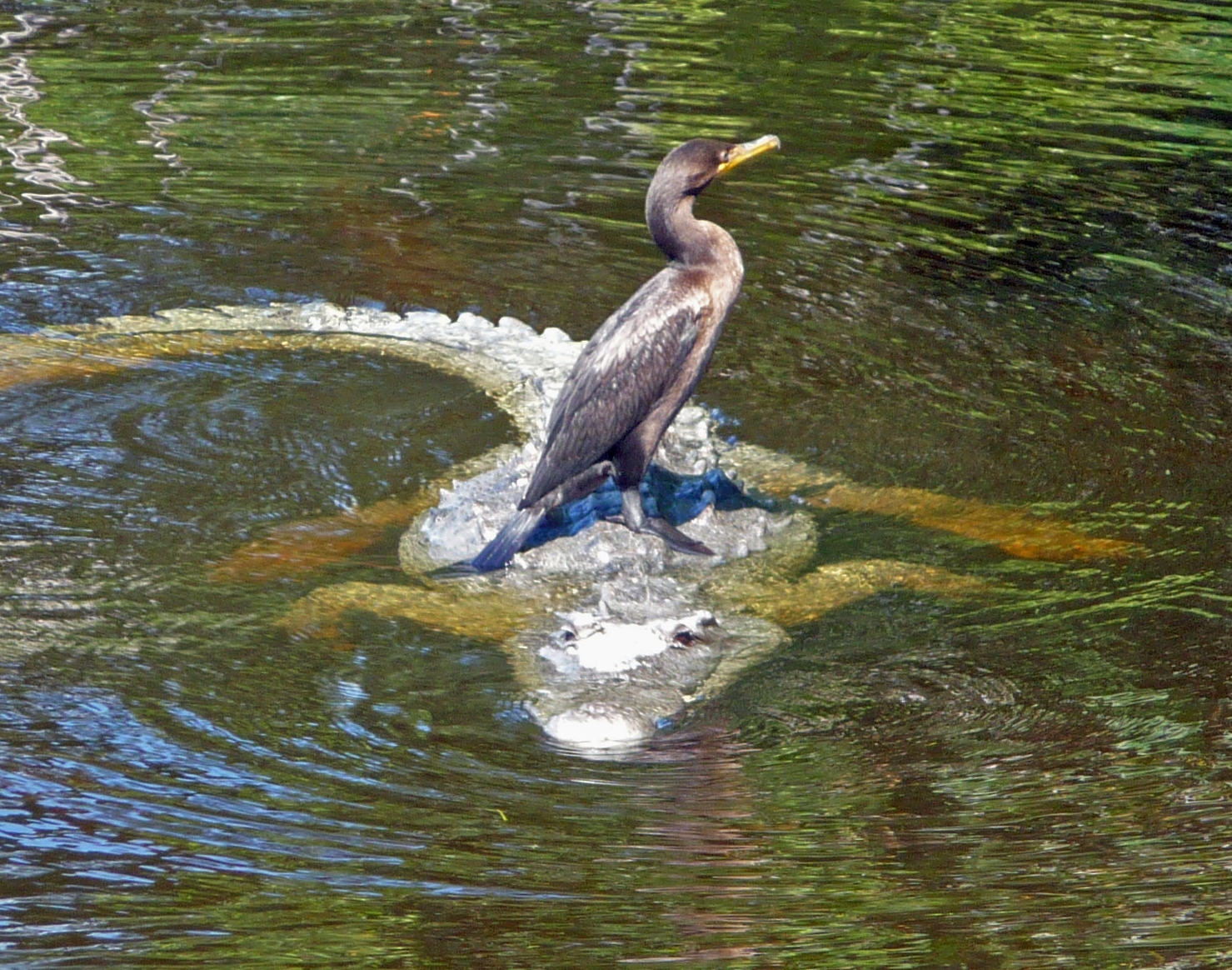
But reality can be just as disturbing as fiction.  A recent study by University of Florida scientists describes how herons, egrets, and storks living in the Everglades willingly sacrifice some of their young to alligators living below their nests so that the alligators will protect the remaining chicks from raccoon and possums.

The deal makes perfect sense for the alligators:  they get a steady diet of baby birds falling from the sky almost straight into their mouths.  And it makes perfect sense for the mothers as well:  since birds typically have more young than they can care for, so giving up a few who wouldn’t survive anyway to protect the rest is practical, logical and, arguably, moral.

Except that it isn’t.  What separates human beings from animals is conscience.  When our moral compass is functioning as it should, simple pragmatism isn’t enough to govern our decision-making.  And if the cost of cold, hard logic, no matter how sound, requires us to sacrifice our humanity, then it is our willingness to embrace the full measure of devotion to a higher moral standard that serves the greater good, even when no one else is watching and no one else will ever know.

Sacrifice of oneself for the benefit of others is the most noble quality of humankind.  Sacrificing others for our own benefit shows us to be lower than the lowest animal.  Because, unlike animals, we know better.  

Or, at least, we should.