Home » Posts tagged 'Science and Nature' (Page 5)
Tag Archives: Science and Nature

Are we born, are we bred, or are we… us?
“When visiting the nature versus nurture debate, there is overwhelming evidence that both genetic and environmental factors can influence traits and diseases.”
 So concluded researchers from Australia and the Netherlands after reviewing 50 years of studies and millions of cases. “One of the great tussles of science – whether our health is governed by nature or nurture – has been settled, and it is effectively a draw.”
Without impugning the value of scientific studies, it’s hard not to wonder at the amount of time and effort scientists often invest to prove what most thinking people have already figured out for themselves.
“The findings, published in Nature Genetics, reveal on average the variation for human traits [is] 49 per cent genetic, and 51 per cent [environment].”
Stop the presses. Film at eleven.
But even the obvious conclusion that personality is determined equally by genetics and by environment misses a larger point.

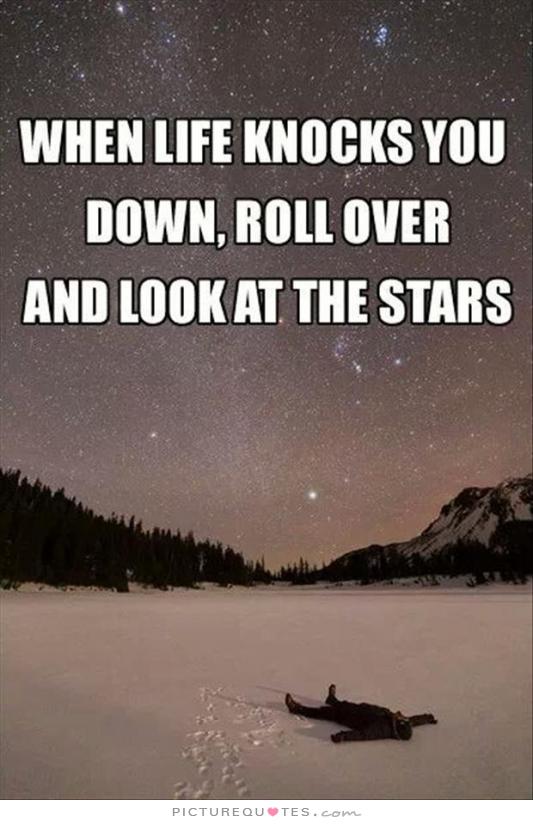
The Answer is in the Stars
 From Symmetry Magazine:
According to theory, the big bang should have created matter and antimatter in equal amounts. When matter and antimatter meet, they annihilate, leaving nothing but energy behind. So in principle, none of us should exist.
But we do. And as far as physicists can tell, it’s only because, in the end, there was one extra matter particle for every billion matter-antimatter pairs. Physicists are hard at work trying to explain this asymmetry.
Here’s a nice follow up to yesterday’s post, Embrace Mystery and Discover Joy. Scientists love to tell us how they’ve decoded the secrets of the universe. Then they tell us that we shouldn’t even exist.
“The universe is not only queerer than we suppose, but queerer than we can suppose.”
~J.B.S. Haldane

Embrace the Unknown and Discover Joy
 Question #1: You’re at an auction. Item #12 is a set of six glass goblets. Item #13 is a mystery set of either four or six glass goblets… you’ll only find out once the bidding is over. Which item is likely to go for a higher price? Needless to say, you would be willing to pay more when they know you’re getting six goblets than you would if you might end up with only four.
Question #2: You’re working at a job for which you will be paid $20. The person next to you is doing the identical job, but doesn’t know whether he will be paid $10 or $20. Who is going to work harder? Needless to say, you will, since you know that you’ll be paid at least as much and maybe twice as much as the other guy.
But guess what? Research shows just the opposite.
Fighting for whose rights?
Here we go again.
Socrates gave up his life for the ideal of pure wisdom. Galileo was threatened with torture for his commitment to scientific truth. Nelson Mandela spent 27 years in prison for his campaign to end apartheid.
 And now, attorney Steven Wise is seeking to be the next torchbearer for virtue and justice by seeking legal personhood for two chimpanzees currently deprived of their primatial integrity by incarceration in the anatomy department of New York’s Stony Brook University. Mr. Wise has even found a judge willing to hear his case.
This is a natural outgrowth of our collective obsession with rights and entitlement which has, proportionally, shrouded our notion of personal responsibility. A healthy culture recognizes that it has a moral obligation to show compassion to all living creatures. But as the very concept of morality flickers and fades from social consciousness, only the assertion of rights prevents the rapid disintegration of society.
And as we lose our sense of responsibility, the distinction between man and animals grows harder to define until, ultimately, it all but disappears. In California, the “rights” of a little fish trump the welfare of humans: crops wither in arid fields during the worst drought on record as the state dumps trillions of gallons of fresh water into the ocean.
It’s worth noting that in 1933, two years before the Nuremberg Laws stripped German Jews of both civil and human rights, the Nazi government passed some of history’s most progressive laws for the protection of animals, legislation considered emblematic of the highest moral values of a people.
Elevating animals to the level of human beings inevitably results in human beings acting worse than animals.
How Ants Survive Rush Hour…
… and why putting your ego in check will change your life
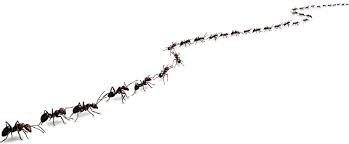 It’s everyone’s nightmare. Rush hour. Inching along interminably as too many cars navigate too few lanes, with too many merging in and too few turning off.
Who would have imagined that King Solomon already anticipated the chaos of our highways when he declared, Go, sluggard, and learn from the ant?
As it turns out, ants are better drivers than we are. And the lessons of their highway habits offer some valuable lessons that extend far beyond the way we drive.
According to NPR, Apoorva Nagar discovered the connection in a study by German and Indian researchers. Apparently, traveling ants are able to maintain a constant speed regardless of the number of ants on the path. In other words, even at rush hour, ant traffic carries on unimpeded.
Bad Hair Day at CSI
 Since 2012, the FBI has been reviewing some 2600 convictions from the ’80s and ’90s that depended on hair analysis. With 268 cases reviewed so far, more than 95% have been called into question, according to NewScientist.
This doesn’t mean that science is unreliable. Rather, it reinforces the well-known computer adage of GIGO — garbage in, garbage out. In other words, technology is only as good as the people using it.
So when it comes to understanding the origins of the universe, the evolution of man, the nature of human psychology, or the changing climate patterns of our planet, perhaps a bit more humility is in order before we jump to conclusions that new discoveries might force us to reverse tomorrow or the next day.
Our world is a complicated place. Instead of insisting that we have everything figured out, let’s watch the sun rise and listen to the rain fall while we enjoy the mystery of it all.
Settled Science?
 Last March, scientists believed they had discovered evidence of the Big Bang. Early this year, analysis raised new doubts about the soundness of the Big Bang Theory altogether, according to an article in Quanta Magazine.
The issue here is not whether to believe in Big Bang. I have no skin in the game, since Creationism can work with or without it. The real issue is the unshakable certainty of so many in the scientific community despite a history of mistaken hypotheses that goes back at least as far as Aristotle.
Whether it’s Big Bang, evolution, or climate change, it is disingenuous for ideologues to quash open debate by proclaiming any of these as “settled science.” They are not. Each faces serious logical and scientific challenges that may not refute them but certainly demand acknowledgment and honest investigation. To claim “case closed” when so many legitimate objections remain unanswered is hardly a responsible application of scientific method.
Which begs the question: why are so many in the scientific community afraid of the truth?
Read the whole article here. Here are a few excerpts:
No one has devised an alternative to inflation [the exponential expansion of the universe following the initial “big bang”] that explains so many observations with so much economy. For a decade, Paul Steinhardt of Princeton University, an early pioneer of inflation who has since become one of its most vocal critics, has championed the “ekpyrotic model,” a cyclical picture in which the universe executes an eternal series of expansions and contractions. In this scenario, any unevenness that develops in the cosmos as it expands gets compressed as it contracts. The slate is wiped clean for each cosmic rebirth, accounting in this way for the exceptional uniformity observed early on in this latest iteration.
But the ekpyrotic model has few subscribers. It hinges on the idea that the universe will bounce, rather than bang, each time it shrinks to a point. The theoretical arguments for why it should bounce strike most experts as highly speculative. And the non-bounciness of black holes suggests it would not do so.
At present, inflation has cornered the market on Big Bang theories, and yet there is still room for doubt. “The fact that we don’t have an alternative doesn’t mean we know the truth,” said Avi Loeb, a theoretical astrophysicist at Harvard University.
The theory’s triumphs are undercut by a strange detail: If inflation works the way it’s supposed to, it seems that it should never have happened at all.
Inflation now seems less likely than ever, the critics say.
The Grateful Whale
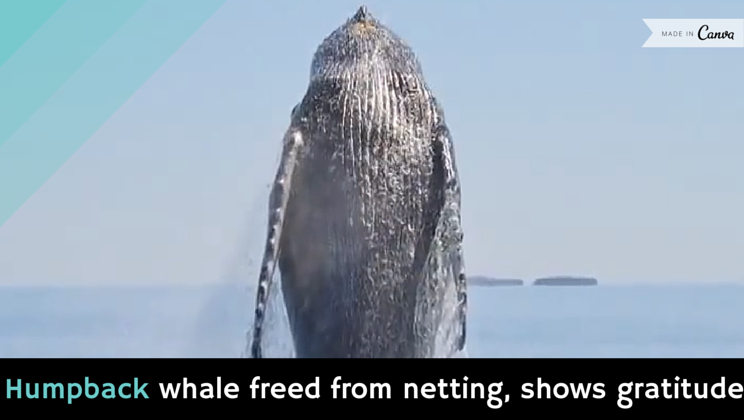 Swimmers worked an hour to free this humpback whale tangled in fishing net. To see the whale’s reaction, skip to 6:40 on the video. Perhaps the display was one of sheer elation at being freed, or perhaps an unbridled expression of gratitude.
This whale knows something too many of us have forgotten. Our society has embraced the culture of convenience, entitlement, and victimization to the point where we barely feel appreciation anymore. In a world where everything is supposed to be available and instantaneous, we’ve responded with the attitude that everything takes too long, takes too much thought, takes too much effort. Our expectations are so high that we are forever frustrated and disgruntled.
In biblical Hebrew, the term for gratitude is hakoras hatov — literally, “recognizing the good.” Before we can appreciate, we have to look for the good in our lives, see it as good, recognize how we have benefited from it as good; once we have that recognition, not only can we experience true appreciation but we inevitably will feel appreciative. How can we not, with that which has benefited us so clear before our eyes?
“The wise man’s eyes are in his head,” says King Solomon in Proverbs. Only if we see through the lens of our minds’ eye can we truly perceive, truly understand, and truly achieve the lofty human reactions that should be uniquely ours, but which sometimes we have to learn from the creatures with which we share our world.
How sad for us if they get it and we don’t.
 Yonason Goldson