Home » Posts tagged 'Society' (Page 26)
Tag Archives: Society

Spitting Image 5:3 — Visions of Martyrdom
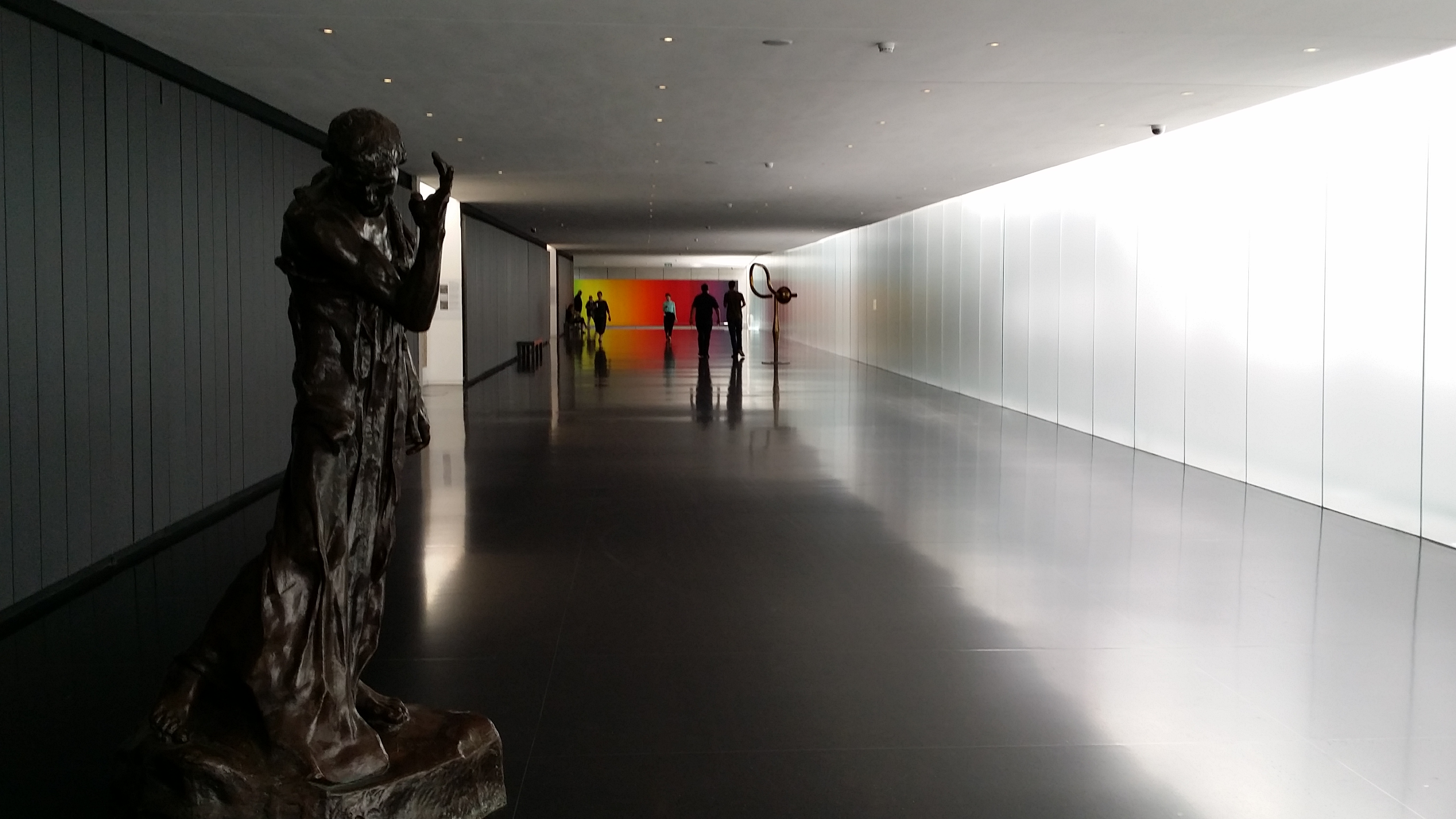
In the vast, austere entry hall to the Israel Museum, with its ultramodern monochrome walls, prismatic focal point, and symbiotic theme of shadow and luminescence, you happen upon a discordant figure: one of the Burghers of Calais, sculpted by the French master Auguste Rodin.
The original sextet of figures represents the city fathers of Calais who surrendered themselves to save their besieged city during the Hundred Years’ War. With heads and feet bare, ropes around their necks, and the keys of the town in their hands, the burghers were brought before the English king Edward III who ordered them beheaded.
Although their lives were eventually spared, Rodin has rendered their images as they prepare to meet what they believe will be their end, their respective expressions spanning the gamut from stoicism to despair.
As jarring as the image may appear in this contemporary setting, the story resonates deeply with ancient Jewish tradition. In the Yom Kippur liturgy, there figures prominently the narrative of the 10 Martyrs, the talmudic sages who received the Heavenly decree that their deaths would atone for the sins of their generation and deflect Divine wrath from their people. They too went to meet their end stoically, but without despair.
Martyrdom is not something we seek, but there are times that call for self-sacrifice of one kind or another. In this generation of selfish individualism, entitlement, and personal autonomy, we can look to the past to remind us that tribalism, senseless violence, and identity politics are all symptoms of a society that has forgotten how to commit itself to a higher sense of purpose, and that only by setting aside our superficial differences can we survive as one people.
Spitting Image 5:2 — Inversion

This provocative image from the Israel Museum provides one of the most compelling examples of what modern art can accomplish. Even as the values of contemporary society become more tangled, our priorities more topsy-turvy, our ideals more overgrown with deadwood, and the roots of civilized society increasingly shriveled, it’s not too late to take a fresh look at where we are and where we’re headed.
We just need to look with open eyes and clear minds.
The Talmud compares a person whose wisdom exceeds his good deeds to a tree with many branches and few roots. Ideas that fail to materialize into positive action may be worse than no ideas at all, since they allow us to live in the world of the mind and praise ourselves for our noble intentions while we stand idly by and allow evil to reign.
Only by recognizing the contradictions in our own lives will we be able to turn the world right-side-up again and restore order amidst the chaos.
Spitting Image 5:1 — Writing on the Wall
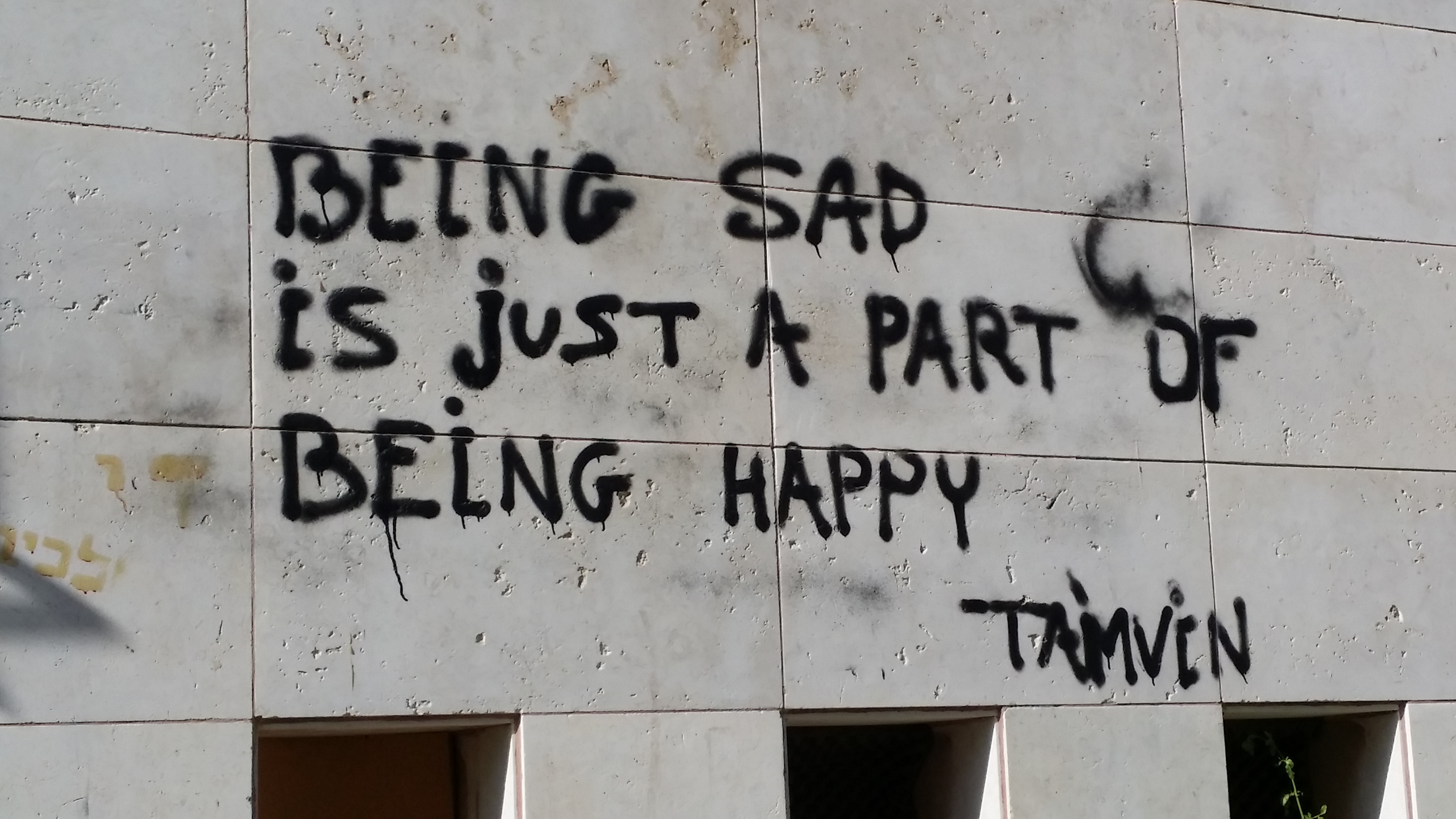 In Israel, even the graffiti aspires to wisdom and spiritual elevation.

The Divided States of America
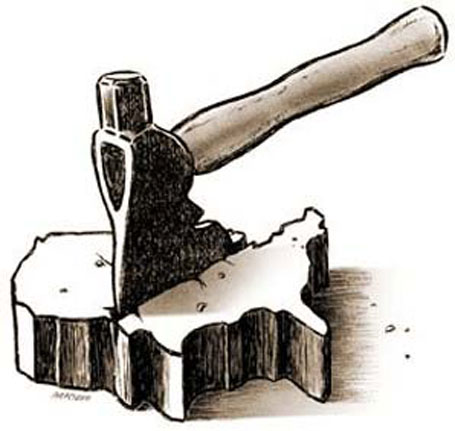 E pluribus unum — Out of many, one.
Such a glorious sentiment, 240 years old this week, destined for the dustbin of history.
In contrast to the vitriol of the broadsheets from two centuries ago — which belied a common commitment to basic, “self-evident truths” — the unfiltered invective filling our airwaves today reveals a wholesale abandonment of common values or, even worse, of any values at all.
With the general election now reduced to a choice between the two most unpopular candidates in American history, the undeniable takeaway is that our population has splintered into four intractable camps, each unwillingly come to terms with any other. Here is a snapshot of who we now are.

What truths do we hold?
 We hold these truths to be self-evident, that all men are created equal, that they are endowed by their Creator with certain unalienable Rights, that among these are Life, Liberty and the pursuit of Happiness.

Are these truths still self-evident, in a nation where all moral and natural boundaries have been worn away, not by the steady march of time, not even by complacency, but by a determined and calculated campaign to redefine standards and values that were once universal?
The great wisdom of the Framers was to recognize that human values shift like the sands of the desert, and that the foundations of any civilization will only endure so long as its people continue to believe that there are higher ideals than individual self interest, that personal and collective sacrifice are necessary for personal and collective prosperity, and that commitment to individual responsibility is the only way to ensure the preservation of individual rights.
Without these, a society will inevitably become a house divided against itself and, as such, will not survive for long.

Can I remain I after we become we?
 No man is an island, wrote John Donne. Neither is any nation, even if it’s the island nation of Great Britain.
This contradiction lies at the heart of the current political crisis facing British Prime Minister David Cameron. And as the British contemplate their future place in the world community, the rest of us should contemplate what the world will look like for our children and their children after them.
There are two legitimate, opposing arguments facing Britain in deciding whether or not to remain part of the European Union. To compete in the world marketplace as part of an economic powerhouse works to the advantage of every European country, Britain included. On the other hand, the threat to employment and security posed by unrestricted immigration may offset any benefits.
But whatever the British end up deciding for themselves in this month’s referendum, there is a deeper issue in play, one that has implications for all of us.
A Tale of Two Icons
 What’s the difference between Bill Clinton and Hillary Clinton?
Obviously, gender.
Less obviously, expectations.
In an interview with NPR’s Shankar Vedantam, Mary-Hunter McDonnell of the Wharton school of business explained the difference between how men and women are judged by their peers for ethical infractions.
Professor McDonnell and her colleagues asked volunteers to recommend a jail sentence for a hospital administrator who filed a false Medicare claim. When the volunteers believed that the administrator was a woman, the average suggested sentence increased by over 60%.
The researchers also analyzed over 500 disciplinary proceedings in 33 states by the American Bar Association. They discovered that women were disbarred more than twice as often for similar types of misconduct.
The assumption here is that, since women are expected to be more ethical, they are punished more severely when they violate ethical standards.
This may be unfair in practice, but in principle is makes perfect sense. Moral people are expected to behave better than immoral people; consequently, we find their moral lapses less tolerable.
Which brings us back to the Clintons.
At last, a hero
Just when you thought there was no hope for sanity left in America, the light of reason breaks through the clouds of ideology, if only for a moment.
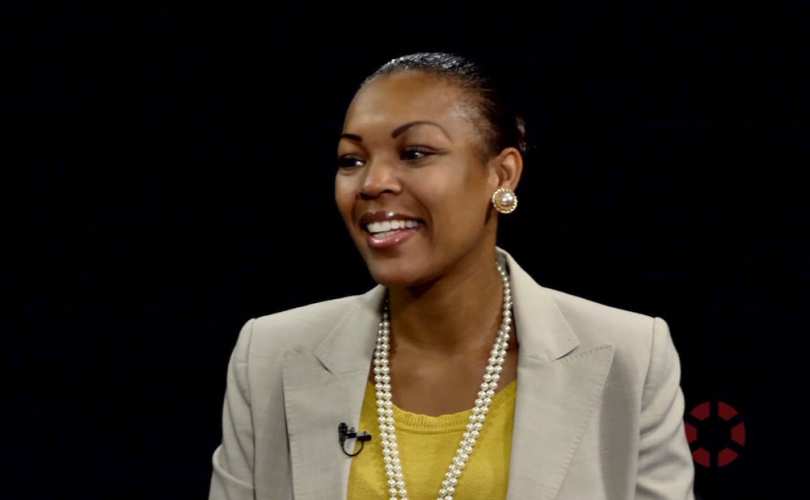 Maya Dillard Smith, head of the Georgia ACLU, resigned her position last week citing her organization’s unwillingness even to discuss any perspective or opinion out of sync with its own advocacy for transgender bathrooms.
The Huffington Post and other far left outlets responded, predictably, by attacking Ms. Smith and completely missing the point. This is not about predators coming into public bathrooms. That approach was from the start a tactical blunder by conservatives (which, sadly, is all too common).
The real issues here are governmental overreach and the right to privacy. Just as the minority deserves protection from oppression by the majority, so too does the majority deserve protection from the predilections of the minority.
This is where the ACLU so consistently gets it wrong. Social conventions are not all oppressive. Just the opposite: they create the standards and boundaries of personal conduct that allow civil society to function. Tearing them down willy-nilly because someone might find them discomfiting leads to social anarchy, from which everyone ultimately suffers.
But even that wasn’t the point behind Ms. Smith’s resignation. It was the ACLU’s outright refusal to acknowledge the legitimacy of any position other than its own.
This is the problem that is plaguing the Western World and tearing our civilization apart. The zombie-like groupthink that turns every adversary into a neanderthal or a Nazi undermines the whole notion of a democratic society. We have to be able to discuss and debate, and to accept that reasonable people can disagree. As long as a culture of political dogma prevails, endorsed and enabled by so many in high office and the media, our society will continue to crumble.
But for now, we have an unlikely hero. Kudos to Maya Smith for taking a true stand on true principle, for not selling out, for not trying to have it both ways (ala Kim Davis), and for not being afraid of the hail of vitriol she knew she would bring upon herself from her former allies.
May she inspire others to follow her example.

The House
 “You’ll leave here after four years with an education few people have had access to in the history of mankind. What are you planning to do with it?”
It was a good question, set forth by consumer advocate Ralph Nader as he spoke before an embarrassingly empty hall at our conservative university. I was pretty conservative myself, and certainly no fan of the wildly liberal public avenger. But I had found the opportunity to hear such an iconic figure irresistible, even if most of my fellow students felt otherwise.
“There’s a world out there filled with problems and suffering and injustice,” Mr. Nader continued. “There’s a desperate need for crusaders, and you just want to get a job?”
The derision Mr. Nader injected into those last three words reverberated inside the echo chamber of my mind, etching upon my psyche an unequivocal contempt toward employment for the sake of mere employment.
It was 1981, during my junior year at the University of California, Davis, and I still had no idea what I wanted to do when I grew up. But during those closing moments of his address, Mr. Nader awakened within me the passionate desire to do something – anything – as long as it might make a difference, as long as it would truly matter.
And so I left the lecture hall that evening feeling like Archimedes, looking for my fulcrum to move the world. And my search led me to The House.
 No other name could have better described it: here was an actual house – still thriving in the shadow of university office-buildings, lecture halls, and dormitories – with its modest front porch, unaffected wooden shingles, and single-pane windows opaque with dust around the corners. Its official designation was Temporary Building-16. But to everyone who worked there, and to anyone who patronized its services, TB-16 was simply called The House.
Fifteen or twenty years earlier, the thought had occurred to someone at Student Services to create an informal atmosphere where students could commiserate about the problems and stresses of college without having to endure the formality of an adviser, the social pressure of a dormitory, or the stigma of a psychologist. In the course of its various incarnations, the project acquired a director, instituted a thorough course of preparatory and continuous training, and acquired TB-16. The House opened its doors.
Karen was the House director, a position she had taken over from her husband, Kennebec. His name was really Ken, but he had fallen in love with the Kennebec River and used its name as his own – at least in the company of friends and close acquaintances. Student Services had brought him in to assume the directorship “after The House’s last nude retreat,” in hope of imposing greater structure upon the fledgling peer counseling facility.
Not that Ken was all that conventional himself. His hobby was jumping freight trains, and he hadn’t thought it at all inappropriate to use this informal style of transportation for his own staff retreats. I nagged Ken every time I saw him to take me train-jumping, but he was settling into the routine of responsible middle age, and never found time to take a weekend off to travel as undeclared baggage.
So Ken, it’s your fault that I later became a hitchhiker and not a hobo.

Remember their sacrifice
 It is rather for us to be here dedicated to the great task remaining before us — that from these honored dead we take increased devotion to that cause for which they gave the last full measure of devotion — that we here highly resolve that these dead shall not have died in vain — that this nation, under God, shall have a new birth of freedom — and that government of the people, by the people, for the people, shall not perish from the earth.
Abraham Lincoln
 Yonason Goldson