Home » Posts tagged 'Society' (Page 38)
Tag Archives: Society

Remembering 9/11: Visionaries and Ideology
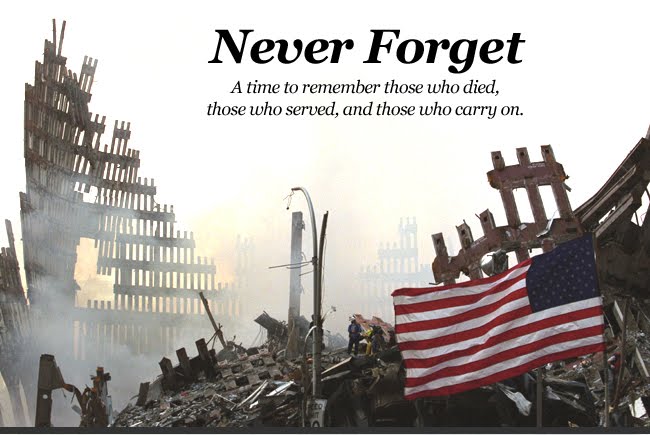 Who knew a trip to New York could be so emotional?
Our first stop was the 9/11 museum. I marveled at the artistic vision that had conceived the memorial pools, the water channeling down in rivulets that mirrored the face of the fallen towers, the continuous downward rush balanced by the redemptive feeling of water — the source of life — returning to the heart of the world. Here there was solace, closure, and consolation.
But a very different feeling accosted me inside. Almost upon entering the doors a single word brandished itself across my mind’s eye: Holocaust.
Obviously there is no comparison between the monstrosity of wantonly dehumanizing genocide and any single act of terror; obviously there is no equivalence between the systematic psychological, spiritual, and physical destruction of millions and a few thousand relatively instantaneous murders.
But then again, yes there is.
Read the whole article here:

Balancing the Scales of Freedom
Originally published in the St. Louis Post-Dispatch the week after 9/11, between Rosh HaShonah and Yom Kippur.
 It was Judgment Day — exactly one week after the World Trade Center buildings collapsed and so many illusions along with them.
“Judgment Day” is the expression found in the traditional liturgy for Rosh HaShonah, the first day of the Jewish new year. And as I stood in the midst of the congregation intoning the High Holiday prayers, the vision of exploding passenger planes and twin towers crumbling to dust hovered before my eyes.
On Rosh HaShonah we will be inscribed … who will live and who will die … who by water and who by fire … who by storm and who by plague … Who will have peace and who will suffer … who will be cast down and who will be exalted.
The judgment upon Jews became kinder after the United States opened her doors to us a century ago. Where no one else would have us, America took us in, allowing us to live both as Americans and as Jews without persecution.
Yet for all that, American Jews often feel torn by opposing cultural forces, especially approaching our Day of Judgment in a society where there is no greater sin than “judgmentalism.”
Without judgment, however, society cannot endure. As good citizens we must judge others – not based on race or religion but upon actions and behavior. And we must judge ourselves as well, by constantly reexamining our motives and our prejudices and our values and our goals. To condemn even this kind of judgment as a threat to freedom is to retreat from our responsibility to discern right from wrong; it is to embrace the illusion of absolute theoretical freedom – moral anarchy – which is in reality no freedom at all.
September 11 brought us face to face with moral anarchy in the form of incomprehensible evil. Perhaps the first step toward confronting it is to remind ourselves that freedom is not a right – it is a privilege, and privileges carry with them obligations that are often inconvenient and occasionally painful. When Thomas Jefferson wrote that the tree of liberty must sometimes be refreshed with the blood of patriots, he warned that the threat against freedom can only be met by not taking freedom for granted.
Freedom is not democratic, as less than a score of suicidal zealots understood when they commandeered four transcontinental airliners. The duties of freedom are non-negotiable, as New York firefighters and policemen understood when they rushed into crumbling skyscrapers. And the rules of freedom cannot always be legislated: sometimes we have to choose between necessary evils, as the passengers aboard United Airlines flight 93 understood when they drove their plane into a Pennsylvania field.
These are the kinds of judgments we must make, every day and every year, to preserve our society, all the more so in a nation built out of so many cultures and beliefs as ours. Every freedom of the individual cannot be permitted if it threatens the collective, nor can every interest of the collective be observed if it oppresses the individual. But when we share the collective will to make our society stable and secure, then the individual will set aside his personal freedoms for the national good and the nation will bend over backward to protect individual freedom.
This is the mark of a great civilization, and it rests upon an informed and devoted citizenry prepared to debate, sometimes passionately but always civilly, the moral direction of our collective journey.
This Rosh HaShonah I stood shoulder to shoulder with friends and neighbors singing ancient liturgical poems in praise of our Creator, just as so many Americans stood together the week before singing “G-d Bless America.” There were no agendas, no politics, no grudges, no rivalries. All of a sudden we were one nation, indivisible, a people with one noble history and many noble ideals whose differences vanished in the shadow of our many common values and common goals.
As the Jews have had ample opportunity to learn, now America has learned that nothing brings us together like a common enemy. What we have yet to learn is how to continue to stand together even in times of peace.

Rosh Hashanah: Letting our spirits soar
 When my youngest daughter was three years old, she discovered the helium balloons in the flower section of our local supermarket, handed out free to every child who asks. I tied the string around her wrist so the precious balloon wouldn’t escape up to the rafters. She bounced it on its string as I pulled it this way and that to avoid bumping other shoppers. She hugged it as we climbed into the car for the ride home.
As I pulled into the driveway, my daughter flew out of the car, her balloon bobbing along behind her, raced in through the front door and out again to our back yard, slipped the string off her wrist and gazed upward as the balloon rose into the sky and slowly drifted away.
“Why did you let go of your balloon?” I asked, slightly miffed that she had so casually cast away the new toy she had been fussing over for the last half hour.
My daughter just shrugged, giggled, and watched the balloon disappear from sight.
After our next trip to the market she did it again. Then again, over and over for months. Every time I asked the same question. “Why did you let go of your balloon?”
Finally I got an answer. My daughter looked me in the eye and replied, “It’s a present for God.”
* * *
She doesn’t do it anymore. And part of me mourns for the pure, innocent faith that prompted a little girl to give up her toy as an offering to the Almighty.
For all our experience and the sophistication, for all our indulgent smiles at the simplicity of our children’s beliefs, is it not likely that our children know something we don’t, something they themselves soon won’t know or even remember they once knew? And perhaps it is precisely their power of belief that sets them apart from the adults they will become.
Children believe in God, believe in their parents, believe in their country and their school and their friends and that good will always win out over evil. Their trust and faith haven’t yet been sullied by the lies of politicians, the corruption of law and justice, the avarice of sports heroes, the superficiality of Hollywood or, most importantly, the cynicism of their parents, who may try for a time to put on an act to spare their children from their own disillusionment.
But what if it worked the other way, that we could learn an old lesson from our children instead of imposing yet another new lesson upon them? What if we could turn the clock back and recapture even a whiff of the innocence of youth? Would we reach out to grasp it, or have we grown too jaded even to try?
 This Rosh Hashana, Jews around the world will fill synagogues to inaugurate the first day of the Jewish new year. But Rosh Hashana celebrates much more than the beginning of another calendrical cycle. It celebrates birth and rebirth; it celebrates beginning and renewal, for it commemorates nothing less than the Creation of the world and Mankind.
As we approach the New Year, let us ask ourselves how we can turn back the clock, exchanging bad habits for new challenges, routine for renewal, and cynicism for enthusiasm. Instead of smiling with adult condescension at the innocence of children, let us consider instead that the difference between childhood and maturity is not whether we give presents to our Creator, but what kind of presents we choose to give. A child serves God by sending a balloon up into the sky. An adult serves God by releasing his spirit to soar to the heights of Godliness.
Have we given charity in proportion with our means? Have we visited the sick and comforted the distressed? Have we consistently spoken with kindness to our neighbors, with respect to our superiors, and with patience to our children? Have we honored the Sabbath and studied the ancient wisdom of our people?
It’s not enough to make resolutions; we need to inspire ourselves to see them through. We need to awaken in ourselves an awe of the Almighty by reflecting upon the vastness of creation, the unfathomability of the stars in their courses, the mysteries of life, and the limitless potential of the soul — to behold for a lingering moment the immeasurable beauty and majesty of our universe.
And if we can follow through, if we can make the moment last without slipping back into our well-traveled rut of discounting every noble and beautiful thought and deed, then perhaps we can retain our faith in those things truly worthy of faith throughout the coming year.
Originally published by the St. Louis Post-Dispatch and Aish.com

Choose Long-term Gain over Short-term Pain-Avoidance
 There are two things that parents of small children can’t stand. One is a child making noise when we’re trying to get work done. The other is a child making no noise at all.
Because if they’re not making noise, they’re usually getting into trouble.
So consider this scenario: you run to see what your too-quiet two year old has gotten into and find him playing with the snow-globe your sister brought back from her trip to Switzerland last year. Since this is not the best toy for a toddler, you smile at your child and gently take the snow-globe out of his hands.
That’s when the screaming begins.
What do you do? Do you endure the shrieking child or give back the snow-globe?
If you’re normal, your thinking probably works its way through the following steps: 1) He can’t really hurt himself with the snow-globe. 2) He probably won’t break the snow-globe. 3) I never really liked the snow-globe anyway. 4) If he does break it, it’s no big deal to clean it up. 5) So is it really worth making him miserable by taking it away?
But we’re not really worried about the child’s misery, are we? We’re more concerned about ourselves.
In the end, the odds are pretty good you’re going to let the toddler keep the snow-globe.
But the real issue isn’t the snow-globe; it’s the lesson you’ve just taught your child.
The End of Man
Rabbi Levitas of Yavneh said: Be extremely lowly of spirit, for the end of man is worms.
Pirkei Avos (Ethics of Father) 4:4

Hat tip: @DreamingJannah
In Praise of Superficiality
As we get deeper into campaign season and the Trump phenomenon gains traction, here’s a look back on my retrospective of 2008, a year of political circus and economic implosion.
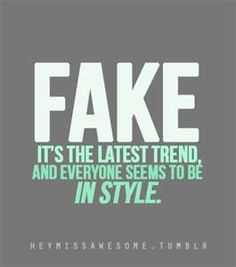 Beauty is only skin deep. Don’t judge a book by its cover. All that glitters is not gold.
These well-heeled sound-bytes of conventional wisdom warn us against granting value to appearance, form, and externality. They assert that depth and substance are the determinants of genuine value and true worth. They teach us to look behind every facade and eschew form over content.
Obviously, the people who composed these popular aphorisms were themselves unattractive, moodily self-conscious, or terminally unpopular — quite possibly all three. Yet somehow they succeeded in foisting upon Western Civilization one of the great propaganda victories of the ages, convincing the masses that physical form is quantitatively less important than such insubstantial qualities as character, aptitude, and integrity.
Astonishingly, this shameless hoax continues to shape our outlooks and attitudes even though we all know better. After all, no one would dream of visiting Washington D.C, without seeing the National Gallery, Paris without taking in the Jeu de Paume, or Croatia without experiencing the Muzej Turopolja. And what are these meccas of cultural sophistication? Art galleries — collections of paintings, sculptures, and countless testimonials to aesthetic form and external beauty. When was the last time you visited a metropolitan museum of internal organs or auto parts?
True, beauty may be only skin deep, but that’s precisely the point. Where would Julia Roberts’s career be without her skin? She may be a fine actress, and I’m sure she’s a very nice person, but her movies wouldn’t draw much of an audience if she had her skin surgically peeled away before production.
WHAT’S IN A NAME? EVERYTHING!
Modern psychology has begun to recognize the fallacy of substance over form. In his bestselling book Blink: the Power of Thinking Without Thinking, Malcolm Gladwell marshals compelling evidence in support of superficiality. In one study, college students concluding their semester courses were asked to evaluate the quality of their teachers. Other students, who had not attended these classes, were shown three ten-second videos of the same teachers in action. Their evaluations matched closely those of the students who had actually attended.
The experimenter then shortened the video samples to five seconds, and then to two seconds, each time with comparable results. And this was with the sound turned off! Unfortunately, Mr. Gladwell does not pursue his train of thought to its logical conclusion. If two seconds is just as good as five seconds, ten seconds, or half a year, why do we need any seconds at all? A picture of the teacher should be enough to determine his competency or, even better, merely his name. It should be obvious that Mr. Sunshine, Professor Smiles, or Ms. Summer will create a more positive classroom experience than Mrs. Stern, Dr. Gaunt, or Miss Winter.
A rose by any other name would smell as sweet, observed William Shakespeare, but let’s remember that most historians now believe that those revered plays and sonnets were not actually written by William Shakespeare, the merchant who lived in Stratford-on-Avon. For all his great literary work, Shakespeare wasn’t really Shakespeare, and no one knows who he was. Imagine if the real author stepped forward today and claimed credit for his writings. Nobody would believe him. Of course, hardly anybody would care. We’ve all moved on to reading more relevant novels about teenage vampires.
Consider the last presidential election. Almost the entire Republican Party establishment agreed that Arkansas governor Mike Huckabee was the best candidate to lead the country. But he never had a chance. Can you imagine the elites of vote-laden New York, New England, and California ever voting for someone named Huckabee? If he’d been clever, the governor would have changed his name to Mike Skywalker-Sanchez, thereby establishing himself as an epic hero while attracting the critical Hispanic vote at the same time.
MIND OVER MATTERS
Consider also the recent economic collapse. Everyone was perfectly happy until someone found that all those companies enjoying soaring stock prices weren’t really making any money. As soon as the media started uttering words like downturn, recession, and pyramid scheme the entire market dove into a tailspin. Wouldn’t we all be better off if those misguided people obsessed with digging beneath the surface had simply satisfied themselves with the illusion of prosperity?
Of greater consequence is the effect of our misguided quest to bring depth, complexity, and meaning into our personal lives. Human nature as it is, how much anxiety do we cause ourselves through self-help books that teach us to look for inner peace, and through therapy that prods us to resolve neuroses of which we weren’t even conscious? How many relationships would flourish if we accepted physical attraction and physical gratification as the ideal rather than pursuing fantasies like “self-actualization” and the search for “soul-mates”?
Further evidence can be found in America’s obesity epidemic. Our subconscious minds, confused by the contradictions implicit in the rejection of two-dimensionalism, leave us with no alternative than to impose our misguided objective of becoming three-dimensional upon our physical bodies. The more we seek depth, the more three-dimensional we become — which may be good for the diet-book industry but not for our wardrobes.
So why don’t we all stop pretending? If superficiality is bliss, and if depth and meaning cause only confusion and discontent, it should be a no-brainer.
Here’s the problem. Superficially, depth is “in.” We don’t want to appear shallow because shallowness appears superficially inferior. Of course, on deeper reflection, we understand that superficial appearance is infinitely preferable to the complexity of depth, but our superficiality doesn’t allow us to admit this fact because it seems too obvious to be significant. Get it?
But today we find ourselves poised on the brink of a new era. Ours is the generation of change! Let us seize the moment and rise up as one people with one objective. Let us cast off our superficial adoration for depth and substance. Let us not be afraid to declare our commitment to all that is two-dimensional and raise up the banner of simplicity and externality. Let us purge our worldview of the pernicious urge to discover meaning in our existence, and let us join hands in our conviction that everything worth having should be available to everyone without any effort, thought, or accountability.
Well, aren’t you feeling better already?

The Virginia Shooting: Nihilism and the Culture of Anarchy
 “What has happened to us as a society that we now devalue life to such a level? What has happened in our society that people have become so violent? That’s the fundamental question we need to confront… We have a societal problem in our country. It reminds us of the most important job any of us will ever have … the job of a mother, a father or a parent.”
Senator Marco Rubio summed it up nicely… or tragically. But the deeper question is this: How do we stop the cultural inertia that is driving our society ever further into nihilism and moral anarchy?
Senator Rubio gets the answer perfect: If it doesn’t start in the home, then there really is no hope for the future. Without respect for traditional values, without recovering the lost ideals of civility, selflessness, modesty, and integrity, then the tide of history will sweep us away as it did the Roman Empire and leave behind a new Age of Darkness.
Bill O’Reilly makes the same point with his usual brass-knuckled pithiness here.

Someone is Always Watching
 “Someone is always watching.” Movie fans will recognize this as the punchline from “Ocean’s Eleven,” a glib repartee that ultimately recoiled on Andy Garcia and drove Julia Roberts back into the arms of George Clooney. Political observers might remember it, now that former Illinois Governor Rod Blagojevich is back (briefly) in the news, as a line the convicted politico should have uttered when he found himself the subject of state and federal investigators.
But just the opposite was true. The AP reported:
“You would think he would see his life collapsing around him,” said Chicago defense lawyer John Beal, who was in the courtroom with Blagojevich this week and noted how carefree he seemed. “But he was the center of attention and seemed to love it.”
One almost envies Mr. Blagojevich the comfort of his delusions.
At the beginning of the last century, the invention of electric lighting,telecommunication, and cinematography began to change the complexion of modern society. At the time, the leader of European Jewry, the venerable Chofetz Chaim, observed that the introduction of technologies scarcely imagined a generation before provided a lesson for any spiritually sensitive person to recognize that the Universe is not indifferent to our moral conduct.
Previously, the natural cycle of night and day imposed strict order upon human activity. Because most people in those times could not afford the limitless supplies of candles necessary to transform night into day, all activity was cut short early by the long nights of winter, and only in summer could the workday stretch late into the evening. Now, inexpensively and with the flick of a switch, the night could be expelled and the secrets of the darkness instantly revealed.
Can you say AshleyMadison?

AshleyMadison — Why we’re too lazy to cheat right
 Everything’s easy. Everything’s instant. Is it any wonder that we want everything to be effortless and risk-free — even our acts of disloyalty.
Ironically, patrons of AshleyMadison made their infidelity all the more vulnerable to discovery, believing they could benefit from technology without exposing themselves to the inevitability that anything online eventually finds its way into the public arena.
Technology should free us to enjoy our lives more richly. Instead, it teaches us to be increasingly undisciplined, leeches meaning and purpose from our existence, and deadens us to the simple pleasures that make us truly happy.
Hear my guest interview on the Christal Frost Show discussing why we look for happiness in all the wrong places:
http://wtcmradio.com/the-christal-frost-show-podcasts/yonasongoldson82115/

The Greatest Moment in the History of the Universe
 Well, no. It wasn’t.
But to hear Ann Coulter tell it, it was awfully close.
Just to be clear, this has nothing to do with politics. Hardly anyone thinks that Donald Trump’s immigration plan is viable, no matter how much it may appeal to hardliners. It probably would require a constitutional amendment, it would certainly take half a century and over 100 billion dollars to implement, and it would effectively make Mr. Trump unelectable — if he isn’t already.
But none of that is the point.
What is absolutely clear, beyond any doubt or debate is this: Donald Trump’s plan is not the greatest political document since the Magna Carta.
No matter what Ms. Coulter says.
This is the same kind of irresponsible hyperbole that turns every ideological opponent into a Nazi, a terrorist, a rapist, or a child molester. It shows the same kind of disregard for history that led Ms. Coulter to attempt to resurrect Joseph McCarthy as a fallen hero in place of the paranoid pit-viper that he was. And it’s the same kind of disregard for language and reality that allowed Al Sharpton to laud Bill Clinton as “the first black president,” that enabled Bill Clinton to redefine the word “is,” and that lies at the heart of the political correctness that Ms. Coulter herself (correctly) abhors.
To brand every antagonist a Nazi is to devalue the horror of the Holocaust and to insult its millions of victims. To call newspaper columnists and television hosts terrorists shows a vile lack of empathy for the victims of 9/11 and Oklahoma City. And to suggest any comparison between the Magna Carta and a political platform that is 90% grandstanding and 10% policy is to muddy the waters of logic and reason whey both are clouded enough already.
What an insult to the Summa Theologica, the Declaration of Independence, the Articles of Confederation, the Constitution, the Federalist Papers, Thomas Paine’s Rights of Man, and the Emancipation Proclamation. What a mockery of political history.
“Words, words, words,” wrote William Shakespeare. When we don’t respect them, when we twist them to gain cheap rhetoric advantage without regard for accuracy or authenticity, we become complicit in accelerating the Orwellian doublethink that is already eating away at the civil discourse that is the foundation of a functioning democracy.
 Yonason Goldson