Home » Posts tagged 'Sociology' (Page 2)
Tag Archives: Sociology

Love Work
 Shemayah says: Love work, despise high position, and do not seek to become intimate with power.
~ Ethics of Fathers 1:10
How far we have come from the wisdom of the sages, who remind us that there is no deeper feeling of satisfaction and fulfillment than that of a purposeful job well-done, no more corrupting influence than the desire for mastery over others, and no more corrosive influence in the erosion of our values than currying favor with those we think can change our fortunes.
When we look at the twisted lives of so many politicians and celebrities, do we need any further reminder that we ought to revel in the blessings of humble productivity and quiet dignity?

Suffer the Children?
 Twelve-year-olds don’t choose to become suicide bombers.
And true believers don’t send children as martyrs in place of themselves. The perpetrators of last week’s vicious attack on a Kurdish wedding in Turkey believe in nothing so much as violence as a means to their own power. It’s a sad sign of the times that we can almost admire the zealots of a few years ago who willingly gave their own lives for their ideals, no matter how convoluted those ideals may have been.
When fanatics eagerly give the last full measure of devotion — for which Abraham Lincoln praised the Union soldiers who sacrificed their lives at Gettysburg — we have to ask ourselves if we are prepared to sacrifice as much for our noble values as our enemies readily sacrifice in the name of terror.

Falling Skies
 The death of any young person is tragic, and all the more tragic when unnecessary. In today’s world where sensory-gratification is king and accountability is unknown, few question the wisdom of jumping out of an airplane for kicks, especially when the chances of anything going awry are so small.
But those odds assert themselves eventually, as they did last month in Acampo, California. The two young men who lost their lives were jumping about an hour’s drive from where I jumped myself almost four decades ago. It seemed like a good idea at the time. But I’ve come to reconsider, as I explain in this essay from 1999, originally published in the St. Louis Post-Dispatch.
“Middle age has finally arrived,” I said to myself as I confronted a life insurance application form for the first time ever. But as I filled in the blanks and checked off the boxes, I suddenly paused, suspended between youth and old age, as I read and reread one question midway through the form: Have you ever been skydiving?
I consider myself an honest person, so I found myself in the midst of a moral struggle as I contemplated how I should answer. The reasoning behind the question seemed obvious: why should any business gamble a quarter of a million dollars on the life of someone foolish enough to jump out of an airplane?
The way I figured it, however, there are three reasonable explanations why an otherwise sane person would do such a thing.
One, as in the case of former President George Bush, to save his life when his plane has been hit by enemy fire in WWII.
Two, also as in the case of George Bush celebrating his 75th birthday, when one is winding down his life and figures he hasn’t much of it left to lose anyway.
And three, as in my own case, when one is not yet sufficiently mature to appreciate that his life is far too precious a thing to be thrown casually out of an open hatch at 3000 feet.
Barring any of these three excuses, an insurer would be entirely justified in refusing coverage or inflating charges. But why, since I now regard jumping from an airplane as ample cause for mandatory psychiatric observation, should I be burdened with doubled insurance premiums because of a momentary lapse in good sense when I was half my present age?
As it turned out, I went with a different company, one whose application phrased the question this way: “Have you been skydiving in the last ten years?” That’s much more fair, I think.
Of course, insurance companies may just be looking for excuses to jack up their prices. After all, compared to BASE jumping, ice climbing, and other extreme sports, skydiving is positively run of the mill. Could George Bush, a former president of the United States, former director of the CIA, and former member of the NRA, be so completely off-the-wall? (Never mind that the poor former first lady could hardly bear to watch her husband’s escapades.)
Indeed, my diving instructor (whose name was also George) told us repeatedly: “Skydiving is no riskier than crossing the street!”
George isn’t alive any more. He wasn’t killed crossing the street, either.
 As a 19-year-old undergraduate still looking for a major course of study, life seemed to have little to offer me except cheap thrills. If something would go wrong, and I would splatter against the plowed earth of the Sacramento valley, well, what was the point of being alive if I didn’t experience all life had to offer?It goes without saying that children of all ages will be drawn like moths to the fire of every kind of sensory stimuli. It is our job as responsible adults to shield them from the flames of both real danger or virtual thrills, to gently prod them along the road to wisdom by exposing them to more rewarding and enduring highs than those brought on by adrenaline rush.
In the same way that chomping on spearmint gum deadens the palate to the subtle complexities of fine food and wine, the instant gratification of putting one’s life at risk may, in the end, kill off any hope of ever savoring the subtle joys of maturity, even if those dangerous pastimes do not themselves prove fatal.
The Talmud offers the following insight into human nature: “If someone says, ‘I struggled but did not achieve,’ don’t believe him; if he says, ‘I achieved without struggle,’ don’t believe him; but if he says, ‘I struggled and achieved,’ believe him.”
The Talmud goes beyond the simple axiom that there is no sense of accomplishment without exertion. It tells us that exertion and effort will inevitably produce a sense of accomplishment. And unlike the transient high produced by LSD, PCP, or any contrived brush with danger, the sense of accomplishment produced by struggle will not vanish into nothingness, leaving behind an emotional void or the anguish of physical or psychological withdrawal. It will endure, and spur us on to greater struggles and greater accomplishments.
Without intellectual effort, we would never graduate from Dr. Seuss to Shakespeare, from Marvel Comics to Monet, or from music videos to Mozart. Without psychological effort we would never learn the practical skills to succeed professionally or the interpersonal skills to succeed as spouses and parents and friends and neighbors. Without effort we would never learn to appreciate the small, subtle pleasures life has to offer because we would be ever waiting impatiently for the next emotional quick-fix.
Acquired taste is accessible to the young. As parents, we must not shy away from the challenge of inculcating patience and prudence in our children. Through persistent effort we can teach them that cultivating a taste for the more refined pleasures of life is not so hard, no harder really than falling out of an airplane.
The Search for Nothing
 Of course, you know all about it. It has overshadowed all other headline news. It has become everyone’s passion. There’s no escaping it.
No, I’m not talking about the presidential elections, climate change, or global terror. I’m talking about something really important:
Pokemon Go.
If you haven’t heard of it, you probably live in a cave and won’t be reading this anyway. If you don’t understand what it is… well, that’s a different story.
For people of a certain age — not to mention a certain level of maturity and common sense — the latest tech-fad is barely comprehensible. Countless denizens of the virtual world have crawled out of the darkness and into the sunlight to search for animated characters that can only be seen on their cell phone screens in undisclosed locations. By wandering about pointing their phones hither and thither, players find cartoon critters, then take aim and “shoot” to catch their pixilated prey.
As inane as it may sound, the game seems relatively harmless. It also has the benefit of drawing participants off their couches and encouraging them to put their atrophying appendages back into use, sometimes by walking miles in pursuit of quarry. Guided by an all-knowing, all-seeing cosmic GPS mastermind, Pokemon creatures may crop up anywhere, leading players on quests of “augmented reality.”
But is it really harmless?

Days of Shame
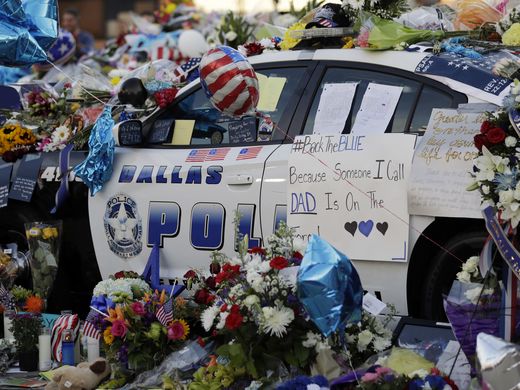 Five policemen cut down in the line of duty. Two more civilians cut down by errant policemen. A mistrustful population further convinced that there is no one deserving of their trust.
It’s more than a shame. It’s shameful. We need to point fingers, even as we recognize that finger-pointing lies at the heart of our problems.
Maybe there is a way to turn around the blame-game, to turn partisanship into hope of something positive. The only way to begin, however, is to acknowledge how we got here and to ask uncomfortable question of the people responsible… ourselves included.

The House
 “You’ll leave here after four years with an education few people have had access to in the history of mankind. What are you planning to do with it?”
It was a good question, set forth by consumer advocate Ralph Nader as he spoke before an embarrassingly empty hall at our conservative university. I was pretty conservative myself, and certainly no fan of the wildly liberal public avenger. But I had found the opportunity to hear such an iconic figure irresistible, even if most of my fellow students felt otherwise.
“There’s a world out there filled with problems and suffering and injustice,” Mr. Nader continued. “There’s a desperate need for crusaders, and you just want to get a job?”
The derision Mr. Nader injected into those last three words reverberated inside the echo chamber of my mind, etching upon my psyche an unequivocal contempt toward employment for the sake of mere employment.
It was 1981, during my junior year at the University of California, Davis, and I still had no idea what I wanted to do when I grew up. But during those closing moments of his address, Mr. Nader awakened within me the passionate desire to do something – anything – as long as it might make a difference, as long as it would truly matter.
And so I left the lecture hall that evening feeling like Archimedes, looking for my fulcrum to move the world. And my search led me to The House.
 No other name could have better described it: here was an actual house – still thriving in the shadow of university office-buildings, lecture halls, and dormitories – with its modest front porch, unaffected wooden shingles, and single-pane windows opaque with dust around the corners. Its official designation was Temporary Building-16. But to everyone who worked there, and to anyone who patronized its services, TB-16 was simply called The House.
Fifteen or twenty years earlier, the thought had occurred to someone at Student Services to create an informal atmosphere where students could commiserate about the problems and stresses of college without having to endure the formality of an adviser, the social pressure of a dormitory, or the stigma of a psychologist. In the course of its various incarnations, the project acquired a director, instituted a thorough course of preparatory and continuous training, and acquired TB-16. The House opened its doors.
Karen was the House director, a position she had taken over from her husband, Kennebec. His name was really Ken, but he had fallen in love with the Kennebec River and used its name as his own – at least in the company of friends and close acquaintances. Student Services had brought him in to assume the directorship “after The House’s last nude retreat,” in hope of imposing greater structure upon the fledgling peer counseling facility.
Not that Ken was all that conventional himself. His hobby was jumping freight trains, and he hadn’t thought it at all inappropriate to use this informal style of transportation for his own staff retreats. I nagged Ken every time I saw him to take me train-jumping, but he was settling into the routine of responsible middle age, and never found time to take a weekend off to travel as undeclared baggage.
So Ken, it’s your fault that I later became a hitchhiker and not a hobo.

Your dog doesn’t love you — get over it
 Okay, I’m guilty.
As a high school teacher, I strive to maintain a persona of impeccable professionalism every moment of every day. Almost.
On rare occasions, however, when I can no longer resist the impulse to really get under my students’ skin, I indulge a streak of sadism and utter those few words guaranteed to enrage even the most mild-mannered teenager.
Are you ready? This is what I say:
“Your dog doesn’t love you.”
And I don’t stop there. Pausing a few seconds to allow the full measure of indignation to begin boiling over, I follow up with:
“And you don’t love your dog.”
I have plenty of ammunition in my arsenal to defend my point. But in addition to the logic of my argument, I now have a current study that supports my claim.

Who we are not
 So here we are again, contemplating a general election that will give us a choice between the lesser of two evils. And the likely options look to be more noxious than any we’ve ever had to face.
Everyone is asking the same question: how did we get here? And the bad news — which is old news — is that negative advertising works.
But why does it work? Everyone hates it, everyone complains about it, everyone laments the decline of civility, the widening of the political divide, and the incurable blight of ideological gridlock. So why do we continue to respond to the very thing we can’t stand in a way that makes it keep getting worse?
A new study may offer a glimmer of explanation.

Spitting Image 2:5 — Keeping within the lines
 What’s wrong with this picture?
Well, that really depends; if there is no shortage of available parking spaces, or no handicapped spots open, perhaps nothing at all; if it is a one-time, careless indiscretion, it might be dismissed; if it is an expression of neurotic fear that others will damage the paint job by carelessly throwing open their doors, it might be understood, if not condoned.
But if it is symptomatic of indifference to the conventions of parking and the potential inconvenience to others, then it becomes something else entirely.
There is a good reason why lines are painted in parking lots. And there is more than one good reason to park one’s car between them.
We can apply the same principle to other conventions, some within the formal dictates of the law and others simply defined by custom and culture. Rolling stops at intersections, or disregarding stop signs altogether on a lonely road in the middle of the night. Changing lanes without signaling, or disturbing passengers on the subway with loud voices or offensive speech. Pushing into an elevator without waiting for its occupants to exit first, or cutting the line at the ticket booth. Setting the knife on the dinner table with blade turned outward, or not using cutlery at all.
Are there worse things? Of course there are. Should these things be legislated? For the most part, definitely not.
But is there something lost when we lose respect for these “trivial” conventions? Undeniably there is.
In his insightful book Civility, Stephen L. Carter explains the common root that turns “civility” into “civilization.” Of course we have to be a nation of laws; that’s a given. But just as important is being a nation of respectfulness, consideration, and self-reflection. Taking into account how our actions will affect others is not a matter for legislation; it is the symptom of a morally healthy world view, and of an awareness that what others expect from me is inseparable from what I can expect from others.
Like the proven “broken windows” theory of urban renewal, the respect I show for convention will serve as a model for others, making it easier for them to retain their own respect for the minutiae of personal conduct that produces a more pleasant society for everyone.
Even if we want to indulge our selfishness, respect for convention benefits us as well. The same discipline that makes me complete my set of 15 reps in the gym when I really want to stop after 12, that makes me finish my peas before I serve myself dessert, that makes me vacuum under the sofa even though no one is going to see the accumulated dust there — all these little concessions to doing things right reinforces our commitment to doing good and doing right on a grander scale by reminding us that there is a higher ideal in the world than our own individual comfort and convenience.
So there is good reason to park between the lines even when the parking lot is empty. Because you never know what other lines you may be tempted to cross, and you may not recognize the danger of crossing them until you’ve already gone over the edge.

Purim and the Jewish response to terror
After the horrific attacks in Brussels, especially coming as they did so close to the Festival of Purim, I’m revisiting these thoughts from 2005. Lest we forget.

Pogroms. Genocide. Jihad.
These are the devices our enemies have directed against us throughout the ages, for no other reason than because we are Jews. Yet for all that, the commitment to mercy and justice that defines us as a people and sets us apart from the other nations of the earth ensures that we would never seek the destruction of another people simply because of who they are.
Or wouldn’t we?
You shall erase the memory of Amolek from beneath the heavens. So the book of Deuteronomy commands us — a command renewed from generation to generation across the span of Jewish history — to strike down the nation of Amolek and obliterate its memory from the consciousness of mankind.
How is such a precept defensible? How can we claim the moral high ground over our enemies if we resort to the same tactics that they employ against us?
The decree against Amolek, however, is based upon neither racial hatred, ethnic struggle, religious ideology, nor even historical justification. Many nations have differed from the Jews in belief, practice, and culture, and many of these have waged war against us and sought our destruction. But only the nation of Amolek warrants such condemnation, not only that we seek out and destroy it, but that we never forget the reason why.
Remember what Amolek did to you on the way, as you departed from Egypt: How they fell upon you in the desert, when you were tired and weary, and cut down the weak who trailed behind you.
Why did Amolek attack us? Why did they descend upon us in the desert, unprovoked, and attempt to annihilate us?
At the time of the Jewish exodus from Egypt, 3328 years ago, the entire world witnessed an event both unprecedented and never to be repeated: The miraculous destruction of the most powerful nation on earth and the even more miraculous supremacy of a small and oppressed people. No one in the world doubted the involvement of the Divine Hand behind the upheaval, nor could anyone fail to recognize the significance of this fledgling nation: the rise of the Jewish nation introduced human civilization to such ideals as peace, collective conscience, social responsibility and, above all, a standard of moral values that would become the foundation of all ethics and human virtue.
Such ideals, previously unknown to human society, did not find immediate universal acceptance. Indeed, the values of Judaism have been rejected and discarded time after time throughout human history. But in the wake of the miraculous destruction of Egypt, every nation and every people recognized what the Jewish nation represented. And every nation stood in awe of them. Every nation except one.
The nation of Amolek despised the very concept of moral standards. They would accept no moral authority, would make every sacrifice to protect their moral autonomy, and would employ any tactic to strike out against the nation who, by teaching morality to the world, threatened to render them a pariah.
Why is it important that they cut down the weak who trailed behind you? What does it reveal that they chose the moment when an unsuspecting people were tired and weary to attack? What perverse strategy drove them to embark upon a hopeless campaign of violence that had no hope of success?
In short, Amolek introduced the world to the tactics of terrorism, launching a suicide campaign against the defenseless, against the tired and the weary, just as their ideological descendants would later blow themselves up to murder women and children, waging brutal physical and psychological war upon a civilian population — not for clearly defined political gain, but to spread chaos and the moral confusion of disorder.

In response, the Torah teaches us the only possible answer to terror: Not negotiation, not compromise, not appeasement, not even military conquest and domination — none of these will ever succeed against the terrorist who seeks nothing less than the obliteration of his enemies, the terrorist driven by such singular purpose that he will sacrifice everything to achieve it and will stop at nothing until he has attained it. He will use others’ desire for peace, their respect for human life, and their confidence in the ultimate goodness of mankind as weapons to destroy them; he will make any promise and offer any gesture of goodwill to gain the opportunity to take another life, to cripple another limb, to break the spirit of all who stand between him and moral anarchy.
In confronting terror, little has changed over the course of 33 centuries. Four centuries after Amolek’s attack upon the Jews in the desert, King Saul showed a moment’s mercy to the king of Amolek, thereby allowing both that nation and its ideology of terror to survive. Five centuries after that, when the Jews of Persia thought to appease Haman, a descendant of Amolek, they very nearly brought about their own destruction, saved only by the miracle of Purim. Similarly did the governments of Europe seek to appease the greatest criminal in modern times, empowering him to send millions to meaningless death in pointless battle and incinerate millions more in an incomprehensible Holocaust.
And today, Western governments and ideologues continue to promote negotiation with and concession to terror, even as more and more innocents are murdered and maimed. Like King Saul, they prove the talmudic dictum that one who shows mercy at a time for cruelty will show cruelty at a time of mercy. For all its insistence upon compassion, upon virtue, upon love for our fellow man, Judaism teaches the cold practicality of confrontation with terror, that there can be no peace with those committed to violence, that there can be no offer of good faith to those who renounce faithfulness, that there can be no respect for the lives of those who devote their lives to dealing out death.
For those who live and die for the sake of terror, only one course of action exists to preserve the society that makes peace and justice possible: to erase their memory from beneath the heavens.
 Yonason Goldson