Home » Posts tagged 'Sociology' (Page 4)
Tag Archives: Sociology
Spam Rebound
Have you ever wanted to spam the spammers?
Here’s what it might look like:
Watch with a friend. Preferably not while you’re working or driving.

A Week of Ironies — Iranian Hostages, Nikki Haley, and $1.5 Billion
 In his State of the Union speech, President Obama patted himself on the back for making peace with Iran while, at that very moment, Iran held 10 American sailors in violation of international law and the Geneva Convention. The next day, Secretary John Kerry thanked the Iranians for not keeping the servicemen as hostages.
In the same speech, the president also lamented his failure to create an atmosphere of bipartisanship and cooperation, while passing up no opportunity to snipe at everyone who disagrees with him.
After South Carolina Governor Nikki Haley responded to the president’s address, the angriest voices loudly condemned her for condemning the angriest voices.
Hillary Clinton, who can boast the lowest national rating on trustworthiness since Richard Nixon, dismissed a new FBI investigation into her mishandling of classified information by declaring “that’s just not the way I treated classified information.” Transparency, at last.
 However, none of this made much of an impression on an American public entranced by the dream of winning a 1.5 billion dollar lottery, even though about half of multimillion-dollar lottery winners eventually admit that sudden wealth proved more of a curse than a blessing.
Now that three winners are going to share the unprecedented payoff, they might want to take a page from the book of a middle-aged man in Atlanta who, back in the 1990s, won a $4 million dollar lottery – what was an exceptional amount for the time.
The winner had been working a double shift as a garbage collector. When asked what he intended to do after winning so much money, the man replied, “I’m going to quit one of my shifts.”
“Only one?” asked the incredulous reporter.
“A man has to have work,” replied the new millionaire.

Justice in Oregon — Color Blind and 20/20
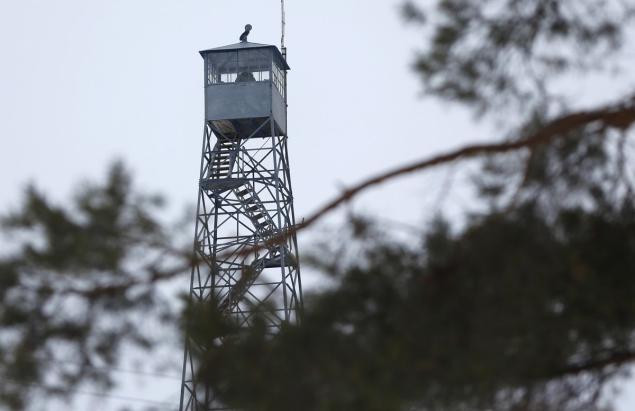 A broken clock is right twice a day and, gratefully, the justice department has found the sweet spot — at least for the moment — in Oregon.
Certainly, the armed occupation of a national wildlife refuge is cause for concern. But it is not cause for panic and, in light of past notorious government interventions, definitely not cause for military confrontation.
In both the 1992 Ruby Ridge, Idaho, incident and the 1993 Branch Davidian raid in Waco, Texas, the level of intervention was clearly disproportionate to the danger posed and the resulting bloodshed largely indefensible. This is not to say that the government did not have just cause; rather, it failed to employ that resource that is more endangered than any other: common sense.
3 people died at Ruby Ridge; 76 died at Waco.
It’s heartening, therefore, that authorities are approaching the current crisis near Burns, Oregon, with circumspection. Of course, they can’t ignore the occupation. But with no one in danger, a wait-and-see strategy is the best of all available options.
The broader relevance of the story arises from the inevitable accusations of racism by leaders in the black and Muslim communities. It’s only because the so-called Citizens for Constitutional Freedom are white, they say, that the government has not charged in with guns blazing.
Which is, of course, pure nonsense. Two dozen right-wing trespassers in the middle of nowhere is hardly comparable to Ferguson, Missouri, or San Bernardino, California.
The response is different because the situations are different. And in this case, stuck between the real fears that inaction will embolden extremists to further acts of defiance while over-reaction will provide the opportunity for martyrdom, wait-and-see offers the best possible compromise between unattractive alternatives.
It’s also arguable that the occupiers have legitimate grievances against government overreach, which has grown into a systemic malady, evidenced by a rash of executive orders and a culture of bureaucratic strong-arming. Compared with the nebulous jeremiads of the Occupy Wall Street crowd and, more recently, students at Yale and the University of Missouri, the very real plaints of the Oregon occupiers appear level-headed and downright mainstream.
Competent leadership is characterized by the ability to gauge every situation according to its unique combination of factors, risks, and potential consequences. One-size-fits-all solutions rarely prove effective, and accusations of inconsistency are childish at best, opportunistic at worst. What we need most in these troubled times is cool-headed calculation that looks to strike the sanest balance between principled action and pragmatic compromise.
When we start demanding that level of aptitude and integrity from our leaders, maybe we will find ourselves with leaders worthy of our confidence and trust.

Why do we Cry? The Psychology of Tears
 My dog died. I just got engaged. An earthquake leaves thousands homeless. “Time in a Bottle” comes on the radio. I passed my college physics exam. My best friend has leukemia. My daughter just gave birth to twins. Another senseless terror attack takes innocent lives. Jimmy Stewart’s friends and neighbors all rally to his defense at the end of “It’s a Wonderful Life.”
It would be hard to compose a more random grouping, would it not? Taken individually, the items on this list seem so far removed from one another that anyone having the same emotional response to every one of them might reasonably be diagnosed as schizophrenic.
Well, maybe schizophrenic is what we are, since any of them could send any of us into a spell of sniffles, if not outright sobbing.
Which has to make us wonder: why do we cry? We all know when we cry.
We cry when we’re sad, and we cry when we’re happy. We cry when we’re lonely, when we’re in pain, when we hear bad news, and when we hear good news. We cry when we’re so overwhelmed with work or debt or family or life in general that we can no longer cope, and we cry when we’re so filled with joy that we want hug the world.
But what do all these highs and lows have in common? And why is crying our natural, involuntary reaction to emotional intensity?
Read more at: http://www.learning-mind.com/why-do-we-cry/

Mistaking Identity
 Dennis Prager is at it again, this time with the simultaneously radical and reactionary, bigoted, sociopathic, and really-not-very-nice assertion that transgender people should take names and employ pronouns appropriate to their chosen identity.
Quick! Inside the nearest shelter… the sky is falling. Civil society may never recover.
Okay, yes, I am being sarcastic. Guilty as charged. But sometimes the logical and moral convolutions the politically-correct allow for no outlet other than simple mockery.
But I apologize if I hurt anyone’s feelings. I know it’s terribly bad form these days to speak the truth.
However, it should come as no surprise that the moral boundaries of civil society grow ever blurrier, in this case by design. These winds were already blowing with gale force when I published the following essay back in 2011:
When their third child, Storm, was born, Kathy Witterick and David Stocker announced the birth of their new baby with the following email:
“We’ve decided not to share Storm’s sex for now — a tribute to freedom and choice in place of limitation, a stand up to what the world could become in Storm’s lifetime (a more progressive place? …).”
Needless to say, friends and family alike have trouble understanding Witterick and Stocker’s unconventional approach to child-raising. With stereotyping, bullying, and social stigma inevitable parts of growing up, it’s easy to argue that manufacturing an additional obstacle to healthy social development is hardly in the child’s own best interest.
“Everyone keeps asking us, ‘When will this end?'” says Witterick. “And we always turn the question back. Yeah, when will this end? When will we live in a world where people can make choices to be whoever they are?”
FREEDOM WITHOUT LIMITS
A single family hardly constitutes a trend. But consider the Egalia preschool in Stockholm, Sweden, where staff avoid such culturally loaded words as “him” and “her,” addressing the children as “friends” rather than “boys and girls.” According to the AP, “breaking down gender roles is a core mission in [Sweden’s] national curriculum,” and many preschools have hired “gender pedagogues” to devisestrategies for eliminating “stereotypes.”
 Could they be right? Is sexual identity nothing more than arbitrary social programming? By eliminating every vestige of guidance from a child’s environment might parents actually help him learn to make better choices? Will indoctrinating a child with the conviction that every imaginable alternative is equally viable produce a canny, confident, and even-keeled adult?
Well, would it make travel easier if we uprooted every street sign and tore down every traffic signal? Would it make navigation easier if we burned every map and disabled every GPS?
The hazards of unrestricted freedom often go overlooked in a society that values personal autonomy above all else. But the formula for resolving the tension between individual expression and social boundaries was articulated by King Solomon, the wisest of all men, nearly three thousand years ago.
Hear, my son, the moral guidance of your father,
and do not forsake the teaching of your mother (Proverbs 1:8).
Giving voice to the self-evident truth that men are men and women are women, Solomon alludes to the distinct manner in which a father and a mother each makes a unique contribution to the psychological and ethical development of their child. From the father comes instruction— formal guidance in the ways of moral values and discipline. How to know right from wrong, and how to choose good over evil — this is the kind of wisdom most effectively communicated through fatherly counsel and direction.
Complementing the father’s instruction are the lessons absorbed from the mother, who plays the primary role in creating the atmosphere of personal responsibility and spiritual commitment that should permeate a home. It is mainly through the intangible, unquantifiable influence of the mother that a child develops moral sensitivity. Neither father nor mother can successfully assume the role of the other, for our distinct psycho-spiritual complexions are part of the design according to which the universe was formed.
Parents who refuse to assert moral principles, albeit in the name of tolerance and progressivism, succeed only in making their home an environment of intellectual anarchy that will inevitably lead to confusion and dysfunction later in life.
CHILD-RAISING, TAILOR-MADE
Train a youth according to his way;
even when he grows old he will not depart from it (Ibid. 22:6).
Often cited, correctly, as the source for individualizing education based upon the singular needs of every child, this proverb contains another element often overlooked: the word “youth” — na’ar, in Hebrew — implies immaturity. Truth be told, the majority of us suffer from a sophomoric certitude in the infallibility of our own wisdom. And children are the most susceptible of all to such delusions.
Wanting desperately to believe in their own independence, children seize hold of any excuse, no matter how irrational, to invalidate the wisdom of their parents. Left to his own devices, a youth will steer confidently into the heart of the nearest storm, delighted to be free from the steady guidance of the parent who could have saved him from catastrophe.
Like old wine and fine cuisine, genuine wisdom is an acquired taste, and the immature mind will reject its lessons as surely as the untrained palate will disdain the delicacies of a Cordon Bleu in favor of peasant’s fare smothered in salt and ketchup. But we do our children no favor by making it easier for them to marching confidently over the edge of the nearest precipice. Gentle instruction administered with care and consistency will lay the foundations of moral discernment as a child grows into adulthood.
A WORLD WITHOUT BORDERS
In his famous legal discourse regarding character development, Maimonides writes that “people are influenced by the society in which they live” (Hilchos Dayos 6:1). Among the many dangers of the modern world, none may be as insidious as the attack upon all natural and moral boundaries. Electric lighting pushes away the darkness of night, central air conditioning and heating insulate us from the changing of the seasons, cars and planes shrink the distance between faraway places, and electronic communication eliminates all delay in correspondence and information.
No one is suggesting that we live like the Amish and eschew modern technology. But these inventions are not as innocuous as we wish to believe: in the same way that physical boundaries have been breached, so too have moral boundaries become increasingly blurred and the path of moral conduct ever more difficult to find.
 Respect for traditional family structure continues to erode. The personal conduct of political leaders raises less concern than the carelessness that leads to getting caught. Violent criminals are cast as victims while defenders of life and limb are vilified as exploiters and oppressors. And the role of human sexuality in mental health and social stability is ever more profoundly misunderstood. Political correctness and moral equivalence have so muddied conventional wisdom that young and old alike often fear censure from their peers for daring to judge even the most abhorrent behaviors.
Yes, children need to learn to make their own choices, and today’s helicopter parents who micromanage every aspect of their children’s lives are more likely to produce crippled than capable adults. Nevertheless, we dare not overcompensate by throwing our children into the stormy waters of amorality and expecting them to swim. As Solomon has said, it is only through the guidance and teaching of moral values that we will keep our children afloat, as well as enabling them to navigate their way to safe harbor.
Originally published by Jewish World Review

That Thou art Mindful of Him
Yes, they’re at it again. According to the New York Law Journal:
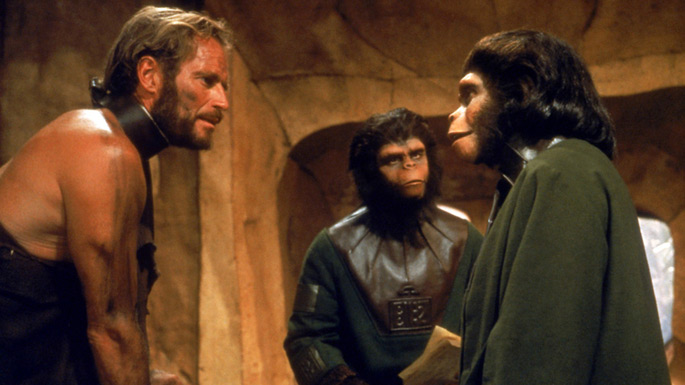 “A group seeking release of chimpanzees in captivity in New York through habeas corpus petitions has renewed its request to free a chimp held at a farm in Fulton County, near Albany.
“This time, the Nonhuman Rights Project said the materials supporting the petition it filed in Manhattan Supreme Court for the release of “Tommy” contain new statements from experts, including an affidavit from anthropologist Jane Goodall, supporting its arguments that chimpanzees possess enough human qualities to make their extended confinement cruel and unusual punishment.
“The group’s previous attempts to have Tommy released failed when an Appellate Division, Third Department, panel ruled that since chimps cannot bear the legal responsibilities and duties of humans, they are not entitled to habeas corpus or other legal protections accorded to people. The state Court of Appeals declined to hear the case [emphasis added].”
Socrates gave up his life for the ideal of pure wisdom. Galileo was threatened with torture for his commitment to scientific truth. Nelson Mandela spent 27 years in prison for his campaign to end apartheid.
And now, attorney Steven Wise is seeking to be the next torchbearer for virtue and justice by seeking legal personhood for two chimpanzees currently deprived of their primatial integrity by incarceration in the anatomy department of New York’s Stony Brook University. Mr. Wise has even found a judge willing to hear his case.
This is a natural outgrowth of our collective obsession with rights and entitlement which has, proportionally, shrouded our notion of personal responsibility. A healthy culture recognizes that it has a moral obligation to show compassion to all living creatures. But as the very concept of morality flickers and fades from social consciousness, only the assertion of rights prevents the rapid disintegration of society.
And as we lose our sense of responsibility, the distinction between man and animals grows harder to define until, ultimately, it all but disappears. In California, the “rights” of a little fish trump the welfare of humans: crops wither in arid fields during the worst drought on record as the state dumps trillions of gallons of fresh water into the ocean.
It’s worth noting that in 1933, two years before the Nuremberg Laws stripped German Jews of both civil and human rights, the Nazi government passed some of history’s most progressive laws for the protection of animals, legislation considered emblematic of the highest moral values of a people.
Elevating animals to the level of human beings inevitably results in human beings acting worse than animals.
Hat tip: Syd Chase

Creating a Culture of Violence
 I wish there was no reason to repost this essay. But with “random” violence becoming a cultural norm, we can’t run away from the root causes of radicalization, whether Muslim or otherwise. President Obama may not be totally off the mark in his belief that the West created this problem — but our contribution is not what he thinks, and his policies are only adding fuel to the fire.
Read the whole article here:
http://yonasongoldson.com/2015/05/18/remembering-the-boston-bombing/

Terrorism Close to Home
 This morning’s terrorist attack by a Palestinian who rammed his car into Israeli soldiers at a bus station struck a little closer to home. Both of the injured soldiers had just drafted into the army and were friends of my son from the same Lone Soldier group. They were released on leave a day before my son was, or he probably would have been standing right beside them.
At least one of them will be disabled for months: the Guardian reports this as “light to moderate” injury.
The story in the Guardian led by stating that the attack took place in the “occupied West Bank,” implying a John-Kerryesque legitimacy, then went on to report that the “incident raises the number of Palestinians killed since 1 October to 98, including an Israeli Arab.” In the interest of balance, the story did concede that, “More than half of them have been alleged perpetrators of stabbing, shooting and car ramming attacks aimed at Israeli civilians and security forces.”
However, the story neglected to mention that after ramming his car into the crowd, the Arab attacker was shot as he tried to stab one of his victims.
Allegedly.
Not the worst example of media bias by far, but shoddy journalism by any account. Our children who put themselves in harm’s way to protect others from violence deserve much better.

The Great Divide: Ignorance and Insecurity
Conor Friedersdorf writes in the Atlantic:
 [At Yale University, one] resident declared in a campus publication, “I have had to watch my friends defend their right to this institution. This email and the subsequent reaction to it have interrupted their lives. I have friends who are not going to class, who are not doing their homework, who are losing sleep, who are skipping meals, and who are having breakdowns.” One feels for these students. But if an email about Halloween costumes has them skipping class and suffering breakdowns, either they need help from mental-health professionals or they’ve been grievously ill-served by debilitating ideological notions they’ve acquired about what ought to cause them pain.
This is the reaction of Ivy League students, the best and the brightest, the cream of the crop, the hope for the future, the movers and shakers of the next generation, the political, social, and economic leaders of tomorrow. Their entire world collapses because someone, somewhere disagrees with them.
The depressing irony of the episode is that Erika Christakis’ noble attempt to accord students a greater measure of personal and moral responsibility resulted in the students themselves protesting for — and thereby demonstrating — their own incapacity to take responsibility for their actions on any level at all. Without a trace of embarrassment, academe’s most elite sons and daughters dissolved into a collective hissy-fit because one of their instructors suggested they should be treated as adults.

Email of the Week — Making “Friends”
 Presently, I am trying to make friends outside of Facebook while applying the principles of Facebook.
So every day I walk down on the street and tell the passers-by what I have eaten, how I feel, what I did yesterday and what I will do tomorrow.
Then I give them pictures of my family, of my dog, and of me gardening and spending time in my pool. I also listen to their conversations and I tell them I love them.
And it works. I already have 3 persons following me:
2 police officers and a psychiatrist.
 Yonason Goldson