Home » Posts tagged 'Virtue' (Page 21)
Tag Archives: Virtue

Is Ted Cruz to blame?
 This isn’t about politics. It’s not even about Ted Cruz. It’s about life.
If you want people to trust you, you have to appear trustworthy. All the more so if you’re going to accuse your opponents of dishonesty and make TrusTed your campaign slogan.
Senator Cruz did the right thing — the only possible thing, really — by firing top aid Rick Tyler for his role in circulating a video falsely accusing Marco Rubio of disparaging the Bible.
But it may be too late for damage control. Because the question everyone’s asking is this: whether or not Ted Cruz knew about or approved of the video, was Rick Tyler only doing what he thought his boss would want him to do?
I’m not suggesting that I know the answer. I’m only underscoring the urgency of the question. And I’m offering this historical precedent.
After leading the Children of Israel to victory in the battle against Jericho, Joshua received a message from the Almighty accusing the entire Jewish people of having lied, stolen, and violated their covenant with the Divine.
In fact, it had been one person who had stolen one object from the banned spoils of war — and this without any other person even knowing of the perpetrator’s actions. If so, why was the entire nation condemned as if they were complicit in the crime?
The answer is simple: the thief would never have committed his act of thievery unless he believed that he would be able to get away with it. Had there been a sufficient awareness of social conscience, had there been a palpable sense woven into the fabric of Jewish society that no one would tolerate his crime, the would thief never have dared to reach out his hand to take something that was not his.
Because an atmosphere of moral complacency permeated the national culture, the entire nation was held accountable for the actions of one man.
If we want to live in a society governed by integrity and character, we have to hold others to a high standard of personal behavior. But that only works if we hold ourselves to an even higher standard, and show the same disdain for corruption toward our friends as we do toward our enemies.

My Interview with Bill Martinez

Click to hear my interview with syndicated radio show host Bill Martinez:
Double Standards and the Death of Civil Society
Interview begins at the 33:30 mark. Enjoy!

Double Standards and the Death of Civilization
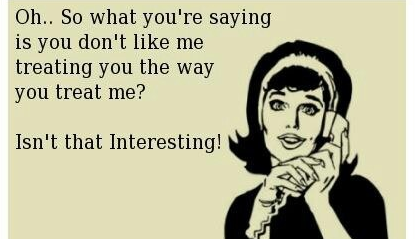 “Don’t say what you’re thinking.”
“It doesn’t matter how you feel.”
“Honesty is not always the best policy.”
It sounds terrible, doesn’t it? And yet modern society has created an entire value system based on these axioms. It’s called political correctness.
At the same time, however, there seems to be a freakish disconnect between the cultural extremes of political correctness and libertinism. On the one hand, the list of socially unacceptable words, phrases, and ideas keeps growing longer; on the other hand, regard for verbal filtering plummets in virtual free-fall.
At first blush, we might explain this away as an obvious consequence of competing ideologies and worldviews. Certainly, the popularity of Donald Trump and Ted Cruz can be understood as a natural reaction to the vacuous rhetoric of our elected officials, and to the farcical condemnation of benign comments and legitimate opinions as “hate speech” by the chattering classes. When a prominent university attempts to censor of words like mothering, fathering, and American as “microaggressions,” the inevitable consequence will be an equal and opposite reaction from the other side of the ideological divide.
But what is truly baffling are the offenses committed by proponents of political correctness themselves.

In Memorium
 Today marks the second anniversary of my father’s death. He was a man of unyielding principle and discipline, of meticulous honesty and unwavering standards. He had the ability to create an instant rapport with others and charm them without guile or manipulation, but he never seemed able to completely let down his emotional guard to truly connect. He could be hard, but he instilled in me a code of ethics and integrity that have formed the foundation of my sense of self and my worldview.
I wrote this tribute to him for Father’s Day in 2001:
Honor (is learned from) Thy Father

And Justice for All?
 Two Israelis have been sentenced by an Israeli court for the murder of a Palestinian teenager.
How many Palestinians have been sentenced by Palestinian courts for the murder of Jews?

The Midpoint of the World
As we finally enter the voting season with the Iowa caucuses, I’m drawn back to these thoughts from 2013 on who we are and where we are headed. If hindsight is 20/20, why do we keep making the same mistakes over and over again?
 What would you ask of a time traveler from a hundred years ago? And if you traveled a hundred years into the future, what would you want to tell the people you found there? Perhaps it would sound something like this:
What did you do to handle the overpopulations we predicted? How did you protect the seashores? What did you do to keep the ozone layer intact, the energy supplies, the trees? Have you eliminated ignorance, brutality, greed?
There might be no better way to discover unexamined truths about ourselves then by composing a letter to our grandchildren’s grandchildren. This was certainly on the mind of award-winning essayist Roger Rosenblatt a quarter century ago when he penned his deeplythoughtful Letter to 2086:
This letter will be propped up in a capsule at the Statue of Liberty, to be opened on the statue’s bicentennial. Go ahead. Undo the lock. I see your sharp, bright faces as you hoist us into your life, superior as cats to your primitive elders. Quaint, are we not? Beware of superior feelings. The message is in this bottle.
As a student of Jewish philosophy, I don’t believe in coincidences. So when my neighbor — out of the blue — handed me a long forgotten back issue of Time Magazine, the cover article by Mr. Rosenblatt resonated with the faint echo of providence. And although the intended audience still reside three generations in the future, this letter offers a tantalizing window into the past, as well as an illuminating perspective on how much has changed and how much has remained the same.
Click here to read the whole essay.

The Obama Legacy: A World Beyond Cynicism
 It really makes you want to scream and cry bang your head against the wall, hoping against hope that you’ll wake from a dystopian nightmare.
The toxic combination of delusion and narcissism that characterizes President Obama and his administration churns through our society like venom as the president trumpets one imagined victory after another and vilifies every critic, all while overseeing the catastrophic disintegration of moral standards, common values, and national security.
By what kind of perverse calculation does the leader of the free world negotiate a hostage release — which should have been part of any treaty from the outset — for the sole purpose of masking the corrosive consequences of that very treaty at the moment of its implementation? Such contrived deception mixed with political incompetence literally staggers the imagination.
The only thing worse is the chilling reality that the president actually believes that he is making the country and the world safer and better. Like Jimmy Carter, Mr. Obama will live out his life believing that he was one of the country’s greatest presidents, and he will remain utterly baffled why no one recognizes his greatness.
Read Charles Krauthammer’s dispiriting post-mortem here.

Alan Rickman and the Heart of Darkness
 I’m not a fan of the Harry Potter movies which, as is so often the case, paled in contrast to the sheer genius of the books. But if there was one portrayal that stood out head and shoulders above the rest, it was Alan Rickman’s pitch-perfect rendering of Severus Snape, the slippery potions-master who tormented Harry Potter throughout his career at Hogwarts while secretly protecting him from harm.
I’ll allow myself to boast that I never doubted Snape’s loyalty, even after he killed Dumbledore at the end of The Half-Blood Prince. Mostly, I trusted the author. J.K. Rowling did a brilliant job of developing Dumbledore’s character from the outset of the series. If Dumbledore trusted Snape, then there was no way Snape could be a traitor.
Reportedly, Alan Rickman turned down the role initially. He thought the character two-dimension and found no challenge in the role. But Ms. Rowling had her heart set on him, and so she revealed to Mr. Rickman what no one else knew yet, that Snape was really Harry’s secret protector, who would ultimately give his life to save the boy from harm.
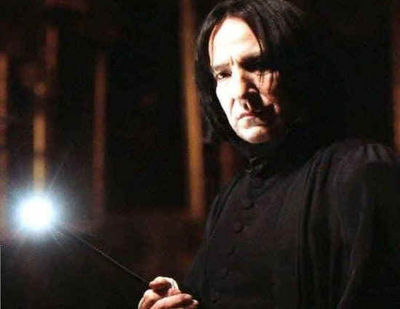 So for all those — young and old alike — who missed the books but saw the movies, Alan Rickman brought to life the character who teaches us that no matter how dark someone may appear on the outside, there may yet reside a soul of light and goodness within.
By way of tribute, I offer this return to my recent essay on the wisdom of Harry Potter.
Read the article at: http://www.learning-mind.com/reading-harry-potter/

Affluenza: Nothing new but the name
 Some verbal atrocities are either too offensive or too absurd to ever be forgotten. Like Jonathan Gruber’s candid admission that “the stupidity of the American voter … was really, really critical for [Obamacare] to pass.” Or Brian Williams misremembering that he had been shot down in a helicopter. Or Al Gore’s claim that he invented the internet (although, in all fairness, that was not quite what he said).
But few violations of common sense and common decency compare to that of Jean Boyd, the judge who concluded that probation and rehab were sufficient punishment for Ethan Crouch — after he pled guilty to taking the lives of four people while driving drunk — because he was a victim of affluenza.
Now, two years later, after Ethan Crouch has violated his parole, fled to Mexico with his mother, and finally ended up back in custody, the Washington Post would like us to reconsider whether the diagnosis is really so ridiculous after all. Rallying experts to support his case, Post editor Fred Barbash suggests that affluenza may indeed be an authentic malady, citing ASU professor of psychology Suniya S. Luthar and Barry Schwartz of Swarthmore College:
“High-risk behavior, including extreme substance abuse and promiscuous sex, is growing fast among young people from communities dominated by white-collar, well-educated parents. These kids … show serious levels of maladjustment as teens, displaying … marijuana and alcohol abuse, including binge drinking [and] abuse of illegal or prescription drugs.”[What also stands out] is the type of rule-breaking – widespread cheating and random acts of delinquency such as stealing from parents or peers among the affluent, as opposed to behavior related to self-defense, such as carrying a weapon, among the inner-city teens.”
“[What also stands out] is the type of rule-breaking – widespread cheating and random acts of delinquency such as stealing from parents or peers among the affluent, as opposed to behavior related to self-defense, such as carrying a weapon, among the inner-city teens.”
And finally: Serious depression or anxiety among affluent kids is “is two to three times national rates.”
No arguments from this quarter. But what does not appear in Mr. Barbash’s lengthy commentary is even the most meager attempt to identify why affluence produces teenage miscreants. What is it about growing up with every possible advantage that predisposes so many children to criminally irresponsible behavior?
The answer is quite simple.
Always Faithful
 My son at his induction ceremony into the IDF.
May the Almighty watch over all those who put the lives of others before their own.
May we all find within ourselves the clarity and courage to stay true to the values that lie at the core of our humanity.
 Yonason Goldson