Home » Education and Childraising (Page 3)

Category Archives: Education and Childraising

World Peace through Shared Servings

We’ve all heard that you are what you eat.  Now we learn that you may be what others eat.

A University of Chicago study found that people are more inclined to trust one another and more likely to come to agreement when eating the same kind of food.  Although researchers can’t explain why, a series of experiments demonstrates a dramatic increase in cooperation and collegiality when people are talking not just over lunch, but over the same lunch.

Experts have been telling us for years that children flourish in proportion to the frequency of family dinners.  The more time parents and children spend together at the table, the more likely children are to succeed in school, to develop positive self-image, and to enjoy better physical and emotional health.

The natural assumption has been that family interaction increases children’s feelings of love and security, which leads to a deeper appreciation of family values.  That’s almost certainly true.

But there may be an additional factor.  At most family dinners, whatever is on the menu is what everyone eats.  And that, apparently, makes a big difference.

Read the rest here.

In Memorium

Originally published by the St. Louis Post-Dispatch on Father’s Day, 2001.

flag1I was ten or twelve years old. My father and I had arrived at the stadium early, and I felt a thrill of excitement as we stood up for the Star Spangled Banner. Down on the field, our home team, the Los Angeles Rams, stood in a line holding their helmets under their arms. And in the row in front of us, a middle aged man stood with his hat perched casually upon his head.

“Hey, Buddy,” my father said.  “Take off your hat.”

The man didn’t respond.  “Hey you,” my father said, louder, “take off your hat.”

The man grunted an unintelligible, though clearly dismissive remark.

“You unpatriotic SOB,” growled my father; he didn’t abbreviate, either.

Dad!” I whispered, mortified and afraid, but also faintly confused.  My father had never before demonstrated any dramatic displays of patriotism.

The national anthem ended, the game began, and I guess I forgot about the incident because I never discussed it with my father, never asked him to explain an indignation that seemed entirely out of character.

But now I’m a father myself, and I don’t find my father’s action thirty years ago perplexing at all.

Why should we take off our hats for the national anthem?  Why should we stand up for the flag?  Why should we address strangers as “Sir” or “Madam,” wear coats and ties to church or synagogue, and give up our seats to the elderly?

It’s a matter of respect.  Respect for people.  Respect for institutions.  Respect for wisdom and values and human dignity.

respectUnfortunately, respect has been going out of fashion for a long time.  Sex scandals and no-fault divorce have eroded respect for marriage and commitment.  Partisan politics has eroded respect for leadership.  Inflated grades and deflated standards have eroded respect for teaching.  Abortion-on-demand and doctor-assisted suicide have eroded respect for life.  “Reality television” has eroded respect for ourselves.

Which was our first step onto this slippery slope?  Maybe it was the noble ideal of social equality, set spinning so wildly out of control that we began to equate respect with elitism.  Maybe the information glut convinced us that we know as much about medicine as our doctors, as much about cars as our mechanics, and as much about education as our children’s teachers.  Maybe our relentless pursuit of leisure time has made us too selfish to value age and experience, too lazy to act civilly toward our neighbors.

When respect is not earned, it disintegrates; when respect is exploited, it implodes.  Indeed, after his desperate quest for legacy, Bill Clinton was best remembered at the time of his departure as the American president who made his underwear preferences a matter of public policy, who pilfered the White House china,  and for whom a large percentage of once-self-respecting Americans so casually excused perjury in federal court.  Barack Obama will leave behind the first video of an American president making faces in the mirror in preparation for an historic selfie.

But we should never rely on respect to percolate down from the top; it is our responsibility to grow it up from the grass roots.  It is the job of parents to teach their children to say “please” and “thank you,” to not interrupt and not talk with their mouths full, to speak civilly and give up their seats to the elderly, to pick up their own litter and maybe even someone else’s.  By doing so, parents instill in their children an intuitive sense of respect for others, even if their children may not understand why all these social minutiae are indispensable.

???????

???????

But too many parents have abdicated that job, either because they’re not around enough or because they never learned to be respectful themselves.

The Talmud says that where there are no leaders, strive to be a leader yourself.  In today’s increasingly fatherless society, teachers, scout leaders, and little league coaches have a greater obligation than ever to teach respect by showing respect for others — and so do we all every time we walk down the street or through the supermarket aisle.

A journey of a thousand miles begins with a single step.  And a journey through life begins with a step in the right direction.  Help a child take that step and, many steps later, his success will speak his thanks louder than words.

Every Father’s Day offers a reminder to say every day:  Thanks, Dad.

Political Correctness: the root of all evil

Attachment-1

After last week’s wackiness at James Madison University, it’s time to revisit this post from last April.  I fear there will be too many opportunities to do so.

A letter to the future president of the United States:

If you want to fix the country, you can start with the root cause of all that ails our country:

Political Correctness.

The truth is that political correctness is not a new idea at all; it is simply the new label for an old, established moral postulate once accepted by all.

The word civility shares its linguistic root with the word civilization.  It means taking into consideration the comfort of others before expressing what I think or doing what I want.  It means remembering that other people have rights before assert my own.  It means reflecting upon how my actions are going to affect my community and recognizing that I have a responsibility to a society that is more than the sum of autonomous individuals.

So what was wrong with the term civility that the concept needed rebranding as political correctness?  Most likely, it was the connotation of political ideology that spawned this illegitimate offspring of cultural nobility.

Read the whole article here.

A Present for Heaven

letting-goWhen my youngest daughter was three years old, she discovered the helium balloons in the flower section of our local supermarket, handed out free to every child who asks for one. I tied the string around her wrist so the precious balloon wouldn’t escape up to the rafters. She bounced it on its string as I tugged it this way and that to avoid bumping other shoppers. She hugged it as we climbed into the car for the ride home.

As I pulled into the driveway, my daughter flew out of the car, her balloon bobbing along behind her, raced in through the front door and out again to our back yard, slipped the string off her wrist and gazed upward as the balloon rose into the sky and slowly drifted away.

“Why did you let go of your balloon?” I asked, slightly miffed that she had so casually cast away the new toy she had been fussing over for the last half hour.

My daughter just shrugged, giggled, and watched the balloon disappear from sight.

After our next trip to the market she did it again. Then again, over and over for months. Every time I asked the same question. “Why did you let go of your balloon?”

Finally I got an answer. My daughter looked me in the eye and replied with a smile, “It’s a present for God.”

* * *

She doesn’t do it anymore. And part of me mourns for the pure, innocent faith that prompted a little girl to give up her toy as an offering to the Almighty.

For all our experience and the sophistication, for all our indulgent smiles at the simplicity of our children’s beliefs, is it not likely that our children know something we don’t, something they themselves soon won’t know or even remember they once knew? And perhaps it is precisely their power of belief that sets them apart from the adults they will become.

Children believe in God, believe in their parents, believe in their country and their school and their friends and that good will always win out over evil. Their trust and faith haven’t yet been sullied by the lies of politicians, the corruption of law and justice, the avarice of sports heroes, the superficiality of Hollywood or, most importantly, the cynicism of their parents, who may try for a time to put on an act to spare their children from their own disillusionment.

But what if it worked the other way, that we could learn an old lesson from our children instead of imposing yet another new lesson upon them? What if we could turn the clock back and recapture even a whiff of the innocence of youth? Would we reach out to grasp it, or have we grown too jaded even to try?

This Rosh Hashana, Jews around the world will fill synagogues to inaugurate the first day of the Jewish new year. But Rosh Hashana celebrates much more than the beginning of another calendrical cycle. It celebrates birth and rebirth; it celebrates beginning and renewal, for it commemorates nothing less than the Creation of the world and Mankind.

edelweiss91As we approach the New Year, let us ask ourselves how we can turn back the clock, exchanging bad habits for new challenges, routine for renewal, and cynicism for enthusiasm. Instead of smiling with adult condescension at the innocence of children, let us consider instead that the difference between childhood and maturity is not whether we give presents to our Creator, but what kind of presents we choose to give. A child serves God by sending a balloon up into the sky. An adult serves God by releasing his spirit to soar to the heights of Godliness.

Have we given charity in proportion with our means? Have we visited the sick and comforted the distressed? Have we consistently spoken with kindness to our neighbors, with respect to our superiors, and with patience to our children? Have we honored the Sabbath and studied the ancient wisdom of our people?

It’s not enough to make resolutions; we need to inspire ourselves to see them through. We need to awaken in ourselves an awe of the Almighty by reflecting upon the vastness of creation, the unfathomability of the stars in their courses, the mysteries of life, and the limitless potential of the soul — to behold for a lingering moment the immeasurable beauty and majesty of our universe.

And if we can follow through, if we can make the moment last without slipping back into our well-traveled rut of discounting every noble and beautiful thought and deed, then perhaps we can retain our faith in those things truly worthy of faith throughout the coming year.

Originally published in 2008 by the St. Louis Post-Dispatch and Aish.com.

Block Yeshiva closing marks end of an era

4c227bb4b9bb9-imageAsk any teacher. Ask any informed parent. Educational standards are in free-fall across America — perhaps around the world. And in St. Louis, Missouri, an extraordinary institution has closed its doors.

Block Yeshiva High School did not come into existence as something new or revolutionary. Its roots reach all the way to the ancient traditions articulated by the sages of the Second Temple period, and its style expressed the more recent articulations of one of the most influential thinkers of the last two centuries.

In 1851, Rabbi Samson Raphael Hirsch relinquished both his pulpit and his seat in the Moravian parliament to accept the position as leader of the Torah community in Frankfurt-am-Main. In response to the rapid assimilation of Western European Jews, Rabbi Hirsch developed a movement that embraced both secular knowledge and passionate commitment to Torah study and observance.

The approach that became known as Neo-Orthodoxy was built upon a rigorous 12-year primary and secondary education system providing Jewish children with the fundamental skills and philosophic outlook to remain strong in their traditions while simultaneously preparing them to flourish in the professional world of gentile society. By doing so, Rabbi Hirsch created a bulwark against the sweeping tide of secularization while establishing a model to produce fluent and committed Torah Jews for generations.

For 38 years, St. Louis has boasted a school that has earned an extraordinary reputation among both American universities and Israeli yeshivos and seminaries. Following the trail blazed by Rabbi Hirsch a century and a half ago, Block Yeshiva High School graduates have distinguished themselves in medicine, law, and business, as well as in the world of Torah scholarship. Perhaps more significantly, as a group, Block Yeshiva graduates have retained an extraordinary commitment to Jewish tradition and values, to the Jewish people and the Land of Israel, and to the refinement of moral and spiritual character that is our true legacy as a nation.

Here are a few examples of what Block Yeshiva has produced:

Click here to read the whole article.  Please comment and share.

The Sound of Silence

2016-1[Rabbi] Shimon [ben Gamliel] says:  All my days I grew up among the sages, and I never found anything better for a person than silence.  Action, not study, is the main thing; and excessive talk inevitably leads to sin.
~Ethics of Fathers 1:17

Listen, my son, to the guidance of your father, and do not forsake the teaching of your mother; for they are a charm of grace upon your head and precious gems about your neck.

~Proverbs 1:8-9

Traditionally, discipline came from the father, whose stern and urgent words provided guidance along the path of life. However, it was the quiet lessons learned by example from the mother that defined that path and had the most enduring influence as children grew up into the adults they were meant to become.

No matter how parenting roles may have changed, the general principles remain.  Intellectual maturity, symbolized here as a charm of grace upon the head, guides the steps we take; the intuitions of the conscience, when articulated through speech, are the precious gems about the neck, which keep us turned toward our ultimate destination.

Only when our thinking and speaking are filtered through the wisdom absorbed from responsible parents and trustworthy teachers will we be able to find our place in the world and live in harmony among our fellows.

Suffer the Children?

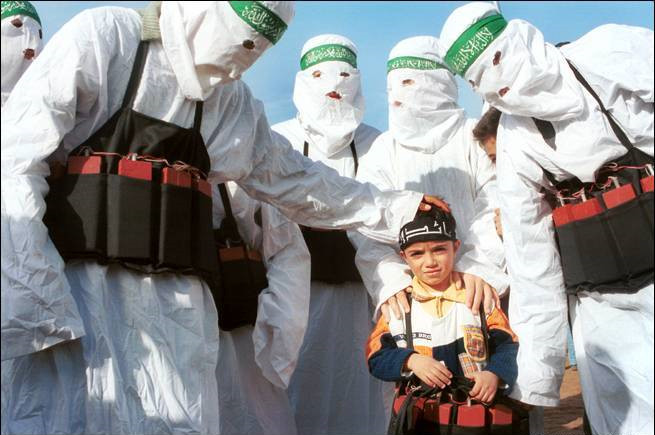
20121001_jihad_kid_terrorist_child_largeTwelve-year-olds don’t choose to become suicide bombers.

And true believers don’t send children as martyrs in place of themselves. The perpetrators of last week’s vicious attack on a Kurdish wedding in Turkey believe in nothing so much as violence as a means to their own power. It’s a sad sign of the times that we can almost admire the zealots of a few years ago who willingly gave their own lives for their ideals, no matter how convoluted those ideals may have been.

When fanatics eagerly give the last full measure of devotion — for which Abraham Lincoln praised the Union soldiers who sacrificed their lives at Gettysburg — we have to ask ourselves if we are prepared to sacrifice as much for our noble values as our enemies readily sacrifice in the name of terror.

Click here to read the whole article.

The Perils of Social Grade Inflation

Elephant n MouseHere’s a no-brainer.

You want to improve your basketball game. Would you rather practice one-on-one with your older brother, who’s on the JV team, or with Kobe Bryant?

Unless you possess a serious streak of masochism, you did not choose Kobe Bryant — for reasons that should be obvious: while you will definitely improve playing with someone marginally better than yourself, you will accomplish nothing by playing with someone exponentially better than you are. Except, in all likelihood, the rapid deflation of your self-esteem.

Applying this principle more broadly, it’s easy to see how associating with peers slightly better than ourselves — whether academically, professionally, or morally — will push us to higher levels in our own conduct and performance. But the benefits of implied social pressure disappear when we perceive our peer group to be functioning on a higher level than it actually is.

Read the whole article here.

Near-death experience

1You’re ten years old and a sound sleeper, so it’s already unusual that something has woken you up in the middle of the night.  You go out into the hall to investigate.  There are strangers in the house and flashing lights out the window.  Your father tells you to go back to bed.

When you wake up the next morning, your mother has disappeared from your life.

It’s 1970, before school counselors or lettered conditions like PTSD.  Your father means well, but he’s not the communicative type, not one for expressing his feelings to others or eliciting others to share their feelings with him.  He’s from the Depression Era, and he barely saw his own father growing up during those desperate years.  He’s a veteran of the Second World War; difficulties are part of life.

He’s also dealing with his own trauma, as his wife lingers between life and death.

You get shipped off to stay with friends, or with your grandmother.  Very little is explained to you, and you understand even less.  Years later, there won’t be much that you remember, aside from the indelible images of that first night.

You won’t remember waking up the next morning to find your grandmother home with you instead of you parents.  You won’t remember when they took you to visit your mother one last time because no one thought she had much time left.  You won’t remember shouting at her for having abandoned you.  You won’t remember the outgoing, cheerful little boy you were before that cold, winter’s night.

You only remember how hard it was for you to talk to people from that moment forward.  You remember how easily you cried during the years that followed, and how much you hated yourself for crying so easily without understanding what made you that way.  You remember how you considered taking your own life, but always managed to convince yourself that you could do it tomorrow.

A decade passes before you really recover.  In some ways, you never recover at all.

Click here to read the whole essay.

Congratulations, Dr. Schreiber

Avigayil Graduation

After graduates from MIT and the University of California, lawyers, businessmen, teachers, a concert violinist, and a rabbi, we have our first doctor in the family.

May you hear nothing but the sounds of success and happiness.

So proud!