Home » Philosophy (Page 6)

Category Archives: Philosophy

The War to End all Wars

This Sunday evening, Jews around the world will begin their observance of the week-long festival of Sukkos.  There’s much to learn from this celebration that concludes the annual cycle of Jewish holidays.  So I’m returning to these thoughts from September, 2001, which remain more relevant than ever.

102609966-200504255-001-530x298Once upon a time there were three little pigs. One built a house of straw, until the big, bad wolf blew it down and gobbled him up. One built a house of sticks, until the big, bad wolf blew it down and gobbled him up. But one built a house of bricks and was safe from all the huffing and puffing of the big, bad wolf.

Society teaches values to successive generations through its children’s stories. The story of the Three Little Pigs is one of our most enduring fables, teaching the importance of good planning and disciplined effort. But it also carries with it a more subtle message, that safety rests in our own hands and our own labors, that security can be bought for the price of a pile of bricks and a bucket of mortar. This ideal, if it was ever true, went up in flames together with New York City ‘s skyline and Washington’s military nerve center on September 11.

More appropriate now than the Three Little Pigs is Robert Burns’s adage about “the best laid schemes of mice and men.” Indeed, the World Trade Center towers were each designed to absorb the impact of a Boeing 727; what the architects failed to factor in was how the fuel carried aboard a transcontinental airliner would create an inferno capable of compromising the structural strength of steel support beams. Of course, we don’t blame the architects; none of us imagined the acts of incomprehensible evil that brought down those towers.

Which is precisely the point. We cannot imagine the design and the reach of evil. We can make our best effort, erect walls of brick around ourselves and roofs of steel over our heads, but we will never be completely safe. The world is too unpredictable an arena, the mind of the wicked too dark a cavern.

As if to drive home the instability of temporal existence, observant Jews around the world will disrupt their normal lives this week by moving out of their homes into little stick houses to live as our ancestors lived in the desert after their exodus from Egypt. But more than an attempt to recreate the experience of a fledgling nation traveling toward its homeland, the holiday of Sukkos offers us an opportunity to attune our minds to a most fundamental principle of Judaism — that however great our strength and the might of our own hands, however elaborate and well conceived our plans, life strews unexpected obstacles in our path that can scuttle our most certain victories and demolish our most solid edifices.

img_6409A sukkah may be built of virtually any material: wood, brick, steel, canvas, or even string may be used to construct its walls. But no matter how stable or how precarious its walls, the roof of a sukkah must be composed of s’chach, thin strips of wood or leaves, through which the light of the stars can shine at night. And when one sits in the sukkah and looks up at the s’chach — the barest representation of a roof, which will not protect him from even the lightest rainfall — he is inspired by the recollection of his ancestors who trusted in the protection of the Almighty, the One who took them out from under the rod of their oppressors and guided them through the inimical desert before bringing them safely home.

In his visionary writings, the prophet Ezekiel describes a great battle on the eve of the messianic era, when the all forces of evil in the world combine themselves into a great army called by the name Gog and Magog. The brilliant eighteenth century thinker Rabbi Samson Rafael Hirsch interprets the prophet’s vision not as a military battle but as an ideological war between the philosophy of gog — “roof”– and the philosophy of sukkah, where those convinced that their fate lies in the power of their own hands and their own resources will attack the values of those who recognize the limits of human endeavor to influence the world.

In the immediate wake of the World Trade Center destruction, cries rang out for vengeance and military retribution. Since then, more measured voices have asserted that this war will be like no other, without defined enemies or defined borders, without clear strategies or decisive victories. This is an unfamiliar kind of crisis, where we find our capacity to respond in our own defense or to secure our own future profoundly diminished in a new world order.

So now the citizens and leaders of the world’s last remaining superpower must grapple with the uncertainties of a violent present and a murky future. Some will respond by declaring that we must work harder to take control of our own fate. Others will concede that we will never be secure again. And they will be right: no building, no bunker, no shelter made of brick or concrete or iron will guarantee our safety from the perverse imagination of extremists who can rationalize indiscriminate mass murder.

sn_collection_082111_hdrYet for all that, the Jew sitting in his sukkah will look up at the heavens and be at peace. He will recognize that the best laid schemes often come to naught and that, after doing all that can be done, we are best off leaving our fate in the hands of the One who placed the stars in their courses, the One from whom protection ultimately comes for those who trust not in their own strength, but in the source of all strength.

As the winds of autumn blow with the first hint of winter, we may shiver with cold but never with fear. The illusion of the roof we can see reminds of the invisible reality of the wings of the Divine presence. We neither abandon ourselves to fate nor try to seize hold of it, but turn with confidence to face the future, secure in the knowledge that we have prepared ourselves as best we can to meet whatever life holds in store for us.

Originally published in Jewish World Review.

An Ode to Almustafa

lonely-walkerIf memory serves — after all, it has been 32 years — I was somewhere between New Orleans, Louisiana, and Waycross, Georgia.  It was late winter, but the southern air was mild and the sun brightened the sky.

Hitchhiker’s weather, to be sure.

I was waiting at a rest stop with my thumb stuck out when a pickup towing a large camper lumbered to a halt in front of me.  I climbed in and uttered my heartfelt thanks.

The driver, wearing a red flannel coat in hunter’s plaid, surprised me by identifying himself as a pastor on vacation.  He asked the usual questions — where was I headed, where was I from, why was I traveling this way — then launched into his story.

There are two ways hitchhikers pay for their rides.  One is by talking, by entertaining a driver lonely from the road and weary of recorded music or talk radio.  The other is by listening, by letting drivers unburden themselves without the cost of therapy, secure in the knowledge that their disclosures will vanish into the air the moment the passenger exits the vehicle … comfort of strangers and all that.

Clergy have gotten a bad rap in recent years — much of it their own doing.  Corruption is bad enough from politicians and business executives, but we have every right to expect more from our religious leaders.  The entire edifice of theology suffers from every single act of spiritual infidelity.

But there are still many sincere men of the cloth, and my benefactor appeared faithful to the integrity of his office.  He saw his mission not only to minister but to shepherd his flock toward pastures sown thick with the morality and ethics of scripture, to challenge them to challenge themselves and prod them to pay closer attention to the calling of their conscience.

And sadly, like spiritual leaders from Moses until today, he had found ample cause for disappointment.

Click here to read the whole essay.

A Present for Heaven

letting-goWhen my youngest daughter was three years old, she discovered the helium balloons in the flower section of our local supermarket, handed out free to every child who asks for one. I tied the string around her wrist so the precious balloon wouldn’t escape up to the rafters. She bounced it on its string as I tugged it this way and that to avoid bumping other shoppers. She hugged it as we climbed into the car for the ride home.

As I pulled into the driveway, my daughter flew out of the car, her balloon bobbing along behind her, raced in through the front door and out again to our back yard, slipped the string off her wrist and gazed upward as the balloon rose into the sky and slowly drifted away.

“Why did you let go of your balloon?” I asked, slightly miffed that she had so casually cast away the new toy she had been fussing over for the last half hour.

My daughter just shrugged, giggled, and watched the balloon disappear from sight.

After our next trip to the market she did it again. Then again, over and over for months. Every time I asked the same question. “Why did you let go of your balloon?”

Finally I got an answer. My daughter looked me in the eye and replied with a smile, “It’s a present for God.”

* * *

She doesn’t do it anymore. And part of me mourns for the pure, innocent faith that prompted a little girl to give up her toy as an offering to the Almighty.

For all our experience and the sophistication, for all our indulgent smiles at the simplicity of our children’s beliefs, is it not likely that our children know something we don’t, something they themselves soon won’t know or even remember they once knew? And perhaps it is precisely their power of belief that sets them apart from the adults they will become.

Children believe in God, believe in their parents, believe in their country and their school and their friends and that good will always win out over evil. Their trust and faith haven’t yet been sullied by the lies of politicians, the corruption of law and justice, the avarice of sports heroes, the superficiality of Hollywood or, most importantly, the cynicism of their parents, who may try for a time to put on an act to spare their children from their own disillusionment.

But what if it worked the other way, that we could learn an old lesson from our children instead of imposing yet another new lesson upon them? What if we could turn the clock back and recapture even a whiff of the innocence of youth? Would we reach out to grasp it, or have we grown too jaded even to try?

This Rosh Hashana, Jews around the world will fill synagogues to inaugurate the first day of the Jewish new year. But Rosh Hashana celebrates much more than the beginning of another calendrical cycle. It celebrates birth and rebirth; it celebrates beginning and renewal, for it commemorates nothing less than the Creation of the world and Mankind.

edelweiss91As we approach the New Year, let us ask ourselves how we can turn back the clock, exchanging bad habits for new challenges, routine for renewal, and cynicism for enthusiasm. Instead of smiling with adult condescension at the innocence of children, let us consider instead that the difference between childhood and maturity is not whether we give presents to our Creator, but what kind of presents we choose to give. A child serves God by sending a balloon up into the sky. An adult serves God by releasing his spirit to soar to the heights of Godliness.

Have we given charity in proportion with our means? Have we visited the sick and comforted the distressed? Have we consistently spoken with kindness to our neighbors, with respect to our superiors, and with patience to our children? Have we honored the Sabbath and studied the ancient wisdom of our people?

It’s not enough to make resolutions; we need to inspire ourselves to see them through. We need to awaken in ourselves an awe of the Almighty by reflecting upon the vastness of creation, the unfathomability of the stars in their courses, the mysteries of life, and the limitless potential of the soul — to behold for a lingering moment the immeasurable beauty and majesty of our universe.

And if we can follow through, if we can make the moment last without slipping back into our well-traveled rut of discounting every noble and beautiful thought and deed, then perhaps we can retain our faith in those things truly worthy of faith throughout the coming year.

Originally published in 2008 by the St. Louis Post-Dispatch and Aish.com.

Rosh Hashanah Tailor-Made

Nobody likes fundraising dinners. The speeches are dry, the menu is dull, and the seating arrangements seem to have been drawn up by the Marquis de Sade. No one looks forward to these affairs, and we attend them only out of a sense of obligation.

Since one dinner I attended last year, however, I have become more wary than ever of this kind of event.

The evening began unremarkably and proceeded unremarkably — up to a point. The food was better than usual, the speeches ran longer than usual, the company was as good as could be hoped for, and I never saw the dinner plate that slipped from the tray of the passing waiter and struck me squarely on the forehead.

icepack“I didn’t hit you, did I?” asked the waiter in response to the alarmed gasps and cries from the people who shared my table, several of whom assured him that he had, indeed, scored a direct hit.

“Are you all right?” he asked, inevitably. A silly question, really.

A pound-and-a-half of glazed ceramic packs quite a wallop after accelerating at thirty-two feet-per-second-squared from a height of six feet in the air.

At least I was still conscious, still sitting upright, and I didn’t think I was bleeding.

“Get a doctor,” someone said.

“He doesn’t need a doctor,” said someone else. “Get him a lawyer.”

The manager arrived with an ice pack. “Here, take this.”

“I was hoping for scotch with my ice,” I said.

He laughed, but didn’t bring me any scotch. “I’ll need your name and address, sir,” he said, handing me a pen and paper.

“Don’t sign anything,” yelled someone from the next table.

I scribbled my vital statistics. “I’m really very sorry, sir,” he said.

“Is there anything else I can do for you?”

“Just the scotch.” He laughed again and went away. I had figured the manager would offer me vouchers for a complimentary night’s stay. He hadn’t. (I never even got a letter of apology.) I hadn’t gotten my whisky, either.

I began regaining my bearings to a medley of more lawsuit jokes. From across the table, however, my next door neighbor offered the only profound comment of the evening: “What were you thinking about before you got hit?”

I knew exactly what he meant. According to Talmudic philosophy, there are no accidents, no coincidences, no random events. Everything comes about through the guiding hand of Divine Providence, what we call hashgochoh pratis: the spiritual imperative that governs how the external world acts upon each and every one of us. In other words, if I got smacked on the head, I must have had it coming to me.

This is a far cry from the popular notion that whatever I want, I have coming to me. As much as contemporary culture may insist that privileges and entitlements are birthrights, the Talmud recognizes only our responsibilities, both to other individuals and to society. When we live up to our obligations, we may expect certain rewards to come our way. But if we do receive an apparently undeserved blow, great or small, we should assume that the equilibrium of the cosmic scales of justice somehow needed to be set back in balance, and we should reflect upon the message that has just been sent us from on high.

Sometimes we can easily identify a concrete lesson to glean from such mishaps. Other times not. But the principle holds, even when we can’t perceive any clear cause and effect: this was necessary; now we need to brush ourselves off and get on with life.

The traditional Yom Kippur liturgy provides a poignant example in its narrative concerning Rabbi Yishmoel, the High Priest, who died as the skin of his face was peeled away to suit the whim of the Roman governor’s daughter.

The malachim, the divine beings who inhabit the heavenly spheres, protested in outrage: “Is this the reward for living a life committed to holiness?” they demanded.

“Be silent!” commanded the Almighty, “or I will return the world to void and nothingness.”

180px-tailor-fit_800The incomparable 18th century genius, Rabbi Elyahu of Vilna, explains G-d’s reply with an allegory: a king once received a gift of fine Turkish wool, the most luxurious fabric in the world. It was so beautiful, in fact, that the king could not bear to think that even a tiny piece of it should end up as scrap on the cutting floor. He went to every tailor in his kingdom and asked each to make him a suit without letting even one thread of the wool go to waste. But every tailor claimed that such a feat was beyond his ability.

Finally, the king found a tailor who agreed to do the job. When the king returned to the tailor’s shop on the appointed date, he discovered that the tailor had indeed produced an exceptional suit of clothes. The king was elated.

“But have you fulfilled your promise?” asked the king. “Did you use every thread?”

“You really don’t know,” answered the tailor. “And the only way you will ever will find out is if you tear your beautiful suit apart and lay out all the pieces in the original shape of the fabric.”

Similarly, we often think that life is full of unfair knocks or is missing essential pieces. But to know for sure, we would have to see all of human history undone before our eyes. Only then would we have the right to assert that there were flaws in the slow sculpture of creation.

The days from Rosh HaShonnah to Yom Kippur — the traditional season of judgment — afford us the opportunity to strengthen our trust that the Master Tailor has done His job well, that He has stitched together the fabric of eternity according to a plan He understands far better than we do — even when bricks, or china plates, fall out of the sky upon our heads.

Should I have sued the hotel? the waiter? the school holding the event? the principal, who was speaking when I got hit? No doubt, I could have found any number of lawyers eager to take the case. If a woman could receive 4 million dollars for spilling a cup of coffee in her own lap, this should be worth at least as much.

But life is full of honest accidents resulting in superficial scrapes and bruises. It’s better for us (and better instruction for our children) to look for what we can learn from life’s bumps and knocks, not to look for whom we can blame and how much we can squeeze out of them.

b312248a90eac5da6778e184074f4ea9The waiter returned, contrite and apologetic, perhaps more shaken than I was. “In twelve years this has never happened to me,” he said. Evidently, he also had a date with Providence. “Is there anything else I can do for you, sir?”

“I wouldn’t mind a scotch on the rocks.”

“I’ll see what I can do.”

He did. It wasn’t four million dollars, but it was better than a knock on the head.

Originally published in 2000 by Jewish World Review.

Rooting for Everyman

cqkkdgqwaaeyuqjIf you’re one of the disgruntled majority who feel they have no choice but to vote for one unfit presidential candidate against another who is even worse, a white knight may have appeared on the horizon.

Yes, I’m talking about Tom Kirkman, aka Kiefer Sutherland, aka Jack Bauer.

Okay, so he’s not a real person and he’s not really going to be the next president. But in this age of surreal politics and reality television, the lines between life and art have grown so fuzzy that we might as well blur them a little more.

Kiefer Sutherland’s new incarnation as Tom Kirkman is a kind of alter ego to Jack Bauer, hero of the iconic series “24.” Where Jack can fight his way out of any situation, Tom has probably never thrown a punch in his life; where Jack instantly assesses every situation and acts with confidence, Tom seems overwhelmed and indecisive; where Jack commands respect and awe, Tom evokes skepticism and doubt.

But all of this is what makes Tom Kirkman a more compelling hero than Jack Bauer. As an American James Bond, Jack is larger-than-life and therefore inaccessible. In contrast, Tom is as ordinary as any one of us – indeed, he could be any one of us. And that is precisely his appeal.

Rosh Hashanah and the Mysteries of the Universe

cropped-man-and-mysterious-universeOriginally published by Jewish World Review in 2003.

96% of the matter in the universe is invisible. Mysterious “dark energy” is pushing all of space apart. Empty space is not really empty, but filled with subatomic “foam.” At least seven parallel universes exist, each a trillionth the size of a proton.

Science fiction? Fantasy? The product of opium hallucinations?

Guess again. According to an article in U.S. News and World Report, these hypothesized phenomena represent the mainstream of current scientific thought.

In the wake of observations reported last March by NASA’s Wilkinson Microwave Anisotropy Probe, astronomers and physicists are resorting to these and other fantastic models to explain anomalous temperature variations in the background radiation permeating the heavens.

And who knows? They may be right. After all, once upon a time a round earth, a heliocentric solar system, and manned flight were all scorned as flights of the wildest fancy. Perhaps entire universes really do exist, wrapped up in a particle of dust beneath your finger nail.

On the other hand, increasingly complex and convoluted theories begin to look like the frantic flailings of scientists drowning in the mysteries of human existence. Indeed, one noted physicist confessed that, if he’d been presented with these theories not long ago, “I’d either ask what you’ve been smoking or tell you to stop telling fairy tales.”

Of course, one almost has to feel sorry for these scientists. Every discovery, every revelation, every insight, opens up a new Pandora’s Box of inexplicable phenomena. A few short decades ago, we knew of about half a dozen known sub-atomic particles. Today there are hundreds, with the number growing all the time, and often only the haziest guesses as to why they exist. Relativity theory and quantum theory both seem to describe the workings of the universe, but only the most strained and unproven theory suggests how to unite these two approaches.

1280It’s almost enough to make one contemplate — dare we say it? — Divine Creation. Indeed, man’s desire to plumb the secrets of the universe is nothing new. Newton, Descartes, Galileo, Aristotle, all of these and many others grappled with physics and metaphysics in their labors to comprehend the vast expanse of time and space that stretches toward the boundaries of existence.
But long before the first scientist or philosopher raised his eyes to gaze into outer space and contemplate the stars, another man searched inner space seeking understanding. His name was Job.

A righteous man who lost his fortune, his family, and his health, Job questioned whether there was any rhyme or reason to explain the suffering of the righteous and the prosperity of the wicked. And as he sank into the mire of self-pity and nihilism, a Voice from above answered him:

“Where were you when I laid the foundations of the earth?” asked the Almighty. “What is the path where light dwells? And darkness, where is its place, that you may take it to its boundary, that you may understand the paths of its home?”

The Creator never explains Job’s suffering, but He does provide Job with the answer that restores his faith: The complexity of creation is not only more that you know, but more than you can begin to imagine. Every star above you in the sky, every drop of water in the sea, and every grain of sand upon the shore resides in its place and follows the course chosen for it; so too is every seeming whim of fate rather an unfathomable pulse from the primordial machine that steers the unfolding of eternity.

And so we say in the Rosh HaShanah liturgy, “This day is the anniversary of the beginning of Your handiwork, a remembrance of the First Day.” As we stand in the murky spiritual twilight between the end of one year and the start of another, we contemplate that amidst the mystery and uncertainty that surrounds us, one constant offers us security and safety if we take hold of it: the indivisible relationship between the Creator of all and His ultimate creation — Mankind, for whom He brought all else into being.

This day. This day of Rosh HaShanah begins a new year, a new season, a new opportunity to draw near to the Master of Creation. This day offers us a poignant reminder of how to cling to the godliness the resides within us, to strive to become more devoted in our relationships and less demanding in our expectations, more focused on others and less fixated on ourselves, less passionate about material gain and more ardent in our pursuit of spiritual fulfillment.

blowing-of-shofarThis day reminds us that we hold in our hands an awesome privilege, as well as an awesome responsibility. How willingly are we seduced into looking for simplistic solutions to the moral and ethical dilemmas that life throws at us day after day? How longingly do we embrace superficial cliches and bromides that urge us to pull the warm covers of apathy over our heads?

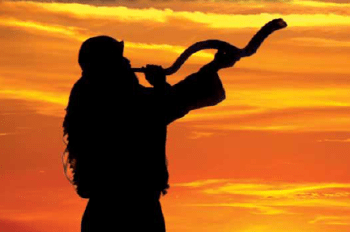
This day. Rosh HaShanah is our wake up call, and the sound of the shofar signals our reveille to open our eyes and behold the breathtaking magnificence that is Creation. And if our minds reel as we try to grasp the limitless expanse of the universe, we can yet grasp onto this certainty: that the One who placed us in its midst has revealed Himself through His Word and has given each of us a priceless gift, no less than the sand and the sea and the stars — an indispensable role to play in the completion of His masterpiece and the means through which we can become one with the infinite and with the divine.

Love Work

labor-dayShemayah says:  Love work, despise high position, and do not seek to become intimate with power.

~ Ethics of Fathers 1:10

How far we have come from the wisdom of the sages, who remind us that there is no deeper feeling of satisfaction and fulfillment than that of a purposeful job well-done, no more corrupting influence than the desire for mastery over others, and no more corrosive influence in the erosion of our values than currying favor with those we think can change our fortunes.

When we look at the twisted lives of so many politicians and celebrities, do we need any further reminder that we ought to revel in the blessings of humble productivity and quiet dignity?

Lip Service

15f24f5565fa780b0dbd1c181a9e721b

When we aren’t who we think we are

83a61e759284e01c80d632c4d8b7143c-20a0g4sFor the second time in one year, two men in Canada have discovered that they were switched at birth four decades ago.  Just last week, DNA testing confirmed that Leon Swanson and David Tait, Jr., were swapped in the government-run Norway House Hospital in 1975.

Close to tears at a press conference, Mr Tait said he felt “distraught, confused and angry”. He said: “I want answers so bad. It’s going to affect us one way or the other, I know that. It’s going to be a long journey.”

Eric Robinson, a former cabinet minister in Manitoba province, told reporters:  “What happened to them is criminal. Lives were stolen. You can’t describe it as anything less than that.”

A similar case was reported in Oregon back in 2009.  Here are my thoughts from then, originally published in Jewish World Review.


It sounds like a movie. Nurses bring a newborn daughter back to her mother after bathing. The mother insists that she’s been given the wrong baby. The nurses, who clearly know better, dismiss her concerns.

But 56 years later, DNA testing proves that Marjorie Angell, the real mother in this real story, was right.

Kay Rene Reed and DeeAnn Angell were both born on the third of May, 1953 in eastern Oregon’s Pioneer Memorial Hospital. As babies they were switched, presumably while being given baths, and grew up to become wives, mothers, and grandmothers. Less than a year ago Kay Rene’s brother discovered an old photograph of Kay Rene in middle school. Except that it wasn’t a picture of Kay Rene; rather, the schoolgirl who could have been her twin was in fact the sister of DeeAnn.

Subsequent DNA testing proved what had already become obvious. Kay Rene wasn’t a Reed, and DeeAnn wasn’t an Angell.

“I cried,” said Kay Rene. “My life wasn’t my life.”

MISTAKEN IDENTITY
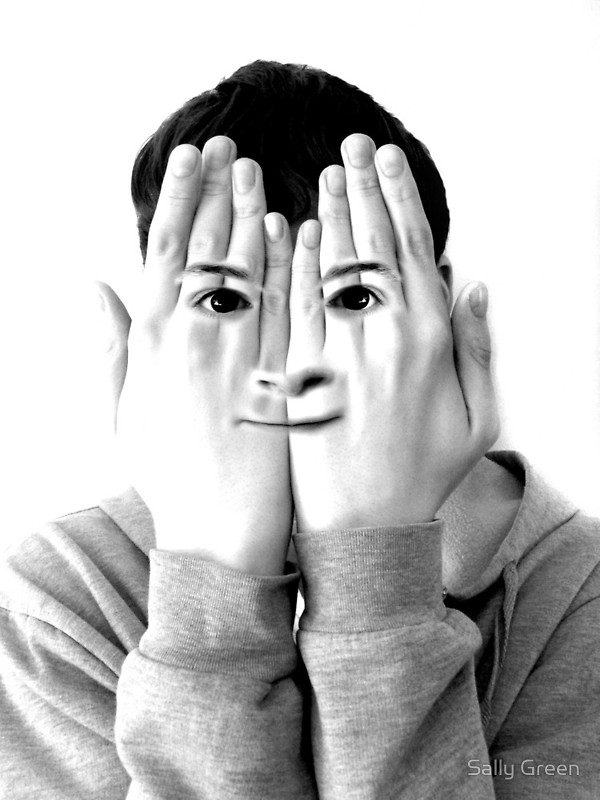
flat,800x800,070,fImagine waking up one morning and discovering that you were someone else. Nothing has changed, yet everything has changed. You have the same friends, the same family, the same job. But you also have another family and another past — a whole different identity about which you know nothing. A careless moment over which you had no control and an innocent mistake outside your knowledge conspired to leave you wondering how your whole life might have unfolded if not for that momentary twist of fate.

What would you do? What would you think? How would you feel?

If you have lived a happy and well-adjusted life, you’d probably wrestle with some inner confusion and then return to your friends and family. But if your life had been difficult, if you had endured an existence of hardships and traumas that had left you broken and bitter, how might you cry out against the cruelty of chance that had snatched away the happy life you might have had.

And what if, somehow, it had actually been your own fault?

THE ULTIMATE ANGUISH

The Sages of the Talmud teach that when a soul departs from this world, it lets out a scream that can be heard from one end of the universe to the other. Contemporary scholars have explained their meaning as follows:

Once freed from the bonds of physical existence, every soul ascends to the next world and comes before the Heavenly tribunal for judgment. Upon our arrival, each of us will witness a reenactment of his entire life on earth, as if projected upon a giant screen, with all of our good deeds and accomplishments, but also with all our carelessness and self-absorption. Recognizing the futility of either excuses or apologies, we will feel the shame and remorse of a life poorly lived, with no further chance of redemption.

Simultaneously, as if on a split-screen, a different story plays out. Here we will behold the life of a tzaddik, a truly pious individual whose every thought and deed is for others and whose efforts are directed entirely toward moral and spiritual self-perfection. The contrast between the two images will be astonishing.

As the painful exercise concludes, each of us will pose a question to the court: “I recognize my own life, but who is this tzaddik that lived so perfect a life, and why was his story projected next to mine?”

“That tzaddik,” the court replies, “is the person you could have been.”

Will sudden clarity, the ascendant soul will understand the consequences of a life lived in pursuit of physical pleasure and material goals. Perceiving that there had resided within him the potential to become someone else altogether and, realizing that it is too late to go back and relive his life, the unfortunate soul will emit a scream that can be heard from one end of the universe to the other.

BEFORE IT’S TOO LATE

04As long as we remain alive in this world, however, there is time to go back. What’s past is not necessarily past, for the Creator has programmed into his universe the extraordinary capability to go back in time and reshape what has already been done. This is teshuva — repentance or, literally, return.

The Jewish concept of repentance is not mere chest-clopping and confession.Teshuva is a process of self-transformation, of changing ourselves into the kinds of individuals incapable of ever again committing our earlier transgressions and indiscretions. Through sincere self-reflection, our genuine remorse will catapult us to new levels of spiritual and moral sensitivity. By returning to the straight path the Creator laid out before us from the moment we were born, we literally re-create ourselves and severe all connection to the errors of the past.

What’s done is now undone, and we have nothing to fear from the ultimate Day of Judgment. It is no longer our past that defines us. It is what we have made of ourselves, and what we do from this point forward, that will define our future.

The two women switched at birth have gotten on with their lives, and they have even become friends. Kay Rene introduces DeeAnn as her “swister.”

“I’m trying to move forward and look at the positive,” DeeAnn said. “You can’t look back. It just drives you crazy.”

No Re-entry

exit door

“I can only show you the door.  You have to walk through it.”

~ Morpheus, The Matrix

Life is a series of doorways, each leading into the future.  Fear and complacency try to convince us not to go through one; complacency and arrogance try to convince us that there’s no need to go through another.

Either way, once we go through, there’s no going back.  All we can do is be careful which doors we choose to open, and learn from our mistakes so that we don’t repeat them.

Here’s a deeper look, excerpted from my book Proverbial Beauty:

Fortunate is the man who listens for me, attentively waiting at my doors day by day, keeping watch by the doorposts of my entryways (Proverbs 8:34).

In the language of Solomon, a doorway symbolizes a point of transition, a threshold of spiritual growth, and an opportunity not only to realize but to increase one’s personal potential.  And so wisdom says, as it were:  “None is more fortunate than those who listen to me, who learn my ways and commit themselves to my principles, who wait eagerly and attentively for every opportunity to rise to the challenges demanded by moral discipline, who do not rest on their laurels but follow every moral victory by hastening to the next ‘entranceway’ and waiting for the next ‘door’ of opportunity to open up for them.”

It sounds a simple formula, but although “change” may make an effective campaign slogan, human nature deplores change and yearns for the status quo.  For many, nothing is more frightening than the unknown that lies on the other side of the next “door.”  And human creativity knows no bounds in its efforts to avoid knocking at the doors life places in our path.

In the mythical town of Khelm, the synagogue beadle would rise at dawn each morning to go around the town, knocking on doors to rouse the parishioners for the morning prayer service.

Years went by, and as the beadle grew older it became increasingly difficult for him to make the rounds.  One winter, after a particularly heavy snowfall, he told the synagogue elders that he would be unable to make it out the next morning to knock on doors.

The wise men of Khelm convened an emergency meeting.  Without the beadle to knock on the doors of the townspeople, there was no way to ensure that they would have the requisite quorum of ten men for the morning service.  But appointing a replacement also posed a problem.  For one thing, the beadle had served the community loyally for decades, and it seemed unappreciative to unceremoniously remove him from his post.  For another, it was difficult to think of a replacement as reliable and trustworthy as the beadle had been.

After lengthy consideration, the wise men finally devised a solution.  No replacement would be necessary after all.  Instead, they hired workers to remove the doors from all the homes in the town and line them up in the beadle’s house.  The next morning, the beadle rose at his usual time, knocked on every door without having to leave the comfort of his home, and then went back to bed.

Even if we make it through one doorway, our problems are still not over.  For just as fear and self-interest are eager to turn us back before we pass through any given door, arrogance and complacency are waiting to pounce upon us after we make it to the other side, urging us to be satisfied with what we have achieved and warning us not to risk what we have by trying to accomplish something more.

Of course, the most successful deceptions are the ones closest to the truth.  There is always risk in aspiring to greatness, and reaching for the unattainable is as certain a recipe for failure as not attempting to reach at all.

This is why we find some doors closed to us.  It is for our own benefit that fate may bar us from pursuing the most appealing pathways:  those ways could lead to crippling failures if we tried to follow them, or else leave us giddy with pride and quash further opportunities for success.

No one ever said life was simple.  Only through self-reflection, sincere introspection, and seeking counsel from the wise can we hope to choose rightly and wisely.  If we make every effort to push ourselves to the limits of our potential without giving in to impulse or ego, more often than not we can expect to succeed in our endeavors.  And if we find that some doors remain closed to us, with perseverance we will discover that other doors open to lead us toward the same, or better, destinations.

Click here for more information on Proverbial Beauty.