Home » Politics (Page 15)
Category Archives: Politics

Sean Penn — the twelfth monkey?
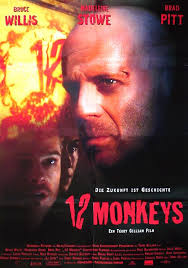 It may be the real-world incarnation of 12 Monkeys, the cult flick in which Bruce Willis goes back in time to save mankind and inadvertently causes the holocaust he is trying to prevent.
Sean Penn has traveled far and wide to uncover the warm, fuzzy side of such political personalities as Hugo Chavez and Raul Castro. We can only speculate on the motives behind his latest adventure, an elaborately staged meeting with El Chapo, the infamous Mexican drug kingpin Joaquin Guzman, who was recently recaptured after escaping from his maximum security prison cell.
Irony of ironies, it was Sean Penn himself who inadvertently led authorities to Guzman’s location. And although Mr. Penn has had little to say about his role in the apprehending of El Chapo, it’s tantalizing to wonder whether he might seek help from Bruce Willis to travel back in time in hope of undoing what he has done.
Always Faithful
 My son at his induction ceremony into the IDF.
May the Almighty watch over all those who put the lives of others before their own.
May we all find within ourselves the clarity and courage to stay true to the values that lie at the core of our humanity.

The Second Amendment and the Oral Law
 As president Obama embarks upon his latest unilateral campaign to repair the world, this time by expanding restrictions on gun ownership, it’s worth revisiting my article on the Second Amendment from 2010.
Perhaps the greatest danger to the Constitution is manipulating its words to validate predetermined conclusions. By doing so, we violate the talmudic admonition against making the law “a spade for digging,” i.e., a tool to advance our own ends.
To preserve constitutional integrity, we have to familiarize ourselves with the context of its times, then apply those observations to the times in which we live. That only works when we are committed to honoring the system, rather than exploiting the system to fit our own agenda.
Last month’s Supreme Court ruling affirming Second Amendment states’ rights (and coinciding with the predictable Republican grilling of Supreme Court nominee Elana Kagan over the same issue) has brought back into the spotlight the constitutional ambiguity regarding gun ownership in the U.S. of A.
A well regulated Militia, being necessary to the security of a free State, the right of the people to keep and bear Arms, shall not be infringed. So states the Second Amendment to the United States Constitution. At first glance, the stipulation seems clear enough. American citizens may own guns, plain and simple.
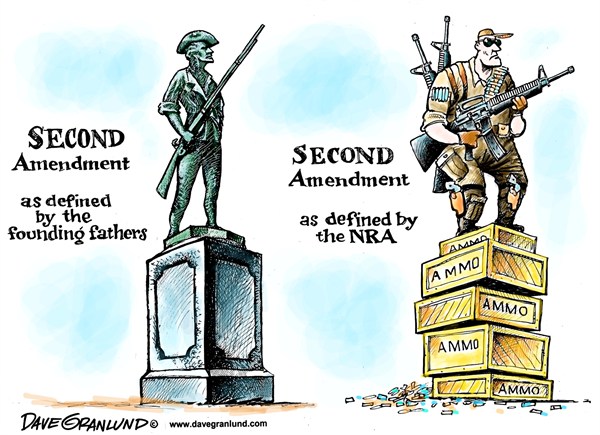 Or maybe not. The qualifying phrase that introduces the amendment appears to restrict constitutional protection to dependence upon a militia, or citizen army, to defend the nation. Accordingly, in times such as ours, when a standing army has assumed responsibility for the common defense, there may be no constitutional guarantee at all. And so, on second thought, the amendment seems to clearly limit the extent of private gun ownership.
Or, again, maybe not.
Perhaps the Founding Fathers meant that, since every citizen ultimately owns an equal share of the responsibility to defend his country, the right to bear arms is part and parcel of each person’s national duty to fight for the public welfare should the need ever arise. This would explain why the authors of the amendment might have mentioned a militia even if they never meant to restrict said right.
So what was the original intent of the Framers? If they were here, we could ask them. Since they are not, each side seems to have a fair and reasoned claim to support its respective position.
Is there any way to resolve the question of what was intended by men who passed away long before our grandfathers were born?
In fact, there may be.
THE REST OF THE STORY
Imagine that, as you pass by a window, you see a man wearing a mask raise a knife and plunge it into the chest of another man lying prone beneath him. You scream for the police, certain that you have just witnessed a murder.
Or, yet again, maybe not.
Now imagine that you were unfamiliar with the concept of open-heart surgery. Only after the police arrive and explain that the man in the mask is a surgeon working to repair the heart of the man on the table beside him will you understand that he is in fact saving a life and not taking one.
Context is everything. It orients us in time, space, and circumstance, transforms isolated acts into links in a chain of connected events, none of which can be understood in isolation. And so, if the words of our forebears sometimes appear to us muddled or imprecise, the surest way to achieve clarity is to examine comments and opinions from the same thinkers and the same era.
 Here are a few examples to provide historical context:
James Madison, on the principle of individual rights: [A bill of rights] should more especially comprise a doctrine in favour of the equality of human rights; of the liberty of conscience in matters of religious faith, of speech and of the press; of the trial by jury… of the writ of habeas corpus; of the right to keep and bear arms.
Massachusetts Representative Fisher Ames: The rights of conscience, of bearing arms, of changing the government, are declared to be inherent in the people.
Supreme Court Justice James Wilson, contributor to the drafting of the Constitution:The defense of one’s self, justly called the primary law of nature, is not, nor can it be abrogated by any regulation of municipal law.
Vice President Elbridge Gerry, signatory to the Declaration of Independence, on national defense: What, sir, is the use of militia? It is to prevent the establishment of a standing army, the bane of liberty.
In the context of the times, the intention of the Framers becomes difficult to debate. Only in relatively recent times, when the concept of a militia has become an anachronism, has it become possible to question the true meaning of the Second Amendment.
PRESERVING THE INTEGRITY OF THE LAW
Is there any way for words to retain their clarity despite the persistent evolution of cultural references and values? Is there any method for protecting ideas from the ravages of changing times and sensitivities?
Indeed there is. It predates the United States Constitution by 31 centuries, and it is called the Oral Law of the Torah.
Consider these biblical commandments:
Remember the Sabbath Day and keep it holy… And this will be a sign upon your arm and a remembrance between your eyes … Slaughter your [livestock] in the manner that I have prescribed… Do not seethe a kid in its mother’s milk.
 These precepts, as they are written in the Torah, are impossible to observe. What does it mean to keep the Sabbath “holy,” and what actions — if any — are required to “remember” it? What kind of sign are we to place upon our arms, if elsewhere the Torah prohibits the application of any tattoo, and how do we place a “remembrance” between our eyes? Nowhere does the Torah outline any prescription for ritual slaughter, nor does it imply what is commonly understood, that that the prohibition against cooking a baby goat in its mother’s milk extends to every mixture of meat and dairy products.
In spite of these and many other ambiguities, the basic practices of the Torah observant community have remained essentially unchanged for over 3300 years. The explanation is simple. Unlike the family encyclopedia which once gathered dust on the shelf and now gathers dust on the CD rack, the Oral Torah forces every committed Jew to see himself as custodian of a living tradition that connects him with the origins of his identity and enables him to live in the modern world without compromising the values of his ancestors.
No longer purely oral, the discussions and debates of past authorities have been recorded for their children in the writings of the Talmud and the commentaries that elucidate them. Unlike the records left behind by the Framers of the Constitution, however, these records have become canonized as part of the structure and process through which Jewish law is determined in each and every generation. Even when questions and disagreements arise, there is no debate within the Torah community over the methods through which answers and solutions are to be found.
Society changes, technology changes, and the values of human beings twist in the winds of time like a weather vane spinning before a storm. Electricity, automobiles, computers, cloning, and in vitro fertilization may have once been unimagined, but we have inherited a legacy that teaches us how those earlier generations would have resolved the problems of our changing world if they were here themselves today. And so the Torah Jew never loses his bearings, for he is guided by the words of his forefathers and finds comfort in the knowledge that the ancient wisdom of the Torah will never become stagnant, corrupted, or out of date.
As my teacher Rabbi Nota Schiller often says, the Oral Torah allows the Jews to change enough to stay the same.
Originally published by Jewish World Review

Justice in Oregon — Color Blind and 20/20
 A broken clock is right twice a day and, gratefully, the justice department has found the sweet spot — at least for the moment — in Oregon.
Certainly, the armed occupation of a national wildlife refuge is cause for concern. But it is not cause for panic and, in light of past notorious government interventions, definitely not cause for military confrontation.
In both the 1992 Ruby Ridge, Idaho, incident and the 1993 Branch Davidian raid in Waco, Texas, the level of intervention was clearly disproportionate to the danger posed and the resulting bloodshed largely indefensible. This is not to say that the government did not have just cause; rather, it failed to employ that resource that is more endangered than any other: common sense.
3 people died at Ruby Ridge; 76 died at Waco.
It’s heartening, therefore, that authorities are approaching the current crisis near Burns, Oregon, with circumspection. Of course, they can’t ignore the occupation. But with no one in danger, a wait-and-see strategy is the best of all available options.
The broader relevance of the story arises from the inevitable accusations of racism by leaders in the black and Muslim communities. It’s only because the so-called Citizens for Constitutional Freedom are white, they say, that the government has not charged in with guns blazing.
Which is, of course, pure nonsense. Two dozen right-wing trespassers in the middle of nowhere is hardly comparable to Ferguson, Missouri, or San Bernardino, California.
The response is different because the situations are different. And in this case, stuck between the real fears that inaction will embolden extremists to further acts of defiance while over-reaction will provide the opportunity for martyrdom, wait-and-see offers the best possible compromise between unattractive alternatives.
It’s also arguable that the occupiers have legitimate grievances against government overreach, which has grown into a systemic malady, evidenced by a rash of executive orders and a culture of bureaucratic strong-arming. Compared with the nebulous jeremiads of the Occupy Wall Street crowd and, more recently, students at Yale and the University of Missouri, the very real plaints of the Oregon occupiers appear level-headed and downright mainstream.
Competent leadership is characterized by the ability to gauge every situation according to its unique combination of factors, risks, and potential consequences. One-size-fits-all solutions rarely prove effective, and accusations of inconsistency are childish at best, opportunistic at worst. What we need most in these troubled times is cool-headed calculation that looks to strike the sanest balance between principled action and pragmatic compromise.
When we start demanding that level of aptitude and integrity from our leaders, maybe we will find ourselves with leaders worthy of our confidence and trust.
Too Tragic for Words
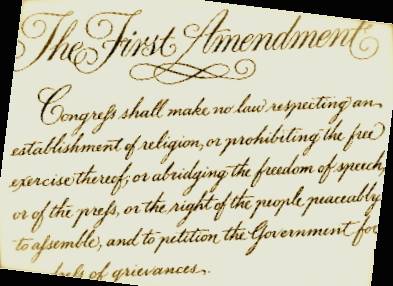 Would you sign a petition to repeal your right to petition? If not, you probably don’t attend Yale University.
Then mourn for our country.

A Short History of Mideast Violence
 Seemingly without end, political groups, government officials, and media outlets continue to blame Israel for unrest in the Mideast. At best, they lament the “cycle of violence,” suggesting that both sides are equally to blame.
With so many outlets providing platforms for misinformation, it’s no surprise how many people believe that Israel is at fault for denying the rights of the Palestinian people to live peacefully in the land that has been theirs since time immemorial.
However, as New York Senator Daniel Patrick Moynihan used to say: “You’re entitled to your own opinions, but you’re not entitled to your own facts.”
So here are the facts.
Before 1920, even the concept of a Palestinian people did not exist. Arabs living in the region considered themselves part of greater Syria, until the French and British divided the region and ended hope of a single commonwealth. Only then, in a desperate attempt to create a national identity out of whole cloth, local Arabs proclaimed themselves Palestinians and begin lobbying for a country of their own.
And they got what they wanted. The next year, Colonial Secretary Winston Churchill divided the region into what are now Jordan and Israel. The Arabs received 76% of the land. The rest was reserved as a Jewish homeland.
But even that was not enough. In 1947, the United Nations divided the remaining territory roughly in half, leaving Israel with 13% of the original Mandate. The Jews accepted the compromise. The Arabs launched a war against the Jews.
Between 540,000 and 720,000 Arabs fled Israel, encouraged by leaders who promised that they would return to their homes after the Jews had been pushed into the sea. Over 70 years later, about 5 million Arab refugees remain, many in squalid camps, unsettled by their own people because of their value as a bargaining chip to demand repatriation or restitution that Israel cannot afford to give.
All the way back in October, 1949, Egyptian Foreign Minister Muhammad Salah A-Din told the Cairo journal Al-Masri that, “In demanding the return of the Palestinian refugees, the Arabs mean their return as masters, not slaves; or, to put it quite clearly — the intention is the termination of Israel.”
You can’t make peace with people who don’t want peace. On, 11 Dec 1948, the UN passed Resolution 194, frequently invoked by Arab leaders b/c it calls for repatriation of (or compensation for) all refugees (Article 11). Every Arab country voted against the resolution, which also guarantees access to holy sites (Article 7) and calls for commitment to peace.
Of course, no one ever mentions the 860,000 Jews who fled for safety from Arab lands at the same time, resettled by Israel without ever receiving restitution from the Arab countries that expropriated their homes and property.
 We also don’t hear how, in 1949, Israel agreed to repatriate 100,000 Arabs as part of a peace negotiation; 35,000 were allowed to return, until repatriation was halted b/c of Arab refusal to make any compromises toward peace. In early 1950, the UN General Assembly established the United Nations Relief and Works Agency, with an annual budget of $54 million. Arab governments refused to cooperate. In 1959, only $7 million had been used while another $28 million lay available in a fund that was never used.
In fact, as early as 1960 King Hussein of Jordan admitted that “Arab leaders have approached the Palestine problem in an irresponsible manner… they have used the Palestine people for selfish political purposes. This is ridiculous and, I could say, even criminal.”
Khaled al-’Azm (Prime Minister of Syria 1948-49) wrote in his memoirs in 1973: “We have brought destruction upon a million Arab refugees, by calling upon them and pleading with them to leave their lands, their homes, their work and their business, and we have caused them to be barren and unemployed though each one of them had been working and qualified in a trade from which he could make a living.”
But the strategy of Arab leaders has always been to use the refugees as a pretext to reject peace in pursuit of their ultimate objective: genocide. Even after getting 87% of the mandatory territory in 1920 and 1947, they still rejected the UN partition, then tried to exterminate Israeli Jews in 1947, 1967, 1973, and have continued terror attacks until today.
By rejecting peace and inciting bloody uprisings, Arab leaders have condemned their own people to lives of poverty and violence. For years, families of suicide murderers were paid tens of thousands of dollars to encourage their “martyrdom.” Murders of Jews are celebrated and their perpetrators turned into heroes by naming streets and schools after them. Yasir Arafat, founder of the Palestinian Liberation Organization (which was established in 1964, three years before Israel had control of the West Bank region, Gaza, or the Golan Heights), embezzled billions of dollars that could have helped his own people.
There are many Palestinians who truly want peace, but any suspected of disloyalty to the power structure and the status quo are executed as sympathizers or collaborators, or else have their families threatened if they don’t “prove” themselves. And Palestinian children grow up in schools that teach hatred of and victimization by Israel, attend paramilitary camps that train them to kill Jews, and learn that the Holocaust is a myth fabricated by Jewish sympathizers in the Western World.
But facts don’t matter. Instead, again and again, Israel is smeared with the same slanderous refrain: occupation, oppression, expansion, apartheid. It doesn’t matter that Israeli Arabs enjoy greater prosperity, literacy, and life expectancy than the Arabs in the surrounding countries. Not to mention freedom. Just as it doesn’t matter that Israeli Arabs have been represented in every walk of life, including an Arab captain of the Tel Aviv football team, an Arab deputy speaker of Knesset, an Arab Supreme court justice, and an Arab Miss Israel.
 It also doesn’t matter that all the way back in 2000, Yasir Arafat refused to accept Israeli Prime Minister Ehud Barak’s offer to return 94% of the West Bank to the PLO.
It doesn’t matter that Israel withdrew from Gaza in 2005, after which Gazans destroyed the infrastructure of greenhouses left behind by the Israelis that could have fed them.
It doesn’t matter that Hamas leaders used their new autonomy to launch missiles against Israeli civilians, while using their own people as human shields in order to win over public opinion. It doesn’t matter that Hamas embezzled millions in humanitarian aid to build sophisticated terror tunnels under the border to attack Israelis.
It also doesn’t matter that the IDF goes to lengths no other country in the world would ever consider to minimize the collateral damage to Arab civilians, dropping leaflets warning of impending attacks and placing its own soldiers in far greater danger than the rules of warfare require or that make sense from a military point of view.
Instead, the propaganda campaign against Israel goes on, even when the casualties are Palestinians themselves. Like when a Palestinian girl stabs a Palestinian man whom she mistakenly believed to be Israeli, the headlines scream Palestinian teenager killed by Israeli forces. And like the 900 workers losing their jobs because the BDS zealots managed to coerce Sodastream to relocate over the green line; it doesn’t matter if a few hundred more martyrs are reduced to poverty if the ideologues can score a PR victory against Israel.
The European community and the Obama administration have ignored these facts and evidence to embrace political correctness and moral equivalence, thereby enabling Palestinian violence against Israeli Jews and prolonging the suffering of Jews and Arabs alike.
No one could say it more clearly or simply than Israeli Prime Minister Binyamin Netanyahu: “If the Arabs put down their weapons today, there would be no more violence. If the Jews put down their weapons today, there would be no more Israel.”
Expanded from an article originally published by Jewish World Review

Donald Trump: Obama 2.0
A magic rests on the lips of the king;
Let his mouth not betray him in judgment.
~Proverbs 16:10
 However improbable it seemed at the start, it’s not hard to understand the initial popularity of Donald Trump. In an age of mealy-mouth, equivocating, do-nothing, business-as-usual, avaricious politicians, many found it refreshing to have a larger-than-life presence who seemed to speak his mind and didn’t pander to popular opinion. But by now the flirtation should have revealed itself for what it is — a cheap one-night stand with no basis for a solid relationship.
Donald Trump represents everything that is wrong with this country: arrogance, self-promotion, pettiness, bellicosity, irresponsibility, bigotry and, despite his hugely successful self-branding, dishonesty and insincerity. In truth, Donald Trump is exactly the opposite of the persona that originally made him so appealing; on closer inspection, he reveals himself to be nothing less than a fun-house reflection of Barack Obama.
Like Mr. Obama, Donald Trump believes in nothing but himself; each man genuinely believes he is the smartest person in the world, and each reacts with seething contempt toward anyone who questions or disagrees with him. Armed with the conviction that comes from infallibility, each will say whatever he has to say, without a flicker of shame, to advance his own personal agenda.
Mr. Trump had only good things to say about Hillary Clinton in his 2012 interview with Greta Van Susteren, but last July he told Meet the Press that Ms. Clinton was “the worst Secretary of State in history.” In 1999 he said, “I love universal health coverage,” but now he chastises the Republican congress for not putting an end to Obamacare. In 1999 he was “very pro-choice,” but now he’s anti-abortion. Apparently, this qualifies him to be president. in 2014, the Washington Post awarded President Obama for having told 3 of the 12 biggest political lies of the year. In 2013, it was 3 out of 10 — an average good enough for an MLB All-Star.
The issues are not the issue; brazen disregard for the truth is. Much more disturbing is the persistent popularity of Mr. Trump based on the illusion that “he tells it like it is.

Heading over the cliff
 Not following the usual conservative line, Bernie Goldberg articulates the train-wreck of Donald Trump, and Glenn Beck explains how we got here.

Why Jews are Liberals
After primary candidates addressed the Republican Jewish Coalition last week, it’s worth revisiting these thoughts from 2010 examining the overwhelming support by Jews of Democrat candidates year after year after year:
 Now that even the New York Times has acknowledged Barack Obama’s confrontational stance toward the State of Israel, one might wonder why American Jews have yet to demonstrate even a hint of buyer’s remorse over their ardent support for the president in the last general election. Long-time Commentary Magazine editor Norman Podhoretz wondered the same thing in a Wall Street Journal editorial last September, in which he posed the title question, “Why are Jews Liberals?”
The article — then a teaser for the author’s new book by the same name — never got around to answering its own question. Indeed, Mr. Podhoretz seemed distinctly less interested in contemplating why Jews are liberal than in pontificating about why they should be more conservative.
He has a point. For over three thousand years, Jewish society has promoted what today are called “traditional values,” those social mores that came to define “tradition” precisely because they were universally held by so many for so long. The sanctity of life, of family, of sexuality, of charity, and of prayer — all these find their origins in Torah Judaism. Moreover, throughout the Biblical and Talmudic eras the structure of the Jewish socioeconomic community was essentially capitalistic, with the free market determining business activity and the social safety net for the poor and the weak provided (successfully) by individual responsibility within a framework of communal obligation
Why then, asked Mr. Podhoretz, have American Jews indulged their love affair with liberalism since Franklin Roosevelt (who demurred from even a token act of intervention on behalf of the 6 million Jews murdered by the Nazis)? Why did American Jews disregard John McCain’s long record of support for Israel and Barack Obama’s open association with known anti-Semites to vote for Mr. Obama by a margin of almost four-to-one? (And why, I might add, if the vote were held today, would the likely results be just about the same?)
Good questions. And although Mr. Podhoretz sidestepped any effort to answer them, there is an answer.
STRANGE BEDFELLOWS
As much as all conservative values trace their origins to Jewish tradition, liberal values trace their origins to the same source — to exactly the same degree.
No one has articulated this better than the non-Jewish historian Paul Johnson: “To [the Jews] we owe the idea of equality before the law, both divine and human; of the sanctity of life and the dignity of human person; of the individual conscience and so a personal redemption; of collective conscience and so of social responsibility; of peace as an abstract ideal and love as the foundation of justice, and many other items which constitute the basic moral furniture of the human mind.” In other words, Judaism is an ideology devoted to the betterment of the human condition based upon values and goals that are fundamentally liberal.
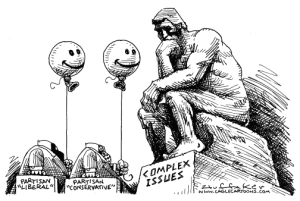 That being said, it may be the greatest misconception of the modern ideological divide that conservatism and liberalism must be mutually exclusive. Conservative traditionalism emphasizes the necessity of building upon the past, while liberal idealism focuses upon the responsibility to shape the future. Conservatism without forward thinking becomes calcified and reactionary. Liberalism without respect for tradition mutates into caricature and absurdity.
The corruption of modern liberalism is evident across the spectrum of political ideology. The sanctity of life has devolved into the rejection of capital punishment while simultaneously negating both the value and the rights of the unborn. The dignity of human person has been distorted to support euthanasia for both unwanted infants and the elderly infirm. Equality before the law has become a bludgeon in the hands of criminals and a straightjacket to constrain victims. Collective conscience has become the underpinning of nonjudgmentalism, whereby every form of perversion gains acceptance as an “alternative lifestyle.” The notion of divinity has vanished altogether, replaced by the self-worship of secular humanism.
Oblivious to these resounding contradictions, secular Jews have rallied to modern liberalism under the banner of tikkun olam, literally “the rectification of the world.” In its new, common usage, however, tikkun olam means something very different from what it meant when the concept was first articulated over 32 centuries ago.
TO REPAIR THE WORLD
Advocacy for saving the rainforests and for saving the whales, for developing renewable resources and for leaving a smaller carbon footprint — these are just some of the enterprises gathered by pop-Jewish philosophy under the umbrella of tikkun olam. According to the ancient wisdom of the Torah, however, every human being is a microcosm of Creation, a world — or olam — unto himself. Yes, it is important for human beings to act as responsible custodians of the Almighty’s world, but the rectification of the universe is a process that ultimately begins and ends within oneself.
How does an individual repair himself and thereby bring his world a step closer to perfection? By cultivating moral behavior and spiritual sensitivity based upon traditional values through acts of kindness, charity, and spiritual self-discipline. When I change myself, I change the world around me, and I do so far more substantially than by trying to change others while I remain the same. My own mandate to repair the world rests upon me alone and can be delegated to no one else.
Modern liberalism has adopted the belief that change depends upon governmental and judicial activism. Ironically, by shifting responsibility for social justice from the individual to the state, modern liberals have abdicated their own responsibility to address the very injustices they yearn to change. And with the abdication of social responsibility, it requires only a short step before even the most basic moral and spiritual axioms are similarly discarded. Finally, with no moral compass to guide it, modern liberalism has embraced the amorality of ancient Greece and the bacchanalia of ancient Rome not only as lifestyles but as models in the image of which contemporary society should be remade.
In truth, the liberal impulse is not only healthy but integral to human existence in general and to the mission of the Jewish people in particular. That impulse proves beneficial, however, only when guided by fealty toward the traditional values that have become associated with conservatism. By cutting themselves off from their spiritual moorings, secular Jews have indeed become the most exuberant seekers of causes for social and environmental justice as they seek any available ism to replace the calling of their ancestral heritage. But their headlong stampede toward utopianism more often resembles the frantic race of lemmings to the sea than an effective campaign for global reconstruction.
Mr. Podhoretz wonders at the alliance of American Jews with the liberal apologists who level every imaginable indictment against the country that granted them the freedom to achieve unprecedented prosperity. In the aftermath of the Passover holiday, it is worth reflecting upon the Jewish concept of freedom. To be truly free, we have to define morality not according to passing fads and fancies but according to the precepts that determine who we are and from where we have come. Only when we fully understand and commit ourselves to the principles that have sustained us since the dawn of civilization can we truly repair the world.
Originally published by Jewish World Review

Terrorism Close to Home
 This morning’s terrorist attack by a Palestinian who rammed his car into Israeli soldiers at a bus station struck a little closer to home. Both of the injured soldiers had just drafted into the army and were friends of my son from the same Lone Soldier group. They were released on leave a day before my son was, or he probably would have been standing right beside them.
At least one of them will be disabled for months: the Guardian reports this as “light to moderate” injury.
The story in the Guardian led by stating that the attack took place in the “occupied West Bank,” implying a John-Kerryesque legitimacy, then went on to report that the “incident raises the number of Palestinians killed since 1 October to 98, including an Israeli Arab.” In the interest of balance, the story did concede that, “More than half of them have been alleged perpetrators of stabbing, shooting and car ramming attacks aimed at Israeli civilians and security forces.”
However, the story neglected to mention that after ramming his car into the crowd, the Arab attacker was shot as he tried to stab one of his victims.
Allegedly.
Not the worst example of media bias by far, but shoddy journalism by any account. Our children who put themselves in harm’s way to protect others from violence deserve much better.
 Yonason Goldson