Blog: The Ethical Echo Chamber

The Midpoint of the World
As we finally enter the voting season with the Iowa caucuses, I’m drawn back to these thoughts from 2013 on who we are and where we are headed. If hindsight is 20/20, why do we keep making the same mistakes over and over again?
 What would you ask of a time traveler from a hundred years ago? And if you traveled a hundred years into the future, what would you want to tell the people you found there? Perhaps it would sound something like this:
What did you do to handle the overpopulations we predicted? How did you protect the seashores? What did you do to keep the ozone layer intact, the energy supplies, the trees? Have you eliminated ignorance, brutality, greed?
There might be no better way to discover unexamined truths about ourselves then by composing a letter to our grandchildren’s grandchildren. This was certainly on the mind of award-winning essayist Roger Rosenblatt a quarter century ago when he penned his deeplythoughtful Letter to 2086:
This letter will be propped up in a capsule at the Statue of Liberty, to be opened on the statue’s bicentennial. Go ahead. Undo the lock. I see your sharp, bright faces as you hoist us into your life, superior as cats to your primitive elders. Quaint, are we not? Beware of superior feelings. The message is in this bottle.
As a student of Jewish philosophy, I don’t believe in coincidences. So when my neighbor — out of the blue — handed me a long forgotten back issue of Time Magazine, the cover article by Mr. Rosenblatt resonated with the faint echo of providence. And although the intended audience still reside three generations in the future, this letter offers a tantalizing window into the past, as well as an illuminating perspective on how much has changed and how much has remained the same.
Click here to read the whole essay.

My interview on Solomon Success
Great minds think alike, and Jason Hartman has a website and podcast exclusively devoted to the practical lessons of King Solomon’s wisdom.
Listen to my interview with him here.

The Failure of Freedom
 For those who care enough to learn the lessons of history, the echoes of the ancient past can be heard clearly amidst the discord of the chaotic present. If we want to understand the crisis of political leadership that plagues our country and our world, we have only to look back to earliest records of national governance, nearly 3000 years ago.
It was the 9th Century Before the Common Era. 391 years had passed since the Children of Israel first entered their land. For nearly four centuries, Jewish society had been plagued by divisiveness, political instability, and spiritual ambivalence. But at last, after the prophet Samuel spent his entire career teaching the Jews to more deeply respect the law and inspiring them to more profoundly appreciate their national mission, the people united in response to his invocations and dispatched emissaries to ask:
“Appoint a king to rule over us like all the other nations” (1 Samuel 8:5).
Seemingly, the Jews had finally come to their collective senses, recognizing that all their political and social strife stemmed from a pervasive national attitude in which “every man did what seemed right in his own eyes” (Judges 21:25). Without a strong executive office to pilot the ship of state, without a single voice of authority to bind many into one, the tribes of Israel remained a disconnected confederation of individuals who joined forces only when necessary and turned against one another whenever self-interest clashed with national purpose and identity.
240 years ago, another attempt was made to create a new nation, conceived in liberty, and built upon guiding principles of equality and justice.
Today, that same nation, blessed with more power, prosperity, freedom, and opportunity than any in the history of the modern world, confronts a political system crippled by bloat, inefficiency, and corruption. At a moment in time when we desperately need inspired leadership, we face a contest between a socialist and a sociopath in one party, a narcissist and a curmudgeon in the other. And while the frontrunners serenade us with siren-songs of high-sounding dreams and visions — all deeply divorced from reality — the few aspirants who attempt to set forth concrete policy proposals and plans of action wallow in low single digits.
Why is the electorate so eager to embrace the illusion of leadership and so unwilling to recognize the real hope of positive change?

Oscar Equality
Click here to listen to my interview with Christal Frost of WCTM Michigan on the Oscars and racism.
You can read last week’s article “Black Actors Matter” here.

Join Bernie to look for Amerika
 Just when you thought this election cycle couldn’t get any wackier, the Sanders campaign has launched a new ad blending sixties-style images of protest marchers and flower children with Simon and Garfunkel’s pop-classic “America.” The unctuous 60-second commercial is brilliantly crafted to stir the heartstrings of starry-eyed liberals everywhere.
But here’s the irony: “America” is a ballad lamenting the failure of romanticism to flourish in a society bereft of direction and meaning, and about the disillusionment of a generation that had abandoned traditional values for a utopian fantasy only to find itself left with nothing:
“Kathy, I’m lost”, I said, though I knew she was sleeping.
“I’m empty and aching and I don’t know why.”
Counting the cars on the New Jersey Turnpike,
They’ve all come to look for America,
All come to look for America.
 Even Art Garfunkel missed the contradiction of using his own song to endorse a socialist agenda. One might as reasonably use “Mrs. Robinson” in an ad for marriage counseling.
Then again, there really could be no better theme song for the campaign of Bernie Sanders, a holdover from the hippie era passionately espousing grand ideas that could never work.
And, on the Republican side, Donald Trump, the alter-ego of Bernie Sanders, promises us a new America — trust me! — while truly viable candidates repeat the mistakes of 2012, forming a circular firing squad (to quote Mara Liasson) and all but ensuring that the general election will offer us a choice between one brand of demagoguery or another.
Where have you gone, Joe DiMaggio?


The Obama Legacy: A World Beyond Cynicism
 It really makes you want to scream and cry bang your head against the wall, hoping against hope that you’ll wake from a dystopian nightmare.
The toxic combination of delusion and narcissism that characterizes President Obama and his administration churns through our society like venom as the president trumpets one imagined victory after another and vilifies every critic, all while overseeing the catastrophic disintegration of moral standards, common values, and national security.
By what kind of perverse calculation does the leader of the free world negotiate a hostage release — which should have been part of any treaty from the outset — for the sole purpose of masking the corrosive consequences of that very treaty at the moment of its implementation? Such contrived deception mixed with political incompetence literally staggers the imagination.
The only thing worse is the chilling reality that the president actually believes that he is making the country and the world safer and better. Like Jimmy Carter, Mr. Obama will live out his life believing that he was one of the country’s greatest presidents, and he will remain utterly baffled why no one recognizes his greatness.
Read Charles Krauthammer’s dispiriting post-mortem here.

Black Actors Matter
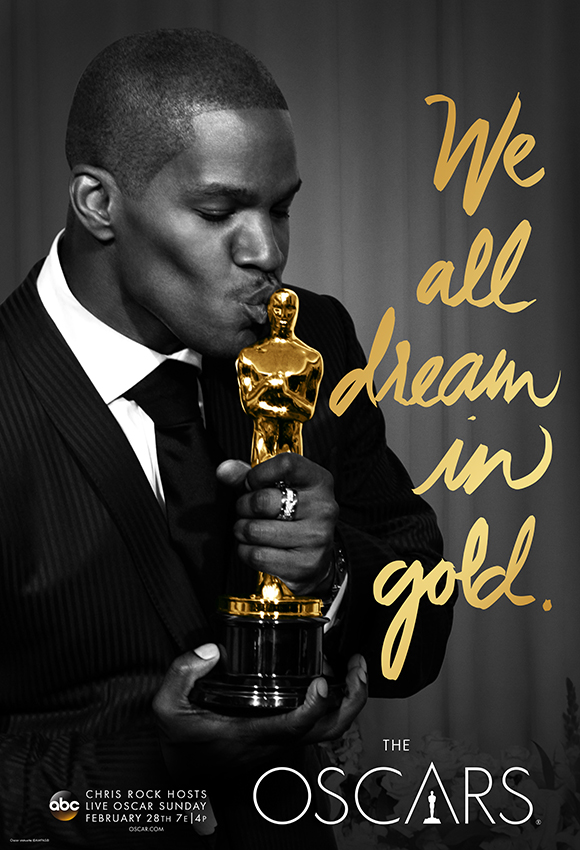 Well, yes, of course they do. Just like black lives.
But does that mean the white actors don’t? Just like, as it often seems, white lives don’t? And what about (alphabetically) Asian, Hispanic, Jewish, and Native American actors? Do their careers matter? Do their lives matter?
Don’t ask Kathleen McCartney, the president of Smith College who was coerced into apologizing for having the audacity to send off an email with the provocative subject line “All Lives Matter.”
Apparently, some lives matter more than others.
And now, so do some actors.
It’s more that a little astonishing that, in an article dog-piling on the Motion Picture Academy for its racism, the Daily Beast could still manage to rattle off a list of 18 black Oscar winners and nominees.
(Interestingly, the Beast doesn’t seem to think Halle Berry counts, since she’s half-white. Kind of like our half-white president.)
It is true, roars the Beast, that Jamie Foxx, Morgan Freeman, Forest Whitaker, Queen Latifah, Chiwetel Ejiofor, Sophie Okonedo, Eddie Murphy, Octavia Spencer, Djimon Hounsou, Taraji P. Henson, Don Cheadle, Viola Davis, Terrence Howard, Jennifer Hudson, Will Smith, Gabourey Sidibe, Quvenzhané Wallis, and the late Ruby Dee have all received Oscars or Oscar nods since 2001.
Be that as it may, “the last two years have felt like an alarming regression.”
Really? Isn’t two years is an awfully short time span to constitute a trend of any kind, much less one that could be considered even remotely “alarming”? But no: the politics of race and victimization are unbounded by time.
Because, ultimately, it does all come down to politics.
Back in 1971, after delivering one of the greatest screen performances in history, George C. Scott became the first actor ever to refuse an Oscar. The BBC quoted Mr. Scott as having said that the politics surrounding the awards was “demeaning” and describing the Oscar ceremony as “a two-hour meat parade.”
Some things never change.
As the most liberal of all liberal institutions in liberal America, Hollywood continues to produce propaganda pieces despite the inevitability of their box office failures. Films like Brokeback Mountain and Lions for Lambs may have been well-received for advancing certain political and social agendas, but neither attracted much of an audience.
Sidney Poitier where are you, now that we need you?
Indeed, there’s no limit to Tinseltown’s political correctness; and now there’s no arguing against cinematic affirmative action. I suppose it won’t be long before every actor has to get a statuette, just like every kid in Little League has to get a trophy.
And what will be after that? My bet is that it’s only a matter of time before short people file suit claiming discrimination by the NBA.
In the meanwhile, it’s worth revisiting these thoughts on the movie industry from 2009.

The Monty Hall Problem: Unlocking the Doors of Destiny
 I can sleep at night again, now that I have resolved one of life’s most perplexing mysteries. All is well with the universe once more.
What is the persistent question that for so long stole my peace of mind? It is the riddle of Monty Hall and the goat behind Door Number Three.
The so-called Monty Hall problem is a counter-intuitive statistics puzzle that goes as follows: You have to choose one of three doors. Behind one you will find a car; behind each of the others, you will find a goat. You pick Door #1, hoping for the car, of course. Monty Hall, the game show host, narrows your choices by opening Door #3 to reveal a goat. Then Monty offers you a choice: you can stick with your original door or switch to Door #2.
What should you do? Simple logic suggests that there is no advantage to switching doors. With the elimination of Door #3, your odds improve from one-in-three to even-money. It shouldn’t matter whether or not you switch: either way, you will still have a 50-50 chance.
But here human logic fails. By switching doors, you increase your odds from even money to two-thirds.
HERE’S WHY IT WORKS, AND WHAT IT MEANS TO US:
http://www.learning-mind.com/the-monty-hall-problem/
Spam Rebound
Have you ever wanted to spam the spammers?
Here’s what it might look like:
Watch with a friend. Preferably not while you’re working or driving.

Alan Rickman and the Heart of Darkness
 I’m not a fan of the Harry Potter movies which, as is so often the case, paled in contrast to the sheer genius of the books. But if there was one portrayal that stood out head and shoulders above the rest, it was Alan Rickman’s pitch-perfect rendering of Severus Snape, the slippery potions-master who tormented Harry Potter throughout his career at Hogwarts while secretly protecting him from harm.
I’ll allow myself to boast that I never doubted Snape’s loyalty, even after he killed Dumbledore at the end of The Half-Blood Prince. Mostly, I trusted the author. J.K. Rowling did a brilliant job of developing Dumbledore’s character from the outset of the series. If Dumbledore trusted Snape, then there was no way Snape could be a traitor.
Reportedly, Alan Rickman turned down the role initially. He thought the character two-dimension and found no challenge in the role. But Ms. Rowling had her heart set on him, and so she revealed to Mr. Rickman what no one else knew yet, that Snape was really Harry’s secret protector, who would ultimately give his life to save the boy from harm.
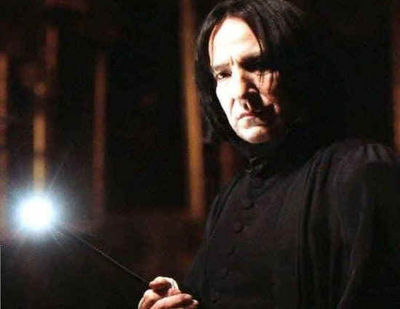 So for all those — young and old alike — who missed the books but saw the movies, Alan Rickman brought to life the character who teaches us that no matter how dark someone may appear on the outside, there may yet reside a soul of light and goodness within.
By way of tribute, I offer this return to my recent essay on the wisdom of Harry Potter.
Read the article at: http://www.learning-mind.com/reading-harry-potter/


 Yonason Goldson