Home » Posts tagged 'Community' (Page 14)
Tag Archives: Community
The Search for Nothing
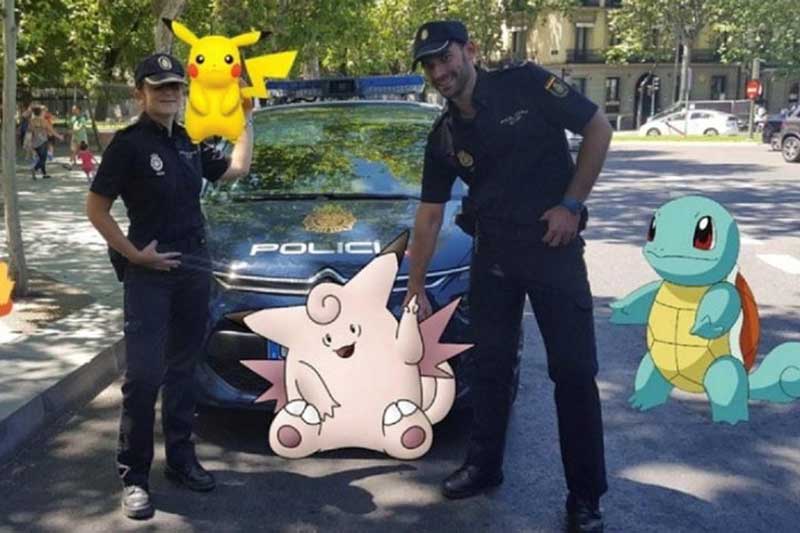 Of course, you know all about it. It has overshadowed all other headline news. It has become everyone’s passion. There’s no escaping it.
No, I’m not talking about the presidential elections, climate change, or global terror. I’m talking about something really important:
Pokemon Go.
If you haven’t heard of it, you probably live in a cave and won’t be reading this anyway. If you don’t understand what it is… well, that’s a different story.
For people of a certain age — not to mention a certain level of maturity and common sense — the latest tech-fad is barely comprehensible. Countless denizens of the virtual world have crawled out of the darkness and into the sunlight to search for animated characters that can only be seen on their cell phone screens in undisclosed locations. By wandering about pointing their phones hither and thither, players find cartoon critters, then take aim and “shoot” to catch their pixilated prey.
As inane as it may sound, the game seems relatively harmless. It also has the benefit of drawing participants off their couches and encouraging them to put their atrophying appendages back into use, sometimes by walking miles in pursuit of quarry. Guided by an all-knowing, all-seeing cosmic GPS mastermind, Pokemon creatures may crop up anywhere, leading players on quests of “augmented reality.”
But is it really harmless?

Days of Shame
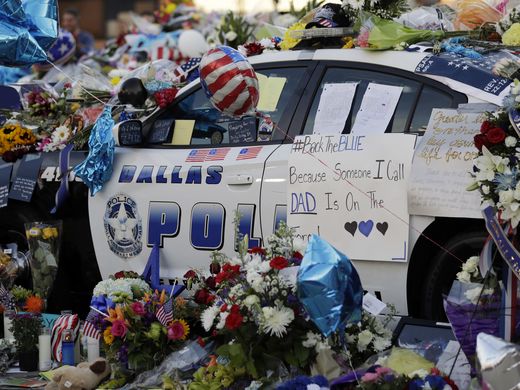 Five policemen cut down in the line of duty. Two more civilians cut down by errant policemen. A mistrustful population further convinced that there is no one deserving of their trust.
It’s more than a shame. It’s shameful. We need to point fingers, even as we recognize that finger-pointing lies at the heart of our problems.
Maybe there is a way to turn around the blame-game, to turn partisanship into hope of something positive. The only way to begin, however, is to acknowledge how we got here and to ask uncomfortable question of the people responsible… ourselves included.

Spitting Image 5:3 — Visions of Martyrdom
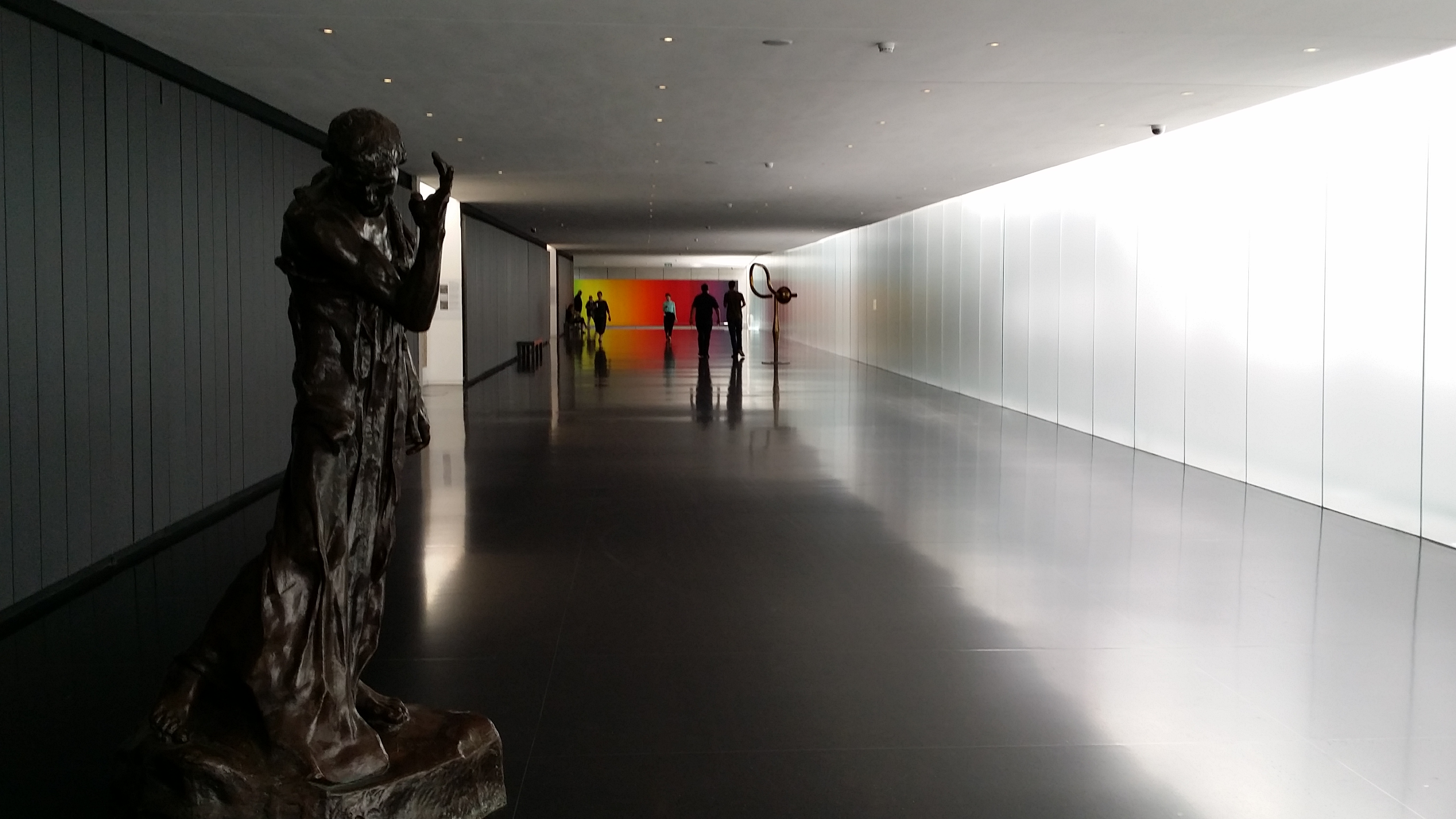
In the vast, austere entry hall to the Israel Museum, with its ultramodern monochrome walls, prismatic focal point, and symbiotic theme of shadow and luminescence, you happen upon a discordant figure: one of the Burghers of Calais, sculpted by the French master Auguste Rodin.
The original sextet of figures represents the city fathers of Calais who surrendered themselves to save their besieged city during the Hundred Years’ War. With heads and feet bare, ropes around their necks, and the keys of the town in their hands, the burghers were brought before the English king Edward III who ordered them beheaded.
Although their lives were eventually spared, Rodin has rendered their images as they prepare to meet what they believe will be their end, their respective expressions spanning the gamut from stoicism to despair.
As jarring as the image may appear in this contemporary setting, the story resonates deeply with ancient Jewish tradition. In the Yom Kippur liturgy, there figures prominently the narrative of the 10 Martyrs, the talmudic sages who received the Heavenly decree that their deaths would atone for the sins of their generation and deflect Divine wrath from their people. They too went to meet their end stoically, but without despair.
Martyrdom is not something we seek, but there are times that call for self-sacrifice of one kind or another. In this generation of selfish individualism, entitlement, and personal autonomy, we can look to the past to remind us that tribalism, senseless violence, and identity politics are all symptoms of a society that has forgotten how to commit itself to a higher sense of purpose, and that only by setting aside our superficial differences can we survive as one people.

What truths do we hold?
 We hold these truths to be self-evident, that all men are created equal, that they are endowed by their Creator with certain unalienable Rights, that among these are Life, Liberty and the pursuit of Happiness.

Are these truths still self-evident, in a nation where all moral and natural boundaries have been worn away, not by the steady march of time, not even by complacency, but by a determined and calculated campaign to redefine standards and values that were once universal?
The great wisdom of the Framers was to recognize that human values shift like the sands of the desert, and that the foundations of any civilization will only endure so long as its people continue to believe that there are higher ideals than individual self interest, that personal and collective sacrifice are necessary for personal and collective prosperity, and that commitment to individual responsibility is the only way to ensure the preservation of individual rights.
Without these, a society will inevitably become a house divided against itself and, as such, will not survive for long.

Radio Interview with Steve Curtis
 More discussion about my recent article in the Times of Israel Blog, “The Danger of Democracy.”
My interview with Steve Curtis of KLZ-AM in Denver ran a full hour segment. Enjoy!

Can I remain I after we become we?
 No man is an island, wrote John Donne. Neither is any nation, even if it’s the island nation of Great Britain.
This contradiction lies at the heart of the current political crisis facing British Prime Minister David Cameron. And as the British contemplate their future place in the world community, the rest of us should contemplate what the world will look like for our children and their children after them.
There are two legitimate, opposing arguments facing Britain in deciding whether or not to remain part of the European Union. To compete in the world marketplace as part of an economic powerhouse works to the advantage of every European country, Britain included. On the other hand, the threat to employment and security posed by unrestricted immigration may offset any benefits.
But whatever the British end up deciding for themselves in this month’s referendum, there is a deeper issue in play, one that has implications for all of us.

The House
 “You’ll leave here after four years with an education few people have had access to in the history of mankind. What are you planning to do with it?”
It was a good question, set forth by consumer advocate Ralph Nader as he spoke before an embarrassingly empty hall at our conservative university. I was pretty conservative myself, and certainly no fan of the wildly liberal public avenger. But I had found the opportunity to hear such an iconic figure irresistible, even if most of my fellow students felt otherwise.
“There’s a world out there filled with problems and suffering and injustice,” Mr. Nader continued. “There’s a desperate need for crusaders, and you just want to get a job?”
The derision Mr. Nader injected into those last three words reverberated inside the echo chamber of my mind, etching upon my psyche an unequivocal contempt toward employment for the sake of mere employment.
It was 1981, during my junior year at the University of California, Davis, and I still had no idea what I wanted to do when I grew up. But during those closing moments of his address, Mr. Nader awakened within me the passionate desire to do something – anything – as long as it might make a difference, as long as it would truly matter.
And so I left the lecture hall that evening feeling like Archimedes, looking for my fulcrum to move the world. And my search led me to The House.
 No other name could have better described it: here was an actual house – still thriving in the shadow of university office-buildings, lecture halls, and dormitories – with its modest front porch, unaffected wooden shingles, and single-pane windows opaque with dust around the corners. Its official designation was Temporary Building-16. But to everyone who worked there, and to anyone who patronized its services, TB-16 was simply called The House.
Fifteen or twenty years earlier, the thought had occurred to someone at Student Services to create an informal atmosphere where students could commiserate about the problems and stresses of college without having to endure the formality of an adviser, the social pressure of a dormitory, or the stigma of a psychologist. In the course of its various incarnations, the project acquired a director, instituted a thorough course of preparatory and continuous training, and acquired TB-16. The House opened its doors.
Karen was the House director, a position she had taken over from her husband, Kennebec. His name was really Ken, but he had fallen in love with the Kennebec River and used its name as his own – at least in the company of friends and close acquaintances. Student Services had brought him in to assume the directorship “after The House’s last nude retreat,” in hope of imposing greater structure upon the fledgling peer counseling facility.
Not that Ken was all that conventional himself. His hobby was jumping freight trains, and he hadn’t thought it at all inappropriate to use this informal style of transportation for his own staff retreats. I nagged Ken every time I saw him to take me train-jumping, but he was settling into the routine of responsible middle age, and never found time to take a weekend off to travel as undeclared baggage.
So Ken, it’s your fault that I later became a hitchhiker and not a hobo.

Is it too late to let freedom ring once more?
 Facebook has confessed that stories appearing on its supposedly-unbiased “Trending Topics” were manipulated. Rather than risk allowing its one billion active users exposure to the corrosive influence of conservative commentators, Facebook’s “news curators” decided to doctor the list of headline stories to favor left-wing political leanings.
In other breaking news, the sky is still blue, the grass is still green, and the loudest proponents of freedom are still laboring mightily to impose their vision of freedom on others.
Freedom of speech has been on life-support for decades already, wracked by the infectious scourge of groupthink, political correctness, and moral equivalence. College newspapers have routinely been stolen by students and even administrators for espousing politically incorrect views. Speakers of all ideological stripes have been shouted down, sometimes even by groups they support. Recently, a petition circulated among Yale students to repeal the First Amendment (including, ironically, the right to petition) collected 50 signatures in one hour.
The real death of free speech stems from the death of credibility. News organizations have abandoned even the pretense of objectivity or accuracy. The line between reporting and editorializing is consciously and persistently blurred. Elected officials and presidential candidates show such utter disregard for the truth that they don’t even attempt to disguise their prevarications, much less apologize when caught in the act.
But it’s the corruption of language itself that may pose the greatest danger to what remains of the institution once called Truth.

The Five Cups of Passover Wine?
 As everyone knows, on the first night of Passover we eat matzah and bitter herbs, we recline at the table, and we drink five cups of wine.
Five cups of wine? We drink four cups of wine, don’t we?
Well, that depends whom you ask.
Of course, it really is only four cups that we drink at the Passover seder. Acceptance of this practice, however, has not always been universal. Rather, it evolved as the best possible compromise between two contradictory Talmudic traditions. And only by going back to the root of the custom can we fully appreciate the relevance of our annual reenactment of the Exodus from Egypt.
The four cups of wine reflect four separate phases that concluded with the Jewish people’s transformation from Egyptian slaves into a free and autonomous nation. Within the narrative of the Exodus itself, four different expressions of redemption allude to the process through which the Jews attained their freedom — a freedom that was not born in an instant, but only as the culmination of four distinct and imperative stages.
Vehotzeisi. And I will take you out from the burdens of Egypt. Although Pharaoh endured ten plagues before he sent the Jews forth from Egypt, only half that many persuaded him to release them from their labors. This enabled the Jews to adjust to independence, to learn what it meant to make their own decisions before the time when they would be held accountable for the choices they would make.
Vehitzalti. And I will rescue you from their service. A slave whose master makes no demands upon him is still a slave. Having already been exempted from their labors, now the Jews were prepared to face the challenges of real freedom.
Vegoalti. And I will redeem you with an outstretched arm. History teaches us that freed slaves often fail to make the adjustment from slavery to freedom. The culture of slavery may be so deeply rooted in their psyches that they cannot succeed as free people. Similarly, the Jews needed divine assistance to purge their hearts and minds of the corrupt values of Egyptian culture, foreshadowing the way Jews all through history have had to struggle against the corrosive influence of foreign ideologies.
Velokachti. And I will take you to Me as a people. Once liberated from the physical and psychological bondage of Egypt, the Jews still faced the subtle dangers of unrestricted freedom. Only with a sense of identity and purpose, only with a clearly defined national mission, could the Jews emerge from cultural anarchy to embrace true freedom.
But there remains one final expression in the narrative of our collective transformation from slaves to free people: Veheiveisi. And I will bring you into the land. As a free and sovereign nation, could the Jewish people begin to fulfill their mission even before they established themselves in their land, in Israel? Or is it impossible for us as Jews to consider ourselves truly free while we remain exiled from our ancestral homeland? This is the essence of the debate whether we drink four or five cups of wine.
 What is our conclusion? We have none. We simply don’t know. However, we do know that we have to drink at least four cups. So that is what we do, then wait for Elijah the Prophet to come, not to drink the fifth cup, but to tell us whether or not we should drink it ourselves.
But some of us refuse to wait for Elijah to affirm our commitment to the Holy Land. This year, like every year, hundreds of Jewish high school graduates from around the country will defer their first year in college to study Jewish tradition and Jewish law in the land from which we are exiled. No threat of terrorist violence has been able to dissuade these young men and women from renewing their connection to the the heritage and land of their ancestors.
And, perhaps even more impressive, their parents have set aside their own fears and their own worst nightmares to encourage their children to travel half way around the world to pursue their highest calling: to rise to the challenge of Jewish freedom.

Why we can’t say what we mean
 A picture is worth a thousand words. Except when it isn’t.
You may have heard of Le Bateau, the work by French avant-garde painter Henri Matisse that hung upside down in New York’s Museum of Modern Art for 47 days back in 1961. Looking at the painting, it’s hard to see why it mattered.
But that’s not the case when we communicate. According to a recent study by the University of Minnesota, the use of emoji — those little yellow emoticons — are almost as likely to cause confusion as they are to evoke the emotions for which they are named.
Interviewing 334 subjects, researchers discovered that people argued over whether emoji communicate positive, negative, or neutral emotions about 25% of the time. That’s a lot of befuddlement for a medium that’s supposed to make communication easier.
Hannah Miller, lead author of the study, told Fortune Magazine that people could solve much of this confusion by “putting emojis in context, adding words into the mix.”
Now there’s a novel idea: use actual words to say what you want to say.
 The problem is, even that doesn’t always help, since the putrefaction of language that has resulted from advertising and political correctness, together with the corrosive influence of texting, has degraded not only our ability to articulate our thoughts clearly but also our capacity for clear thinking altogether.
Whether the deterioration of thought has influenced the deterioration of language or vice versa is the topic of these musings from 2009.
 Yonason Goldson