Home » Posts tagged 'Conflict' (Page 17)
Tag Archives: Conflict

South Carolina and the Great Flood
 As residents of South Carolina begin to emerge from the floodwaters that inundated their state, Jews around the world are reading the story of Noah and the ark this week in their synagogues. Water is both the source of all life and the greatest destructive force on earth. I ponder the paradox in these reflections from after the Pacific Rim tsunami of 2005.
Volcanoes. Hurricanes. Earthquakes. Fires. Tornadoes. Blizzards. Drought.
In a time when reports of terrorism have become all too common, it is sobering to consider the myriad ways nature possesses to inflict death and violence on a scale surpassing the most destructive instruments devised by man. Of all these, however, destruction by water, whether from the sea or from the sky, holds a unique terror in the scope and measure of its devastation.
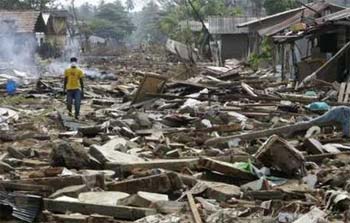 Aside from the 150,000 lives already reported lost across nearly a dozen countries along the Indian Ocean, dehydration, disease and hunger threaten as many as 5 million more in the wake of the recent tsunami. And rare though tidal waves may be, the more familiar trial-by-water of floods has, with much greater frequency, left similar numbers homeless and in danger of starvation.
It seems ironic that water, the source and foundation of all life upon our planet, can become nature’s most malevolent instrument against the beings whose lives depend upon it.
Devastation by water occupies a prominent place in human history. Virtually every ancient culture records the tradition of a great flood that inundated the world, lending credence to the biblical account of Noah and the ark. Jewish tradition describes this not as a random event, but as a divine response to the corruption of mankind.
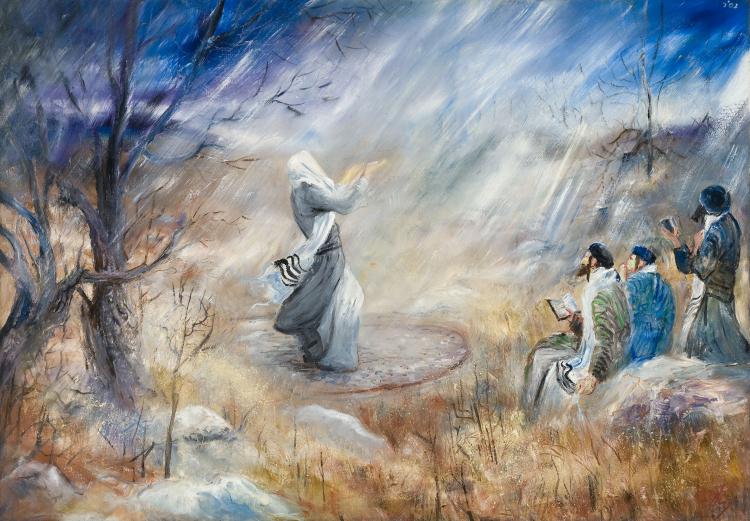
The Talmud, however, reports a much more enigmatic account of divine intervention through water. It was in a time of terrible drought that the Jewish people approached the sage Choni HaMagil and beseeched him to pray for rain on their behalf. When Choni’s supplications to the Almighty went unanswered, he drew a circle in the dust and stepped inside of it, vowing not to leave the circle until G-d bestowed rain upon His people.
Immediately, a fine mist settled upon the earth, too little to alleviate the drought but sufficient to free Choni from his vow.
Choni called out to heaven: “I asked not for this, but for a rain to fill all the wells and cisterns.” Immediately, raindrops larger than melons began to fall, wreaking destruction upon homes and fields.
 Again Choni called out to heaven: “Neither did I ask for this, but for a rain of blessing.” Immediately a normal rain began to fall, filling the wells and cisterns of the people as Choni had requested. But the rain did not stop, and soon the entire population of the land feared that they would drown in the rising waters.
One last time Choni called out heavenward: “Master of the World, Your people, Israel, whom You brought out from Egypt, can tolerate neither too much blessing nor too much misfortune.” Immediately the waters abated, and the people returned to their fields. From this time onward, people referred to Choni by the name HaMagil — the Circle-maker.
What was the point of G-d’s demonstration to the people of Israel? What did Choni mean that the people could not tolerate too much blessing? And why did Choni find it necessary to remind the Almighty, at this particular moment, that He had brought the Jewish people out from Egypt?
The Exodus from Egypt may be described, in commercial terms, as the largest loan ever extended in the history of man. During the generations of slavery in Egypt, the Jewish people had forgotten their Creator and lapsed into the same idolatries as their Egyptian masters. And although, to their credit, the Jews had guarded themselves against assimilation, this alone was insufficient to earn them the privilege of miraculous redemption. Nevertheless, G-d gave them an incalculable line of credit: Freedom from slavery, freedom from oppression, freedom to chart their own course into the future.
Moreover, He promised them immeasurable blessing and unbounded prosperity, on condition that they would repay their loan — repay it by living according to G-d’s law, repay it by rising above material pursuits and petty self-interest, repay it by using all the blessing that G-d would bestow upon them to aspire to moral, ethical, and spiritual perfection.
In this light, blessing may be understood as a double-edged sword. Wielded in one direction, it cuts down all enemies and obstacles that stand before us. Wielded in another, it obligates us to a standard of righteousness and moral behavior that we may find nearly impossible to meet.
This was the meaning behind the Almighty’s response to Choni the Circle-maker’s plea:
Two roads lie before My people, and it is their choice which to follow. One leads back to Egypt, back to the oppression of materialism and the slavery of self-indulgence, back to spiritual emptiness and the absence of all blessing. The other road leads forward, to spiritual fulfillment and spiritual greatness, if My people will only find within themselves the potential to seek greatness and discard all lesser goals. It is for this that I redeemed them, that they might cast off the chains of physicality and reach for the heavens.
 And this too was the meaning behind Choni’s appeal to the Almighty:
Master of the World, You brought your people out from slavery and oppression on condition that they would use their freedom and the blessings to strive for spiritual heights. Your people, however, have demonstrated from their beginnings that, whatever their potential may be, they still suffer from human failings and human shortcomings. They cannot tolerate too little material blessing, lest the struggle to survive overwhelms them and they abandon all higher aspirations. And they cannot tolerate too much blessing, lest they cower before the goal set for them and lose all hope of its attainment.
By all accounts, the world that we live in today enjoys a level of material affluence unattained and unimagined by previous generations. Such basic necessities as rapid transit, instantaneous communication, indoor plumbing, electrical lighting and refrigeration, which we take for granted, provide us with an ease of living simply unavailable to even the wealthiest, most powerful monarchs until the last century. The very existence of an “entertainment industry,” much less the staggering sums of money devoted to it, testifies to our abundance of resources — which is to say, our abundance of material blessing.
Nowhere does Jewish tradition teach the condemnation of wealth or of recreation.
Nowhere does Jewish law mandate the forcible redistribution of wealth from those blessed with good fortune to those less fortunate. But Jewish tradition does warn us of the responsibilities of prosperity. It warns us in the narrative of the flood, in the story of Choni HaMagil, and also in the Hebrew word for charity: tzedakah, derived from the word tzedek, or justice.
It is only just that those who are blessed share a portion of their blessing with their less fortunate neighbors. It is only just that, before overindulging in one’s own good fortune, he ponders why he deserves having received such blessing while his neighbor has not. And it is only just that he ask himself how, even in the absences of tax incentives or legal mandate, he might reach out with his blessing to ease his neighbor’s plight.
If the waters of the earth, the life-giving waters that are the source of our greatest blessing — life itself — have risen up to inflict enormous tragedy, swallowing human life and draining billions of dollars of aid to spare human suffering, we will all be remiss if we do not pause to consider whether we have used our blessings wisely, and what we must do to ensure that we will continue to deserve them.

Finding Reason in the Midst of Chaos
After last week’s Oregon massacre and last month’s Virginia shooting, it’s worth looking back on these thoughts from the days after the 2013 Boston Marathon bombing:
 Zebadiah Carter describes himself living in “an era when homicide kills more people than cancer and the favorite form of suicide is to take a rifle up some tower and keep shooting until the riot squad settles it.” In 1980, this remark by the main character in a Robert Heinlein novel sounded like the science fiction that it was. Now it echoes like a prophecy.
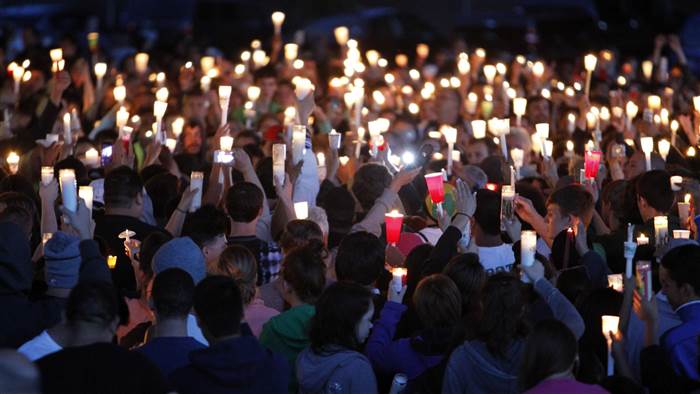
Random acts of mass violence in the United States still horrify us but no longer shock us. We’ve heard too many stories, seen too many pictures. And too many of them are depressingly the same:
- 20 students and 6 adults murdered at Sandy Hook Elementary School.
- 12 killed and 58 wounded at the Century Theater in Aurora, Colorado.
- 13 killed and 30 wounded at Fort Hood.
- 32 dead and 17 wounded in the Virginia Tech massacre.
And those are only the bloodiest atrocities going back to 2007. The Columbine school shooting in 1999 adds another 39 victims to the tally. And, of course, Timothy McVeigh’s bombing of the Federal Building in Oklahoma City in 1995 claimed 168 lives and injured nearly 700.
Now we have to try and make sense of this latest act of senselessness — the Boston Marathon bombings, which shattered an iconic American institution and shook our already precarious sense of order and security.
Amidst all the suffering and all the investigation, the question we most want answered is why?
We’ve asked the same question before. According to reports, Adam Lanza was bullied as a student at Sandy Hook; Eric Harris and Dylan Klebold were bullied at Columbine High School; so was Timothy McVeigh as a boy in Pendleton, New York. There were also histories of psychiatric problems, as there were with Seung-Hui Cho before his attack on Virginia Tech, James Eagan Holmes before Aurora, and Nidal Malik Hasan before Fort Hood.
But these explanations offer little in the way of real answers. Almost all of us were bullied when we were younger without seeking murderous retribution against our tormentors, and most of us can lay claim to at least some kind of neurosis. More to the point, why is random violence on the rise, if the root causes have been around for generations? According to data assembled by Mother Jones Magazine, nearly 40% of mass shootings since 1982 have taken place in the last seven years (excluding robberies and gang-related incidents). If so, what has changed? And can we expect it to get worse?
Ultimately, it may be all about control. “These kids often feel powerless,” psychiatrist Peter Langman told LiveScience. “The one way they can feel like they’re somebody is to get a gun and kill people.”
“Out of control” is a term that seems increasingly characteristic of the world we live in. On the one hand, technology provides us with the power of information, opportunity, and access at a level unimaginable barely a decade ago. But on the other hand, our inability to manipulate so much power leaves us feeling both frustrated and inadequate, while the triumphs of others make us feel like pawns in a game we can never win. With the world at our fingertips, success and happiness remain damnably elusive.
 And so we flail about with increasing desperation, constantly trying to push ourselves just a little harder and work just a little faster. Day by day, our sense of anger and resentment toward a society that promises so much and delivers so little builds within us until we feel ready to explode. In a world gone mad, what else can we do but get mad at the world?
The fallacy, however, is the world has not made sense since the beginning of time. Last weekend, Jews around the world paused in the midst of their Sabbath morning services to read the Book of Ecclesiastes, compiled over a lifetime by King Solomon, the wisest of all men, in his search for meaning and justice:
And I returned and saw under the sun that the race is not to the swift nor the battle to the strong, neither is there bread to the wise, nor riches to men of understanding, nor yet favor to men of knowledge; but time and death will overcome them all.
Really, all that has changed is our expectation. We have been taught to believe that anything we desire is within our grasp, that we are entitled to the love of poets, the wealth of kings, the pleasures and the power of the gods. Our culture has etched upon our collective consciousness the inalienable right to life, liberty, and the pursuit of happiness. And although Thomas Jefferson had the wisdom not to assert the right to happiness itself, that subtle distinction is lost on most of our generation.
Given the fantasy images of Pixar and Dreamworks, the superhero illusions of the silver screen, and the miracle gadgets that fit in the palm of our hands, what can we expect from a youth wholly unprepared for reaching the age of responsibility? And when they confront the seeming impossibility of leaving their mark on the world through any positive contribution, why should we be surprised when they choose violence as their final recourse to make the world take notice of their existence?
And yet, for all that, Solomon himself did not give in to despair and hopelessness, despite the words of lamentation with which he begins Ecclesiastes:
Futility of futilities — all is futile!
But it is not Solomon’s opening words that contain his ultimate message. It is the words he offers at the end, in sharp contrast to all the observations he offers before:
The sum of the matter, when all is heard: Fear the Eternal and guard His teachings, for this is the entirety of Man.
Viewed superficially, this world is a place of chaos, without rhyme or reason, without justice or pity. Says Solomon: do not look at the outer trappings of creation, but search for the nobility of man. Recognize the greatness that compels a 27 year old first grade teacher, with scarcely a moment’s notice, to give up her life in the protection of her innocent charges. Admire the reflexive heroism of bystanders who rushed to help the injured at the finish line, without regard for whether another explosion might make them victims themselves. Do not lose hope in the face of wanton violence, but take inspiration from the lofty heights to which Man can rise.
In the marathon of life, some finish and some fall. But greatness is measured by perseverance, by pursuing the unique potential that resides within each of us us, by our determination to choose good over evil and show the world that the divine spark of the human spirit will never die.

Remembering 9/11: Visionaries and Ideology
 Who knew a trip to New York could be so emotional?
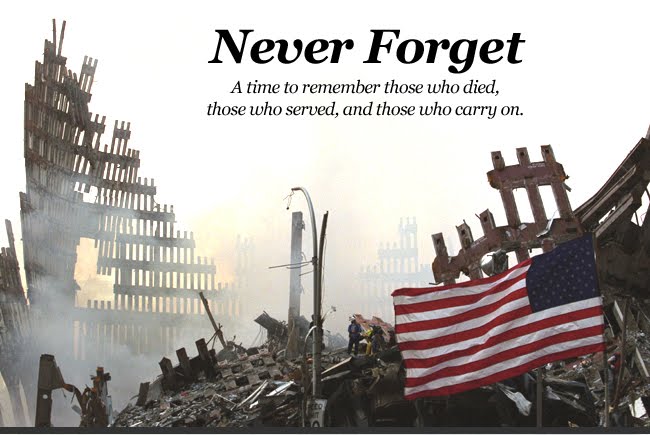
Our first stop was the 9/11 museum. I marveled at the artistic vision that had conceived the memorial pools, the water channeling down in rivulets that mirrored the face of the fallen towers, the continuous downward rush balanced by the redemptive feeling of water — the source of life — returning to the heart of the world. Here there was solace, closure, and consolation.
But a very different feeling accosted me inside. Almost upon entering the doors a single word brandished itself across my mind’s eye: Holocaust.
Obviously there is no comparison between the monstrosity of wantonly dehumanizing genocide and any single act of terror; obviously there is no equivalence between the systematic psychological, spiritual, and physical destruction of millions and a few thousand relatively instantaneous murders.
But then again, yes there is.
Read the whole article here:
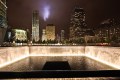
Balancing the Scales of Freedom
Originally published in the St. Louis Post-Dispatch the week after 9/11, between Rosh HaShonah and Yom Kippur.
 It was Judgment Day — exactly one week after the World Trade Center buildings collapsed and so many illusions along with them.
“Judgment Day” is the expression found in the traditional liturgy for Rosh HaShonah, the first day of the Jewish new year. And as I stood in the midst of the congregation intoning the High Holiday prayers, the vision of exploding passenger planes and twin towers crumbling to dust hovered before my eyes.
On Rosh HaShonah we will be inscribed … who will live and who will die … who by water and who by fire … who by storm and who by plague … Who will have peace and who will suffer … who will be cast down and who will be exalted.
The judgment upon Jews became kinder after the United States opened her doors to us a century ago. Where no one else would have us, America took us in, allowing us to live both as Americans and as Jews without persecution.
Yet for all that, American Jews often feel torn by opposing cultural forces, especially approaching our Day of Judgment in a society where there is no greater sin than “judgmentalism.”
Without judgment, however, society cannot endure. As good citizens we must judge others – not based on race or religion but upon actions and behavior. And we must judge ourselves as well, by constantly reexamining our motives and our prejudices and our values and our goals. To condemn even this kind of judgment as a threat to freedom is to retreat from our responsibility to discern right from wrong; it is to embrace the illusion of absolute theoretical freedom – moral anarchy – which is in reality no freedom at all.
September 11 brought us face to face with moral anarchy in the form of incomprehensible evil. Perhaps the first step toward confronting it is to remind ourselves that freedom is not a right – it is a privilege, and privileges carry with them obligations that are often inconvenient and occasionally painful. When Thomas Jefferson wrote that the tree of liberty must sometimes be refreshed with the blood of patriots, he warned that the threat against freedom can only be met by not taking freedom for granted.
Freedom is not democratic, as less than a score of suicidal zealots understood when they commandeered four transcontinental airliners. The duties of freedom are non-negotiable, as New York firefighters and policemen understood when they rushed into crumbling skyscrapers. And the rules of freedom cannot always be legislated: sometimes we have to choose between necessary evils, as the passengers aboard United Airlines flight 93 understood when they drove their plane into a Pennsylvania field.
These are the kinds of judgments we must make, every day and every year, to preserve our society, all the more so in a nation built out of so many cultures and beliefs as ours. Every freedom of the individual cannot be permitted if it threatens the collective, nor can every interest of the collective be observed if it oppresses the individual. But when we share the collective will to make our society stable and secure, then the individual will set aside his personal freedoms for the national good and the nation will bend over backward to protect individual freedom.
This is the mark of a great civilization, and it rests upon an informed and devoted citizenry prepared to debate, sometimes passionately but always civilly, the moral direction of our collective journey.
This Rosh HaShonah I stood shoulder to shoulder with friends and neighbors singing ancient liturgical poems in praise of our Creator, just as so many Americans stood together the week before singing “G-d Bless America.” There were no agendas, no politics, no grudges, no rivalries. All of a sudden we were one nation, indivisible, a people with one noble history and many noble ideals whose differences vanished in the shadow of our many common values and common goals.
As the Jews have had ample opportunity to learn, now America has learned that nothing brings us together like a common enemy. What we have yet to learn is how to continue to stand together even in times of peace.

Why Souls Come Back: A Study of Reincarnation
 What is déjà vu? Some believe it’s an echo of recognition resonating through the curtain that separates one incarnation from another. For one brief moment, two separate but interconnected lives make contact through a flicker of metaphysical commonality. Maybe that’s true; maybe it isn’t. But a recent study of reincarnation by Dr. Ian Stevenson supports the belief that our souls do in fact return to this world after we die.
One of the most persistent dilemmas in spiritual philosophy is why bad things happen to good people, followed closely by its sister conundrum, why good things happen to bad people. If we believe in Divine justice, why does our world operate according to a system in which justice seems to be the exception rather than the rule?
Read more at: http://www.learning-mind.com/why-souls-come-back-a-study-of-reincarnation/

The Virginia Shooting: Nihilism and the Culture of Anarchy
 “What has happened to us as a society that we now devalue life to such a level? What has happened in our society that people have become so violent? That’s the fundamental question we need to confront… We have a societal problem in our country. It reminds us of the most important job any of us will ever have … the job of a mother, a father or a parent.”
Senator Marco Rubio summed it up nicely… or tragically. But the deeper question is this: How do we stop the cultural inertia that is driving our society ever further into nihilism and moral anarchy?
Senator Rubio gets the answer perfect: If it doesn’t start in the home, then there really is no hope for the future. Without respect for traditional values, without recovering the lost ideals of civility, selflessness, modesty, and integrity, then the tide of history will sweep us away as it did the Roman Empire and leave behind a new Age of Darkness.
Bill O’Reilly makes the same point with his usual brass-knuckled pithiness here.

Channeling Anger and Solving our Common Problems
My thanks to Dan Mason of KKOH in Reno for inviting me to be a guest on his show. We talked about the anger driving voters, resolving conflict, and transforming negatives into positives.

Napoleon’s Wisdom
 According to legend, Napoleon was riding through the streets of Paris one evening when he ordered his carriage driver to stop. Passing by a synagogue and glancing in the window, he had witnessed an entire congregation of Jews sitting on the floor by candlelight and raising their voices in cries of sorrow.
Napoleon sent his aide to investigate, and was informed that it was the ninth day of the month of Av, when the Jews were mourn the destruction of the Temple in Jerusalem.
“How long ago was it destroyed?” asked the Emperor.
“Over 1700 years ago,” he was told.
“1700 years and they’re still mourning!” exclaimed Napoleon. “Such a nation will endure forever and will rise to power again.”

The Road to Compromise
 After last week’s “historic” Obama-Kerry Compromise with Iran, it’s instructive to take a look back to see how little has changed. I published this op-ed in the St. Louis Post-Dispatch on 2 August 2002.
Henry Clay earned his reputation as “the great compromiser” when he forestalled the outbreak of the Civil War by ten years. Even so, one has to wonder whether even Mr. Clay’s genius for mediation could save the Mideast peace process from becoming a towering embarrassment to US foreign policy.
Compromise, according to Webster’s, is “a method of reaching agreement in a dispute, by which each side surrenders something that it wants.” This shouldn’t be hard to comprehend for anyone with a background in high school civics. What does remain incomprehensible is how otherwise reasonable people might seriously apply the term “compromise” to past peace proposals, and why anyone thinks it will be different the next time around.
Definitions notwithstanding, immediately after the Camp David negotiations in the summer of 2000 the New York Times observed that Yasir Arafat’s “willingness for more talks suggests room for compromise.”
The Times deserved credit for optimism and imagination, but won few points for objective editorial insight. Indeed, only a month earlier (on July 11 of that year), the Times reported that, “The Palestinians want a settlement based on United Nations Resolution 242,” implying that if not for Israeli intransigence, there would have been peace in the region long before.
Let’s see. Resolution 242 mandates 1) the “withdrawal of Israeli armed forces from territories occupied in the recent conflict,” and 2) the “termination of all claims or states of belligerency and respect for and acknowledgement of the sovereignty, territorial integrity and political independence of every State in the area and their right to live in peace within secure and recognized boundaries free from threats or acts of force.”
For its part, Israel returned more than 90% of the Sinai to Egypt in 1981, and offered to give more than 90% of Judea and Samaria to the Palestinians under former Prime Minister Ehud Barak. Pretty good, for a compromise.
From the Palestinian side, however, it’s been hard to detect even a whiff of compliance. Rather, these are the ways the Palestinian Authority has terminated its claims and belligerency: all government and schoolbook maps, as well as children’s television programs, identify the whole of Israel as “Palestine;” teenagers at Palestinian “summer camps” train with automatic weapons to fight Israelis; Arafat has named squares and streets after Hamas suicide bombers; Israeli security has caught PA officials smuggling numerous weapons, including anti-tank weapons, into Israel. The list could easily fill this column.
Ehud Barak had been prepared to overlook all that. But then the Camp David talks broke down anyway, largely because of Palestinian insistence of absolute sovereignty over East Jerusalem. Yet Jerusalem has been the heart and soul of Israel for over 3000 years, the holiest site on earth according to Jewish tradition and the Old Testament. The Arab’s spiritual capital is Mecca, whereas Jerusalem is merely a religious and historical footnote, not mentioned by name even once in the Quran. What’s more, from 1948 to 1967, when Jordan controlled East Jerusalem, not one Arab ruler visited the city, except Jordon’s own King Hussein. Electricity and water services were neglected, and no government offices or cultural centers were set up there.
So what does the Palestinian Authority want? What it has always wanted: everything. The very concept of compromise appears utterly foreign to the thinking of Palestinian leaders, and is entirely absent from their behavior. It’s hard to see what the PA has ever thought it’s bringing to the negotiating table, except for the vague promise of controlling terrorism and the hazy commitment of conceding Israel’s right to exist, a right already granted by the United Nations over half a century ago.
In hindsight, it’s also hard to see what Ehud Barak hoped to accomplish by bargaining away so much for so little. According to Mideast analyst David Makovsky, Mr. Barak’s objective was “peace without illusions.” Peace between governments, the former Prime Minister believed, is the only possible goal presently within grasp; peace between peoples is generations away.
Mr. Barak assumed that once a treaty is signed, all of Israel’s Arab neighbors will abide by its conditions, gradually leading to normalization and the eventual cessation of the hateful rhetoric that foments Arab violence.
The trouble is, there’s no evidence it would work. Whatever the terms, any deal that produces even the coldest peace must rest on the foundation of compromise, a foundation that doesn’t exist. The indoctrination of children with hatred of Israel continues, even in Egypt, nearly three decades after it grudgingly traded political recognition for the return of its land.
 Other Arab nations have refused to offer even this little olive branch; they have never demonstrated the slightest willingness to compromise. Neither Israel nor the United States should take another step forward until they do. Let us hope that the new U. S. president will learn from the errors of his failed namesake and not put his hope in false promises that have already led nowhere.

Elbowing God Out
 Back when I possessed the charming innocence of a twelve-year-old, I took offense at the wording of the Pledge of Allegiance. Why, I wondered, was I expected to pledge my allegiance to a flag? Proclaiming loyalty to my country I could understand, but to a piece of fabric?
Moreover, as I had concluded with unshakable, preadolescent self-confidence that human existence was nothing more than a cosmic accident, I found the phrase “under God” equally offensive.
So while my classmates were loudly reciting the full text of the Pledge of Allegiance, I was quietly editing my own recitation: I pledge allegiance… to the United States of America… one nation… indivisible, with liberty and justice for all.
By my final year in high school, however, having acquired a sufficient measure of sophistication to appreciate the importance of symbolism, I no longer resented being asked to swear loyalty to a flag. But we weren’t reciting the Pledge of Allegiance any more, so I had no chance to mend my ways.
I was also less certain concerning the existence of a Creator. Six years of secondary education had opened my eyes to a universe so enormously complex that to embrace any world view as extreme as atheism seemed the height of arrogance. The phrase “under God,” therefore, struck me as a comforting expression of humility, that we as a nation recognized the grandeur of our universe and conceded its unfathomability.
Perhaps the circuit court judges who ruled the phrase “under God” unconstitutional might have interpreted the law with more humility if they had familiarized themselves not only with the letter, but with the spirit of the Constitution. Perhaps they might have better understood the intent of the Framers if they had read, or remembered, the words of Alexander Hamilton: “The sacred rights of mankind… are written, as with a sun beam in the whole of human nature, by the hand of the divinity itself; and can never be erased or obscured by mortal power.”
 Considering the many references to the Almighty among the writings of the Framers of the Constitution, it’s astonishing how often we hear the Constitution invoked as the basis for expurgating every reference to God from the public arena. If the founding fathers weren’t afraid of mentioning God in the Declaration of Independence, why should we fear the utterance of His name in our courthouses or schools? But many among us are afraid, afraid with a fear born of insecurity.
Indeed, what is more terrifying than the unknown, and what is less known than what awaits us when we depart this mortal coil? As Prince Hamlet pondered: “To sleep? Perchance to dream! Ay, there’s the rub.” For the devout atheist, there is no greater dread than the haunting suspicion that he might be wrong, that there might truly be a Creator and an accounting before Him upon arrival in the hereafter. To the atheist, every reference to God is an unwelcome reminder that the rest of the world is not so certain that our existence is random and without purpose.
The great Rabbi Joseph B. Soloveitchik summed it up like this: “All extremism, fanaticism and obscurantism come from a lack of security. A person who is secure cannot be an extremist.” And, indeed, extremism in the form of radical religion or radical nihilism is one and the same. The 19th century anarchist used techniques not unlike the suicide bomber of today to advance his own variety of jihad. The modern anarchist uses manipulation of the law to advance his cause, supremely confidant that he understands the Constitution better than its authors.
The Talmud describes how, during the last days of the second Temple in Jerusalem, the Jewish people observed the law of the Torah meticulously according to its letter. But they failed to look beyond the letter of the law, to strive for understanding and fulfilling of the spirit of the law, to labor in applying the essence of the law toward the transformation of their character. This failure, together with a senseless hatred born of mutual suspicion, mutual contempt and, ultimately, the uncompromising assertion of their own egos, resulted in the destruction of the Temple, the deaths of millions of Jews, and the beginning of our long, dark exile scattered among the nations of the earth.
It has been observed that the word ego is in fact an acronym for Elbow God Out. A daily reminder that we should receive our national freedoms with humility is among the surest means of preserving those freedoms for our children. Close to two thousand years ago, instead of subduing their egos before the Highest Authority, instead of subjugating their ideological differences to the pursuit of shalom, peace, the Jews distorted Divine law to serve their own agendas, thereby sealing their fate and the fate of the Temple.
The sages teach that any generation that does not rebuild the Temple is considered to have destroyed it. But if we return to the law with humility and reverence, then we can truly hope to rebuild that which for so long has been lost.
Adapted from an article previously published by the St. Louis Post-Dispatch, the Baltimore Sun, and Aish.com.
 Yonason Goldson