Home » Posts tagged 'Culture Wars' (Page 16)
Tag Archives: Culture Wars

The Devil can’t make you do it
 Hey, mom. Post-partum depression got you down? Thinking of leaving your husband? Don’t fight it; just let him go. After all, it’s not your fault.
It’s your hormones. That’s the latest from the world of science. According to psychologist Jennifer Bartz of McGill University, researchers have identified a link between new parents divorcing and low levels of oxytocin.
Whatever the explanation, there seems to be a familiar eagerness by researchers to impose a chemical, as opposed to a psychological, explanation upon human behavior. Scientists often appear to prefer a model that links our choices to biological and evolutionary causes, further disassociating human decision-making from that most obvious explanation — free will.

Double Standards and the Death of Civilization
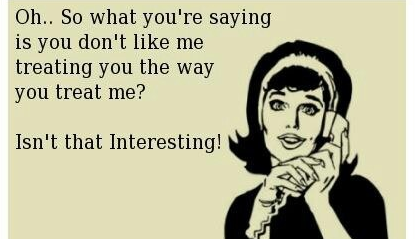 “Don’t say what you’re thinking.”
“It doesn’t matter how you feel.”
“Honesty is not always the best policy.”
It sounds terrible, doesn’t it? And yet modern society has created an entire value system based on these axioms. It’s called political correctness.
At the same time, however, there seems to be a freakish disconnect between the cultural extremes of political correctness and libertinism. On the one hand, the list of socially unacceptable words, phrases, and ideas keeps growing longer; on the other hand, regard for verbal filtering plummets in virtual free-fall.
At first blush, we might explain this away as an obvious consequence of competing ideologies and worldviews. Certainly, the popularity of Donald Trump and Ted Cruz can be understood as a natural reaction to the vacuous rhetoric of our elected officials, and to the farcical condemnation of benign comments and legitimate opinions as “hate speech” by the chattering classes. When a prominent university attempts to censor of words like mothering, fathering, and American as “microaggressions,” the inevitable consequence will be an equal and opposite reaction from the other side of the ideological divide.
But what is truly baffling are the offenses committed by proponents of political correctness themselves.

Christopher Hitchens: Almost a Hero
 It’s remarkable how we can develop a deep fascination, sometimes to the point of fixation, toward people we despise.
This is not particularly healthy: we gain much more by studying those who are worthy of our admiration and reverence, both as models for the refinement of our own behavior and as sources of inspiration that demonstrate the heights to which human nobility can soar.
But human nature produces an incessant magnetism toward the negative, no matter how much we may know better. So I couldn’t resist clicking on Daniel Oppenheimer’s recent retrospective* on Christopher Hitchens, one of my least favorite intellectuals.
I’m glad I did.

“A Special Place in Hell”
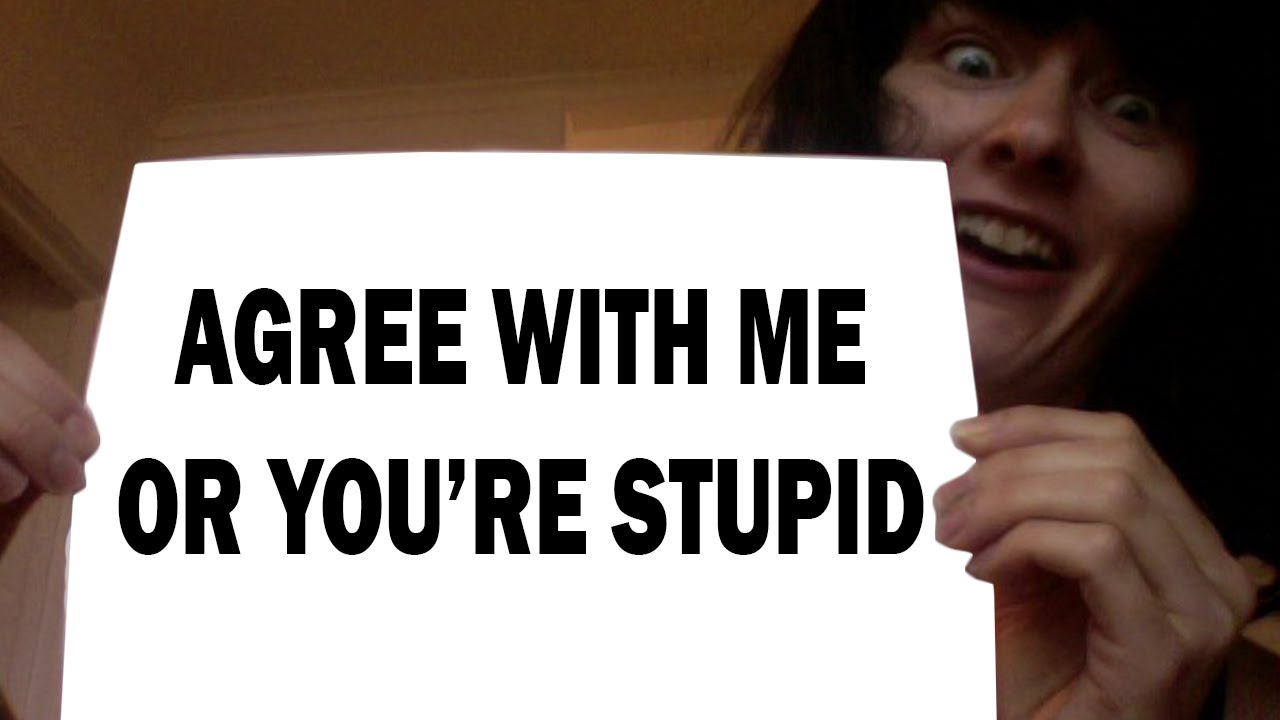 I am quoting. Don’t shoot the messenger.
In fact, it was Madeleine Albright, the first woman to serve as U. S. Secretary of State, who declared, “There’s a special place in hell for women who don’t help each other!”
Apparently, Ms. Albright believes that Hillary Clinton is either unworthy or incapable of winning the office of the president on her own merit. One has to wonder whether Ms. Albright also believes that she herself was appointed Secretary of State because of her sex rather than her abilities.
Feminist icon Gloria Steinem was close at hand to weigh in on the issue — predictably on the wrong side. “When you’re young, you’re thinking: ‘Where are the boys? The boys are with Bernie,’ ” sneered the crusader for women’s rights and dignity.
Just imagine if a man had said that. But so it goes in our age of unabashed double-standards.
In then, in classically Clintonesque style, the fearless former revolution tried to revise her message: “I misspoke on the Bill Maher show recently,” Ms. Steinem posted on Facebook, “and apologize for what’s been misinterpreted as implying young women aren’t serious in their politics.”
“Misspoke”? “Interpreted”? So what exactly was Ms. Steinem trying to say?
It’s heartening that at least some women are seeing through the smoke and mirrors.
“Shame on Gloria Steinem and Madeleine Albright for implying that we as women should be voting for a candidate based solely on gender,” said Zoe Trimboli, a 23-year-old self-described feminist from Vermont.
Indeed, that would be like suggesting that people voted for Barack Obama only because he’s black.
Wouldn’t it?

The next new thing all over again
Why didn’t I think of that?
 Can you remember the world before Post-It notes? Have you ever paused to appreciate the brilliant simplicity of the Phillips-head screw and screwdriver?
How many times have you cursed yourself for sloshing tea onto the table or dropping your keys between the car seat and console? But you never thought of the Tea-Pot Frame of the Drop-Stop Car Seat Gap Filler, did you?
Don’t feel too bad; you have plenty of company. That’s why we might all benefit from reading Adam Grant’s new book, The Originals: How Non-Conformists Move the World.
 But here’s the problem: For years, Dr. Pepper challenged the cola establishment with it’s tag-line, Be Original. Promoters knew that we all like to think of ourselves as one-of-a-kind, to imagine that we are masters of our own destiny, a breed apart from the herd. The sad truth is, however, that we only want to imagine it; in reality, nothing scares us more than the fear that we don’t belong.
Even the Dr. Pepper ads reflected our ambivalence toward non-conformity: a whole room full of people line-dancing, in perfect sync with one another, singing “Be original.”
Anti-conformity is easy. Just say no to the party line, and you can always find a cadre of nay-sayers willing to accept you into the ranks of their new conformity. Just look at some of the most unlikely front-runners in our political primary race.
 True non-conformity is much more difficult. It requires thought, courage, integrity, perseverance, conviction, and the willingness to be able to join when it’s right to join and stand alone when popular opinion will crucify you for breaking ranks.
It’s just too hard for most of us most of the time. But then, nothing good comes easy, does it?

The Midpoint of the World
As we finally enter the voting season with the Iowa caucuses, I’m drawn back to these thoughts from 2013 on who we are and where we are headed. If hindsight is 20/20, why do we keep making the same mistakes over and over again?
 What would you ask of a time traveler from a hundred years ago? And if you traveled a hundred years into the future, what would you want to tell the people you found there? Perhaps it would sound something like this:
What did you do to handle the overpopulations we predicted? How did you protect the seashores? What did you do to keep the ozone layer intact, the energy supplies, the trees? Have you eliminated ignorance, brutality, greed?
There might be no better way to discover unexamined truths about ourselves then by composing a letter to our grandchildren’s grandchildren. This was certainly on the mind of award-winning essayist Roger Rosenblatt a quarter century ago when he penned his deeplythoughtful Letter to 2086:
This letter will be propped up in a capsule at the Statue of Liberty, to be opened on the statue’s bicentennial. Go ahead. Undo the lock. I see your sharp, bright faces as you hoist us into your life, superior as cats to your primitive elders. Quaint, are we not? Beware of superior feelings. The message is in this bottle.
As a student of Jewish philosophy, I don’t believe in coincidences. So when my neighbor — out of the blue — handed me a long forgotten back issue of Time Magazine, the cover article by Mr. Rosenblatt resonated with the faint echo of providence. And although the intended audience still reside three generations in the future, this letter offers a tantalizing window into the past, as well as an illuminating perspective on how much has changed and how much has remained the same.
Click here to read the whole essay.

Oscar Equality
Click here to listen to my interview with Christal Frost of WCTM Michigan on the Oscars and racism.
You can read last week’s article “Black Actors Matter” here.

Join Bernie to look for Amerika
 Just when you thought this election cycle couldn’t get any wackier, the Sanders campaign has launched a new ad blending sixties-style images of protest marchers and flower children with Simon and Garfunkel’s pop-classic “America.” The unctuous 60-second commercial is brilliantly crafted to stir the heartstrings of starry-eyed liberals everywhere.
But here’s the irony: “America” is a ballad lamenting the failure of romanticism to flourish in a society bereft of direction and meaning, and about the disillusionment of a generation that had abandoned traditional values for a utopian fantasy only to find itself left with nothing:
“Kathy, I’m lost”, I said, though I knew she was sleeping.
“I’m empty and aching and I don’t know why.”
Counting the cars on the New Jersey Turnpike,
They’ve all come to look for America,
All come to look for America.
 Even Art Garfunkel missed the contradiction of using his own song to endorse a socialist agenda. One might as reasonably use “Mrs. Robinson” in an ad for marriage counseling.
Then again, there really could be no better theme song for the campaign of Bernie Sanders, a holdover from the hippie era passionately espousing grand ideas that could never work.
And, on the Republican side, Donald Trump, the alter-ego of Bernie Sanders, promises us a new America — trust me! — while truly viable candidates repeat the mistakes of 2012, forming a circular firing squad (to quote Mara Liasson) and all but ensuring that the general election will offer us a choice between one brand of demagoguery or another.
Where have you gone, Joe DiMaggio?


Black Actors Matter
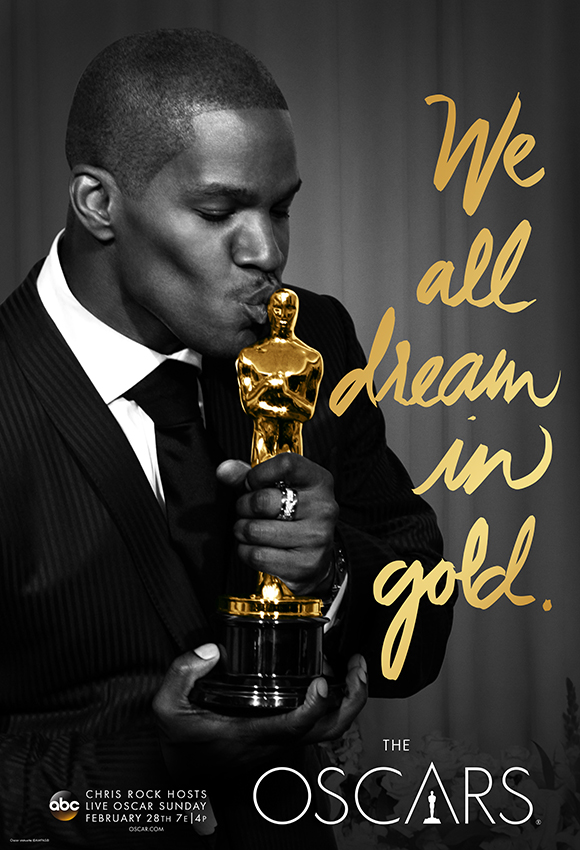 Well, yes, of course they do. Just like black lives.
But does that mean the white actors don’t? Just like, as it often seems, white lives don’t? And what about (alphabetically) Asian, Hispanic, Jewish, and Native American actors? Do their careers matter? Do their lives matter?
Don’t ask Kathleen McCartney, the president of Smith College who was coerced into apologizing for having the audacity to send off an email with the provocative subject line “All Lives Matter.”
Apparently, some lives matter more than others.
And now, so do some actors.
It’s more that a little astonishing that, in an article dog-piling on the Motion Picture Academy for its racism, the Daily Beast could still manage to rattle off a list of 18 black Oscar winners and nominees.
(Interestingly, the Beast doesn’t seem to think Halle Berry counts, since she’s half-white. Kind of like our half-white president.)
It is true, roars the Beast, that Jamie Foxx, Morgan Freeman, Forest Whitaker, Queen Latifah, Chiwetel Ejiofor, Sophie Okonedo, Eddie Murphy, Octavia Spencer, Djimon Hounsou, Taraji P. Henson, Don Cheadle, Viola Davis, Terrence Howard, Jennifer Hudson, Will Smith, Gabourey Sidibe, Quvenzhané Wallis, and the late Ruby Dee have all received Oscars or Oscar nods since 2001.
Be that as it may, “the last two years have felt like an alarming regression.”
Really? Isn’t two years is an awfully short time span to constitute a trend of any kind, much less one that could be considered even remotely “alarming”? But no: the politics of race and victimization are unbounded by time.
Because, ultimately, it does all come down to politics.
Back in 1971, after delivering one of the greatest screen performances in history, George C. Scott became the first actor ever to refuse an Oscar. The BBC quoted Mr. Scott as having said that the politics surrounding the awards was “demeaning” and describing the Oscar ceremony as “a two-hour meat parade.”
Some things never change.
As the most liberal of all liberal institutions in liberal America, Hollywood continues to produce propaganda pieces despite the inevitability of their box office failures. Films like Brokeback Mountain and Lions for Lambs may have been well-received for advancing certain political and social agendas, but neither attracted much of an audience.
Sidney Poitier where are you, now that we need you?
Indeed, there’s no limit to Tinseltown’s political correctness; and now there’s no arguing against cinematic affirmative action. I suppose it won’t be long before every actor has to get a statuette, just like every kid in Little League has to get a trophy.
And what will be after that? My bet is that it’s only a matter of time before short people file suit claiming discrimination by the NBA.
In the meanwhile, it’s worth revisiting these thoughts on the movie industry from 2009.
Spam Rebound
Have you ever wanted to spam the spammers?
Here’s what it might look like:
Watch with a friend. Preferably not while you’re working or driving.
 Yonason Goldson