Home » Posts tagged 'Culture Wars' (Page 21)
Tag Archives: Culture Wars

The Miracle of Music
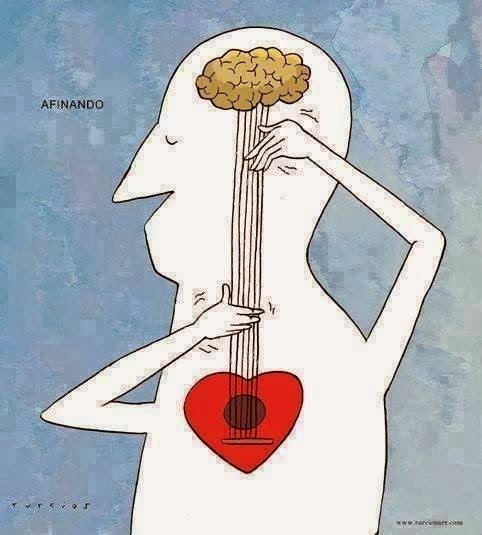 Why do the human mind and heart respond so passionately to an arrangement of sounds and words that provide absolutely no tangible or evolutionary benefit? The answer reveals much about ourselves and the world we live in.
We spend much of our lives looking and hoping for miracles. But the greatest miracle of all is right before our eyes: nature itself, the seamless fusion of all the forces of the world into a unified, unvarying system.
Science itself testifies to this: the principle of entropy, intrinsic to Newton’s second law of thermodynamics, describes the natural state of the universe as tending always toward disorder. In other words, nature’s law cannot account for the laws of nature, cannot explain the original ordering of the natural world that produced the immutable regularity of nature itself. What greater testimony to intelligent design can one find than the unnatural, persistent order evident in every aspect of the workings of Creation?
But what does this have to do with music?
Read the whole article here: http://www.learning-mind.com/the-miracle-of-music-how-sounds-affect-the-human-mind-and-heart/


Fox and Hounds: A Debate for our Time
 More than 1500 years ago, the Talmud predicted an era in which the generation would have “the face of a dog.”
Dogs walk out in front of their owners, creating the appearance that they are leading the way. But a sharp pull on the leash and the dog falls into line, surrendering its will to the will of its master.
Could there be a more accurate description of modern leadership, where our “leaders” look to polls and constituencies before tailoring their message and their policies to fit what is popular and what will keep them in office?
It seems to work, despite the irony that public approval of our public officials continues to plummet. Like the family pet, too many of us are happy enough if we have food, a place to sleep, and masters who tell us how much they love us.
Others are disgusted by the implosion of the system, so much so that they are willing to embrace a self-promoting egomaniac with no redeeming qualities except the one that might matter most: a willingness to say what he really thinks.
This is where things will stand tonight as Fox News hosts the first Republican debate. Maybe a true leader will rise up out of the melee. But for now, all we hear is a lot of barking.

When Prejudices Become Principles
 Two cheers for Freedom to Marry, the gay-rights advocacy group that is taking the unorthodox step of closing its doors for no other reason than because it got what it wants — namely, the redefinition of marriage (according to Anthony Kennedy’s unilateral revision of the constitution). So I’m adding my small voice to that of the New York Post to praise the group’s president, Evan Wolfson — irrespective of how much I disagree with his position — for having the integrity to take his victory and go home rather than persisting in advocacy for the sake of advocacy.
Which doesn’t mean, of course, that all his allies will do the same. It took almost no time at all before ABC’s Nightline ran a segment on polyamory, clearly the next step in the dismantling of the nuclear family. “We’re just trying to be the pioneers like in the civil rights movement,” gushed one member of the “trailblazing triad” trumpeted by network.
Finally, in an inevitable but long-delayed surrender to the tide of history, the Boy Scouts of America have released their hold on traditional values by ending their ban on openly gay troop leaders. One feeble cheer to the organization for holding out as long as it did.
With the abyss of moral anarchy looming before us, I’m revisiting my thoughts on the subject from six years ago. At the very least, when archaeologists dig up the remains of Western Civilization some time in the distant future, let them see that Civilization didn’t go down without a fight.
“We must be ever on our guard, lest we erect our prejudices into legal principles.”
This concise jewel of wisdom, from former Supreme Court Justice Louis Brandeis, may eventually take its place as either the standard or the epitaph of Western Civilization. While the evolution of social sensitivity can claim an impressive record of civil rights legislation, we have now to question whether our collective obsession with personal privilege threatens the very foundations of the legal system that protects us.
For his inauguration this Tuesday, soon-to-be President Barak Obama has chosen evangelical pastor Rick Warren to deliver the invocation. Instantaneously, the politically correct Left launched its blitzkrieg, excoriating Reverend Warren for the unpardonable sin of supporting Proposition 8, California’s recent gay-marriage ban. Because he used his First Amendment rights to speak his conscience, and because he recognizes his obligation as a representative of religious conviction to defend religious doctrine, Reverend Warren finds himself where almost all defenders of moral integrity now find themselves: under attack by the zealots of moral anarchy.
The offensive against Reverend Warren may not rank among the most disturbing examples in the aftermath of California’s Proposition 8 referendum. In Riverside, California, 40 to 50 signs supporting Proposition 8 were found arranged in the form of a swastika on the front lawn of a Roman Catholic church. Mormon temples in Salt Lake City and Los Angeles, along with a Catholic Knights of Columbus printing press in Connecticut, received packages containing white powder presumably intended to imitate the 2001 anthrax scare. Reports from around the country include harassment, vandalism, and disruption of church services.
 What would Justice Brandeis say?
He probably would not agree with Justice John Paul Stevens, who quoted him in his dissent against the June 28th, 2000, Supreme Court decision allowing the Boy Scouts of America to dismiss an open homosexual from his position as scoutmaster. Invoking Justice Brandeis as a beacon of light to dispel the darkness of prejudice, Justice Stevens (together with the three justices who voted with him) cast his dissenting vote in an effort to canonize his own prejudices within the body of constitutional law.
But if Justice Stevens argued with the reasoning of colleagues in the majority, presumably he accepted the authority of their decision. Not so the moral and legal vigilantes who have deputized themselves as protectors of the American People against both due process of law and the erroneous decisions of the United States Supreme Court.
Back then, government officials and corporate officers across the country began cutting off financial support to the Boy Scouts and restricting their access to public and private resources. Sounding the charge, predictably, was the New York Times, which asserted that “by allowing a group that bans gays to use public facilities and supporting it, they violate their anti-discrimination statutes.” This, of course, was patently false for two reasons. First, BSA never issued any ban against gays, but only refused to allow leaders in its organization who openly advocated behaviors antithetical to BSA’s core values. Second, and most important, is that BSA was not violating any anti-discrimination statues, since that was precisely the point on which the highest court in the land has just ruled.
“Lest we erect our prejudices into legal principles.” Wasn’t this kind of self-righteous legalistic coercion precisely what Justice Brandeis warned against? Nothing about the policies of the Boy Scouts, who then faced accusations of prejudice, could be reasonably considered prejudicial. Quite the contrary: through their choice of leaders they have always endeavored to inculcate traditional morals and values among a generation of young people bombarded by the relentless media messages of self-indulgence and self-absorption. That they were vilified for adhering to a moral code should have raised a cry of outrage from every parent, every teacher, every community leader, and every responsible citizen in the nation. But all we heard instead, from the highest elected offices on down, was mealy-mouthed equivocation about diversity and open-mindedness.
Sometimes, however, we can be so open minded that our brains fall out. Indeed, the larger issue now, as then, is whether our personal-rights mentality has given birth to an amoral culture that is systematically becoming mandated by law. Even now, those activists who have announced their intention to turn their backs on Reverend Warren when he delivers his invocation are within their rights to do so and should not be legislated against. But what they consistently fail to realize is that respect for differing opinions that are reached through reason and integrity is essential to the survival of a free and democratic society.
Do we really want to live in the kind of lobotomized society where there is no greater sin than judgmentalism? By definition, where there is no judgment there is no justice. By intuition, where there is no civil discourse there is no civilization. To bash each other over the head with legalistic bludgeons is to act like cavemen, and it leads down the road to social chaos far more directly than it does toward social utopia. It doesn’t allow much room for personal freedom, either.
If there is any change that we should truly hope for, it is that this new administration will lead us into a new era in which we stop demanding that the law protects our every right and start acknowledging our responsibility to uphold the system that makes it possible for us to have any rights at all.

The Language of Confusion
 Political Correctness has reached a new high — or low — at the University of New Hampshire, where administrators have issued a Bias-Free Language Guide. Forbidden words include the following: “mothering, fathering, healthy, homosexual, rich, poor, senior citizen, and American.”
Perhaps we should find it comforting that a taxpayer-funded school is prepared to go so far to protect its students from hurt feelings. Presumably, educators believe that this measure will improve student’s self-esteem and thereby lead to greater success in the workplace.
Once again, life imitates art, as I discussed in this essay from 2009, written to honor the 60th anniversary of George Orwell’s 1984.
If only they would teach it in New Hampshire.
It never takes more than a day or two into the new school year before I hear the chant of my students’ favorite refrain: That makes no sense!
“What you mean,” I answer the first student who utters that unutterable phrase, “is that you don’t understand.”
“That’s what I said,” the student responds, predictably. “It makes no sense.”
“It makes perfect sense,” I insist, “as you will see once you understand it.”
The student doesn’t give up without a fight. “You know what I mean,” he says. “What difference does it make how I say it?”
“It makes no sense implies that, if the material we are learning does not conform to your way of thinking, then it must be wrong. I don’t understand acknowledges the possibility that the flaw in reasoning may reside in you, rather than in the material.”
He stares back at me, trying to digest this new idea. Over the course of the year, through constant repetition, most of my students will learn never to saythat makes no sense. At least not in my class.
I’ve been challenged on this many times. Is it really my job to belabor this point, to demand that my students express ideas concisely, even when the intent is clear? After all, I’m not a speech or language instructor. Why not just teach the material I’m being paid to teach?
WE THINK WHAT WE SPEAK
In his essay “The Principles of Newspeak,” the appendix to his classic novel, 1984 (published 60 years ago this month), George Orwell describes how the leaders of his totalitarian future have contrived to assure their hold on power by replacing English with Newspeak, a language containing no vocabulary for concepts contrary to the platform of the state-run Party. By controlling language, the Party controls its people’s very thoughts.
 Intuition suggests that language is a product of thought: if we think clearly, automatically we will speak clearly. Orwell demonstrates the opposite, that thought is a product of language. Because we formulate our thoughts in words and sentences, incompetent use of language guarantees muddled thinking. If there are no words for rebellion, uprising, or discontent people will find it difficult to formulate and articulate the concept of overthrowing even the most corrupt and oppressive government.
Students of Orwell will shudder when applying this simple axiom to the corruption of modern language. Advertisers and politicians have known for years that the best way to manipulate public perception is by arranging words in unconventional combinations. Car dealers know that potential customers will feel better buying cars that are “pre-owned” rather than “used.” A certain former president knew that the American people would not respond to the gravity of his presidential peccadilloes if distracted by pondering what the meaning of “is” is.
But linguistic confusion became institutionalized with the rise of political correctness. By dodging frantically out of the rain of potentially offensive terms, we soak ourselves in a torrent of euphemisms for simple words the thought-police deem pejorative. When illegal aliens become “undocumented workers,” we lose all sense of the danger posed by the porous condition of our borders. When terrorists become “insurgents,” we more readily accommodate the moral equivalence that blurs the line between aggressors and defenders. When abortion becomes “reproductive freedom,” the horror over the indiscriminate murder of innocents vanishes altogether.
Similarly, when marriage is bereft by judicial fiat of the definition that has served for thousands of years, the foundations of the family structure erode like sand castles before the approaching tide. And as it becomes taboo to make any direct reference to race, class, ability or performance without fear of hurting one group’s collective feelings or another group’s collective self-esteem, the words that form our thoughts and understanding end up so fully shorn of their dictionary definitions that they cease to mean much of anything at all. In short, nothing makes sense.
CONFUSION BY DESIGN
In truth, for advertisers, politicians, special interest groups, and the politically correct, the real purpose of language is no longer to convey meaning – it is to obscure meaning, to appeal to emotions while bypassing the intellect. Their motive is obvious: it is far easier to evoke a strong emotional response than it is to present a logically developed argument. But by allowing meaning to be drained from our language and our words, we have not only denuded them of their clarity, but also of their depth.
Even worse, we are no longer allowing confusion to reign free but legislating it into the public square. Earlier this year, London decided to remove apostrophes from its street signs. King’s Heath will now become Kings Heath. What’s the reason? Apostrophes are too confusing.
According to Councilor Martin Mullaney, who heads the city’s transport scrutiny committee, “Apostrophes denote possessions that are no longer accurate, and are not needed,” he said. “More importantly, they confuse people. If I want to go to a restaurant, I don’t want to have an A-level (high school diploma) in English to find it.”
Linguistic laziness in both syntax and vocabulary has worn smooth the sharpness of our minds. When I say that I love my wife, and I love my car, and I love ice cream, am I not indulging a subtle self-hypnosis that affirms an equation between all three, that suggests that my feelings for my wife is no more profound than my taste for Baskin Robbins and BMW? By impoverishing our words, we impoverish our thoughts as well.
 What is love? And what is honor? and loyalty? and commitment? As we strip our language of both its clarity and its nobility, these concepts become caricatures of what they once were, defined by the mass media who, like the Orwellian Party, have as their only concern the selling of their own values and their own agenda. And as much as we the people are willing to buy, they will continue to sell.
“Teachers, be careful with your words,” warns the Talmud, “lest the disciples who follow you will drink of evil waters and die.” When the waters of wisdom become polluted with confusion and contradiction, it is society’s youth who will pay the price through the erosion of moral clarity and moral principles.
Back in the classroom, my student continues to stare at me, contemplating my rebuke for a few more seconds before he responds. “What I meant to say,” he finally answers, “is that it makes no sense to me.”
I shake my head. “Don’t make it sound like what you want it to mean,” I tell him. “Just say it the way it is.”

Paradise

Completed in 2004, this jailhouse in Leoben, Austria, was designed by world-renowned architect, Jospeh Hohensinn. With a maximum occupancy of 205 inmates, overcrowding is not a problem.
Paradise /ˈpærəˌdaɪs/ n., late 12c., from Old French paradis (11c.), from Late Latin paradisus, from Greek paradeisos.
A place where everybody has guaranteed employment, free comprehensive healthcare, free education, free food, free housing, free clothing, free utilities, and only law enforcement officers carry firearms.
And, contrary to popular belief, such a place already does exist:
It’s called “Prison.”
Hat tip: Todd Rush and Steve Glassman

Mike Huckabee’s the Bomb Thrower?

“This President’s foreign policy is the most feckless in American history. It is so naive that he would trust the Iranians. By doing so, he will take the Israelis and march them to the door of the oven. This is the most idiotic thing, this Iran deal.”
These are the incendiary words of Mike Huckabee in an interview with the Breitbart News Network. Woe upon us.
It’s hardly surprising that Barack Obama found the governor’s words offensive; for six years the president has taken offense at every utterance that isn’t laudatory, obeisant, or downright reverential.
It’s also no surprise that John Kerry found the governor’s comments offensive. The Iran deal is Mr. Kerry’s only shot at a Nobel Peace Prize, and the unwelcome reality check of fear-mongers like Prime Minister Netanyahu and Governor Huckabee might, if they find traction (which they won’t), jeopardize his chance to join the ranks of such great historic peacemakers as Jimmy Carter, Al Gore, and Yasir Arafat.

Can we Stay Honest in a Dishonest World?

The biggest tragedy of the Supreme Court decisions on Obamacare and gay marriage was not the decisions themselves. It was the perception, by both winners and losers, that these decisions were not reached based on legal principle but upon political ideology and personal bias.
Which means that, regardless of which side won, the country as a whole lost.
Honesty has seen its market value tumble over the years with countless reports of plagiarism, factual carelessness, and blatant fabrication. It’s bad enough when such prevarication comes from the media. But what’s really cause for alarm when it becomes the norm among our political leaders.
The sad truth is that truth from our politicians has become far more the exception than the rule. But the brazenness with which they conjure up easily verifiable falsehoods grows ever more astonishing.
Once integrity disappears, the only motive not to lie is fear of not getting away with it — and get away with they have, in a society that has grown indifferent to lying.
We may not be able to stop the lying in politics. But here are ten ways we can prevent the erosion of our own integrity.
Expanded and updated from an article published earlier this year. Click here to read the whole article.

How to Survive the Age of Advertising
 After the Stone Age came the Iron Age, then the Industrial Age, and now the Age of Advertising. Regardless of what the experts say, we are not living in the age of a consumer economy, but of an advertising economy.
With companies trading for billions without producing proportional revenue — or any at all — we can only imagine how far things can go and how far the markets will climb before this latest bubble bursts, exposed for the pyramid scheme that it is. Indeed, the inability to distinguish between reality and illusion is precisely the goal of modern advertising.
Nevertheless, there is some small hope that escape from its influence might still be possible, no matter how far its tendrils have reached. That evidence comes in the person of Julian Keonig, perhaps the greatest legend in advertising history, who passed away last year at age 93.
Readers of a certain age will remember the classic Timex slogan, “It takes a licking and keeps on ticking,” and the self-validating tagline for the Volkswagen Beetle — think small — voted the most successful ad of the last century. Both were the creations of Julian Keonig; but neither was what he considered his most inspired brainstorm.
And neither provides us with an insight into his most important legacy.

What do you mean, “You don’t have a cellphone”?
 I’ve always known this day would arrive. But it lay too far off in the future to worry about.
I sat safely atop my own personal promontory, even as the tide surged forward to swallow lesser souls who tested the waters and were lost.
But you can’t stop a tsunami. The Day of Reckoning is at hand. And even if I can hold out a little longer, after all these years of holding out now I feel like I’m selling out. It’s hard to even articulate the words.
Still… here it goes. It may finally be time to get a cellphone.
Click here to read the whole article.
 Proverbial Beauty at Amazon.com

Elbowing God Out
 Back when I possessed the charming innocence of a twelve-year-old, I took offense at the wording of the Pledge of Allegiance. Why, I wondered, was I expected to pledge my allegiance to a flag? Proclaiming loyalty to my country I could understand, but to a piece of fabric?
Moreover, as I had concluded with unshakable, preadolescent self-confidence that human existence was nothing more than a cosmic accident, I found the phrase “under God” equally offensive.
So while my classmates were loudly reciting the full text of the Pledge of Allegiance, I was quietly editing my own recitation: I pledge allegiance… to the United States of America… one nation… indivisible, with liberty and justice for all.
By my final year in high school, however, having acquired a sufficient measure of sophistication to appreciate the importance of symbolism, I no longer resented being asked to swear loyalty to a flag. But we weren’t reciting the Pledge of Allegiance any more, so I had no chance to mend my ways.
I was also less certain concerning the existence of a Creator. Six years of secondary education had opened my eyes to a universe so enormously complex that to embrace any world view as extreme as atheism seemed the height of arrogance. The phrase “under God,” therefore, struck me as a comforting expression of humility, that we as a nation recognized the grandeur of our universe and conceded its unfathomability.
Perhaps the circuit court judges who ruled the phrase “under God” unconstitutional might have interpreted the law with more humility if they had familiarized themselves not only with the letter, but with the spirit of the Constitution. Perhaps they might have better understood the intent of the Framers if they had read, or remembered, the words of Alexander Hamilton: “The sacred rights of mankind… are written, as with a sun beam in the whole of human nature, by the hand of the divinity itself; and can never be erased or obscured by mortal power.”
 Considering the many references to the Almighty among the writings of the Framers of the Constitution, it’s astonishing how often we hear the Constitution invoked as the basis for expurgating every reference to God from the public arena. If the founding fathers weren’t afraid of mentioning God in the Declaration of Independence, why should we fear the utterance of His name in our courthouses or schools? But many among us are afraid, afraid with a fear born of insecurity.
Indeed, what is more terrifying than the unknown, and what is less known than what awaits us when we depart this mortal coil? As Prince Hamlet pondered: “To sleep? Perchance to dream! Ay, there’s the rub.” For the devout atheist, there is no greater dread than the haunting suspicion that he might be wrong, that there might truly be a Creator and an accounting before Him upon arrival in the hereafter. To the atheist, every reference to God is an unwelcome reminder that the rest of the world is not so certain that our existence is random and without purpose.
The great Rabbi Joseph B. Soloveitchik summed it up like this: “All extremism, fanaticism and obscurantism come from a lack of security. A person who is secure cannot be an extremist.” And, indeed, extremism in the form of radical religion or radical nihilism is one and the same. The 19th century anarchist used techniques not unlike the suicide bomber of today to advance his own variety of jihad. The modern anarchist uses manipulation of the law to advance his cause, supremely confidant that he understands the Constitution better than its authors.
The Talmud describes how, during the last days of the second Temple in Jerusalem, the Jewish people observed the law of the Torah meticulously according to its letter. But they failed to look beyond the letter of the law, to strive for understanding and fulfilling of the spirit of the law, to labor in applying the essence of the law toward the transformation of their character. This failure, together with a senseless hatred born of mutual suspicion, mutual contempt and, ultimately, the uncompromising assertion of their own egos, resulted in the destruction of the Temple, the deaths of millions of Jews, and the beginning of our long, dark exile scattered among the nations of the earth.
It has been observed that the word ego is in fact an acronym for Elbow God Out. A daily reminder that we should receive our national freedoms with humility is among the surest means of preserving those freedoms for our children. Close to two thousand years ago, instead of subduing their egos before the Highest Authority, instead of subjugating their ideological differences to the pursuit of shalom, peace, the Jews distorted Divine law to serve their own agendas, thereby sealing their fate and the fate of the Temple.
The sages teach that any generation that does not rebuild the Temple is considered to have destroyed it. But if we return to the law with humility and reverence, then we can truly hope to rebuild that which for so long has been lost.
Adapted from an article previously published by the St. Louis Post-Dispatch, the Baltimore Sun, and Aish.com.
 Yonason Goldson