Home » Posts tagged 'Discipline' (Page 16)
Tag Archives: Discipline

Before the Flood
 “Things will last my time,” said the Marquise de Pompadour, “But after me, le deluge.”
More prophetic words were never spoken. The mistress of Louis XV foresaw clearly the collapse of the French monarchy and the flood of violence and chaos that would engulf the next generation. But that was the future’s problem. Why should she care?
In some ways, her brutal disregard for future suffering is more palatable than the utopian fantasies and rhetorical flourishes of modern leaders. At least the Marquise knew what lay ahead, and at least she didn’t pretend that she had an easy fix to prevent the future from arriving on tomorrow’s doorstep.
But today we face an impending crisis no less ominous. Our expectations for national leadership have sunk so low that we are willing to overlook pathological, craven, and unapologetic dishonesty from one presidential candidate and volcanic, adolescent recklessness from the other. One can scour the nation’s capital without turning up even a smidgen of character and statesmanship, evidence of a political culture rife with cronyism, gridlock, and groupthink.

A Tale of Too Many Egos
 This isn’t about the 2016 presidential campaign. It’s not about the candidates or the conventions; it’s not about about political ideology or the political process.
It’s all about We The People.
But that requires talking about — at least briefly — the candidates I’d rather not talk about.
Some of us had dared to hope that Donald Trump, after securing the Republican nomination, would disclose that it had all indeed been an act and that he was ready to start acting like an adult. After all, he’s a super-successful billionaire real estate mogul. And he has such great kids. Surely, he’s capable of acting presidential.
Ah, hope springs eternal.
Then the ghost of Ted Cruz reappeared. To be fair, Mr. Trump has a legitimate grievance against Mr. Cruz, who should have either endorsed his former rival or declined the invitation to speak from the convention pulpit. As a career politician, Senator Cruz must understand that the purpose of a national convention is to inspire party solidarity, not to posture for the next election cycle. Mustn’t he?
Of course, life isn’t any better in Philadelphia, where DNC head Debbie Wasserman-Schultz finally agreed to disappear into the night in exchange for one last grandstand, after she was caught exploiting her position to skew the supposedly even-handed primary process in favor of Hillary Clinton.
Not than anyone was surprised. Whatever your political bent, principles have largely become a thing of the past.
That may be because too many Americans have no notion of the values on which this country was founded: Equal opportunity, equal rights, and equal protection under the law. These do not ensure equal wealth or power. But they are part of a culture that once recognized a moral, as opposed to a legal, commitment to place the lowest rung of the ladder of fortune within reach of its most downtrodden citizens, to protect the minority from the tyranny of the majority, and to shape a society bound together by commitment to higher values and national destiny.

The Humpty Dumpty Deception
 “When I use a word,” Humpty Dumpty said, in rather a scornful tone, “it means just what I choose it to mean — neither more nor less.”
This would appear to be a powerful statement of personal empowerment and forward-thinking vision. In fact, it is precisely the opposite.
The truth is this: if we don’t master our language, we can’t be masters of ourselves. Because we think in words, sloppy speaking will inevitably produce sloppy thinking. And if we aren’t thinking clearly, then we don’t know who we are, what we believe in, or what we stand for.
Clichés, sound-bites, political correctness — these are all our enemies. The reflexive recitation of words bereft of authentic meaning constitutes much of talk radio, and it may offer a convenient refuge from having to defend our opinions with hard facts and sound reasoning. But we don’t open up lines of communication and cooperation by hiding from clarity and logic.
Verbal interchanges have become so glib, so vapid, and so superficial, that anything short of a complete overhaul of our language will not do. But some popular expressions are worse than others, and here is my short list of the worst offenders, phrases that should be punishable by law.
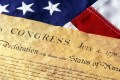
What truths do we hold?
 We hold these truths to be self-evident, that all men are created equal, that they are endowed by their Creator with certain unalienable Rights, that among these are Life, Liberty and the pursuit of Happiness.

Are these truths still self-evident, in a nation where all moral and natural boundaries have been worn away, not by the steady march of time, not even by complacency, but by a determined and calculated campaign to redefine standards and values that were once universal?
The great wisdom of the Framers was to recognize that human values shift like the sands of the desert, and that the foundations of any civilization will only endure so long as its people continue to believe that there are higher ideals than individual self interest, that personal and collective sacrifice are necessary for personal and collective prosperity, and that commitment to individual responsibility is the only way to ensure the preservation of individual rights.
Without these, a society will inevitably become a house divided against itself and, as such, will not survive for long.

Giving offense vs. taking offense
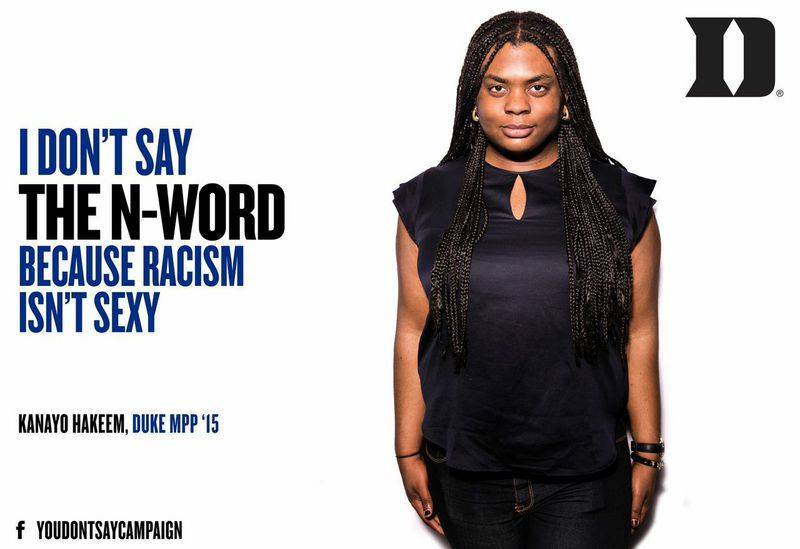 The political correctness police were out in force recently, correctly censuring Larry Wilmore for his use of the N-word and insanely condemning Hillary Clinton for uttering the words “off the reservation,” perceived as demeaning to Native Americans.
Starting with Mrs. Clinton’s turn of phrase, we might as well excise from the the lexicon of acceptability words such as “nosy” because it might offend people with large noses, “insightful” as insulting to myopics, “high-minded” as defamatory of marijuana users, and “thin skinned” for denigrating hemophiliacs. If we want to find reason for taking offense, we can find it everywhere.
The more noteworthy incident was Larry Wilmore’s use of the N-word at the White House Correspondents’ Association dinner, and his directing it toward the President of the United States, no less. Clearly the remark was intended to be affectionate and laudatory, which is how it was taken — without offense.
But that’s not really the point. In a society that is growing simultaneously disrespectful and intolerant of disrespectful speech, we need to elevate public discourse, not sink deeper into the gutter. If the N-word is too offensive to be broadcast — even news anchors reporting the story weren’t permitted to repeat it in quotation marks — then it is certainly unacceptable to be used in the presence of our president or, even worse, said to him.
Frankly, I’m more concerned by the use of President Obama’s first name, and his nickname at that. Maybe Mr. Obama and Mr. Wilmore are on a first-name basis. But in a formal context, such familiarity is utterly disrespectful from anyone other than a spouse, parent, or sibling.
This is the real threat of political correctness. It’s not just that we take offense in all the wrong places. It’s that we lose all sensitivity for the difference between what is respectful and what is disrespectful, we lose all sense of priorities, and we forget that refinement is a value. Nothing matters except the applause, the laugh, the ratings, and the votes.
This is why the same people who took offense at Mrs. Clinton’s use of “off the reservation” have no reservations about her pathological pattern of telling lies and misrepresenting political adversaries.
This is why our political and social institutions are in chaos.
And this is what we are teaching our children.

Spitting Image 3:1 — A Journey of a Thousand Miles…
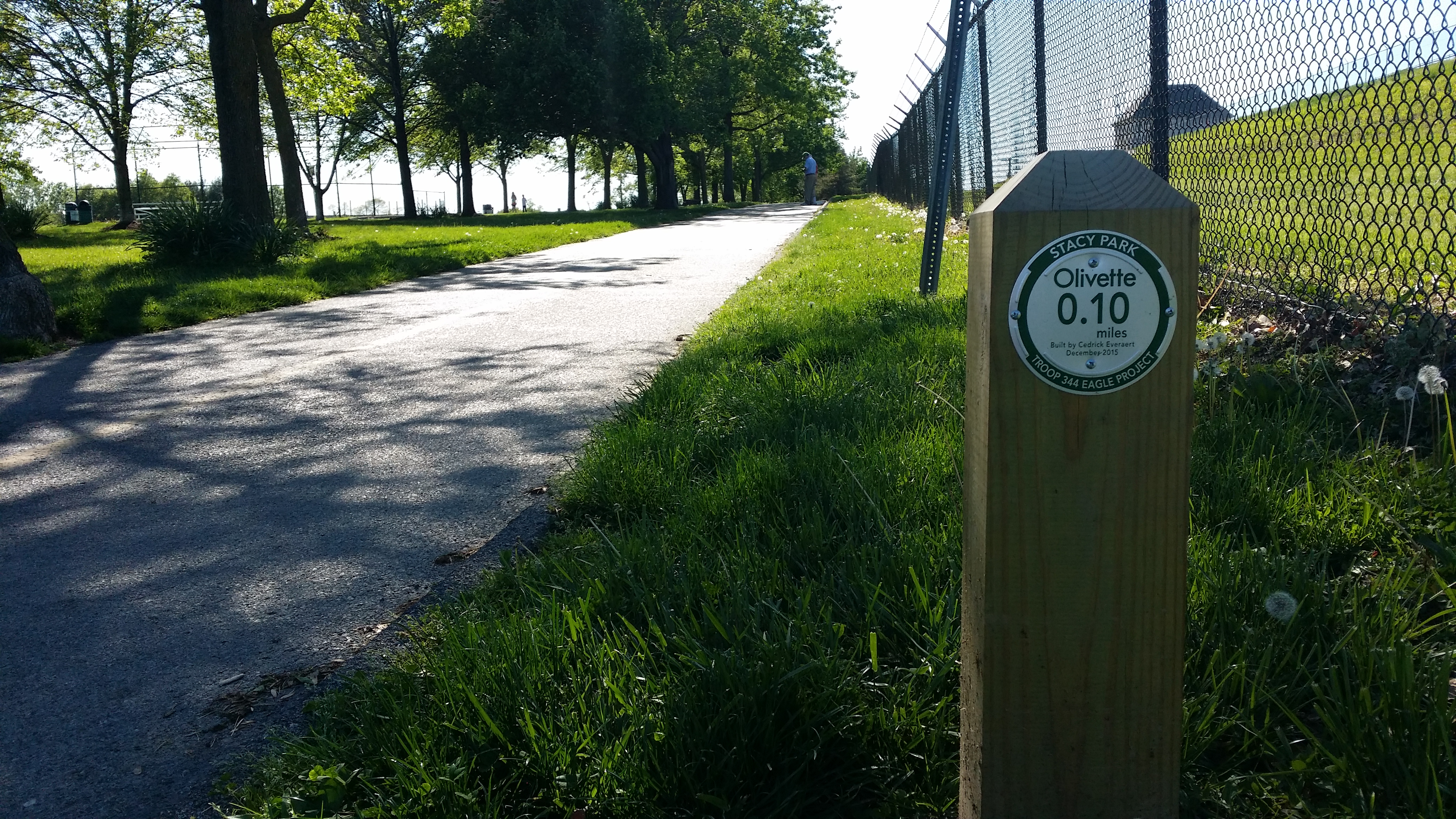 The road beckons, and our heart longs for adventure. But the way is long, and who knows what might befall us along our journey?
How many times have we turned back, turned aside, or given up before we’ve given ourselves time to either succeed or fail? How many opportunities have we missed, how many victories have we left unwon, how many heroic failures have we traded for cold comfort and abandoned hopes?
All beginnings are difficult, say the sages of the Talmud. And when we concede the race before we start, all we have left is a scrapbook of empty dreams.

Why do we think so?
 We think so because all other people think so;
Or because—or because, after all, we do think so;
Or because we were told so, and think we must think so;
Or because we once thought so, and think we still think so;
Or because, having thought so, we think we will think so…
Henry Sidgewick

Marriage of Convenience
 We are what we pretend to be, so we must be careful about what we pretend to be.
― Kurt Vonnegut
The orderly rolled my gurney to a stop before an imposing double doorway. “Okay,” he said, “This is where you get your kiss.” I couldn’t tell if he was speaking to me or to my wife. In any case, my wife kissed me and laughed and cried all at once. Then I was rolling again.
I arrived in surgery and scooted over onto the operating table. I joked with the anesthesiologist. He found my vein on the first try. I recited Psalms to myself and wondered distantly why I wasn’t scared out of my wits.
They sliced me open, broke my sternum, compressed my lungs like empty sugar bags, and stopped my heart to patch the hole between its upper chambers with a piece of my pericardium while redirecting the blood that flowed through an anomalous vein.
I don’t remember that part.
I also don’t remember my hands clawing the air, straining against nylon straps, struggling to tear the ventilator mask from my face and the dressing from my chest. My wife stifled a cry when she saw me in recovery. Apart from the convolutions of my fingers, the pallor of my face starkly mirrored the countenance of death.
“He looks so good,” the nurse told her.
When I did regain consciousness the next day, numbed by morphine and dazed by the residue of anesthesia, I asked my cardiologist if he could release me that afternoon. “I have to catch a flight to Jacksonville this evening,” I said.
I was trying to be funny. He thought I was delirious.
EXPECT THE UNEXPECTED
![[ File # csp3608269, License # 1131644 ] Licensed through http://www.canstockphoto.com in accordance with the End User License Agreement (http://www.canstockphoto.com/legal.php) (c) Can Stock Photo Inc. / Eraxion](https://proverbsandprovidence.com/wp-content/uploads/2016/04/anatomy-lungs.jpg)
Lacking prescience, however, I had no excuse for the cavalier attitude with which I approached this whole business. No matter how distinguished my surgeon’s credentials, and no matter how casually he explained away the operation as routine (with the probability of success better than 99%), cardiac surgery remains as heart-stopping as it sounds: they carve open your chest and, during an extended period of clinical death, cut and paste around your most vital organ before sewing you back together.
Call it what you like; it hardly ranks among the more attractive forms of elective surgery.
Yet “elective surgery” was how the doctor had described it. After all, I had virtually no symptoms, and my condition might not advance for twenty years. Then again, deterioration could begin within months, or even weeks. And so, at my cardiologist’s insistence, I opted to exchange the distant prospect of lingering death for the immediate promise of physical pain followed by months-long recovery.
That was what I expected. Instead, from beginning to end, while my wife and children and parents were dealing with their respective emotional traumas, the greatest discomfort I suffered throughout the entire episode came not from the incision, not from anesthesia withdrawal, not even from the mild pneumonia I contracted during recovery, but from a persistent hangnail that nagged me from the day after surgery until I returned home and exorcised it with my cuticle clippers.
THERE IS A LESSON
The great tennis player Arthur Ashe, after contracting AIDS via blood transfusion, was reported to have said, “If I ask why this has happened to me, then I must also ask concerning all the good that I have had in my life.”
Indeed, Mister Ashe, may you rest in peace — you should have asked both questions, as should we all.
If life is all One Great Accident, then there is no why. But the exquisitely textured fabric of our universe, the elegant design of our world, and the transcendent nobility of Man when he listens to the calling of his soul — all these testify to the genius of an invisible Conductor who guides the symphony of Creation.
And if there is a plan behind the apparent chaos, then whatever happens for good or for bad should prompt us to ask, “Why?”
Click here to read the whole essay, from my column in the inaugural issue of The Wagon Magazine

Spitting Image 2:5 — Keeping within the lines
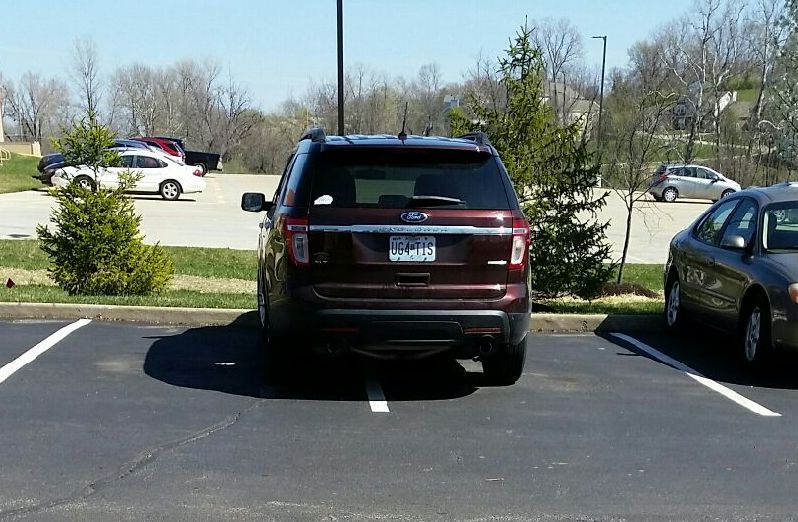 What’s wrong with this picture?
Well, that really depends; if there is no shortage of available parking spaces, or no handicapped spots open, perhaps nothing at all; if it is a one-time, careless indiscretion, it might be dismissed; if it is an expression of neurotic fear that others will damage the paint job by carelessly throwing open their doors, it might be understood, if not condoned.
But if it is symptomatic of indifference to the conventions of parking and the potential inconvenience to others, then it becomes something else entirely.
There is a good reason why lines are painted in parking lots. And there is more than one good reason to park one’s car between them.
We can apply the same principle to other conventions, some within the formal dictates of the law and others simply defined by custom and culture. Rolling stops at intersections, or disregarding stop signs altogether on a lonely road in the middle of the night. Changing lanes without signaling, or disturbing passengers on the subway with loud voices or offensive speech. Pushing into an elevator without waiting for its occupants to exit first, or cutting the line at the ticket booth. Setting the knife on the dinner table with blade turned outward, or not using cutlery at all.
Are there worse things? Of course there are. Should these things be legislated? For the most part, definitely not.
But is there something lost when we lose respect for these “trivial” conventions? Undeniably there is.
In his insightful book Civility, Stephen L. Carter explains the common root that turns “civility” into “civilization.” Of course we have to be a nation of laws; that’s a given. But just as important is being a nation of respectfulness, consideration, and self-reflection. Taking into account how our actions will affect others is not a matter for legislation; it is the symptom of a morally healthy world view, and of an awareness that what others expect from me is inseparable from what I can expect from others.
Like the proven “broken windows” theory of urban renewal, the respect I show for convention will serve as a model for others, making it easier for them to retain their own respect for the minutiae of personal conduct that produces a more pleasant society for everyone.
Even if we want to indulge our selfishness, respect for convention benefits us as well. The same discipline that makes me complete my set of 15 reps in the gym when I really want to stop after 12, that makes me finish my peas before I serve myself dessert, that makes me vacuum under the sofa even though no one is going to see the accumulated dust there — all these little concessions to doing things right reinforces our commitment to doing good and doing right on a grander scale by reminding us that there is a higher ideal in the world than our own individual comfort and convenience.
So there is good reason to park between the lines even when the parking lot is empty. Because you never know what other lines you may be tempted to cross, and you may not recognize the danger of crossing them until you’ve already gone over the edge.

Spitting Image 2:3 — Unrandom Acts of Kindness
 My neighbor was standing at the front desk of a high-end fitness center one morning when a man came through the door and approached the counter.
“I’ve been jogging,” he said, panting, “and I forgot to bring my water bottle with me. Could I please have a glass of water?”
“I’m sorry,” said the young woman behind the desk, “but this is a private club. There’s a gas station down the street that might be able to help you.”
The jogger looked at the receptionist, shrugged his shoulders, and left.
My neighbor watched in disbelief. “Excuse me,” she said. “You have a coffee machine with paper cups right next to you. You have a sink with a faucet. You could have poured the man a cup of water.”
The young woman looked back at her and replied, with evident remorse. “You’re right. I wish I had thought of that.”
The response is staggering. Not “I was just following the rules” or “I’m not allowed to leave my desk.” Those would have be the predictable, if disappointing answers.
But how is it possible that the thought of offering a cup of water to an overheated stranger could have been so far off the receptionist’s radar that it would not even enter her mind?
Never mind that the woman behind the counter was white and the jogger was black. That only makes it worse, since the jogger might reasonably have suspected racism and the motive behind the refusal.
But this was not about race. It was about how we have retreated so far into our worlds of isolation that offering a cup of water — the easiest, simplest, cheapest, most fundamental act of kindness possible for one human being to perform for another — has become something “we wish we had thought of.”
Those stories of disconnectedness — of two friends in school passing each other without noticing while they talk to each other on the phone, of a child calling her parents in the living room from her bedroom, of a husband and wife texting one another from opposite sides of the couch — have gone from being amusing anecdotes to being darkly disturbing. We’re well on our way to forgetting that other people are real. Which means we’re forgetting what it is to be human.
Like anything else, kindness takes practice. It has become popular to talk about doing random acts of kindness, and that’s wonderful. But it might benefit us more if we did disciplined acts of kindness, to develop the habit of kindness so that we don’t have to think about it.
It really isn’t so hard to drop a coin in a jar for charity every morning, to give a smile and a greeting to the strangers we pass on the sidewalk or to our co-workers in the office, to hold the door open for another as we go through the door ourselves, to offer help to someone whose hands are full, to call a colleague who doesn’t show up at work to ask if everything is okay.
With a little practice, we won’t have to remember to act kind because we will have become kind.
 Yonason Goldson