Home » Posts tagged 'Discipline' (Page 17)

Tag Archives: Discipline

What would your grandmother say, Mr. Cheeseburger?

193Does the benefit of pointing out outrageous behavior outweigh the cost of rewarding outrageous behavior by pointing it out? It’s hard to know anymore.

Nevertheless, the recent report of a man in Britain who changed his name to Bacon Double Cheeseburger demands brief mention — not only for its idiocy but for its insidious banality.

Oh, I know what you’re thinking: that this kind of no-news-news isn’t worth the time it takes to read about it. But trivial symptoms can offer an early warning to life-threatening conditions; and, with our culture already in dire need of life-support, the passive acceptance of every “new normal” may soon lead us into the category of DNR — Do Not Resuscitate.

So, yes, the obvious question is, “who cares”? People do all kinds of dopey things and, if they aren’t violating any laws or committing immoral acts, we might as well just shrug our collective shoulders and get on with our collective lives — especially when we can’t stop them in any case. Compared with multiple body piercings and blanket-tattoos, adopting a silly name seems downright pedestrian.

But it’s worth asking ourselves this: why did it never occur to our grandparents to alter their appearances or their appellations?

Click here to read the whole article.

Spitting Image 2:2 — When sacrifice is for the birds

evergladesWould you sacrifice one of your children to save the other?

That was the unthinkable dilemma revealed at the climax of the Meryl Streep classic Sophie’s Choice, which left the heroine emotionally scarred for the rest of her life.  

The poignancy of that final scene tears at the insides of anyone who’s ever seen it.  Some things are too hideous even to contemplate, and we simultaneously rage against the evil of the Nazi tormentor and ache for the mother who had to choose and could never forgive herself for choosing.

But reality can be just as disturbing as fiction.  A recent study by University of Florida scientists describes how herons, egrets, and storks living in the Everglades willingly sacrifice some of their young to alligators living below their nests so that the alligators will protect the remaining chicks from raccoon and possums.

The deal makes perfect sense for the alligators:  they get a steady diet of baby birds falling from the sky almost straight into their mouths.  And it makes perfect sense for the mothers as well:  since birds typically have more young than they can care for, so giving up a few who wouldn’t survive anyway to protect the rest is practical, logical and, arguably, moral.

Except that it isn’t.  What separates human beings from animals is conscience.  When our moral compass is functioning as it should, simple pragmatism isn’t enough to govern our decision-making.  And if the cost of cold, hard logic, no matter how sound, requires us to sacrifice our humanity, then it is our willingness to embrace the full measure of devotion to a higher moral standard that serves the greater good, even when no one else is watching and no one else will ever know.

Sacrifice of oneself for the benefit of others is the most noble quality of humankind.  Sacrificing others for our own benefit shows us to be lower than the lowest animal.  Because, unlike animals, we know better.  

Or, at least, we should.

In Memorium

Father-son-fist-bumpToday marks the second anniversary of my father’s death.  He was a man of unyielding principle and discipline, of meticulous honesty and unwavering standards.  He had the ability to create an instant rapport with others and charm them without guile or manipulation, but he never seemed able to completely let down his emotional guard to truly connect.  He could be hard, but he instilled in me a code of ethics and integrity that have formed the foundation of my sense of self and my worldview.

I wrote this tribute to him for Father’s Day in 2001:

Honor (is learned from) Thy Father


Four Ways to Make Attention Deficit Less Disorderly

attend-girlMany years ago, when my eldest son was about six years old, I introduced him to Chutes and Ladders, the next board game up from Candyland on the sophistication scale.  Nothing but luck, the game nevertheless contains an engaging element of the unpredictable, as any roll of the die can rocket you up a ladder to the top or send you plummeting down a slide to the bottom.

My son took to the game immediately, and we bonded as we moved our respective pieces up and down the board.  And then, with fatherly foresight, I waited for the moment of supreme joy and excitement as my son counted his piece onto the 100 mark at the top of the playing grid.

“You won!” I cried out, expecting him to respond with elation.

Instead, my son looked at the board, looked at me, and burst into tears.

“What’s wrong?” I exclaimed, genuinely flummoxed.

“I don’t want the game to be over!” he bawled.

Oh, if only they could stay six years old forever.

It’s worth examining what happens as we grow older that makes us lose the joy of the game in our headlong pursuit of victory.  Maybe it’s that we’re not paying attention.  Maybe it’s that we’re paying too much attention.

Or maybe it’s both.

Click here to read the whole article.

My interview on Solomon Success

Great minds think alike, and Jason Hartman has a website and podcast exclusively devoted to the practical lessons of King Solomon’s wisdom.

Listen to my interview with him here.

Always Faithful

Yaakov army inductionMy son at his induction ceremony into the IDF.

May the Almighty watch over all those who put the lives of others before their own.

May we all find within ourselves the clarity and courage to stay true to the values that lie at the core of our humanity.

Worst Day Ever?

RottenEcardsWorst Day Ever?
by Chanie Gorkin

Today was the absolute worst day ever
And don’t try to convince me that
There’s something good in every day
Because, when you take a closer look,
The world is a pretty evil place.
Even if
Some goodness does shine through once in a while
Satisfaction and happiness don’t last.
And it’s not true that
It’s all in the mind and heart
Because
True happiness can be attained
Only if one’s surroundings are good
It’s not true that good exists
I’m sure that you can agree that
The reality
Creates
My attitude
It’s all beyond my control
And you’ll never in a million years hear me say
Today was a very good day

Now read it from bottom to top, the other way,
And see what I really feel about my day.

From Aish.com.


The Heroism of Giving Thanks

Originally published in 2002 by the St. Louis Post-Dispatch and the Baltimore Sun.

Will Rogers couldn’t have said it better: No nation has ever had more, yet no nation has ever had less. And it’s easy to understand why the two go together.

The Talmud observes that the moment a person acquires $100, he immediately wants $200. The more we have, the more we want. And the more we believe in our own entitlement, the more likely we are to forget both our humble origins and our obligations to others.

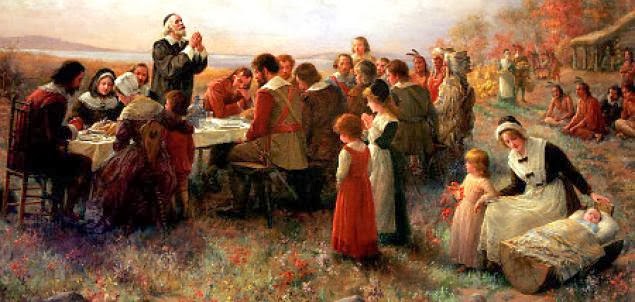
The-First-Thanksgiving-DinnerIt’s somewhat heartening, therefore, that Thanksgiving has retained so prominent a place in American culture, even if most of us rarely give a passing thought to the Puritan ideals that gave birth to the first Thanksgiving.

Who were the Pilgrims? The settlers who stepped off the Mayflower in 1620 were not adventurers or opportunists. They were devout Protestants seeking a pure, uncorrupted expression of the Christian values they had found wanting in their native England.

They paid a high price for their idealism: Half of them died during that first, brutal, Massachusetts winter. But summer brought hope, and out of hope they declared a festival to thank their Creator for their survival and for their hard-won religious freedom.

Political freedom was still a novel idea in Europe then, although the concept had existed for nearly 3,000 years, since the Jewish exodus from Egypt. The notion of religious freedom, introduced to the world somewhat later, was already 17 centuries old when the Pilgrims landed at Plymouth Rock.
3-Emperial-ELEPHANTSBack then, the Jewish nation had been at war not only with the Selucid Greeks, which controlled Israel, but also with itself. The Hellenist Jews found much in Greek culture that they admired and eagerly sought to incorporate into Jewish practice, while the majority of the Jews recognized the inherent incompatibility of Judaism, with its focus on the perfection of the soul, and Grecianism, with its self-worship of body and intellect. Behind the Hellenists, however, towered the full power of the Selucid Empire, before which the ideal of Jewish cultural purity seemed to have little hope of survival.

But the weak rose up against the strong and the many were vanquished by the few. Shouts of freedom echoed through the streets of Jerusalem as the Maccabees rekindled the lights of the Temple in purity, and the festival of Chanukah was established as “days of thanksgiving and praise to [the Almighty’s] great name.”

RamirezCartoon21

“This year we’re having goose instead. It was flaunting its wealth and showing off its golden eggs.”

The complacency of the Jews and their unwillingness to toil in the preservation of their own cultural values put them in danger of cultural extinction. The complacency of Christian Europe, in the eyes of the Puritans, led to a dilution and a depreciation of Christian values. And the ultimate realization of the Jews, like the realization of the Puritans centuries later, was that ideals not fought for and defended cease to remain ideals.

The true heroes in any society are those prepared to struggle for their ideals, those ready to sacrifice for a greater good, those who understand that nothing of value ever comes cheap or easy. When we take freedom for granted, we stand in danger of losing it. And the surest way of taking anything for granted is by failing to express appreciation.

Life begins with struggle. And when struggle ends, life ends with it. Indeed, it is that very struggle that makes life worth living. Both Thanksgiving and Chanukah remind us to be grateful not just for the success, but even for the struggle.

Especially for the struggle.


Pollard and Nuremberg

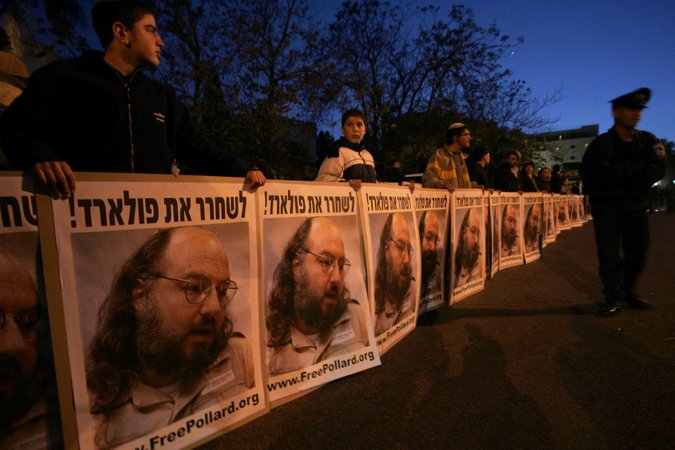
20pollard-web4-master675-v3The case of Jonathan Pollard was more complicated than most people understood.  His actions may have placed others in danger, and may have contributed to the death of agents he compromised.  But almost everyone agrees that his punishment was disproportionate to his crime, and the sense of joy upon his release is more than justified.

The real take-away is this:  whether one agrees with or disagrees with what Mr. Pollard did, he followed his conscience, and he was prepared to accept the consequences of his actions.  If only more of our fellow citizens and more of our political leaders demonstrated the same courage and conviction.

Of course, not everyone’s moral compass is adequately calibrated.  Edward Snowden also believed that he was following his conscience, and the morality of his actions is far more questionable for his having caused more damage by far than did Jonathan Pollard.

The Nuremberg trials after WW II changed forever the interrelationship between civil and moral law.  No longer would it be legitimate to claim “I was only following orders” as a defense for crimes against man.  A soldier has an obligation to refuse to carry out an immoral order, even if by doing so he puts himself in danger of court martial.

We should all consider ourselves foot-soldiers in the culture wars that threaten our society.  But moral obligation implies more than just following our conscience.  It means investing the effort, energy, and thought necessary to understand the decisions we will have to make and their consequences.  Otherwise, our claim to the moral high ground can become a smokescreen to hide our moral irresponsibility.

That’s what makes Jonathan Pollard a hero in the eyes of so many, and Edward Snowden, perhaps, something very different indeed.

Are you Smarter than a Pigeon?

Screen-Shot-2015-11-17-at-11.19.28-AMIn the name of science, I’d like to propose a new study to investigate how researchers choose the topics they study.  If my proposal finds acceptance, Jessica Stagner of the University of Florida will almost certainly figure prominently in the investigation.

Professor Stagner and her colleagues hoped to find support for evidence indicating that gamblers feel the same thrill of excitement when they almost win as they do when they actually win.  To do so, they created an experiment in which pigeons had to peck at colored markers in order to receive hidden rewards.

That’s right:  Pigeons.

And what was their conclusion?  Pigeons are smarter than people.

Read the whole article here.