Home » Posts tagged 'Ideology' (Page 7)
Tag Archives: Ideology

One Cheer for Tim Kaine

A few election cycles ago, a politician I greatly admired was tapped as running mate for a nominee I did not so greatly admire. What followed was a classic example of what is commonly known as the Waffle.
Prior to accepting the vice-presidential nomination, Mr. Waffle met with the presumptive nominee to discuss their respective positions and differences, of which there were more than a few. The future vice-presidential candidate emerged from the meeting and announced to the press that, after a 45 minute-long meeting, he had been convinced to reverse his position on all points of disagreement and now, wholeheartedly, supported the nominee’s entire platform.
I’ll take my Waffle with syrup, please.
At the time, I wasn’t sure what was more disheartening: that a man I admired could so easily abandon his own convictions, or that he and his team believed it would be politically advantageous to do so. In either case, it was a sad day for integrity.
That’s why I have to tip my hat to Tim Kaine.

The Continuing Culture of Violence
 I’ve had too many opportunities to repost this article. Violence begets violence, and as chaos becomes the new normal we have to find a way to restore order and civility to our societies. If we do, we can make Ft. Myers and Munich and Dallas and Boston nothing more than the names of cities once again.
https://yonasongoldson.com/2015/05/18/remembering-the-boston-bombing/

Days of Shame
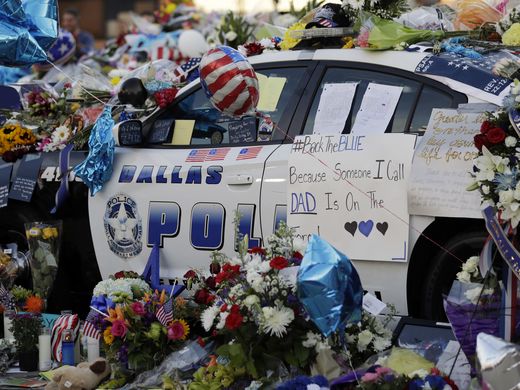 Five policemen cut down in the line of duty. Two more civilians cut down by errant policemen. A mistrustful population further convinced that there is no one deserving of their trust.
It’s more than a shame. It’s shameful. We need to point fingers, even as we recognize that finger-pointing lies at the heart of our problems.
Maybe there is a way to turn around the blame-game, to turn partisanship into hope of something positive. The only way to begin, however, is to acknowledge how we got here and to ask uncomfortable question of the people responsible… ourselves included.

The Divided States of America
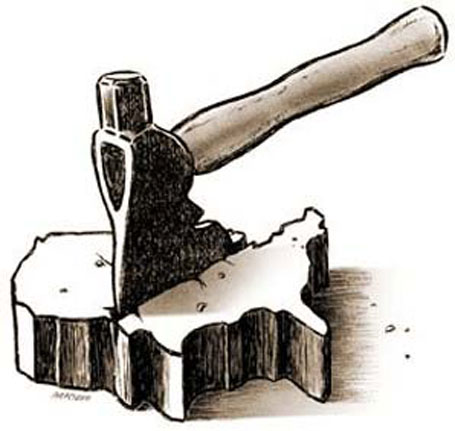 E pluribus unum — Out of many, one.
Such a glorious sentiment, 240 years old this week, destined for the dustbin of history.
In contrast to the vitriol of the broadsheets from two centuries ago — which belied a common commitment to basic, “self-evident truths” — the unfiltered invective filling our airwaves today reveals a wholesale abandonment of common values or, even worse, of any values at all.
With the general election now reduced to a choice between the two most unpopular candidates in American history, the undeniable takeaway is that our population has splintered into four intractable camps, each unwillingly come to terms with any other. Here is a snapshot of who we now are.
What truths do we hold?
 We hold these truths to be self-evident, that all men are created equal, that they are endowed by their Creator with certain unalienable Rights, that among these are Life, Liberty and the pursuit of Happiness.

Are these truths still self-evident, in a nation where all moral and natural boundaries have been worn away, not by the steady march of time, not even by complacency, but by a determined and calculated campaign to redefine standards and values that were once universal?
The great wisdom of the Framers was to recognize that human values shift like the sands of the desert, and that the foundations of any civilization will only endure so long as its people continue to believe that there are higher ideals than individual self interest, that personal and collective sacrifice are necessary for personal and collective prosperity, and that commitment to individual responsibility is the only way to ensure the preservation of individual rights.
Without these, a society will inevitably become a house divided against itself and, as such, will not survive for long.

Radio Interview with Steve Curtis
 More discussion about my recent article in the Times of Israel Blog, “The Danger of Democracy.”
My interview with Steve Curtis of KLZ-AM in Denver ran a full hour segment. Enjoy!

Is it too late to let freedom ring once more?
 Facebook has confessed that stories appearing on its supposedly-unbiased “Trending Topics” were manipulated. Rather than risk allowing its one billion active users exposure to the corrosive influence of conservative commentators, Facebook’s “news curators” decided to doctor the list of headline stories to favor left-wing political leanings.
In other breaking news, the sky is still blue, the grass is still green, and the loudest proponents of freedom are still laboring mightily to impose their vision of freedom on others.
Freedom of speech has been on life-support for decades already, wracked by the infectious scourge of groupthink, political correctness, and moral equivalence. College newspapers have routinely been stolen by students and even administrators for espousing politically incorrect views. Speakers of all ideological stripes have been shouted down, sometimes even by groups they support. Recently, a petition circulated among Yale students to repeal the First Amendment (including, ironically, the right to petition) collected 50 signatures in one hour.
The real death of free speech stems from the death of credibility. News organizations have abandoned even the pretense of objectivity or accuracy. The line between reporting and editorializing is consciously and persistently blurred. Elected officials and presidential candidates show such utter disregard for the truth that they don’t even attempt to disguise their prevarications, much less apologize when caught in the act.
But it’s the corruption of language itself that may pose the greatest danger to what remains of the institution once called Truth.

Passover, Freedom, and the War on Culture
 The responsibilities of freedom, the history of freedom, and the culture wars that threaten the values and the foundations of civilization.
Listen to my interview on the Bill Martinez show (interview begins at 33:00).

Passover: the Freedom to Serve
 “This year we are here, next year in Jerusalem! This year we are slaves, next year — free people!”
This is how the Passover seder begins, as Jewish families all over the world prepare to re-experience their people’s historic exodus from Egypt.
Herein lies the essence of the evening and of the holiday: the national transformation from servitude to freedom. As we well know, Western culture recognizes no loftier ideal than freedom, no more contemptible degradation than slavery.
And yet, there seems to be a contradiction. When the Jewish patriarch Jacob looked with trepidation at the beginnings of exile as he prepares to lead his family down into Egypt, the Almighty reassured him with the words, “al tiroh avdi Yaakov — Do not fear, My servant Jacob.” The sages observe that only ten were called by G-d, “My servant,” and that there is no greater accolade than to be considered a servant of the Divine.
How can this be? We were servants to Pharaoh in Egypt, and on Passover we celebrate freedom. If freedom is our goal, why is My servant the highest praise with which Jacob and the other luminaries of Jewish tradition can be lauded?
The answer is really self-evident. To serve a higher goal, a higher purpose, or a higher ideal is not servitude at all. It is rather to connect with something greater than oneself and, thereby, to become greater in the process.
On the gate to Harvard Yard these words from university president Charles William Eliot were inscribed over a century ago: Enter to grow in wisdom. Depart better to serve thy country and mankind. One can only hope the message is still heeded. In the language of biblical Hebrew, there is no distinction between service and servitude except the context in which they are used. We were slaves to Pharaoh because we had no choice, because the whips and rods of Pharaoh’s taskmasters bloodied our backs and crippled our bodies if we slackened in our labor. But freedom from Pharaoh gave us the opportunity to enter freely into the service of heaven, to accept upon ourselves the yoke of the Torah and its commandments in devotion to a higher purpose and in pursuit of spiritual fulfillment.
But even so, Pharaoh’s army drowned in the waters of the Sea of Reeds 3,328 years ago. How are the words of the Haggadah, this year we are slaves, still relevant after so many generations?
 Freedom is not a goal; it is an opportunity — and freedom misused often results in slavery. Is the chain smoker addicted to nicotine truly free? Is the alcoholic who cannot give up his drink or the workaholic who cannot relax from his business truly free? And what of the status seeker who worships designer labels and fancy cars; the teenager who worships the false god of cool; the couch potato who worships his soda and his chips and his remote control; or the anorexic who worships her skeletal reflection in the mirror and imagines herself a goddess — is any one of them truly free?
Finally, what of the cosmopolitan, the progressive, the enlightened thinker who has cast off what he believes to be the shackles of tradition in favor of the values of modern society, the rational humanist who believes himself to be the better judge of morals and ethics than the eternal transmission of his own heritage? Is he truly free, or has he not in fact allowed himself to become the unwitting slave of yet another master?
This year we have been slaves — slaves to our prejudices and biases, slaves to our own impulses and egos, slaves to the expectations of the culture that surrounds us. But Passover reminds us that we are as free as we choose to be, that we alone hold the keys to the chains that hold us back from acquiring the most precious gift of all — a closer relationship with the ultimate Master.

Political Correctness: the root of all evil
 Dear Future President:
If you want to fix the country, you can start with the root cause of all that ails our country:
Political Correctness.
The truth is that political correctness is not a new idea at all; it is simply the new label for an old, established moral postulate once accepted by all.
The word civility shares its linguistic root with the word civilization. It means taking into consideration the comfort of others before expressing what I think or doing what I want. It means remembering that other people have rights before I assert my own. It means reflecting upon how my actions are going to affect my community and recognizing that I have a responsibility to a society that is more than the sum of autonomous individuals.
So what was wrong with the term civility that the concept needed rebranding as political correctness? Most likely, it was the connotation of political ideology that spawned this illegitimate offspring of cultural nobility.
In this series, professionals provide advice for the next U.S. president.
#nextpresident
 Yonason Goldson