Home » Posts tagged 'Jewish Philosophy' (Page 6)
Tag Archives: Jewish Philosophy

The Monty Hall Problem: Unlocking the Doors of Destiny
 I can sleep at night again, now that I have resolved one of life’s most perplexing mysteries. All is well with the universe once more.
What is the persistent question that for so long stole my peace of mind? It is the riddle of Monty Hall and the goat behind Door Number Three.
The so-called Monty Hall problem is a counter-intuitive statistics puzzle that goes as follows: You have to choose one of three doors. Behind one you will find a car; behind each of the others, you will find a goat. You pick Door #1, hoping for the car, of course. Monty Hall, the game show host, narrows your choices by opening Door #3 to reveal a goat. Then Monty offers you a choice: you can stick with your original door or switch to Door #2.
What should you do? Simple logic suggests that there is no advantage to switching doors. With the elimination of Door #3, your odds improve from one-in-three to even-money. It shouldn’t matter whether or not you switch: either way, you will still have a 50-50 chance.
But here human logic fails. By switching doors, you increase your odds from even money to two-thirds.
HERE’S WHY IT WORKS, AND WHAT IT MEANS TO US:
http://www.learning-mind.com/the-monty-hall-problem/

The Second Amendment and the Oral Law
 As president Obama embarks upon his latest unilateral campaign to repair the world, this time by expanding restrictions on gun ownership, it’s worth revisiting my article on the Second Amendment from 2010.
Perhaps the greatest danger to the Constitution is manipulating its words to validate predetermined conclusions. By doing so, we violate the talmudic admonition against making the law “a spade for digging,” i.e., a tool to advance our own ends.
To preserve constitutional integrity, we have to familiarize ourselves with the context of its times, then apply those observations to the times in which we live. That only works when we are committed to honoring the system, rather than exploiting the system to fit our own agenda.
Last month’s Supreme Court ruling affirming Second Amendment states’ rights (and coinciding with the predictable Republican grilling of Supreme Court nominee Elana Kagan over the same issue) has brought back into the spotlight the constitutional ambiguity regarding gun ownership in the U.S. of A.
A well regulated Militia, being necessary to the security of a free State, the right of the people to keep and bear Arms, shall not be infringed. So states the Second Amendment to the United States Constitution. At first glance, the stipulation seems clear enough. American citizens may own guns, plain and simple.
 Or maybe not. The qualifying phrase that introduces the amendment appears to restrict constitutional protection to dependence upon a militia, or citizen army, to defend the nation. Accordingly, in times such as ours, when a standing army has assumed responsibility for the common defense, there may be no constitutional guarantee at all. And so, on second thought, the amendment seems to clearly limit the extent of private gun ownership.
Or, again, maybe not.
Perhaps the Founding Fathers meant that, since every citizen ultimately owns an equal share of the responsibility to defend his country, the right to bear arms is part and parcel of each person’s national duty to fight for the public welfare should the need ever arise. This would explain why the authors of the amendment might have mentioned a militia even if they never meant to restrict said right.
So what was the original intent of the Framers? If they were here, we could ask them. Since they are not, each side seems to have a fair and reasoned claim to support its respective position.
Is there any way to resolve the question of what was intended by men who passed away long before our grandfathers were born?
In fact, there may be.
THE REST OF THE STORY
Imagine that, as you pass by a window, you see a man wearing a mask raise a knife and plunge it into the chest of another man lying prone beneath him. You scream for the police, certain that you have just witnessed a murder.
Or, yet again, maybe not.
Now imagine that you were unfamiliar with the concept of open-heart surgery. Only after the police arrive and explain that the man in the mask is a surgeon working to repair the heart of the man on the table beside him will you understand that he is in fact saving a life and not taking one.
Context is everything. It orients us in time, space, and circumstance, transforms isolated acts into links in a chain of connected events, none of which can be understood in isolation. And so, if the words of our forebears sometimes appear to us muddled or imprecise, the surest way to achieve clarity is to examine comments and opinions from the same thinkers and the same era.
 Here are a few examples to provide historical context:
James Madison, on the principle of individual rights: [A bill of rights] should more especially comprise a doctrine in favour of the equality of human rights; of the liberty of conscience in matters of religious faith, of speech and of the press; of the trial by jury… of the writ of habeas corpus; of the right to keep and bear arms.
Massachusetts Representative Fisher Ames: The rights of conscience, of bearing arms, of changing the government, are declared to be inherent in the people.
Supreme Court Justice James Wilson, contributor to the drafting of the Constitution:The defense of one’s self, justly called the primary law of nature, is not, nor can it be abrogated by any regulation of municipal law.
Vice President Elbridge Gerry, signatory to the Declaration of Independence, on national defense: What, sir, is the use of militia? It is to prevent the establishment of a standing army, the bane of liberty.
In the context of the times, the intention of the Framers becomes difficult to debate. Only in relatively recent times, when the concept of a militia has become an anachronism, has it become possible to question the true meaning of the Second Amendment.
PRESERVING THE INTEGRITY OF THE LAW
Is there any way for words to retain their clarity despite the persistent evolution of cultural references and values? Is there any method for protecting ideas from the ravages of changing times and sensitivities?
Indeed there is. It predates the United States Constitution by 31 centuries, and it is called the Oral Law of the Torah.
Consider these biblical commandments:
Remember the Sabbath Day and keep it holy… And this will be a sign upon your arm and a remembrance between your eyes … Slaughter your [livestock] in the manner that I have prescribed… Do not seethe a kid in its mother’s milk.
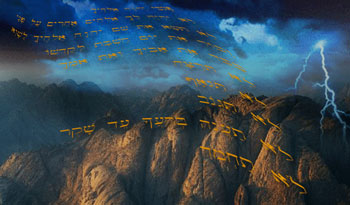 These precepts, as they are written in the Torah, are impossible to observe. What does it mean to keep the Sabbath “holy,” and what actions — if any — are required to “remember” it? What kind of sign are we to place upon our arms, if elsewhere the Torah prohibits the application of any tattoo, and how do we place a “remembrance” between our eyes? Nowhere does the Torah outline any prescription for ritual slaughter, nor does it imply what is commonly understood, that that the prohibition against cooking a baby goat in its mother’s milk extends to every mixture of meat and dairy products.
In spite of these and many other ambiguities, the basic practices of the Torah observant community have remained essentially unchanged for over 3300 years. The explanation is simple. Unlike the family encyclopedia which once gathered dust on the shelf and now gathers dust on the CD rack, the Oral Torah forces every committed Jew to see himself as custodian of a living tradition that connects him with the origins of his identity and enables him to live in the modern world without compromising the values of his ancestors.
No longer purely oral, the discussions and debates of past authorities have been recorded for their children in the writings of the Talmud and the commentaries that elucidate them. Unlike the records left behind by the Framers of the Constitution, however, these records have become canonized as part of the structure and process through which Jewish law is determined in each and every generation. Even when questions and disagreements arise, there is no debate within the Torah community over the methods through which answers and solutions are to be found.
Society changes, technology changes, and the values of human beings twist in the winds of time like a weather vane spinning before a storm. Electricity, automobiles, computers, cloning, and in vitro fertilization may have once been unimagined, but we have inherited a legacy that teaches us how those earlier generations would have resolved the problems of our changing world if they were here themselves today. And so the Torah Jew never loses his bearings, for he is guided by the words of his forefathers and finds comfort in the knowledge that the ancient wisdom of the Torah will never become stagnant, corrupted, or out of date.
As my teacher Rabbi Nota Schiller often says, the Oral Torah allows the Jews to change enough to stay the same.
Originally published by Jewish World Review

Guest Post: No Good Deed…
 A poor Jew finds a wallet with $700 in it. At his synagogue, he reads a notice saying that a wealthy congregant lost his wallet and is offering a $100 reward for it. He spots the owner and gives him the wallet.
The rich man counts the money and says, “I see you already took your reward.”
The poor man answers, “What?”
“This wallet had $800 in it when I lost it.”
They begin arguing, and eventually come before the rabbi.
Both state their case. The rich man concludes by saying, “Rabbi, I trust you believe ME.”
The rabbi says, “Of course,” and the rich man smiles. The poor man is crushed.
Then the rabbi hands the wallet to the poor man.
“What are you doing?!” yells the rich man.
The rabbi answers, “You are, of course, an honest man, and you say the wallet you lost had $800 in it. Therefore I’m sure it did. But if the man who found this wallet is a liar and a thief, he wouldn’t have returned it at all. Which means that this wallet must belong to somebody else. If that man steps forward, he’ll get the money. Until then, it belongs to the man who found it.”
“What about my money?” the rich man asks.
“Well, we’ll just have to wait until somebody finds a wallet with $800 in it…”

Why do we Cry? The Psychology of Tears
 My dog died. I just got engaged. An earthquake leaves thousands homeless. “Time in a Bottle” comes on the radio. I passed my college physics exam. My best friend has leukemia. My daughter just gave birth to twins. Another senseless terror attack takes innocent lives. Jimmy Stewart’s friends and neighbors all rally to his defense at the end of “It’s a Wonderful Life.”
It would be hard to compose a more random grouping, would it not? Taken individually, the items on this list seem so far removed from one another that anyone having the same emotional response to every one of them might reasonably be diagnosed as schizophrenic.
Well, maybe schizophrenic is what we are, since any of them could send any of us into a spell of sniffles, if not outright sobbing.
Which has to make us wonder: why do we cry? We all know when we cry.
We cry when we’re sad, and we cry when we’re happy. We cry when we’re lonely, when we’re in pain, when we hear bad news, and when we hear good news. We cry when we’re so overwhelmed with work or debt or family or life in general that we can no longer cope, and we cry when we’re so filled with joy that we want hug the world.
But what do all these highs and lows have in common? And why is crying our natural, involuntary reaction to emotional intensity?
Read more at: http://www.learning-mind.com/why-do-we-cry/

Free Judea Under Shimon Maccabee
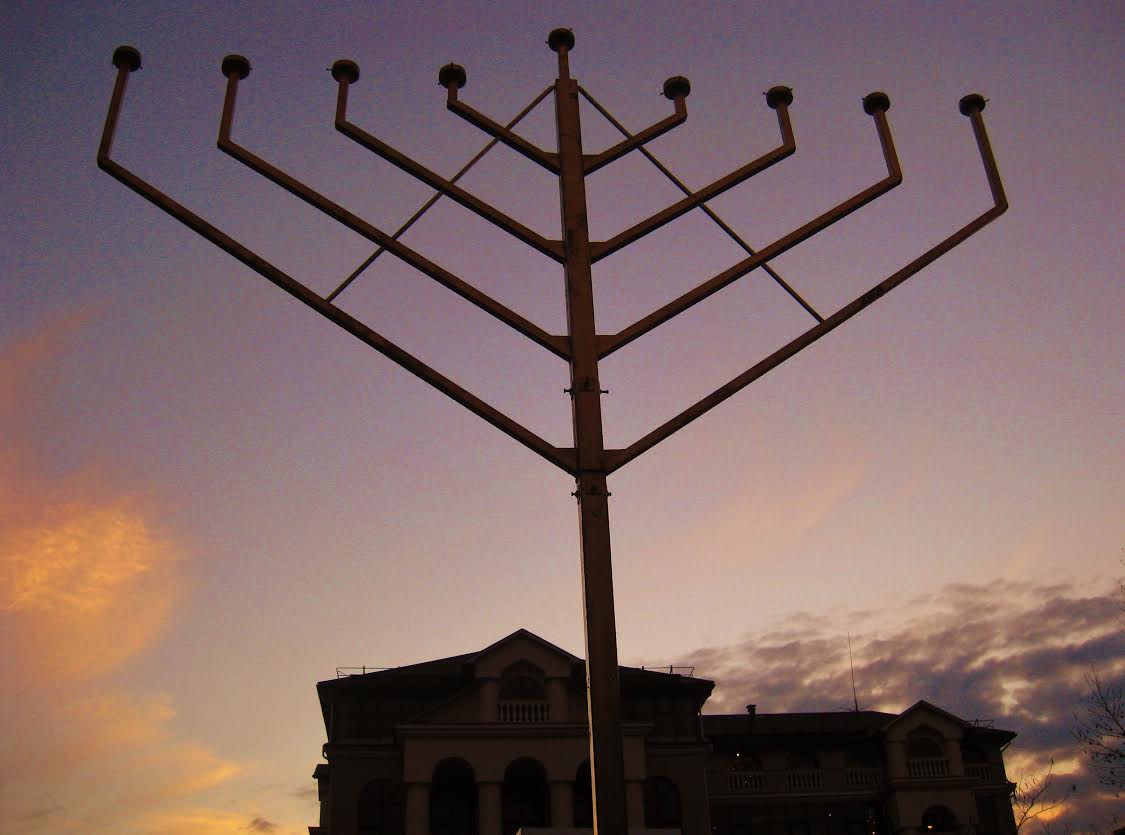 Virtually everyone has learned about the miracle of Chanukah and the rededication of the Temple in Jerusalem. But the tumultuous 22 years between the Hasmonean victory over the Seleucid Greek army and the establishment of an autonomous Jewish state are not nearly so well known.
In 165 BCE, the same year that the Maccabees recaptured the Temple, Demetrius I succeeded Antiochus IV as ruler of Syria. Immediately, the new monarch sought to consolidate his forces with the soldiers still garrisoned in Jerusalem and with the Hellenist Jews still determined to resist the authority of a Torah government.
The early success of the Maccabees evaporated before the renewed Syrian onslaught. Eleazar, eldest brother of Judah Maccabee, was the first Hasmonean casualty of war, crushed beneath the elephant he believed was carrying the king as he drove his sword upward into its belly during the battle of Beis Zecharyah. Only a year later, after defeating an army ten times greater his own and slaying the Seleucid general Nikanor, Judah Maccabee himself fell in battle as he attempted to defend Jerusalem with only 800 men. Both the capital and the Temple were lost, and Demetrius appointed Bacchides, a particularly cruel Seleucid officer, as governor over Judea.
CRISIS AND RECOVERY
After Judah’s death, his brother Jonathan assumed command of the Jewish resistance. Vastly outnumbered and in retreat, Jonathan prepared his army to flee across the Jordan river, where he hoped to reorganize his forces. Before he had completed the operation, however, enemy soldiers discovered and surrounded his hideout. Jonathan barely escaped with his life, while his brother Yochanon was captured and killed.
With his forces too weak to mount a conventional assault, Jonathan returned to the guerrilla tactics of the early Hasmonean revolt. Gradually, he rebuilt his strength until his own army attained parity with the Seleucid forces. Recognizing that Bacchides had lost the will to fight, Jonathan took advantage of the stalemate and dispatched messengers with offers of peace. Bacchides accepted, and Jonathan established himself north of Jerusalem in the village of Michmash, the early home of Saul, first King of Israel.
 Five years later, an attempted coup against Demetrius back in Syria provided Jonathan with the opportunity for which he had long been hoping. Preoccupied with his own fight for survival, Demetrius posed no threat at all as Jonathan advanced to seize Jerusalem and began refortifying the city’s defenses. Jonathan continued to monopolize on the fractious Seleucid government, playing Demetrius and his rival, Alexander Balas, one against the other. In short order, Jonathan secured his position in Jerusalem and reclaimed his hereditary position as High Priest in the Holy Temple. As the political situation in Syria deteriorated, Jonathan continued to expand his control over Judea.
TREACHERY AND REPRISAL
But Jonathan’s successes in diplomacy ultimately led him too far. When Tryphon, a new king in Syria, marched against Jerusalem, he found Jonathan waiting for him at the head of a much larger army of 40,000 men. Recognizing that he had no hope of victory, Tryphon convinced Jonathan to meet with him in Akko, where he captured Jonathan and subsequently murdered him.
After 17 years of Jonathan’s leadership, his brother Shimon, the last of the five Maccabean brothers, took his place as leader over Judea. In response to Tryphon’s treachery, Shimon threw his support to Tryphon’s rival, Demetrius II. In appreciation, on the 27th day of Iyar, 3619 (142 BCE), Demetrius formally exempted the Jews from their annual tribute and declared Judea fully independent, recognizing Shimon as its sovereign. Twenty-two years after the miracle of Chanukah, the Jews finally gained political autonomy for the first time since the era of the First Temple.
In the course of his rule, Shimon secured the boundaries of his tiny kingdom, repulsed an attack by Antiochus VII of Syria, and led his people into one of the greatest periods of prosperity of the Second Temple era.
Shimon’s own end was less glorious. He was assassinated by his son-in-law, Ptolemy, in the seventh year of his reign. Ptolemy’s ambitions profited him nothing, however, since Shimon’s son Yochanon drove him out of the kingdom. But Ptolemy did succeed in bringing the last of the sons of Mattisyahu to a violent death.
For the family who restored glory to the Jewish people, drove out the Selucid oppressors, resisted the corrosive influence of Hellenism, and returned the divine service to the Temple in Jerusalem, we hardly would expect such an inglorious end. We would also not expect such a mixed legacy: Shimon’s son and grandson both allied themselves with the heretical Sadducees; his great-grandsons began a civil war that resulted in the beginning of Roman rule over Israel and produced the bloody reign of Herod.
Where did the Hasmoneans go wrong?
THE DIVINE RIGHT OF KINGSHIP
Before his death, the Jewish patriarch Jacob prophesied that, “The scepter shall never depart from Judah,” meaning that no tribe other than Judah would ever rule legitimately over the Jewish people (Genesis 49:10). The reputation of Judah Maccabee as a brilliant general and an inspired leader remains unimpeachable. But from the moment he drove the Greeks out of Jerusalem, Jewish law required him to petition the Sanhedrin straight away for the appointment of a permanent leader from the dynasty of David. By retaining national leadership for himself and establishing a precedent followed by his brothers and their descendants, Judah sentenced the Hasmonean line to a destiny of one tragedy after another, until nothing remained but the memory of former greatness.
 There is another, deeper reason for the inevitable downfall of the Hasmonean dynasty. As members of the priestly kohanim,the Hasmonean family had their mission within the Jewish nation defined by the Torah as purely spiritual. Unlike the large majority of Jews who must strive to balance the pursuit of spiritual ideals with involvement in the material world, kohanim have no occupation other than Divine service and no portion in the Land of Israel other than the Temple itself.
Conversely, the kings, whose royal line descends from David himself, live a life of opulence and luxury, through which they endeavor to achieve an absolute synthesis of spirituality and materialism.
By shouldering the mantle of kingship, perhaps not in name but undeniably in practice, the
Hasmoneans encumbered themselves with the burden of kings — to harmonize the physical and the spiritual — obligating themselves in a service diametrically opposed to the austerity demanded by their intrinsic nature as priests.
Unable to succeed simultaneously as kohanim and as kings, the Hasmoneans condemned themselves to failure and, ultimately, self-destruction when they did not return the leadership of the Jewish nation to its rightful heirs, the descendants of the dynasty of David, the true kings of Israel.

The Secret of the Dreidel
 It’s more than a shame that Chanukah has become diluted to the point where potato latkes and jelly donuts excite many Jews more than the lights themselves.
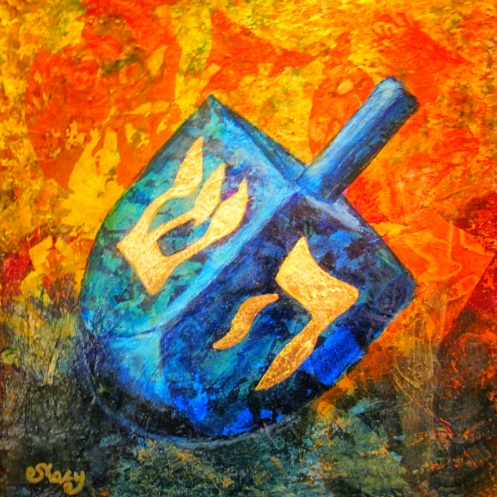
It’s not hard to understand how children, with their feverish expectation of presents eclipsing the true meaning of the season, fail to think deeply into meaning of the day. And it’s not hard to understand how children might never look beyond the message of their favorite Chanukah toy, the dreidel, tattooed with the letters nun, gimmel, hei, and shin as a superficial and simplistic acronym for neis gadol hayah sham — “a great miracle happened there.”
But why, as we grow older, don’t we ask if there’s anything more?
As for the dreidel, it truly strikes a dissonant chord that the sages of a people so rich in cultural wisdom and so steeped in spiritual symbolism could have composed no better a message than “a great miracle happened there.”
If the Passover matzah symbolizes exorcism of one’s inclination toward evil, if the shofar blast on Rosh HaShanah symbolizes the eternal cry of the soul to be reunited with its Creator, if the sukkah hut symbolizes the clouds of glory the guided and protected the Jews through their 40 years of wandering in the desert, is it possible that they dreidel could offer no more profound insight into the significance of Chanukah than “a great miracle happened there”? And if there is a deeper message, what is it?
EXILE UNDER FOUR KINGDOMS
The Greek domination that opens the story of Chanukah was only one of four exiles spanning the last 2400 years of Jewish history. Before the Greeks came the Persians; before the Persians came the Babylonians. And, after a brief autonomy following Greek rule, the Jews found themselves subjugated by a power far greater than the sum of the first three: the Roman empire, under whose exile the Jews remain until today, 15 centuries after the fall of Rome. But first to Babylon.
BABYLON — ATTACK UPON THE SOUL
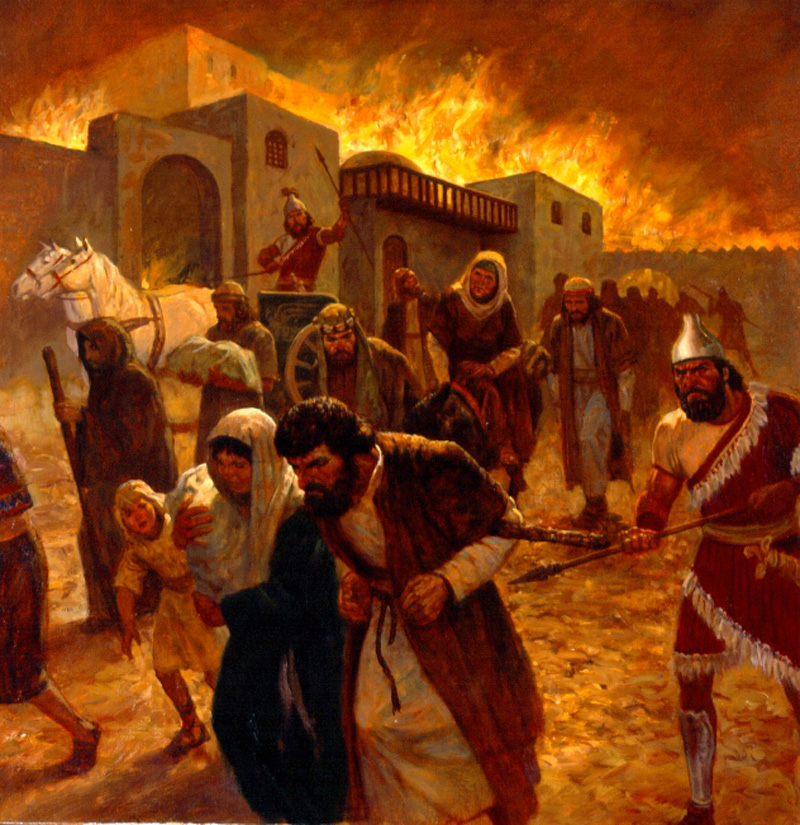 Frightened by the prophecy of Jeremiah that the Jews would return to their land after 70 years, the Babylonian king Nebuchadnezzar destroyed the Temple in Jerusalem and exiled the people from the Land of Israel. Nebuchadnezzar understood that if he attacked the nefesh, the soul of Jewish people, if he cut the Jews off from the source of their spirituality — the Temple and the Land — then he could sever their connection with the Almighty and nullify the prophecy of 70 years.
In fact, he was right. But he was also wrong, for the Jews retained a spiritual connection that Nebuchadnezzar failed to anticipate. Although separated from their homeland and G-d’s Sanctuary, they could not be separated from their Torah, the spiritual wellspring that keeps the nefesh of the Jews connected to their G-d no matter where they may find themselves scattered throughout the world. Jeremiah’s 70 years culminated with the famous writing on the wall, interpreted by the prophet Daniel, which foretold the death of Belshazzar, Nebuchadnezzar’s grandson, and the fall of Babylon.
PERSIA — BATTLE FOR LIFE ITSELF
The Persians, who conquered the Babylonians, attempted a much more direct approach. Harboring a bitter grudge against the Jewish sage Mordechai, Haman, viceroy to the king of Persia, conceived a plot to exterminate every Jewish man, woman, and child within the Persian empire. Where the Babylonians had tried to cut off the nefesh of the Jewish people, Haman would act far more boldly to cut down the guf, the physical body of the Jewish people.
When the Jews, by disregarding the counsel of their spiritual leader, Mordechai, forfeited the merit of divine protection against their enemies, Haman had his chance. But the moment the Jews repented the tables turned, and it was not the guf of the Jewish nation that was destroyed but Haman himself who swung from his own gallows.
GREECE — ASSAULT AGAINST THE MIND
The most subtle strategy, however, belonged to the Greeks. Also learning from the failure of their predecessors, they attempted to destroy neither the Jewish nefesh nor the Jewish guf. Instead, they embraced the Jews with open arms, welcomed the Jewish nation into their empire, and sought to seduce the Jewish people with the glittering magnetism of their culture.
The most dangerous and most insidious weapon ever to be directed against the Jews was perfected by the Greeks: assimilation, the attack upon the seichel — the Jewish intellect and the Jewish mind.
Greek culture celebrated the physical and the material, raising artistic expression and architectural design to previously unimagined sophistication and beauty. The Greeks exalted the human body, their perfectly toned and trained athletes performing Olympic feats naked before adoring and exulting crowds. Indeed, Greek philosophy perceived the human form and the human psyche as the pinnacle of creation, with no higher being and no higher authority to rival the perfection of Man.
In their arrogance, the Greeks created a pantheon of gods remarkable not for their kindness or their mercy or their grace, but for their lust, their vengeance, and their spite. The most base human impulses became not only glorified but deified through the Greek gods and the myths extolling them.
The external beauty and indulgent pleasure of Greek culture exerted a powerful attraction over all Greek subjects, and the Jews were not impervious to its assault. But whereas other pagan peoples lacked a commitment to virtue and morality, the substance of Judaism has always called for every Jew to aspire toward moral and spiritual self-perfection. By insinuating their culture into the everyday lives of the Jews, the Greeks undermined the ideological foundations of Jewish belief and Jewish practice, gradually ensnaring the minds — the seichel — of many Jews.
Thus were born the Hellenists, Jews who sought to bond the externality of the Greeks with the substance of Judaism, a marriage that could only result in the ultimate extinction of the Jew and his culture. But the Maccabees, rising up to meet the threat against the Jewish mind, drove the Greeks out of Jerusalem, rededicated the Temple, rekindled the lights, and restored the purity of Jewish practice, Jewish tradition, and Jewish culture to the land.
ROME — THE SUM OF OUR FEARS
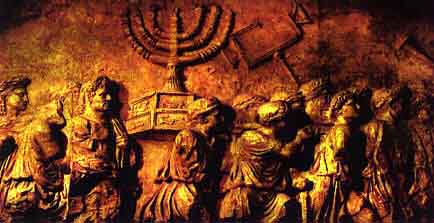 Finally came Rome, a culture that produced no innovations but borrowed from the peoples it conquered as it spread its military and political influence across most of the civilized world. As pagan as Babylon and Persia, as materially self-indulgent as Greece, Rome mimicked not only the nations it subdued but also the tactics employed by its predecessors against the most culturally stubborn of all its subjects, the Jews.
Like Babylon, Rome tried to destroy the spiritual nefesh of the Jewish people by destroying the Second Temple and exiling the Jews from their land. Like Persia, Rome tried to crush the physical guf of the Jewish nation through pogroms and violent decrees. And, like Greece, Rome tried to destroy Jewish culture through assimilation, attacking the seichel of the Jews. The Roman strategy, therefore, may be characterized as hakol — a combined assault against the nefesh, guf, and seichel of the Jewish people.
Until today, long after the decline of Rome, assimilation remains the greatest threat to Jewish survival.
THE SECRET OF THE DREIDEL
 The word Chanukah derives from the Hebrew word chinuch — Jewish education. The greatest defense against spiritual, physical, and cultural attack is the knowledge of one’s own beliefs and the commitment to one’s own traditions that endure only when they are founded on a solid education of cultural thought and practice. The flames of Chanukah symbolize the light of self-knowledge and the wisdom that comes from knowing what it means for Jews to live as Jews.
The dreidel does indeed recall far more than the simple formula that “a great miracle happened there.” It reminds us of the tactics employed by the four kingdoms that sought our destruction. The letter nun recalls the Nefesh of Israel that the Babylonians tried to cut off. The letter gimmel stands for the Guf of Israel that the Persians tried to cut down. The letter shin echoes the Seichel of Israel that the Greeks tried to corrupt. And the letter hei stands for Hakol, the combined efforts of Rome to destroy the Jewish nation on every front.¹
Yes, a great miracle did happen there. But to see nothing more than that shallow message is to miss the profound depth of the miracle itself, to see the dreidel, the lights, and the miracle of Chanukah as a Greek would see them.
To see them as a Jew, with all their complexity and substance and beauty, is to truly appreciate and truly commemorate Chanukah in all its glory.²
Originally published in Jewish World Review
¹The gematria (numerical equivalents) of the letters of the dreidel — nun (50), gimmel (3), shin (300), and hei (5) — add up to 358, equaling the gematria of nachash (serpent), the influence of which has dominated the world since the Serpent in the Garden of Eden convinced man to sin, as well as the gematria of Moshiach (Messiah), whose influence will ultimately conquer and replace the influence of the Snake in the End of Days.
²Adapted from the Chassidic classic, B’nei Yissasschar

The Candles and the Tree
 It was the December after my ninth birthday. A menorah rested on the bookshelf over the television console. Across the room, beside the fireplace, the lights of a tree twinkled red and green and blue. I was standing next to my mother as she held a candle in her hand. My father wasn’t there. He wasn’t into these things.
My mother lit the lone candle, ushering in the first night of Chanukah. She didn’t recite the blessing. She didn’t know it. I remember watching the wick catch, watching the flame grow bright, and asking myself, “Now what happens?”
“We light the candles for eight nights because the oil burned for eight days,” my mother had told me. What oil? I wondered. But something about her brief explanation stopped me before I asked. Maybe she didn’t know, either.
A year or two later, at my suggestion, the menorah had disappeared and only the tree remained. Waiting for the morning of December 25th when all the presents could be opened at once seemed far more dramatic than diluting the experience over a week, especially when those wrapped boxes mysteriously appeared under the tree day after day over the course of almost a whole month. Chanukah just couldn’t compete.
Only two decades later did I come to appreciate how much my own experience had truly been a Chanukah story.
SEEKING SPIRITUALITY FROM A TO ZEN
When I went away to college, I left behind the tree with the menorah. December 25th had become as irrelevant as Santa Claus, and I preferred an envelope with a check to wrapped presents that would most likely be returned for credit. I eagerly adopted the ambivalent agnosticism of so many of my peers, celebrating dormitory weekends by emptying six-packs rather than observing commercialized annual holidays with empty rituals.
Sometime toward the end of my university career I found myself attracted to Zen. Not in the traditional style, with its practices of discipline and self-mastery, but the pop-spiritual variety learned from Zen and the Art of Motorcycle Maintenance and similar modern scriptures.
Aligning myself with the spiritual energy of the universe became my goal. I wanted to choose good over evil because, ultimately, that brought good karma and tranquility. Surely, this was the road to Truth.
But we all know which road is paved with good intentions. As sincere as I may have been in my aspiration to travel the road to Truth, I found with annoying frequency that when my desire to do good clashed with my desire to indulge amoral self-interest, good threw in the towel at least two times out of three. Forced to take stock of myself, I had to concede that, for all its high-sounding ideals, a spiritual discipline that produced no moral discipline wasn’t worth its mantras.
TOO LATE FOR THE HIPPIES
 I hadn’t developed much discipline in my academic life, either. Oh, my grades were good enough, but four years studying English literature and writing had left me with neither gainful employment nor vocational direction. It was 1983, a decade late to join the hippies or beatniks, but that didn’t stop me from swinging a backpack over my shoulders and hitchhiking across the country. If I hadn’t found Truth in the ivory tower, perhaps I might find it in the heart of America.
Sixth months crisscrossing the country brought me no closer to Truth, but it did whet my wanderlust, and I soon boarded a flight across the Atlantic to continue my journey through Europe, after which Africa, Asia, and Australia lay upon my horizon.
Half a year into my journey, Europe ended with a short hop across the Mediterranean to Israel, where I sought to have a classical Jewish experience — volunteering to pick oranges on a kibbutz. But it was December, with little agricultural work to be done; moreover, the dollar was strong, resulting in some 9 million American tourists in Europe, many of them draining south into Israel as winter weather set in. I found the kibbutz placement office blocked by a line of 20-somethings camped out like they were waiting for tickets to a Rolling Stones concert, oblivious to the signs screaming, NO PLACEMENTS UNTIL JANUARY.
Desperate for a break from the stresses of travel on a shoestring, I cast about for some way of imposing routine upon my life before departing for Africa and, somehow, found myself invited to attend yeshiva.
Yeshiva? The word was unfamiliar, but the offer of a bed, hot meals, and a daily schedule of classes proved irresistible. It was two weeks before Chanukah, and I would finally learn about the secrets of the menorah and the miracle of the oil.
THE CLASH OF CULTURES
Although a period of peaceful coexistence followed Alexander the Great’s occupation of the Land of Israel, it didn’t take long after Alexander’s death before the ruling governments began to feel first discomfited and later threatened by their Jewish subjects and the Judaism they practiced. Greek philosophy recognized man as the pinnacle of creation, perfect in his accomplishments, answerable to no one but himself. Greek mythology embraced a pantheon of gods characterized by caprice and selfishness, by lust and vengeance, thereby sanctioning similar behavior among men.
And even though it was no longer the Greeks who controlled Israel, the Ptolemys of Egypt and later the Seleucids of Syria had thoroughly absorbed the cultural values of the empire that had briefly ruled over them. How offended they must have been by a Jewish society devoted to self-perfection through submission to a divine code of moral conduct.
When they could no longer tolerate the Jewish threat to their ideals, the Syrian-Greeks contrived to destroy Jewish ideology. Whereas their predecessors, Babylon and Persia, had turned to violent oppression, the cultural successors of Alexander’s empire posed a much more subtle danger: in place of physical violence or outright prohibition of Torah observance, Antiochus IV of Syria banned only three practices: the Sabbath, bris milah (circumcision), and Rosh Chodesh, the sanctification of the new month.
The Sabbath testifies to the divine nature of the physical universe: without this weekly reminder, we easily loose touch with and ultimately forget our relationship with the Creator of all. Bris milah testifies to the divinity of life: it is the sign of our higher calling, reminding us that we can control our physical impulses rather than allowing them to control us, that each of us is a work-in-progress striving toward self-completion and self-perfection. Rosh Chodesh testifies to the divinity of time: it is the ceremony that fixes the calendar and imbues the Jewish holidays with an intrinsic holiness. Without Rosh Chodesh, placement of the holidays would become arbitrary, leeching all meaning from them the way American Federal holidays have lost all substance in the eyes of most Americans.
 The Jews refused to submit, and in the end the Syrian-Greeks resorted to more draconian decrees and eventually violent repression. But their plan had been sound: had they succeeded in stopping our adherence to those three basic precepts, they would have succeeded also in reducing Torah observance to an empty ritual, one that might have continued on for generations, but would have quickly become bereft of all meaning and spiritual significance. For this reason, the observance of Chanukah always includes one Sabbath, always passes through Rosh Chodesh, and is eight days long as a remembrance of the bris, the covenant between the Jew and his Creator.
Chanukah celebrates victory not only over our Grecian oppressors, but also over the Hellenists, those Jews who promoted a new syncretism of Judaism, wherein they hoped to intermingle Jewish practice with that which they found most attractive in Greek culture. The Maccabees recognized the absolute incompatibility between Greek ideology and Jewish philosophy, and they foresaw that ultimately one would have to prevail over the other. Without staunch defenders fighting for Jewish identity, the torch of Judaism would inevitably be extinguished and only the tree of foreign culture would remain.
ILLUMINATING THE GENERATIONS
Despite the victory of the Maccabees, the threat from Greece did not disappear. To this day it persists in its cultural assault against the values of Jewish tradition. The nine year old boy in America, or Britain, or even in Israel, who looks at the Chanukah candles and wonders what they mean, who sees no difference between the flames of the menorah and the twinkling lights of the tree, testifies to the victory of the Greeks.
But not every child has forgotten the lights. The rekindling of the menorah each year reminds us that the torch of Jewish tradition continues to illuminate generation after generation and dispel the darkness of apathy and assimilation. However much the ideological descendants of the Greeks strive to extinguish the lights, the eternal flame that burns within the soul of the Jewish people still shines on and on.
In my own observance of Chanukah, I rejoice that my own children have grown up not only with the lights of the menorah, but with a growing understanding of what they mean. I’m grateful that I’ve been able to give them what my parents were unable to give me: self-knowledge, the greatest weapon against cultural extinction.
Through the generations and across the world, the Jewish people have successfully adapted to living as guests among disparate societies, but only by retaining a strong sense of our history, the values of our heritage, and a familiarity with the culture that keeps our sense of identity alive and vibrant. Compromise these, and the Jew, together with his Judaism, will surely vanish. Preserve them, and we guarantee that the victory of the Hasmoneans over the Greeks will be renewed in every generation as a victory of the Jewish people over assimilation.
Originally published in the St. Louis Jewish Light and Aish.com.

Why Jews are Liberals
After primary candidates addressed the Republican Jewish Coalition last week, it’s worth revisiting these thoughts from 2010 examining the overwhelming support by Jews of Democrat candidates year after year after year:
 Now that even the New York Times has acknowledged Barack Obama’s confrontational stance toward the State of Israel, one might wonder why American Jews have yet to demonstrate even a hint of buyer’s remorse over their ardent support for the president in the last general election. Long-time Commentary Magazine editor Norman Podhoretz wondered the same thing in a Wall Street Journal editorial last September, in which he posed the title question, “Why are Jews Liberals?”
The article — then a teaser for the author’s new book by the same name — never got around to answering its own question. Indeed, Mr. Podhoretz seemed distinctly less interested in contemplating why Jews are liberal than in pontificating about why they should be more conservative.
He has a point. For over three thousand years, Jewish society has promoted what today are called “traditional values,” those social mores that came to define “tradition” precisely because they were universally held by so many for so long. The sanctity of life, of family, of sexuality, of charity, and of prayer — all these find their origins in Torah Judaism. Moreover, throughout the Biblical and Talmudic eras the structure of the Jewish socioeconomic community was essentially capitalistic, with the free market determining business activity and the social safety net for the poor and the weak provided (successfully) by individual responsibility within a framework of communal obligation
Why then, asked Mr. Podhoretz, have American Jews indulged their love affair with liberalism since Franklin Roosevelt (who demurred from even a token act of intervention on behalf of the 6 million Jews murdered by the Nazis)? Why did American Jews disregard John McCain’s long record of support for Israel and Barack Obama’s open association with known anti-Semites to vote for Mr. Obama by a margin of almost four-to-one? (And why, I might add, if the vote were held today, would the likely results be just about the same?)
Good questions. And although Mr. Podhoretz sidestepped any effort to answer them, there is an answer.
STRANGE BEDFELLOWS
As much as all conservative values trace their origins to Jewish tradition, liberal values trace their origins to the same source — to exactly the same degree.
No one has articulated this better than the non-Jewish historian Paul Johnson: “To [the Jews] we owe the idea of equality before the law, both divine and human; of the sanctity of life and the dignity of human person; of the individual conscience and so a personal redemption; of collective conscience and so of social responsibility; of peace as an abstract ideal and love as the foundation of justice, and many other items which constitute the basic moral furniture of the human mind.” In other words, Judaism is an ideology devoted to the betterment of the human condition based upon values and goals that are fundamentally liberal.
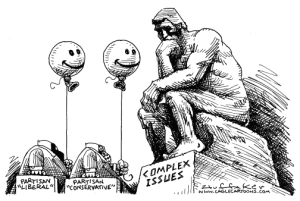 That being said, it may be the greatest misconception of the modern ideological divide that conservatism and liberalism must be mutually exclusive. Conservative traditionalism emphasizes the necessity of building upon the past, while liberal idealism focuses upon the responsibility to shape the future. Conservatism without forward thinking becomes calcified and reactionary. Liberalism without respect for tradition mutates into caricature and absurdity.
The corruption of modern liberalism is evident across the spectrum of political ideology. The sanctity of life has devolved into the rejection of capital punishment while simultaneously negating both the value and the rights of the unborn. The dignity of human person has been distorted to support euthanasia for both unwanted infants and the elderly infirm. Equality before the law has become a bludgeon in the hands of criminals and a straightjacket to constrain victims. Collective conscience has become the underpinning of nonjudgmentalism, whereby every form of perversion gains acceptance as an “alternative lifestyle.” The notion of divinity has vanished altogether, replaced by the self-worship of secular humanism.
Oblivious to these resounding contradictions, secular Jews have rallied to modern liberalism under the banner of tikkun olam, literally “the rectification of the world.” In its new, common usage, however, tikkun olam means something very different from what it meant when the concept was first articulated over 32 centuries ago.
TO REPAIR THE WORLD
Advocacy for saving the rainforests and for saving the whales, for developing renewable resources and for leaving a smaller carbon footprint — these are just some of the enterprises gathered by pop-Jewish philosophy under the umbrella of tikkun olam. According to the ancient wisdom of the Torah, however, every human being is a microcosm of Creation, a world — or olam — unto himself. Yes, it is important for human beings to act as responsible custodians of the Almighty’s world, but the rectification of the universe is a process that ultimately begins and ends within oneself.
How does an individual repair himself and thereby bring his world a step closer to perfection? By cultivating moral behavior and spiritual sensitivity based upon traditional values through acts of kindness, charity, and spiritual self-discipline. When I change myself, I change the world around me, and I do so far more substantially than by trying to change others while I remain the same. My own mandate to repair the world rests upon me alone and can be delegated to no one else.
Modern liberalism has adopted the belief that change depends upon governmental and judicial activism. Ironically, by shifting responsibility for social justice from the individual to the state, modern liberals have abdicated their own responsibility to address the very injustices they yearn to change. And with the abdication of social responsibility, it requires only a short step before even the most basic moral and spiritual axioms are similarly discarded. Finally, with no moral compass to guide it, modern liberalism has embraced the amorality of ancient Greece and the bacchanalia of ancient Rome not only as lifestyles but as models in the image of which contemporary society should be remade.
In truth, the liberal impulse is not only healthy but integral to human existence in general and to the mission of the Jewish people in particular. That impulse proves beneficial, however, only when guided by fealty toward the traditional values that have become associated with conservatism. By cutting themselves off from their spiritual moorings, secular Jews have indeed become the most exuberant seekers of causes for social and environmental justice as they seek any available ism to replace the calling of their ancestral heritage. But their headlong stampede toward utopianism more often resembles the frantic race of lemmings to the sea than an effective campaign for global reconstruction.
Mr. Podhoretz wonders at the alliance of American Jews with the liberal apologists who level every imaginable indictment against the country that granted them the freedom to achieve unprecedented prosperity. In the aftermath of the Passover holiday, it is worth reflecting upon the Jewish concept of freedom. To be truly free, we have to define morality not according to passing fads and fancies but according to the precepts that determine who we are and from where we have come. Only when we fully understand and commit ourselves to the principles that have sustained us since the dawn of civilization can we truly repair the world.
Originally published by Jewish World Review

The Boundaries of the World
 This week, the world observed the 100th anniversary of Albert Einstein publishing his General Theory of Relativity. The effects of his revelation extend far beyond what most of us imagine, as I outline in this excerpt from my book Proverbial Beauty: Secrets for Success and Happiness from the Wisdom of the Ages.
Do not remove the boundaries of eternity, which were set in place by your forefathers (Proverbs 22:28).
Writing for Environmental Health Perspectives, Ron Chepesiuk cites research that exposure to artificial light can prevent trees from adjusting to seasonal variation, affecting the behaviors, foraging areas, and breeding cycles of insects, bats, turtles, birds, fish, rodents, and reptiles even in rural settings. Urban light has caused disorientation in migrating birds, accounting for avian deaths estimated between 98 million and one billion each year.
The 24-hour day/night cycle, known as the circadian clock, affects physiologic processes in almost all organisms. These processes include brain wave patterns, hormone production, cell regulation, and other biologic activities. Disruption of the circadian clock is linked to several medical disorders in humans, including depression, insomnia, cardiovascular disease, and cancer, says Paolo Sassone-Corsi, chairman of the Pharmacology Department at the University of California, Irvine, who has done extensive research on the circadian clock. “Studies show that the circadian cycle controls from ten to fifteen percent of our genes,” he explains. “So the disruption of the circadian cycle can cause a lot of health problems.”
A meeting sponsored by the National Institute of Environmental Health Sciences (NIEHS) concluded that, although there is still no conclusive evidence, the correlation between altered patterns of light and dark in the modern world and dramatic increases in the risk of breast and prostate cancers, obesity, and early-onset diabetes appears more than coincidental.
And, of course, we can no longer see the stars.
Breaches in natural boundaries have taken many other forms as well:
- In 1884, a farmer visiting the Cotton States Exposition in Louisiana brought back a few Venezuelan water hyacinths to decorate the fountain outside his home in Florida. Today, the aggressive purple flowers choke 126,000 acres of waterways.
- Kudzu, a Japanese vine imported in 1876 to prevent erosion, is currently spreading through the southern United States and expanding at a rate of 150,000 acres a year.
- The European rabbit, introduced to Australia in 1859, has reached a population of over 200 million, necessitating the construction of a 2000 mile long rabbit-proof-fence to prevent the wholesale destruction of farmlands.
- In 1956, African bees brought over by Brazilian scientists to breed for honey production escaped their quarantine and gave rise to the noted “killer bee” scare.
The list goes on and on. In the United States alone, containment costs of invasive species are estimated at $138 billion annually.
But the violation of natural boundaries has even more broad-reaching consequences, affecting not only the stability of our physical world but the integrity of the moral universe as well. In his book Modern Times: the world from the twenties to the nineties, historian Paul Johnson analyzes the impact of Albert Einstein’s theory of relativity upon the way Western society began to look at the established values of the ages:
All at once, nothing seemed certain in the movements of the spheres… It was as though the spinning globe had been taken off its axis and cast adrift in a universe which no longer conformed to accustomed standards and measurement. At the beginning of the 1920s the belief began to circulate, for the first time at a popular level, that there were no longer any absolutes: of time and space, of good and evil, of knowledge, above all of value. Mistakenly but perhaps inevitably, relativity became confused with relativism.
No one was more distressed than Einstein by this public misapprehension. He was bewildered by the relentless publicity and error which his work seemed to promote…
Einstein was not a practicing Jew, but he acknowledged a God. He believed passionately in absolute standards of right and wrong… He wrote to [colleague Max] Born: “You believe in a God who plays dice, and I in complete law and order in a world which objectively exists and which I, in a wildly speculative way, am trying to capture. I firmly believe, but I hope that someone will discover a more realistic way or rather a more tangible basis than it has been my lot to find.”
But Einstein failed to produce a unified theory, either in the 1920s or thereafter. He lived to see moral relativism, to him a disease, become a social pandemic, just as he lived to see his fatal equation bring into existence nuclear warfare. There were times, he said at the end of his life, when he wished he had been a simple watchmaker…
[T]he public response to relativity was one of the principal formative influences on the course of twentieth-century history. It formed a knife, inadvertently wielded by its author, to help cut society adrift from its traditional moorings in the faith and morals of Judeo-Christian culture.
It’s hard not to be impressed by the prescience of King Solomon. When civilization depended upon candlelight to hold back the darkness, the inexorable cycle of day and night forced us to conform to the natural order. True, our lives have become more convenient and more comfortable, but once electric lighting pushes away the darkness of night, once central air conditioning and heating insulate us from the changing of the seasons, once cars and planes shrink the distance between faraway places, once electronic communication eliminates all delay in correspondence and information and, indeed, once science itself seems to provide justification that all boundaries are negotiable, is it not inevitable that society will begin to challenge moral boundaries as well?
There are no absolutes when every established norm is threatened by the inertia of change for the sake of change and an idealized vision of unrestricted freedom. Once change becomes the new normal, human society has little hope of curbing the headlong rush into chaos and social disintegration into moral anarchy.
In the same way that we have to defend the integrity of natural and moral boundaries as a society, we have to guard the boundaries between ourselves and those around us when the order of society begins to crumble. But no matter how much we try, we can never completely seal ourselves off from the influences of the culture in which we live.
I discovered this frightening truth on a trip to southern Asia, where a popular joke is repeated only half-jokingly:
In America people drive on the right side of the road.
In England, people drive on the left side of the road.
In India, it’s optional.
Only when society as a whole preserves its respect for the traditions that have been handed down through the ages will the structure of that society endure. But if each generation believes that it can reject the standards of its forbears from a position of moral superiority, the next age of darkness can be found lurking right around the corner.

The Heroism of Giving Thanks
Originally published in 2002 by the St. Louis Post-Dispatch and the Baltimore Sun.
Will Rogers couldn’t have said it better: No nation has ever had more, yet no nation has ever had less. And it’s easy to understand why the two go together.
The Talmud observes that the moment a person acquires $100, he immediately wants $200. The more we have, the more we want. And the more we believe in our own entitlement, the more likely we are to forget both our humble origins and our obligations to others.
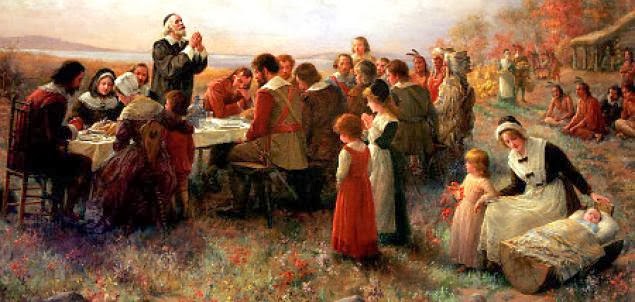 It’s somewhat heartening, therefore, that Thanksgiving has retained so prominent a place in American culture, even if most of us rarely give a passing thought to the Puritan ideals that gave birth to the first Thanksgiving.
Who were the Pilgrims? The settlers who stepped off the Mayflower in 1620 were not adventurers or opportunists. They were devout Protestants seeking a pure, uncorrupted expression of the Christian values they had found wanting in their native England.
They paid a high price for their idealism: Half of them died during that first, brutal, Massachusetts winter. But summer brought hope, and out of hope they declared a festival to thank their Creator for their survival and for their hard-won religious freedom.
Political freedom was still a novel idea in Europe then, although the concept had existed for nearly 3,000 years, since the Jewish exodus from Egypt. The notion of religious freedom, introduced to the world somewhat later, was already 17 centuries old when the Pilgrims landed at Plymouth Rock.
 Back then, the Jewish nation had been at war not only with the Selucid Greeks, which controlled Israel, but also with itself. The Hellenist Jews found much in Greek culture that they admired and eagerly sought to incorporate into Jewish practice, while the majority of the Jews recognized the inherent incompatibility of Judaism, with its focus on the perfection of the soul, and Grecianism, with its self-worship of body and intellect. Behind the Hellenists, however, towered the full power of the Selucid Empire, before which the ideal of Jewish cultural purity seemed to have little hope of survival.
But the weak rose up against the strong and the many were vanquished by the few. Shouts of freedom echoed through the streets of Jerusalem as the Maccabees rekindled the lights of the Temple in purity, and the festival of Chanukah was established as “days of thanksgiving and praise to [the Almighty’s] great name.”

“This year we’re having goose instead. It was flaunting its wealth and showing off its golden eggs.”
The complacency of the Jews and their unwillingness to toil in the preservation of their own cultural values put them in danger of cultural extinction. The complacency of Christian Europe, in the eyes of the Puritans, led to a dilution and a depreciation of Christian values. And the ultimate realization of the Jews, like the realization of the Puritans centuries later, was that ideals not fought for and defended cease to remain ideals.
The true heroes in any society are those prepared to struggle for their ideals, those ready to sacrifice for a greater good, those who understand that nothing of value ever comes cheap or easy. When we take freedom for granted, we stand in danger of losing it. And the surest way of taking anything for granted is by failing to express appreciation.
Life begins with struggle. And when struggle ends, life ends with it. Indeed, it is that very struggle that makes life worth living. Both Thanksgiving and Chanukah remind us to be grateful not just for the success, but even for the struggle.
Especially for the struggle.
 Yonason Goldson