Home » Posts tagged 'Psychology' (Page 24)
Tag Archives: Psychology

Embrace the Unknown and Discover Joy
 Question #1: You’re at an auction. Item #12 is a set of six glass goblets. Item #13 is a mystery set of either four or six glass goblets… you’ll only find out once the bidding is over. Which item is likely to go for a higher price? Needless to say, you would be willing to pay more when they know you’re getting six goblets than you would if you might end up with only four.
Question #2: You’re working at a job for which you will be paid $20. The person next to you is doing the identical job, but doesn’t know whether he will be paid $10 or $20. Who is going to work harder? Needless to say, you will, since you know that you’ll be paid at least as much and maybe twice as much as the other guy.
But guess what? Research shows just the opposite.

Remembering the Boston Bombing
After the sentencing of Boston Marathon bomber Dzhokhar Tsarnaev last week, I’m revisiting some thoughts from the days after the 2013 bombing:
 Zebadiah Carter describes himself living in “an era when homicide kills more people than cancer and the favorite form of suicide is to take a rifle up some tower and keep shooting until the riot squad settles it.” In 1980, this remark by the main character in a Robert Heinlein novel sounded like the science fiction that it was. Now it echoes like a prophecy.
Random acts of mass violence in the United States still horrify us but no longer shock us. We’ve heard too many stories, seen too many pictures. And too many of them are depressingly the same:
- 20 students and 6 adults murdered at Sandy Hook Elementary School.
- 12 killed and 58 wounded at the Century Theater in Aurora, Colorado.
- 13 killed and 30 wounded at Fort Hood.
- 32 dead and 17 wounded in the Virginia Tech massacre.
And those are only the bloodiest atrocities going back to 2007. The Columbine school shooting in 1999 adds another 39 victims to the tally. And, of course, Timothy McVeigh’s bombing of the Federal Building in Oklahoma City in 1995 claimed 168 lives and injured nearly 700.
Now we have to try and make sense of this latest act of senselessness — the Boston Marathon bombings, which shattered an iconic American institution and shook our already precarious sense of order and security.
Amidst all the suffering and all the investigation, the question we most want answered is why?
We’ve asked the same question before. According to reports, Adam Lanza was bullied as a student at Sandy Hook; Eric Harris and Dylan Klebold were bullied at Columbine High School; so was Timothy McVeigh as a boy in Pendleton, New York. There were also histories of psychiatric problems, as there were with Seung-Hui Cho before his attack on Virginia Tech, James Eagan Holmes before Aurora, and Nidal Malik Hasan before Fort Hood.
But these explanations offer little in the way of real answers. Almost all of us were bullied when we were younger without seeking murderous retribution against our tormentors, and most of us can lay claim to at least some kind of neurosis. More to the point, why is random violence on the rise, if the root causes have been around for generations? According to data assembled by Mother Jones Magazine, nearly 40% of mass shootings since 1982 have taken place in the last seven years (excluding robberies and gang-related incidents). If so, what has changed? And can we expect it to get worse?
Ultimately, it may be all about control. “These kids often feel powerless,” psychiatrist Peter Langman told LiveScience. “The one way they can feel like they’re somebody is to get a gun and kill people.”
“Out of control” is a term that seems increasingly characteristic of the world we live in. On the one hand, technology provides us with the power of information, opportunity, and access at a level unimaginable barely a decade ago. But on the other hand, our inability to manipulate so much power leaves us feeling both frustrated and inadequate, while the triumphs of others make us feel like pawns in a game we can never win. With the world at our fingertips, success and happiness remain damnably elusive.
 And so we flail about with increasing desperation, constantly trying to push ourselves just a little harder and work just a little faster. Day by day, our sense of anger and resentment toward a society that promises so much and delivers so little builds within us until we feel ready to explode. In a world gone mad, what else can we do but get mad at the world?
The fallacy, however, is the world has not made sense since the beginning of time. So observed King Solomon, the wisest of all men, in his Book of Ecclesiastes, compiled over a lifetime spent searching for meaning and justice:
And I returned and saw under the sun that the race is not to the swift nor the battle to the strong, neither is there bread to the wise, nor riches to men of understanding, nor yet favor to men of knowledge; but time and death will overcome them all.
Really, all that has changed is our expectation. We have been taught to believe that anything we desire is within our grasp, that we are entitled to the love of poets, the wealth of kings, the pleasures and the power of the gods. Our culture has etched upon our collective consciousness the inalienable right to life, liberty, and the pursuit of happiness. And although Thomas Jefferson had the wisdom not to assert the right to happiness itself, that subtle distinction is lost on most of our generation.
Given the fantasy images of Pixar and Dreamworks, the superhero illusions of the silver screen, and the miracle gadgets that fit in the palm of our hands, what can we expect from a youth wholly unprepared for reaching the age of responsibility? And when they confront the seeming impossibility of leaving their mark on the world through any positive contribution, why should we be surprised when they choose violence as their final recourse to make the world take notice of their existence?
And yet, for all that, Solomon himself did not give in to despair and hopelessness, despite the words of lamentation with which he begins Ecclesiastes:
Futility of futilities — all is futile!
But it is not Solomon’s opening words that contain his ultimate message. It is the words he offers at the end, in sharp contrast to all the observations he offers before:
The sum of the matter, when all is heard: Fear the Divine and keep His commandments, for this is the entirety of Man.
Viewed superficially, this world is a place of chaos, without rhyme or reason, without justice or pity. Says Solomon: do not look at the outer trappings of creation, but search for the nobility of man. Recognize the greatness that compels a 27 year old first grade teacher, with scarcely a moment’s notice, to give up her life in the protection of her innocent charges. Admire the reflexive heroism of bystanders who rushed to help the injured at the finish line, without regard for whether another explosion might make them victims themselves. Do not lose hope in the face of wanton violence, but take inspiration from the lofty heights to which Man can rise.
In the marathon of life, some finish and some fall. But greatness is measured by perseverance, by pursuing the unique potential that resides within each of us us, by our determination to choose good over evil and show the world that the divine spark of the human spirit will never die.

What’s in a Name? Everything!
A name is not merely a label; it is an expression of the thing itself.
For instance, in Hebrew a donkey is a chamor. A variant form of the same word, chomer, means “mortar,” the cement used in laying bricks. And so the animal most characterized by its stubbornness is called by a name that also connotes “thickness.” The dog, known for its loyalty, is called a kelev, which can also be read as k’lev, which means “of the heart.” Names can provide insights into the nature of the world, if we know how to interpret them…
The meaning of a name can offer an insight into one’s intrinsic character. The name David means “beloved,” suggesting the capacity to form deep emotional bonds. The name Deborah means “bee,” suggesting an industrious nature as well as a personality that can both sting and sweeten. The name Abigail means, “source of joy,” suggesting a talent for providing happiness to others. Awareness of our innate, individual abilities can motivate us to develop potential that would otherwise remain dormant deep within us.

When does encouragement turn deadly?
A New York Times article last month highlighted suicide clusters among Palo Alto high school students over the past few years. Many believe the reason lies in mixed messages from parents who tell their children to do their best and be happy, but who clearly won’t be happy themselves if their children’s best doesn’t get them into Ivy League universities.
Dr. Glenn McGee, the district superintendent, thinks that parents don’t get it. “My job is not to get you into Stanford,” he said he tells parents and students. “It’s to teach them to learn how to learn, to think, to work together — learn how to explore, collaborate, learn to be curious and creative.”

But the pressure to compete and perform remains. During this past school year, three boys laid down on local train tracks and took their own lives. Their parents’ words of assurance couldn’t offset the pressure of uncompromising expectations.
Indeed, one wonders whether Dr. McGee gets it himself. “Can we put sensors up there?” he wonders, suggesting some sort of system to alert the train operators. “This is Silicon Valley. There ought to be something we can do.”
But the solution isn’t to monitor the train tracks. As the old cliche goes, you don’t save people from falling of a cliff by putting an ambulance down in the valley.
The only answer is to change the culture so that success is measured not by standardized test scores and status but by cultivating individual talents and the attitudes that contribute to a healthy society. When parents make it their mission to fulfill each child’s unique potential — and not to satisfy their own dreams — then children are likely not only to meet parents’ expectations but to exceed them.
Reflect the reality you want
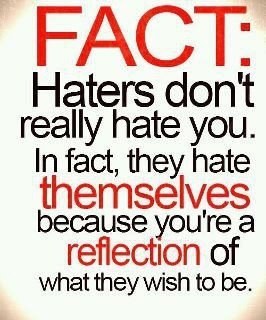 If you want to be happy, let happy people shape your mood.
If you want to be successful, let successful people show you the way.
If you want to be wise, walk in the ways of wisdom.
If you want to be appreciated, show appreciation.
If you want to be respected, act worthy of respect.
If you want to be loved, love others.
If you want to make a difference, learn right from wrong, and have the courage to do what’s right.
Send us your email, and we will send you the first four chapters of Proverbial Beauty – free!


Enjoy the little things
 Children grow up. Friends move away. Parents pass on.
We miss out on sunsets, and sunrises; we miss out on walks in the woods and float trips on the river. And we can’t even remember the reason for the fits and fights and pity parties that seemed so justified at the time.
It should be obvious what’s really important. But we find so many ways to rationalize the irrational.
Stubborn, aren’t we?
So smile more, give more compliments, hug your kids, call your parents, take time out for friends.
Sure, it’s all a cliche. But after all, don’t cliches become cliches because they’re true?

The War on Women Continues
From the Huffington Post:
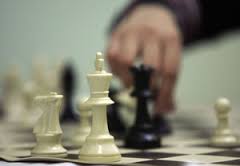 British chess grandmaster Nigel Short is responding to criticism after recently arguing that inherent differences in men’s and women’s brains may explain why there are fewer female chess champions than males ones.
“Men and women’s brains are hard-wired very differently, so why should they function in the same way? I don’t have the slightest problem in acknowledging that my wife possesses a much higher degree of emotional intelligence than I do,” he wrote in the February issue of New In Chess magazine. “One is not better than the other, we just have different skills.”
“It would be wonderful to see more girls playing chess, and at a higher level, but rather than fretting about inequality, perhaps we should just gracefully accept it as a fact,” he added.
So why would Huff Post run such a blatantly chauvinistic report? Well, obviously, for the counter-offensive that makes up the last 60% of the article. Then, of course, you have the comments, which fluctuate wildly between the apoplectic, the apologetic, the politically correct, and the well-reasoned.
Anyone who has raised children or taught school knows that males and females are more different than some species. We have different strengths and weaknesses, which is why it makes sense that we form partnerships called “the family.”
It’s both fascinating and disturbing that so many people are offended by those who say so.
How Ants Survive Rush Hour…
… and why putting your ego in check will change your life
 It’s everyone’s nightmare. Rush hour. Inching along interminably as too many cars navigate too few lanes, with too many merging in and too few turning off.
Who would have imagined that King Solomon already anticipated the chaos of our highways when he declared, Go, sluggard, and learn from the ant?
As it turns out, ants are better drivers than we are. And the lessons of their highway habits offer some valuable lessons that extend far beyond the way we drive.
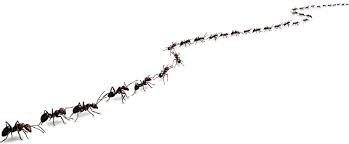
According to NPR, Apoorva Nagar discovered the connection in a study by German and Indian researchers. Apparently, traveling ants are able to maintain a constant speed regardless of the number of ants on the path. In other words, even at rush hour, ant traffic carries on unimpeded.
Sanity vs. Compassion — how to choose?
 Would you accept an invitation to the Mind and Life Institute’s International Symposium for Contemplative Studies? Or does it all sound too flaky?
It’s hard not to sound pretentious when trying to be substantive in a superficial world. I might easily have dismissed the headline — Creating a Caring Society — as so much new-age twaddle… but if I had I’d have been guilty of the same superficiality that I frequently decry.
Citing Tania Singer, a social neuroscientist from The Max Planck Institute, the article offers an intriguing distinction between empathy and compassion. The first is a mere sharing of feelings; the second is an impulse to turn feelings into action. Sure, empathy is a good start. But feeling another’s pain doesn’t help feed the poor, shelter the homeless, enlighten the ignorant, or comfort the bereaved.
In fact, failure to take action may actually cause distress and suffering to the empathizer, who feels frustrated and inadequate for having provided no relief to the one in need.
The more pervasive problem, however, is our increased detachment from the plight of others so that we don’t feel at all. No surprise there… if we responded as we should to every news story of poverty, illness, and violence, we’d all be on a perpetual Valium drip. So instead we plug into our electronic kaleidoscopes and tune out the real world.
We can only preserve our sanity by deadening ourselves to the flood of human suffering that washes over us day and night. But to ignore the call of compassion leaves us less than human.
As with so many things, the answer lies somewhere in the middle. Feel pain, but not too much pain. Respond to the pain of others with concrete action. No, it’s not easy. But it’s the only avenue we have for restoring an emotionally and morally healthy society.
Bad Hair Day at CSI
 Since 2012, the FBI has been reviewing some 2600 convictions from the ’80s and ’90s that depended on hair analysis. With 268 cases reviewed so far, more than 95% have been called into question, according to NewScientist.
This doesn’t mean that science is unreliable. Rather, it reinforces the well-known computer adage of GIGO — garbage in, garbage out. In other words, technology is only as good as the people using it.
So when it comes to understanding the origins of the universe, the evolution of man, the nature of human psychology, or the changing climate patterns of our planet, perhaps a bit more humility is in order before we jump to conclusions that new discoveries might force us to reverse tomorrow or the next day.
Our world is a complicated place. Instead of insisting that we have everything figured out, let’s watch the sun rise and listen to the rain fall while we enjoy the mystery of it all.
 Yonason Goldson