Home » Posts tagged 'Values' (Page 10)
Tag Archives: Values

The Curse of Cowardice
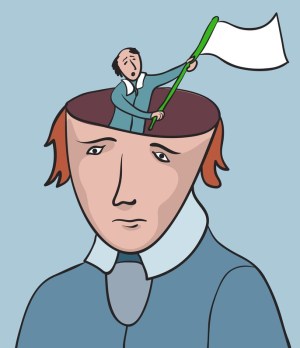 “The implications for our country are so serious that I feel a responsibility to my constituents… as well as to my conscience, to voice my concerns forthrightly and publicly. And I can think of no more appropriate place to do that than on this great Senate floor.”
~Democratic Sen. Joseph Lieberman, September 1998
It takes courage to stand up to our enemies, but even greater courage to stand up to our friends. And that’s precisely what is missing in modern political culture:
Courage.
In today’s world of groupthink, challenging the party line can be socially and professionally self-destructive. Friends and allies turn into assailants at the first whisper of dissent, at even the suggestion that there may be more than one side to any issue.
THE SOUNDS OF SILENCE
In June of last year, Maya Dillard Smith, head of the Georgia ACLU, came under attack for suggesting that the topic of transgender bathrooms warranted deeper discussion. To her credit, Ms. Smith resigned her position rather than remain part of an organization so fervently opposed to the principle of civil discourse.
The previous November, Professor Erika Christakis (together with her husband) lost her job at Yale after sending an email suggesting that students should be treated as adults, then compounding her transgression by attempting to engage demonstrators in reasoned debate.
And for years, moderate Republicans, disparaged as RINOs – Republicans in Name Only – have been hunted and attacked as traitors to their party.
In this age of polarization and partisanship, it’s much safer to attack the other party, whether from the right or the left. Republicans and Democrats alike circle the wagons to defend those among them who hurl even the most outrageous verbal projectiles across the aisle. To stand alone as the voice of reason by suggesting temperance, moderation, or compromise means taking your life in your hands.
After last week’s horrific shooting spree, which targeted Republican lawmakers as they practiced for the annual congressional baseball game, the obligatory expressions of unity and civility poured forth from both Democrats and Republicans. But it didn’t last long. By week’s end the rhetoric was already ratcheting up again, with each side blaming the other for creating a cultural atmosphere of toxic hate and violence.
Both sides are right. Yet neither is willing to offer more than lip service toward solving the problem.
SAY IT AIN’T SO, JOE
So who will be today’s Joe Lieberman? Who will speak out against entrenched power and political pressure to risk the slings and arrows of reprimand and reprisal? Who will show the courage to call out his or her own colleagues for their inflammatory excesses instead of taking the coward’s way out by indicting the other side while claiming the high moral ground from amidst the morass?
 Where are the mavericks, the lone wolves, and the white knights who fear the sting of their own conscience more than lash of their own party, who will bet their own future on the long odds that their example might spur others to join them in building a coalition of responsible statesmen to right the ship of state?
When Senator Lieberman took to the senate floor two decades ago, he directed his censure not only against his president and the leader of his party, but against his personal friend. It wasn’t easy, and it wasn’t safe. But loyalty to truth and responsibility to country outweighed emotional comfort or potential fallout. Abuse of power could not be tolerated. Corruption of office could not be sanctioned. Silence was not an option:
“The president is a role model and, because of his prominence in the moral authority that emanates from his office, sets standards of behavior for the people he serves.
“His duty… is nothing less than the stewardship of our values. So no matter how much the president or others may wish to compartmentalize the different spheres of his life, the inescapable truth is that the president’s private conduct can and often does have profound public consequences.”
If so, how much more so his public demeanor.
King Solomon teaches: When a ruler indulges falsehood, all his ministers disdain the law.
Herein lies the awesome responsibility of all who wield power. Every elected official, every appointed judge, every journalist and news anchor and editorialist has a moral obligation to ensure that his words are accurate, that his positions are based in fact and reason, and that his language is respectful.
And it is the moral obligation of We The People to hold our leaders accountable, and to support those among them who demand accountability.

Reclaiming Civility
 A child’s brain is like a sponge, absorbing everything with which it comes in contact. As the brain gets older it learns to process, to analyze, to interpret. And eventually it begins to slow, begins to forget, begins to lose function.
Few prospects are as forbidding as mental decline, the specter of which haunts us as we advance toward old age. And so the experts tell us to keep our minds active, that using the brain is the surest way to stave off mental deterioration.
- Crossword puzzles
- Sudoku
- Word games
- Logic problems
These are common recipes from the diet books for the mind. But don’t stop there; the more creative and more challenging, the better for your brain.
- Go traveling
- Take up knitting or gardening
- Learn Italian
- Drive a different way to work
- Get an advanced degree
Anything and everything that piques cognitive activity belongs in our catalogue of mental health activities.
“That’s all good,” says Barbara Strauch, author of The Secret Life of the Grown-Up Brain: The Surprising Talents of the Middle-Aged Mind and New York Times health and medical science editor. But the most intriguing advice Ms. Strauch has heard is this:


The 7 worst things you can say
 “When I use a word,” Humpty Dumpty said, in rather a scornful tone, “it means just what I choose it to mean — neither more nor less.”
This would appear to be a powerful statement of personal empowerment and forward-thinking vision. In fact, it is precisely the opposite.
The truth is this: if we don’t master our language, we can’t be masters of ourselves. Because we think in words, sloppy speaking will inevitably produce sloppy thinking. And if we aren’t thinking clearly, then we don’t know who we are, what we believe in, or what we stand for.
What are some of the worst offenders?
- Clichés
- Sound-bites
- Redundancies
- Political correctness
These are all our enemies. The reflexive recitation of words bereft of authentic meaning constitutes much of talk radio, and it may offer a convenient refuge from having to defend our opinions with hard facts and sound reasoning. But we don’t open up lines of communication and cooperation by hiding from clarity and logic.
Verbal interchanges have become so glib, so vapid, and so superficial, that anything short of a complete overhaul of our language will not do. But some popular expressions are worse than others, and here is my short list of the worst offenders, phrases that should be punishable by law.
“I’m just saying.” No you’re not. You’re just blathering. What is this even supposed to mean? I know you don’t want to hear this but I’m saying it anyway? I know you don’t care about my opinion but I have the right to express myself? If something is not worth saying, don’t say it. If your advice or opinion won’t be heeded, don’t bother. But if something needs to be said, don’t deflate your message by giving the listener permission to disregard it.
“That makes no sense.” Well, how would you know, since you obviously haven’t invested enough time thinking about it to evaluate its potential for veracity? The universe is full of weird and wonderful phenomena that, superficially, appear to make no sense. The computer screen you’re looking at right now is composed of molecules, which are composed of atoms, which are composed of tiny particles orbiting other tiny particles at near-light speed, but which are composed mostly of empty space. Does that make sense? The ideas we dismiss because they challenge our preconceptions may turn out to make plenty of sense once we make the effort to understand them.
“It’s a thing.” I don’t know when this insipid verbal blob crept into common usage. It has become so pervasive that I can’t even remember what we used to say. Probably “it’s a guy thing” or “it’s a work thing.” Now even that modicum of clarity is too much trouble. But almost any linguistic alternative would be preferable to this meaningless arrangement of syllables. In his prophetic novel 1984, George Orwell described how a totalitarian government controlled the minds of the populace by eliminating all insurgent vocabulary. The goal was to reduce the language of Newspeak to a mere 200 words, rendering people incapable of formulating complex thoughts that could lead to organized rebellion. What Orwell never imagined is that people would willingly lobotomize themselves the same way.
“I’m entitled to my opinion.” Of course, you are. But remember what the late New York Senator Daniel Patrick Moynihan said: You’re entitled to your own opinion, but not to your own facts. In this brave new world of virtual reality, opinions and feelings carry more weight than data and logic; similarly, pseudo-information is indistinguishable from real information because we don’t invest the time to determine what’s true and what is not. After all, it’s somebody’s opinion, so it must be valid… right?
“I had no choice.” Of course, you did. Unless you had a gun to your head or were under hypnotic control, a choice is precisely what you made. That you managed to convince yourself that the options were so out of proportion as to be equivalent to a choice between life and death is likely a function of your own unwillingness to face up to responsibility. In a world that increasingly indulges the notion that free will is an illusion, that each of us is nothing more than a conglomeration of our genetics and our environment, it keeps getting easier for us to deny all guilt and claim that we are not accountable for anything we do.
“I can do what I want.” Of course, you can. So can lemmings. But your ability to do what you want has no relevance to whether it’s a good idea, or to the effect it may have on others or on yourself. Just as there are physical laws that make it impossible for us to flap our arms and fly, just as there are societal laws that prohibit us from causing physical harm to others, so too are there moral axioms that allow society to function in a way that makes all our lives better. Valuing only what I can do reduces all human society to an irrelevant footnote and widens the gap between ourselves and others.
“Future consequences.” In contrast to what? Past consequences? This is only one example of how people tack on adjectives in an effort to sound smart and only succeed in making themselves sound stupid. Some of the more egregious offenders are: end results, advance warning, very unique, past history, and unintended mistake. Adjectives are the junk food of writing; they are also the hobgoblins of speech, clouding our thinking and obfuscating communication.
Now please don’t misunderstand. These misdirected phrases are not the source of our problems; they are symptoms of a culture that has grown more careless in its conduct, more slovenly in its thinking, and more indifferent to the standards that once defined and informed the behavior of responsible citizens. In short, we have grown lazy, no matter how hard we seem to be working.
Discipline is the key to success. Whether in school, in our careers, in the gym, or in our relationships, if we want to succeed in our communication we can’t afford not to be disciplined in our speech as well. Success in almost every other area is sure to follow.
And if we do make the effort, we will quickly notice that our professional relationships become more rewarding and that our personal relationships become more satisfying. What’s more, with the ripples we send out into our communities, we can all do our part to creating a culture of greater warmth, stronger cooperation, and deeper respect among all those who share our world.

Post-Victory let-downs are for the birds
 Why do people gamble? Obviously, they do it for the rush of adrenaline they feel when they win. No?
No.
At least not according to Professor Jessica Stagner of the University of Florida.
Professor Stagner and her colleagues hoped to find support for evidence indicating that gamblers feel the same thrill of excitement when they almost win as they do when they actually win. To do so, they created an experiment in which pigeons had to peck at colored markers in order to receive hidden rewards.
That’s right: Pigeons.
And what did they discover? Although pigeons are willing to take a risk for a bigger payday, they only like it when they win. People, on the other hand, are excited by a close loss almost as much as a big win.
In other words, pigeons are smarter than people.
The researchers speculate that a near-miss creates the illusion that we have control over situations that are largely random. This is similar to the hypothesis that people embrace conspiracy theories because they find a world manipulated by sinister puppet-masters less frightening than one in which events unfold for no reason at all.
But there may be a more profound lesson to these studies. Because in one sense, approaching success can truly be more satisfying than success itself.
Do you remember the last time you…
- read a really engrossing novel?
- watched a gripping action movie?
- worked on a challenging business project?
- went on a date when all the chemistry was working just right?
Do you remember the excitement, the elation of living in the moment, the expectation of what was to come?
And do you remember the bittersweet commingling of fulfillment and disappointment when it was over?
In truth, we love to win much more than we love to have won.
Why?
Because at the very moment of success, victory, conquest, or completion, we have to face the inevitable question:
Where do I go from here?
On the other hand, there’s nothing quite like the keen pleasure of watching success draw near, of feeling that victory is nearly within our grasp. And even when things don’t go our way in the end, we can still bask in the glow of that tantalizing instant when we felt triumph waiting right around the corner.
The mistake we so often make is to focus on our goals with such single-mindedness that we forget to enjoy the process of attaining them. The first day of an adventure is usually the most exciting, for it is filled with possibility and mystery, while every successive day brings us closer to the moment when it will all be over.
So what can we do to preserve the thrill of near-victory?
Here are a few suggestions:
Make the process the goal. Of course we have to get work done, fill quotas, and meet deadlines. But focusing on the quality of work, the feeling of genuine achievement, and the camaraderie of collaborative effort sweetens both the journey and the destination.
Think in rest-stops, not end-points. Almost any task can be seen as part of a larger mission, project, or game plan. Have in mind the next logical phase for connecting each point of completion with a new beginning.
Exchange star and supporting roles. Often, we can accomplish more as partners. Recruit a colleague to add his or her area of expertise to your project and contribute your expertise to hers or his. Both projects will be likely to be completed better and ahead of schedule, and you’ll end up with two victories instead of one.
King Solomon teaches, Fortunate is the one who listens for me, attentively waiting at my doors day by day, keeping watch by the doorposts of my entryways.
It is not so much what we find on the other side of each door, but the anticipation of always looking for the next opportunity and the next challenge, of looking forward to each victory not as an end unto itself but as a stepping stone to the many victories that will follow.
Each step up the stairway to success leads to the next one. So it’s worth remembering that the moment we reach to top of one step we are immediately at the bottom of the next one.
And keep in mind that if we do reach the rooftop, we might find ourselves only in the company of pigeons.
Adapted from an article originally published in Pick the Brian.



The French battle for ethics
 What is the world coming to?
It’s truly a sign of the times when France – of all nations – is leading the way in ethics reform. This is the country that for decades has destabilized the world by selling weapons to and buying oil from any regime willing to do business; it’s the culture that embraced casual illegitimacy centuries before the institution of marriage began crumbling elsewhere around the globe; and it’s the government that has recently taken the war on terror to its beaches by banning Muslim women from wearing “burkinis,” apparently based on the presumption that modesty leads to suicide bombings.
Then there are the endless tales of cronyism, kickbacks, and embezzlement among the political elites. Former President Nicolas Sarkozy gave himself a 170% raise shortly after taking office.
But there’s a new sheriff in town – President Emmanuel Macron – whose justice minister François Bayrou introduced sweeping ethics legislation last week into a system that has shown little interest in ethics.
Among the list of proposals we find:
- A ban on nepotism in appointments to government positions
- Increased scrutiny over the use of public money
- Stronger penalties for political corruption
- A public bank to finance and control political party funds
These are all worthy and admirable steps to restore a measure of integrity to a morally dysfunctional system. But they also demonstrate how imposing the battle for ethics really is.
THE EYE OF THE LAW
There are two ways of looking at legislation in general. The more common perspective views legality as the border-crossing of culpability. On one side of the line are things I’m allowed to do; on the other side of the line are things I get punished if I get caught doing.
And there’s the rub. It’s only illegal if I get caught, the conventional thinking goes. When that attitude becomes the accepted norm, inevitably the gray area of ethical ambiguity starts to spread like nuclear fallout, leaving in its wake countless casualties of radioactive rationalizing and moral mutation.
But what if instead we look at the law as an expression of civil values and responsibilities? Then we come away with an entirely different mindset, one in which the law is something to be upheld, not circumvented. And when that viewpoint takes hold, everything else begins to look different.
Imagine if the narrative inside our heads sounded like this:
- I don’t cheat on my taxes because I’m a member of a society that values honesty, not because I’m afraid of the IRS.
- I seek out the owner of a lost wallet because I empathize with his distress, not because the law might punish me if I don’t.
- I trip the fleeing purse snatcher and return the handbag to the little old lady not because there’s a Good Samaritan law, but because I see myself as a good citizen.
THE LETTER OF THE LAW
Really, laws should only be necessary as protection against miscreants and as a guide to morally ambiguous conflicts of interest. Instead of searching for loopholes that allow us to pervert the intent of legislation, we should seek to glean the spirit that guided those who designed the law and contemplate how we can contribute to a more civil society.
King Solomon says, The performance of justice is joy to the righteous, but ruinous to the workers of corruption.
 There is no greater joy than the feeling that comes from benefiting others through selflessness and service, from the sense of integrity that swells in our hearts when we know we’ve honored the values of society without being goaded by the fear of punishment that haunts the unscrupulous day and night.
So kudos to the French for their efforts to re-establish basic ethical standards in government. But to have any hope of real change, we must return to seeing the law as a foundation for moral conduct, not a snare of reprisal to be skirted at every opportunity.
After all, wouldn’t you rather live in a world where others think more about what they can contribute than what they can get away with? Isn’t the best first step to start thinking that way yourself?


Strangers on a Train
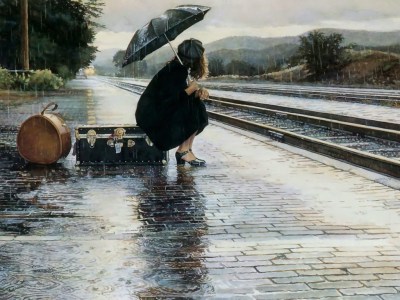 There is an art to travelling with small children by public transportation.
We had managed to balance our seven bags in and atop our two baby strollers. Needless to say, this left them unavailable for babies. My wife, Sara, shifted one-year-old Jake into long-distance-hip-riding mode while our new friend Blythe did the same with her own one-year-old, Joshie. Zeke and I, the husbands and designated sherpas, prepared to push the makeshift luggage carts.
The problem was, we had no idea where we were going.
Sara and I had arrived in Budapest less than a week earlier, and our feelings of apprehension had been deepening by the hour. Through the mercy of divine intervention, the principal of our new school was on our flight from Israel. Otherwise, we might have taken up residence in Ferihegy International Airport like Tom Hanks in The Terminal.
A haze of disorientation enveloped us almost immediately, progressively growing thicker and darker. Principal Haraszti – whose name I soon began to slur into Horrorstory – deposited us in our apartment with a loaf of bread, a bag of apples, and a box of milk. There was no crib for Jake and no bed for three-year-old Abby. Horrorstory promised to call the next morning, which he did – an hour late. Relief, if not gratitude, came naturally. We had no money, had yet to find anyone who spoke English, and didn’t know our own address or phone number.
Why had no preparations been made? we asked. After all, the administration had had all summer to prepare for our arrival.
We received the answer we were to hear again and again: the matter will be resolved.
We proceeded to deal with one ineptitude after another. Of course, that made it easy to forge a bond of friendship and alliance with Blythe and Zeke, the other American couple who had parachuted in from across the globe to find themselves similarly neglected.
Generally speaking, the end of the week allows us to shrug off our troubles and anxieties with the arrival of the Sabbath, and we had been assured that all our needs were taken care of. The school had arranged an orientation camp for the students an hour outside the city, and we were expected to participate. Horrorstory told us which train to take and where to get off. The camp, he said, was “right across the street from the train station.”
 Most of his information was accurate. All of it, actually, except the last part. Across the street from the train station stood a lovely expanse of woodland, with no sign of life other than birds and rodents. There was no attendant behind the station window, either. He probably wouldn’t have spoken English anyway.
As we pondered our options, I found myself already thinking in Hungarian: the matter will be resolved.
So we loaded up the strollers and headed off in the opposite direction, only to find ourselves wandering through an industrial area almost as deserted as the woods. It would be the sundown in a few hours, and the specter of welcoming the arrival of the Sabbath in the middle of nowhere loomed ominously before us.
We asked the few passersby if they knew of the camp, but no one had any idea what we were talking about. Eventually, we flagged down a young German tourist on a bicycle. He knew no more than we did; but he took pity on us, turned back the way he had come, and set off as if in search of the Holy Grail. A few minutes later he returned. The camp was indeed across the street from the station. Just a half-mile down the road and hidden entirely from view.
So we survived our first week in Budapest, our first Sabbath in Hungary, and our first encounter with students who looked at us as if we had just emerged from the ghettos of their grandparents’ tortured memories.
***
The return trip to Budapest was somewhat more relaxed. It hadn’t started off that way, however. We had just finished loading up the strollers for our hike to the train station when the rain began to fall. A quarter hour searching for a taxi turned up nothing and left us nowhere.
Then the camp director took pity on us. Miraculously, he succeeded in cramming four adults, four children, and all our baggage into his matchbox sedan, and off we went.
Whatever their idiosyncrasies, Hungarians do have a certain passion for coming to the rescue of others. The camp director raced us to the station, somehow gathered up most of our belongings and carried them single-handed through the pedestrian underpass and into the first-class cabin of the train, which pulled up as if on cue for us to board. We hadn’t planned on traveling first class, but once there we had no interest in packing up to relocate. Aside from that, the price of $3.50 U.S. – albeit triple the second-class fare – seemed eminently reasonable; at least for rich Americans like us.
We had the entire train car to ourselves.
The money gap would follow us everywhere. On Sundays, Sara and I crossed the street from our apartment to let Jake and Abby frolic in Városliget, Budapest’s central park. Often we would buy the children giant balloons, shaped like rabbits or roosters, almost as big as they were. The locals, never shy about staring at strangers, glared with a mixture of resentment and awe at the wealthy Westerners who could afford two balloons. They cost a dollar apiece.
Our Hungarian salary was about $200 a month, which covered food and basic living expenses. That was what most Hungarians lived on. We received a separate American salary which, back in the States, would have kept us at subsistence level. But in Hungary we were able to save most of it (which had a lot to do with why we were there in the first place).
There was something unsettling, however, about being seen as rich. It was one more thing that set us apart in a country where we stood out noticeably already. And even if it wasn’t objectively true, it was relatively true; and that taught us an uncomfortable lesson about the reality of perception.
In a way, we are what other people think we are, no matter what we think we are, and no matter what we really are.
That sense of displacement tarnished the pleasure of our train ride back to Budapest. If not for us, the first-class car would have been empty. Ergo, it should have been empty. We didn’t belong there. No one did.
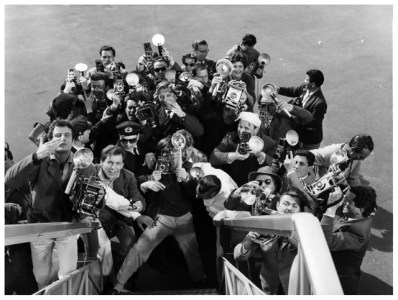 The train pulled into the station and we descended from our private car. Porters raced each other for the privilege, and expected gratuity, of carrying our luggage. But these were no ordinary porters. They were like the cast of surreal characters from a Federico Fellini movie. The withered septuagenarian who got to us first beat out two comrades, one hobbling on a crutch and the other with his arm in a sling.
We let him take one of the lighter bags, with which he struggled, uncomplaining, as he hauled it to the taxi stand. The cabbie demanded the extortionate price of 300 forint – about three dollars – to drive us back to our apartment, where Blythe and Zeke joined us. The work crew that was supposed to have completed repairs on their apartment was running behind schedule.
It wouldn’t take much longer, they were told. The matter would be resolved.
Published in this month’s issue of The Wagon Magazine.
 Yonason Goldson