Home » Posts tagged 'Wisdom' (Page 28)
Tag Archives: Wisdom
A Tale of Two Icons
 What’s the difference between Bill Clinton and Hillary Clinton?
Obviously, gender.
Less obviously, expectations.
In an interview with NPR’s Shankar Vedantam, Mary-Hunter McDonnell of the Wharton school of business explained the difference between how men and women are judged by their peers for ethical infractions.
Professor McDonnell and her colleagues asked volunteers to recommend a jail sentence for a hospital administrator who filed a false Medicare claim. When the volunteers believed that the administrator was a woman, the average suggested sentence increased by over 60%.
The researchers also analyzed over 500 disciplinary proceedings in 33 states by the American Bar Association. They discovered that women were disbarred more than twice as often for similar types of misconduct.
The assumption here is that, since women are expected to be more ethical, they are punished more severely when they violate ethical standards.
This may be unfair in practice, but in principle is makes perfect sense. Moral people are expected to behave better than immoral people; consequently, we find their moral lapses less tolerable.
Which brings us back to the Clintons.

At last, a hero
Just when you thought there was no hope for sanity left in America, the light of reason breaks through the clouds of ideology, if only for a moment.
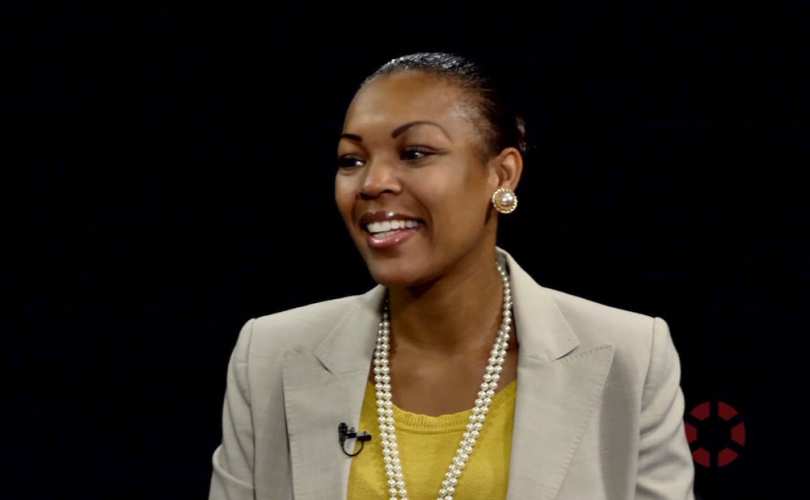 Maya Dillard Smith, head of the Georgia ACLU, resigned her position last week citing her organization’s unwillingness even to discuss any perspective or opinion out of sync with its own advocacy for transgender bathrooms.
The Huffington Post and other far left outlets responded, predictably, by attacking Ms. Smith and completely missing the point. This is not about predators coming into public bathrooms. That approach was from the start a tactical blunder by conservatives (which, sadly, is all too common).
The real issues here are governmental overreach and the right to privacy. Just as the minority deserves protection from oppression by the majority, so too does the majority deserve protection from the predilections of the minority.
This is where the ACLU so consistently gets it wrong. Social conventions are not all oppressive. Just the opposite: they create the standards and boundaries of personal conduct that allow civil society to function. Tearing them down willy-nilly because someone might find them discomfiting leads to social anarchy, from which everyone ultimately suffers.
But even that wasn’t the point behind Ms. Smith’s resignation. It was the ACLU’s outright refusal to acknowledge the legitimacy of any position other than its own.
This is the problem that is plaguing the Western World and tearing our civilization apart. The zombie-like groupthink that turns every adversary into a neanderthal or a Nazi undermines the whole notion of a democratic society. We have to be able to discuss and debate, and to accept that reasonable people can disagree. As long as a culture of political dogma prevails, endorsed and enabled by so many in high office and the media, our society will continue to crumble.
But for now, we have an unlikely hero. Kudos to Maya Smith for taking a true stand on true principle, for not selling out, for not trying to have it both ways (ala Kim Davis), and for not being afraid of the hail of vitriol she knew she would bring upon herself from her former allies.
May she inspire others to follow her example.

The House
 “You’ll leave here after four years with an education few people have had access to in the history of mankind. What are you planning to do with it?”
It was a good question, set forth by consumer advocate Ralph Nader as he spoke before an embarrassingly empty hall at our conservative university. I was pretty conservative myself, and certainly no fan of the wildly liberal public avenger. But I had found the opportunity to hear such an iconic figure irresistible, even if most of my fellow students felt otherwise.
“There’s a world out there filled with problems and suffering and injustice,” Mr. Nader continued. “There’s a desperate need for crusaders, and you just want to get a job?”
The derision Mr. Nader injected into those last three words reverberated inside the echo chamber of my mind, etching upon my psyche an unequivocal contempt toward employment for the sake of mere employment.
It was 1981, during my junior year at the University of California, Davis, and I still had no idea what I wanted to do when I grew up. But during those closing moments of his address, Mr. Nader awakened within me the passionate desire to do something – anything – as long as it might make a difference, as long as it would truly matter.
And so I left the lecture hall that evening feeling like Archimedes, looking for my fulcrum to move the world. And my search led me to The House.
 No other name could have better described it: here was an actual house – still thriving in the shadow of university office-buildings, lecture halls, and dormitories – with its modest front porch, unaffected wooden shingles, and single-pane windows opaque with dust around the corners. Its official designation was Temporary Building-16. But to everyone who worked there, and to anyone who patronized its services, TB-16 was simply called The House.
Fifteen or twenty years earlier, the thought had occurred to someone at Student Services to create an informal atmosphere where students could commiserate about the problems and stresses of college without having to endure the formality of an adviser, the social pressure of a dormitory, or the stigma of a psychologist. In the course of its various incarnations, the project acquired a director, instituted a thorough course of preparatory and continuous training, and acquired TB-16. The House opened its doors.
Karen was the House director, a position she had taken over from her husband, Kennebec. His name was really Ken, but he had fallen in love with the Kennebec River and used its name as his own – at least in the company of friends and close acquaintances. Student Services had brought him in to assume the directorship “after The House’s last nude retreat,” in hope of imposing greater structure upon the fledgling peer counseling facility.
Not that Ken was all that conventional himself. His hobby was jumping freight trains, and he hadn’t thought it at all inappropriate to use this informal style of transportation for his own staff retreats. I nagged Ken every time I saw him to take me train-jumping, but he was settling into the routine of responsible middle age, and never found time to take a weekend off to travel as undeclared baggage.
So Ken, it’s your fault that I later became a hitchhiker and not a hobo.

Spitting Image 4:1 — Face the East, Love the West
The sages of the Talmud teach us that the center of spirituality is in the east, but the Divine Presence resides in the West. The essence of divinity cannot be perceived directly, but is reflected in the wonders of nature, the magnificence of the universe, and the acts of moral dignity that elevate Man from an animal to above the highest angels, illuminating the world with the glory of the Creator.




Remember their sacrifice
 It is rather for us to be here dedicated to the great task remaining before us — that from these honored dead we take increased devotion to that cause for which they gave the last full measure of devotion — that we here highly resolve that these dead shall not have died in vain — that this nation, under God, shall have a new birth of freedom — and that government of the people, by the people, for the people, shall not perish from the earth.
Abraham Lincoln

Is it too late to let freedom ring once more?
 Facebook has confessed that stories appearing on its supposedly-unbiased “Trending Topics” were manipulated. Rather than risk allowing its one billion active users exposure to the corrosive influence of conservative commentators, Facebook’s “news curators” decided to doctor the list of headline stories to favor left-wing political leanings.
In other breaking news, the sky is still blue, the grass is still green, and the loudest proponents of freedom are still laboring mightily to impose their vision of freedom on others.
Freedom of speech has been on life-support for decades already, wracked by the infectious scourge of groupthink, political correctness, and moral equivalence. College newspapers have routinely been stolen by students and even administrators for espousing politically incorrect views. Speakers of all ideological stripes have been shouted down, sometimes even by groups they support. Recently, a petition circulated among Yale students to repeal the First Amendment (including, ironically, the right to petition) collected 50 signatures in one hour.
The real death of free speech stems from the death of credibility. News organizations have abandoned even the pretense of objectivity or accuracy. The line between reporting and editorializing is consciously and persistently blurred. Elected officials and presidential candidates show such utter disregard for the truth that they don’t even attempt to disguise their prevarications, much less apologize when caught in the act.
But it’s the corruption of language itself that may pose the greatest danger to what remains of the institution once called Truth.

Profile of Terror
 Whether or not the cause of the EgyptAir disaster turns out to be terrorism — and regardless of whether Donald Trump was right or wrong to call it terrorism before any information was in — that was and is everyone’s first thought in these dangerous times. We don’t believe in accidents anymore; experience has been too stern a teacher and the lessons of fanaticism have been too painful.
Presumably, such incidents will only make TSA lines move slower and slower. Which wouldn’t matter if that actually made us safer and safer.
My neighbor told me recently that his son flew to Australia by way of Istanbul and Qatar. Changing planes in Qatar’s Hamad International Airport, he was ushered through customs without even breaking stride — along with every other Caucasian on his flight — while every single Middle-Easterner was detained, searched, and questioned at length.
Interesting that the Qataris have no qualms about profiling their own people, while here in the open-minded West cling desperately to the illusion that every passenger poses an equal threat to our security.
Is it possible that the Qataris know something we haven’t figured out yet?
If terrorists were dressing up as Orthodox rabbis, I would want TSA to profile me and those who look like me. Instead of taking it personally, I would be grateful for their common sense and conscientiousness.
But I guess that’s just me.

The Danger of Democracy
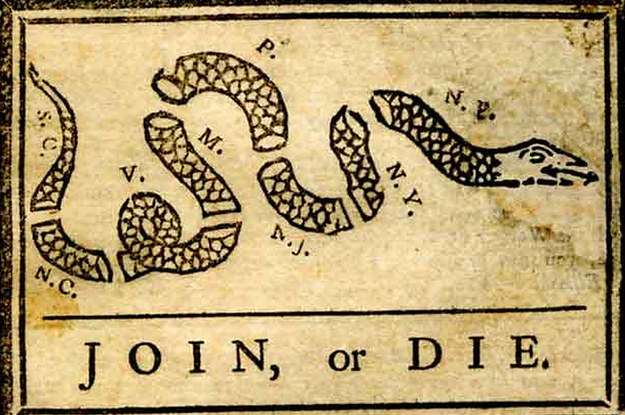 The prospect of a presidential race between the two most unpopular candidates in American electoral history should give us serious pause to reflect upon the inherent precariousness of any democratic system.
On the one hand, democracy protects a people from the whims and excesses of despotism by creating a system of accountability and popular will. On the other, it places power in the hands of the masses, who may be uninformed and easily manipulated; as Robert A. Heinlein once wrote, does history record any case in which the majority was right?
A lot of people seem to agree. Even now that the outcome appears inevitable in both primary races , opposition to the status quo has grown so intense that, in both parties, the voices of pragmatism are being drowned out by the battle cry of revolution.
Each rebel camp is a bizarre mirror-image of the other. On the Republican side, the party orthodoxy is rejecting the presumptive nominee for being indifferent to its values and unfit to lead. On the Democratic side, a surging upstart movement rallies around an untethered independent while decrying the corruption of the party orthodoxy itself.
Both insurgent groups are threatening to turn to third-party candidates. Leaders on both sides are warning that such a move would be political suicide, and history supports their fears. Third-party campaigns backfired for Teddy Roosevelt in 1912, Strom Thurmond (nearly) in 1948, Ross Perot in 1992, and Ralph Nader in 2000. So isn’t it better to vote for the lesser of two evils than to give away the election by grasping at straws?
That’s a good question.

Spitting Image 3:3 — Never having to say you’re sorry
 I can almost feel sorry for J. K. Rowling. By age 40 she had published the most successful literature series in history, become the richest woman in England and, according to Forbes, was the first person ever to become a billionaire by writing books.
By any accounts, 40 is too young to retire. So what does one do for a second act?
Ms. Rowling tried turning her hand to crime novel writing, but the glare of Harry Potter washes out anything else connected with her name. After claiming she would never add to the series, now it seems that she is doing precisely that with a forthcoming sequel.
And why not? Better than the sad attempts to stir up controversy with her post-publication commentaries, which seem aimed at no goal other that remaining relevant after her book sales ceased to make headlines. First she told us that Albus Dumbledore is gay, an assessment that cooled the enthusiasm of many fans and met with incredulity from many others.
Then she began apologizing for killing off her characters, first Remus Lupin then, most recently, Fred Weasely.
 If Leo Tolstoy were still alive, would we expect him to apologize for killing off Anna Karenina? Did William Shakespeare go too far by killing off Romeo and Juliet? Should Arthur Miller have re-imagined the saga of Willy Loman as Life of a Salesman? And is there anybody with more blood on his hands than Nicholas Sparks?
Ms. Rowling’s gift for making the fantastic seem believable depended upon lacing her stories with the kind of harsh and painful twists that are inevitable in the real world. Without these, her novels would never have struck such a resonant chord with readers who could be captivated by impossible flights of fancy while finding within the narrative a wealth of down-to-earth lessons and insights for every day living.
Of course, maybe Ms. Rowling didn’t mean any of it, like the April Fool’s joke of Harry being a figment of Ron’s imagination.
We can hope, while suggesting that the author remember the words of King Solomon: Do not say, “How is it that times gone by were better than these?” For that is not a question prompted by wisdom.
With a talent for storytelling like yours, Ms. Rowling, no apologies are necessary.

A Day of Remembrance Soon Forgotten
 So what was the point of last week’s Holocaust Memorial Day?
Once upon a time, the commemoration served as a warning against the consequences of unbridled nationalism. But in this generation, the memory of Nazi atrocities has mutated into a political football tossed about to score points for one ideological cause or against another.
IDF Major General Yair Golan made the most egregious fumble when he suggested last Wednesday that events in pre-war Germany are repeating themselves in modern-day Israel. Like all public figures who talk first and think later, the deputy chief of staff was soon scurrying to revise his comments, pleading that he hadn’t meant what he said and hadn’t said what he meant.
More likely, General Golan meant exactly what he said. And it’s likely that his heart was in the right place, even if his brain was out to lunch.
 Yonason Goldson