Home » Posts tagged 'Culture Wars' (Page 20)
Tag Archives: Culture Wars

The War to End all Wars
Originally published by Jewish World Review in September, 2001, two weeks after the attacks on the Twin Towers.
 Once upon a time there were three little pigs. One built a house of straw, until the big, bad wolf blew it down and gobbled him up. One built a house of sticks, until the big, bad wolf blew it down and gobbled him up. But one built a house of bricks and was safe from all the huffing and puffing of the big, bad wolf.
Society teaches values to successive generations through its children’s stories. The story of the Three Little Pigs is one of our most enduring fables, teaching the importance of good planning and disciplined effort. But it also carries with it a more subtle message, that safety rests in our own hands and our own labors, that security can be bought for the price of a pile of bricks and a bucket of mortar. This ideal, if it was ever true, went up in flames together with New York City ‘s skyline and Washington’s military nerve center on September 11.
More appropriate now than the Three Little Pigs is Robert Burns’s adage about “the best laid schemes of mice and men.” Indeed, the World Trade Center towers were each designed to absorb the impact of a 727; what the architects failed to factor in was how the fuel carried aboard a transcontinental airliner would create an inferno capable of compromising the structural strength of steel support beams. Of course, we don’t blame the architects; none of us imagined the acts of incomprehensible evil that brought down those towers.
 Which is precisely the point. We cannot imagine the design and the reach of evil. We can make our best effort, erect walls of brick around ourselves and roofs of steel over our heads, but we will never be completely safe. The world is too unpredictable an arena, the mind of the wicked too dark a cavern.
As if to drive home the instability of temporal existence, observant Jews around the world will disrupt their normal lives this week by moving out of their homes into little stick houses to live as our ancestors lived in the desert after their exodus from Egypt. But more than an attempt to recreate the experience of a fledgling nation traveling toward its homeland, the holiday of Sukkos offers us an opportunity to attune our minds to a most fundamental principle of Judaism — that however great our strength and the might of our own hands, however elaborate and well conceived our plans, life strews unexpected obstacles in our path that can scuttle our most certain victories and demolish our most solid edifices.
A sukkah may be built of virtually any material: wood, brick, steel, canvas, or even string may be used to construct its walls. But no matter how stable or how precarious its walls, the roof of a sukkah must be composed of s’chach, thin strips of wood or leaves, through which the light of the stars can shine at night. And when one sits in the sukkah and looks up at the s’chach — the barest representation of a roof that won’t protect him from even the lightest rainfall — he is inspired by the recollection of his ancestors who trusted in the protection of the Almighty, the One who took them out from under the rod of their oppressors and guided them through the inimical desert before bringing them safely home.
In his visionary writings, the prophet Ezekiel describes a great battle on the eve of the messianic era, when the all forces of evil in the world combine themselves into a great army called by the name Gog and Magog. The brilliant eighteenth century thinker Rabbi Samshon Raphael Hirsch interprets the prophet’s vision not as a military battle but as an ideological war between the philosophy of gog — “roof”– and the philosophy of sukkah, where those convinced that their fate lies in the power of their own hands and their own resources will attack the values of those who recognize the limits of human endeavor to influence the world.
In the immediate wake of the World Trade Center destruction, cries rang out for vengeance and military retribution. Since then, more measured voices have asserted that this war will be like no other, without defined enemies or defined borders, without clear strategies or decisive victories. This is an unfamiliar kind of crisis, where we find our capacity to respond in our own defense or to secure our own future profoundly diminished in a new world order.
So now the citizens and leaders of the world’s last remaining superpower must grapple with the uncertainties of a violent present and a murky future. Some will respond by declaring that we must work harder to take control of our own fate. Others will concede that we will never be secure again. And they will be right: no building, no bunker, no shelter made of brick or concrete or iron will guarantee our safety from the perverse imagination of extremists who can rationalize indiscriminate mass murder.

Yet for all that, the Jew sitting in his sukkah will look up at the heavens and be at peace. He will recognize that the best laid schemes often come to naught and that, after doing all that can be done, we are best off leaving our fate in the hands of the One who placed the stars in their courses, the One from whom protection ultimately comes for those who trust not in their own strength, but in the source of all strength.
As the winds of autumn blow with the first hint of winter, we may shiver with cold but never with fear. The illusion of the roof we can see reminds of the invisible reality of the wings of the Divine presence. We neither abandon ourselves to fate nor try to seize hold of it, but turn with confidence to face the future, secure in the knowledge that we have prepared ourselves as best we can to meet whatever life holds in store for us.

Do we really want a leader?
 The second Republican debate provided three indisputable facts:
- The mainstream press can barely disguise its bias in favor of the democrat party. Virtually every question was designed to promote inter-party bickering rather than elicit either policy positions or evidence of executive experience and aptitude. Whether in the debate itself or beyond, the press devotes disproportional attention to Donald Trump, not because he is the front-runner, nor even because he’s good for ratings, but because he discredit the Republican party in the eyes of most Americans with his ill-mannered and self-serving bluster.
- Far too high a percentage of the electorate lacks any real understanding of the responsibility implicit in the right to vote. Donald Trump has insulted a war hero, insulted women, insulted his fellow candidates, and has skirted giving meaningful responses to specific questions while telling us all to trust how great a job he will do. That he maintains such a commanding lead over so many truly qualified candidates is perhaps the most depressing aspect of the primary race so far. True, represents a reaction against political corruption and political correctness. But incivility is not the opposite of either.
- Carly Fiorina stands head and shoulders above every other candidate. She is well-informed, specific and to the point, poised and articulate, strong yet civil. She’s exactly what the country needs, and she should be leading by a mile.
When the Children of Israel approached Samuel the Prophet to ask for a king, Samuel responded with anger and rebuke. It was not the people’s request that was wrong; it was their reason.
“Give us a king,” the people said, “like all the other nations.”
The surrounding nations submitted to the rule of kings to absolve themselves of the responsibility of making choices and of the consequences of their actions. A Jewish king was supposed to inspire the people to live up to their mission as children of the Almighty. But the people wanted to take the easy way rather than challenge themselves to strive for greatness.
Ultimately, this country will only find its way back to greatness when we, the people, stop looking at the window dressing, stop looking for an entertainer-in-chief, stop looking for who will promise us the most goodies or tell us what we want to hear. We can only restore our country to greatness when we rally behind a true leader who is qualified to understand complex issues, who is willing to make difficult choices that are best for the nation, and who has the character to earn trust and respect from friends and enemies alike, at home and across the world.

Remembering 9/11: Visionaries and Ideology
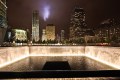
 Who knew a trip to New York could be so emotional?
Our first stop was the 9/11 museum. I marveled at the artistic vision that had conceived the memorial pools, the water channeling down in rivulets that mirrored the face of the fallen towers, the continuous downward rush balanced by the redemptive feeling of water — the source of life — returning to the heart of the world. Here there was solace, closure, and consolation.
But a very different feeling accosted me inside. Almost upon entering the doors a single word brandished itself across my mind’s eye: Holocaust.
Obviously there is no comparison between the monstrosity of wantonly dehumanizing genocide and any single act of terror; obviously there is no equivalence between the systematic psychological, spiritual, and physical destruction of millions and a few thousand relatively instantaneous murders.
But then again, yes there is.
Read the whole article here:
Balancing the Scales of Freedom
Originally published in the St. Louis Post-Dispatch the week after 9/11, between Rosh HaShonah and Yom Kippur.
 It was Judgment Day — exactly one week after the World Trade Center buildings collapsed and so many illusions along with them.
“Judgment Day” is the expression found in the traditional liturgy for Rosh HaShonah, the first day of the Jewish new year. And as I stood in the midst of the congregation intoning the High Holiday prayers, the vision of exploding passenger planes and twin towers crumbling to dust hovered before my eyes.
On Rosh HaShonah we will be inscribed … who will live and who will die … who by water and who by fire … who by storm and who by plague … Who will have peace and who will suffer … who will be cast down and who will be exalted.
The judgment upon Jews became kinder after the United States opened her doors to us a century ago. Where no one else would have us, America took us in, allowing us to live both as Americans and as Jews without persecution.
Yet for all that, American Jews often feel torn by opposing cultural forces, especially approaching our Day of Judgment in a society where there is no greater sin than “judgmentalism.”
Without judgment, however, society cannot endure. As good citizens we must judge others – not based on race or religion but upon actions and behavior. And we must judge ourselves as well, by constantly reexamining our motives and our prejudices and our values and our goals. To condemn even this kind of judgment as a threat to freedom is to retreat from our responsibility to discern right from wrong; it is to embrace the illusion of absolute theoretical freedom – moral anarchy – which is in reality no freedom at all.
September 11 brought us face to face with moral anarchy in the form of incomprehensible evil. Perhaps the first step toward confronting it is to remind ourselves that freedom is not a right – it is a privilege, and privileges carry with them obligations that are often inconvenient and occasionally painful. When Thomas Jefferson wrote that the tree of liberty must sometimes be refreshed with the blood of patriots, he warned that the threat against freedom can only be met by not taking freedom for granted.
Freedom is not democratic, as less than a score of suicidal zealots understood when they commandeered four transcontinental airliners. The duties of freedom are non-negotiable, as New York firefighters and policemen understood when they rushed into crumbling skyscrapers. And the rules of freedom cannot always be legislated: sometimes we have to choose between necessary evils, as the passengers aboard United Airlines flight 93 understood when they drove their plane into a Pennsylvania field.
These are the kinds of judgments we must make, every day and every year, to preserve our society, all the more so in a nation built out of so many cultures and beliefs as ours. Every freedom of the individual cannot be permitted if it threatens the collective, nor can every interest of the collective be observed if it oppresses the individual. But when we share the collective will to make our society stable and secure, then the individual will set aside his personal freedoms for the national good and the nation will bend over backward to protect individual freedom.
This is the mark of a great civilization, and it rests upon an informed and devoted citizenry prepared to debate, sometimes passionately but always civilly, the moral direction of our collective journey.
This Rosh HaShonah I stood shoulder to shoulder with friends and neighbors singing ancient liturgical poems in praise of our Creator, just as so many Americans stood together the week before singing “G-d Bless America.” There were no agendas, no politics, no grudges, no rivalries. All of a sudden we were one nation, indivisible, a people with one noble history and many noble ideals whose differences vanished in the shadow of our many common values and common goals.
As the Jews have had ample opportunity to learn, now America has learned that nothing brings us together like a common enemy. What we have yet to learn is how to continue to stand together even in times of peace.

The Virginia Shooting: Nihilism and the Culture of Anarchy
 “What has happened to us as a society that we now devalue life to such a level? What has happened in our society that people have become so violent? That’s the fundamental question we need to confront… We have a societal problem in our country. It reminds us of the most important job any of us will ever have … the job of a mother, a father or a parent.”
Senator Marco Rubio summed it up nicely… or tragically. But the deeper question is this: How do we stop the cultural inertia that is driving our society ever further into nihilism and moral anarchy?
Senator Rubio gets the answer perfect: If it doesn’t start in the home, then there really is no hope for the future. Without respect for traditional values, without recovering the lost ideals of civility, selflessness, modesty, and integrity, then the tide of history will sweep us away as it did the Roman Empire and leave behind a new Age of Darkness.
Bill O’Reilly makes the same point with his usual brass-knuckled pithiness here.

AshleyMadison — Why we’re too lazy to cheat right
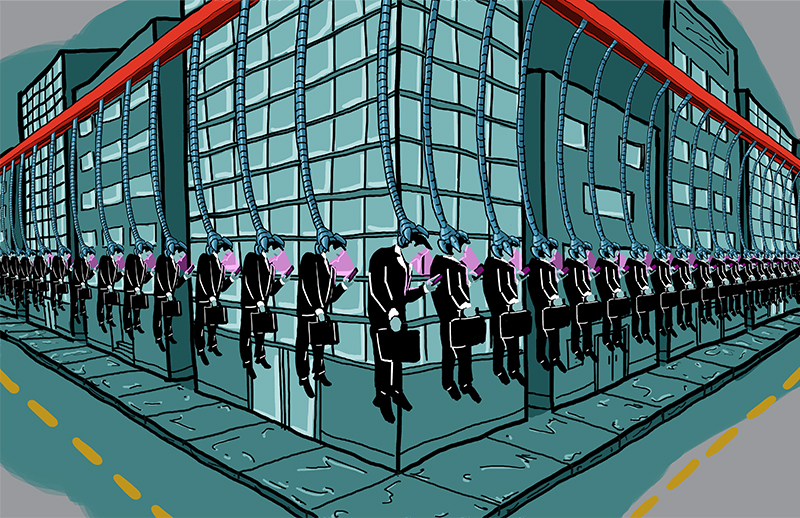 Everything’s easy. Everything’s instant. Is it any wonder that we want everything to be effortless and risk-free — even our acts of disloyalty.
Ironically, patrons of AshleyMadison made their infidelity all the more vulnerable to discovery, believing they could benefit from technology without exposing themselves to the inevitability that anything online eventually finds its way into the public arena.
Technology should free us to enjoy our lives more richly. Instead, it teaches us to be increasingly undisciplined, leeches meaning and purpose from our existence, and deadens us to the simple pleasures that make us truly happy.
Hear my guest interview on the Christal Frost Show discussing why we look for happiness in all the wrong places:
http://wtcmradio.com/the-christal-frost-show-podcasts/yonasongoldson82115/

The Greatest Moment in the History of the Universe
 Well, no. It wasn’t.
But to hear Ann Coulter tell it, it was awfully close.
Just to be clear, this has nothing to do with politics. Hardly anyone thinks that Donald Trump’s immigration plan is viable, no matter how much it may appeal to hardliners. It probably would require a constitutional amendment, it would certainly take half a century and over 100 billion dollars to implement, and it would effectively make Mr. Trump unelectable — if he isn’t already.
But none of that is the point.
What is absolutely clear, beyond any doubt or debate is this: Donald Trump’s plan is not the greatest political document since the Magna Carta.
No matter what Ms. Coulter says.
This is the same kind of irresponsible hyperbole that turns every ideological opponent into a Nazi, a terrorist, a rapist, or a child molester. It shows the same kind of disregard for history that led Ms. Coulter to attempt to resurrect Joseph McCarthy as a fallen hero in place of the paranoid pit-viper that he was. And it’s the same kind of disregard for language and reality that allowed Al Sharpton to laud Bill Clinton as “the first black president,” that enabled Bill Clinton to redefine the word “is,” and that lies at the heart of the political correctness that Ms. Coulter herself (correctly) abhors.
To brand every antagonist a Nazi is to devalue the horror of the Holocaust and to insult its millions of victims. To call newspaper columnists and television hosts terrorists shows a vile lack of empathy for the victims of 9/11 and Oklahoma City. And to suggest any comparison between the Magna Carta and a political platform that is 90% grandstanding and 10% policy is to muddy the waters of logic and reason whey both are clouded enough already.
What an insult to the Summa Theologica, the Declaration of Independence, the Articles of Confederation, the Constitution, the Federalist Papers, Thomas Paine’s Rights of Man, and the Emancipation Proclamation. What a mockery of political history.
“Words, words, words,” wrote William Shakespeare. When we don’t respect them, when we twist them to gain cheap rhetoric advantage without regard for accuracy or authenticity, we become complicit in accelerating the Orwellian doublethink that is already eating away at the civil discourse that is the foundation of a functioning democracy.

Channeling Anger and Solving our Common Problems
My thanks to Dan Mason of KKOH in Reno for inviting me to be a guest on his show. We talked about the anger driving voters, resolving conflict, and transforming negatives into positives.

Email of the Week — Making “Friends”
 Presently, I am trying to make friends outside of Facebook while applying the principles of Facebook.
So every day I walk down on the street and tell the passers-by what I have eaten, how I feel, what I did yesterday and what I will do tomorrow.
Then I give them pictures of my family, of my dog, and of me gardening and spending time in my pool. I also listen to their conversations and I tell them I love them.
And it works. I already have 3 persons following me:
2 police officers and a psychiatrist.

What is happiness, and how do we get it?
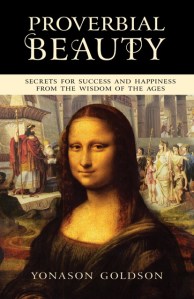
Order on Amazon today.
Proverbial Beauty, a new book on how to achieve happiness and success, offers a practical guide to changing our outlooks and our fortunes. Here’s an excerpt:
In a single, ringing phrase, Thomas Jefferson captured the essence of the American dream when he declared that all men have the right to “life, liberty, and the pursuit of happiness.” And yet, despite Mr. Jefferson’s noble sentiments and laudable achievements, the enduring lyricism of his words spawned an epidemic of confusion and despondency that continues to spread like pestilence through western society.
How precisely does one pursue happiness? We may pursue wealth, pursue fame, pursue gratification of one form or another. But the fiction of pursuing happiness has become a collective obsession that consumes our lives, either by goading us into chasing impossible dreams or by tarnishing the quality of our existence with unwarranted regrets.
Before we set off in pursuit of anything, we ought to know what it is and how to get it. Like many other words and expressions, we toss about the word “happiness” without really knowing what we mean. The definition seems obvious, but the inconvenient truth is that we really have no idea what we’re talking about.
So what is happiness, and how does one get it?
Read the whole excerpt here:
http://www.jewishworldreview.com/0815/Goldson_pursuit_of_happiness.php3
 Yonason Goldson