Home » Posts tagged 'Culture' (Page 33)
Tag Archives: Culture
The Price of Principle
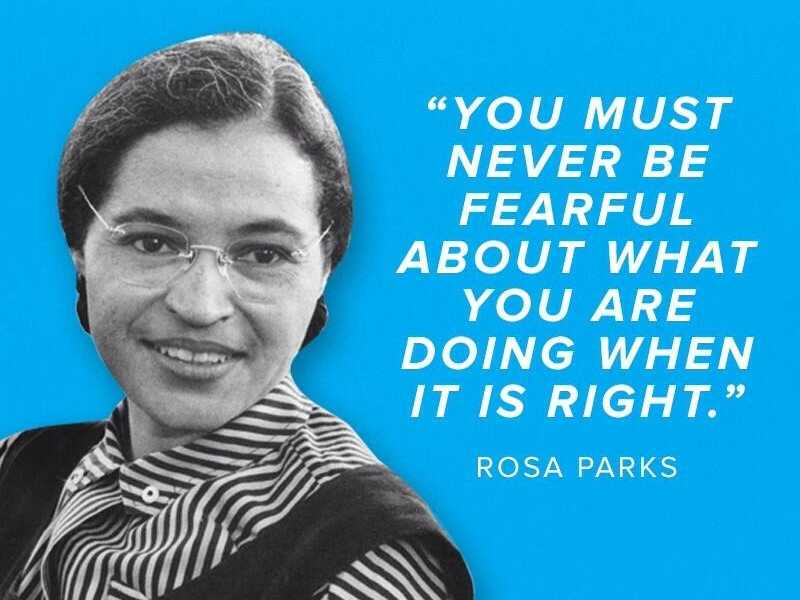 Early last month, Kentucky clerk Kim Davis became the latest standard-bearer of civil disobedience in the face of governmental overreach. Her refusal to sign marriage certificates for gay couples made her first a hero among traditionalists in an age of moral anarchy, and then a martyr for conservatism when she chose jail time rather than compromise her beliefs. In the eyes of many, she has become a latter-day Rosa Parks.
Except that she wasn’t.
Let me be clear. I agree with Ms. Davis in every way: the Supreme Court decision conjuring up gay marriage as a constitutional right is an offense against moral and legal tradition, a blow against the crumbling integrity of the family structure upon which civilized society depends, and a travesty of jurisprudence. In his embarrassing decision, Justice Anthony Kennedy didn’t even pretend that his ruling was based in law, but rather on feelings. In many ways, he himself set the stage for Ms. Davis’s act of rebellion.
But all of that is really beside the point.
The point is this: Ms. Davis took an oath of office. If her conscience does not allow her to fulfill her duty, then the principled course of action is to resign. There are consequences that go with conviction, and in this case the path of conscience requires her to remove herself from her position, not to assert that her personal values prevent her from discharging her duty while insisting that she can keep her job. That rationale is akin to Lois Lerner claiming innocence and then taking the fifth. You can’t have it both ways.
In an interview with Fox News anchor Megyn Kelly, Senator Ted Cruz responded to those calling for Ms. Davis to resign by asking, “where have those voices been calling for the Mayor of San Francisco to resign for having made San Francisco a sanctuary city and defied the immigration laws [and] for President Obama to resign — for six in a half year he has defied immigration law, he has defied welfare reform law, he has even defied his own Obamacare…?”
With all due respect, the Senator had it exactly backwards. By supporting Kim Davis, Senator Cruz undercuts his own objection to President Obama flouting national immigration laws. If Kim Davis is permitted to pick and choose which laws she follows as a matter of conscience, how is that different from Barack Obama’s failure to enforce legislation his conscience tells him is unjust?
This is what happens when respect for the law gives way before personal ideology, regardless of whether that ideology is right or wrong. The result is a societal free-for-all, in which individual feelings and sensitivities trump civic order. My conscience is my own, but it does not permit me to deprive others of their civil rights, no matter how flawed the legal underpinnings of those rights may be.
 Not surprising, there is a talmudic precedent. On one occasion, the sages of the Sanhedrin, the highest body of Torah legislation, were engaged in an unusually heated debate. Rabbi Eliezer, the most revered scholar of his time, was unable to convince any of his colleagues to see a particular point of view. Eventually, he became so frustrated with his fellow scholars that he invoked the name of G-d to support his opinion.
According to tradition, a heavenly voice rang out in the chamber declaring that Rabbi Eliezer was correct in his ruling.
Astonishingly, another sage, Rabbi Yehoshua, stood up and replied, “The Law is not in Heaven.” Not only were the sages not swayed by Rabbi Eliezer’s demonstration, but the actually expelled him from the High Court.
The talmudic narrative goes on to record that the Almighty, upon hearing that the sages had disregarded the divine endorsement of Rabbi Eliezer, responded that, “My children have defeated Me.”
In other words, once G-d put the system in law in force for His people to follow, even He may not abrogate the dictates of that law. For once the system of law becomes subject to exceptions, the system will no longer serve its function.
 Nevertheless, it must also be said that Senator Cruz was not completely off the mark. If the President of the United States will not uphold the law of the land, if Supreme court justices usurp power over the constitution without the slightest legal pretense to justify their decision, if the Attorney General of the United States will not prosecute local officials or former cabinet officers who show contempt for the law they are sworn to uphold, then why should there be any objection to a county clerk standing up for the tenets of her own religion?
The answer is that wrong behavior does not excuse other wrong behavior. When mutineers are doing their level best to scuttle the ship of state, when even the captain of the ship cannot be trusted to steer a clear and steady course, the solution is not for the crew to take up their hatchets and begin hacking away at the gunwales.
Ultimately, Kim Davis is just the latest symbol of the spreading disgust with politics as usual. The real offenders are the highest officials in the land whose conduct promotes personal feelings over responsibility and accountability. The effects of their civic negligence can be seen in the senseless violence on the streets of Ferguson and Baltimore, and in the surreal ascendancy of Donald Trump.
Personally, I applaud Kim Davis for her conviction and her principles. But only when all of us — from the chief executive to the most humble civil servant — put respect for the law before our individual predilections, only then will we be able to restore a climate of common purpose to our fragmented society.

Living Beneath Falling Skies
 Two stories from this morning’s headlines:
Man Suing Over Injury From Giant Pine Cone in San Francisco
Missile Brought Down Malaysia Airlines Plane in Ukraine, Investigators Conclude
Our hearts should truly go out to the U.S. Navy veteran who had the misfortune of relaxing in a national park when a 16-pound pine cone fell on his head. The story would be comical were it not so tragic. After serving their country, our servicemen deserve respect and appreciation, not traumatic brain injury from freak accidents.
But that’s just the point. This was an accident, and accidents happen.
I suppose lawyers will wrangle over whether the Park Service was negligent for not posting warning signs and fencing off the area, or for planting a non-native species that might threaten unsuspecting visitors. I suppose one could also make the case that the Park Service should assume a measure of responsibility by covering the victim’s medical expenses.
But what does it say about us when our natural impulse is to litigate every mishap, to turn to the courts, assign blame, and make others pay? Life is full of scrapes and bruises, and sometimes more painful twists of fate. How we deal with the apparent randomness of our world comes down to personal philosophy and theology, but it isn’t always someone else’s fault.
In truth, it reflects a kind of collective arrogance, resulting from the delusion that we are in total control of our lives and our world, and that anything bad that happens to us must have been inflicted in some kind of criminal act. Why fate smiles on some and torments others is a question we can’t expect to answer in this world. But there isn’t always a man behind the curtain whom we can haul into court to demand restitution.
Even worse, when we attribute wicked intent to every whim of fortune, we lose some of our contempt for true acts of evil. The recent finding that it was a Russian-built Buk missile that killed 298 people aboard Malaysia Airlines Flight 17 last year confirms what everyone expected. There is true evil in the world, and we dare not conflate incidental suffering with that perpetrated by authentic villains.
We live in a world full of contradictions. When bad things happen to good people, we owe them our comfort and sympathy. When bad people spread suffering among the innocent, we are duty bound to hunt them down and exact justice.
But we should never confuse the two.

Finding Reason in the Midst of Chaos
After last week’s Oregon massacre and last month’s Virginia shooting, it’s worth looking back on these thoughts from the days after the 2013 Boston Marathon bombing:
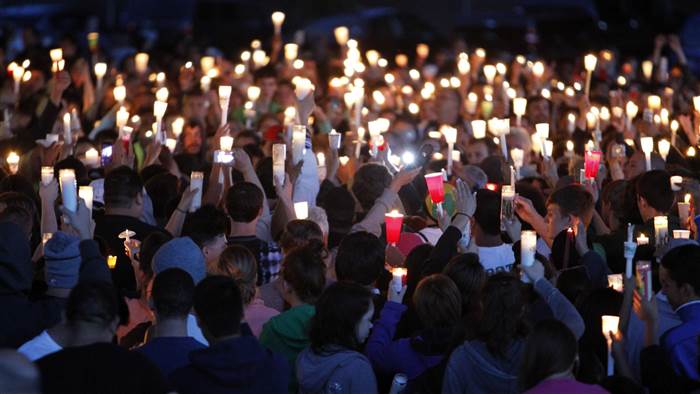 Zebadiah Carter describes himself living in “an era when homicide kills more people than cancer and the favorite form of suicide is to take a rifle up some tower and keep shooting until the riot squad settles it.” In 1980, this remark by the main character in a Robert Heinlein novel sounded like the science fiction that it was. Now it echoes like a prophecy.
Random acts of mass violence in the United States still horrify us but no longer shock us. We’ve heard too many stories, seen too many pictures. And too many of them are depressingly the same:
- 20 students and 6 adults murdered at Sandy Hook Elementary School.
- 12 killed and 58 wounded at the Century Theater in Aurora, Colorado.
- 13 killed and 30 wounded at Fort Hood.
- 32 dead and 17 wounded in the Virginia Tech massacre.
And those are only the bloodiest atrocities going back to 2007. The Columbine school shooting in 1999 adds another 39 victims to the tally. And, of course, Timothy McVeigh’s bombing of the Federal Building in Oklahoma City in 1995 claimed 168 lives and injured nearly 700.
Now we have to try and make sense of this latest act of senselessness — the Boston Marathon bombings, which shattered an iconic American institution and shook our already precarious sense of order and security.
Amidst all the suffering and all the investigation, the question we most want answered is why?
We’ve asked the same question before. According to reports, Adam Lanza was bullied as a student at Sandy Hook; Eric Harris and Dylan Klebold were bullied at Columbine High School; so was Timothy McVeigh as a boy in Pendleton, New York. There were also histories of psychiatric problems, as there were with Seung-Hui Cho before his attack on Virginia Tech, James Eagan Holmes before Aurora, and Nidal Malik Hasan before Fort Hood.
But these explanations offer little in the way of real answers. Almost all of us were bullied when we were younger without seeking murderous retribution against our tormentors, and most of us can lay claim to at least some kind of neurosis. More to the point, why is random violence on the rise, if the root causes have been around for generations? According to data assembled by Mother Jones Magazine, nearly 40% of mass shootings since 1982 have taken place in the last seven years (excluding robberies and gang-related incidents). If so, what has changed? And can we expect it to get worse?
Ultimately, it may be all about control. “These kids often feel powerless,” psychiatrist Peter Langman told LiveScience. “The one way they can feel like they’re somebody is to get a gun and kill people.”
“Out of control” is a term that seems increasingly characteristic of the world we live in. On the one hand, technology provides us with the power of information, opportunity, and access at a level unimaginable barely a decade ago. But on the other hand, our inability to manipulate so much power leaves us feeling both frustrated and inadequate, while the triumphs of others make us feel like pawns in a game we can never win. With the world at our fingertips, success and happiness remain damnably elusive.
 And so we flail about with increasing desperation, constantly trying to push ourselves just a little harder and work just a little faster. Day by day, our sense of anger and resentment toward a society that promises so much and delivers so little builds within us until we feel ready to explode. In a world gone mad, what else can we do but get mad at the world?
The fallacy, however, is the world has not made sense since the beginning of time. Last weekend, Jews around the world paused in the midst of their Sabbath morning services to read the Book of Ecclesiastes, compiled over a lifetime by King Solomon, the wisest of all men, in his search for meaning and justice:
And I returned and saw under the sun that the race is not to the swift nor the battle to the strong, neither is there bread to the wise, nor riches to men of understanding, nor yet favor to men of knowledge; but time and death will overcome them all.
Really, all that has changed is our expectation. We have been taught to believe that anything we desire is within our grasp, that we are entitled to the love of poets, the wealth of kings, the pleasures and the power of the gods. Our culture has etched upon our collective consciousness the inalienable right to life, liberty, and the pursuit of happiness. And although Thomas Jefferson had the wisdom not to assert the right to happiness itself, that subtle distinction is lost on most of our generation.
Given the fantasy images of Pixar and Dreamworks, the superhero illusions of the silver screen, and the miracle gadgets that fit in the palm of our hands, what can we expect from a youth wholly unprepared for reaching the age of responsibility? And when they confront the seeming impossibility of leaving their mark on the world through any positive contribution, why should we be surprised when they choose violence as their final recourse to make the world take notice of their existence?
And yet, for all that, Solomon himself did not give in to despair and hopelessness, despite the words of lamentation with which he begins Ecclesiastes:
Futility of futilities — all is futile!
But it is not Solomon’s opening words that contain his ultimate message. It is the words he offers at the end, in sharp contrast to all the observations he offers before:
The sum of the matter, when all is heard: Fear the Eternal and guard His teachings, for this is the entirety of Man.
Viewed superficially, this world is a place of chaos, without rhyme or reason, without justice or pity. Says Solomon: do not look at the outer trappings of creation, but search for the nobility of man. Recognize the greatness that compels a 27 year old first grade teacher, with scarcely a moment’s notice, to give up her life in the protection of her innocent charges. Admire the reflexive heroism of bystanders who rushed to help the injured at the finish line, without regard for whether another explosion might make them victims themselves. Do not lose hope in the face of wanton violence, but take inspiration from the lofty heights to which Man can rise.
In the marathon of life, some finish and some fall. But greatness is measured by perseverance, by pursuing the unique potential that resides within each of us us, by our determination to choose good over evil and show the world that the divine spark of the human spirit will never die.

The War to End all Wars
Originally published by Jewish World Review in September, 2001, two weeks after the attacks on the Twin Towers.
 Once upon a time there were three little pigs. One built a house of straw, until the big, bad wolf blew it down and gobbled him up. One built a house of sticks, until the big, bad wolf blew it down and gobbled him up. But one built a house of bricks and was safe from all the huffing and puffing of the big, bad wolf.
Society teaches values to successive generations through its children’s stories. The story of the Three Little Pigs is one of our most enduring fables, teaching the importance of good planning and disciplined effort. But it also carries with it a more subtle message, that safety rests in our own hands and our own labors, that security can be bought for the price of a pile of bricks and a bucket of mortar. This ideal, if it was ever true, went up in flames together with New York City ‘s skyline and Washington’s military nerve center on September 11.
More appropriate now than the Three Little Pigs is Robert Burns’s adage about “the best laid schemes of mice and men.” Indeed, the World Trade Center towers were each designed to absorb the impact of a 727; what the architects failed to factor in was how the fuel carried aboard a transcontinental airliner would create an inferno capable of compromising the structural strength of steel support beams. Of course, we don’t blame the architects; none of us imagined the acts of incomprehensible evil that brought down those towers.
 Which is precisely the point. We cannot imagine the design and the reach of evil. We can make our best effort, erect walls of brick around ourselves and roofs of steel over our heads, but we will never be completely safe. The world is too unpredictable an arena, the mind of the wicked too dark a cavern.
As if to drive home the instability of temporal existence, observant Jews around the world will disrupt their normal lives this week by moving out of their homes into little stick houses to live as our ancestors lived in the desert after their exodus from Egypt. But more than an attempt to recreate the experience of a fledgling nation traveling toward its homeland, the holiday of Sukkos offers us an opportunity to attune our minds to a most fundamental principle of Judaism — that however great our strength and the might of our own hands, however elaborate and well conceived our plans, life strews unexpected obstacles in our path that can scuttle our most certain victories and demolish our most solid edifices.
A sukkah may be built of virtually any material: wood, brick, steel, canvas, or even string may be used to construct its walls. But no matter how stable or how precarious its walls, the roof of a sukkah must be composed of s’chach, thin strips of wood or leaves, through which the light of the stars can shine at night. And when one sits in the sukkah and looks up at the s’chach — the barest representation of a roof that won’t protect him from even the lightest rainfall — he is inspired by the recollection of his ancestors who trusted in the protection of the Almighty, the One who took them out from under the rod of their oppressors and guided them through the inimical desert before bringing them safely home.
In his visionary writings, the prophet Ezekiel describes a great battle on the eve of the messianic era, when the all forces of evil in the world combine themselves into a great army called by the name Gog and Magog. The brilliant eighteenth century thinker Rabbi Samshon Raphael Hirsch interprets the prophet’s vision not as a military battle but as an ideological war between the philosophy of gog — “roof”– and the philosophy of sukkah, where those convinced that their fate lies in the power of their own hands and their own resources will attack the values of those who recognize the limits of human endeavor to influence the world.
In the immediate wake of the World Trade Center destruction, cries rang out for vengeance and military retribution. Since then, more measured voices have asserted that this war will be like no other, without defined enemies or defined borders, without clear strategies or decisive victories. This is an unfamiliar kind of crisis, where we find our capacity to respond in our own defense or to secure our own future profoundly diminished in a new world order.
So now the citizens and leaders of the world’s last remaining superpower must grapple with the uncertainties of a violent present and a murky future. Some will respond by declaring that we must work harder to take control of our own fate. Others will concede that we will never be secure again. And they will be right: no building, no bunker, no shelter made of brick or concrete or iron will guarantee our safety from the perverse imagination of extremists who can rationalize indiscriminate mass murder.

Yet for all that, the Jew sitting in his sukkah will look up at the heavens and be at peace. He will recognize that the best laid schemes often come to naught and that, after doing all that can be done, we are best off leaving our fate in the hands of the One who placed the stars in their courses, the One from whom protection ultimately comes for those who trust not in their own strength, but in the source of all strength.
As the winds of autumn blow with the first hint of winter, we may shiver with cold but never with fear. The illusion of the roof we can see reminds of the invisible reality of the wings of the Divine presence. We neither abandon ourselves to fate nor try to seize hold of it, but turn with confidence to face the future, secure in the knowledge that we have prepared ourselves as best we can to meet whatever life holds in store for us.

Do we really want a leader?
 The second Republican debate provided three indisputable facts:
- The mainstream press can barely disguise its bias in favor of the democrat party. Virtually every question was designed to promote inter-party bickering rather than elicit either policy positions or evidence of executive experience and aptitude. Whether in the debate itself or beyond, the press devotes disproportional attention to Donald Trump, not because he is the front-runner, nor even because he’s good for ratings, but because he discredit the Republican party in the eyes of most Americans with his ill-mannered and self-serving bluster.
- Far too high a percentage of the electorate lacks any real understanding of the responsibility implicit in the right to vote. Donald Trump has insulted a war hero, insulted women, insulted his fellow candidates, and has skirted giving meaningful responses to specific questions while telling us all to trust how great a job he will do. That he maintains such a commanding lead over so many truly qualified candidates is perhaps the most depressing aspect of the primary race so far. True, represents a reaction against political corruption and political correctness. But incivility is not the opposite of either.
- Carly Fiorina stands head and shoulders above every other candidate. She is well-informed, specific and to the point, poised and articulate, strong yet civil. She’s exactly what the country needs, and she should be leading by a mile.
When the Children of Israel approached Samuel the Prophet to ask for a king, Samuel responded with anger and rebuke. It was not the people’s request that was wrong; it was their reason.
“Give us a king,” the people said, “like all the other nations.”
The surrounding nations submitted to the rule of kings to absolve themselves of the responsibility of making choices and of the consequences of their actions. A Jewish king was supposed to inspire the people to live up to their mission as children of the Almighty. But the people wanted to take the easy way rather than challenge themselves to strive for greatness.
Ultimately, this country will only find its way back to greatness when we, the people, stop looking at the window dressing, stop looking for an entertainer-in-chief, stop looking for who will promise us the most goodies or tell us what we want to hear. We can only restore our country to greatness when we rally behind a true leader who is qualified to understand complex issues, who is willing to make difficult choices that are best for the nation, and who has the character to earn trust and respect from friends and enemies alike, at home and across the world.

Remembering 9/11: Visionaries and Ideology
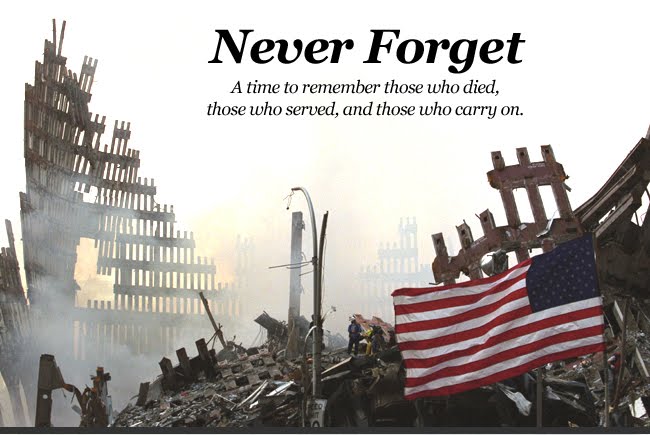 Who knew a trip to New York could be so emotional?
Our first stop was the 9/11 museum. I marveled at the artistic vision that had conceived the memorial pools, the water channeling down in rivulets that mirrored the face of the fallen towers, the continuous downward rush balanced by the redemptive feeling of water — the source of life — returning to the heart of the world. Here there was solace, closure, and consolation.
But a very different feeling accosted me inside. Almost upon entering the doors a single word brandished itself across my mind’s eye: Holocaust.
Obviously there is no comparison between the monstrosity of wantonly dehumanizing genocide and any single act of terror; obviously there is no equivalence between the systematic psychological, spiritual, and physical destruction of millions and a few thousand relatively instantaneous murders.
But then again, yes there is.
Read the whole article here:

Rosh Hashanah: Letting our spirits soar
 When my youngest daughter was three years old, she discovered the helium balloons in the flower section of our local supermarket, handed out free to every child who asks. I tied the string around her wrist so the precious balloon wouldn’t escape up to the rafters. She bounced it on its string as I pulled it this way and that to avoid bumping other shoppers. She hugged it as we climbed into the car for the ride home.
As I pulled into the driveway, my daughter flew out of the car, her balloon bobbing along behind her, raced in through the front door and out again to our back yard, slipped the string off her wrist and gazed upward as the balloon rose into the sky and slowly drifted away.
“Why did you let go of your balloon?” I asked, slightly miffed that she had so casually cast away the new toy she had been fussing over for the last half hour.
My daughter just shrugged, giggled, and watched the balloon disappear from sight.
After our next trip to the market she did it again. Then again, over and over for months. Every time I asked the same question. “Why did you let go of your balloon?”
Finally I got an answer. My daughter looked me in the eye and replied, “It’s a present for God.”
* * *
She doesn’t do it anymore. And part of me mourns for the pure, innocent faith that prompted a little girl to give up her toy as an offering to the Almighty.
For all our experience and the sophistication, for all our indulgent smiles at the simplicity of our children’s beliefs, is it not likely that our children know something we don’t, something they themselves soon won’t know or even remember they once knew? And perhaps it is precisely their power of belief that sets them apart from the adults they will become.
Children believe in God, believe in their parents, believe in their country and their school and their friends and that good will always win out over evil. Their trust and faith haven’t yet been sullied by the lies of politicians, the corruption of law and justice, the avarice of sports heroes, the superficiality of Hollywood or, most importantly, the cynicism of their parents, who may try for a time to put on an act to spare their children from their own disillusionment.
But what if it worked the other way, that we could learn an old lesson from our children instead of imposing yet another new lesson upon them? What if we could turn the clock back and recapture even a whiff of the innocence of youth? Would we reach out to grasp it, or have we grown too jaded even to try?
 This Rosh Hashana, Jews around the world will fill synagogues to inaugurate the first day of the Jewish new year. But Rosh Hashana celebrates much more than the beginning of another calendrical cycle. It celebrates birth and rebirth; it celebrates beginning and renewal, for it commemorates nothing less than the Creation of the world and Mankind.
As we approach the New Year, let us ask ourselves how we can turn back the clock, exchanging bad habits for new challenges, routine for renewal, and cynicism for enthusiasm. Instead of smiling with adult condescension at the innocence of children, let us consider instead that the difference between childhood and maturity is not whether we give presents to our Creator, but what kind of presents we choose to give. A child serves God by sending a balloon up into the sky. An adult serves God by releasing his spirit to soar to the heights of Godliness.
Have we given charity in proportion with our means? Have we visited the sick and comforted the distressed? Have we consistently spoken with kindness to our neighbors, with respect to our superiors, and with patience to our children? Have we honored the Sabbath and studied the ancient wisdom of our people?
It’s not enough to make resolutions; we need to inspire ourselves to see them through. We need to awaken in ourselves an awe of the Almighty by reflecting upon the vastness of creation, the unfathomability of the stars in their courses, the mysteries of life, and the limitless potential of the soul — to behold for a lingering moment the immeasurable beauty and majesty of our universe.
And if we can follow through, if we can make the moment last without slipping back into our well-traveled rut of discounting every noble and beautiful thought and deed, then perhaps we can retain our faith in those things truly worthy of faith throughout the coming year.
Originally published by the St. Louis Post-Dispatch and Aish.com
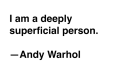
In Praise of Superficiality
As we get deeper into campaign season and the Trump phenomenon gains traction, here’s a look back on my retrospective of 2008, a year of political circus and economic implosion.
 Beauty is only skin deep. Don’t judge a book by its cover. All that glitters is not gold.
These well-heeled sound-bytes of conventional wisdom warn us against granting value to appearance, form, and externality. They assert that depth and substance are the determinants of genuine value and true worth. They teach us to look behind every facade and eschew form over content.
Obviously, the people who composed these popular aphorisms were themselves unattractive, moodily self-conscious, or terminally unpopular — quite possibly all three. Yet somehow they succeeded in foisting upon Western Civilization one of the great propaganda victories of the ages, convincing the masses that physical form is quantitatively less important than such insubstantial qualities as character, aptitude, and integrity.
Astonishingly, this shameless hoax continues to shape our outlooks and attitudes even though we all know better. After all, no one would dream of visiting Washington D.C, without seeing the National Gallery, Paris without taking in the Jeu de Paume, or Croatia without experiencing the Muzej Turopolja. And what are these meccas of cultural sophistication? Art galleries — collections of paintings, sculptures, and countless testimonials to aesthetic form and external beauty. When was the last time you visited a metropolitan museum of internal organs or auto parts?
True, beauty may be only skin deep, but that’s precisely the point. Where would Julia Roberts’s career be without her skin? She may be a fine actress, and I’m sure she’s a very nice person, but her movies wouldn’t draw much of an audience if she had her skin surgically peeled away before production.
WHAT’S IN A NAME? EVERYTHING!
Modern psychology has begun to recognize the fallacy of substance over form. In his bestselling book Blink: the Power of Thinking Without Thinking, Malcolm Gladwell marshals compelling evidence in support of superficiality. In one study, college students concluding their semester courses were asked to evaluate the quality of their teachers. Other students, who had not attended these classes, were shown three ten-second videos of the same teachers in action. Their evaluations matched closely those of the students who had actually attended.
The experimenter then shortened the video samples to five seconds, and then to two seconds, each time with comparable results. And this was with the sound turned off! Unfortunately, Mr. Gladwell does not pursue his train of thought to its logical conclusion. If two seconds is just as good as five seconds, ten seconds, or half a year, why do we need any seconds at all? A picture of the teacher should be enough to determine his competency or, even better, merely his name. It should be obvious that Mr. Sunshine, Professor Smiles, or Ms. Summer will create a more positive classroom experience than Mrs. Stern, Dr. Gaunt, or Miss Winter.
A rose by any other name would smell as sweet, observed William Shakespeare, but let’s remember that most historians now believe that those revered plays and sonnets were not actually written by William Shakespeare, the merchant who lived in Stratford-on-Avon. For all his great literary work, Shakespeare wasn’t really Shakespeare, and no one knows who he was. Imagine if the real author stepped forward today and claimed credit for his writings. Nobody would believe him. Of course, hardly anybody would care. We’ve all moved on to reading more relevant novels about teenage vampires.
Consider the last presidential election. Almost the entire Republican Party establishment agreed that Arkansas governor Mike Huckabee was the best candidate to lead the country. But he never had a chance. Can you imagine the elites of vote-laden New York, New England, and California ever voting for someone named Huckabee? If he’d been clever, the governor would have changed his name to Mike Skywalker-Sanchez, thereby establishing himself as an epic hero while attracting the critical Hispanic vote at the same time.
MIND OVER MATTERS
Consider also the recent economic collapse. Everyone was perfectly happy until someone found that all those companies enjoying soaring stock prices weren’t really making any money. As soon as the media started uttering words like downturn, recession, and pyramid scheme the entire market dove into a tailspin. Wouldn’t we all be better off if those misguided people obsessed with digging beneath the surface had simply satisfied themselves with the illusion of prosperity?
Of greater consequence is the effect of our misguided quest to bring depth, complexity, and meaning into our personal lives. Human nature as it is, how much anxiety do we cause ourselves through self-help books that teach us to look for inner peace, and through therapy that prods us to resolve neuroses of which we weren’t even conscious? How many relationships would flourish if we accepted physical attraction and physical gratification as the ideal rather than pursuing fantasies like “self-actualization” and the search for “soul-mates”?
Further evidence can be found in America’s obesity epidemic. Our subconscious minds, confused by the contradictions implicit in the rejection of two-dimensionalism, leave us with no alternative than to impose our misguided objective of becoming three-dimensional upon our physical bodies. The more we seek depth, the more three-dimensional we become — which may be good for the diet-book industry but not for our wardrobes.
So why don’t we all stop pretending? If superficiality is bliss, and if depth and meaning cause only confusion and discontent, it should be a no-brainer.
Here’s the problem. Superficially, depth is “in.” We don’t want to appear shallow because shallowness appears superficially inferior. Of course, on deeper reflection, we understand that superficial appearance is infinitely preferable to the complexity of depth, but our superficiality doesn’t allow us to admit this fact because it seems too obvious to be significant. Get it?
But today we find ourselves poised on the brink of a new era. Ours is the generation of change! Let us seize the moment and rise up as one people with one objective. Let us cast off our superficial adoration for depth and substance. Let us not be afraid to declare our commitment to all that is two-dimensional and raise up the banner of simplicity and externality. Let us purge our worldview of the pernicious urge to discover meaning in our existence, and let us join hands in our conviction that everything worth having should be available to everyone without any effort, thought, or accountability.
Well, aren’t you feeling better already?

The Virginia Shooting: Nihilism and the Culture of Anarchy
 “What has happened to us as a society that we now devalue life to such a level? What has happened in our society that people have become so violent? That’s the fundamental question we need to confront… We have a societal problem in our country. It reminds us of the most important job any of us will ever have … the job of a mother, a father or a parent.”
Senator Marco Rubio summed it up nicely… or tragically. But the deeper question is this: How do we stop the cultural inertia that is driving our society ever further into nihilism and moral anarchy?
Senator Rubio gets the answer perfect: If it doesn’t start in the home, then there really is no hope for the future. Without respect for traditional values, without recovering the lost ideals of civility, selflessness, modesty, and integrity, then the tide of history will sweep us away as it did the Roman Empire and leave behind a new Age of Darkness.
Bill O’Reilly makes the same point with his usual brass-knuckled pithiness here.

Someone is Always Watching
 “Someone is always watching.” Movie fans will recognize this as the punchline from “Ocean’s Eleven,” a glib repartee that ultimately recoiled on Andy Garcia and drove Julia Roberts back into the arms of George Clooney. Political observers might remember it, now that former Illinois Governor Rod Blagojevich is back (briefly) in the news, as a line the convicted politico should have uttered when he found himself the subject of state and federal investigators.
But just the opposite was true. The AP reported:
“You would think he would see his life collapsing around him,” said Chicago defense lawyer John Beal, who was in the courtroom with Blagojevich this week and noted how carefree he seemed. “But he was the center of attention and seemed to love it.”
One almost envies Mr. Blagojevich the comfort of his delusions.
At the beginning of the last century, the invention of electric lighting,telecommunication, and cinematography began to change the complexion of modern society. At the time, the leader of European Jewry, the venerable Chofetz Chaim, observed that the introduction of technologies scarcely imagined a generation before provided a lesson for any spiritually sensitive person to recognize that the Universe is not indifferent to our moral conduct.
Previously, the natural cycle of night and day imposed strict order upon human activity. Because most people in those times could not afford the limitless supplies of candles necessary to transform night into day, all activity was cut short early by the long nights of winter, and only in summer could the workday stretch late into the evening. Now, inexpensively and with the flick of a switch, the night could be expelled and the secrets of the darkness instantly revealed.
Can you say AshleyMadison?
 Yonason Goldson