Home » Posts tagged 'Ideology' (Page 6)
Tag Archives: Ideology

Rosh Hashanah and the Mysteries of the Universe
 Originally published by Jewish World Review in 2003.
96% of the matter in the universe is invisible. Mysterious “dark energy” is pushing all of space apart. Empty space is not really empty, but filled with subatomic “foam.” At least seven parallel universes exist, each a trillionth the size of a proton.
Science fiction? Fantasy? The product of opium hallucinations?
Guess again. According to an article in U.S. News and World Report, these hypothesized phenomena represent the mainstream of current scientific thought.
In the wake of observations reported last March by NASA’s Wilkinson Microwave Anisotropy Probe, astronomers and physicists are resorting to these and other fantastic models to explain anomalous temperature variations in the background radiation permeating the heavens.
And who knows? They may be right. After all, once upon a time a round earth, a heliocentric solar system, and manned flight were all scorned as flights of the wildest fancy. Perhaps entire universes really do exist, wrapped up in a particle of dust beneath your finger nail.
On the other hand, increasingly complex and convoluted theories begin to look like the frantic flailings of scientists drowning in the mysteries of human existence. Indeed, one noted physicist confessed that, if he’d been presented with these theories not long ago, “I’d either ask what you’ve been smoking or tell you to stop telling fairy tales.”
Of course, one almost has to feel sorry for these scientists. Every discovery, every revelation, every insight, opens up a new Pandora’s Box of inexplicable phenomena. A few short decades ago, we knew of about half a dozen known sub-atomic particles. Today there are hundreds, with the number growing all the time, and often only the haziest guesses as to why they exist. Relativity theory and quantum theory both seem to describe the workings of the universe, but only the most strained and unproven theory suggests how to unite these two approaches.
 It’s almost enough to make one contemplate — dare we say it? — Divine Creation. Indeed, man’s desire to plumb the secrets of the universe is nothing new. Newton, Descartes, Galileo, Aristotle, all of these and many others grappled with physics and metaphysics in their labors to comprehend the vast expanse of time and space that stretches toward the boundaries of existence.
But long before the first scientist or philosopher raised his eyes to gaze into outer space and contemplate the stars, another man searched inner space seeking understanding. His name was Job.
A righteous man who lost his fortune, his family, and his health, Job questioned whether there was any rhyme or reason to explain the suffering of the righteous and the prosperity of the wicked. And as he sank into the mire of self-pity and nihilism, a Voice from above answered him:
“Where were you when I laid the foundations of the earth?” asked the Almighty. “What is the path where light dwells? And darkness, where is its place, that you may take it to its boundary, that you may understand the paths of its home?”
The Creator never explains Job’s suffering, but He does provide Job with the answer that restores his faith: The complexity of creation is not only more that you know, but more than you can begin to imagine. Every star above you in the sky, every drop of water in the sea, and every grain of sand upon the shore resides in its place and follows the course chosen for it; so too is every seeming whim of fate rather an unfathomable pulse from the primordial machine that steers the unfolding of eternity.
And so we say in the Rosh HaShanah liturgy, “This day is the anniversary of the beginning of Your handiwork, a remembrance of the First Day.” As we stand in the murky spiritual twilight between the end of one year and the start of another, we contemplate that amidst the mystery and uncertainty that surrounds us, one constant offers us security and safety if we take hold of it: the indivisible relationship between the Creator of all and His ultimate creation — Mankind, for whom He brought all else into being.
This day. This day of Rosh HaShanah begins a new year, a new season, a new opportunity to draw near to the Master of Creation. This day offers us a poignant reminder of how to cling to the godliness the resides within us, to strive to become more devoted in our relationships and less demanding in our expectations, more focused on others and less fixated on ourselves, less passionate about material gain and more ardent in our pursuit of spiritual fulfillment.
 This day reminds us that we hold in our hands an awesome privilege, as well as an awesome responsibility. How willingly are we seduced into looking for simplistic solutions to the moral and ethical dilemmas that life throws at us day after day? How longingly do we embrace superficial cliches and bromides that urge us to pull the warm covers of apathy over our heads?
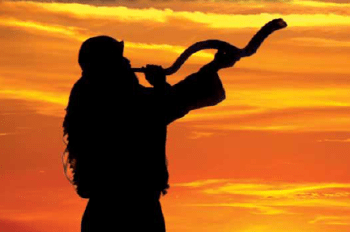
This day. Rosh HaShanah is our wake up call, and the sound of the shofar signals our reveille to open our eyes and behold the breathtaking magnificence that is Creation. And if our minds reel as we try to grasp the limitless expanse of the universe, we can yet grasp onto this certainty: that the One who placed us in its midst has revealed Himself through His Word and has given each of us a priceless gift, no less than the sand and the sea and the stars — an indispensable role to play in the completion of His masterpiece and the means through which we can become one with the infinite and with the divine.

A Zoo with a View
 In the 1920s, comedian Robert Benchley commented that there are two categories of people in the world: people who divide people into categories and people who don’t. He went on to remark that, “Both classes are extremely unpleasant to meet socially, leaving practically no one in the world whom one cares very much to know.”
Groucho Marx may have been thinking the same thing when he famously quipped that he wouldn’t want to belong to any club that would have him as a member.
In all seriousness, it may be high time that we took these humorists and their absurdist observations a bit more seriously.
My first serious exposure to absurdism was back in my sophomore year at the University of California, when my English professor introduced our class to playwright Edward Albee. I was immediately fascinated by The Zoo Story, although I wasn’t quite worldly enough to appreciate the subtext of class warfare and social malaise.
Time would solve that problem. But I was still able to recognize the hidden threads of realism sewn together in a garment of tragicomic incongruity.

Block Yeshiva closing marks end of an era
 Ask any teacher. Ask any informed parent. Educational standards are in free-fall across America — perhaps around the world. And in St. Louis, Missouri, an extraordinary institution has closed its doors.
Block Yeshiva High School did not come into existence as something new or revolutionary. Its roots reach all the way to the ancient traditions articulated by the sages of the Second Temple period, and its style expressed the more recent articulations of one of the most influential thinkers of the last two centuries.
In 1851, Rabbi Samson Raphael Hirsch relinquished both his pulpit and his seat in the Moravian parliament to accept the position as leader of the Torah community in Frankfurt-am-Main. In response to the rapid assimilation of Western European Jews, Rabbi Hirsch developed a movement that embraced both secular knowledge and passionate commitment to Torah study and observance.
The approach that became known as Neo-Orthodoxy was built upon a rigorous 12-year primary and secondary education system providing Jewish children with the fundamental skills and philosophic outlook to remain strong in their traditions while simultaneously preparing them to flourish in the professional world of gentile society. By doing so, Rabbi Hirsch created a bulwark against the sweeping tide of secularization while establishing a model to produce fluent and committed Torah Jews for generations.
For 38 years, St. Louis has boasted a school that has earned an extraordinary reputation among both American universities and Israeli yeshivos and seminaries. Following the trail blazed by Rabbi Hirsch a century and a half ago, Block Yeshiva High School graduates have distinguished themselves in medicine, law, and business, as well as in the world of Torah scholarship. Perhaps more significantly, as a group, Block Yeshiva graduates have retained an extraordinary commitment to Jewish tradition and values, to the Jewish people and the Land of Israel, and to the refinement of moral and spiritual character that is our true legacy as a nation.
Here are a few examples of what Block Yeshiva has produced:
Click here to read the whole article. Please comment and share.

Karma Always Strikes Twice

Arriving in Hangzhou on Saturday, President Obama received an unexpected welcome. Absent were both rolling staircase and television coverage. Instead, the president was compelled to disembark ignominiously through a high-security door in the belly of the plane.
New York Times reporter Mark Landler mused that in his six years covering the White House he had never witnessed the president shut off from the media.
And that was only the beginning. Both reporters and staffers — including National Security Advisor Susan Rice and her deputy — found their way blocked by bright-blue police tape. When Ms. Rice tried to duck under the tape, Chinese officials swiftly intercepted her. When White House staff members protested the radical departure from protocol, their objections were met by angry shouts from the Chinese.
Some saw in this a reprise of Mr. Obama’s first visit to China in 2009, when the Chinese censored coverage of the president’s town hall meeting and an interview with the non-government press. Maybe the administration’s much-heralded pivot-to-Asia swung too far and came around full-circle.
Or it may be yet another case of karma, which chooses its targets without political bias.


Open Season on Everyone
 Let me be clear. I am no fan of Ann Coulter.
The right-wing firebrand disdains all forms of moderation in both tone and worldview, whether she is tweeting expletives about Jews or hailing Donald Trump’s immigration plan as a new Magna Carta. When it comes to discrediting the intellectual and moral integrity of conservatism, nobody does it better.
Even Ms. Coulter’s political mentor, arch-conservative David Horowitz, disavowed her for attempting to resurrect as a martyred crusader Senator Joseph McCarthy, whose self-serving campaign against communists real and imagined represents one of American history’s ugliest eras.
For my part, I’ve never gotten out of my head Ms. Coulter’s inexcusably cruel and utterly gratuitous swipe at Margot Kidder in a 2004 column about the controversy that eventually ended the career of CBS anchor Dan Rather. With neither context nor pretext, Ms. Coulter’s savaging of an admired actress struggling with bipolar disorder was even more contemptible that Donald Trump’s mocking of disabled reporter Serge Kovaleski.
So it may be simple karma that Ms. Coulter received as good as she dishes out at last weekend’s Comedy Central roast of actor Rob Lowe. Her mere presence on the dais apparently marked her as fair game, making her the target of more vicious barbs than the man-of-honor himself.
But karma does not excuse the cast of notables who turned what should have been good-natured (if adolescent) banter into a lynching party.

Fighting Political Correctness — Civilly
 Conservatives across America are cheering University of Chicago dean John Ellison for his recent letter informing incoming students that they may have to suffer the indignity of confronting people they don’t agree with and ideas that make them uncomfortable.
Needless to say, the position was immediately denounced by zealots who sincerely believe that the only way to preserve intellectual freedom is by muzzling any and every utterance that they find threatening to their own feelings and worldview.
The sad reality is that there are racists and sexists in the world, just as some people are intellectually dishonest and plain rude. (Some of them are running for president of the United States.)
But people such as these will not go away or change their stripes because others attempt to silence them. The only effect of censorship is to drive people into more insulated camps and encourage their withdrawal into more extreme factions where groupthink reigns and all meaningful exchange of ideas is prohibited.
The freedom to disagree and engage in civil discourse is what keeps a society healthy, and a college campus is where intellectual and moral maturity are supposed to take root and blossom. It’s a challenging process; but there’s a reason for the expression growing pains.
When such distinguished figures at Condoleezza Rice and George Will — not to mention Binyamin Netanyahu — are disinvited on account of pressure from students who would rather hide from opposing viewpoints than defend their own positions, it is obvious that American universities are no longer serving their students or society at large.
A free society depends upon the ability to differentiate between legitimate opinions that differ from our own and pathological ideologies corrosive to moral values and human dignity. As such, we have to allow those who embrace the latter free voice so that we can then refute them from a position of reason, not opposing ideology.
In his book Civility, Stephen L. Carter makes the critical point that civil behavior — which is the foundation of civilization — requires a sensitivity to a code of personal conduct that goes beyond the letter of the law. By attempting to legislate free speech and codify free thought, we forfeit the essential value that human culture is built upon a commitment to seek and to do good, not merely to abstain from what is forbidden.
With courage and clarity of thought, we can engage those with whom we disagree in a way that is both civil and respectful. By doing so, we can promote mutual respect and understanding, while effectively marginalizing those who reject civility without needing to stifle all dissenting opinions.
This is not merely a prescription for American college campuses. It would serve to foster a much needed atmosphere of unity and fellowship in all our communities, at home and around the world.

Suffer the Children?
 Twelve-year-olds don’t choose to become suicide bombers.
And true believers don’t send children as martyrs in place of themselves. The perpetrators of last week’s vicious attack on a Kurdish wedding in Turkey believe in nothing so much as violence as a means to their own power. It’s a sad sign of the times that we can almost admire the zealots of a few years ago who willingly gave their own lives for their ideals, no matter how convoluted those ideals may have been.
When fanatics eagerly give the last full measure of devotion — for which Abraham Lincoln praised the Union soldiers who sacrificed their lives at Gettysburg — we have to ask ourselves if we are prepared to sacrifice as much for our noble values as our enemies readily sacrifice in the name of terror.

The Seasons of our Discontent
 I received the following email in response to my article last week about Donald Trump and Tony Soprano. I think it’s well worth posting here:
Dear Rabbi,
His point was that Donald Trump’s crude, impulsive, petty, and narcissistic behavior has no bearing on his fitness for office.
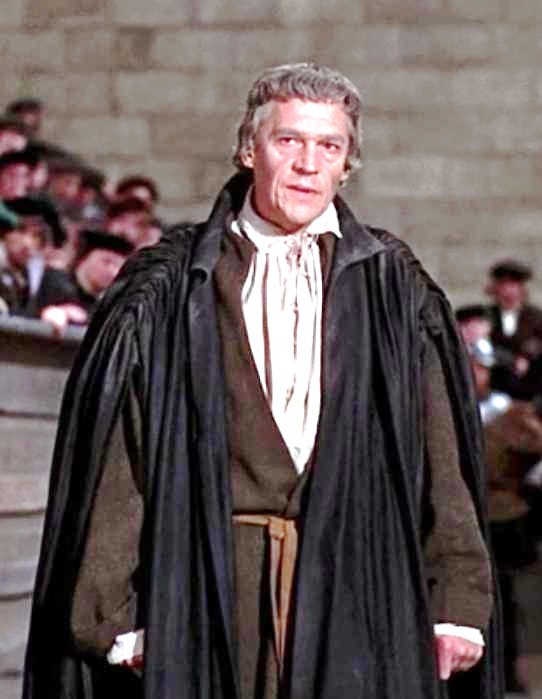
As I read these words in your email, a scene from the 1966 movie A Man for All Seasons came to my mind. The scene occurs at the beginning of the film between Cardinal Wolsey (Orson Welles) and Sir Thomas More (Paul Scofield). This whole scene, all of it worth quoting and so marvelously acted, is one of my favorite “duets” in all movies but I’ll limit myself to the quote below. .
WOLSEY:
Let the dynasty die with Henry Vlll
and we’ll have dynastic wars again.
Blood-witted barons ramping the country
from end to end.
Is that what you want? Very well.
England needs an heir.
Certain measures, perhaps regrettable…
…perhaps not, there’s much in the Church
which needs reformation, Thomas.
All right, regrettable.
But necessary to get us an heir.
Now, explain how you, as a councillor
of England, can obstruct these measures
for the sake of your own private conscience.
SIR THOMAS MORE:
I think that when statesmen forsake
their own private conscience
for the sake of their public duties
they lead their country
by a short route to chaos.
Your usually clear headed good friend is willing to jettison his own private conscience for the sake of political expediency. Millions of other Americans who are also willing to do so are leading our country by a short route to chaos.
 Your statement
The Hitlers, Stalins, and Ahmadinejads of the world may love their children and may have had troubled youths, but evil remains evil whether we choose to look it in the face or to bury our heads in the sand
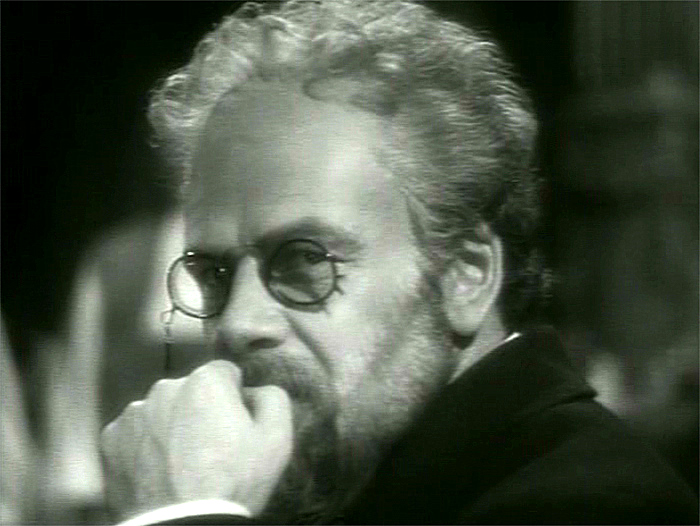
likewise brought to my mind an excerpt from the 1936 movie The Life of Emil Zola, delivered by Zola (played by the incomparable Paul Muni) during Zola’s trial which came about because of Zola’s accusations against the army with regard to the injustice of the Dreyfus affair:
The minister of war,
the chief of the general staff…
…and the assistant chief never doubted
that the famous bordereau…
…was written by Esterhazy…
…but the condemnation of Esterhazy
involved revision of the Dreyfus verdict…
…and that the general staff
wished to avoid at all cost.
For over a year, the minister of war
and the general staff have known…
…that Dreyfus is innocent…
…but they have kept this knowledge
to themselves.
And those men sleep…
…and they have wives
and children they love.
Evil, depravity and mediocrity come in all shapes and sizes. When we are willing to dispense with our own moral consciences and standards in support of that evil for whatever reason we have permitted ourselves to become one with that evil and become just as guilty.
Regards,
Bill Meisler
Look in the Mirror, Mr. President
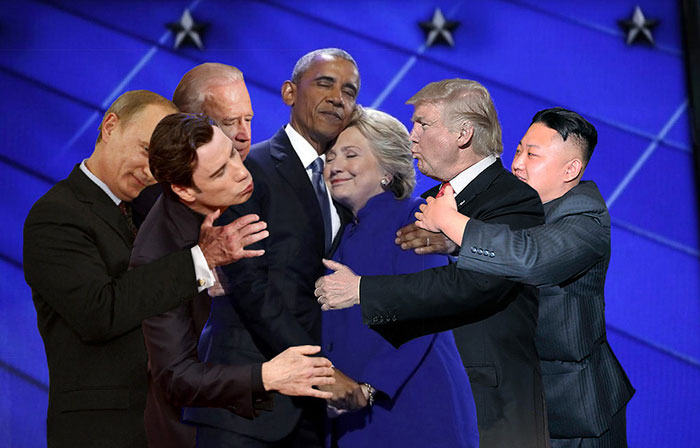 “The Republican nominee is unfit to serve as president.”
Such is the gospel according to Barack Obama, who went on to defend his verdict by citing “the repeated denunciations of his statements by leading Republicans.”
He’s right, of course. But his critique might carry more weight if it were not a classic case of the pot calling the kettle black.
(OMG, did I just write that?)
Before his very public embrace and endorsement of Hillary Clinton at the Democratic convention, Mr. Obama might have taken a look at the recent incendiary assessment of Ms. Clinton by NYT columnist Maureen Dowd, who’s about as far to the left as one can get without falling off the edge of the earth.
Here are a few choice quotes:
[The Clintons’] vast carelessness drags down everyone around them…
In a mere 11 days, arrogant, selfish actions by the Clintons contaminated three of the purest brands in Washington…
Hillary willfully put herself above the rules — again — and a president, campaign and party are all left twisting themselves into pretzels defending her.
The Clintons work hard but don’t play by the rules. Imagine them in the White House with the benefit of low expectations.
If even the most ardent defenders of liberal ideology give Ms. Clinton a failing grade in character, surely that must call into question her credibility as an aspirant for the country’s highest office.
So answer us this, President Obama: how can you, with a straight face and in all earnest, chide Republicans for not rejecting an unfit candidate when you so brazenly refuse to do so yourself?
 Yonason Goldson