Home » Posts tagged 'Ideology' (Page 9)
Tag Archives: Ideology

“A Special Place in Hell”
 I am quoting. Don’t shoot the messenger.
In fact, it was Madeleine Albright, the first woman to serve as U. S. Secretary of State, who declared, “There’s a special place in hell for women who don’t help each other!”
Apparently, Ms. Albright believes that Hillary Clinton is either unworthy or incapable of winning the office of the president on her own merit. One has to wonder whether Ms. Albright also believes that she herself was appointed Secretary of State because of her sex rather than her abilities.
Feminist icon Gloria Steinem was close at hand to weigh in on the issue — predictably on the wrong side. “When you’re young, you’re thinking: ‘Where are the boys? The boys are with Bernie,’ ” sneered the crusader for women’s rights and dignity.
Just imagine if a man had said that. But so it goes in our age of unabashed double-standards.
In then, in classically Clintonesque style, the fearless former revolution tried to revise her message: “I misspoke on the Bill Maher show recently,” Ms. Steinem posted on Facebook, “and apologize for what’s been misinterpreted as implying young women aren’t serious in their politics.”
“Misspoke”? “Interpreted”? So what exactly was Ms. Steinem trying to say?
It’s heartening that at least some women are seeing through the smoke and mirrors.
“Shame on Gloria Steinem and Madeleine Albright for implying that we as women should be voting for a candidate based solely on gender,” said Zoe Trimboli, a 23-year-old self-described feminist from Vermont.
Indeed, that would be like suggesting that people voted for Barack Obama only because he’s black.
Wouldn’t it?

Join Bernie to look for Amerika
 Just when you thought this election cycle couldn’t get any wackier, the Sanders campaign has launched a new ad blending sixties-style images of protest marchers and flower children with Simon and Garfunkel’s pop-classic “America.” The unctuous 60-second commercial is brilliantly crafted to stir the heartstrings of starry-eyed liberals everywhere.
But here’s the irony: “America” is a ballad lamenting the failure of romanticism to flourish in a society bereft of direction and meaning, and about the disillusionment of a generation that had abandoned traditional values for a utopian fantasy only to find itself left with nothing:
“Kathy, I’m lost”, I said, though I knew she was sleeping.
“I’m empty and aching and I don’t know why.”
Counting the cars on the New Jersey Turnpike,
They’ve all come to look for America,
All come to look for America.
 Even Art Garfunkel missed the contradiction of using his own song to endorse a socialist agenda. One might as reasonably use “Mrs. Robinson” in an ad for marriage counseling.
Then again, there really could be no better theme song for the campaign of Bernie Sanders, a holdover from the hippie era passionately espousing grand ideas that could never work.
And, on the Republican side, Donald Trump, the alter-ego of Bernie Sanders, promises us a new America — trust me! — while truly viable candidates repeat the mistakes of 2012, forming a circular firing squad (to quote Mara Liasson) and all but ensuring that the general election will offer us a choice between one brand of demagoguery or another.
Where have you gone, Joe DiMaggio?


A Week of Ironies — Iranian Hostages, Nikki Haley, and $1.5 Billion
 In his State of the Union speech, President Obama patted himself on the back for making peace with Iran while, at that very moment, Iran held 10 American sailors in violation of international law and the Geneva Convention. The next day, Secretary John Kerry thanked the Iranians for not keeping the servicemen as hostages.
In the same speech, the president also lamented his failure to create an atmosphere of bipartisanship and cooperation, while passing up no opportunity to snipe at everyone who disagrees with him.
After South Carolina Governor Nikki Haley responded to the president’s address, the angriest voices loudly condemned her for condemning the angriest voices.
Hillary Clinton, who can boast the lowest national rating on trustworthiness since Richard Nixon, dismissed a new FBI investigation into her mishandling of classified information by declaring “that’s just not the way I treated classified information.” Transparency, at last.
 However, none of this made much of an impression on an American public entranced by the dream of winning a 1.5 billion dollar lottery, even though about half of multimillion-dollar lottery winners eventually admit that sudden wealth proved more of a curse than a blessing.
Now that three winners are going to share the unprecedented payoff, they might want to take a page from the book of a middle-aged man in Atlanta who, back in the 1990s, won a $4 million dollar lottery – what was an exceptional amount for the time.
The winner had been working a double shift as a garbage collector. When asked what he intended to do after winning so much money, the man replied, “I’m going to quit one of my shifts.”
“Only one?” asked the incredulous reporter.
“A man has to have work,” replied the new millionaire.

The Second Amendment and the Oral Law
 As president Obama embarks upon his latest unilateral campaign to repair the world, this time by expanding restrictions on gun ownership, it’s worth revisiting my article on the Second Amendment from 2010.
Perhaps the greatest danger to the Constitution is manipulating its words to validate predetermined conclusions. By doing so, we violate the talmudic admonition against making the law “a spade for digging,” i.e., a tool to advance our own ends.
To preserve constitutional integrity, we have to familiarize ourselves with the context of its times, then apply those observations to the times in which we live. That only works when we are committed to honoring the system, rather than exploiting the system to fit our own agenda.
Last month’s Supreme Court ruling affirming Second Amendment states’ rights (and coinciding with the predictable Republican grilling of Supreme Court nominee Elana Kagan over the same issue) has brought back into the spotlight the constitutional ambiguity regarding gun ownership in the U.S. of A.
A well regulated Militia, being necessary to the security of a free State, the right of the people to keep and bear Arms, shall not be infringed. So states the Second Amendment to the United States Constitution. At first glance, the stipulation seems clear enough. American citizens may own guns, plain and simple.
 Or maybe not. The qualifying phrase that introduces the amendment appears to restrict constitutional protection to dependence upon a militia, or citizen army, to defend the nation. Accordingly, in times such as ours, when a standing army has assumed responsibility for the common defense, there may be no constitutional guarantee at all. And so, on second thought, the amendment seems to clearly limit the extent of private gun ownership.
Or, again, maybe not.
Perhaps the Founding Fathers meant that, since every citizen ultimately owns an equal share of the responsibility to defend his country, the right to bear arms is part and parcel of each person’s national duty to fight for the public welfare should the need ever arise. This would explain why the authors of the amendment might have mentioned a militia even if they never meant to restrict said right.
So what was the original intent of the Framers? If they were here, we could ask them. Since they are not, each side seems to have a fair and reasoned claim to support its respective position.
Is there any way to resolve the question of what was intended by men who passed away long before our grandfathers were born?
In fact, there may be.
THE REST OF THE STORY
Imagine that, as you pass by a window, you see a man wearing a mask raise a knife and plunge it into the chest of another man lying prone beneath him. You scream for the police, certain that you have just witnessed a murder.
Or, yet again, maybe not.
Now imagine that you were unfamiliar with the concept of open-heart surgery. Only after the police arrive and explain that the man in the mask is a surgeon working to repair the heart of the man on the table beside him will you understand that he is in fact saving a life and not taking one.
Context is everything. It orients us in time, space, and circumstance, transforms isolated acts into links in a chain of connected events, none of which can be understood in isolation. And so, if the words of our forebears sometimes appear to us muddled or imprecise, the surest way to achieve clarity is to examine comments and opinions from the same thinkers and the same era.
 Here are a few examples to provide historical context:
James Madison, on the principle of individual rights: [A bill of rights] should more especially comprise a doctrine in favour of the equality of human rights; of the liberty of conscience in matters of religious faith, of speech and of the press; of the trial by jury… of the writ of habeas corpus; of the right to keep and bear arms.
Massachusetts Representative Fisher Ames: The rights of conscience, of bearing arms, of changing the government, are declared to be inherent in the people.
Supreme Court Justice James Wilson, contributor to the drafting of the Constitution:The defense of one’s self, justly called the primary law of nature, is not, nor can it be abrogated by any regulation of municipal law.
Vice President Elbridge Gerry, signatory to the Declaration of Independence, on national defense: What, sir, is the use of militia? It is to prevent the establishment of a standing army, the bane of liberty.
In the context of the times, the intention of the Framers becomes difficult to debate. Only in relatively recent times, when the concept of a militia has become an anachronism, has it become possible to question the true meaning of the Second Amendment.
PRESERVING THE INTEGRITY OF THE LAW
Is there any way for words to retain their clarity despite the persistent evolution of cultural references and values? Is there any method for protecting ideas from the ravages of changing times and sensitivities?
Indeed there is. It predates the United States Constitution by 31 centuries, and it is called the Oral Law of the Torah.
Consider these biblical commandments:
Remember the Sabbath Day and keep it holy… And this will be a sign upon your arm and a remembrance between your eyes … Slaughter your [livestock] in the manner that I have prescribed… Do not seethe a kid in its mother’s milk.
 These precepts, as they are written in the Torah, are impossible to observe. What does it mean to keep the Sabbath “holy,” and what actions — if any — are required to “remember” it? What kind of sign are we to place upon our arms, if elsewhere the Torah prohibits the application of any tattoo, and how do we place a “remembrance” between our eyes? Nowhere does the Torah outline any prescription for ritual slaughter, nor does it imply what is commonly understood, that that the prohibition against cooking a baby goat in its mother’s milk extends to every mixture of meat and dairy products.
In spite of these and many other ambiguities, the basic practices of the Torah observant community have remained essentially unchanged for over 3300 years. The explanation is simple. Unlike the family encyclopedia which once gathered dust on the shelf and now gathers dust on the CD rack, the Oral Torah forces every committed Jew to see himself as custodian of a living tradition that connects him with the origins of his identity and enables him to live in the modern world without compromising the values of his ancestors.
No longer purely oral, the discussions and debates of past authorities have been recorded for their children in the writings of the Talmud and the commentaries that elucidate them. Unlike the records left behind by the Framers of the Constitution, however, these records have become canonized as part of the structure and process through which Jewish law is determined in each and every generation. Even when questions and disagreements arise, there is no debate within the Torah community over the methods through which answers and solutions are to be found.
Society changes, technology changes, and the values of human beings twist in the winds of time like a weather vane spinning before a storm. Electricity, automobiles, computers, cloning, and in vitro fertilization may have once been unimagined, but we have inherited a legacy that teaches us how those earlier generations would have resolved the problems of our changing world if they were here themselves today. And so the Torah Jew never loses his bearings, for he is guided by the words of his forefathers and finds comfort in the knowledge that the ancient wisdom of the Torah will never become stagnant, corrupted, or out of date.
As my teacher Rabbi Nota Schiller often says, the Oral Torah allows the Jews to change enough to stay the same.
Originally published by Jewish World Review
Too Tragic for Words
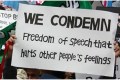
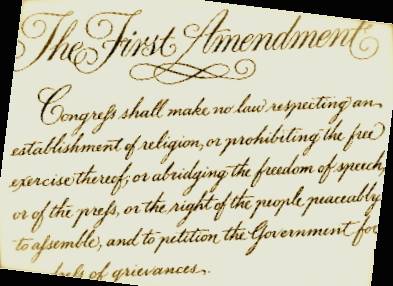 Would you sign a petition to repeal your right to petition? If not, you probably don’t attend Yale University.
Then mourn for our country.

Donald Trump: Obama 2.0
A magic rests on the lips of the king;
Let his mouth not betray him in judgment.
~Proverbs 16:10
 However improbable it seemed at the start, it’s not hard to understand the initial popularity of Donald Trump. In an age of mealy-mouth, equivocating, do-nothing, business-as-usual, avaricious politicians, many found it refreshing to have a larger-than-life presence who seemed to speak his mind and didn’t pander to popular opinion. But by now the flirtation should have revealed itself for what it is — a cheap one-night stand with no basis for a solid relationship.
Donald Trump represents everything that is wrong with this country: arrogance, self-promotion, pettiness, bellicosity, irresponsibility, bigotry and, despite his hugely successful self-branding, dishonesty and insincerity. In truth, Donald Trump is exactly the opposite of the persona that originally made him so appealing; on closer inspection, he reveals himself to be nothing less than a fun-house reflection of Barack Obama.
Like Mr. Obama, Donald Trump believes in nothing but himself; each man genuinely believes he is the smartest person in the world, and each reacts with seething contempt toward anyone who questions or disagrees with him. Armed with the conviction that comes from infallibility, each will say whatever he has to say, without a flicker of shame, to advance his own personal agenda.
Mr. Trump had only good things to say about Hillary Clinton in his 2012 interview with Greta Van Susteren, but last July he told Meet the Press that Ms. Clinton was “the worst Secretary of State in history.” In 1999 he said, “I love universal health coverage,” but now he chastises the Republican congress for not putting an end to Obamacare. In 1999 he was “very pro-choice,” but now he’s anti-abortion. Apparently, this qualifies him to be president. in 2014, the Washington Post awarded President Obama for having told 3 of the 12 biggest political lies of the year. In 2013, it was 3 out of 10 — an average good enough for an MLB All-Star.
The issues are not the issue; brazen disregard for the truth is. Much more disturbing is the persistent popularity of Mr. Trump based on the illusion that “he tells it like it is.

Heading over the cliff
 Not following the usual conservative line, Bernie Goldberg articulates the train-wreck of Donald Trump, and Glenn Beck explains how we got here.

That Thou art Mindful of Him
Yes, they’re at it again. According to the New York Law Journal:
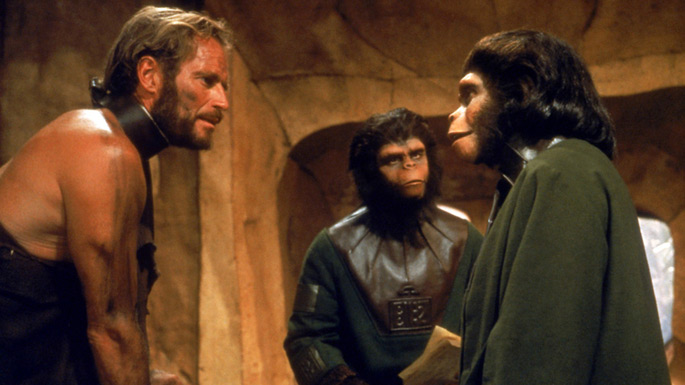 “A group seeking release of chimpanzees in captivity in New York through habeas corpus petitions has renewed its request to free a chimp held at a farm in Fulton County, near Albany.
“This time, the Nonhuman Rights Project said the materials supporting the petition it filed in Manhattan Supreme Court for the release of “Tommy” contain new statements from experts, including an affidavit from anthropologist Jane Goodall, supporting its arguments that chimpanzees possess enough human qualities to make their extended confinement cruel and unusual punishment.
“The group’s previous attempts to have Tommy released failed when an Appellate Division, Third Department, panel ruled that since chimps cannot bear the legal responsibilities and duties of humans, they are not entitled to habeas corpus or other legal protections accorded to people. The state Court of Appeals declined to hear the case [emphasis added].”
Socrates gave up his life for the ideal of pure wisdom. Galileo was threatened with torture for his commitment to scientific truth. Nelson Mandela spent 27 years in prison for his campaign to end apartheid.
And now, attorney Steven Wise is seeking to be the next torchbearer for virtue and justice by seeking legal personhood for two chimpanzees currently deprived of their primatial integrity by incarceration in the anatomy department of New York’s Stony Brook University. Mr. Wise has even found a judge willing to hear his case.
This is a natural outgrowth of our collective obsession with rights and entitlement which has, proportionally, shrouded our notion of personal responsibility. A healthy culture recognizes that it has a moral obligation to show compassion to all living creatures. But as the very concept of morality flickers and fades from social consciousness, only the assertion of rights prevents the rapid disintegration of society.
And as we lose our sense of responsibility, the distinction between man and animals grows harder to define until, ultimately, it all but disappears. In California, the “rights” of a little fish trump the welfare of humans: crops wither in arid fields during the worst drought on record as the state dumps trillions of gallons of fresh water into the ocean.
It’s worth noting that in 1933, two years before the Nuremberg Laws stripped German Jews of both civil and human rights, the Nazi government passed some of history’s most progressive laws for the protection of animals, legislation considered emblematic of the highest moral values of a people.
Elevating animals to the level of human beings inevitably results in human beings acting worse than animals.
Hat tip: Syd Chase

The Candles and the Tree
 It was the December after my ninth birthday. A menorah rested on the bookshelf over the television console. Across the room, beside the fireplace, the lights of a tree twinkled red and green and blue. I was standing next to my mother as she held a candle in her hand. My father wasn’t there. He wasn’t into these things.
My mother lit the lone candle, ushering in the first night of Chanukah. She didn’t recite the blessing. She didn’t know it. I remember watching the wick catch, watching the flame grow bright, and asking myself, “Now what happens?”
“We light the candles for eight nights because the oil burned for eight days,” my mother had told me. What oil? I wondered. But something about her brief explanation stopped me before I asked. Maybe she didn’t know, either.
A year or two later, at my suggestion, the menorah had disappeared and only the tree remained. Waiting for the morning of December 25th when all the presents could be opened at once seemed far more dramatic than diluting the experience over a week, especially when those wrapped boxes mysteriously appeared under the tree day after day over the course of almost a whole month. Chanukah just couldn’t compete.
Only two decades later did I come to appreciate how much my own experience had truly been a Chanukah story.
SEEKING SPIRITUALITY FROM A TO ZEN
When I went away to college, I left behind the tree with the menorah. December 25th had become as irrelevant as Santa Claus, and I preferred an envelope with a check to wrapped presents that would most likely be returned for credit. I eagerly adopted the ambivalent agnosticism of so many of my peers, celebrating dormitory weekends by emptying six-packs rather than observing commercialized annual holidays with empty rituals.
Sometime toward the end of my university career I found myself attracted to Zen. Not in the traditional style, with its practices of discipline and self-mastery, but the pop-spiritual variety learned from Zen and the Art of Motorcycle Maintenance and similar modern scriptures.
Aligning myself with the spiritual energy of the universe became my goal. I wanted to choose good over evil because, ultimately, that brought good karma and tranquility. Surely, this was the road to Truth.
But we all know which road is paved with good intentions. As sincere as I may have been in my aspiration to travel the road to Truth, I found with annoying frequency that when my desire to do good clashed with my desire to indulge amoral self-interest, good threw in the towel at least two times out of three. Forced to take stock of myself, I had to concede that, for all its high-sounding ideals, a spiritual discipline that produced no moral discipline wasn’t worth its mantras.
TOO LATE FOR THE HIPPIES
 I hadn’t developed much discipline in my academic life, either. Oh, my grades were good enough, but four years studying English literature and writing had left me with neither gainful employment nor vocational direction. It was 1983, a decade late to join the hippies or beatniks, but that didn’t stop me from swinging a backpack over my shoulders and hitchhiking across the country. If I hadn’t found Truth in the ivory tower, perhaps I might find it in the heart of America.
Sixth months crisscrossing the country brought me no closer to Truth, but it did whet my wanderlust, and I soon boarded a flight across the Atlantic to continue my journey through Europe, after which Africa, Asia, and Australia lay upon my horizon.
Half a year into my journey, Europe ended with a short hop across the Mediterranean to Israel, where I sought to have a classical Jewish experience — volunteering to pick oranges on a kibbutz. But it was December, with little agricultural work to be done; moreover, the dollar was strong, resulting in some 9 million American tourists in Europe, many of them draining south into Israel as winter weather set in. I found the kibbutz placement office blocked by a line of 20-somethings camped out like they were waiting for tickets to a Rolling Stones concert, oblivious to the signs screaming, NO PLACEMENTS UNTIL JANUARY.
Desperate for a break from the stresses of travel on a shoestring, I cast about for some way of imposing routine upon my life before departing for Africa and, somehow, found myself invited to attend yeshiva.
Yeshiva? The word was unfamiliar, but the offer of a bed, hot meals, and a daily schedule of classes proved irresistible. It was two weeks before Chanukah, and I would finally learn about the secrets of the menorah and the miracle of the oil.
THE CLASH OF CULTURES
Although a period of peaceful coexistence followed Alexander the Great’s occupation of the Land of Israel, it didn’t take long after Alexander’s death before the ruling governments began to feel first discomfited and later threatened by their Jewish subjects and the Judaism they practiced. Greek philosophy recognized man as the pinnacle of creation, perfect in his accomplishments, answerable to no one but himself. Greek mythology embraced a pantheon of gods characterized by caprice and selfishness, by lust and vengeance, thereby sanctioning similar behavior among men.
And even though it was no longer the Greeks who controlled Israel, the Ptolemys of Egypt and later the Seleucids of Syria had thoroughly absorbed the cultural values of the empire that had briefly ruled over them. How offended they must have been by a Jewish society devoted to self-perfection through submission to a divine code of moral conduct.
When they could no longer tolerate the Jewish threat to their ideals, the Syrian-Greeks contrived to destroy Jewish ideology. Whereas their predecessors, Babylon and Persia, had turned to violent oppression, the cultural successors of Alexander’s empire posed a much more subtle danger: in place of physical violence or outright prohibition of Torah observance, Antiochus IV of Syria banned only three practices: the Sabbath, bris milah (circumcision), and Rosh Chodesh, the sanctification of the new month.
The Sabbath testifies to the divine nature of the physical universe: without this weekly reminder, we easily loose touch with and ultimately forget our relationship with the Creator of all. Bris milah testifies to the divinity of life: it is the sign of our higher calling, reminding us that we can control our physical impulses rather than allowing them to control us, that each of us is a work-in-progress striving toward self-completion and self-perfection. Rosh Chodesh testifies to the divinity of time: it is the ceremony that fixes the calendar and imbues the Jewish holidays with an intrinsic holiness. Without Rosh Chodesh, placement of the holidays would become arbitrary, leeching all meaning from them the way American Federal holidays have lost all substance in the eyes of most Americans.
 The Jews refused to submit, and in the end the Syrian-Greeks resorted to more draconian decrees and eventually violent repression. But their plan had been sound: had they succeeded in stopping our adherence to those three basic precepts, they would have succeeded also in reducing Torah observance to an empty ritual, one that might have continued on for generations, but would have quickly become bereft of all meaning and spiritual significance. For this reason, the observance of Chanukah always includes one Sabbath, always passes through Rosh Chodesh, and is eight days long as a remembrance of the bris, the covenant between the Jew and his Creator.
Chanukah celebrates victory not only over our Grecian oppressors, but also over the Hellenists, those Jews who promoted a new syncretism of Judaism, wherein they hoped to intermingle Jewish practice with that which they found most attractive in Greek culture. The Maccabees recognized the absolute incompatibility between Greek ideology and Jewish philosophy, and they foresaw that ultimately one would have to prevail over the other. Without staunch defenders fighting for Jewish identity, the torch of Judaism would inevitably be extinguished and only the tree of foreign culture would remain.
ILLUMINATING THE GENERATIONS
Despite the victory of the Maccabees, the threat from Greece did not disappear. To this day it persists in its cultural assault against the values of Jewish tradition. The nine year old boy in America, or Britain, or even in Israel, who looks at the Chanukah candles and wonders what they mean, who sees no difference between the flames of the menorah and the twinkling lights of the tree, testifies to the victory of the Greeks.
But not every child has forgotten the lights. The rekindling of the menorah each year reminds us that the torch of Jewish tradition continues to illuminate generation after generation and dispel the darkness of apathy and assimilation. However much the ideological descendants of the Greeks strive to extinguish the lights, the eternal flame that burns within the soul of the Jewish people still shines on and on.
In my own observance of Chanukah, I rejoice that my own children have grown up not only with the lights of the menorah, but with a growing understanding of what they mean. I’m grateful that I’ve been able to give them what my parents were unable to give me: self-knowledge, the greatest weapon against cultural extinction.
Through the generations and across the world, the Jewish people have successfully adapted to living as guests among disparate societies, but only by retaining a strong sense of our history, the values of our heritage, and a familiarity with the culture that keeps our sense of identity alive and vibrant. Compromise these, and the Jew, together with his Judaism, will surely vanish. Preserve them, and we guarantee that the victory of the Hasmoneans over the Greeks will be renewed in every generation as a victory of the Jewish people over assimilation.
Originally published in the St. Louis Jewish Light and Aish.com.

Creating a Culture of Violence
 I wish there was no reason to repost this essay. But with “random” violence becoming a cultural norm, we can’t run away from the root causes of radicalization, whether Muslim or otherwise. President Obama may not be totally off the mark in his belief that the West created this problem — but our contribution is not what he thinks, and his policies are only adding fuel to the fire.
Read the whole article here:
http://yonasongoldson.com/2015/05/18/remembering-the-boston-bombing/
 Yonason Goldson