Home » Posts tagged 'Moral Compass' (Page 28)
Tag Archives: Moral Compass

In Memorium
 Today marks the second anniversary of my father’s death. He was a man of unyielding principle and discipline, of meticulous honesty and unwavering standards. He had the ability to create an instant rapport with others and charm them without guile or manipulation, but he never seemed able to completely let down his emotional guard to truly connect. He could be hard, but he instilled in me a code of ethics and integrity that have formed the foundation of my sense of self and my worldview.
I wrote this tribute to him for Father’s Day in 2001:
Honor (is learned from) Thy Father

“A Special Place in Hell”
 I am quoting. Don’t shoot the messenger.
In fact, it was Madeleine Albright, the first woman to serve as U. S. Secretary of State, who declared, “There’s a special place in hell for women who don’t help each other!”
Apparently, Ms. Albright believes that Hillary Clinton is either unworthy or incapable of winning the office of the president on her own merit. One has to wonder whether Ms. Albright also believes that she herself was appointed Secretary of State because of her sex rather than her abilities.
Feminist icon Gloria Steinem was close at hand to weigh in on the issue — predictably on the wrong side. “When you’re young, you’re thinking: ‘Where are the boys? The boys are with Bernie,’ ” sneered the crusader for women’s rights and dignity.
Just imagine if a man had said that. But so it goes in our age of unabashed double-standards.
In then, in classically Clintonesque style, the fearless former revolution tried to revise her message: “I misspoke on the Bill Maher show recently,” Ms. Steinem posted on Facebook, “and apologize for what’s been misinterpreted as implying young women aren’t serious in their politics.”
“Misspoke”? “Interpreted”? So what exactly was Ms. Steinem trying to say?
It’s heartening that at least some women are seeing through the smoke and mirrors.
“Shame on Gloria Steinem and Madeleine Albright for implying that we as women should be voting for a candidate based solely on gender,” said Zoe Trimboli, a 23-year-old self-described feminist from Vermont.
Indeed, that would be like suggesting that people voted for Barack Obama only because he’s black.
Wouldn’t it?

And Justice for All?
 Two Israelis have been sentenced by an Israeli court for the murder of a Palestinian teenager.
How many Palestinians have been sentenced by Palestinian courts for the murder of Jews?

The next new thing all over again
Why didn’t I think of that?
 Can you remember the world before Post-It notes? Have you ever paused to appreciate the brilliant simplicity of the Phillips-head screw and screwdriver?
How many times have you cursed yourself for sloshing tea onto the table or dropping your keys between the car seat and console? But you never thought of the Tea-Pot Frame of the Drop-Stop Car Seat Gap Filler, did you?
Don’t feel too bad; you have plenty of company. That’s why we might all benefit from reading Adam Grant’s new book, The Originals: How Non-Conformists Move the World.
 But here’s the problem: For years, Dr. Pepper challenged the cola establishment with it’s tag-line, Be Original. Promoters knew that we all like to think of ourselves as one-of-a-kind, to imagine that we are masters of our own destiny, a breed apart from the herd. The sad truth is, however, that we only want to imagine it; in reality, nothing scares us more than the fear that we don’t belong.
Even the Dr. Pepper ads reflected our ambivalence toward non-conformity: a whole room full of people line-dancing, in perfect sync with one another, singing “Be original.”
Anti-conformity is easy. Just say no to the party line, and you can always find a cadre of nay-sayers willing to accept you into the ranks of their new conformity. Just look at some of the most unlikely front-runners in our political primary race.
 True non-conformity is much more difficult. It requires thought, courage, integrity, perseverance, conviction, and the willingness to be able to join when it’s right to join and stand alone when popular opinion will crucify you for breaking ranks.
It’s just too hard for most of us most of the time. But then, nothing good comes easy, does it?

The Failure of Freedom
 For those who care enough to learn the lessons of history, the echoes of the ancient past can be heard clearly amidst the discord of the chaotic present. If we want to understand the crisis of political leadership that plagues our country and our world, we have only to look back to earliest records of national governance, nearly 3000 years ago.
It was the 9th Century Before the Common Era. 391 years had passed since the Children of Israel first entered their land. For nearly four centuries, Jewish society had been plagued by divisiveness, political instability, and spiritual ambivalence. But at last, after the prophet Samuel spent his entire career teaching the Jews to more deeply respect the law and inspiring them to more profoundly appreciate their national mission, the people united in response to his invocations and dispatched emissaries to ask:
“Appoint a king to rule over us like all the other nations” (1 Samuel 8:5).
Seemingly, the Jews had finally come to their collective senses, recognizing that all their political and social strife stemmed from a pervasive national attitude in which “every man did what seemed right in his own eyes” (Judges 21:25). Without a strong executive office to pilot the ship of state, without a single voice of authority to bind many into one, the tribes of Israel remained a disconnected confederation of individuals who joined forces only when necessary and turned against one another whenever self-interest clashed with national purpose and identity.
240 years ago, another attempt was made to create a new nation, conceived in liberty, and built upon guiding principles of equality and justice.
Today, that same nation, blessed with more power, prosperity, freedom, and opportunity than any in the history of the modern world, confronts a political system crippled by bloat, inefficiency, and corruption. At a moment in time when we desperately need inspired leadership, we face a contest between a socialist and a sociopath in one party, a narcissist and a curmudgeon in the other. And while the frontrunners serenade us with siren-songs of high-sounding dreams and visions — all deeply divorced from reality — the few aspirants who attempt to set forth concrete policy proposals and plans of action wallow in low single digits.
Why is the electorate so eager to embrace the illusion of leadership and so unwilling to recognize the real hope of positive change?

Oscar Equality
Click here to listen to my interview with Christal Frost of WCTM Michigan on the Oscars and racism.
You can read last week’s article “Black Actors Matter” here.

Join Bernie to look for Amerika
 Just when you thought this election cycle couldn’t get any wackier, the Sanders campaign has launched a new ad blending sixties-style images of protest marchers and flower children with Simon and Garfunkel’s pop-classic “America.” The unctuous 60-second commercial is brilliantly crafted to stir the heartstrings of starry-eyed liberals everywhere.
But here’s the irony: “America” is a ballad lamenting the failure of romanticism to flourish in a society bereft of direction and meaning, and about the disillusionment of a generation that had abandoned traditional values for a utopian fantasy only to find itself left with nothing:
“Kathy, I’m lost”, I said, though I knew she was sleeping.
“I’m empty and aching and I don’t know why.”
Counting the cars on the New Jersey Turnpike,
They’ve all come to look for America,
All come to look for America.
 Even Art Garfunkel missed the contradiction of using his own song to endorse a socialist agenda. One might as reasonably use “Mrs. Robinson” in an ad for marriage counseling.
Then again, there really could be no better theme song for the campaign of Bernie Sanders, a holdover from the hippie era passionately espousing grand ideas that could never work.
And, on the Republican side, Donald Trump, the alter-ego of Bernie Sanders, promises us a new America — trust me! — while truly viable candidates repeat the mistakes of 2012, forming a circular firing squad (to quote Mara Liasson) and all but ensuring that the general election will offer us a choice between one brand of demagoguery or another.
Where have you gone, Joe DiMaggio?


The Obama Legacy: A World Beyond Cynicism
 It really makes you want to scream and cry bang your head against the wall, hoping against hope that you’ll wake from a dystopian nightmare.
The toxic combination of delusion and narcissism that characterizes President Obama and his administration churns through our society like venom as the president trumpets one imagined victory after another and vilifies every critic, all while overseeing the catastrophic disintegration of moral standards, common values, and national security.
By what kind of perverse calculation does the leader of the free world negotiate a hostage release — which should have been part of any treaty from the outset — for the sole purpose of masking the corrosive consequences of that very treaty at the moment of its implementation? Such contrived deception mixed with political incompetence literally staggers the imagination.
The only thing worse is the chilling reality that the president actually believes that he is making the country and the world safer and better. Like Jimmy Carter, Mr. Obama will live out his life believing that he was one of the country’s greatest presidents, and he will remain utterly baffled why no one recognizes his greatness.
Read Charles Krauthammer’s dispiriting post-mortem here.

Alan Rickman and the Heart of Darkness
 I’m not a fan of the Harry Potter movies which, as is so often the case, paled in contrast to the sheer genius of the books. But if there was one portrayal that stood out head and shoulders above the rest, it was Alan Rickman’s pitch-perfect rendering of Severus Snape, the slippery potions-master who tormented Harry Potter throughout his career at Hogwarts while secretly protecting him from harm.
I’ll allow myself to boast that I never doubted Snape’s loyalty, even after he killed Dumbledore at the end of The Half-Blood Prince. Mostly, I trusted the author. J.K. Rowling did a brilliant job of developing Dumbledore’s character from the outset of the series. If Dumbledore trusted Snape, then there was no way Snape could be a traitor.
Reportedly, Alan Rickman turned down the role initially. He thought the character two-dimension and found no challenge in the role. But Ms. Rowling had her heart set on him, and so she revealed to Mr. Rickman what no one else knew yet, that Snape was really Harry’s secret protector, who would ultimately give his life to save the boy from harm.
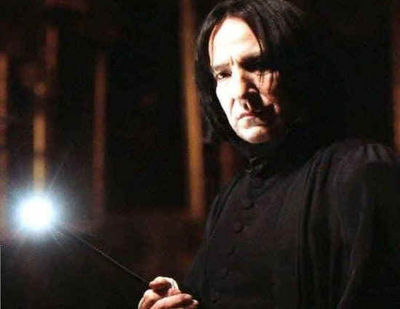 So for all those — young and old alike — who missed the books but saw the movies, Alan Rickman brought to life the character who teaches us that no matter how dark someone may appear on the outside, there may yet reside a soul of light and goodness within.
By way of tribute, I offer this return to my recent essay on the wisdom of Harry Potter.
Read the article at: http://www.learning-mind.com/reading-harry-potter/

A Week of Ironies — Iranian Hostages, Nikki Haley, and $1.5 Billion
 In his State of the Union speech, President Obama patted himself on the back for making peace with Iran while, at that very moment, Iran held 10 American sailors in violation of international law and the Geneva Convention. The next day, Secretary John Kerry thanked the Iranians for not keeping the servicemen as hostages.
In the same speech, the president also lamented his failure to create an atmosphere of bipartisanship and cooperation, while passing up no opportunity to snipe at everyone who disagrees with him.
After South Carolina Governor Nikki Haley responded to the president’s address, the angriest voices loudly condemned her for condemning the angriest voices.
Hillary Clinton, who can boast the lowest national rating on trustworthiness since Richard Nixon, dismissed a new FBI investigation into her mishandling of classified information by declaring “that’s just not the way I treated classified information.” Transparency, at last.
 However, none of this made much of an impression on an American public entranced by the dream of winning a 1.5 billion dollar lottery, even though about half of multimillion-dollar lottery winners eventually admit that sudden wealth proved more of a curse than a blessing.
Now that three winners are going to share the unprecedented payoff, they might want to take a page from the book of a middle-aged man in Atlanta who, back in the 1990s, won a $4 million dollar lottery – what was an exceptional amount for the time.
The winner had been working a double shift as a garbage collector. When asked what he intended to do after winning so much money, the man replied, “I’m going to quit one of my shifts.”
“Only one?” asked the incredulous reporter.
“A man has to have work,” replied the new millionaire.
 Yonason Goldson