Home » Posts tagged 'Values' (Page 35)
Tag Archives: Values
The Price of Principle
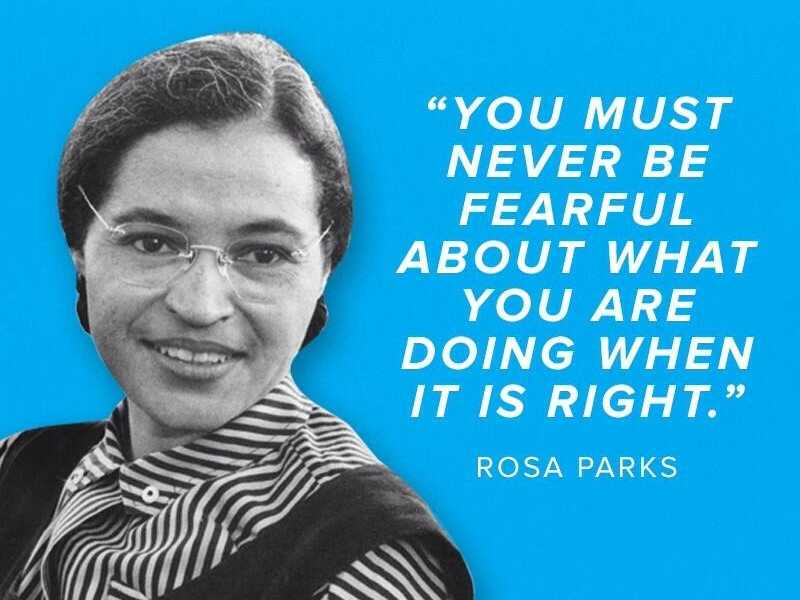 Early last month, Kentucky clerk Kim Davis became the latest standard-bearer of civil disobedience in the face of governmental overreach. Her refusal to sign marriage certificates for gay couples made her first a hero among traditionalists in an age of moral anarchy, and then a martyr for conservatism when she chose jail time rather than compromise her beliefs. In the eyes of many, she has become a latter-day Rosa Parks.
Except that she wasn’t.
Let me be clear. I agree with Ms. Davis in every way: the Supreme Court decision conjuring up gay marriage as a constitutional right is an offense against moral and legal tradition, a blow against the crumbling integrity of the family structure upon which civilized society depends, and a travesty of jurisprudence. In his embarrassing decision, Justice Anthony Kennedy didn’t even pretend that his ruling was based in law, but rather on feelings. In many ways, he himself set the stage for Ms. Davis’s act of rebellion.
But all of that is really beside the point.
The point is this: Ms. Davis took an oath of office. If her conscience does not allow her to fulfill her duty, then the principled course of action is to resign. There are consequences that go with conviction, and in this case the path of conscience requires her to remove herself from her position, not to assert that her personal values prevent her from discharging her duty while insisting that she can keep her job. That rationale is akin to Lois Lerner claiming innocence and then taking the fifth. You can’t have it both ways.
In an interview with Fox News anchor Megyn Kelly, Senator Ted Cruz responded to those calling for Ms. Davis to resign by asking, “where have those voices been calling for the Mayor of San Francisco to resign for having made San Francisco a sanctuary city and defied the immigration laws [and] for President Obama to resign — for six in a half year he has defied immigration law, he has defied welfare reform law, he has even defied his own Obamacare…?”
With all due respect, the Senator had it exactly backwards. By supporting Kim Davis, Senator Cruz undercuts his own objection to President Obama flouting national immigration laws. If Kim Davis is permitted to pick and choose which laws she follows as a matter of conscience, how is that different from Barack Obama’s failure to enforce legislation his conscience tells him is unjust?
This is what happens when respect for the law gives way before personal ideology, regardless of whether that ideology is right or wrong. The result is a societal free-for-all, in which individual feelings and sensitivities trump civic order. My conscience is my own, but it does not permit me to deprive others of their civil rights, no matter how flawed the legal underpinnings of those rights may be.
 Not surprising, there is a talmudic precedent. On one occasion, the sages of the Sanhedrin, the highest body of Torah legislation, were engaged in an unusually heated debate. Rabbi Eliezer, the most revered scholar of his time, was unable to convince any of his colleagues to see a particular point of view. Eventually, he became so frustrated with his fellow scholars that he invoked the name of G-d to support his opinion.
According to tradition, a heavenly voice rang out in the chamber declaring that Rabbi Eliezer was correct in his ruling.
Astonishingly, another sage, Rabbi Yehoshua, stood up and replied, “The Law is not in Heaven.” Not only were the sages not swayed by Rabbi Eliezer’s demonstration, but the actually expelled him from the High Court.
The talmudic narrative goes on to record that the Almighty, upon hearing that the sages had disregarded the divine endorsement of Rabbi Eliezer, responded that, “My children have defeated Me.”
In other words, once G-d put the system in law in force for His people to follow, even He may not abrogate the dictates of that law. For once the system of law becomes subject to exceptions, the system will no longer serve its function.
 Nevertheless, it must also be said that Senator Cruz was not completely off the mark. If the President of the United States will not uphold the law of the land, if Supreme court justices usurp power over the constitution without the slightest legal pretense to justify their decision, if the Attorney General of the United States will not prosecute local officials or former cabinet officers who show contempt for the law they are sworn to uphold, then why should there be any objection to a county clerk standing up for the tenets of her own religion?
The answer is that wrong behavior does not excuse other wrong behavior. When mutineers are doing their level best to scuttle the ship of state, when even the captain of the ship cannot be trusted to steer a clear and steady course, the solution is not for the crew to take up their hatchets and begin hacking away at the gunwales.
Ultimately, Kim Davis is just the latest symbol of the spreading disgust with politics as usual. The real offenders are the highest officials in the land whose conduct promotes personal feelings over responsibility and accountability. The effects of their civic negligence can be seen in the senseless violence on the streets of Ferguson and Baltimore, and in the surreal ascendancy of Donald Trump.
Personally, I applaud Kim Davis for her conviction and her principles. But only when all of us — from the chief executive to the most humble civil servant — put respect for the law before our individual predilections, only then will we be able to restore a climate of common purpose to our fragmented society.

Sue your loved ones: all’s fair in the insurance market place
 Maybe the most disturbing factor in the bizarre story of the woman who sued her nephew for jumping into her arms is that her reason almost seems to make sense.
“From the start, this was a case was about one thing: getting medical bills paid by homeowners’ insurance,” explained Jennifer Connell’s attorneys. Her nephew says he understands and harbors no ill feelings.
Whether the story here is family loyalty, embezzlement, or the inadequacies of our medical insurance system, the deeper issue is our collective attitude that someone else should take responsibility for everything that happens to us, which I addressed earlier this week regarding the man hit on the head by a pine cone.
Sometimes there is real guilt and should be real accountability. Other times we’re just in the wrong place at the wrong time, or victims of a hug gone wrong.
We need to grow up and learn to tell the difference.

Living Beneath Falling Skies
 Two stories from this morning’s headlines:
Man Suing Over Injury From Giant Pine Cone in San Francisco
Missile Brought Down Malaysia Airlines Plane in Ukraine, Investigators Conclude
Our hearts should truly go out to the U.S. Navy veteran who had the misfortune of relaxing in a national park when a 16-pound pine cone fell on his head. The story would be comical were it not so tragic. After serving their country, our servicemen deserve respect and appreciation, not traumatic brain injury from freak accidents.
But that’s just the point. This was an accident, and accidents happen.
I suppose lawyers will wrangle over whether the Park Service was negligent for not posting warning signs and fencing off the area, or for planting a non-native species that might threaten unsuspecting visitors. I suppose one could also make the case that the Park Service should assume a measure of responsibility by covering the victim’s medical expenses.
But what does it say about us when our natural impulse is to litigate every mishap, to turn to the courts, assign blame, and make others pay? Life is full of scrapes and bruises, and sometimes more painful twists of fate. How we deal with the apparent randomness of our world comes down to personal philosophy and theology, but it isn’t always someone else’s fault.
In truth, it reflects a kind of collective arrogance, resulting from the delusion that we are in total control of our lives and our world, and that anything bad that happens to us must have been inflicted in some kind of criminal act. Why fate smiles on some and torments others is a question we can’t expect to answer in this world. But there isn’t always a man behind the curtain whom we can haul into court to demand restitution.
Even worse, when we attribute wicked intent to every whim of fortune, we lose some of our contempt for true acts of evil. The recent finding that it was a Russian-built Buk missile that killed 298 people aboard Malaysia Airlines Flight 17 last year confirms what everyone expected. There is true evil in the world, and we dare not conflate incidental suffering with that perpetrated by authentic villains.
We live in a world full of contradictions. When bad things happen to good people, we owe them our comfort and sympathy. When bad people spread suffering among the innocent, we are duty bound to hunt them down and exact justice.
But we should never confuse the two.

Finding Reason in the Midst of Chaos
After last week’s Oregon massacre and last month’s Virginia shooting, it’s worth looking back on these thoughts from the days after the 2013 Boston Marathon bombing:
 Zebadiah Carter describes himself living in “an era when homicide kills more people than cancer and the favorite form of suicide is to take a rifle up some tower and keep shooting until the riot squad settles it.” In 1980, this remark by the main character in a Robert Heinlein novel sounded like the science fiction that it was. Now it echoes like a prophecy.
Random acts of mass violence in the United States still horrify us but no longer shock us. We’ve heard too many stories, seen too many pictures. And too many of them are depressingly the same:
- 20 students and 6 adults murdered at Sandy Hook Elementary School.
- 12 killed and 58 wounded at the Century Theater in Aurora, Colorado.
- 13 killed and 30 wounded at Fort Hood.
- 32 dead and 17 wounded in the Virginia Tech massacre.
And those are only the bloodiest atrocities going back to 2007. The Columbine school shooting in 1999 adds another 39 victims to the tally. And, of course, Timothy McVeigh’s bombing of the Federal Building in Oklahoma City in 1995 claimed 168 lives and injured nearly 700.
Now we have to try and make sense of this latest act of senselessness — the Boston Marathon bombings, which shattered an iconic American institution and shook our already precarious sense of order and security.
Amidst all the suffering and all the investigation, the question we most want answered is why?
We’ve asked the same question before. According to reports, Adam Lanza was bullied as a student at Sandy Hook; Eric Harris and Dylan Klebold were bullied at Columbine High School; so was Timothy McVeigh as a boy in Pendleton, New York. There were also histories of psychiatric problems, as there were with Seung-Hui Cho before his attack on Virginia Tech, James Eagan Holmes before Aurora, and Nidal Malik Hasan before Fort Hood.
But these explanations offer little in the way of real answers. Almost all of us were bullied when we were younger without seeking murderous retribution against our tormentors, and most of us can lay claim to at least some kind of neurosis. More to the point, why is random violence on the rise, if the root causes have been around for generations? According to data assembled by Mother Jones Magazine, nearly 40% of mass shootings since 1982 have taken place in the last seven years (excluding robberies and gang-related incidents). If so, what has changed? And can we expect it to get worse?
Ultimately, it may be all about control. “These kids often feel powerless,” psychiatrist Peter Langman told LiveScience. “The one way they can feel like they’re somebody is to get a gun and kill people.”
“Out of control” is a term that seems increasingly characteristic of the world we live in. On the one hand, technology provides us with the power of information, opportunity, and access at a level unimaginable barely a decade ago. But on the other hand, our inability to manipulate so much power leaves us feeling both frustrated and inadequate, while the triumphs of others make us feel like pawns in a game we can never win. With the world at our fingertips, success and happiness remain damnably elusive.
 And so we flail about with increasing desperation, constantly trying to push ourselves just a little harder and work just a little faster. Day by day, our sense of anger and resentment toward a society that promises so much and delivers so little builds within us until we feel ready to explode. In a world gone mad, what else can we do but get mad at the world?
The fallacy, however, is the world has not made sense since the beginning of time. Last weekend, Jews around the world paused in the midst of their Sabbath morning services to read the Book of Ecclesiastes, compiled over a lifetime by King Solomon, the wisest of all men, in his search for meaning and justice:
And I returned and saw under the sun that the race is not to the swift nor the battle to the strong, neither is there bread to the wise, nor riches to men of understanding, nor yet favor to men of knowledge; but time and death will overcome them all.
Really, all that has changed is our expectation. We have been taught to believe that anything we desire is within our grasp, that we are entitled to the love of poets, the wealth of kings, the pleasures and the power of the gods. Our culture has etched upon our collective consciousness the inalienable right to life, liberty, and the pursuit of happiness. And although Thomas Jefferson had the wisdom not to assert the right to happiness itself, that subtle distinction is lost on most of our generation.
Given the fantasy images of Pixar and Dreamworks, the superhero illusions of the silver screen, and the miracle gadgets that fit in the palm of our hands, what can we expect from a youth wholly unprepared for reaching the age of responsibility? And when they confront the seeming impossibility of leaving their mark on the world through any positive contribution, why should we be surprised when they choose violence as their final recourse to make the world take notice of their existence?
And yet, for all that, Solomon himself did not give in to despair and hopelessness, despite the words of lamentation with which he begins Ecclesiastes:
Futility of futilities — all is futile!
But it is not Solomon’s opening words that contain his ultimate message. It is the words he offers at the end, in sharp contrast to all the observations he offers before:
The sum of the matter, when all is heard: Fear the Eternal and guard His teachings, for this is the entirety of Man.
Viewed superficially, this world is a place of chaos, without rhyme or reason, without justice or pity. Says Solomon: do not look at the outer trappings of creation, but search for the nobility of man. Recognize the greatness that compels a 27 year old first grade teacher, with scarcely a moment’s notice, to give up her life in the protection of her innocent charges. Admire the reflexive heroism of bystanders who rushed to help the injured at the finish line, without regard for whether another explosion might make them victims themselves. Do not lose hope in the face of wanton violence, but take inspiration from the lofty heights to which Man can rise.
In the marathon of life, some finish and some fall. But greatness is measured by perseverance, by pursuing the unique potential that resides within each of us us, by our determination to choose good over evil and show the world that the divine spark of the human spirit will never die.

The War to End all Wars
Originally published by Jewish World Review in September, 2001, two weeks after the attacks on the Twin Towers.
 Once upon a time there were three little pigs. One built a house of straw, until the big, bad wolf blew it down and gobbled him up. One built a house of sticks, until the big, bad wolf blew it down and gobbled him up. But one built a house of bricks and was safe from all the huffing and puffing of the big, bad wolf.
Society teaches values to successive generations through its children’s stories. The story of the Three Little Pigs is one of our most enduring fables, teaching the importance of good planning and disciplined effort. But it also carries with it a more subtle message, that safety rests in our own hands and our own labors, that security can be bought for the price of a pile of bricks and a bucket of mortar. This ideal, if it was ever true, went up in flames together with New York City ‘s skyline and Washington’s military nerve center on September 11.
More appropriate now than the Three Little Pigs is Robert Burns’s adage about “the best laid schemes of mice and men.” Indeed, the World Trade Center towers were each designed to absorb the impact of a 727; what the architects failed to factor in was how the fuel carried aboard a transcontinental airliner would create an inferno capable of compromising the structural strength of steel support beams. Of course, we don’t blame the architects; none of us imagined the acts of incomprehensible evil that brought down those towers.
 Which is precisely the point. We cannot imagine the design and the reach of evil. We can make our best effort, erect walls of brick around ourselves and roofs of steel over our heads, but we will never be completely safe. The world is too unpredictable an arena, the mind of the wicked too dark a cavern.
As if to drive home the instability of temporal existence, observant Jews around the world will disrupt their normal lives this week by moving out of their homes into little stick houses to live as our ancestors lived in the desert after their exodus from Egypt. But more than an attempt to recreate the experience of a fledgling nation traveling toward its homeland, the holiday of Sukkos offers us an opportunity to attune our minds to a most fundamental principle of Judaism — that however great our strength and the might of our own hands, however elaborate and well conceived our plans, life strews unexpected obstacles in our path that can scuttle our most certain victories and demolish our most solid edifices.
A sukkah may be built of virtually any material: wood, brick, steel, canvas, or even string may be used to construct its walls. But no matter how stable or how precarious its walls, the roof of a sukkah must be composed of s’chach, thin strips of wood or leaves, through which the light of the stars can shine at night. And when one sits in the sukkah and looks up at the s’chach — the barest representation of a roof that won’t protect him from even the lightest rainfall — he is inspired by the recollection of his ancestors who trusted in the protection of the Almighty, the One who took them out from under the rod of their oppressors and guided them through the inimical desert before bringing them safely home.
In his visionary writings, the prophet Ezekiel describes a great battle on the eve of the messianic era, when the all forces of evil in the world combine themselves into a great army called by the name Gog and Magog. The brilliant eighteenth century thinker Rabbi Samshon Raphael Hirsch interprets the prophet’s vision not as a military battle but as an ideological war between the philosophy of gog — “roof”– and the philosophy of sukkah, where those convinced that their fate lies in the power of their own hands and their own resources will attack the values of those who recognize the limits of human endeavor to influence the world.
In the immediate wake of the World Trade Center destruction, cries rang out for vengeance and military retribution. Since then, more measured voices have asserted that this war will be like no other, without defined enemies or defined borders, without clear strategies or decisive victories. This is an unfamiliar kind of crisis, where we find our capacity to respond in our own defense or to secure our own future profoundly diminished in a new world order.
So now the citizens and leaders of the world’s last remaining superpower must grapple with the uncertainties of a violent present and a murky future. Some will respond by declaring that we must work harder to take control of our own fate. Others will concede that we will never be secure again. And they will be right: no building, no bunker, no shelter made of brick or concrete or iron will guarantee our safety from the perverse imagination of extremists who can rationalize indiscriminate mass murder.

Yet for all that, the Jew sitting in his sukkah will look up at the heavens and be at peace. He will recognize that the best laid schemes often come to naught and that, after doing all that can be done, we are best off leaving our fate in the hands of the One who placed the stars in their courses, the One from whom protection ultimately comes for those who trust not in their own strength, but in the source of all strength.
As the winds of autumn blow with the first hint of winter, we may shiver with cold but never with fear. The illusion of the roof we can see reminds of the invisible reality of the wings of the Divine presence. We neither abandon ourselves to fate nor try to seize hold of it, but turn with confidence to face the future, secure in the knowledge that we have prepared ourselves as best we can to meet whatever life holds in store for us.

Gaining Entry to the Glorious Kingdom
Aaron [the High Priest] shall place lots upon the two goats: one lot “for God” and one lot “for Azazel.” Aaron shall bring close the goat designated by lot for God and make it a sin-offering. And the goat designated by lot for Azazel shall be stood alive before God, to provide atonement though it, to send it to Azazel into the wilderness.
Leviticus 16:8-10
 One of the most puzzling and disturbing rituals in Jewish practice is the goat “for Azazel.” During the afternoon of Yom Kippur, two goats are brought before the Kohein Gadol, the High Priest. By lot, one is chosen to be placed upon the altar as a sin-offering, while the other is taken out into the desert and thrown alive over the edge of a sheer cliff.
What purpose could such a practice possibly serve?
In truth, the symbolism of this ritual is astonishingly simple and frighteningly relevant. The two goats, identical in every way, symbolize the two possible futures that stretch out before every single human being. Like these goats – which appear indistinguishable from one another – many of the paths open to us in our youth seem equally attractive and filled with opportunity. Every child demonstrates both qualities of virtue and qualities of selfishness. Whether our higher or lower nature will win out in the end can never be reliably predicted.
Only over the course of a lifetime will it become evident whether the individual has chosen the path of righteousness, dedicating his life “to God,” like the goat offered up on the altar, or abandoned virtue for the path of wickedness, wandering through life into the wasteland of moral confusion and making himself into an offering “to Azazel,” a name commonly associated with the Satan but often left undefined.
Rabbi Samson Rafael Hirsch explains that the name Azazel can be understood as a composite of two Hebrew words: az azal – “wasted strength.”[1] Rather than devoting his life to the ways of virtue defined by God’s law, a person may use his human potential for pleasure seeking, for ego-gratification, for ultimately self-serving ends. By doing so, he squanders the resources of physical health, intelligence, and imagination in pursuit of temporal rewards that leave him, for all his efforts, with nothing of real value. He will have wasted his life, as surely as the life of the goat flung over the precipice in the wilderness comes to a wasted end. Like that goat, his life will have served no purpose except as a warning to others.
On this Day of Atonement, we remind ourselves of the urgency of daily reflection upon our past and our future, of the need to contemplate the awesome indictments of the Day of Judgment that we have only just survived, and of the priceless opportunity we have to influence the verdict of the Celestial Court as it determines our fate for the coming year.
Will we choose to offer ourselves on the altar of divine service by committing ourselves to take greater care in our speech, in our actions, and in our thoughts? Will we show more consideration for our fellow men and conduct ourselves with modesty and humility? Or will we continue on as we have, like the goat wandering blindly into the wilderness of oblivion, persisting in the habits of spiritual and moral insensitivity that may have already led us to the brink of eternal desolation?
It should be an easy choice. But the most important choices that confront us are rarely easy; instead, we grope through the darkness of confusion, blundering through the days and years of our lives.
Except for one day a year, when our eyes are opened wide.
 The sages tell us that one who answers amen has greater merit than one who recites the blessing itself: no praise of the Almighty is complete until it is reaffirmed by another.[2] However, we learn elsewhere that in the Holy Temple in Jerusalem, the congregation did not answer with the tradition amen but with the phrase “baruch sheim kovod malchuso l’olam vo’ed– Blessed is the name of His glorious kingdom forever and ever.”[3]
Rabbi Samuel Eliezer Edels (Maharsha) explains that amen is an expression of emunah, the faithfulness that compels us to remain true to God’s Law and to our spiritual mission even when the darkness of exile envelops us, even when human logic would abandon all hope that there is any rhyme or reason, that there is either Judge or justice.[4] Amen is the affirmation of our faithful belief in the existence and the divine plan of our Creator even when our senses can make little sense of our existence. When we declare amen – it is so! – not as an obligatory act but as a willing response, we testify to others and to ourselves that the hidden face of God hides from us only so that we can raise ourselves to new spiritual heights by seeking out the divine presence.
In the courtyard of the Temple, however, the radiance of the Shechina (the Divine presence) illuminated the eyes of all who stood in the holy courtyard facing the inner sanctum. Those who made the pilgrimage and passed through those gates were rewarded with a vision of such profound spiritual clarity that every shred of doubt evaporated and absolute certainty overtook them. There was no room left for emunah, and no need to cry out amen.
Instead, the ministrants would proclaim blessed is the name of His glorious kingdom forever and ever, a formula reserved for the malachim — the celestial emissaries that reside in the heavenly spheres — but which we are allowed to intone only in a whisper.
And why are we not permitted to say these words out loud? Since we do not know and cannot know the name – the essence – of God’s glorious kingdom, at least not until we have lived out our lives in this world and made our transition into the next. We have no right to praise that of which we have no knowledge, and so we dare only speak of it softly in anticipation of the day when it becomes our inheritance.
But in the Temple, in the presence of the Shechina enwrapped in the light of holiness, one gained sufficient clarity so that he could cry out with the malachim, not as an expression of faith but as declaration of absolute knowledge.
And there is one other occasion when we are permitted to proclaim this formula aloud: on Yom Kippur.
On Yom Kippur, we shed the trappings of our material existence and enter the realm of the malachim. Indeed, if we have prepared ourselves properly over the Ten Days of Repentance, then we do not merely give up eating and drinking; rather, we lose all interest in physical indulgences, attaining a vision of such spiritual clarity that we might as well be in the Temple itself, or in the celestial spheres alongside God’s divine emissaries.
And when the day is over and we return to the mundane existence of the physical world, we should find ourselves transformed, no longer malachim but much more than flesh and blood. With renewed spiritual energy and awareness, we are equipped to resolve the contradictions of the higher and lower worlds, and the paradox of the Almighty’s hidden and revealed self.
And this we can accomplish a hundred times a day, with every blessing we pronounce and every amen we answer.
Maharsha goes on to explain that the Tetragrammaton — the four letter name of God as it is spelled out in Hebrew – yud-kay-vav-kay – represents the Almighty in His ultimate form, all powerful and eternal, Master of the glorious kingdom whose name is known only to the malachim. On the other hand, the spoken name of God, the name in our prayers and our blessings – Ado-noy – represents the Creator as He reveals Himself to us as Master of our world.
With every blessing that we recite, we have an opportunity to act upon the revelation we experienced on Yom Kippur, uniting the revealed and the concealed names of God, proclaiming the unity of the Master of the Universe. And even more so when we respond amen.
According to Jewish numerology, or gematria, every letter in the Hebrew alphabet has a numerical equivalent. The numerical values of God’s written name – yud-kay-vav-kay – is 26. The gematria of God’s name as we pronounce it – Ado-noy – is 65. And when we respond to another’s blessing, affirming our faithful conviction that the same God we perceive imperfectly through our limited human eyes is one with the ineffable God who created the heavens and the earth, we ourselves transcend both the simple obligations of Torah observance and the finite nature of our earthly existence with one simple word: amen – with the gematria of 91, the sum of 26 and 65, representing the absolute unity of the Almighty.
And if we can achieve this awareness, despite all the darkness and confusion of our world, the malachim can do nothing but look on and covet the opportunity all of us have to serve our Creator in the way that is uniquely our own.
[1] Commentary on Chumash, loc. cit.
[2] Berachos 53b; Rashba, Sha’alos and Teshuvos 5:53
[3] Sotah 40b
[4] Ibid.

Do we really want a leader?
 The second Republican debate provided three indisputable facts:
- The mainstream press can barely disguise its bias in favor of the democrat party. Virtually every question was designed to promote inter-party bickering rather than elicit either policy positions or evidence of executive experience and aptitude. Whether in the debate itself or beyond, the press devotes disproportional attention to Donald Trump, not because he is the front-runner, nor even because he’s good for ratings, but because he discredit the Republican party in the eyes of most Americans with his ill-mannered and self-serving bluster.
- Far too high a percentage of the electorate lacks any real understanding of the responsibility implicit in the right to vote. Donald Trump has insulted a war hero, insulted women, insulted his fellow candidates, and has skirted giving meaningful responses to specific questions while telling us all to trust how great a job he will do. That he maintains such a commanding lead over so many truly qualified candidates is perhaps the most depressing aspect of the primary race so far. True, represents a reaction against political corruption and political correctness. But incivility is not the opposite of either.
- Carly Fiorina stands head and shoulders above every other candidate. She is well-informed, specific and to the point, poised and articulate, strong yet civil. She’s exactly what the country needs, and she should be leading by a mile.
When the Children of Israel approached Samuel the Prophet to ask for a king, Samuel responded with anger and rebuke. It was not the people’s request that was wrong; it was their reason.
“Give us a king,” the people said, “like all the other nations.”
The surrounding nations submitted to the rule of kings to absolve themselves of the responsibility of making choices and of the consequences of their actions. A Jewish king was supposed to inspire the people to live up to their mission as children of the Almighty. But the people wanted to take the easy way rather than challenge themselves to strive for greatness.
Ultimately, this country will only find its way back to greatness when we, the people, stop looking at the window dressing, stop looking for an entertainer-in-chief, stop looking for who will promise us the most goodies or tell us what we want to hear. We can only restore our country to greatness when we rally behind a true leader who is qualified to understand complex issues, who is willing to make difficult choices that are best for the nation, and who has the character to earn trust and respect from friends and enemies alike, at home and across the world.

Yom Kippur: Playoff Season for the Soul
Guest post by Mendel Horowitz

Like a field of dreams Yom Kippur counts on ghosts to inspire. In Kevin Costner’s sentimental role, his character Ray Kinsella carves a baseball diamond from a cornfield after hearing a mysterious whisper “if you build it he will come.” Encouraged by the prophecy and by the spirits of departed ballplayers, Ray in the end discovers his estranged father behind the plate and engages him in a seraphic game of catch. The High Holidays too can be stirred by fantastic voices – inexplicable motivators of contrition, correction, change. On Yom Kippur, standing solemn before my Maker with ghosts of past defeats and not-yet triumphs at hand, I too will aspire to engage Him. I too will hew a future from the past.
This year, the portentous Day of Atonement falls on the eve of September 23, while Sir David Wright hosts the Braves and the Mets delight in their amazing dream. For believers in Flushing, on that weekend baseball might seem delightfully temporal, repentance as distant a notion as spring. For me, our pastime is irresistibly spiritual, her diamond silhouette an invocation, her metaphors as vibrant as her checkered outfield grass. In my synagogue, that holy day will be celebrated as an occasion of longing, an extra-inning playoff of abstinence and prayer. I may not be rooting for the home team that afternoon but I will be encouraged by baseball’s oddities.
Our national pastime is peculiar indeed. When Yogi Berra quipped “it ain’t over till it’s over” during the summer of 1973, the Mets were in last place, finishing July a dismal 44-57. By August 30 the team was 61-71, 6.5 games back with 29 to play. Before the season closed the Mets would claim the NL East, victorious in 21 of their last 29 contests. The Mets infiltrated the postseason with a record of 82-79, to date the worst percentage by a division champion. After raising the NL pennant and battling to a World Series Game Seven, it was finally over when the Mets fell to the Mustache Gang and their swaggering MVP.
Yogi was only half right. In all professional team sports – baseball included – a playoff berth is routinely clinched before the season officially ends. It can be over before it’s over. Baseball is, however, unique in disallowing any single game to be over before its final out. Only on a diamond can a team come back from any deficit with no buzzer, whistle, or horn interrupting its rally. No game is over till it’s over. Just ask Mookie Wilson, who in 1986 delegitimized Billy Buckner on the tenth pitch of his heroic at-bat after the Red Sox were at three times one strike from deliverance. Baseball is a game of second chances.
For diehards, Yom Kippur is a final opportunity in a season of do-overs. When the Israelites forged a golden calf at Sinai Moses was compelled to smash the original tablets, tossing the first pitch in an epic struggle for God’s favor. Throughout a heated summer Moses labored valiantly atop the hill, earning the right to carve new tablets by offering himself for his team. On Yom Kippur, his efforts rewarded, the prophet descended triumphant, with God’s unassuming pardon and trophy slabs in hand. From the assurance of spring through the worry of summer, Moses carried his team to a fall salvation. Not bad for a rookie.
Relived annually, the Jewish season of second chances gets underway with the advent of Elul, the final month before the New Year. From then, each morning after services a shofar sounds and a special psalm is recited, calling to mind the far-reaching potential of the ensuing homestand. For a meritorious few and their less fortunate opposites, Rosh Hashanah, thirty days later, is the conclusive day of judgement, when the righteous and the wicked are inscribed in their respective tomes. Yom Kippur occurs ten days after that, allowing unremarkable journeymen extra innings to settle their score. Before the season’s final strike everyone will have their say at the plate.
A forty day homestand of penitence offers adequate occasions for transcendance. The process of repentance can invigorate, awakening dormant courage from slumber. But introspection is notoriously difficult to maintain, the stretch from Elul to Yom Kippur wearisome, draining. Like an ordinary baseball season (which spans three of four climatic seasons) the Days of Awe rely more on storylines than thrills, more on drama than excitement. Baseball is neither raucous nor bold. When “90% of the game is half mental” its energy is bound to be subtle.
 By some estimates 90% of the game is also spent standing around. According to the WSJ baseball’s fleeting moments of action account for but 17 minutes and 58 seconds of a typical three hour game. From on-deck circle to bullpen, from pathological glove adjustments to obsessive shaking off signs, baseball is an exhibition of exaggerated preparedness. Everything important in baseball happens in the heartbeats between anticipation. Apprehension is baseball’s charm; waiting, her mystique.
What made the pennant race endearing in ‘73 and the rally against Boston amazing in ‘86, were the unhurried ways they unfolded. Few things happen suddenly in baseball, it’s magic evolves leisurely in plain sight. No need for rapid eye movement or instant replay; baseball’s feats are taken in with a pencil and a stomach for suspense. In baseball, time is not something to play against but to toy with, the moments between activity more moving than the action itself.
The Day of Atonement is itself drawn out, prone to rushes of emotion and spans of boredom too. Between its haunting first inning and expectant last are 25 self-denying hours, an ascetic journey of supplication, ceremony, and song. Like baseball, Yom Kippur is a slow game, one that rewards patience with equal measures of elation. The enchantment of the day lingers in its tensions, its allure apparent in its yearning. A classic Yom Kippur unfolds without hurry, its promise swelling cautiously, its hesitancy bursting my heart.
As a religious orientation, baseball imbues the virtue of readiness, the modesty of reacting to something thrown at you really fast. At the plate and on Yom Kippur I can never be sure what may be tossed my way. All I can do is to prepare. Before the ghosts arrived, Ray Kinsella sculpted sacred space from profane, building it so “he will come.” Before knowing who he was, Ray was prepared for his arrival.
Absolution is never assured. To encounter Him on September 23 I will rely on ritual and superstition to get myself ready. My personal playoff will be lengthy, and if all goes well, improbable. I envision a nail-biter until late innings when, like Kirk Gibson, I will limp to the plate and achieve the impossible. Preferably with a longball. Preferably on a full count.

Rethink Everything
 The ten days from Rosh Hashanah to Yom Kippur commemorate the Creation of the universe and the creation of mankind. Rosh Hashanah is called the Day of Judgment, reminding us that all our actions matter, whether great or small, whether public or private.
By contemplating that we will have to make an accounting before the One Judge, we become more aware of our own choices, more cautious in how we judge others, and more willing to rethink the many ideas and attitudes we take for granted.
Ultimately, we want to be the best people we can be, which means looking back on the past year to evaluate how we’ve succeeded and how we have fallen short. It also means looking forward to envision where we would like to see ourselves this time next year, and then setting the bar a little higher, knowing that we will always fall short of our goals.
Change isn’t easy. But it is inevitable, for better or for worse.
And it’s in our hands to see that we change for the better.

Remembering 9/11: Visionaries and Ideology
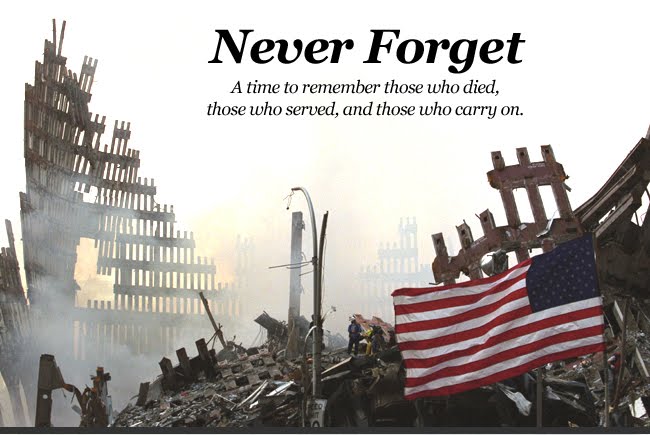 Who knew a trip to New York could be so emotional?
Our first stop was the 9/11 museum. I marveled at the artistic vision that had conceived the memorial pools, the water channeling down in rivulets that mirrored the face of the fallen towers, the continuous downward rush balanced by the redemptive feeling of water — the source of life — returning to the heart of the world. Here there was solace, closure, and consolation.
But a very different feeling accosted me inside. Almost upon entering the doors a single word brandished itself across my mind’s eye: Holocaust.
Obviously there is no comparison between the monstrosity of wantonly dehumanizing genocide and any single act of terror; obviously there is no equivalence between the systematic psychological, spiritual, and physical destruction of millions and a few thousand relatively instantaneous murders.
But then again, yes there is.
Read the whole article here:
 Yonason Goldson