Home » Posts tagged 'Wisdom' (Page 37)
Tag Archives: Wisdom

The Heroism of Giving Thanks
Originally published in 2002 by the St. Louis Post-Dispatch and the Baltimore Sun.
Will Rogers couldn’t have said it better: No nation has ever had more, yet no nation has ever had less. And it’s easy to understand why the two go together.
The Talmud observes that the moment a person acquires $100, he immediately wants $200. The more we have, the more we want. And the more we believe in our own entitlement, the more likely we are to forget both our humble origins and our obligations to others.
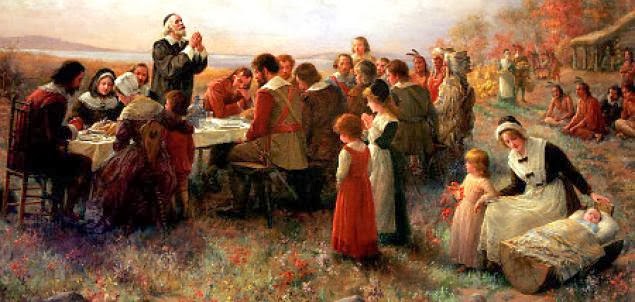 It’s somewhat heartening, therefore, that Thanksgiving has retained so prominent a place in American culture, even if most of us rarely give a passing thought to the Puritan ideals that gave birth to the first Thanksgiving.
Who were the Pilgrims? The settlers who stepped off the Mayflower in 1620 were not adventurers or opportunists. They were devout Protestants seeking a pure, uncorrupted expression of the Christian values they had found wanting in their native England.
They paid a high price for their idealism: Half of them died during that first, brutal, Massachusetts winter. But summer brought hope, and out of hope they declared a festival to thank their Creator for their survival and for their hard-won religious freedom.
Political freedom was still a novel idea in Europe then, although the concept had existed for nearly 3,000 years, since the Jewish exodus from Egypt. The notion of religious freedom, introduced to the world somewhat later, was already 17 centuries old when the Pilgrims landed at Plymouth Rock.
 Back then, the Jewish nation had been at war not only with the Selucid Greeks, which controlled Israel, but also with itself. The Hellenist Jews found much in Greek culture that they admired and eagerly sought to incorporate into Jewish practice, while the majority of the Jews recognized the inherent incompatibility of Judaism, with its focus on the perfection of the soul, and Grecianism, with its self-worship of body and intellect. Behind the Hellenists, however, towered the full power of the Selucid Empire, before which the ideal of Jewish cultural purity seemed to have little hope of survival.
But the weak rose up against the strong and the many were vanquished by the few. Shouts of freedom echoed through the streets of Jerusalem as the Maccabees rekindled the lights of the Temple in purity, and the festival of Chanukah was established as “days of thanksgiving and praise to [the Almighty’s] great name.”

“This year we’re having goose instead. It was flaunting its wealth and showing off its golden eggs.”
The complacency of the Jews and their unwillingness to toil in the preservation of their own cultural values put them in danger of cultural extinction. The complacency of Christian Europe, in the eyes of the Puritans, led to a dilution and a depreciation of Christian values. And the ultimate realization of the Jews, like the realization of the Puritans centuries later, was that ideals not fought for and defended cease to remain ideals.
The true heroes in any society are those prepared to struggle for their ideals, those ready to sacrifice for a greater good, those who understand that nothing of value ever comes cheap or easy. When we take freedom for granted, we stand in danger of losing it. And the surest way of taking anything for granted is by failing to express appreciation.
Life begins with struggle. And when struggle ends, life ends with it. Indeed, it is that very struggle that makes life worth living. Both Thanksgiving and Chanukah remind us to be grateful not just for the success, but even for the struggle.
Especially for the struggle.

A Message to my Son

My oldest son enters the Israeli army this week, motivated by nothing other than a sense of commitment to the security of his people.
It seems fitting to revisit these thoughts, written on the occasion of his bar mitzvah ten years ago.
It’s not difficult to sympathize with the skeptics who questioned the ability of Avrohom Mordechai Altar, then still a teenager, to succeed his father as leader of the Gerrer Chassidim, possibly the most influential Torah community in Poland at the end of the 19th century. But the young scholar, who would grow up to become a great rabbi and author of the Imrei Emes, answered his critics with the following parable.
A small town in an isolated land rested at the foot of a great mountain, a peak so high and steep that all reasonable people considered it unconquerable. From time to time, however, some impetuous youth would set out to climb the mountain. Some of these returned admitting defeat. The rest were never heard from again.
Despite the warnings and prophesies of doom, a certain young man decided to challenge the mountain. Many times he nearly turned back, and many times he nearly met his end, but through sheer persistence he finally reached the mountain top. But he was utterly unprepared for what he found there.
A thriving city of people lived upon a great plateau at the mountain¹s summit. There were houses and farms — an entire community living where everyone believed that no one had ever set foot.
The inhabitants of the mountain top laughed at him when he expressed his astonishment. “Do you think you¹re the first one to climb the mountain?” they chided. “We also reached the top and, having done so, chose to build this town and make our lives here.”
Not yet recovered from his dismay, the young man noticed a small boy, only six or seven years old. This was more than he could believe. “Did you climb all the way up here, too?!” the young man exclaimed.
“No,” replied the boy. “I was born here.”
The youthful rabbi explained to his followers that indeed he was young. But he had been born into a dynasty of great Torah leaders, raised by and taught by the greatest sages of his generation who had in turn been taught and raised by the greatest sages of their generation. True, he was young; but he had been born on a mountain, and from his place atop the shoulders of the spiritual giants who preceded him he would build upon their greatness. In this way would he succeed as a leader of his people.
And so he did.
 Every year, on the sixth day of the Jewish month of Sivan, Jews around the world celebrate the revelation at Sinai, over 3300 years ago, when the Almighty gave us the Torah. It was the Torah that provided the moral and legal foundation that has enabled the Jewish people to build a nation devoted to spiritual ideals, a nation that endured for nearly 1,500 years in its land and nearly 2,000 years scattered across the globe. It was the Torah that introduced the concepts of peace, of charity, of justice, and of collective responsibility to a world that knew no value other than “might makes right.” It was the Torah that formed the basis of Christianity and Islam, spreading monotheism throughout the world and fashioning the attitudes of modern progressivism.
It all began on that mountain called Sinai, and from that point on the Jewish people have labored to climb the mountain of morality and virtue, sometimes succeeding, sometimes failing, sometimes wondering whether our efforts are worthwhile, but always persevering in our mission to attain the summit of spiritual and moral perfection.
Had our mission demanded completion within a single generation, we would never have held out hope of success. But every generation climbs a little higher, building on the accomplishments of their parents and grandparents, fighting for every handhold, struggling for every foothold, occasionally slipping back but never surrendering.
The mission that defines us as a people began 33 centuries ago; it continues today as we recommit ourselves to the study and observance of Torah, and celebrate it on the holiday of Shavuos.
And it was two weeks after Shavuos that I celebrated what happens only once in a lifetime — the bar mitzvah of my eldest son. In his first 13 years of life I did my utmost to teach him that he was born on the mountain, that he has the accomplishments of generations beneath his feet to support him, and that future generations will depend upon him for their support just as he depends on those who went before.
And so it is with every Jewish child. Each has his own contribution to make in the eternal mission of our eternal people. It is the Torah that defines us, the Torah that guides us, the Torah that sustains us, and the Torah that will ultimately bring us to the fulfillment of the spiritual goals for which the Almighty created us.
Climb, my son. Climb and keep climbing toward the top of the mountain.
Originally published by Aish.com.
The Legacy of Woodrow Wilson
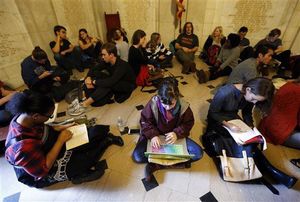 Once Iowa Democrats decided to rename the venerated event known as the Jefferson-Jackson dinner, it was only a matter of time before PC zealots would start demanding the purge of historical icons all across America. After all, how in good conscience can a country continue to commemorate its most influential leaders if they failed to anticipate that the legal and universally-accepted institutions of their times would eventually be regarded as immoral by their great-grandchildren?
Now it’s Woodrow Wilson’s turn, as students at Princeton demand that the memory of their university’s former president be expunged from under the heavens because he supported segregation, a policy viewed by many as progressive a century ago, no matter what we may think of it now.
There is a deeper irony in their campaign, however. In terms of political acumen, Woodrow Wilson has quite a bit in common with a much more contemporary figure, one who is revered by the very people who are protesting President Wilson’s racism and misogyny: Barack Obama.
Pollard and Nuremberg
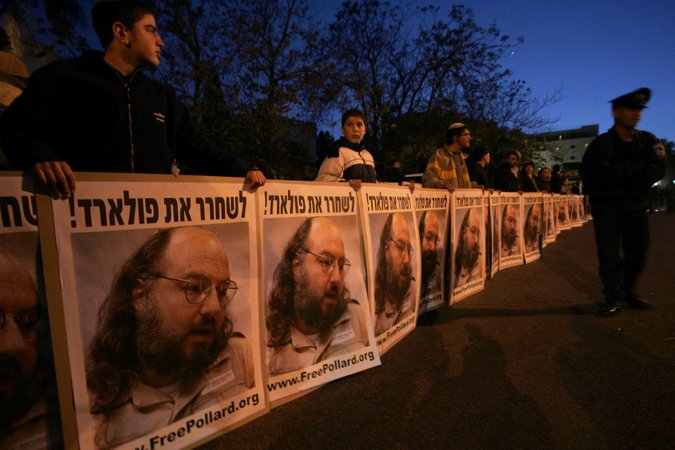 The case of Jonathan Pollard was more complicated than most people understood. His actions may have placed others in danger, and may have contributed to the death of agents he compromised. But almost everyone agrees that his punishment was disproportionate to his crime, and the sense of joy upon his release is more than justified.
The real take-away is this: whether one agrees with or disagrees with what Mr. Pollard did, he followed his conscience, and he was prepared to accept the consequences of his actions. If only more of our fellow citizens and more of our political leaders demonstrated the same courage and conviction.
Of course, not everyone’s moral compass is adequately calibrated. Edward Snowden also believed that he was following his conscience, and the morality of his actions is far more questionable for his having caused more damage by far than did Jonathan Pollard.
The Nuremberg trials after WW II changed forever the interrelationship between civil and moral law. No longer would it be legitimate to claim “I was only following orders” as a defense for crimes against man. A soldier has an obligation to refuse to carry out an immoral order, even if by doing so he puts himself in danger of court martial.
We should all consider ourselves foot-soldiers in the culture wars that threaten our society. But moral obligation implies more than just following our conscience. It means investing the effort, energy, and thought necessary to understand the decisions we will have to make and their consequences. Otherwise, our claim to the moral high ground can become a smokescreen to hide our moral irresponsibility.
That’s what makes Jonathan Pollard a hero in the eyes of so many, and Edward Snowden, perhaps, something very different indeed.

The Ostrich Mentality
 More unprovoked murders today in Israel: this time the victims included men in the act of prayer.
The approach taken by the Obama administration and much of European leadership, differentiating between terrorism and Islam so not to further alienate the Muslim world, might sound plausible. But the incontrovertible evidence from Paris, Beirut, and Tel Aviv is that it’s not working. Ayaan Hirsi Ali makes a case no thinking person can refute.
But, of course, that’s the point: people aren’t thinking; they’re feeling. If only the rich and powerful Western nations would humble themselves before the oppressed peoples of the third world, then there would be peace. If only the intransigent Israelis would stop their illegal occupation, then there would be peace. If only the culture of white supremacy in America would confess and atone for its evil ways, then there would be peace.
From the United Nations to the European Union to the White House to many of the elite universities around the country, Utopian ideologues bury their heads in the sand and ignore reality so they can persist in their chants of kumbaya and we are the world, reaching out to embrace people who want nothing but to watch the world burn.
In every aspect of our lives we are becoming more confused: we alienate our friends while we appease enemies who want to kill us; we disdain the blessings we have while chasing shadows in pursuit of happiness; we preach tolerance while attempting to silence all who disagree with us; we dream of a perfect world while we stand idly by and let madmen tear down the world our fathers and grandfathers worked so hard to build.
The chaos of our times didn’t start this week in Paris. It won’t end there, either, unless we open our eyes and start confronting the moral anarchy that is eating away at the heart of civilization.

Are you Smarter than a Pigeon?
 In the name of science, I’d like to propose a new study to investigate how researchers choose the topics they study. If my proposal finds acceptance, Jessica Stagner of the University of Florida will almost certainly figure prominently in the investigation.
Professor Stagner and her colleagues hoped to find support for evidence indicating that gamblers feel the same thrill of excitement when they almost win as they do when they actually win. To do so, they created an experiment in which pigeons had to peck at colored markers in order to receive hidden rewards.
That’s right: Pigeons.
And what was their conclusion? Pigeons are smarter than people.

The Cost of Voyeurism
 Where were you on Tuesday, August 19th, 2014? That’s the day ISIS terrorists beheaded American journalist James Foley. Or, to be more accurate, that was when they posted the video of their atrocity on YouTube
Did you watch it? If you did, you had plenty of company. According to one poll, an estimated 1.2 million people in Great Britain watched the beheading in just the first few days after the video appeared online. In the United States, pollsters found that 9% of those surveyed had watched the brutal execution, suggesting that about 30 million Americans had witnessed the spectacle by mid-November.
And back in 2004, the video of Islamists beheading freelance repairman Nick Berg was the most popular search topic for a solid week; the al-Qaeda-linked website hosting the video received so much traffic it had to temporarily shut down.
According to Oxford anthropologist Frances Larson, this fascination with violent images is nothing new.
Read more at: http://www.learning-mind.com/voyeurism-violent-images/

The Other Butterfly Effect
 Earlier this month, Daniel Cohen joined the ranks of Israeli victims of unprovoked Arab knife attacks. The only difference in his story is that it was the best thing the could have happened to him.
As doctors worked to stop the bleeding and stabilize his condition, they discovered that the 31-year-old father of five was suffering from an undiagnosed case of intestinal cancer. Now receiving treatment, his prospects are good. Had he not been stabbed, who knows how long it might have been before the cancer was discovered.
How many things that look really bad eventually turn out to be really good? How many little things that go unnoticed may end up changing our lives in ways we can’t imagine?
It’s a topic worth revisiting, so I offer these thoughts from 2010:
On August 29, 1776, General George Washington’s first field command was about to end in disaster. Having divided his forces, Washington now found half his Continental army trapped between a superior redcoat contingent advancing on his position on one side and a fleet of British warships sailing up the East River to bombard his men from the other.
Instead, the rising winds of a nor’easter turned back the British ships, allowing the American force of over 9000 to escape across the river by night without losing a single man. As dawn broke, an impenetrable fog concealed the final stages of the withdrawal so that, when the air cleared around 7 AM, the British discovered an empty landscape where there had been an army only hours before.
On account of a timely wind and a providential fog, the American army survived to fight another day and the failure of the American Revolution was averted.
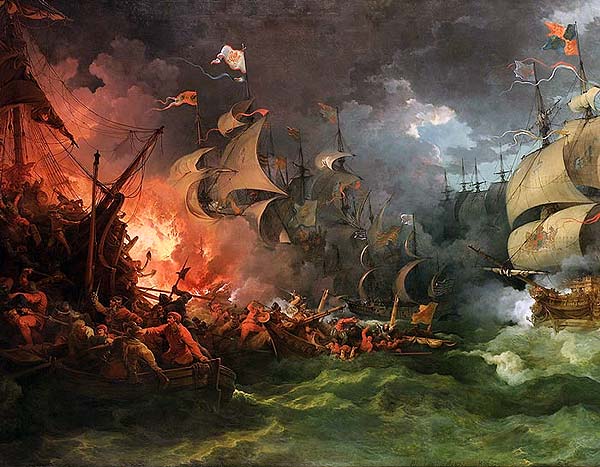 Two centuries earlier, it was the British who found salvation from a change in the wind. In 1588, King Philip II of Spain dispatched his fearsome Armada to depose the Protestant Queen Elizabeth and make Europe safe for Catholicism. On the night of August 7, however, a powerful north wind sped a plucky fleet of English fireships from its southern harbor up into the English Channel. By engaging the enemy flotilla, the British ships delayed the Spanish from their rendezvous with an invasion force of 27,000 soldiers that would almost certainly have captured London and executed Elizabeth. The wind then drove the Spanish on into the North Sea where they posed no further threat to England.
If not for the strong north breeze, Spain, not Britain, would have prevailed as the dominant power in Europe, the counter-Reformation might well have purged Protestantism from Europe, and Spanish would today be the preeminent language of world commerce and politics.
ALL THINGS GREAT AND SMALL
Even before the popular movie of the same name, virtually everyone had heard of the “butterfly effect,” the theoretical phenomenon whereby a tiny breeze begins with the flapping of a butterfly’s wings in Africa and gathers strength until it becomes a typhoon in the Pacific Ocean. A seemingly insignificant event on one side of the world may produce events of titanic proportions on the other.
And although it took winds stronger than the humble breeze of a butterfly’s wings to carry British ships to within reach of the Spanish Armada in the 16th century and hold them back from trapping Washington’s army 200 years later, in comparison with the rise and fall of nations we would generally consider weather conditions on any given day to be equally inconsequential.
In the grand scheme of creation, however, nothing is without consequence. The kabbalists tell us that nothing occurs on earth unless it is first decreed On High, and that nothing is decreed above unless it is first determined below. This is not a contradiction. Every event in this world is a reflection of the Divine Will, which changes each and every moment according to the behavior of man, the same way a mother and father may alter their parenting style to match every action of their child. The blessings and the retributions that come to the world, therefore, are a heavenly response to the conduct of human beings.
In the final moments before the destruction of the Second Temple, not satisfied to have razed Jerusalem to the ground and set fire to the House of G-d, the Roman general Titus showed his contempt for the sanctity of the Jewish nation by taking the Torah scroll, unrolling it upon the floor of the Holy of Holies, and laying with a prostitute upon it. In the place where the High Priest once performed the most intensely spiritual act of divine service, Titus committed the most despicable act of defilement.
Why did the Almighty allow Titus to so desecrate His innermost sanctuary? Rabbi Chaim of Volozhin, founder of the great Talmudic academy of 18th century Europe, explains that Titus gained divine sanction for his act because the Jews had, in a manner of speaking, already done the same thing themselves.
Just as the Temple once served as the focal point of Jewish society, similarly should every Jew see himself as a microcosm of the Temple. And just as the focal point of the Temple was the Holy of Holies, wherein resided the Ark of the Covenant, similarly is the mind the holiest sanctuary of the human being, for therein resides the soul. By allowing the philosophies of Greece and Rome to infiltrate their thinking and shape their values, the Jews had yielded to the carnal seduction of their souls and defiled the inner sanctuary of their own minds. For that reason alone was Titus allowed to perpetrate his abomination.
Despite the Temple serving as a constant reminder of their spiritual purpose, the Jews in ever increasing numbers had compromised their cultural integrity by adopting Greek and Roman styles of dress, by eagerly attending the spectacles of the Greek gymnasia and the Roman coliseums, by passionately studying sophistry from the philosophers of Greece and courting the aristocracy of Rome – all the while convinced that their dabbling in foreign culture was as innocent as the flitting of a butterfly on the breeze. But the moral corruption that lay at the core of these societies released a hurricane of spiritual confusion, eroding the foundations of Jewish values until the Jews forfeited the merit to serve their Creator in the great Temple of Jerusalem.
FROM ANY SOURCE, AT ANY MOMENT
 Though the guidance of Divine Providence, however, the flutter of the butterfly’s wings need not always result in devastation. In November 1991, a long and painful drought in Israel ended dramatically with rain and snow falling at record levels to fill the dangerously low Sea of Galilee beyond capacity and replenish underground aquifers. Climatologists attributed the precipitous weather to the eruption of Mount Pinatubo, on the Philippine island of Luzon, five months earlier. Coming after nearly 500 years of inactivity, Pinatubo’s eruption was the second largest of the 20th century.
After months of special prayers and fasting, the religious community had a different explanation. When the Almighty wants it to rain in Israel, He causes a volcano to erupt on the Pacific rim of Asia. Indeed, a more recent volcano eruption revealed the hand of Providence less globally but no less dramatically.
Earlier this year, an 18 year old seminary student in Israel was diagnosed with fulminate hepatic failure. Following the advice of his doctors and rabbi, the young man traveled to Brussels, the world center for liver transplants, which offered his only hope of recovery. But with five patients on the list ahead of him and his health deteriorating rapidly, the young man’s prospects were bleak. And so he waited and prayed for a miracle.
In mid-April, a liver became available. The medical center contacted the patient whose name topped the list, but he was unable to get to Brussels within the lifespan of the liver. Patients numbers two, three, four, and five could not arrive in time, either. The young student waiting for a miracle in Brussels received word that a liver was available. The transplant surgery was successful.
Why were none of the other candidates able to get to Brussels to benefit from the liver? Because only days earlier, the eruption of Iceland’s Eyjafjallajokull volcano had shut down all air traffic in Europe. What should have been a journey of only a few hours now became an unbridgeable gap for all except the prayerful seminary student who waited seemingly without hope.
After seeing his diseased liver, doctors agreed that if not for the transplant the young man would have died within a week.
Nothing occurs on earth unless it is first decreed On High, and nothing is decreed above unless it is first determined below. As we mourn the loss of the Temple in Jerusalem today, Tisha B’Av, let us consider that the flapping of butterfly wings begins in our hearts, in our conduct toward our Creator and toward our fellow men. The breeze produced by every act of kindness and devotion works its way up to the highest reaches of the heavens, then wafts back down to earth as the wind of change that visits upon us the consequences of our misdeeds or, if we are worthy, the blessings of our virtue.

The Great Divide: Ignorance and Insecurity
Conor Friedersdorf writes in the Atlantic:
 [At Yale University, one] resident declared in a campus publication, “I have had to watch my friends defend their right to this institution. This email and the subsequent reaction to it have interrupted their lives. I have friends who are not going to class, who are not doing their homework, who are losing sleep, who are skipping meals, and who are having breakdowns.” One feels for these students. But if an email about Halloween costumes has them skipping class and suffering breakdowns, either they need help from mental-health professionals or they’ve been grievously ill-served by debilitating ideological notions they’ve acquired about what ought to cause them pain.
This is the reaction of Ivy League students, the best and the brightest, the cream of the crop, the hope for the future, the movers and shakers of the next generation, the political, social, and economic leaders of tomorrow. Their entire world collapses because someone, somewhere disagrees with them.
The depressing irony of the episode is that Erika Christakis’ noble attempt to accord students a greater measure of personal and moral responsibility resulted in the students themselves protesting for — and thereby demonstrating — their own incapacity to take responsibility for their actions on any level at all. Without a trace of embarrassment, academe’s most elite sons and daughters dissolved into a collective hissy-fit because one of their instructors suggested they should be treated as adults.

Making the Ordinary Extraordinary
 You’ve just ordered a top sirloin at a five star restaurant and the waiter brings you prime rib. Or you arrive on time for your reservation and still have to wait 20 minutes to get a table. Or you ask for a beer with your dinner and, after you’ve reminded the waiter twice, he informs you as you’re finishing off your entree that the restaurant is out of your selection.
Do you complain to the manager, or do you wax philosophic and chalk up the experience to the vagaries of life?
It may depend on whether you are dining cross-country or dining across town.
That’s what researchers from Temple University, Arizona State University, and the University of Minnesota concluded when they studied a cross-section of restaurant reviews: we’re more likely to be critical of establishments when we’re closer to home than we are when we’re on the road.
The question, of course, is why?
 Yonason Goldson